Normally, we are more aware of some Mughal architecture in central Punjab and sufi shrines in southern Punjab, when we think about Punjab. Started reading a book ‘Nai Manzilen Talash kar - Safrnama e Punjab’ by Muhammad Dawood Tahir and the preface mentions so many places that are hidden and not promoted properly. This thread is about such places / people of Punjab.
Re: The Punjab we don’t know!
People know him as a marvelled engineer of his time with lasting imprints on the edifices and aesthetics of modern day Lahore. People know him as a celebrated philanthropist who if quoted to the actual words ‘gave like saints’. People know him as a reformist agriculturist, with a deep insight into water works who established a novel private estate and an agricultural enterprise of its times. A well bred and educated gentelman who joined the imperial service through distinction in the academia, left an unprecedented mark through the projects undertaken at Lahore as well elsewhere in the British Empire and who, post retirement eventually settled to prove that he was an agriculturist at heart. The agriculture estate of Gangapur was established by employing the visionary mechanical and electrical tools of irrigation and was coupled with a feat of townplanning in itself, but dear readers, more on it a bit later. The reason of my attraction here were neither the architectural landmarks of Lahore nor the irrgiation wizardry at Gangapur (being unaware of the same till actually visited the place), but was a unique railway track, laid in 1898 and one of its kind that had connected the village Chak no. 591 GB – Gangapur with the neighboring Buchiana Mandi in Jaranwala, Faisalabad. Away from the standard broad guage and not so standard metre guage, it was a railway track where the lines were mere 2 feet apart on which a trolley plied, pulled by no steam power, but horses.
On the recent trip to my village in Faisalabad, I had a few planned excursions beforehand. One out of those was to explore this mini railway track from Buchiana to Gangapur (around 2 miles stretch) on which plied the Horse Tram, popularly known as Ghora Train and Anokhi Sawari with the locals. I had little hopes of finding the track intact and it was the possibility of exploring some hidden and obscured remnants that excited me out on the venture. Since it was a trip to explore something related to Railways, the services of two veterans from Pakistan Railways were sought. Abbu and Taya Abbu (my father and uncle) gladly made themselves available and accompanied us (me and my cousin). The group took on the much sought out journey to Chak No. 591 GB – Ganga Pur, named after Rai Bahadur Sir Ganga Ram who on a barren land developed an agricultural enterprise through unprecendented irrigation mechanisms. The same Ganga Ram, dear reader, who was an Executive Engineer of Lahore for over 10 years and who gave away enormously in charity and with whose introduction the current post begins.
More: A Tale of Competence and WizardryThe Anokhi Sawari of Gangapur |

Re: The Punjab we don’t know!
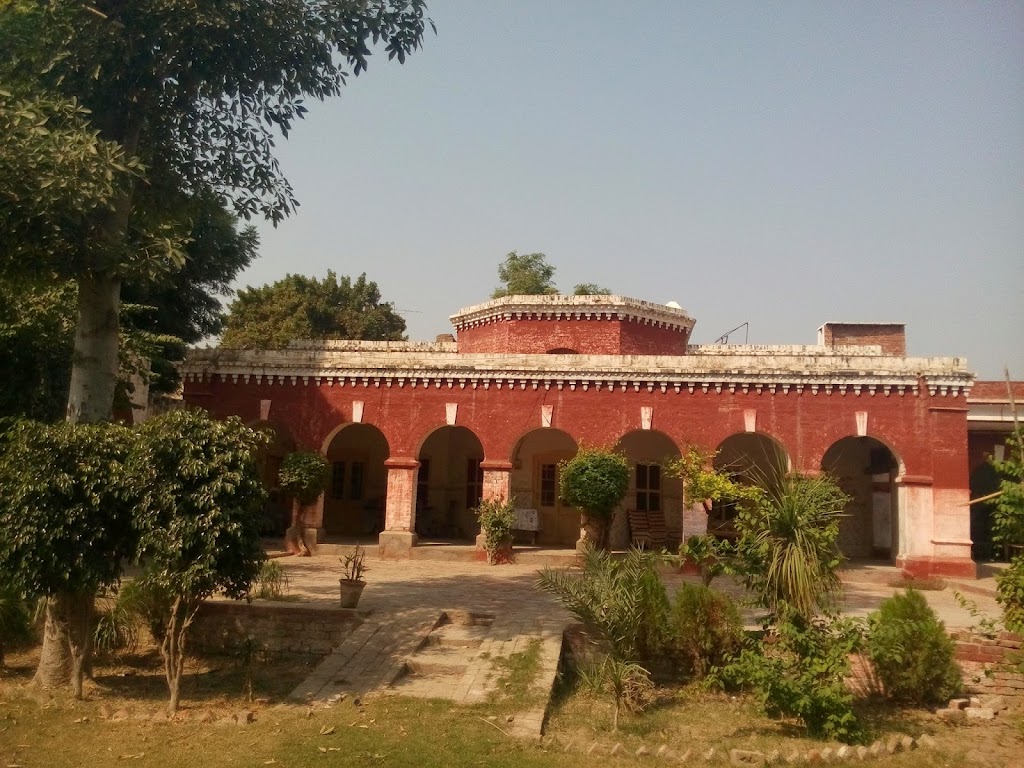
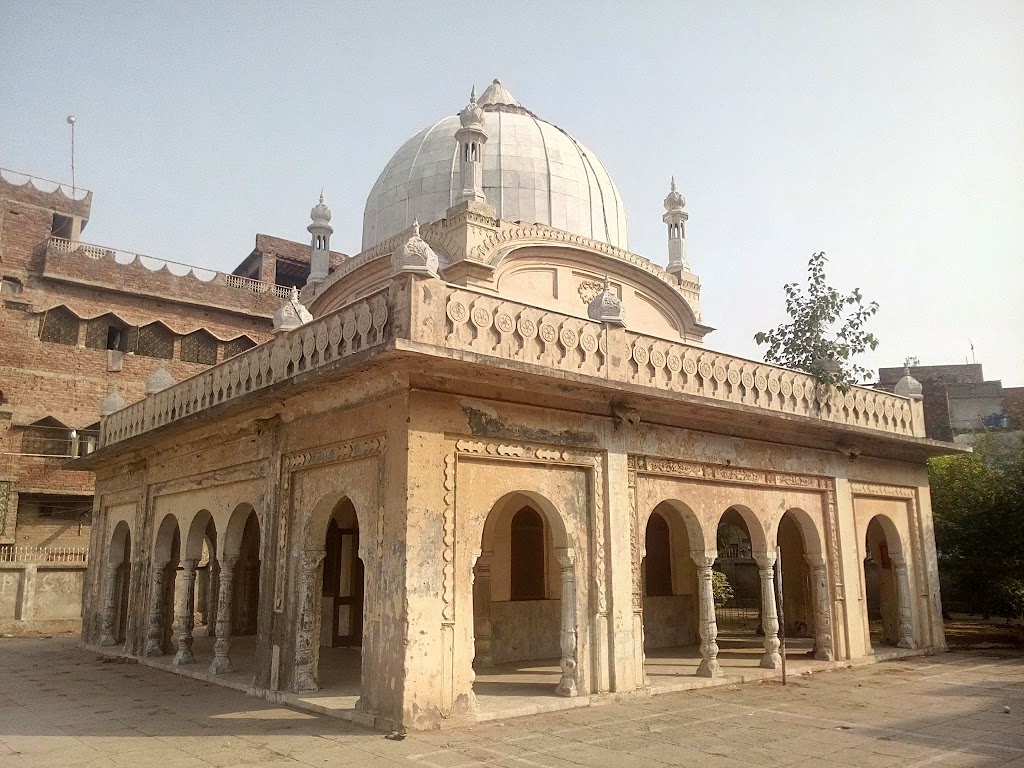
LAHORE, July 10: “It has become a place for criminals,” reads a graffiti at the Smadhi of Sir Ganga Ram, pointing to the step-motherly treatment being meted out to the historic place by the authorities concerned.
Today is the death anniversary of Sir Ganga Ram, whose last destination’s crumbling structure may collapse any moment.
Thousands of people, irrespective of their faith, had gathered on Aug 15, 1927 to bury the ashes of Ganga Ram at the beautiful marble tomb near the Old Ravi.
The lawns of the city’s Town Hall were crowded with people, including women and children, who wanted to have the last darshan of the ashes of the philanthropist, who gave them a lot, including a full-fledged modern hospital.
The dola (palanquin) carrying the ashes was covered with fragrant flowers and had the picture of Ganga Ram on front. Police on horseback were also present there to provide a smooth passage to the procession. The mourners chanted slogans like “Gharibon key waali ki jai” and “Long live the lord of orphans.”
After 95 years, hundreds of people enraged at the demolition of Babri Mosque by ‘zealot Hindus’ in India damaged the tomb. However, this time police were not there to save the Smadhi of the man, who had established hospital, college, school, and widow and orphan homes for the people of Lahore.
“The area people had tried to stop them from destroying the tomb, but they were emotionally charged in reaction to the demolition of the historic mosque in India,” said Muhammad Yousaf, who runs a grocery shop outside the Smadhi.
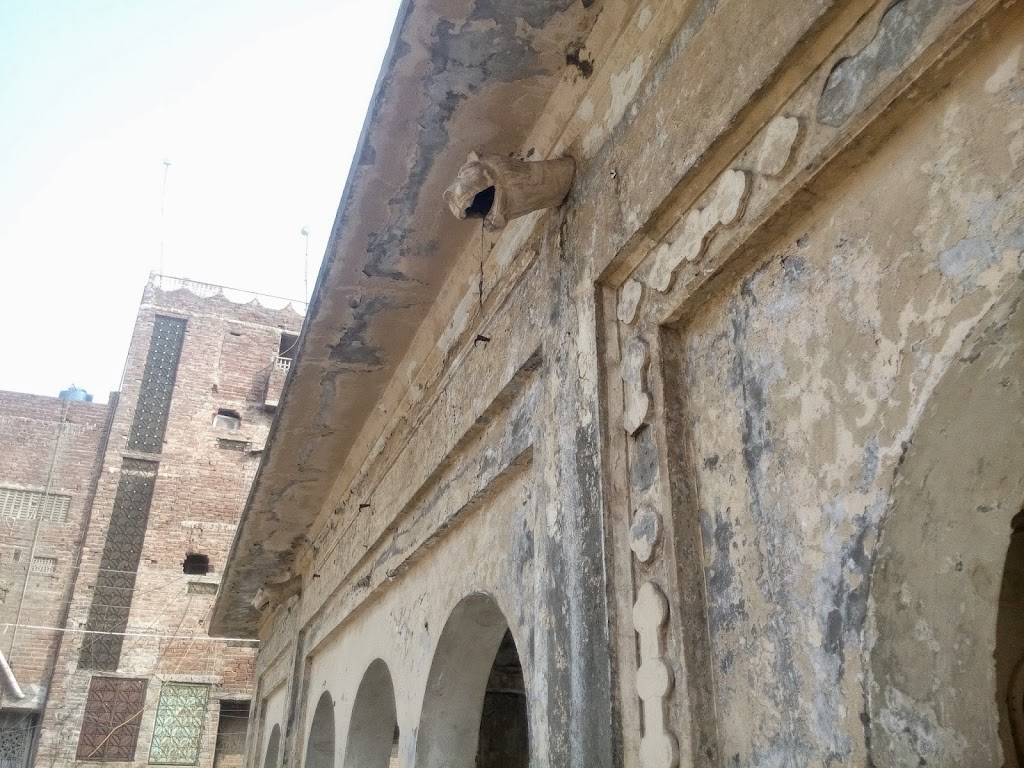
Besides damaging the tomb, the mob had also demolished its six pillars and eight lattices. The two water tanks, one for men and the other for women, and a garden were also damaged.
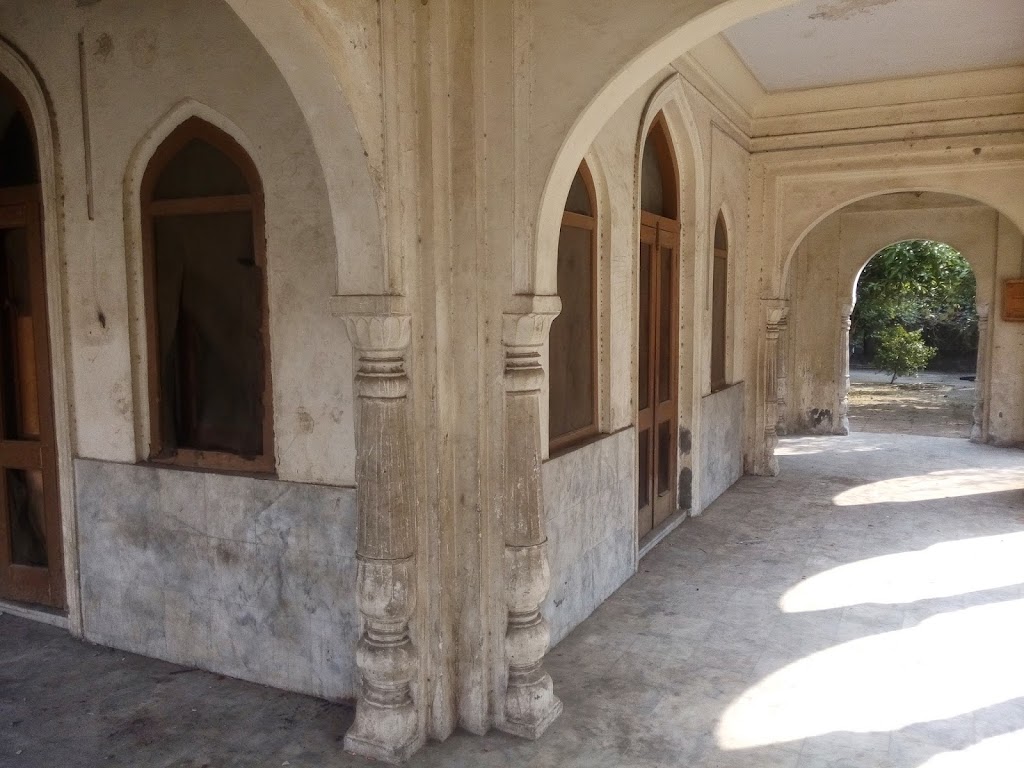
There are no traces of the tanks and garden, as the locals have cemented the grassy ground and erected electricity poles for night cricket. People while away time inside the remaining structure of the tomb.
Yousaf said several people, including foreigners, had visited the place many times and promised to restore it, but to no avail.
**The Evacuee Property Trust Board, which looks after the shrines and other religious places of Hindus and Sikhs across the province, had no record of temples and Smadhis located in the province, according to an EPTB official. “None of us has ever worked on it,” he admitted. **The Ganga Ram’s Smadhi is ‘protected’ under the Punjab Special Premises Act of 1986, but the Punjab archaeology department has never bothered to press the EPTB to restore the Smadhi to its original form.
The tomb of the Smadhi was built in the 1920’s on the wish of Ganga Ram, who wanted to be laid to rest at the Apahaj Ashram and the Widow’s Home located there.
Sir Ganga Ram was born in 1851 and died on July 10, 1927 in London. Before the partition, a fair used to be held at his smadhi on his birth anniversary called Baisakhi. People from the length and breadth of India used to gather here to celebrate the event.
Ganga Ram was an executive engineer by profession and a man behind the construction of various city buildings like museum, Aitchison College, Mayo School of Arts, high court, GPO, Government College’s chemistry block and Mayo Hospital’s Albert Victor wing.
Being a philanthropist, he built Sir Ganga Ram Free Hospital, Hailey College of Commerce, Lady McLagon Girls High School, Ravi Road Orphanage, Sir Ganga Ram Trust Building on the Mall and a couple of societies for Hindu and Sikh widows.
Sir Ganga Ram’s abode on its last legs - Newspaper - DAWN.COM
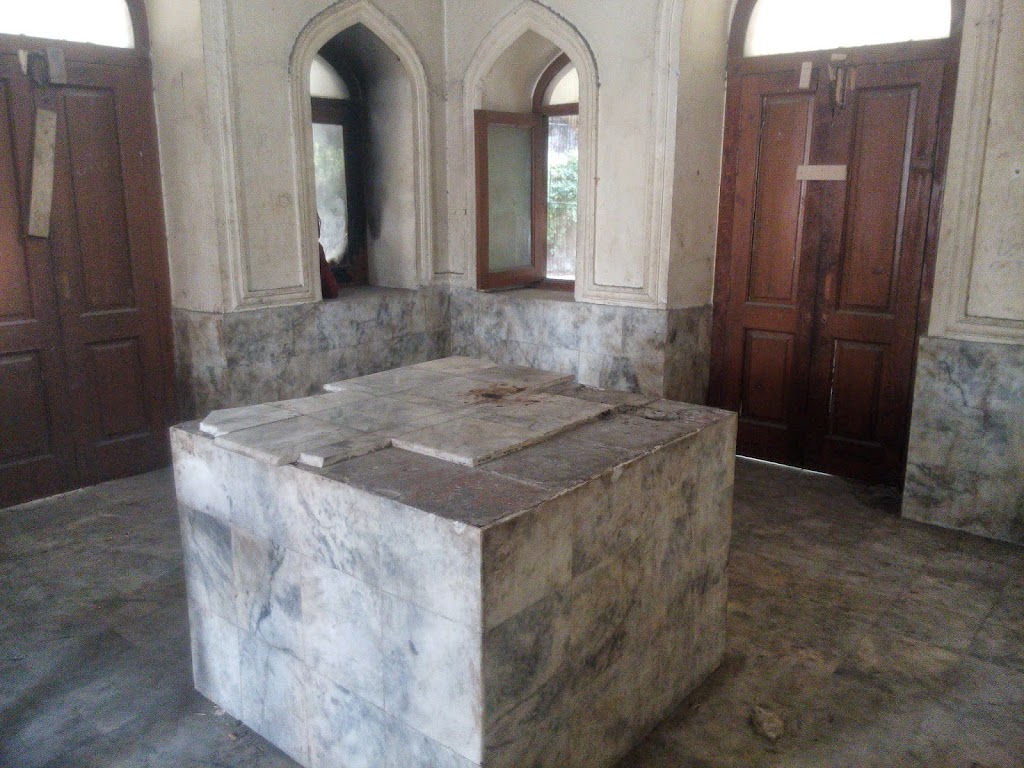
@desert_bird Ask SS to look at this as well, but I’m sure he won’t as this won’t earn him votes.
Re: The Punjab we don’t know!
The rage of the Sikhs sole spokesman - Newspaper - DAWN.COM
In every era Lahore has had its peculiar political characters, colourful as they come. Give them half an issue and then watch the fun. In the history of Lahore few can match the colour and controversy generated by the famous Master Tara Singh.
Most older people in Lahore recollect this Sikh leader as the man who stood on the stairs of the Punjab Assembly in 1947 and pledged that he would never allow Pakistan to be made, drawing his ‘kirpan’ in the process. The result of that defiant gesture was that hundreds of innocent Sikhs were butchered the next day. That is the abiding image of the man in Lahore. But then he was a much more serious politician. It would be interesting to trace his life and see how he fared, for after 1947 little is known of his ways.
Born to a Hindu Malhotra family in 1885 in the village Harial in Rawalpindi District, his childhood name was Nanak Chand. His father was Bakshi Gopi Chand the village ‘patwari’. His was a religious family, but tolerant as all Punjabis once were of other religions. Having passed his primary examination from a school near his village, he moved to Rawalpindi to join the Mission School. His interest in the Sikh faith resulted in him, during holidays, going to listen to a well-known Sikh ‘saint’ Attar Singh at Dera Khalsa.
In 1902 Baba Attar Singh initiated him into the Khalsa order and named him Tara Singh – ‘the star with the love of the Almighty in his heart’. The following year he passed his matriculation and joined Khalsa College, Amritsar. At college he organised a few strikes over trivial matters and soon was known as a rabble rouser. In 1907, Tara Singh joined the peasant movement in Lyallpur (now Faisalabad) against the passage of the Colonization Bill.
Strangely, he concluded that people were trying to portray the Sikhs as anti-British. In an amazing flip, which would be the hallmark of his life, he supported what he set out to oppose. But then he sought solace in educating Sikh farmers of the benefits they stood to gain. It was, by any measure, a progressive leap of faith.
After graduating in 1907 he decided to become a teacher and joined the Teacher Training College, Lahore. In 1908 after completing his teacher training, he opened the Khalsa High School, Lyallpur. From this school he rose to become a national leader, preaching that Sikhs educate other Sikhs for free. He formed ‘The Lyallpur Group’, which brought out a magazine called ‘Sach Dhandhora’.
In 1914 he returned to Lyallpur as headmaster for his own school when the Gurdwara Reform Movement started. He was thus called Master Tara Singh. Elected to the Shiromani Gurdwara Prabandhak Committee, his life as a progressive religious politician had started.
**
In 1921 took place the infamous Nankana Sahib massacre. It all started with complaints of immoral practices in the Janam Asthan Gurdwara at Nankana Sahib by the Udasi mahant (priest) Narain Das and his companions. The Sikhs resolved to take the management of the gurdwara in their own hands. A group of 150 Sikhs entered the gurdwara as ordinary pilgrims, unarmed and peaceful. But the priest, apprehending a takeover, had hired a few armed Pathans, who opened fire on the ‘peaceful’ posse. According to an official report about 130 devotees were massacred inside the gurdwara.**
**
The next day Master Tara Singh joined a group of over 1,000 Sikhs and after negotiating with the British administration took over control. He was truly into active Sikh religious politics, which he would pursue for the rest of his life. Leaders like Gandhi, Maulana Shaukat Ali, Saifuddin Kitchlew, Lala Dhuni Chand and Lala Lajpat Rai visited the scene of the tragedy and expressed sympathy for the Akalis.**
This exposure Master Tara Singh had never experienced, and he pledged before the Sikh community to devote his whole life to the cause of the Sikhs. He was immediately invited to become the secretary of the Shiromani Gurdwara Prabandhak Committee at Amritsar. Master Tara Singh had truly arrived.
He immediately was engulfed in a dispute over possession of the Golden Temple, and after a brush with the local administration was arrested under the provisions of the Seditious Meetings Act, tried and sentenced to rigorous imprisonment. He immediately resigned from his job as a headmaster and devoted himself to the Akali Dal. The Sikhs resolved to not cooperate with the British and soon everyone was released. Mahatma Gandhi sent a telegram which said: “First battle for India’s freedom won, congratulations”. Master Tara Singh was propelled to a much higher pedestal.
In March 1922, Master Tara Singh was again arrested alongside 1,400 others for wearing extra long swords publicly. In this he again emerged an even bigger Sikh leader. Then followed a series of Sikh related issues, and every time he was arrested his stature grew. Very soon he was to be dubbed ‘Sole Spokesman of the Sikhs’. The ‘patwari’s’ son from Rawalpindi had made it to become a headmaster in Lyallpur, and from there to a national leader in Lahore, all in a matter of 15 years.
The rise and rise of Master Tara Singh saw him, in 1923, take on the authorities after they deposed the Maharajah of Nabha, who was viewed as an Akali supporter. Master Tara Singh organised a ‘shaheedi jatha’ – suicide squad – and went to Nabha. In the tragedy that followed over 40 Sikhs were killed.
The whole of Punjab was alight. Master Tara Singh was at the centre of this dispute. Leaders of the Indian National Congress, led by Jawaharlal Nehru, who demonstrated in support of Master Tara Singh, were also arrested. It had become an All-India affair. The Khilafat Committee and the Muslim League also expressed their sympathies with Master Tara Singh. The situation had the colonial rulers reconsider their position and the rabble rouser had won yet another victory.Barely had the matter been resolved that the Punjab governor, Sir Malcolm Hailey, was willing to pacify the Sikhs by assisting them in taking possession of all the important gurdwaras in the province through a five-member committee. A draft of a new Gurdwara Bill was sent to the Akali leaders imprisoned in the Lahore Fort. The leaders let the ‘headmaster’ read the complicated piece of legislation, who within minutes ruled that it was fine. It was passed into law in November 1925. Thus ended what came to be known in Lahore as the ‘Third Sikh War’.
Master Tara Singh moved to a house in Shahdara. As the Freedom Movement gained pace, the Nehru Report on the abolition of communal provisions in elections was opposed by the Sikhs, who felt that this would mean that the Muslims of the Punjab would gain ascendancy over the Sikhs. He wrote: “As Congress wants to please the Muslims, so it is ignoring the Sikh interests”.
The seeds of partition of Punjab were being sown. From then onwards he always spoke of ‘majority despotism’, a phrase, ironically, the Muslim League used much later when demanding Pakistan.
When Gandhi launched his Civil Disobedience Movement in 1930, Master Tara Singh extended his support and a conference of Congress, Muslim and Sikh leaders was held in Lahore. He got 5,000 Akalis ready to fight it out. All over Punjab strikes took place. In April 1930 in Peshawar’s Qissa Khawani Bazaar, people protesting against the arrest of their leaders were fired upon, killing 300 persons. Master Tara Singh, as a mark of sympathy, led 100 suicide fighters to Peshawar. It was an impressive march by all accounts and he was arrested in Lahore and sent to Gujarat Jail.
The Simon Commission of June 1930 issued an award which favoured separate electorates and reservation of seats and recommended only 19 per cent representation to the Sikhs in Punjab. The Congress and the Sikhs rejected the report. Sikh agitation was brewing and he was interned in his house at Shahadra.
Master Tara Singh realised that they would have to struggle against the Communal Award on their own. A split occurred as many Sikhs realised that their demands were unfair. The end result was that an angry Master Tara Singh was asked to quit politics as he was driving them into an unacceptable position. In anger he left for a self-imposed exile to Burma, bidding farewell to politics and promising not to return. “When I return you will have forgotten me”, he said. But how could Lahore forget such a colourful person.
In January 1935, he learnt of the death in Patiala Jail of his companion Sewa Singh Thikriwala. He rushed back and the leaderless Sikhs immediately passed a resolution expressing full confidence in his leadership. He accused the maharajah of betraying the Sikhs. The Maharajah of Patiala even sent a gang of killers to finish him.
The 1937 elections of the Punjab Assembly resulted in a clear-cut majority for the Unionists. In an astute move Sikandar Hayat Khan sought the cooperation of the Khalsa National Party. Sunder Singh Majithia became a minister in the Unionist government. Master Tara Singh condemned him as a traitor.
In the first year of his rule in July 1937 Sir Sikander called a ‘Unity Conference’ of leaders from all political parties for the purpose of maintaining communal harmony in the province. Master Tara Singh decided to take part. On the question of playing music before mosques, Master Tara Singh and Sardar Sunder Singh Majithia exchanged hot words and the conference ended in total failure. After years of success, now his position was more and more confused.
The Sikander-Jinnah Pact led Sikhs to believe that Sir Sikander was basically a communal politician. It forced Master Tara Singh to start favouring the Congress Party. The complexities of the situation meant that Sikh aspirations could not be met. After the Second World War as freedom neared, Master Tara Singh fiercely argued against the partition of India. The reality was that no district has a Sikh majority.
The fact that they would have to leave behind Nankana Sahib, Hasanabdal, Lahore and their other holy sites was, in human terms, a massive tragedy for the Sikhs. After all they belonged to the land. It was in this rage of utter hopelessness that he stood on the steps of the Punjab
Assembly of Lahore in 1947 and waved his ‘kirpan’. The result was death and destruction.
In the new East Punjab State he demanded that ‘gurmukhi’ be the official script. In a way his politics ended up with a Sikh majority East Punjab where the Sikhs lived their lives as they wished. But then the divided Punjab was further sub-divided in November 1966 into three parts. One a Sikh-majority Punjab, and two Hindu-majority states of Himachal Pradesh and Haryana. The rabble rouser from Harial and Shahdara had had his final say. He died on Nov 22, 1967 always longing to return to die in his native village.
Re: The Punjab we don’t know!
^ he had 100 suicide bombers, so this ailment is old.
Re: The Punjab we don’t know!
who he? Tara Singh?
Re: The Punjab we don’t know!
Master Tara Singh, as a mark of sympathy, led 100 suicide fighters to Peshawar
Re: The Punjab we don’t know!
okay. I missed that para in above article. I was looking at it from Nankana Massacre as mentioned in the book. There are accounts in history that Tara Singh supported riots in east Punjab in association with RSS.
This ailment might be traced to first kafan posh rally. Your homework to search it out 
Re: The Punjab we don’t know!
this was quoted in the article you posted above. Reading the article it seems as this guy had a big role in the ensuing riots in Punjab.
Re: The Punjab we don’t know!
Everyone knows about the Gurdwara JanamAsthan in Nankana Sahib. Sikh yatris travel across the world to Pakistan each November to celebrate birth of Guru Nanank. What most of us don’t know is about the other 5 gurdwaras of the city, built by Ranjeet Sindh during his period. Ranjeet Singh is said to be pioneer of many Sikh rituals as well including Palki Sahib procession.
5 Gurdwars denote different places where important events related to Guru Nanak’s life happened.
These are:
- Gurdwara Patti Sahib (where Guru started his formal education). ‘Patti’ means a wooden board on which children learn to write alphabets with a pen made of a soft stem. The board could be washed after the lesson and would be given another coating of soft light clay and is re-used
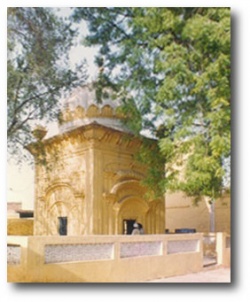
- Gurdwara Baal Lila
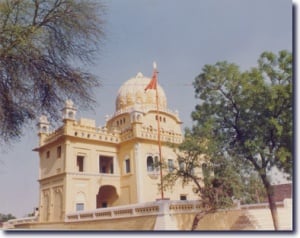
About 300 metres south-east of Gurdwara Janam Asthan, marks the field where Guru Nanak used to play in the company of other children. As is apparent from the name, this site is related with the wonderful adventure of the early childhood of the Guru.
- Gurdwara Tanbu Sahib

This has been built on a site where Guru hide due to his father’s fear after distributing his wealth among the poor and Saadhus / Bhagts
- Gurdwara Maal ji (Maal = cattle in Punjabi)
http://sgpc.net/new%20gurdwara/Gurdwara%20Sri%20Mall%20Ji%20Sahib_A.jpg
This holy place is associated with the childhood activities of Guru Nanak Dev ji. One day while grazing the cattle, the Guru was taking rest under a shady tree. He went into trance. When the shadows were falling down, his divinely face happened to be covered with the sunshine. A big cobra spread its hood on the very face of the Guru for relieving him from the scorching heat. Rai Bular, the hakam of Talwandi saw this from a far off place. He got the impression that the child Guru Nanak was bitten by the snake. On approaching the the place, where the Guru Nanak was lying, the snake snailed to its pit. The Guru was awakened by the Rai Bular and he found him quite safe and sound. The Rai Bular, thus came to realise the divine personality of the Guru and became his disciple from that very day. He made it clear to Mehta Kalu that he should not take the former as merely his son but a revered holy prophet. A grant building stands erected to day at this historical site.
- Gurdwara Kiara Sahib
http://sgpc.net/new%20gurdwara/Gurdwara%20Kiyara%20Sahib_A.jpg
This Gurdwara is situated at a distance of one and a half kilometres from Gurdwara Janam Asthan. According to Janam Sakhi, when Guru Nanak was yet a young man, he was to graze cattle. While resting underneath a shady tree, Guru was immersed in thoughts and the cattle went astray in the feilds of a farmer. On having seen this, the peasant got red with rage. The clamouring made by the peasent disturbed the Guru from his trnace. On beholding the Guru, he got embarrassed and made a complaint to Rai Bular. The Guru drove the cattle towards his house. On his return, the Guru just had a kind look at the fields which turned green. By watching this miracle, the Hindus and the Muslims revered the Guru. This Gurdwara is situated in that historical field. The building is large.
Source: http://sgpc.net/historical-gurdwaras/gurdwaras_in_pakistan_kiara_sahib.asp
So this is just one city of Nankana Sahib and so many important places of Sikhism. That tells us about the rage of Sikhs leaving the land.
Re: The Punjab we don’t know!

How a saint is born – The Express Tribune
Wahndo in Gujranwala district is famous only for lawlessness. But there is, near this town, the small village of Kotli Maqbara with an imposing domed Mughal structure in the fields outside the habitation. The ground floor is plain while the basement has three graves. Its minarets recall those of Chauburji in Lahore and, therefore, give us a date of construction.
In November 1991, when I was working on my book on Gujranwala, I thought I had discovered a monument that had escaped the official eye. But my mentor Dr Saifur Rahman Dar told me that this building was mid-17th century and housed the mortal remains of Divan Abdul Nabi Khan, the governor of Wazirabad, successively under Shah Jehan and Aurangzeb.
On my first visit, I was told that the building was raised by jinns and was locally known as Deo Minara — Minaret of the Jinn. No one knew who was interred within and the usual refrain was, ‘It’s been there since the time of our grandfathers and nobody knows anything about it.’ In Punjabi plain-speak, this means it could either be millions of years old or one hundred.
There was one interesting story in November 1991: a woman had, of late, started to visit the mausoleum. She dismounted from her escort’s motorcycle some ways away and came dancing to the tomb where she did all sorts of genuflexions at the subterranean graves. She told the people that a vision in her dream had informed her that these three were great heroes of Islam, who had come from Arabia and whose exertions had done much for religion in the heathen land of India. My investigations revealed that this seer of visions was a superannuated dancing woman and prostitute from Chhicherwali, a village outside Gujranwala.
Exactly a year later, November 1992, I took a bunch of college students from Lahore to Kotli Maqbara. Some local hangers-on warned me this being the hallowed burial of a great man of God, we could not go in with our shoes on. We went in nevertheless.
Done with our excursion, our bunch was at the nearby hand pump where we were joined by a group of young men from the village. I was telling the kids about Abdul Nabi Khan when one of the locals interrupted me. What on earth was I babbling on about, he demanded to know. Everyone knew that the tomb housed three saints. The man also said I could believe what I wanted, but everyone knew how supplication at the tomb was answered quickly.
Since when, I asked. And the answer: “This has always happened since the time of our grandfathers. Everyone knows of it.” However, none of the locals could give us the saints’ names.
Nine years later, in early 2001, I returned to Kotli Maqbara. The entrance to the underground burial chamber was now draped with the signature green satin of holy Islamic burials. **The new steel signboard had names: Hazrat Pir Makki Shah and Hazrat Pir Atray Shah. **The first one was understandable: you want to create a saint, just name him Makki Shah — from Mecca — and you get a ready-made saint. The second name was inexplicable and the third was evidently under consideration.
I went into the village and asked around. Of course, the names had been known since the time of the grandfathers. If no one remembered what the past was like only a year after it had been reinvented, it was foolish to imagine they would now want to recall the time before 1991, 10 years later.
There were stories about how supplicants’ wishes simply came true as soon as they put their foreheads to the ground in front of the graves. Now people took off their shoes about a hundred metres from the plinth of the building. There was a weekly Thursday festival and an annual urs to celebrate the death of Makki Shah. No prizes for guessing who took the pickings from the business: none but the woman from Chhicherwali, who had retired from selling her virtue — though, if she had any is questionable.
Strange place, Pakistan. Tell the truth and watch it rejected; whisper some inane notion to the winds and it becomes gospel.
Re: The Punjab we don’t know!
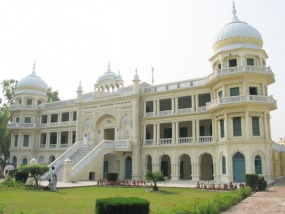
Gurdwara Sachcha Sauda is situated at a distance of 37 miles from Lahore on the Lahore-Lyallpur Railway Line.
Guru Nanak as a young man was sent by his father Mehta Kalu, who was hoping to instill a sense of business in his son, to buy some goods which he could return home with, then sell and make a profit.
At least that was Mehta Kalu’s plan but along the way to his destination, the young Nanak came across some sadhus who were hungry and without food. The Guru to be decided to use the sum his father had given him (a sum of Rs. 20) with which to provide a meal, a langar for the Sadhus. Returning home without any purchases Mehta Kalu was very annoyed. But young Nanak explained to his father that as he saw it he had done a very good deed, feeding the starving Sadhus, and gaining the best profit one could gain from the money. It would not be the last time that Mehta Kalu would worry over his son.
On the spot where Guru Nanak Dev fed the sadhus, now stands a magnificent Gurdwara that was built by Maharaja Ranjit Singh, on the pattern of a fortress.


Re: The Punjab we don’t know!
I read it as Shekharipuram
Re: The Punjab we don’t know!
What is it?
Sheikh-pura was named behind Mughal emperor Jehangir nick ‘Sheikhoo’, as Akbar was a devotee of Salim u din Chishti (he considered him as his sheikh) and due to his blessings and prayers Salim (Jehangir) was born.
Re: The Punjab we don’t know!
Shekaripuram happens to be a village in Kerala.
Re: The Punjab we don’t know!
I’m reading about White Jews of Cochin. Sad story.
Re: The Punjab we don’t know!
I will reveal my ignorance. What is sad
Re: The Punjab we don’t know!
end of 2000 years old community from Kerala. I just got the book, when I go through the book, I’ll come up with a new thread.
Re: The Punjab we don’t know!
Ok. Look forward to it.
To the best of my knowledge, the Jewish people were treated very well in Kerala.