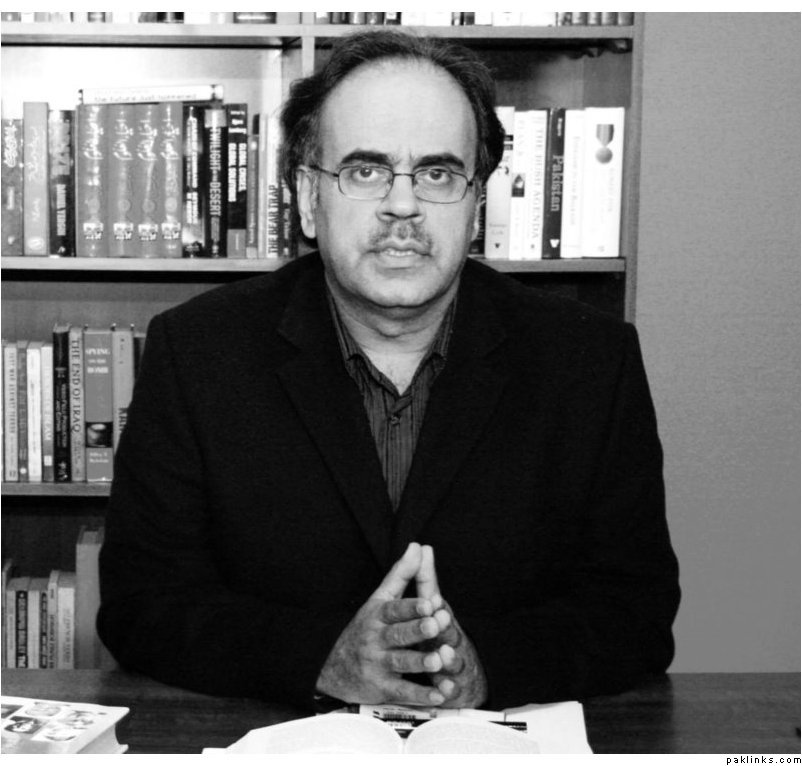
Shaheen Sehbai, Group Editor The News , was the first person who wrote in January,2009 that its time for Kyani to play his innings in a manner that the Power- Pillars of Pakistan to remain intact without damaging the structure and we saw this on 15th Match,2009 at Long March.Now , what next !
**
Friday, August 29, 2009**
By* Shaheen Sehbai*
**
From a Troika to a Quartet**
WASHINGTON: Pakistan has entered into a make-or-break, decisive phase for the political system and the next few weeks have become so critical that any slip by any of the main institutional players could cause a major catastrophe and land the country into deep trouble.
The three pillars of the so-called troika, namely the president, the prime minister and the Army chief, have now been joined by another major pillar, the chief justice of the Supreme Court and the troika is practically now a quartet.
Each of these four players appear to have their hands full with matters they have to dispose of and some of these issues impact directly on the other two or three members of the quartet, a matter of life or death for some.
Behind the scene matters appear to be moving in such mysterious ways and at such a dangerous pace that no political or official spokesperson has been able to explain why and how of the developments. No one knows what was the urgent need for diverting the presidential aircraft to Islamabad while flying from China to the UK just days ago and why President Asif Zardari stayed on the tarmac at Chaklala to meet the prime minister and the Army chief and then immediately took off for Dubai and London. These happenings are not normal by any given standard.
What the next few weeks hold in store for the country can be put simply in this brief form:
-
The president has to decide, and decide quickly, whether he is going to give up his powers under the 17th Amendment, which has become a basic factor of the continuing political instability in the country. This lack of stability has not only damaged the prospects and potential of a democratic set up but has given rise to unnecessary and frivolous controversies over dead and buried issues. Politicians squabbling and fighting like kids on non-issues do not inspire confidence or raise hopes while the teeming millions get crushed by ever-increasing burden of day to day survival.
-
The president has to decide whether he would continue with his style of running the system like the US/French model with presidential cronies surrounding him or will he allow a set-up that has built-in systems of checks and balances and keeps every institution within its prescribed constitutional limits.
-
The prime minister has to make up his mind whether he wants to say all the right things at all the right forums but is unable to deliver and lose credibility with each statement he makes. His pathetic plight is so pitiable that the nation starts cheering him up if he sacks a petty corporate official.
-
The limits of patience which opposition political parties have shown towards the PM are about to end if Gilani keeps waiting forever for real power to fall automatically in his lap. That may not happen any time soon.
-
The Army Chief has his own compulsions as he has his real wars and battles to fight on hot military fronts but he must be the most disturbed person looking at the political landscape from his Pindi seat of power. He must be feeling desperate because the political stability that he needed to fight these wars, without caving in totally to outrageous demands of the foreign powers involved, is not being provided by the politicians.
-
The Army chief would also be worried because his own retirement is just about a year from now and it would be giving him sleepless nights when wondering whether he would leave the national scene in the hands of the current players with their incompetence. His options to bring about improvements are limited but he has shown the willingness to intervene, when pushed really against the wall and the nation saw two such almost positive interventions in recent months, once on the night of March 15-16 when the chief justice was restored and another when the July 31 judgment of the Supreme Court was about to be announced.
-
The latest member of the quartet, the Chief Justice of Pakistan, has the most crucial decisions to make as cases involving all the other members of the previous troika come before him for judgment. His words and decisions may bring down the entire system, if not carried out in a proper, well rehearsed and balanced way. But as one top lawyer recently in Washington put it, the restored judiciary has to prove that the people were not wrong in fighting for their cause so they will take all the decisions that need to be taken, without fear or favour.
-
The chief justice also has to do a balancing act when matters pertaining to the conduct of the Army generals and the politicians come before it. Thus a hasty decision against Musharraf or a sweeping reversal of NRO related benefits could further increase tensions and the instability that may deepen may cause a collapse of the system. Yet the CJ has to act within the next few weeks.
With these critical matters in the air, what options do the four players of the quartet have. The most frightening scenario is that either of these four pillars may take some precipitate action in panic which may cause a domino effect.
For instance, it has been in the air for some time that the presidency was keeping its fingers very close to the panic buttons. All the loud talk of Minus-1 formulas and NRO bashing may have triggered this panic and President Zardari’s sudden, unexplained dashes abroad have not helped create the sense of confidence and calm that should otherwise be the hallmark of an elected and popular president.
There have also been whispers that President Zardari would not give in to political or physical threats and would fight all the way, even if that created an October 12, 1999-like situation. It would be better if nothing more is said about these options.
In Pindi, there is a general agreement that no one would like to see the system collapse but some corrections are due and should be quickly made. These include the end of the crony control and taking away a few unelected and unpopular associates of the president may satisfy Pindi.
The PM side may be happy if President Zardari moved fast on the 17th Amendment but any impression or attempt of stalling things and gaining time may backfire, again causing someone to push the panic button. The political parties sitting on the fence including Mian Nawaz Sharif may also find their patience exhausted if things linger on indefinitely. The smear campaign launched recently resurrecting the Midnight Jackals can adversely hit the system. But the Supreme Court holds most of the cards and in the new power equation with four instead of three troika players, there could be a tie with two sides aligned against each other.
The bottom line is that the courts enjoy the support of the people, at least until now, and Pindi holds the real physical power so in any such eventuality, the losers may be the two big houses on the hill in Islamabad. But the country may be the biggest loser if all the players do not realise their grave responsibilities and act sensibly, and now

 @ Malaysians blaming their problems on Israel). One big problem Pakistan, and several other Muslim and some African countries, have is an exploding population that the economy cannot accommodate. Is the US forcing average Pakistani’s to have 50 kids and increase their population from 40 million in 1950 to around 140 million in 2000 to 344 million in 2050? The irony is there is a big emphasis on sex-related issues in Muslim culture (via the obsession with gender apartheid in some places) yet apparently having too much of it is a top reason for the further decline of such nations (the more sex-obsessed, i.e. Saudi Arabia, the higher the birth rate generally is).