10 years of war in swat, malakand, fata and balochistan and we are back to square one.
The terrorists are attacking at will. More than 50 % of the country is a war zone and its increasing by each passing day. If we go a little bit further, another operation was carried out against MQM which brought peace to the city (temporarily) but now again the city is bleeding.
Not one success story can be observed in the country.
Isn’t this the time to reflect on the weaknesses of our counter terrorism strategy?
The way we are fighting these wars I can bet that Pakistan can continue for another 50 years and the situation won’t improve.
Fata mistake
*Talking is amongst equals or a tacit
recognition of equality. If this happens too soon it will be TTP’s political checkmate to the state of Pakistan. So what exactly are the options?
By Kashif Noon
*
When I was growing up in Bahawalpur in the 1970s, I did not know what Fata really was. I only knew that there was an Illaqa-Ghair (The other area not our own — a rough translation) somewhere in Pakistan. Every crime which was untraced like murderers never caught was connected to this Illaqa Ghair of Pakistan; on gossips at tea shops and karyana stores (general provision shops) Illaqa Ghair was the Bermuda Triangle. The images were of a land where dangerous men lived, no women lived there and a land where to tread was fraught with unimaginable fate. The law did not exist there. The image of fearsome tribes persisted in my head until I started reading.
Later, much later, when I read the official versions the images of ‘fiercely independent’ tribesmen of the North West with a keen sense of honour emerged. Myths create images and this collage of images is what an average Pakistani knows about Fata. Images are brick and mortar of imagination. This national imagination ironically made Fata a lawless land; lawlessness being their choice, inhabited by perpetual warriors, who even dance with swords and who are not our own.
Experience is a strange thing. Collective organisational experience is even stranger. It sets in our memory structure and acts as a tour guide of our actions and inactions. Complete dependency on experience is also anti-creative. In bureaucratic/military organisations, collective experience is valued much more than creativity or newness. Experience is dehumanised.
First Kashmir War in 1947-48 was a ‘good’ organisational experience by all concerned. The Wazir and Mehsud tribesmen were used as mercenaries. The First Kashmir War was the first and the only time that territory was captured from India and kept. The legitimacy of the action is not a concern here but consequences are. The tribesmen were good fighters; somebody must have thought because they are wild let us keep them wild. Rest as they say is history. We (the state of Pakistan) used the land and people of Fata for our ambitious projects. The deliberateness of this policy actually is not only unfair, it’s scary — a whole people, as experimental control group.
I served in parts of Fata and learnt the human side of it. The ‘fiercely independent’ tribesmen were constantly crushed under the heels of political agents. Their symbolic fierce independence was only the right to carry arms and that too to avenge blood feuds — apparently, a state encouragement to provide them means to fight and monopolise the role of final arbitrator. However, I have seen more arms in Mandi Bahauddin in Punjab than in Fata. The penal system of ‘collective responsibility’ was and is like a sledgehammer justice system. Houses of the criminals were and are blown and bulldozed without a thought about women and children living there, families who called those mud houses home.
There is no doubt that development work has been done in Fata. Development at best is a very un-wholesome substitute for freedom and rights. Independence is also not a substitute of freedom. It is only a function of just not being ‘dependent’ whereas freedom is an absolute state of being. We in Pakistan in any case have little appreciation of rights and freedom. We don’t know how it feels to be free? But at least the freedoms are on the statute books. For Fata, the statute books are empty pages. You will be surprised how thin the FCR is in book form compared to Constitution, CrPC etc; it is almost a brochure.
In these pages I wrote about ‘talking to TTP’. I wrote about ‘legitimacy capture’ and ‘fear factor’. The talks are on the immediate agenda of incumbent national and provincial governments. I cautioned (for whatever that is worth) and now I reason further.
Terror as a methodology of politics is powerful besides being destructive. It is designed to gain political power by checkmating and limiting options. The legitimacy gained from terror or creating fear is at best transitory. The TTP knows its Achilles heel. Terror cannot sustain forever. Constant state of fear is an unnatural way of life. The lashkars and resistance to TTP and affiliates is evidence to that. By coming to an elected government (this is the first time) across a negotiating table, the TTP will gain credence and legitimacy which is not theirs to have and which they crave. They are not popular in Fata as their Afghan brethren are across the Durand Line. Terror and consequent fear cannot be popular. Talking is amongst equals or a tacit recognition of equality. If this happens too soon, it will be TTP’s political checkmate to the state of Pakistan.
So what exactly are the options?
Reform packages for Fata is also one option. Reform packages in Pakistan have been mostly useless. What happened to Aghaz-e-Haqooq-e Balochistan? Everyone knows what happened to that; on second thought, nobody knows what really happened to that. An apology of a reform package introduced by the last government for Fata was just that — an apologetic, feeble attempt. I cannot even categorise it as half-baked… it is not baked at all. Reform packages by definition are half-hearted and vision-less. Reforms cannot be packaged. Even the nomenclature is wrong. They have to be comprehensive and unencumbered. They also need to be owned by the people. The top down approach of designing reforms in offices and secretariats is only perceived as despotic handouts by the people. The days of benevolent despotism are over. Doesn’t anyone notice that?
Referendums in Pakistan have a chequered and devious history. Yet referendum, in essence, is a powerful democratic tool for gaining legitimacy or deciding a question of national importance. KP is the only province which has a history of a) let us say, positive, issue based referendum (1947 accession to Pakistan). **For a change let us put referendum to better use than legitimising dictators. Let us decide and have a referendum in Fata and KP on two suggested questions; do the people of Fata want Fata to be a full-fledged province or do they want to merge with KP.
**The TTP cannot offer this to the people of Fata, only the state of Pakistan can. This will be the state of Pakistan’s checkmate to TTP. This is the position of strength much stronger than a militaristic position of strength. The people of Fata will actually gain freedom and rights even if on paper but they will become equal citizens. The people’s voice will speak. They have spoken in the elections. They will speak again. The legitimacy will be recaptured.
It will not be easy; the economy will be a problem. The issue of taxes will be a problem. Cleansing of layers of dust of ineptitude, created by a false adherence to tradition, gathered for too long, will be a problem. But statesmanship is all about solving problems. It cannot be anything else. It is now time that we make the ‘Illaqa Ghair’ a part of Pakistan; hamara apna illaqa (our own area). It’s time for assimilation. Talks can happen later if the need still persists.
There really is no terrorism strategy in place as such. Army operations have never succeeded in establishing lasting peace in Pakistan. US army couldnt do it in Iraq, nor in Afghanistan. Specifically in Pakistan, military operations are also hampered by a lack of political will, and fear of public retribution.
Unfortunately, no Pak govt has ever undertaken any meaningful negotiations. The only realistic ‘negotiated agreement’ is that of PML-N (or Punjab govt) with the TTP and LEJ. Not sure why PML-N cant come up with the political will to use the same leverage for the entire country. They have a very strong mandate, and they can manage it quite well, if they want to. They have always touted the fact that Punjab has been relatively peaceful, compared to other provinces. Now they have a big central mandate. It should be simple to replicate the same countrywide, no?
The peace in Punjab seems to be temporary, maybe to gain foothold and reorganization. If the peace efforts with taleban fail, I foresee a very dangerous time approaching for Punjab.
Aren’t Taliban’s going to spare Peshawar because of Pro-Taliban government in place?
Granted provincial government can’t do much regarding national CT policy but i am watching the response of provincial government after-math of bomb blasts in KP and it is despicable.
Not just security but also infrastructure, education, health, sanitation, economy is much better then rest of the Pakistan. Call it whatever but leaders from rest of the provinces are just not capable enough and corrupt to the core.
As far CT policy concerns, i doubt talking with the butchers will create any good environment to move forward. Both Nawaz Shareef & Imran Khan are wrong.
Sardars can never be pro-taliban it will be anesthesia for them. As far fed concern their response to yesterday tragedy was absurd and wrong, while watching tv it was evident of lack of leadership.
Pakistan as whole sucks !
My only expectation from PMLN is to revive economy & take care of energy crises, security situation will going to get worse as NATO forces going to leave Afghanistan, better renew your passports and check the visas expiry.
Do have some foreign currency such as dollars & euros in hand, you never know..
Pakistan is not azad yet from military clutches even if NS got two third he still have no say in foreign & counter terrorism policy. Same is true for defense housing schemes.
So better forward your anger towards the men in uniform.
I am not attacking the federal or provincial governments. I just want to know if the counter terrorism policy is working (regardless of who calls the shots).
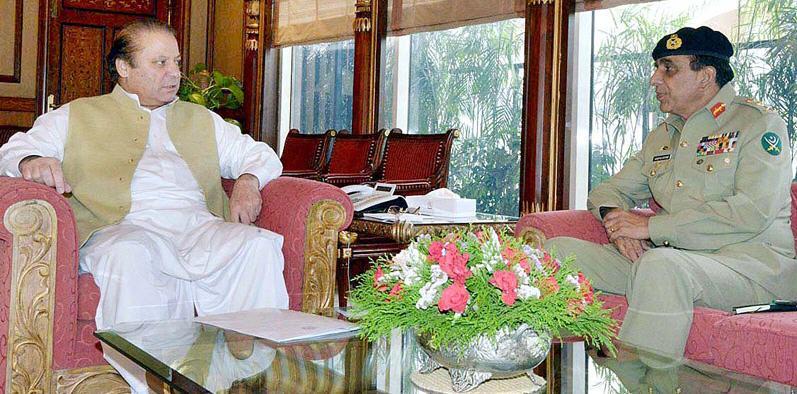
Look at the picture, they are discussing where to begin new operations and what to do next. What happening in Pakistan is war of survival but sorry to say i can’t see the seriousness on any of our so-called leaders be it civilians or military.
They dont seem to have a counter terrorism strategy… The PPP only passed some anti terrorism bills near the end of their term, but beyond that, they have no plans what so ever.
What strategy / Policy? Can some one share a link to the govt. website showing what that is? Oh yeah its on the US state dept. site. Right. That is Pakistan’s policy as well.
Balochistan, the largest but least populous province of Pakistan, is slowly descending into anarchy. Since 2005, Pakistani security forces have brutally repressed the Baloch nationalist movement, fueling ethnic and sectarian violence in the province. But the Pakistani armed forces have failed to eliminate the insurgency—and the bloodshed continues. Any social structures in Balochistan capable of containing the rise of radicalism have been weakened by repressive tactics. A power vacuum is emerging, creating a potentially explosive situation that abuts the most vulnerable provinces of Afghanistan. Only a political solution is likely to end the current chaos.
Key Themes
Before the state began repressing Balochistan in an effort to maintain authority, most Baloch nationalist parties were not radicalized or fighting for independence. They were working within the framework of the federal constitution to achieve more political autonomy and socioeconomic rights.
State institutions such as the Supreme Court have been unable to convince security forces to respect the law, but they have been instrumental in drawing attention to violence and atrocities in Balochistan.
Many Pakistanis now view the security forces—not the separatists—as the biggest obstacle to national unity and stability.
A negotiated solution is politically feasible. The nationalist movement is weak and divided, and a majority of Baloch favors more autonomy, not the more extreme position of independence. Islamabad may be willing to seek a political solution now that it has failed to eliminate the nationalists by force of arms.
Finding a Way Out
The nationalist parties should participate in provincial elections in May. Only their participation in Balochistan’s administration can confer sufficient legitimacy on the provincial government. A legitimate and credible Baloch government can reestablish local control over the province, help reduce violence, and advocate for Balochistan on the federal level.
The Pakistani security establishment should show greater respect for human rights in Balochistan by disbanding death squads, stopping extrajudicial executions, and ending forced disappearances. Serious negotiations and political solutions are impossible as long as these violations persist.
Security forces should disavow the use of proxy groups and use legitimate state authority to combat sectarian violence.
The United Nations should send a permanent observation mission to Balochistan to monitor the human rights situation. Such a mission would create greater transparency, promote accountability, and build confidence should the security establishment decide to change its policies in the province.
Are we talking now or 1948? In 1948, it was a rebel balochi sardar who had rebelled against khan of kalat’s decision in favor of Pakistan. In 2005, like it or not, but it was the bugti militia who had allegedly being “wronged” about the honor of Dr. Shazia. Now, I think that it was a travesty of justice by how a sitting army chief cum president decided to give a clean chit right away to Captain Hammad (the accused), so I won’t bring in how these so-called sardars actually treat women (burying them alive “per tradition” or making men walk on coals to prove innocence the bugti favorite). Still, the bugti liberation army decided to abscond to the mountains and destroy sui pipeline and even attack a head of state’s chopper on a visit to turbat. Now, say what you may of the tactics employed by the army and FC, but no state allows this including the enlightened ones in europe and the US.