History of Pashtuns series

Re: History of Pashtuns series

Pashtun Rohilla invasion of Kingdoms of Kumaon and Garhwal (Uttarakhand )
**
Kingdom of Kumaon**
In 1744, Ali Muhammad Khan Rohilla invaded Kumaon with a body of fifteen thousand veteran Afghans, to revenge the death of his father Daud by Raja of Kumaon, Kalyan Chand. Ali Muhammad chose an unexpected route - his forces, boldly penetrated through the forests, and after a march of eighteen days, they arrived at a village in Kumaon. The success of this bold attempt terrified the Raja, that he fled his dominion, and took refuge in the neighboring country of Garhwal.Pradeep singh, Raja of Garhwal collaborated with Raja of Kamaoan but their combined army suffered a severe defeat at the hands of
the Rohillas. Ali Muhammad overran and plundered the entire territory and threatened to invade the kingdom of Garhwal, that compelled Pradeep singh to sue for peace and pay rupees 3 lakhs per annum on behalf of kalyan chand. In 1747, Kalyan Chand approached the mughal emperor and implored him for aid against Rohillas. The appeal of Kumaoni Raja was heard, though the powerful Rohillas were not a force to reckon with at that time.
In 1757 Najib Khan Rohilla invaded Garhwal. Thee Garhwalis were defeated , and Najib khan established his authority in Dun. Garhwal remained Najib khan’s rule till his death in 1770.
In 1764 the control of Tarai slipped into the hands of Rohillas and Raja deep chand, son of Kalyan Chand was reduced to the state of a nominal zamindar or jagirdar in Tarai.

Man and Forests: The Khatta and Gujjar Settlements of Sub-Himalayan Tarai By Ajay Singh Rawat
An Historical Relation of the Origin, Progress, and Final Dissolution of the … - Charles Hamilton - Google Books
History of Uttaranchal By Omacanda Hāṇḍā
http://2.bp.blogspot.com/-ItFjHRUkPUs/U7V2CQmj4fI/AAAAAAAAAUI/To3yZdvxyVM/s1600/Kumaon+rohilla.jpg
http://3.bp.blogspot.com/-HoyTnYqspSw/U7V3pJ4bA3I/AAAAAAAAAUU/3_jvT2tr1II/s1600/uttaranchal2005.gif

Kingdom of Garhwal
In 1757 Najib Khan Rohilla invaded Garhwal. Thee Garhwalis were defeated , and Najib khan established his authority in Dun. Garhwal remained Najib khan’s rule till his death in 1770. Dera Dun was invaded again by Rohillas in 1785 under Ghulam Qadir Rohilla and was re-
annexed. In 1803 Gurkhas conquered Garhwal. In 1815 British fought the Ghurkas in Garhwal, 4000 irregular Rohilla infantry armed with matchlocks from Rohilkhund were recruited for this war. British used the light Rohilla infantry as skirmishers and sharpshooters. They were encouraged to use their initiative to take aimed shots at the enmeies.

Garhwal Himalayas: A Study in Historical Perspective By Ajay S. Rawat
Early Wall Painting of Garhwal By B. P. Kamboj
Butterflies on the Roof of the World: A Memoir By Peter Smetacek
Encyclopedia of the Age of Imperialism, 1800-1914 by Carl Cavanagh Hodge

http://1.bp.blogspot.com/-dbSnGw1zteo/U7V6BjZaa8I/AAAAAAAAAUg/h4wsOynbCa4/s1600/rohilla+uttarakhand.png
Location of uttarakhand, which comprises of former kingdoms of kumaon and garhwal, once conqueured and ruled by rohilla pashtuns

Re: History of Pashtuns series

Germans and Faqir of ipi in WW2

German and Italian intelligence agents established clandestine contacts with faqir of ipi in south waziristan. The Afghan governament warned the Germans about the misfortune by all those who tried to manipulate frontier tribes. German ignorance about frontier tribal dynamics, the afghans pointed out gauaranted that their covert activities would fail.
Afghan bluntness did not deter the Germans. In 1941, an italian intelligence agent traveled to south waziristan and opened contacts with faqiur of ipi with a view to furnish arms, ammunition, and communication equipments equipments for raids against British troops. The Italians provided the faqir with a substancial amount of Afghan cuurency and 12,000 pounds. The faqir agreed to recieve radio operator to train his men in operating a German shortwave radio transmitter, he returned the british pound notes , stating his preference for american dollars or gold.
The abwehr took over the faqir of Ipi’s portfolio from the Italians. German intelligence gave the Faqir of Ipi the code name Feuerfresser (Fire-eater). when two abwehr agents with waziri escorts left kabul for south waziristan , dressed as afghans, they were carrying money, maps, weapons,and radio equipments. On july 19, 1941, a fifty-man afghan army unit surrounded the german encampment. during the ensueing firefight , the waziris ran away. One of the German was killed, the other captured. Back in kabul, german minister told Afghan officials the mission was merely exploratory and a “tragic mistake”
.Afghans believed that the operation had probably been penetrated by the British from begining. Afghan premeir insisted that, given the vast british spy network and German ignorance of the region , similar ventures to be avoided in future.
Historical Dictionary of German Intelligence By Jefferson Adams
The Wars of Afghanistan: Messianic Terrorism, Tribal Conflicts, and the … By Peter Tomsen

German operatives of the Abwehr continued supplying Kabul with finances and
arms, and even contacted Mirza Ali Khan, the faqir of Ipi, who waged continuous
skirmishes against the British in Waziristan, providing him payments and materiel.

The Daily Herald claimed on its front page of April 16, 1937, that Mussolini was behind the revolt in North waziristan. The Sunday Chronicle on February 26 1939 implied that a radio link between the faqir of ipi and the italians had been established. The article added meanwhile Hitler is active in Kabul…

Subhas chandra bose viewed the Afghan tribal territory as an important staging territory in his plan to harass british india, bose discussed these plans perosnally on his vist to Berlin. The axis however proved incapable of establishing strong propaganda operation on the north west frontier and never attained any capability to airlift commando units to support an insurgency in afghanistan. The axis legations in kabul recieved the following monetary requests from the faqir :, 25,000 pounds to be paid bimonthly , according the hauner’s research, and doublke the sum if tribal unrest should be extended to other areas. In the event of general uprising on the frontier the sum would be increased three times the orignal amount, not including supplies of weapons and ammunition that the faqir also required urgently to sutain insurgency .

The Germans also wanted to establish their own links with faqir, but unlike the italian improvisation, their leads had to be on truly g*****ose scale. Oberleutnant Dietrich witzel-kim, chief of the Abwehr branch in kabul, was ordered with his Afghan and indian agents to take charge of contact arrangement with the faqir and to seek out a landing strip in the operating area of faqir of ipi. A full scale uprising among the frontier tribes was the scheme dreamt by axis, to occur on september 1941 Barbrossa ( German invasion of soviet union) was expected to be completed.
Had the axis managed the faqir of ipi and shami pir affair differently and fought a long term war on the periphery instead of direct attacks on France and Soveit union, the conflict would have evolved differently.

While Germans agitated in afghanistan anti-british sentiments, george cunningahm, the governor of NWFP worked through his political agent kuli khan to get more mullahs in tribal areas to speak out against bolshevism , and then the axis countries as enemies of islam . Among the descriptions used against the japanese was but-parasti(idol worshipper)

The Secret War for the Middle East: The Influence of Axis and Allied …By Youssef H. Aboul-Enein, Basil H. Aboul-Enein

http://4.bp.blogspot.com/-mJlU7ZOou6g/U9rrYzisc0I/AAAAAAAAAgY/Y-PG447gb3g/s1600/faqir+of+ipi.jpg

http://2.bp.blogspot.com/-B9kSupcChfw/U9rzBZOlOSI/AAAAAAAAAgo/jyhlpdUIyOk/s400/bose.jpg

Re: History of Pashtuns series

Mohmand Campaign 1935
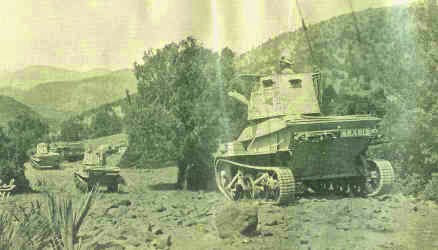
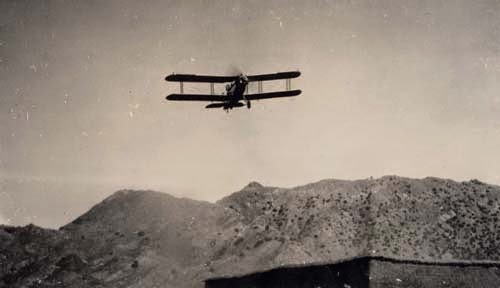
In 1935 Auchinleck led over 30,000 British troops against Mohmands with air support from the Indian Wing commanded by Basil Embry.. Tanks were used, the first operational use of tanks in India. The Mohmands, having no word for tanks, called them “the snakes that spit”.

The Mohmands , hard by shati khel, mauled regiments of the 5th/12th frontier force, the guides, killing thirty five and wounding sixty in the battle of hill point 4080. Captain Meynell was awarded the victoria cross for the action and Auchinleck promoted to Major General.. Extensive coverage was given to the campaign and the range overlooking shati khel, khazana sar, a tribal stronghold from where Mohmands sniped was mentioned in The Times (17 september 1935).

http://1.bp.blogspot.com/-LBrdlZkhU54/U9dvvWch6bI/AAAAAAAAAeQ/wBSBPLwqncU/s640/tanks+fata.jpg
Light Tanks on the Frontier c.1936

The operation against Mohamand pashtuns provided a practical test of the various changes in the British army introduced during the early 1930s. Of greater significance was the deployment of Mk II light tanks

http://3.bp.blogspot.com/-xnNtMs85SIE/U9pU63mKn-I/AAAAAAAAAgI/uSj3D5e23bA/s1600/mohmand+1935.jpg
‘Dropping message to brigade headquarters’ from photographs relating to Col Alexander Bennett’s service with the Mohmand Field Force, North West Frontier Province, 1935-1936 (ref: Bennett)

Re: History of Pashtuns series

Mohmand Blockade 1916-17
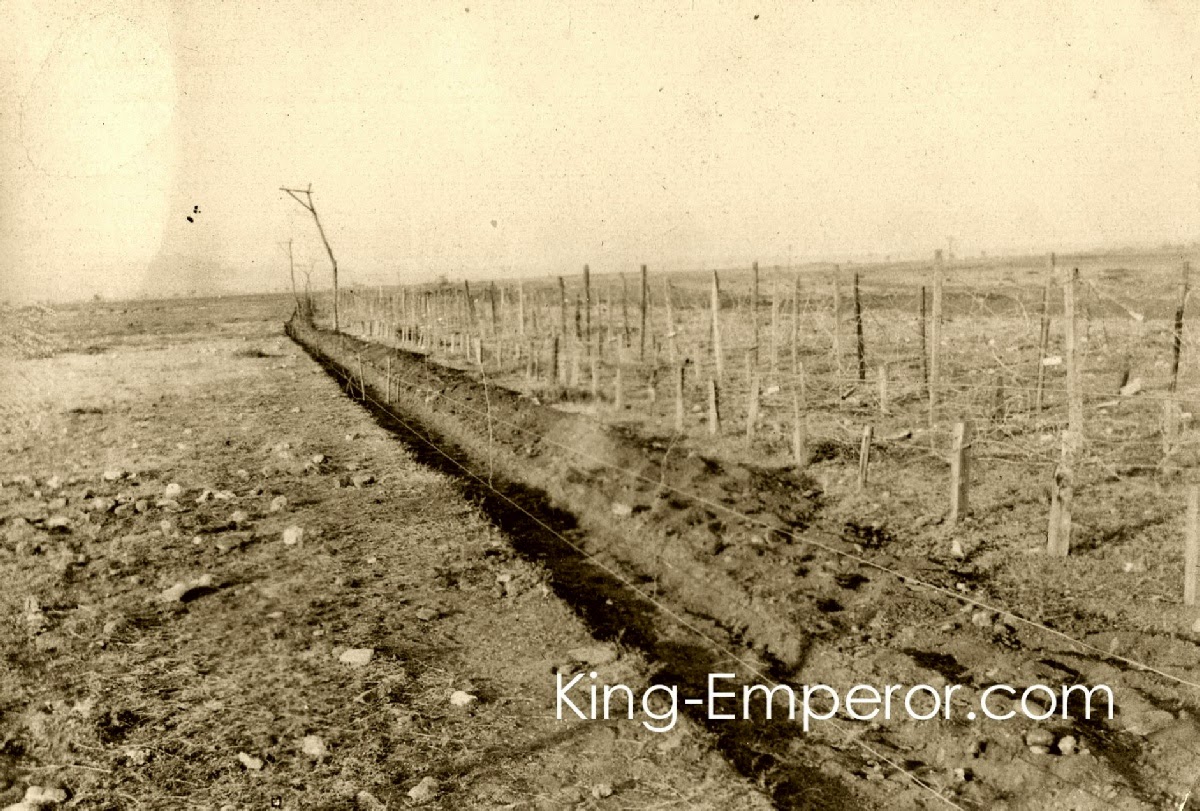
In 1915 Mohmands announced Jihad against British and their lashkars invaded Peshawer district near shabkadar but were defeated with great losses Another lashkar of about 9 thousands came down from the hills again in the october of the same year. .The Mohmand Blockade line was then instituted. It began in late September 1916 and continued on into July 1917. The Blockade was made up of a series of blockhouses and barbed wire defenses manned by men of the British and Indian Armies along the British border of Mohmand territory. The Blockade began in response to excessive Mohmand attacks. The most important engagement occurred on 15th November where at the Third Affair of Hafiz Kor.. The Blockade was lifted in July 1917 when the Mohmands finally submitted to British terms.

The standard military report on the Mohmand country recommends that the 'only means by which by which submission of tribes can be secured are the temporary occupation of country and the destruction of crops and villages (General staff 1926 : 33)

http://1.bp.blogspot.com/-NTQ1hY7XURs/U9dqSsYCcgI/AAAAAAAAAdM/MJZgogB_RIA/s640/mohmand.jpg
‘Live wire’ on the Mohmand Blockade Line c.1917

http://4.bp.blogspot.com/-gCjyeMshTxg/U9dq7KhJi-I/AAAAAAAAAdU/fDOz6NDZcrQ/s640/mohmand+2.jpg
The Mohmand Blockade

http://2.bp.blogspot.com/-nau_o94oxqM/U9drQ-vAgSI/AAAAAAAAAdc/xi756adZhm8/s640/Mohmand+3.jpg
The 81st Pioneers on the Mohmand Blockade

http://1.bp.blogspot.com/-umxx5mh-v9c/U9dr68Fc0uI/AAAAAAAAAdo/HEgHLMvDf1E/s640/Mohmand+4.jpg
The 2/4 Border Regiment constructing the Mohmand Blockade line.

http://3.bp.blogspot.com/-PvRSYUQrGn8/U9dr7AmyjlI/AAAAAAAAAds/kRwi4xYSyjk/s640/Mohmand+5.jpg
Mohmand Territory

http://4.bp.blogspot.com/-YiWTKD7PoF4/U9dsCaT5xzI/AAAAAAAAAd4/kVMvEhNarzE/s640/Mohmand+6.jpg
No.12 Blockhouse on the Mohmand Blockade

http://4.bp.blogspot.com/-n691iPyHJ9U/U9dt6IYB8XI/AAAAAAAAAeE/6G0CwV9N4Ow/s640/Mohmand-+7.jpg
The Mohmand Blockade - note the armoured car.

Re: History of Pashtuns series

Operations in Zhob valley, 1890
In 1890 khidarzai branch of Largha section of sheranis were still in open revolt. The British became determined to bring the unrest in the Zhob Valley to an end and in October 1890 sent out a brigade-sized field force under Major-General Sir George White, against khidarzais who were headed by Murtaza Khan.
It had been originally proposed by Sir Robert Sandeman that the Khiddarzais should be attacked by two forces of equal strength, the one starting from the Punjab and the other from Apozai as bases of operations. The Indian Government, however, decided that only one force should be despatched, and that from the Quetta side, Mr. Bruce, the Commissioner of the Derajat, to join it in the Khiddarzai country in order the more satisfactorily to settle the various points of difference with the tribe in question. In consequence of the continued representations which were made, this decision was subsequently changed, and a detachment of the Punjab frontier force was finally placed by the Government at the disposal of Sir George White to operate against the Sheranis from the direction of the Punjab and the Derajat to the east The Punjab force was
placed under the immediate command of Colonel A. G. Ross, C.B., of the ist Sikh Infantry, and consisted of one troop of the ist Punjab Cavalry, one squadron of the 3rd Punjab Cavalry, four guns of No. 1 (Kohat) Mountain Battery, two guns of No. 7 (Bengal) Mountain Battery, and half a battalion each of the ist and 2nd Sikh Infantry, and of the 2nd Punjab Infantry.
With the Zhob Field Force, 1890 by Albert William
When the troops penetrated the high country in the south of the mountain ranges of the takht-e-sulieman, they were sable to capture and burn the two principle villages of khidarzais . As the force continued its sweep though mountains, several skirmishes took place with khidarzais, and, when these occurred the nearest village was found and destroyed. The captured tribesmen were hanged on spot and their bodies burned. Albert William, who accomapanied the expedition, for example, writes that at Apoza a ghazi “fanatic” fired at Lieutenant Godfrey, the Assistant Political Agent,who his way to Europe on leave under cavalry escort. The ghazi first shot at and then dashed with his sword at Godfrey, but was shot in the hip and disabled. At hanging, before the drop fell, he shouted to the Pathan onlookers to pray for him. In another case the local who shot the Bengal Cavalry was also hanged on the spot of the attack. In both cases the bodies were burned.
War in Afghanistan By Kevin James Baker
With the Zhob Field Force, 1890 page 112

“During this march we saw several of the inhabitants on the hilltops watching us from afar off. It was a wonderful sight to see the natives getting over the rocks. They wore chupplis, a kind of leather sandal, and flew along like goats up, down, or along the hillsides. We often saw them in the distance, but could never get very near them. They appeared to vanish in a marvellous manner, their loose baggy garments flowing about them
as they moved along. They appeared to carry their food grain, dried apricots and
atta — in skins strapped over the shoulder, also water, so being able to live for days
away from villages and habitations.”
With the Zhob Field Force, 1890 - Albert William

By these means as November advanced and the colder weather threatened tribesmen and their dependents (families) who were mostly out in open on bleak mountainside, the khidarzai came to terms. In the case of the Sherani tribe generally, the terms imposed were these : (i) that Murtaza Khan and the other refugees, if in the Sherani country, should be surrendered, or, in the event of their having left the country as had been reported, that they should not be permitted to return there ; (2) that a fine of 6000 rupees should be imposed upon the tribe, including 1000 rupees inflicted on individuals for offences committed by them in Dera Ismail Khan and Zhob ; (3) that the Khiddarzai maliks and other refractory members of the tribe who had either surrendered or been taken prisoners should be detained as hostages until all the terms had been fulfilled."

After the Khidarzai expedition of 1890, the tribe was split up, the Bargha Shiranis remaining under the control of the Zhob Political Agency, whilst the Largha Shiranis fell to the Dera Ismail khan.
Balochistan Through the Ages: Tribes

http://2.bp.blogspot.com/-xrYJhclIRxo/U9c7iVUICFI/AAAAAAAAAaU/JMbCvkS1FsE/s320/George_Stewart_White.jpg
General Sir George Stuart White, the Zhob Field Force was organised under him in September 1890 for subjection and pacification of khidarzai.

Sir George White says :
“This fine has since been paid in full, and Murtaza Khan, who had been for many years an avowed and active enemy of the British Government, surrendered himself to the Commissioner of the Derajat after the troops had been withdrawn from the Sherani Hill — a result, I submit, due entirely to the strong policy of Sir Robert Sandeman in insisting upon the responsibility of the tribe for the acts of its individual representatives, and a conclusive proof that the Sheranis no longer believe in the impregnability of their position to shield them from the long arm of England’s power.”

Re: History of Pashtuns series

Third of British Indian army was stationed in NWFP and tribal areas
There are two forms of warfare to be taught in India, viz, open warfare and mountain warfare. Except for those stationed on the frontier the former of course requires the most attention, but mountain warfare should never be entirely neglected in view of the fact that wherever the Army in India fights in the future it is almost certain to be in mountainous country. In addition, about a third of our Army in India is presently stationed on the frontier and practically every unit takes a turn of duty there sooner or later
(“An Infantry Officer”, ‘Collective Training in a Battalion’, JUSII, 60/259, (1930), p.128)
THE ARMY IN INDIA & FRONTIER WARFARE 1914-1939
Military Power: Land Warfare in Theory and Practice edited by Brian Holden Reid

Re: History of Pashtuns series

Isa Khan, a Pashtun hero of Bengal

Isa Khan,born in 1529 A.D, was the leader of the Baro Bhuiyans (twelve landlords) of the Bhati region in medieval Bengal.
"The baro bhuiyans, a coalition of twelve feudal chieftains, Afghans and local Bengalis,offered the invading mughal army stiff resistance. Isa khan, ruler of Sonargaon was key figure among them. European Trade and Colonial Conquest, Volume 1 By Biplab Dasgupta
Baro Bhuiyans made their headquarters in inaccessible region of Bengal which were interspersed with dense jungles.
Muslim monuments of Bangladesh by Sayed Mahmudul Hasan
His father Sulaiman Khan, a descendant of an Afghan chieftain of the region of the Sulayman ranges in Afghanistan, had settled in Bengal in the reign of Nusrat shah and carved out an independent principality in the Bhati region comprising the northeastern portion of greater Dhaka district and the southeastern portion of greater Mymensingh district. Sulaiman, who rebelled against Islam Shah Sur at least twice, was killed in 1548. Isa was then about 19 years old. After his father’s death Isa was brought up by his paternal uncle Qutubuddin. He spent his childhood and youth in Bhati. It was because of the good grace of Taj Khan, the Karrani Afghan ruler, that Isa obtained an estate in sonargaon and Maheswardi Pargana in 1564 at the age of about 35 as a vassal of the Karrani rulers of Bengal. By winning the favour of the Karrani rulers he gradually increased his strength and status and by 1571 became so powerful that Abul Fazl designated him as the ruler of Bhati. In 1573 he helped daud khan karrani in his expedition to Chittagong against Udaya Manikya, the king of Tripura. He also helped his mentor in driving out the Mughal flotilla from the vicinity of Sonargaon in 1575. Isa Khan’s services to Daud Khan earned him the title of Masnad-i-Ala.

Isa Khan played a leading role in the local resistance that followed the defeat of the Kararani Afghans at the hands of the Mughals in the battle of rajmahal (1576). An astute and farsighted politician, Isa Khan realised that he could not face akbar single-handed with his relatively limited resources. So he established rapport with the neighbouring landlords and the Afghan chieftains and forged an anti-Mughal politico-military alliance with them. He also made friendship with Amar Manikya and Raghu Dev, the neighbouring kings of Tripura and Kamrup respectively. Above all, Isa ensured proper use of his war-boats, the backbone of his military power.

In 1578 the Mughal subahdar Khan Jahan invaded the Bhati region, ie, East Bengal and encamped at Bhawal (Bhawal). Ibrahim Naral and Karimdad Musazai, the two Afghan chieftains broke their alliance with Isa and offered allegiance to the Mughals. Isa Khan stood defiant and a large Mughal naval force was sent against him under Shah Bardi and Muhammad Quli. A fierce engagement took place at Kastul, now in Kishoreganj district. Despite Isa’s initial retreat, the Mughal army took to flight after being severely defeated by Isa’s allies, Majlis Dilawar and Majlis Pratap. Consequently Khan Jahan, utterly ruined, was compelled to leave Bhati. Thus Isa Khan proved a formidable obstacle against Mughal expansion in Eastern Bengal.

In 1586 Ralph Fitch, a merchant then exploring the possibilities of opening up trade between England and India, traveled through Bengal’s eastern districts and wrote, “They be all hereabout Rebels against the King Zebaldin Echebar [Jalal al-Din Akbar]: for here are so many Rivers and Ilands, that they flee from one to another, whereby his Horsemen cannot prevaile against them. The chiefe King of all these Countries is called Isacan ‘Isa Khan], and he is chiefe of all the other Kings, and is a great friend to all Christians.” Fitch’s “other Kings” were the “twelve chieftains” (Beng., bāra bhūyān) recorded in other European accounts and celebrated in Bengali lore. In December 1600 the annual letter of the Jesuit Mission in Goa, commenting on the Mughal drive against Bengal’s former Afghan rulers, stated:

Twelve princes, however, called Boyones [bhūyān] who governed twelve provinces in the late King’s name, escaped from this massacre. These united against the Mongols [sic], and hitherto, thanks to their alliance, each maintains himself in his dominions. Very rich and disposing of strong forces, they bear themselves as Kings, chiefly he of Siripur [Sripur], also called Cadaray [Kedar Rai], and he of Chandecan [Raja Pratapaditya of Jessore], but most of all the Mansondolin “Masnad-i ‘ālī,” title of ‘Isa Khan]. The Patanes [Afghans], being scattered above, are subject to the Boyones.

The next Viceroy shahbaz khan led an expedition against Isa Khan in 1584. Taking advantage of Isa’s preoccupations in the Kuch Bihar expedition the Mughal army ravaged katrabo, the home and capital of Isa, as well as khizrpur, Sonargaon and egarasindhur. At this time Isa returned from Kuch Bihar and, with his ally masum khan kabuli, put up a vehement resistance against the Mughals both on land and water. The Mughals were defeated in the battle of Egarasindhur and Bhawal, and were forced to turn back to Tanda, the local headquarters of the Mughals. But this victory did not relieve Isa of anxiety as, rejuvenated with reinforcements sent by Akbar, Shahbaz Khan again marched towards Bhati in 1586. At this juncture, Isa sent presents and a proposal of peace to the Mughal viceroy and pretending to be loyal to the emperor he succeeded in forestalling a Mughal invasion of Bhati. Since then Isa remained undisturbed in his own territory for almost a decade.

In September 1597, mansingh sent two large forces by land and water against Isa Khan. The Mughal army under the command of durjan singh, son of Mansingh, initially achieved some success and even attacked Katrabo. But finally on 5 September of the same year a naval engagement took place 12 miles off vikramapura. This resulted in the death of Durjan and the ruination of the Mughal army. Isa Khan died in September 1599 at the age of about 70.

Thus Isa brilliantly resisted Mughal aggression and succeeded in maintaining his independence against the Mughal onslaughts for a quarter of a century. Akbar failed to establish his authority over the Bhati region during the lifetime of Isa Khan. On the contrary, Isa established his authority over a vast territory by gradually increasing his strength. He successfully transformed his estate in Sonargaon and Maheswardi Pargana into an independent domain which comprised a considerable portion of Dhaka district, almost the whole of Mymensingh district and also a small portion of Tripura district. Katrabo and Sonargaon were his capitals. Apart from these two, Khizrpur in Narayanganj and jangalbari and Egarasindhur in Kishoreganj district were his strong outposts. ralph fitch, who visited Sonargaon in 1586,calls him ‘the chief king of all these countries’, ‘the chief of all the other kings’ (Bhuiyans) and ‘a great friend to the Christians’.

Isa Khan’s success in the struggle for the preservation of the independence of Bengal against Mughal imperialism and aggression in the last quarter of the 16th century turned him into a pre-eminent personality of Bengal. It would not be an exaggeration to designate him as one of the national heroes in recognition of the heroism which he demonstrated to preserve the regional sovereignty of Bengal in a transitional phase of her history. Isa Khan’s remarkable career profoundly stirred the minds of the Bengali people. This has been reflected in different ballads, dramas, novels and patriotic songs composed since his time.
**
Area**

His area was known as Bhati-that now comprises parts of the districts of Dhaka, Narayanganj and Mymensingh in Bangladesh. His capital city was in Sonargaon, at Narayanganj near present day Dhaka city.

**Free-spirited Man
**
He was the chief of Baro Bhuiyans, (the famous twelve landlords). Bangla was a very crucial area for the outcomers and Bhuiyans always tried to keep it independent. The most momentous moment of his life was repelling the forces of the legendary Man Singh, the great general of Mughal emperor Akbar. This incident has come to represent the defiance and love of freedom of the people of Bengal and has been celebrated in numerous plays, songs, ballads and novels.

Isa Khan - Banglapedia
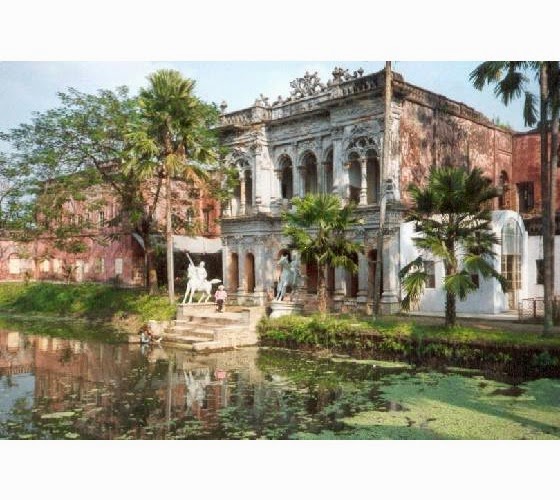
http://2.bp.blogspot.com/-4F6tw74kbdY/U7WvYUoriOI/AAAAAAAAAVQ/3EWV5q4UIwU/s1600/Sonargaon.jpg
Sonargaon, capital of Isa Khan

http://4.bp.blogspot.com/-SEQo23O_iHQ/U7WvwYWtE-I/AAAAAAAAAVY/AWUS6vv0luo/s1600/Fort+Hajiganj.jpg

Re: History of Pashtuns series

When Niazis contested for throne of Delhi
Islam Shah succeeded to the throne after the death of sher Shah suri. Though Sher Shahs eldest son, Adil Khan was nominated by him as his successor but the nobles preferred Jalal Khan, Sher Shahs younger son who was regarded more capable by them. Jalal Khan was called by them to come to Kalinjar and after his arrival, he was declared Sultan on 27 may 1545 A.D. He assumed the title of Islam Shah.

Islam Shah could not feel secure as long as his elder brother was alive. He asked him to come to Agra. He was assured of his life and the grant of Jagir of Sayan. Eminent nobles like Isa Khan Niazi and Khawas Khan stood surety for his life. Adil Khan went to Agra, paid homage to the Sultan and returned to Bayana. Islam Shah tried to murder him but failed. Feeling insecure Adil Khan sought support of Khawas Khan. They combined their forces and proceeded towards Agra but the rebels were defeated. Adil Khan fled towards Panna and was heard of no more. Khavass Khan also fled towards Sarhind.

Islam Shah tried to kill ail those nobles who were supposed to be in sympathy with Adil Khan. Thirteen old nobles were sent to Gwalior where they were blown by gun-powder. Said Niazi fled away from the court and found shelter with his brother Haibat Khan Niazi, governor of Lahore. .On account of his flight, Islam Shah went back to Agra, where he collected his troops and marched thence towards Dehli. When Shujé.’ Khan received intelligence of these occurrences, he hastened to Dehli with all possible speed, without being summoned by Islam Shah. The King gratified him by treating him with distinction, and after arranging his army, and halting some days at Dehli, he proceeded in the direction of Lahore. ’Haibat Khan and the whole of the King’s enemies had an interview with Khawas Khan and his friends, and dispatched a powerful force from the Panjab to encounter Islam Shah. They came up with each other near Ambala; and as Islam Shah was encamped very near the Niazi troops, a fight was imminent.

On the night preceding the day of battle, ’Haibat Khan and his brothers met in Khawas Khan’s tent, and consulted together concerning the appointment of another Sovereign. Khawas Khan said, that the best course would be to raise ’Adil Khan, the eldest son of Sher Shah, to the throne, as he was the rightful heir. Upon this all the Niazis said unanimously, “ What advice is this ? No one obtains a kingdom by inheritance ; it belongs to whoever can gain it by the sword.’.’ Khawas Khan was vexed at their intentions, and on the same night he secretly sent a verbal message to one of the confidential servants of Islam Shah, requesting him to inform the King, that although His Majesty looked on him (Khawas Khan) as an unfaithful servant, yet that his heart had always inclined towards Sher Shah’s family and offspring; and that although he had sided with ’Adil Khan, who were the Niazis that he should be guilty of disloyalty to his benefactor on their account, and for the sake of their alliance ? That his wish to be of service should, with the consent of the Almighty, be made manifest on the day of battle.

When Islam Shah became aware of the disagreement which had taken place amongst the chiefs of the enemy, and of the friendly feeling of Khawas Khan, he rejoiced exceedingly, and became confident of success. Meanwhile, news was brought that the Niazi troops had advanced to within a very short distance of the royal camp. Islam Shah said: “ The Afghans have no sense.” He made an enclosure with all his wheeled carriages, like a fortress, into which he caused the whole of his army to enter, and then went in person to reconnoiter the Niazis from an elevated position. When he beheld the foe, he said, “ I shall be disgraced if I do not fight the rebel troops,” and ordered the chains, with which the carriages were fastened together to be removed. At that moment, he ranged his troops in battle array, and made ready for the fight. The war drums were beaten on both sides._ Khawas Khan sent to tell ’Haibat Khan and his brothers to advance when they saw him do so on his elephant with his standard displayed, and not to forsake him. With this intention they turned their faces towards the field. Khawas Khan started from his post, but attacked no one, and succeeded in making his way into the open country. The Niazis fought to the best of their ability, but as no benefit is ever derived from disloyalty, and as it always occasions distress and regret, they were routed, and the victory remained with Islam Shah.

Whilst these events were occurring, Said Khan Niazi, the brother of ’Haibat Khan, came armed to the teeth, under the pretext of congratulating the King; hoping, as no one knew him, to find an opportunity of slaying Islam Shah. He mixed with the royal guards. Islam Shah was at the time standing surrounded by a circle of war elephants, and Said Khan was, consequently, unable to reach him immediately. He was shortly afterwards recognized by one of the elephant drivers, who gave the alarm, and was slain by a thrust of Said’s spear. Said’s valour and strength enabled him to make good his escape from the place where the royal guards were. The Niazis fled to Dinkot, which is near Roh. After their defeat, they were hindered in their flight by the marshy ground in the neighborhood bf Ambala, which prevented their horses from proceeding, and consequently Islam Shah’s troops who were in pursuit coming up with them, made a great slaughter of the Niazis. Islam Shah followed them in person as far as New Rohtas, and there appointed Khwaja Wais Sarwani, with an immense army, to prosecute the war with the Niazis, after which he turned back towards agra and Gwalior.

Haibat khan Niazi and Khwaja Wais fought together on several occasions. In the last action ’haibat khan defeated the Khwaja, and turned his face towards Sirhind. When Islam Shah heard this news, he raised a large force, and sent it against the Niazis, on which ’haibat khan retraced his steps and went to Mankot. Islam Shah’s troops came up with him near Sambhal, and a battle took place, in which the Niazis, numbering 20,000 were again routed. Numbers of Niazi women, falling into the hands of conquerors, were sent to Islam shah. The captured Niazis including women and children were brutally treated by Islam Shah. According to Ram Prasad Tripathi,
"The most repugnant and disgusting feature in the Niazi war was the beastly treatment given to Niazi women.Some were kept exposed for months in the state of nudity. Others were made over to harlots!
This dishonor of Niazi ladies was resented by afghans in general, most of whom were in some way connected togather.
After their defeat, the Niazis took refuge with the Ghakkars, in the hill-country bordering on Kashmir. Islam Shah advanced in person with a large army for the purpose of quelling the Niazi rebellion, and during the pace of two years was engaged in constant conflicts with the Ghakkars, whom he desired to subdue. He strove by every means in his power to gain possession of the person of Sultan Adam Ghakkar, who had been a faithful friend of the Emperor Humayun, without success; but he caught Serang Sultan Ghakkar, who was one of the most noted men of his tribe, and caused him to be flayed alive, and confined his son, Kamal Khan, in the fort of Gwalior. When Islam Shah had thus taken a proper revenge of Sultan Adam Ghakkar, and destroyed many of his tribe, many of the zaminda’rs whose possessions were at the foot of the hills submitted themselves to him. Skirting the hills.

He then set seriously to work to exterminate the Niazis. When the Ghakkars had been rendered powerless, Haibat Khan went into the hill-country of Kashmir. Islam Shah encamped beneath Kaitiili-shahr, and designed to pursue the Niazis into Kashmir; while Mirza Haidar, the Governor of Kashmir, in order to gain Islam Shah’s good-will, blocked up the road against the Niazis. ’haibat khan perceived that the King was coming in his rear, and that the Governor of Kashmir had closed the path on ahead ; being, therefore, unable to effect anything, he went to Rajauri. Islam Shah 'pursued the Niazis with the choicest of his troops as far as the village of Madad, in the territory of Naushahra, where he was terrified by the dangers and difficulties of the mountain passes, and thought that his best plan would be to make peace. With this view he sent Said Khan and ’Abdu-l Malik, who were two of his most trusted and confidential courtiers, with a letter to ’haibat khan and the other Niazis, counseling them to take a course by which their interests would be best benefited’. Haibat khan son and mother were then surrendered as hostages to Islam Shah, and he, taking them with him, quitted the defiles of the hills, and encamped at Ban, a village near Sialkot.

Muhammad Nazr and Sabr ’Ali, the King of Kashmir’s governors in Réjanri, plotted to carry ’Haibat khan into Kashmir, and expel Mirza Haidar thence. Haibat khan consulted the Afghans who had accompanied him with reference to the propriety of this proceeding, and the greater portion of them counseled him to consent to what was evidently a decree of the Almighty. ’haibat khan, however, refused to agree to this arrangement, and sent a brahman to Mirza Haidar, with proposals for accommodation, at the same time begging for assistance, and giving an account of his distressed condition. Mirza Haidar, who was a youth of a magnanimous disposition, sent a large sum of money to ’haibat Khan, with a civil message.

Haibat khan marched from his encampment to the village of Buzurg. When the faithless Kashmiris saw that haibat khan was unsuccessful, they turned against him and deserted him. Some of them went over to Islam Shah. Ghazi Khan Chak went to Mirza Haidar and told him that haibat khan was coming with a body of Afghans for the purpose of seizing Kashmir, and had reached the pargana of Banihél, and the hills of Lohkot and Malwakot. I’di Ratna, Husain Mékari, Bahrarn Chak, and Yusuf Ghak, were ordered to attack the Niazis with a. force of Kashmiris. Both sides prepared for action, and a fierce contest took place. Bibi Rabia, the wife of Haibat khan, fought like a man, and smote Lali Chak with her sword. The Kashmiris were very numerous, and were victorious over the discomfited Afghans. ’Haibat khan, Said Khan, and Bibi Rabi’a were killed in the battle, and the men of Kashmir returned successful to Srinagar. Mirza Haidar sent the heads of the Afghans, by the hand of Ya’kiib Mir, to Islam Shah, who was in the village of Ban, near the river Chinab, and who, well pleased at the termination of the Niazi rebellion, marched back homewards.

The History of India, as Told by Its Own Historians: The Muhammadan Period - Sir Henry Miers Elliot - Google Books

History Of India Under Humayun - William Erskine

Re: History of Pashtuns series

Pashtun-Mughal war (1667-1678)
The North-West Frontier has all along been a vulnerable point in the Indian Empire and the tribes that have inhabited it have always been a source of trouble to all Indian Governments. The Mughal Emperors made many attempts to introduce law and order in that quarter but failed to accomplish anything substantial or permanent. Their success was short-lived ; for the turbulent tribes availed themselves of the weakness of the Central Government during the War of Succession and carried their raids into the Mughal districts in the neighborhood of Peshawar.

Invasion of Mughal territories by Yousafzais

In1667, a yousafzasi leader, bahgu khan and crowned a child, Muhammad Shah as the king and proclaimed himself the wazir. He organized a force of 5000 clansmen , clansmen blessed by mullah chalak, a man of saintly reputation. They crossed the Indus , invaded the plain of pakhali and . they also attacked and captured several Mughal outposts and planned to advance even into the interior of the Mughal territory. There they established their authority and exacted contributions from the peasants. Other yousfazi bands began to ravage imperial territory along the bank of river Kabul in western peshawer and attock districts.

The emperor instructed the governor of attock to march against rebels with all available troops in the neighborhood. Orders were also dispatched to the governor of Kabul to advance with his contingent of 13,000 men and attack the yousafzai country and a force of 10,000 troopers with artillery was sent from the court. . The last two division took time to arrive on the scene, therefore, the faujdar of attock, kamil khan led his own division against yousafzais. His army was reinforced by more men sent from peshawer, gakkars from the Punjab and Rajputs under Maha Singh bhadauria.

A desperate battle was fought at the ferry of river harun early in April, the mughal artillery broke their formation and the cavalry completed the yousafzai defeat. mughal force was not strong enough to attempt an invasion of yousafzai country. Kamil khan therefore made a long halt at harun, till shamshir khan of Kabul arrived and took over the supreme command. He won many victories and made fair headway into their country. In the mean while came Muhammad amin khan, son of Mir Jumla, from the court with ten thousands troops, and joining shamshir khan, took over supreme command from him. The afghans were now systematically subdued. Their villages were burnt , crops trampled and properties looted. Bajuar was also invaded. The mughal victory was complete, though skirmishes continued till the end of October. Rajah Jaswant Singh was posted at Jamrud in 1671 to see that the Afghans kept quiet.

Destruction of Mughal army by Darya khan Afridi

Muhammad Amin Khan’s deputy in Jalalabad came into conflict with the Afridi tribe. Under the leadership of darya khan, the Afridis closed the Khyber Pass in the spring of 1672, and proclaimed war against the Mughals calling on all Pathan clans to join them.The haughty Mughal viceroy, who had been passing the winter at Peshawar, moved to Kabul for the summer months, disregarding his officer’s advice. He had with him all his family and camp followers, which slowed down the rest of his army, and doomed them to an ambush in the narrow gorge at Ali Masjid.

In the battle that followed the Afghans rained down arrows, bullets, and stones from the hill-tops on the Mughals. The army broke into a confused mass into which the triumphant enemy charged. Muhammad Amin Khan and his officers escaped with their lives to Peshawar but forty thousand men fell under the enemy’s sword in the field, and above two crores of rupees in cash and kind was looted by the enemy. They captured 20,000 men and women and sent them to Central Asia for sale. Amin Khan’s own family, including his wife, were among the prisoners but he secured their release by paying a huge ransom. All the Mughal lands across the Khyber Pass were lost to the Afghan tribes — only Jaswant Singh continued to hold post at Jamrud beneath the pass.

General Afghan rising

News of this great victory, and of the immense riches gained by darya khan, spread like wildfire among the Afghans. Many of them came over to his army; other tribes raised the banner of revolt against the Mughals. The recently supressed Yusufzai’s recovered their lands from Mughal occupation.

The Khattak tribe, located in the southern portions of Peshwar, rose under their chieftain Khushal Khan, who had recently served in the Mughal campaign against his hereditary enemies the Yusufzais. Khushal joined up with Darya khan and Aimal khan mohmand and inspired the Afghans with his poetry and by his victories over the isolated Mughal posts.

Karapa disaster

On receiving this news of disaster , emperor took all precautions to guard against an afghan incursion into the Punjab. The governor of Lahore was instructed to hasten to peshawer with all his available troops and veteran mahabta khan was sent as governor of Kabul to replace muhammaed amin khan , who as degraded and sent to gujrat. Maharja jaswant singh, who was at that time holding the outposts of jamrud, was also instructed to cooperate with mahabat khan. Mahabt khan was now nearly seventy and incapable of much exertion. He remained inactive at peshawer and was only persuaded to make move towards Kabul by repeated orders from the emperor. Another imperial division was sent from the south, under shujaat khan, who had recently made the name for himself by quelling satnami rising. In February 1674 shuaat khan ascended the karapa pass , the enemy surrounded him, In a pitched battle commander Shujaat Khan was killed. The leaderless troops were saved from complete annihilation by the
arrival of Rathor contingent sent by Maharaja Jaswant Singh.

Aurangzeb takes command

The karapa disaster convinced aurangzaib that a supreme effort must be made to restore imperial prestige. He himself went to hasan abdal and stayed there for year AND HALF directing the operations. The emperor took with him all the veterans who had service in afghan country in the previous reigns. Aghar khan, who had distinguished himself in the by fighting afghans on previous occasions, being recalled from Deccan to accompany him. Force and diplomacy, both were tried, and the emperor was able to, to restore peace inn the neighborhood of peshawer. many clans were won over by lucre and posts in the mugahls service. And those who resisted had to bear the brunt of the scorched earth policy applied with unparallel vengeance.

Mahabat khan was removed from post of viceroy of Kabul and fidai khan was appointed in his place. Agha khan was directed to escort fidai khan and keep open the Khyber pass. At gandamark engaged in action with enemy, who were thirty or forty thousands strong. .After both the sides had suffered heavy losses, the Afghans gave way..

The newly-appointed governor of Kabul reached Jalalabad and captured a number of Afghan outposts. At Gandamak Aghar Khan ousted the Afghans from their positions and, had Prince Aktar proceeded towards Jalalabad when he was pushing westwards, the Afghans could
have been easily encircled and attacked from all sides.

But the Prince failed to follow the plan and thus allowed the opportunity an easy escape. In 1675 A. C. the Afghans inflicted a crushing defeat on Fidai Khan, an Imperial general, at Jagdalak on his way to Peshawar. His fate would have been sealed if Aghar Khan had not rescued him by a prompt action from Gandamak.

The expedition of Mukarram Khan against Bajaur was a greater failure. The Emperor employed his best generals, but it was extremely difficult to deal with the hardy mountaineers who were thoroughly familiar
with the ins and outs of their passes and defiles. thoroughly familiar with the ins and outs of their passes and defiles. In 1675 A. C., towards the end, the situation improved and the Emperor came back to Delhi. Next year he sent Prince Mu’azzam against the Afghans, some of whom were still at large. With the Prince were associated Amir Khan and other distinguished generals.

The mughal victories cowed the Daudzai, Tarakzai, and Tirahi tribes into submission. Cracks appeared within the families of the rebels. Akmal Khan’s relatives offered to arrest him if they were pardoned, Bhagu’s son joined the Mughals, Khushal Khan’s son also took up Mughal service. The Bangash and other tribes in the region came to the Mughal side.

Amir Khan successfully coped with the enemy and his services were recognised by the bestowal of the
governorship of Kabul on him. He governed Afghan- istan with considerable tact and ability. He granted large subsidies to the border tribes and won them over to his side by lucrative concessions. Under the influence of Amir Khan’s diplomatic policy, peace was maintained on the frontier.

Impact of Afghan war on Mughal empire

The war had cost much to the empire. Apart from the financial loss, the political loss was grevious. It made the empoloyments of afghans in the ensuing rajpit war impo9ssible. Though the afghahns were just class of soldiers who could have won the victory for imperilists in the rugged and barren country. It relievd pressure on shivaji by draining the deccen of the best of mughal troops for elsewhere .the maratha chief fully exploited the diversion to consolidate himself and sweep through golkanda, karnatak and bijapur during the fifteen months following december 1676. Thus frontier trouble adversely reacted upon the stability of empire.

Sources
Studies in Mughal History - Ashvini Agrawal - Google Books
Mughal Empire in India: A Systematic Study Including Source Material - S.R. Sharma - Google Books
Mughal Rule in India - Stephen Meredyth Edwardes - Google Books
](The Mughal Empire from Babar to Aurangzeb - Sm Jaffar - Google Books)The Mughal Empire from Babar to Aurangzeb - Sm Jaffar - Google Books
Studies in Mughal History - Ashvini Agrawal - Google Books

Re: History of Pashtuns series

Afghan-Sikh Wars
1- Battle of Kasur (1807)
Kasur had long been a thorn in the side of Ranjeet Singh’s power because of its proximity to his capital city. He had alreay made three unsuccessful attempts to conquer Kasur. In 1807 Sikh forces under surrounded Kasur and cut off all communications. Afghans were defeated and their leader Kutab ud Din was forced to give way to Ranjit Singh and fled to his territory at Mamdot, beyond the Sutlej River. Kasur was then incorporated into the dominion of Ranjit Singh.

**
Early Unsuccessful attempts of Sikhs to wrest Multan from Afghans (1802, 1805, 1807, 1810, 1816 and 1817)**
Two of Ranjit Singh’s attacks in 1802 and 1805 on Multan were failed. Ranjeet singh made another unsuccessful attempt in 1807. The immediate provocation for this was nawab giving refuge to Qutb-ud-din of Kasur and Ahmad shah sial of jhang.
1810, on pretence of demanding the place for Shah Sujah, the king of Cabool,
who had just been dethroned. The nawab, Muzuffur Khan, refusing to surrender
his city. Afghans sucessfully defended the seige but were finally struck by famine, so they convinced Sikhs, who were demoralized by long fruitless seige, to lift siege of the city by paying bribe of 1,80,000 rupees. Maharaja took the failure at Mulatna to very much to his heart. He was determined to overpower the Nawab. Maharaja even sought British assisstance to defeat Multan but east india company declined to oblige.
The years 1816 and 1817 witnessed two more attempts by Lahore to capture Multan, which ended in failures.

**
Battle of Chach (1813)**
In 1813, renegade governor of Attock, Jahandad Khan surrendered the fort at Attock to Sikhs in return of a jagir. Fateh Khan was shocked to hear this news and dispatched a cavalry force under his younger brother Dost Mohammad to meet the Sikh challenge.Dost Mohammad arrived at chach in April 1813 and invested Attock Fort. At the same time Ranjit Singh rushed Dewan Mokham Chand and Karam Chand Chahal from Burhan with a force of cavalry, artillery, and a battalion of infantry to meet the Afghans. Dewan Mokham Chand encamped 8 miles (13 km) from the Afghan camp, unwilling to risk a decisive engagement, although both sides engaged in numerous skirmishes and took losses. On 12 July 1812, the Afghans’ supplies were exhausted and Dewan Mokham Chand marched 8 kilometres (5.0 mi) from Attock to Haidaru, on the banks of the Indus River, to offer battle.
The battle was opened by brilliant cavlary charge led by Dost mohammad khan, afterwords the celebrated ruler of kabul, which broke the sikh line. One wing was thrown into complete disorder and some guns captured. The Afghans, thinking the victory won, dispersed to plunder when diwan led up his reserves in person and drove back the Afghans with great loss. In the mean while Persians invaded Herat, Fateh Khan had to retreat to kabul and from there led his army to save Herat from persian invasion.
History of Koh-i-Noor, Darya-i-Noor, and Taimur’s Ruby
http://4.bp.blogspot.com/–2p2DhmJV_8/U9etHmiM31I/AAAAAAAAAfw/zEDFllNA-kw/s1600/battle+of+attock.jpg

Failed Sikh expeditions to conquer Kashmir (1812, 1813 and 1814)
Ranjeet made three attempts in 1812, 1814 and 1815 to wrest Kashmir from the Afghans but badly failed. In 1812 Sikh army was marching towards Kashmir, but Fateh Khan conquered Kashmir before them and placed the valley under his brother Azim khan.
Ranjeet singh sent his second expedition to Kashmir in 1814. But azim khan had consolidated his position in the valley and defeated sikh forces.

Battle of Multan (1818)
in 1818 Sikhs mounted a full scale invasion on multan under diwan chand and prince karak singh. They had an army 20,000 strong, with artillary and continegnt of Akali fanatics under their leader phula singh.
The sikh forces took muzafargarh and khangarh. Nawab Muzaffar khan Sadozai announced Jihad again. He sent messages to kabul for help but nothing availed. sikh forces advanced and occupied city of Multan, seeing this nawab retreated to the fort with 2000 warriors, determined to fight to the last. The seige continued for four months. A wide moat surrounded the fort, so that before the invaders could avail itself of a breach, Afghans had it repaired and plugged. Zamzama, 80 pounder cannon, was commissioned again.
The sikhs made various attempts to cross the moat, but each time they were beaten back. the Nawab’s garrison of 2000 was reduced to bare 400 combatants. Yet the fight continued. At last on the night of 2 june, the akali sadhu singh led a party through breach and occupied the khizri gate of fort. A grim fight followed. The Nawab with his eight sons and entire garrison came out with swords in their hands. They challenged the sikh forces to hand-to-hand fight. The white bearded nawab and his sons fell fighting along with entire garrison except few who barely escaped.
After capture of the fort, the city of Multan, which sikhs had seized after years of numerous failed attempts since 1802, was plundered mercilessly.
Maharaja Ranjit Singh, the Last to Lay Arms By Kartar Singh Duggal

http://upload.wikimedia.org/wikipedia/en/9/97/Battle_of_Multan_-_Devender_Singh.jpg

Battle of Shopian (1819)
When Fateh Khan in Afghanistan was murdered and Azim Khan had to go to take his place leaving behind Jabbar Khan, a weak man, to govern Kashmir. Azim Khan had taken a large portion force of the troops to Kabul. Birbal Dhar, Azim Khan’s revenue minister, traveled to Lahore, the capital of the Sikh Empire, and asked Maharaja Ranjit Singh to annex Kashmir from the Durrani Empire. He informed Ranjit Singh that Azim Khan was no longer leading the Durrani forces in Kashmir, and supplied information on invasion routes into Kashmir. On 3 July 1819, the Sikh army attempted to march through Shopian to Srinagar but was stopped by a Durrani army headed by Jabbar Khan.
Although both sides sustained heavy losses, Jabbar Khan and his army retreated from the battlefield and fled in disorder from Kashmir over the Indus river.

Battle of Pakhli (1819)

Battle of Mangal (1821)
Jadoons, Tanolis and their other allies intercepted the passage of Hari Singh Nalwa, Governor of Kashmir, at Mangal, who was coming from Kashmir without facing any resistance from Garhi Habibullah to Mansehra. Parleys having failed, Hari Singh stormed their position and burnt Mangal town. Jadoons, Tanolies, Marjans and other allies suffered a heavy loss of lives. As a further punishment, Hari Singh levied a fine of rupees 5/- on every household inhabited by Jadoons. He built a fort at Nawanshehr in the centre of Jadoons’ area and garrisoned it with strong contingent of Sikh force. The exploits of Hari Singh pleased Ranjit Singh, who appointed him the governor of Hazara.In 1823, he inflicted severe chastisement on Jadoons, Swathis and Tanolies, who had taken advantage of his absence and attacked the forts of Nawanshehr, Shinkiari and Darband. The Jadoons were defeated at Nawanshehr with heavy slaughter. At Nara in Mishwani area, Hari Singh himself was wounded in the fighting. When recovered, he surprised the Jadoon villagers of Bagra, where he slew every armed man, as Jadoons had sided with Mishwani and Utmanzais in the encounters of Nara.

Battle of Mankera (1822)
in 1821 Ranjit crossed the Jelum into Khushab, he was also joined by Ahmad yar, chief of Tiwanas. Nawab of Mankera, Haji Ahmed Khan, held also the territories of Dera Ismail Khan, Tonk, Bannu, Liya and Kundian. Surrounding Mankera, Ranjit Singh defeated the Afghans.But Dera Ismail Khan was allowed to be retained by the defeated ruler

Battle of Nowshera (1823)
In 1823 Pashtuns under Azim Khan Barakzai declared jihad against Sikhs. An army of Pashtuns collected on the bank of Kabul river at Naushehra. They were however defeated and were dispersed.

battle of Sirikot (1824)
In October 1824, Hari singh nalwa, with 8,000 men advanced towards Srikot, the Said Khanis and Mashwanis intercepted him at Nara and defeated his force. He lost about 500 men and himself barely escaped with his life. When he recovered from the wounds, he suddenly fell upon Bagra and put to the sword fond every one found armed in the area.
Gazett[e]er of the Hazara District, 1883-4

**Battle of Saidu (1827) **
Pashtun army under Yaar Muhammad Khan and Syed Ahmad Bareilwi were defeated by Sikhs at Shaidu in 1827.

Battle of Peshawer (1827)
Peshawar was occupied by the Sikhs on May 6, 1834. Sardar Hari Singh Nalwa
was appointed its governor.

Battle of Jamrud (1837)
In the year 1837, the Sikh forces and the Afghans fought their last battle which
became the last confrontation between these two rival forces. At the battle of Jamrud the Sikhs suffered severe defeat at the hands of the Afghan horsemen, and they lost one of their king’s favorite generals, Hari Singh.
First Afghan War: 1838-42 By James A. Norris, Norris

Re: History of Pashtuns series

Khyber Knife (Salawar/Charay)
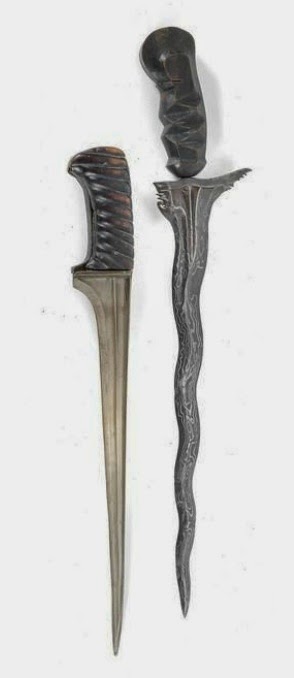
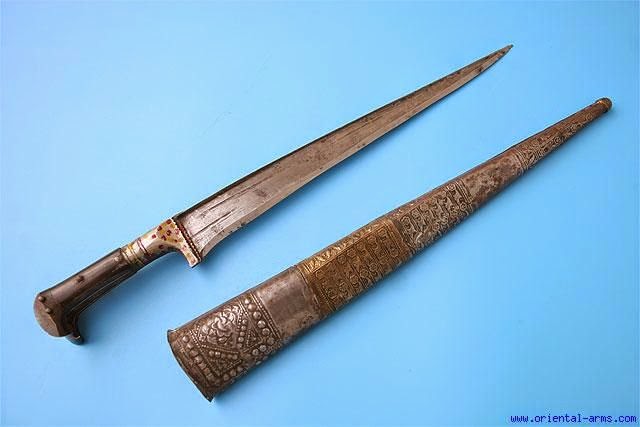
The Khyber is more properly called a Charay (equivalently, charas, churea, salawar yatagan). Also referred to as a “Khyber”, in reference to the treacherous mountain pass to Afghanistan where the Pashtun tribes reside, the salawar is well known to every army that has attempted to conquer the tribes of Afghanistan. With its distinctive T-shaped blade, it is exceptionally strong all along its length and ideal for piercing armor as well as cutting attacks. This style of blade can also be found in the salawar’s small cousins, the choora and pesh-kabz. Khyber swords and the smaller knife variant, the Choora, typical of the Pashtun tribes of the Khyber pass region of Afghanistan. The scabbard is worn thrust, unsecured, in a number of positions under a belt with blades ranging from 14” to 30” in length.
http://4.bp.blogspot.com/-AvvrUQ231gE/U7NiYz_DblI/AAAAAAAAATY/AXqSG7U_HSs/s1600/khyber+salawar.jpeghttp://1.bp.blogspot.com/-D6oiLugM9a0/U7NicN0Z_qI/AAAAAAAAATg/gR192G8aSus/s1600/khyber+charay+2.jpeg

http://1.bp.blogspot.com/-CQ9sccHoqEc/U7M23iSpUHI/AAAAAAAAASs/TDXMBRGj9Nw/s1600/khyber+knife.jpg
1) A’Khyber knife’, as used by the Pashtun (or Pathan) tribes in the area of the Khyber Pass in the border region between eastern Afghanistan and the Northwest Frontier Province of Pakistan. 2) A kris dagger from Bali, Indonesia
http://3.bp.blogspot.com/-M703tV4PRUw/U7Nja7tFShI/AAAAAAAAATo/Yu8Fi1S0v4U/s1600/charay.jpg

http://2.bp.blogspot.com/-NGPAOkImHls/U7M3Qt08_nI/AAAAAAAAAS0/zGveX6v15p4/s1600/khyber+knife+afghanistan.jpg
Khyber Knife, Afghanistan

http://4.bp.blogspot.com/-Pdjh8I4KCEE/U7Ng19jO0cI/AAAAAAAAATM/CmZpR-OY_ag/s1600/Khyber_Knife1.jpg
19th Century Khyber knife

Re: History of Pashtuns series

Nehru in Waziristan
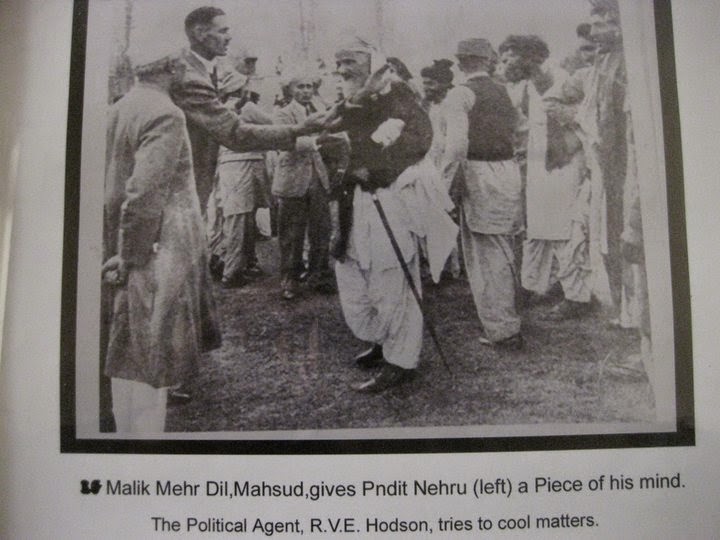
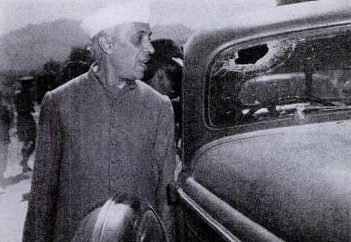
The first town in tribal territory on Nehru’s itinerary was Mirmashah, where he was to address a jirga. But according to reports reaching the British, the utmanzai wazirs were not impressed with his pledge to ‘set them free’, calling out, ‘why dont ypu speak pashto? Go back to Hindostan’. His reception at Razmak was no better. The tribesemn fired on the plane before it even arrived. Robin Hodson who was the poltical agent of south waziristan, witnessed nehru’s address to the jirga there. 'Instead of remaining seated, to my astonishment Nehru got up and started addressing the tribesmen as though he were at political rally, waving his arms around and marching up and down. At jirga it is custom to sit on the ground and the person addressing the meeting would be seated on chair. But nehru’s manner didnt plaese them. Again he said that he would set them free from slavery of the British, but the reply – in urdu for Nehru to understand-- came: ‘we are not the slaves of British and we are certainly not going to be your slaves’. Using the contemptous word for an indian, kortunai, they said that if they had to deal with any indian , it would be jinnah. The meeting broke up in disorder. When Nehru was advanced upon by a Mahsud with an umbrella, it was robin Hodson who stood in to protect him. Hodson was therefore somewhat surprised to listen to All radio india saying that political officers there had arranged a demonstration against Nehru.
http://3.bp.blogspot.com/-BZ6u3EYuwUM/U-ntGoyuHkI/AAAAAAAAAhs/aSInOsyhP1s/s1600/nehru%2Bwaziristan.jpg
At Wana Ahmadzai wazirs refused to meet him, and debagged the suited and booted hindus who went to visit him. Abdul Ghaffar khan, who, togather with Dr.khan sahib accomapnied Nehru throughout the trip , sppoke scathingly of the British officers in waziristan calling them ‘sauve and cunning’. he attributed the docility of tribesmen to the allownces given them by British. Nehru journyed onto Tank and Jandula , where he met some of the smaller tribes. ‘Here the tribesmen recieved us warmly and brought back sheep to present us’, noted Ghaffar khan. Back in Peshawer Nehru’s next stop was Khyber pass, But the afridis refused to grant usual tribal protection and the recently reconstituted khyber rifles were called in to protect the party against against sniping and stone throwing. After tea in Torkham , they returned to peshawer without meeting an Afridi.
Afghan Frontier: At the Crossroads of Conflict By Victoria Schofield

A fascinating account of the details of Nehru’s visit is available from a letter which the political agent of South waziristan wrote to his wife:

"Abdul Ghaffar Khan opened the proceedings by telling the waziris that the great Nehru had heard of how they had been oppressed by the firangis and had decided to come and investigate their condition. They were poor and the new indian governamnet was determined to give them schools, to teach them their religion , to build hospitals and to civilize them. The wazir spokesman replied more in grief than in anger that abdul ghaffar had got it all wrong. The utmanzai wazirs were oppressed by no one, nor did they need instruction in teaching of islam from a man whose son had married a parsi and whose niece (Dr.Khan sahib’s daughter Marium) was married to a christian. This remark infuriated Dr.khan sahib who called them paid toadles of the political agent. This remark was too much for the jirga who leapt to their feet in protest. Smouldering with indignation the party then departed [to meet Mehsuds]. A Mehsud Jirga was assembled in the residency garden. Nehru spoke in Urdu. The Mahsuds probably didnt understand much. But when he said that those present were all debauched by British robbery, it was too much for old kaka. Mir Badshah’s father , who in the coarse way that mahsuds have, said 'Hindu, if the british pay us money. there’s a good reason. Our private parts are of extraordinary size as you will find out to your cost before long. 'With that the old boy stumped out. The political agent tried to persuade nehru to end his tour after this but Bacha khan begged him to continue. Things only got worse however as their car was pelted with stones, injuring the two leaders with flying glass. (Hunt and Harrison 1980:231)
The Pathan Unarmed: Opposition & Memory in the North West Frontier By Mukulika Banerjee

http://4.bp.blogspot.com/-ytvf7sEXV7k/U-tiuclzyyI/AAAAAAAAAjg/tzG1iKOVYzc/s1600/nehru%2Blife%2B3.png
Mehsud Tribal maliks sit in semi-circle, listening to Nehru who is pointing finger at them for added emphasiz
http://3.bp.blogspot.com/-j0UNXh3BU3k/U-oLqoqQOyI/AAAAAAAAAiM/C1d9-f2WD6M/s1600/nehru%2Bin%2Btribal%2Bareas.jpg
http://4.bp.blogspot.com/-WDUafcPHD4c/U-tl0_XjOiI/AAAAAAAAAkI/sp9S2KZxRVE/s1600/nehru%2B6.png
*tribesmen walk out
*
http://1.bp.blogspot.com/-1Ppwp4XPoWs/U-tfKU4X7qI/AAAAAAAAAjI/yGr__XBYWVo/s1600/Nehru%2Blife%2B1%2B.png
Nehru’s Route is gaurded by khyber riflles, who have just driven off some tribesemen with rifle fire. The troops are now crouched in a cut by the side of the road to protect nehru in case tribesemn return when nehru resumes his journey

http://4.bp.blogspot.com/-_kf08V59ZHY/U-thpgvJQUI/AAAAAAAAAjY/-zo8yH43_N0/s1600/nehrulife%2B2.png
tribesemen hurl stone at Nehru convoy from embankment near landi kotel fort

http://3.bp.blogspot.com/-I-GgcnwsXAI/U-tknQNzBFI/AAAAAAAAAj8/Qy6bXX_ejD4/s1600/nehru%2B5.png
nehru examines hole in the windshield

Re: History of Pashtuns series

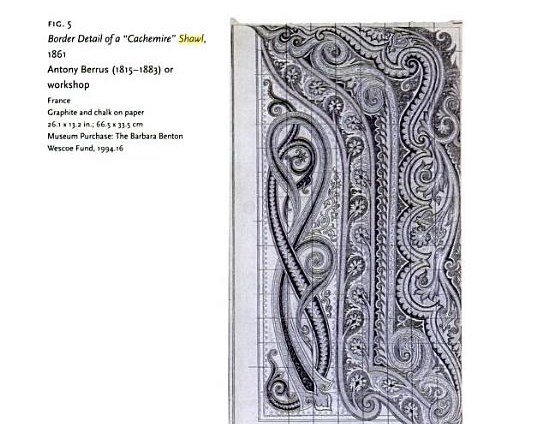
Flourishing of Kashmir’s shawl industry during Afghan rule
It was during Mughal rule, the Shawl industry first assumed an enormous international standing and increased output. It was during Afghan Muslim rule the Shawl industry in addition to other commodities and trades received newer customers still in the form of Iran, Turkistan and Russia as well as Afghanistan. Kashmiris as well as merchants from abroad could meet and trade with one another without being worried most of their profit would go to the state. In later Sikh and Hindu rule, in respect to the Shawl industry alone, foreign merchants largely traded not with Kashmiri shawl weavers but the State. By the 1900s, the Shawl industry in Kashmir was dead

During the close of 18th century, when Kashmir was under the afghans, the shawl industry thrived, with the market even extending even as far as turkey. In 1796 kashmiri shawl reached the hands of napoleon. His wife Josephine was immensely pleased and she set a new trend in fashion among women not only in paris but also in Europe and England. By 1800 AD the shawl trade between Kashmir and west was well established.
Arts and Crafts, Jammu and Kashmir: Land, People, Culture - D. N. Saraf

http://4.bp.blogspot.com/-MBRV9kJE5WA/U-txyNuI-RI/AAAAAAAAAkg/iUEzA7I2puw/s1600/kashmiri%2Bshawl%2B2.pnghttp://3.bp.blogspot.com/-wU_2Y12km9Q/U-txlpw3qGI/AAAAAAAAAkY/-kgs4FDqEYg/s1600/kashmir%2Bshawl%2B3.png

With the establishment of Afghan reign in Kashmir valley in 1753, the
shawl industry received a boast. It was during this period the Kashmiri shawls
were in demand in iran, Afghanistan and Russia. During sikh rule , the condition of silk weavers was not so good, because the heavy imposition of tax by the government. With the arrival of maharaja gulab singh 1846, conditions for the artisans and and of the shawl industry worsed. The impoded annual tax levied by maharaja on each shawl weaver was Rs.47.8.
Paintings and Lifestyles of Jammu Region: From 17th to 19th Century A.D. - Raj Kumar

During the mughal and Afghan rule, the shawl industries of Kashmir , were at their zenith and this factor contributed towards the growth of urban population in the valley.
Kashmir Under Maharaja Ranjit Singh - C. Baron V. Hugel, Annotated By D.C. Sharma

Re: History of Pashtuns series

Battle of Saragarhi - Myths and Facts
In 1897, during low intensity fighting with Afghan and Pathan people, what was initially described as a “very gallant” if futile ‘resistance’ of 21 Sikh sipahis against ‘wild-spirited’ Afridi and Orakzai Pathans, was carefully cultivated into an elaborate myth. The soldiers, who had all died, were said to have faced odds of 10,000 Afghans and had slain at least 180 of them, posthumous medals were awarded, each sikh regiment was ordered to honour 12th September as ‘Saragrahi day’ and a plaque was erected at the holiest of sikh shrines inside the walls of golden temple complex.
The Testimonies of Indian Soldiers and the Two World Wars: Between Self and …By Gajendra Singh

http://4.bp.blogspot.com/-J1WXfxEHpJI/U-zNxvieShI/AAAAAAAAAqQ/JCVFRXMffaI/s1600/saraghari.png
http://2.bp.blogspot.com/-OfN_cSnk0MA/U7LIOdWi1rI/AAAAAAAAAP0/YuV-dN_NZ5I/s1600/saragarhi.jpg
Colonial masters of India fabricated such story to boost the motivation of their desi troops . The fact is, 21 sikh soldiers at saragarhi, all of them got killed along with the destruction of fort they were defending. It was never determined how many tribesmen attacked saragarhi, they couldnt be 10000, as claimed, as Afridis and Orakzais never had this much numerical strength. According to to 1951 census of Pakistan ,the entire population of FATA was 1,332,005 i.e 1.3 million. In 1897, it would be around be 3 or 4 lakh. Now according to 1998 census of Pakistan, combined Orakzai agency and khyber agency make 25% of total population of FATA. If population of FATA in 1879 was 4 lakh, then the entire combined population of Orakzai and khyber agencies would be 1 lakh. Lets say 50% of them were females, so male population would be 50 thousands. It means out of 50 thousands male kids, young, middle-aged and old ones, ten thousands were busy surrounding a small fort on a hill. Take into account the fact that not every young male is a fighter in tribal areas, and exclude the kids and old ones. moreover considerable number of Afridis and shinwaris were in khyber rifles. Also some sections/sub-tribes of Afridis and Orakzais were not hostile to British raj and and were cooperative with British and remained neutral in the 1897 revolt..

British used to exaggerate the numbers of their enemies and hide their losses. The Pashtun uprising which took place in 1897, was all over the tribal areas and many parts of NWFP. It seems ridiculous that Afridis and Orakzais would waste their supposed thousands of lives on a small fort, we are talking about insurgency which covered the regions from swat to Quetta.. The loss of 181 Afghans killed by the artillery fire above from hilltop of saragrahi seems believable then 4800 claimed by sikhs. The reasons they had a better kill ratio are - better weapons, shooting from the high ground, better weapons, fortified defences, lack of long range weapons in the opposition.There was nothing spectacular about the Sikh defence of the fort. Pashtuns were masters of guerrilla warfare, particularly afridis who were more into sniping and ambushing enemy in small pockets than dashing at heavily armed fortified or armored enemy in thousands.

The Sikhs locked themselves in Fort Saraghari, and would not venture out of it to face the Afghans. The could not run away either since they were surrounded. Their tactic was to stall so that reinforcements could come at a later date - one of the Sikhs was found dead on a toilet seat btw, which kind of tells of their mental state when they were surrounded by the Afghans.The Sikhs had no option but to fight off the Afghans - they could not run off because they were surrounded.

Re: History of Pashtuns series

Tughlaq dynasty and Afghans
Ghiyas al-Din Balban (1266—1286) is known to have established Afghan garrisons around Delhi and in many places along the Ganges River.
Afghans too made a marked progress during Muhammad bin Tughlaq’s reign, Malik ikhtiyar-ud-din Yal Afghan who had been noticed earlier in connection with nobility under Ala-ud-din khalji continued to hold the position under Muhammad bin Tughlaq. Malik Makh Afghan, his younger brother was sent by ghiyas-ud-din to the expedition against Warangal in A.D 1321 under the leadship of his son ulugh khan. Other notable Afghans of Muhammad bin tughlaq were Malik khattah Afghan, Jalhu Afghan, tughal-al-Afghan, Bahram Afghan, Mandi Afghan and last but the least Malik Shahu Lodhi. His successor Firuz Tughlaq continued to patronize the Afghans and prominent among them were Malik Afghan, Malik Daud Khan Afghan, the muqti of bihar, Malik Muhammad Shah Afghan, the muqti of tughluqpur, Malik Bali Afghan and Yasin, son of Malik Shah Afghan.
Essays on Medieval India by Raj Kumar

During Muhammad bin tughlaq reign, the lower grade officers came to be called Sadah. Sadah or hundred (centurian) was the term used in mongol military for one who commanded a hundred men.. But in india, the word sadah began to used as a territorial divisions , to signify a hundred villages. The sadah amirs were, however, not all Mongols. Afghans were also to be found among them. The mongol and Afghan sadah amirs behaved differently than much loyal Turkish and hindostani nobles.
Medieval India: From Sultanat to the Mughals-Delhi Sultanat (1206-1526 … By Satish Chandra
The emergence of large number of Afghan zamindars during the latter part of 14th century wa, in fact, made possible by the postion enjoyed by them as Sadah amirs.
The Muslims of Indian origin: during the Delhi sultanate : emergence, attitudes, and role, 1192-1526 A.D.
The Afghans continued to enjoy prominence under the Tughlaq Sultans as well. Some of the Afghans took advantage of imperial favour and endeavored to build up their military strength on the meager resources which they possessed.
The Afghan nobility and the Mughals: 1526-1707 by Rita Joshi

Being largely cut off from west asia after the rise of Mongols , the Turkish rulers had to rely increasingly on Afghans and Indian muslims for their armies. Thus armies of turk rulers was a mixed up, consisting of descendents of original Turkish soldiers, Afghans and Indian muslims supplemented by hindu contingents of the chiefs.
Medieval India: From Sultanat to the Mughals-Delhi Sultanat (1206-1526 …By Satish Chandra

In the reign of Muhammad bin Tughluq, barani says in Tarikh-e-firoz shahi that there was rebellion at multan by body of Afghans headed by Malik Mall Afghan. Again Makh Afghan was one of the forign amirs who rebelled at Deogir. In 1376-1377 the fief of Bihar was given to Malik Bir Afghan (Tarikh-e-mubarak shahi.
Glossary of the Tribes and Castes of the Punjab and North West …, Volume 1 By IBBETSON, Maclagan

“An Afghan noble, malik Makh revolted against Tughluqs.
Then they made Makh Afghan, brother of Malik Yak Afghan, one of the foreign amirs, their leader, and placed him on the throne. The money and treasure were distributed among the soldiers. The Mahratta country was apportioned among these foreign amirs, and several disaffected persons joined the Afghans. The foreign amirs of Dihui and Baroda left Man Deo and proceeded to Deogir, where the revolt had increased and had become established. The people of the country joined them.
The Sultan, on hearing of this revolt, made ready a large force and arrived at Deogir, where the rebels and traitors confronted him. He attacked them and defeated them. Most of the horsemen were slain in the action. Makh Afghan, their commander, who had received a royal canopy, and had called himself Sultan, escaped, with his confederates and his wives and children, to the fort of Dharagir, and there took refuge. Hasan Kangii, and the rebels of Bidar, and the brethren of Makh Afghan, fled before the royal forces to their own countries”
The History of India, as Told by Its Own Historians: The …, Volume 3 By Sir Henry Miers Elliot

In 1341 Malik Shahu Lodhi, an Afghan noble,who had considerable following of his own tribe, slew Malik Bihzad, governor of Multan. When this news reached Delhi, the Sultan Muhammad bin Tughlaq assembled his army and set out to crush him. He had hardly covered two or three stages, when he heard that his mother had died but sultan continued his march. When he reached Dipalpur, he learnt that Shahu had fled to afghanistan. The sultan thereupon return to his capital and issued orders for the wholesale arrest of Afghans in his empire.
Islamic Concept of Crime and Justice, Volume 1 By N. Hanif

During the invasion of India by Timur in 1398, Afghan groups fought on both sides. Malik Khidr Lodhi , Malik Baha al-Din Jilwani , Malik Yusuf Habib Sarwani and Malik habib Niazi joined Timur with 12,000 soldiers.

Bahmani Sultanate
Bahmani Sultanate was founded in 1 347 by Zafar Khan, an Afghan Officer in the service of Mohammad-bin-Tughlaq.
Against Muhammad bin Tuqhlaq ,the nobles of Deccan rose into rebellion who occupied the city of Daulatabad and one of them an Afghan chief—Ismail Mukh became the King of Deccan. He assumed the title Nasir-ud-din Shah. Nasir-ud-din Shah was an old man and hence he resigned from the post and the nobles nominated Hasan Gangu or Zafar Khan as the new chief under the title Abul Muzaffar Alauddin Bahman Shah.

History of Medieval India: From 1000 A.D. to 1707 A.D.
http://4.bp.blogspot.com/-3OmFksjnEFA/U7F9Irz-bFI/AAAAAAAAAPQ/U_KQyHl0sFg/s1600/Afghan+bahmani+sultanate.png
bahmani sultanate at its peak, 1470.

Behram Lodi, the grandfather of Bahlul Lodi, came as a horse-dealer during the reign of Firoz Shah Tughlaq.

Re: History of Pashtuns series

Study of the Pathan Communities in Four States of India Safia Haleem Publishing Date: Tuesday, July 24 2007
India has been attracting invaders, travellers and traders since the time of Alexander the Great. Every invader had left its marks on the geography, history and culture of the country. The impact of some like the Moguls is very prominent in the monuments like the Taj Mahal. The others such as Iran had left its legacy in the language and literature. One set of invaders whose marks are either not visible or little attention has been paid to them were by the Afghans or the Pathans as they are popularly known in India.
The word Afghans and Pathan is synonymous when we deal with the history of the sub-continent. Pathans came as invaders, traders and they served in the armies of the rulers, whoever was on the Throne. They were hired as soldiers, officers and diplomats by different rulers throughout the history of the last few centuries. Moreover, the whole clans would follow from the tribal areas of Afghanistan and settle in the green pastures of India. Very little is known of the legacy of these Pathans, except that they still live as close community in, Punjab, Utter Pradesh, Central India and Bihar on the North Eastern borders. The Indian film industry has always thrived on the actors with the family name of Khan and it was always assumed that their ancestors were Pathans.
Pathan! What does it mean in India?Generally the Pashtoons outside India believe that anyone with the Sir name of Khan means a Pathan. The Indian film industry has famous names with this title, such as Shahrukh Khan, Aamer Khan and Salman Khan. When a new film of these stars is released on Video, people in Pakistan and in Afghanistan, watch it with special fondness. It becomes a matter of Pride for them to identify with their favourite stars as their Kinsmen. However the reality is different.
The teachers and students of History and Social Anthropology in the Jawaharlal Nehru University in Delhi warned me to be careful with the word “Khan”. It was used as a title by the Mughals and then the British during their rule. The word Pathan is also used by those Hindu Rajputs who were converted to Islam. As they considered themselves superior to the other casts in India, they wanted the same status after becoming Muslims. It happened that because the Pathans were a warrior people like the Rajputs and they were respected and feared for their bravery, the Rajputs adopted not only the title of Khan but they adopted the clan names such as Yousafzais or Khattak and Afridi etc. It is interesting to know that the Pathans of these clans had no objection to this practice. During the course of my study, I talked to the Rajput Pathans as well.
The Caste System of India had its effects on Muslims as well and there are clear parallels which the Muslim Sociologist Aysha Sunbul told me to watch. In Hindu Religion there are four castes. As it happened the Muslims of India have unconsciously followed the same pattern by having four equal groups.

  1. The Sayyeds: The descendents of the Prophet Mohammad.
  2. The Pathans: The Martial race and the warriors.
  3. The Sheikhs: Converts who till the land and are mainly in businesses.
  4. The Workers: Barbers, cooks, Ironmongers etc.

BhopalThis Pathan state was founded by an Orakzai tribesman from the Tirah area in 1710/11. Dost Mohammad Khan was a soldier in the Mughal King Aurangzeb’s army. It was the time when the Mughal Empire was crumbling and the small states and their rulers were employing fighters to keep their fiefdoms. Dost Mohammad Khan became one of such Warriors with a group of 100 Pashtoons who earned their living by using their skill of swordsman ship and horse riding. He started capturing the areas around Bhopal in the middle of 18th Century and built strong forts to establish himself as the Ruler. Ever since he took over the area, the other tribesmen followed and the practice stopped only after the Partition of India in 1947.
The story of Dost Mohammad Khan is not known to many Muslims living in Bhopal. But they know that the state was ruled by four women one after the other in the past 200 years.
[TABLE]

The Women Rulers of Bhopal

  • Qudsia Begum Regent and 8th ruler 1819-37
  • Sikandar Begum Regent and 10th ruler 1844-68
  • Shahjehan Begum 11th Ruler 1868-1901
  • Sultan Jehan Begum 12th Ruler 1901-26

The state army of Bhopal always consists of the Pathans who were specially brought from the Afghan areas and they were given land and money at the time of their retirement if they wanted to settle down in Bhopal.
The whole of India was one big piece of land before the British left and people of different ethnic groups could move from one place to another as they do in any free country. Some families could speak/understand Pashto. The reason was that until a few years ago, most of them were able to travel to Afghanistan and Pakistan. There was a better communication at each level of the family and the children would be able to understand. However this is not possible now and the women folk are not able to speak the language, although they understood what was being said.
Talaezar Khan who came from Bunair in the Tribal areas about 70 years ago has fond memories of the time of the last Nawab, but he is not well off and lives like the rest of the lower middle class families. There are many villages where the Pathan families are land owners and are working hard on the land to keep a decent living. Some of the villages have Pashto names which have been localised due to different pronunciations, such as Raisan area, Khan Dera (the place where the Khans live), Bavalia, Silvani, Auchiara, Nakhtara (name of a tree in Pashto). The population of these Pathans is less than 5% in each village on average. Nobody could tell me the exact figure though.
Traditions of the Pathans in Villages of Madhya PradeshTraditional foods of Bhopal are no different from the rest of India, however the Pathans eat a lot of meat and they do not serve lentils to the guests especially in the villages. They prepare fried sweet pastry pieces called Ghonzakhi which is given to the bride when she goes to her in laws or someone who is travelling far. They also prepare pancakes on rainy days or for the guests which are called “Waishallay” (called Cheelay in Bhopal Language).
LanguageTalking to the Bhopali Pathans, I found the following Pashto expressions.

  1. Ghat (big or fat) used for a boy who was bigger than his age.
  2. Chilla (extreme cold) Pashto word Tsilla (which means frost).
  3. Vara Varrai (Vaada Madai) in Pashto it means meal for all. This meal consists of big pieces of meat cooked in water and served with pieces of bread. It is eaten in a big dish and all eat from it using their hands.

BiharBihar always held a fascination for me for two reasons. One, that it had Buddha’s birthplace and second, it was ruled by the great Pashtoon King Sher Shah Suri (1540 -1545) who took power from Mughals in the 16th Century and ruled for 5 year until his death. But he has left his mark on the Indian society and they still revere him. His Revenue system and Postal system are still followed in the 21st century.
The Pathan lands and villages are scattered all over Bihar and I concentrated only on the area where Sher Shah lived, which was mostly in and around Patna and Sehsaram. There is a famous place called Sher Ghati and villages in that area are reputed for having wild Pathans.
PatnaThere were many Mohallas inhabited by the Pathans and they are named after the clans such as “Lodhi Kadrra”, “Khattak Toli” and “Afridi Tola”. There are also two gardens named Kalo Khan and Mallo Khan. These were the two of the commanders who came with Taimurlane when he attacked India in 8th Century.
Shah Arzani’s Shrine and MonasteryArzani is one of the famous Pashto Poets and a Sufi of the Roshania movement which started as a reaction to the Mughal King Akbar’s new religion Din-e-Elahi. It started in the 17th Century, and later became a Sufi way of life, going along with the Chishtia Tariqa. The whole place around Arzani’s shrine looked peaceful, but I was told that only two weeks ago, there was an Urs (annual celebrations to mark the birthday or death of a saint) and about 10,000 people came which is minimum. Between, 30 and 40,000 people come in good weather. The interesting thing is that there are two days of the Urs, one for men and the second for the women. On the womens day, all the shops are run by women and no man is allowed to go near the place.
When I was about to leave the place after the evening prayers came to an end in the main mosque, I saw a group of women heading towards the Shrine singing traditional wedding songs. They were taking the bride to the shrine to have the blessings. This is a very old tradition followed in the tribal areas of Pakistan and Afghanistan now. A day before the wedding the bride to taken to the local shrine by the women of the family.
Sehsaram and Sher Shah Suri’s clanIn Sehsaram district, very few Pathans live and in fact none of the Sher Shah Suri’s family members were ever traced successfully. However the villages at the vicinity about 100 km from Sehsaram have fragmented population of the Pathans who carry their family names with them. As far as the differences of the traditions, I could not spot many amongst the different clans e.g. Khattaks and Afridis or Yousafzais. However there were many subtle differences. Yousafzais were more educated and joined the government services. The Khattaks and Shiranis work on the land. Their women folk are usually from their own tribe and they hardly marry outside the family. The Afridis are more open and they marry with other families, although the education level amongst them is not that high.
Jagdesh Pur Village in BiharIt is 80 km North West of Patna. The total number of houses in the village is about 1000. There are about 50 Pathan families and all of them live in one area which is called “Pathan Tola”. It was interesting to know that wherever there were Muslims living in an area in Bihar, there is bound to be one Pathan Toli or Tola (which means group).
Some of the family traditions are still followed strictly.

  1. When a child is born, they shoot in the air. Three shots for a boy and two for a girl.
  2. The family has kept some of the swords and shields safe although they were in a bad condition.
  3. The men shout outside the door when they enter their own house, so that if there are any women guests, they could cover themselves.
  4. The family is strictly religious and they kept the men and the women quarters separate from each other.
  5. At the time of the wedding, no demand is made for the Dowry and the boys family will always present two gold coins in a plate at the time of the Rukhsati (bride leaving her parent’s house) to the bride’s family. It is usually given to the bride now a days.
  6. A lot of meat is cooked at the wedding feast. Special meat with no spices is cooked in earthenware and is eaten with leavened bread baked on the Charcoal.

Punjab: Maleer KotlaThe capital of the state is also called Maler Kotla and it is situated at a distance of 28 miles to the South of Ludhiana and 36 miles from Patiala. It has a population of 100,000 and the total area of the state is 164 square miles. It is comprised of 213 villages and has rich fertile land plain broken by sand drifts here and there. The Muslims are 65% of the population and 20% of them are of Pathan origin.
There are several myths about the city and one is plausible enough about Shaikh Sadruddin. He was a pious man from Daraband area (present day Quetta in Pakistan) of Shirani tribe sometimes between 1430 and 1440. He settled in the village of present day Patiala living in a small hut praying and meditating and was considered a saint by the local people. It happened that Behlol Lodhi (1451- 1517) the Afghan king who had most of the western parts of India under his control wanted to rule Delhi and was on his way with a big force. He was caught in a sand drift and while there was nothing visible in the darkness, the King spotted a dim light of a lamp still burning in the wind. It was the hut of Shaikh Sadruddin and when the king found out, he came to the hut to show his respect and asked the holy man to pray for him to bear a son and have victory.
The king married off his daughter Taj Murassa to Sadruddin after he got the throne of Delhi, and also gave him the area of Maler Kotla. This happened some time between 1451 and 1452. The descendents of Shaikh Sadruddin branched into two groups. One started ruling the state and they were given the title of Nawabs. The other branch lived around the Shrine of Shaikh Sadruddin and they control the revenues of the shrine. Muslims and Sikhs live peacefully at present and there was never any ethnic violence since the partition. There are many mosques in the city and call for prayer is heard on loud speakers at the time of the prayers.
Pathans of the CityThe level of education amongst the Muslim population is low, but those Pathans who do get education, usually join the government service. Their preferred field is Police and it happened that they are successful Police officers. Some of the Pathans are renting out their properties and a few of them are still keeping the old family business of Rearing horses and selling them in the annual fairs of Punjab. Most of them are religious, and they send their children to several of the Madrassas in the city where the boys and girls study. Children from the nearby villages also come to such Madrassas and Quranic education is considered compulsory. There are schools and one college for girls. For Post Graduation, they go to either nearby Patiala or Ludhiana.
The Nawab’s Family in Maler KotlaSajida Begum is the second wife of the last Nawab Iftikhar Ahamd Khan of Maler Kotla. I went to see her in the main palace which is decaying day by day. It was built at the end of the 18th Century, but every successor improved it. It is built of brick and mortar, with huge wooden doors and high ceilings. The original palace was surrounded by Green fields and it must have been a grand place, but all the grounds have been sold now and new shopping plazas are being built.
Family Traditions of Pathans in Maler KotlaIqbal told me that rearing horses was done by his family in the past 300 years. But they never sold horses. It was started only by him to make a living. All the horses are named at birth and they are marked with the Shirwani seal. Akhlaq Ahmad Khan is also from the same family and he is a famous advocate of the city. He is also holding on to some of the family heirlooms. In fact the Sword from his house is always borrowed by the other families at the time of the weddings

  • The Kamees Shalwar is called “The Pathan dress”.
  • The traditional embroidered shoes are also called Pathani shoes by the local population and they are worn on special occasions.
  • Pathan women observe Pardah strictly when they go out. They used to wear Burqas, but now they are using Shawls and big sheets of material to cover themselves.
  • The Pathan married women will always spend the weekend (Sundays) with her parents along with her husband and children. Her parents make sure that she is well entertained and there are plenty of meat especially Kabab and Tandoori Naan are cooked for her. This tradition continues until her death. In the absence of her parents, the brothers and their wives will keep this tradition.

Up until 1903, the Pathans of Maler Kotla did speak Pashto amongst themselves. However it gradually died down and now Punjabi is the common language with Urdu spoken by the Muslims. There are 29 shrines of all sizes in Maler Kotla and most of the saints buried there came from Afghanistan. The Pathans respect and believe in the power of these saints.
Uttar PradeshIt is the biggest state of India which had the largest number of Pathans living in many big cities.
Rohilla State (Rohail Khand)This is the area in U.P (Utter Pardesh) Province, in which Pashtoons were either given land by the emperors or they settled for Trade purposes. Roh was the name of the area around Peshawar city, in Pakistan. Yousafzai Pathans especially Mandarr sub clan, living in this valley were also known as Rohillas when they settled down the area was known as Katehr, which literally means soft well aerated loam which is extremely suitable for cultivation. It later became known as Rohil Khand ( the land of the Rohillas ) The great majority of Rohillas migrated between 17th and 18th Century.
Hafiz Rahmat Khan (the famous Rohilla leader) who was also involved in the horse trade, moved to Rohil Khand around 1730. He used to Purchase horses from the north of present day Afghanistan disposed them off in Delhi while going to his new home in Aonla It is important to note that Rohaikhand as a whole became the crossroads of trade routes from the North, North West as well as the East. The axis of the Mughal empire, the Grand Trunk Road ( first built by Sher Shah Suri ) which had linked Bengal with the Mughal Capitals of Agra and Delhi & via Sirhind and Lahore ( in Punjab ) eventually reached Kabul was completely Redirected. During 18th Century the Eastern track shifted northwards entering Rohilkhand via Central Awadh and Farrukhabad. From there traffic could bypass Delhi altogether and continue either south to Jaipur and other Rajput cities or through Baraily, along the hills via Najibabad. The rout circumvented the Punjab & Delhi and Caravans could reach Peshawar and Kabul without touching Sikh territory.
Although the Pathans are poor in this area they are still living off their wits and courage, sometimes taking law into their own hands. Taking revenge is still common and on a few occasions, there were murders which even the police could not handle.
Rae Bareli, in Western U.P it is at the moment under the influence of the Pathan Peer Ali Raza Khan. He has a School of thought and has thousands of followers all over the world. As he is the vote bank for any contestant of the election, all the communities respect him. His family has their own monastery in Bareli and do not see women there.
Farrukhabad has a mixed population of Pathans dominated by the Bangash and Yousafzais. In Qaim Ganj there are many Pathan landlords who do not do much and give their land to be cultivated by other communities. They keep guns and shoot at the time of the weddings or at childbirth.
Uttar Pradesh Traditions

  • Orbal. The tiny plaits of hair at the time of the weddings for the bride. It is dying now in the educated families.
  • Boiled meat eaten with Nan bread. It is called Tar Tanoori.
  • Rampur knife industry was the pride of the town. Some knives are still being made and the young men carry them to show off. These days the same professional ironmongers are making good copies of the guns at a small level. These guns are used for hunting which is a pastime of the Pathans. Shannu Khan ordered a dozen knives for me to choose from and I took only the smallest one with a bone handle.
  • The Jirgah system is intact and for small disputes people do call a jirgah.
  • Snuff is used and special, elaborate boxes were in fashion but not now.
  • The youngsters kiss the hands of their elders.
  • They do not smoke or chew Paan (beetle leave) in front of their parents.
  • Until 1940s the white Burqa (shuttle cock like shroud which women of Afghanistan wear when they go out) was abandoned by many women of Uttar Pradesh 20 years ago but it is in fashion now in an Arab style, due to the Identity crises.
  • The first Thursday of the Lunar month is considered Auspicious and sweet dishes are prepared to send to the local shrine for the poor to eat.
  • A married woman should spend the first day of the new moon in her Parents house and she has to sight the moon there.
  • A pregnant woman should drink milk in the light of the full moon if she wants her baby to be fair skinned. On the sixth day after the Childbirth, the woman is taken out at night in the courtyard and she looks at the stars. If it is a cloudy night she must do it the next day.
  • At weddings, most of the traditions are common with the other U.P Muslims but Mahpara told me that when bride and the groom are brought together for the Ceremonies of the Mirror and Quran ( Arsy Mashaf ) an elderly lady of the brides family must pull her plaited hair before the groom looks at her face in the mirror for the first time.
  • Shalwar Qamees and Turban is a must for the men on special occasions.
  • If you don’t eat enough meat, it is considered a lack of proper diet. Handay Ka Gosht (meat cooked in a clay pot) Tikka (small pieces of meat which is barbecued).
  • Some of the Pashto words are still use e.g. Patka (turban) Peshawari Chappal (Sandles from Peshawar) Loopatta. (Long scarf) Saaloo ( shawl )
  • Pardah is strictly observed by women in the countryside

Poetry Charbait (Quartet) competitionsPathans love poetry, especially the epoch. For the Pathans there is a special fascination in the night. They are thrilled by the moon and the darkness and go hunting or sit around the fire and recite poetry or sing and dance. Even now all the big events in the state happen at night.
As the language is no more spoken, the Charbaits are composed in Urdu. The content of the poetry is usually a famous war in history of the area.
There are Charbait competitions at night and they are called “Akhadas” All the poets who compose Charbait take part in these events and at the time of the Nawabs used to get valuable prizes when they won. These competitions are famous in UP. At these events the Rabab is also played which the musical instrument of the Pathans.
Libraries and literary worksRampur Raza Library also known as the Taj Mahal of books. It was started as a personal collection of the Nawab Faizullah Khan in 1774. The succeeding Nawabs added to the collection and then Nawab Hamed transferred it into his own Palace, Hamed Manzil. It has over 50,000 manuscripts and about 100,000 books. It is considered the largest library in India for Manuscripts.
Khuda Bakhsh Library in PatnaThis library has also started as a personal collection of Maulavi Khuda Bakhsh ( not a Pathan ) The person who enriched it and gave it a proper building was Dr. Zakir Hossain ( ex-President of India who was the governor of Bihar in 1961 ) Zakir Hossain bought manuscripts from private collection all over Bihar and donated them to the library.
CONCLUSIONThe most important area of Pashtoons was “Rohil Khand” in U.P State. I was also told that there is Bara Basti (12 settlements) that means the number 12 for the 12th tribe of the Jews which left Israel and wandered away. Many Pashtoons in India believe that they are the 12th tribe of Israel. The actual number of settlements in Bara Basti is 17 and when I searched in the history books, the original settlements were 9. There was also the question of authenticity, as I was warned that there are fake Pathans. But it was interesting to find out the reasons for people to call themselves Pathans. Aysha Sumbul (Sociologist in Jawaharlal Nehru University ) told me that there are three reasons for that.

  • The word Khan symbolises a status and a glorified past.
  • The Pathans had a good reputation in the Indian community and they are still influential. The Muslims feel insecure especially after the communal violence of the recent past.
  • People, who migrate from their birthplace for economic reasons, want a new and impressive identity in a new environment.
  • Study of the Pathan Communities in Four States of India :: Khyber.ORG

Re: History of Pashtuns series

History of Kohat Extracts from the Gazetteer of Kohat District Contents
[ol]
[li]The Buddhist Period[/li][li]Babar’s Expedition[/li][li]Character of Subsequent History of Kohat[/li][LIST=1]
[li]Nadir Shah’s Invasion[/li][li]Mr. Elphinstone’s Visit[/li][li]Fall of Shah Shuja[/li][li]Sikh Conquest (First Sikh War)[/li][li]Kohat Granted to Sultan Muhammad Khan[/li][li]Second Sikh War[/li][/ol]

[li]History of Tribes Occupying District[/li][ol]
[li]Bangash Tribe[/li][LIST=1]
[li]Bangash Pedigree[/li][li]Settlement in Kuram[/li][li]Defeat of Orakzais[/li][li]Settlement of Baizais in Kohat[/li][li]Gar and Samil Factions[/li][li]Effect of Factions on Present Times[/li][li]Dr. Bellew’s Hypothesis[/li][li]Divisions into Miranzai and Kohat[/li][li]Sanad and Position of Chiefs[/li][/ol]

[li]Niazi Tribe[/li][ol]
[li]Settlement in Kohat[/li][/ol]

[li]Khattak Tribe[/li][ol]
[li]Malak Ako[/li][li]Sagri Khattaks[/li][li]Bhangi Khels[/li][li]Akora Khattaks[/li][li]Grant of Teri to Khwaja Muhammad Khan[/li][/ol]

[/LIST]

[li]State of District at Annexation[/li][li]Construction of Roads[/li][ol]
[li]Kohat Pass Road[/li][LIST=1]
[li]Further History of Pass till 1853[/li][li]Bahadar Sher Khan[/li][/ol]

[li]Road to Khushalgarh[/li][li]Road to Bannu[/li][/LIST]

[li]Miranzai[/li][ol]
[li]First Miranzai Expedition[/li][li]Anarchy in Upper Miranzai[/li][li]Kabul Khel Expedition[/li][li]Second Miranzai Expedition[/li][li]Murder of Ghulam Haider Khan[/li][li]Third Miranzai Expedition[/li][li]Government’s Refusal to Annexe Biland Khel[/li][/ol]

[li]Akora Tappas[/li][ol]
[li]Nilab[/li][/ol]

[li]Shakardarra[/li][li]Mutiny Years[/li][ol]
[li]State of Border Tribes[/li][li]The Mutiny[/li][/ol]

[li]Death of Major Henderson[/li][li]State of Kohat Pass from Mutiny to 1875[/li][li]Bazoti Troubles[/li][ol]
[li]Demonstrations Against Kabul Khel Wazirs[/li][/ol]

[li]Kohat Pass Troubles[/li][ol]
[li]Settlement with pass Afridis[/li][li]Jawaki Disturbances[/li][li]Afghan War & Disturbed State of Miranzai Border[/li][li]Waziri Expedition of 1880[/li][li]Barak Disturbances[/li][li]Change in Management of Kohat Pass[/li][li]Evacuation of Kuram and Biland Khel[/li][/ol]

[li]Officers Connected with District[/li][li]Notes[/li][/LIST]
The Buddhist Period The early history of the district is limited to the vaguest traditions. It is said that in Buddhist times two Rajas named Adh and Kohat settled along the northern border of the district. Raja Kohat gave his name to the town of Kohat, and Raja Adh to the ruins of an old fort on the hill side north of Muhammadzai, a village four miles to the west of Kohat. The remains of this fort, which is known as Adh-i-Samut, consist of the ruins here and there of the old ramparts. These show that the plan of the fort was merely escarping with walls and bastions a spur of the hill projecting between two ravines. Like most of the forts of those days, Adh-i-Samut is situated far below the crest of the range, and is easily commanded with the weapons of the present day from the adjacent hill-side. The masonry of the ruins is inferior. None of those gigantic blocks are to be seen, such as compose the walls of the Buddhist forts of Bil and Til Kafir Kot on the Indus in the Dera Ismail Khan district. No ruins of buildings are now to be found within the fortified enclosure. There is a small spring, the presence of which undoubtedly led to the selection of the position. The other sights consist of an old banyan tree and a small stalactite grotto. The only other remnant of the Buddhist days is a road cut out of the mountain aide, near the Kohat Kotal, leading by a very even gradient towards the crest of the hill.
Babar’s Expedition The first historical mention of Kohat is to be found in the memoirs of the Emperor Babar. The district was then being taken possession of by the Bangashes and Khattaks who now hold it. Babar’s annals, however, throw little or no light on the extent of their occupation. He first mentions generally that Bangash was a Tummun entirely surrounded by hills inhabited by Afghan robbers, such as the Khogiani, the Khirilchi, the Buri and the Linder, who, lying out of the way, did not willingly pay taxes. He then narrates that in the year A.D. 1505, when at Peshawar, he was induced by Baki Cheghaniani to visit Kohat on the false hope of obtaining a rich booty. Babar had never before heard even the name of Kohat. He reached the town through the Kohat pass in two marches, and fell on it at luncheon time. After plundering it he sent foraging parties as far as the Indus. Bullocks, buffaloes and grain were the only plunder. He released his Afghan prisoners. After two days he marched up the valley towards “Bangash.” When he reached a narrow part of the valley, the hill men of Kohat and that quarter crowded the hills on both flanks, raised the war shout and made a loud clamour. At last they foolishly occupied a detached hill. Now was Babar’s opportunity. He sent a force to cut them off from the hills. About a hundred and fifty were killed. Many prisoners were taken. These put grass in their mouths in token of submission, being as much as to say “I am your ox,” a custom which Babar first noticed here. Notwithstanding he had them beheaded at once. A minaret of their heads was erected at the next camping place. The next day he reached Hangu. Here again he met with resistance. The Afghans held a fortified Sangar, which was stormed by Babar’s troops, who cut off the heads of one or two hundred of them for another minaret.
Babar gives us no further account of either Kohat or Hangu. In two marches from Hangu he reached Thal, and thence marched for Bannu through the Waziri hills along the Kuram. His guides took him along the gosfand-lar or sheep road, which was so bad that most of the bullocks plundered during the previous expedition dropped down by the way. Babar uniformly speaks of the inhabitants of the country as Afghans, making no mention of special tribes by name. Like Kohat, Hangu appears to have been established as a town previous to the advent of the Bangashes.
Character of the Subsequent History of Kohat The history of the Kohat district from the time of Babar is little more than an account of the Bangash and Khattak tribes. These clans appear to have taken possession of the district during the fourteenth and fifteenth centuries, but before giving the history of this settlement it will be well to sketch the connection of Kohat with the outside world up to the annexation of the Punjab in 1849. From the time of the Emperor Akbar to the invasion of Nadir Shah the Kohat district formed a part of the Mughal Empire.
Nadir Shah’s Invasion (AD 1738) In 1788 Nadir Shah invaded India. His main army appears to have forced its way through the Peshawar district. A portion of his forces is said to have marched by the Kuram route through Biland Khel to Bannu. The Kohat district thus escaped invasion. After the sack of Delhi, the whole of the Trans-Indus tract was surrendered to Nadir Shah. His death in 1747 was followed by the establishment of the Durani Dynasty in the person of Ahmed Shah. From that time till the conquest of Peshawar by the Sikhs, Kohat remained a portion of the Afghan kingdom. Till the beginning of the present century such Government as there might be was administered through the local Bangash and Khattak chiefs. These collected a little revenue, but were more often called on to furnish levies, and many of them served in person in Hindustan, the Punjab and Cashmere.
Mr. Elphinstone’s Visit (AD 1809) In the spring of 1809 Mr. Elphinstone passed through the Kohat district on his way to Peshawar to the court of the King Shah Shuja. He marched from Kalabagh on the Indus through the Bhangi Khel country to Chashmai near Shakardarra, and thence by Malgin and Shadi Khel to Kohat. It was February and the rain fell heavily, so that the march as far as Malgin was not pleasant. Some of the baggage was plundered by robbers. Mr. Elphinstone speaks of the country as belonging to the Baraks, whom he stigmatises as a wild tribe living in a state of anarchy and independent of the Khan of Teri. He probably confounded the Sagris and Bhangi Khels with the Baraks; the real Baraks being more to the west. He was escorted by Musa Khan, one of the King’s officers. At Dodha he was met by Umar Khan, the son of the Khan of Kohat (Azizullah) with seven or eight hundred matchlock men. The party went on to Peshawar through the Kohat pass. Mr. Elphinstone mentions that the people of lower Bangash (Kohat) were very obedient to their Khan and to the King; those of upper Bangash less so.
Fall of Shah Shuja (AD 1810) After the fall of Shah Shuja in 1810 Kohat was brought more directly under the control of the rulers of Kabul and Peshawar, and like the rest of Afghanistan was subjected to a constant change of masters. Kohat was first leased for Rs. 33,000 to Mirza Girani, Munshi Bashi. He was succeeded by Sardar Shakur Khan, who in turn had to evacuate in favour of Shahzada Muhammad Sultan, brother of the King Mahmud Shah. This prince resided at Kohat for some years. After the murder of Wazir Fateh Khan in 1818, the whole of Afghanistan, except Herat, revolted from the Abdali Dynasty. The country was parcelled out among Fateh Khan’s brothers. Dost Muhammad Khan had Ghazni; Muhammad Azim Din had Kabul; Sultan Muhammad Khan, Syed Muhammad and Pir Muhammad had Peshawar. Samad Khan obtained Kohat and Hangu. Samad Khan was on good terms with Dost Muhammad Khan, who afterwards obtained possession of Kabul, and thus excited the jealousy of his other brothers at Kandahar and Peshawar. Samad Khan’s sons were expelled from Kohat by a force under Pir Muhammad in 1827. Mr. Masson, who visited these parts in that year, passed through Hangu just as Sadu Khan, the son of Samad Khan, was retiring thence to Kabul. [1]
Sikh Conquest (1834) Ranjit Singh first marched to Peshawar in 1819. In 1832 Azim Khan was defeated by Ranjit Singh with great slaughter near Nowshera, after which the Peshawar Sardars became tributary to the Sikh Government, who sent an army each year to collect the revenue and ravage the country. In 1834, on the flight of the Sardars, Harri Singh, the Sikh General, gained possession of Peshawar, and a Sikh Governor, Autar Singh Sindhanwalia, was now sent to Kohat. A Sikh outpost was at the same time established at Teri. On the arrival of the Sikhs at Kohat, Sardar Pir Muhammad made his way to Kabul by the Paiwar Kotal.
Kohat Granted to Sultan Muhammad Khan (AD 1836) In 1836, however, Ranjit Singh became reconciled to Sultan Muhammad, and restored to him in service jagir Hastnagdar and half Doaba with Kohat, Teri and Hangu, the annual revenues of which were Rs. 1,50,000. The Sikhs now abandoned Kohat, and their garrison at Teri was at the same time massacred by the Khattak chief Rasul Khan. Harri Singh Nalwa was killed in 1837 in a battle near Jamrud. Tej Singh administered the Peshawar Government for a short time in his place until relieved by General Avitabile, who retained charge for five years from 1838 to 1842, and was again followed by Tej Singh, who governed for four years. In 1846 Tej Singh was succeeded by Sher Singh, who was accompanied by Colonel George Lawrence as assistant to the newly appointed British Resident at Lahore. All this time Sultan Muhammad remained jagirdar and ruler of Kohat.
Second Sikh War (AD 1848) In 1848 the second Sikh war broke out. The troops at Peshawar did not mutiny till October 1848. Colonel G. Lawrence knowing that the road to Attock was closed then took refuge at Kohat, where he was hospitably received by Khwaja Muhammad, son of Sardar Sultan Muhammad. The Sardar himself had remained at Peshawar in order to receive over charge of that province in accordance with a treacherous agreement that he had made with Chattar Singh, the Sikh General. Previous to Colonel Lawrence’s departure Sultan Muhammad had sworn solemnly to provide for his safety and that of his family and of the officers with him. The party, however, soon found that though well-treated they were really prisoners. In the beginning of November Lawrence was sent back to Peshawar and delivered over to Chattar Singh. On the termination of the war, Lawrence, who had been previously released by the Sikhs, was re-appointed to Peshawar, Lieutenant Pollock being appointed Assistant Commissioner at Kohat, which, with the rest of the Panjab, had been formally annexed to the British dominions on 29th March 1849.
History of Tribes Occupying the District It will now be convenient to give some account of the tribes already mentioned as occupying the district.
The Bangash Tribe The Bangashes are not real Pathans. They claim a problematical descent from Khalid Ibn Waleed Ibn Moghaira, a Sheikh of the Arab tribe of Koreish, whose descendants are said to have settled in Persia, whence they were driven at the commencement of the 13th century by the tyranny of the Mughal Emperor Jenghis Khan. They passed via Sindh into Hindustan, and their chief Ismail was appointed Governor of Multan. His oppression gained him the title of Bangash, or tearer up of roots, and his descendants have been known as Bangashes ever since. He and his people excited the enmity of the neighbouring tribes, who drove them off. They retired to the Suleman mountains and eventually settled in Gardez.
Bangash Pedigree
Ismail is said to have ruled in Gardez for 30 years. After his death his sons moved down into the Kuram valley. The statements as to the names of his sons and grandsons vary. Some say that he had four sons; Gora, Gara, Samil, and Bai. Others say that Bai was a descendant of Gara. Miran and Jamshed were also sons of Gara. The only facts to be deduced from these mythical genealogies seem to be that the Bangashes were originally divided into two main sections, Gara and Samil. The Gara comprised of the Baizais and Miranzais, who now occupy the tappas of those names. The descendants of Jamshed are included under the general head of Miranzais. The Samilzais are not divided into any well marked sub-sections. They also have given their name to a tappa, which is mainly occupied by their descendants.
Settlement in Kuram
The whole tribe at first settled in the Kuram valley. This immigration is supposed to have taken place subsequent to the invasion of Taimur (AD 1398); in the beginning of the 15th century they gradually moved down into Miranzai and eventually ousted the Orakzais from the country about Kohat. They appear to have done this in alliance with the Khattaks, who were simultaneously invading the Kohat district from the south. The Orakzais previously held as far as Reysi on the Indus. The Khattaks took the eastern country, Reysi, Pattiala and Zera; the Bangashes took the valley of Kohat. This occupation had been probably completed prior to the time of Babar’s invasion in AD 1505. [2]
Defeat of the Orakzais
The decisive engagement which made the Bangashes masters of the Kohat valley is said to have been fought near Muhammadzai. Local traditions describe the battle as having lasted day and night for three days, till at last a youth in white appeared on the scene shouting “Dai, Dai, Dai, Sam de Bangasho; Ghar de Orakzo,” which, being translated, means “It is, it is, it is, the plain of the Bangashes; the hill of the Orakzais.” This legend is supposed by the Bangashes to satisfactorily dispose of any claims of the Orakzais to proprietary rights in the Kohat or Miranzai valleys. According to another tradition the Kohat valley before the Bangash invasion was occupied, not by Orakzais, but by the tribes of the Gabris, Safis and Maujaris, who are not now to be traced. Whoever the original inhabitants may have been they now entirely disappeared. They were either exterminated, or more probably they were incorporated with the Bangash settlers, at first as Hamsayahs till in process of time they became indistinguishable from the real Bangashes
Settlement of Baizais at Kohat
The original settlements of the Bangashes were in the Kuram valley. Miranzais, Samilzais, and Baizais were all located there. The Baizais, whose summer quarters were at Ziran in Kuram, used to move during the winter to the Kohat plain, much as the Waziris and Ghilzais now do. After a time they quarrelled with the inhabitants of the country. Being unable to cope with them alone, they got the men of Upper Miranzai and Hangu to join them, and with their assistance conquered the country, which has been since known as Baizai. In dividing the tract the Hangu and Miranzai confederates got allotments which their descendants still hold.
As the Bangashes took possession of these lower valleys the lands abandoned by them in Kuram were taken possession of by a new tribe, the Turis, who gradually obtained the mastery over the Bangashes that remained, and are now the dominant tribe there. The Bangashes still possess the following tracts in the Kuram valley: Baghzai occupied by Jamshedis, and Shalozam, Makhazai, Hajikhel, and Ziran occupied by Shamilzais.
Gar and Samil Factions
There seems at some remote period to have been a bitter feud between the two great branches of the Bangashes, the Gar and the Samal, and all the neighbouring tribes joined either one faction or the other. The distinction still remains long after the origin of the quarrel has been forgotten. The Khattaks, the Waziris, the Zaimushts, and most of the Orakzais and Khaibar Afridis are Samil. The Turis, the Adam Khel Afridis and some of the Orakzai and Khaibar Afridi tribes are Gar. The factions are not of much political importance nowadays, having been superseded by the more rabid enmity between Shias and Sunnis.
Effect of Factions in Present Times
In our own territory, though one village may be pointed out as Gar and another as Samil, the old faction feeling has almost disappeared except when kept alive by some further cause of enmity. As regards the relations of our people with trans-border tribes, as a rule where both are Gar or both Samil they are friendly. Where they belong to different sides, they are hostile. The Gar villages of Upper Miranzai hate the Waziris and the Zaimushts, who are Samil. The Khattaks and Waziris are both Samil, and are on good terms with one another. In the wars between the Sunnis and Shias which go on in Tirah, a Samil tribe on one side will sometimes interpose in favour of a Samil tribe on the other, on account of the old connection; and so with the Gars. Thus in 1874, when a great confederacy of the Sunni tribes had collected together to crush the Shias, the Ismailzais who are Samil got off the Bar Muhammad Khels, and the Ali Khels who are Gar got off the Mani Khels, so that the expedition came to nothing.
Dr. Bellew’s Hypothesis
Dr. Bellew in his “Races of Afghanistan” explains the existence of these factions in the following way. He writes that “The factions evidently came into existence on the conversion of the people en bloc to Islam, when all became a common brotherhood in the faith, and called themselves Musalmans, though they yet maintained a distinction expressive of their original religious separation; a sign that their conversion was effected by force. And thus the people of the two rival religions, at that time flourishing side by side in this region, namely, the Buddhist and the Magian, ranged themselves naturally under the respective standards or factions of their original religions; the Buddhist Saman or Sraman giving the name to the one, and the Magian Gabr, Gour or Gar to the other.” The theory is ingenious, but the simple explanation given by the people themselves seems more probable, viz., that the factions took their origin in a quarrel between the Gar and Samil sections of the Bangash tribe, in which the neighbouring clans took sides. The Bangashes did not enter the district till the 14th or 15th century, long subsequent to their conversion to Mohammedanism. It is hardly likely that they should have been affected by religious distinctions, which had come to an end centuries before they came into existence as a separate tribe.
The following villages and tracts are respectively Samil and Gar:
[TABLE]

   **Samil**
   **Gar**
 
 
   Baizai
    
   Baizai (No Strong Gar Feeling)
 
 
   Samilzai
   Muhammadzai
  Kaghazai
  Ushtarzai
  Landai Kachai
   Sherkot
  Alizai
  Khadizai
  Machai except Landai
  Marai
  Nusrat Khel
 
 
   Hangu
   Shahu Khel (Partly Gar)
  Hangu
   Shahu Khel (Partly Samil)
  Lodi Khel
  Bezar
  Raisan
  Ibrahimzai
 
 
   Miranzai above Hangu
   Baliamin
  Muhammad Khoja
  Zaimusht and
  Orakzai villages
   All the old Bangash villages except Muhammad        Khoja and Baliamin
 
 
   Khattak
   Khattaks are all Samil

The following statement shows the division of the border tribes into Gar and Samil:
http://khyber.org/publications/036-040/5s.gif
Click on Image to Expand
Of the other Afridi tribes towards the Khaibar, the Aka Khels, Sipahs, Malik din Khels and Zakha Khels are Samil, while the Kambar Khels and Kuki Khels are Gar.
Division into Miranzai and Kohat
The Bangash tribe seem from the time of their first settlement to have been divided into the Upper Bangashes of Miranzai or Hangu, and the Lower Bangashes of Kohat. The Samilzai tappa was sometimes attached to Hangu, sometimes to Kohat. Probably when they arrived they had no recognised chiefs, managing their affairs on the democratic system peculiar to these Pathan clans. When, however, they settled in a comparatively rich and open country, easily accessible to the armies of the Mughal Emperors, the latter would naturally have found it advisable to recognise certain leading men as chiefs, and to employ them in the collection of revenue and the furnishing of levies.
Sanad and Position of the Chiefs
The Khan of Hangu has a succession of sanads given to his ancestors dating as far back as 1632 (from the Emperor Shah Jahan). The earliest of these gives him the farm of Kachai and Marai. Another from the Emperor Aurangzeb, dated A.D. 1700, gives him the lease of both Upper and Lower Miranzai on a net revenue of Rs. 12,000. The succession to the chief ship in the Kohat family has been more broken, and probably the older sanads have been lost and mislaid. The earliest forthcoming dates from A.D. 1745 and was given by Muhammad Shah to Izzat Khan, the ancestor of the present chiefs.
The rule of the Khans of Kohat and Hangu must have been of the most intermittent character. The boundaries of their jurisdictions were perpetually varying, and they were constantly engaged in internecine disputes. Upper Miranzai seems to have been all along almost independent. Sometimes a powerful chief, with the support of the king, became Governor of the whole country from the Indus to the Kuram. For instance Ghulam Muhammad of Hangu in the time of Nadir Shah is said to have ruled over Baizai and as far as Matanni in the Peshawar district. Zabardast Khan, Izzat Khel of Kohat, in the time of Timur Shah, held the whole country as far as Biland Khel, the Hangu family being temporarily expelled. When the Durani monarchy broke tip, its dominions were divided among the numerous brothers of Fateh Khan, and from that time members of the Barakzai family constantly resided both at Kohat and Hangu overshadowing the local chiefs. These sometimes held a public position as lessees of portions of the country. At other times they sank into obscurity or fled for refuge into the neighbouring hills.
The detailed history of these Khans and lessees is very confused and of no interest to the general reader, though an acquaintance with it is very necessary for officers connected with the district. It will be found in detail in the appendices to Mr. Tucker’s Settlement Report. The Bangashes now form the bulk of the population of the Kohat and Hangu tahsils.
The Niazi Tribe Associated with the Bangashes are large numbers of Niazis, who are now hardly to be distinguished from them. The Niazis are by origin Pawandahs, the general name for the migratory tribes who carry on the trade between Afghanistan and the Panjab through the Gomal pass in the Dera Ismail Khan district. A remnant of this tribe to the number of about 400 men are still engaged in the Pawandah trade. These Niazis are a Lodi tribe; their first settlements were in the Tank tahsil. They spread thence about the end of the 15th century into the Bannu district. Being driven out by the Marwats they moved on into Isa Khel and Mianwali, where they are now the dominant class. According to Sr. Thorburn they settled in Isa Khel about A.D. 1600 and in Mianwali about A.D. 1750.
Settlement in Kohat
Little is known of the settlement of the Niazis in the Kohat district. It must have taken place a century or two before their settlement in Isa Khel. According to local tradition they arrived here in the time of Daulat Khan son of Bai Khan. This would make their settlement contemporaneous with that of the Baizai Bangashes, which seems to have taken place previous to the time of Babar’s invasion (A.D. 1505). It is probable, however, that they arrived before the settlement of Baizai. They probably first established themselves along the lower course of the Kohat toi, about Kamal Khel, and spread along one of its main feeders up the Sumari valley to where it debouches on Miranzai near Togh., Tegh, Barabbas Khel and Kotki in Miranzai, the two villages of Samari, Gadda Khel and a number of villages lower down on the Kohat toi, as well as the large villages of Togh east of Kohat, are now occupied by Niazis. In the Bangash pedigree tables, showing the allotment of shares in the land to the different sections, the Niazis are shown among the original sharers, but I expect that most of their lands were acquired independently of the Bangashes. The Niazi villages form a lone strip interposing between the Khattaks and the Bangashes from Togh, in Miranzai to Manda Khel, a distance of more than thirty miles. Except in Upper Miranzai the Khattaks and Bangashes hardly ever come directly in contact. The Baizai Togh is acknowledged to have been founded by settlers from the Miranzai Togh, when the Kohat lands were partitioned among the Baizais. This alone proves that the Niazi settlement must have been of very old date.
The Bangashes, including the Niazis, occupy the Hangu tahsil and the Baizai and Samilzai tappas round Kohat. The Khattaks hold all the rest of the district.
The Khattak Tribe The first settlement of the Khattaks was at Shawal, a valley in the Waziri country lying to the west of Bannu, near the Pir Ghal peak. They migrated thence eastwards to the British district of Bannu and settled with the Afghan tribes of Honai and Mangal, who then held it. These tribes were driven out by the ****aks, a clan allied to the Khattaks, also from Shawal, probably during the 14th century.[4] The ****aks gradually drove back the weak Khattak communities previously settled along the left bank of the Kuram. The Khattaks thus pressed from behind gradually spread over the southern portion of the Kohat district. They first took Possession of the Chauntra Bahadar Khel and Teri valleys, and jointly with the Bangashes drove out the tribes previously occupying the north-eastern part of the district, and obtained the Gumbat, Pattiala and Zira tappas as their share.
Malak Ako
Malik Akorai, or Ako, the first of a long line of Khattak chiefs, who flourished in the 16th century, was a man of Karbogha, a village north-west of Teri. The Khattaks seem to have been firmly established there in his time, and to have carried on a predatory war with the neighbouring Bangashes of Darsamand. Malik Ako quarrelled with his relatives at Karbogha and removed to the Khwarra. The Karbogha men were subsequently induced to emigrate. They tried to settle in Shakardarra, but the Awans of Kalabagh were too strong for them, and after a good deal of fighting the Khattaks moved off and eventually settled with Malik Ako at Sunialu in the Khwarra. The Karbogha Khattaks were first class robbers, and from their strongholds in the Cherat range, they ravaged the country far and wide. The Malik had a special dislike on religious grounds to Hindu jogis. He used to kill them and keep their earnings, which eventually filled two large earthen jars. He successfully resisted the lances of the Emperor Akbar under Shah Beg Khan, Governor of Peshawar. When the Emperor himself happened on one of his campaigns to be at Nilab, A.D. 1581, he sent for Malik Ako and arranged with Lim that the Khattaks were to enjoy a transit duty on all cattle passing along the Peshawar-Attock road, in consideration for which they were to be responsible for its safety. Malik Ako also obtained a grant from the emperor of the country south of the Kabul river from Khairabad to Nowshera. He subsequently founded the village of Akora on this road, and established a serai there. Akora became thenceforth the capital of the tribe.
Sagri Khattaks
The Sagris, a branch of the Bolak Khattaks, who had accompanied Malik Ako to the Khwarra, soon afterwards moved down to Shakardarra and Nandraka. They drove out the Awans, and took possession of the country nearly as far as Kalabagh. They afterwards crossed the Indus and drove the Awans out of Makhad and the surrounding tract. The Shakardarra and Makhad tappas are still held by the Sagris. They have always had a chief; but the family holding the chief ship has been more than once changed. An account of the Sagri Khattaks will be found in Appendix IV to Mr. Tucker’s Settlement Report. The present chief Ghulam Muhammad Khan lives at Makhad and is a jagirdar of both the Pindi and the Kohat district.
Bhangi Khels
The Bhangi Khel Khattaks were a section of the Sagris. They broke off from the latter and acquired an adjoining tract now included in the Bannu district.
Akora Khattaks
The Sagris seem to have been altogether independent of the family of Malik Ako, who established themselves at Akora and were the acknowledged chiefs of all the other Khattaks, from the Kabul river, to the neighbourhood of Bannu. Malik Ako’s successors appear to have held their eldership under the confirmation of the Delhi Emperors, and usually met a violent death at the hands of their relatives. The celebrated Khushal Khan was their most noted chieftain. His great grandson Sadullah Khan, being on bad terms with his father Afzal Khan (the historian), established himself on the site of the present town of Teri which has ever since been the head-quarters of the western Khattaks. Sadullah himself afterwards succeeded to the chief ship of the whole tribe, but from this time forward the western Khattaks were separately governed by a chief of their own residing at Teri.
At first the Teri chief was merely the Naib of the Akora chief. Eventually the Teri chief ship became settled in the family of Shahbaz Khan, the younger son of Sadullah Khan, from whom the present chief, Nawab Sir Khwaja Muhammad Khan, is descended. The elder branch, the descendants of Saadat Khan, resided at Akora. They interfered a good deal in Teri matters, and exercised a sort of over-chief ship till they were overwhelmed by the Sikh invasion. The Teri chief ship was but little affected by the Sikh conquest, but the Akora chief ship as a whole was entirely broken up. All the leading members of the family were at feud with one another, and murder was more rife than ever. Two or three petty chiefs survived from the wreck and were found at annexation in possession of small jagirs bestowed on them by the Sikh Government. These will be mentioned further on. They divided between them the whole of the Akora Khattak portion of the Kohat tahsil.
Grant of Teri to Khwaja Muhammad Khan
During the second Sikh war Khwaja Muhammad Khan, the chief of Teri, took the side of the British Government. At annexation he was continued in the management of the whole Teri tahsil, which was confirmed to him in perpetuity at a fixed assessment equal to about a third of the revenue of the tract. Further information regarding him will be found further on in “Leading Families of the District.”
State of the District at Annexation At the annexation of the Punjab on the 29th of March, 1849, Kohat was included in the Peshawar district. The state of things was then as follows:

[ul]
[li]Lieut. Pollock was supported at Kohat by a force of levies, mostly Multanis from the Derajat.[/li][li]Bahadar Sher Khan was the leading man among the Bangashes of Kohat, and Ghulam Haidar Khan, on the departure of the Barakzais, had regained his position as Chief of Hangu.[/li][li]Upper Miranzai was practically in a state of independence, the villages for many years past having paid no revenue whatsoever to the Barakzais.[/li][li]Khwaja Muhammad Khan was the chief of the Teri Khattaks, but had very little power over a large portion of the tract. Chauntra, including Bahadar Khel and Lawaghar, was nearly independent of his authority, and the upper portion of the Darra towards Dallan was almost as free as the adjoining villages of Upper Miranzai.[/li][li]The Akora Khattak country was divided between the jagirdars Jafir Khan and Afzal Khan. Afzal Khan’s jagir was generally in a state of anarchy.[/li][li]Shakardarra formed a part of the jagir of Ghulam Mustapha Khan, the Sagri Chief of Makhad. Ghulam Mustapha was then an old man, and his son Ghulam Muhammad Khan, the present Chief, really managed the country.[/li][/ul]
Construction of Roads Kohat Pass Road The attention of the District Officers was first drawn to the construction of roads to connect Kohat with Peshawar, Rawalpindi and Bannu. The first brought us at once into collision with hill tribes. At annexation the Government had agreed to continue to the Afridis of the Kohat pass the allowances that they had drawn under native rule. In the cold weather of 1849-50, Colonel Lawrence commenced to make a good road through the pass, but in 1850 the Bazotis showed their disapprobation by cutting up a working party of Sappers. On this there was a military expedition from Peshawar under Sir Colin Campbell. The Commander-in-Chief Sir Charles Napier himself accompanied the column, which marched through the pass, destroying the villages on the way, and reached Kohat on 12th February. The 1st Punjab Infantry under Captain Coke and some other troop were now left at Kohat, while the remainder of the force marched back through the pass to Peshawar, not without some opposition on the part of the Afridis.
Further History of Pass till 1853
No practical benefit resulted from this expedition, and the pass remained closed as before till the following November (1850), when fresh arrangements were made, and it was reopened, Rahmat Khan Orakzai [5] being associated in the management. The attempt to make a good road was at the same time abandoned. The pass now remained open for nearly three years. Eventually a quarrel sprang up between Rahmat Khan and the Afridis. In October 1853 the latter seized Rahmat Khan’s post on the Kotal, and the pass was then closed. After this Captain Coke made an attempt to hold the Kotal with Bangash levies. These, however, fled precipitately on the first attack by the Afridis, Captain Coke being himself slightly wounded on the occasion. The Daulatzai tribes (viz., the Bazotis, Feroz Khels and Utman Khels), the Sipaiahs and the southern Jowakis were now associated with the Bangashes in the defence of the Kotal, and were given allowances, Rahmat Khan Orakzai being at the same time got rid of. Our position at the northern end of the pass was also strengthened by the construction of Fort Mackeson. The Afridis now came to terms; the pass was reopened at the end of 1853, and with one trivial interval remained open till 1865.
Bahadar Sher Khan
Bahadar Sher Khan, the Bangash Chief, was engaged at annexation as lessee for several villages near Kohat. In the beginning of 1851 he was in difficulties with his revenue, and fled into the Sipaiah hills. He was soon recalled however by Captain Coke and placed in charge of our relations with the pass Afridis, a position that he occupied till his death in 1880.
Road to Khushalgarh The road by Khushalgarh to Rawalpindi gave comparatively little trouble. Occasional robberies were committed by the neighbouring Jowakis, who even ventured now and then to plunder boats on the Indus. Our relations with the Jowakis were very uncertain in their character. Sometimes when the Kohat pass was closed, a postal line would be established vid Bori; at other times we were threatening them with punitive expeditions. In 1853 the conduct of the Bori Jowakis was exceptionably bad, and at the end of that year a force was marched into the Bori valley. Some villages were burned, and in the beginning of 1854 Captain Coke was able to report their complete submission. The southern Jawakis had before this been associated in the arrangements for defending the Kotal.
Road to Bannu The main route from Kohat to Bannu before annexation passed by Nar and Karak through the Khuni Gah ravine. As early as 1850 a scheme was taken in hand for opening out a more direct route vid Bahadar Khel and the Surdagh pass. A military road to Bahadar Khel was absolutely necessary to enable us to control the great salt mines at that place, which were jeopardised by the rebellious character of the neighbouring Khattaks as well as by attacks from the Waziris of the adjoining border.
A good deal of excitement had been caused in the neighbourhood of these mines, and among the salt traders generally, by a very heavy increase in the salt duty introduced in January 1850. In February 1850 the Bahadar Khel and adjoining Khattaks took advantage of the troubles in the Kohat pass, to show signs of insubordination. On this Lieutenant Pollock marched with a small force through their country to Latammar, which he reached unopposed on 2nd March 1850. This was enough to quiet the country, and in April the salt duty was reduced to the present low rates.
In October 1850, the men of Bahadar Khel and Drish Khel attacked a party of Multani levies who were protecting a working party employed on the new Bannu road near Totakki. They drove them off and took possession of the Bahadar Khel mines, but the insurrection was quelled on the arrival of a small force under Captain Coke and Lieutenant Pollock, who reached Bahadar Khel on 10th October. Arrangements were now made for constructing a fort at Bahadar Khel.
Hitherto the Waziris and Khattaks had been in league; but in November 1851 the Waziris attacked the village of Bahadar Khel and were roughly handled by the villagers and by a company of the 4th Punjab Infantry. This broke up the alliance; but to the present day the Khattaks of this border are generally on intimate terms with the neighbouring Waziris.
The last and the most serious of these disturbances occurred in the summer of 1852. There were rumours that our troops had met with serious reverses in Ranizai. The Deputy Commissioner, Captain Coke, was himself absent in Ranizai with his regiment. The Khattaks of Bahadar Khel, Karak, and Lawaghar, who had been annoyed at the establishment of military posts at Nari and Latammar, took advantage of our supposed difficulties to rise in open insurrection. They again seized the salt mines, while the men of Lawaghar threatened the garrison of Nari. Captain Coke, on receipt of the news, at once marched back with the 1st Punjab Infantry, four companies of the 3rd Panjab Infantry, and two squadrons of the 1st Punjab Cavalry. He reached Kohat on 3rd June and the next day made a forced march of 60 miles via Nari to Bahadar Khel. The villagers having refused to give in, and having retired to the adjoining hills, Captain Coke dismantled their village. These prompt proceedings led to the submission of the men of Surdagh and Latammar within a week. Most of the Bahadar Khel malcontents had given in by the end of August, but the Lawaghar men, protected by the remoteness and the difficult character of their country, did not submit till the following cold weather. The village of Bahadar Khel was removed to a site commanded by the new fort.
After this the new road to Bannu was completed without further disturbance, and by 1853 a good fort had been constructed at Bahadar Khel. This part of the country henceforward remained perfectly quiet till the Barak rising of 1880. Nari was at first garrisoned by the 5th Punjab Infantry under Captain Vaughan, but the change of route rendered it a post of but little importance, and when the fort of Bahadar Khel was built the troops at Nari were withdrawn, except a small detachment that was retained there for many years afterwards. About this time the old crumbling Durrani fort at Kohat was enlarged and reconstructed on a plan of Colonel Napier’s.
Miranzai It remains to sketch the history of Miranzai and the Akora Khattak ilaqa. As regards Lower Miranzai, Ghulam Haidar Khan, the Chief, was continued in charge after annexation as tahsildar. Our boundary to the west was at that time quite unsettled. For two years no revenue was taken from Upper Miranzai, and Sardar Azim Khan, Governor of Kuram, seeing that the British Government, were taking no steps to annex it, made arrangements in 1851 for including it within his own province. The Upper Miranzai villagers objected strongly to passing again under Kabul rule, and petitioned the Deputy Commissioner to be annexed to the Kohat district, to which they asserted they had always hitherto been attached. In accordance with their wishes the Upper Miranzai villages were solemnly annexed by proclamation in August 1851. Sardar Azim Khan in spite of this continued his arrangements for taking possession of the tract, and detachments of Kabul Cavalry had advanced as far as Torawari. The Waziris and Zaimushts were at the same time given khillats and instigated to continue their predatory attacks on the Bangashes of the valley. Captain Coke accordingly addressed a remonstrance to the Sardar, which he forwarded by his right hand man Mir Mubarak Shah, and meanwhile prepared to defend Miranzai by force.
First Miranzai Expedition (AD 1851) The Waziris had already assembled at Biland Khel to attack Darsamand, when Captain Coke in September 1851 with a small military force and some Khattak levies, under their Chief Khwaja Mohamed Khan, set out on what is known as the first Miranzai expedition. After all there was no fighting beyond a little firing in the neighbourhood of Thal and Biland Khel, and the force returned to Kohat on 12th November. Captain Coke took advantage of this opportunity to settle the revenue arrangements of Miranzai.
Anarchy in Upper Miranzai The only object of the Upper Miranzai villages had been to escape from the clutches of the Kabul Government. They had no intention of paying revenue, or becoming British subjects in anything but name. Captain Coke was exceedingly anxious to bridle the unruly inhabitants of these parts by the construction of a fort like that at Bahadar Khel, but his attention was too much taken up with matters elsewhere for him to interfere with any effect in Miranzai. At the end of 1854 Upper Miranzai was in a state of anarchy. The villages had paid no revenue since their nominal annexation; they resisted our civil officials, and fought with and plundered one another. At the same time no sooner were they attacked by Turis and Waziris from outside, than they screamed out loudly for aid, urging absurd reasons for their past misconduct. In addition to this the valley was an asylum for all the murderers and robbers of Kohat and the neighbouring districts, who raided from it in security of the adjoining portions of the Hangu and Teri ilaqas.
Kabul Khel Expedition of 1852 One or two attempts had been made in this interval to bring the Waziris and Turis to order. In December 1852 an expedition was sent up the Gumatti pass from the Bannu side against the Umarzai Waziris, who were to some extent assisted by the Kabul Khels, and caravans had from time to time been seized in reprisal.
Second Miranzai Expedition (AD 1855) At last, in the beginning of 1855, it was determined to despatch a military force against Upper Miranzai. General Chamberlain commanded and Captain Coke accompanied the expedition. The troops first marched to Togh, where all the Upper Miranzai villages gave in their submission. The force marched thence via Nariab to Darsamand. At this latter place Afridis, Zaimushts and other hill men to the number of about 4,000 collected to oppose it, occupying the surrounding hills. On 29th April the enemy was attacked and routed. They fled with such precipitation that very few were kilted. The force then marched into the cultivated country of the Waziris along the Kuram below Thal, on which the Kabul Khels submitted without fighting. This, which is known as the second Miranzai expedition, lasted from 4th April to 21st May 1855.
Murder of Ghulam Haider Khan of Hangu On 7th June 1855, Ghulam Haidar, who was Khan of Hangu and also tahsildar, was murdered by a relative, Munawar. The murderer forthwith escaped into the Orakzai hills. Ghulam Haidar Khan left some young sons, and a brother Muzaffar Khan, the present chief. Captain Coke, however, at once appointed Mir Mubarak Shah to the vacant tahsildar-ship. The Hangu family were the heads of the neighbouring Samil clans of the Orakzais, with whom in old days they had habitually taken refuge when in difficulties with the Governors of Kohat. It is not extraordinary, therefore, that these clans, especially the Rabia Khels, Sheikhans and Mishtis now began to raid on our villages. Accordingly General Chamberlain, accompanied as before by Captain Coke, led a force to Hangu. On 31st August the troops attacked the Rabia Khel strongholds in the Samana mountains, while a raiding party of Khwaja Muhammad Khan’s Khattaks destroyed their villages in the Khankai valley behind. After this the Orakzais submitted. The force returned to Kohat on 7th October. The Commissioner, Colonel Edwardes, having insisted on Muzaffar Khan being appointed tahsildar of Hangu in the place of his murdered brother, Captain Coke, who objected to the removal of his own nominee, Mir Mubarak Shah, resigned the Deputy Commissionership. He retained the command of his regiment and continued to take a part in the subsequent expeditious. This was in October 1855. Captain Henderson, who commanded the 3rd Punjab Infantry, now became Deputy Commissioner, retaining at the same time his regimental appointment.
Third Miranzai Expedition (AD 1856) In spite of the expedition in 1855, Upper Miranzai continued to give trouble. The Turis had been raiding as before, Darsamand had withheld its revenue, and the Zaimushts were rebellious. This led to the third Miranzai expedition. General Chamberlain, accompanied by Captain Henderson, with 4,500 men and 14 guns, started on 21st October 1856, and marched up the valley as far as Nariab. The Zaimushts of Torawari, continuing to be contumacious, their village was attacked and the greater part of it burned. The Zaimushts were fined. Darsamand had already given in and paid up the revenue due. The force now marched up the Kuram valley, nearly as far as the Paiwar Kotal. The Turis were fined Rs. 8,000. The Miamai section of the Kabul Khels having murdered some grass-cuts, the troops now turned against this latter tribe. After some fighting in the hills beyond Biland Khel they submitted. The force returned to Gandionr on 21st December, and after the settlement of some further difficulties with the Zaimushts was broken up.
Govt. Refuses Annexation of Biland Khel The local officers at this time were very desirous that the Bangash village of Biland Khel and the trans-Kuram lands of Thal should be included in British territory. In spite of their representations the Government decided by orders, dated 14th September 1858, that the river Kuram was to be the British boundary in this direction. This decision appears to have led to fresh difficulties with the Waziris. In 1859, they raided on the trans-Kuram lands of the village of Thal, and their border was generally in an unsettled state. Eventually the murder of Captain Meecham on the Bannu road near Latammar led to another expedition against the Kabul Khels. A force under General Chamberlain, consisting of 3,900 men and 13 guns, accompanied by Captain Henderson, crossed the Kuram at Thal on 20th December 1859 and marched to Maidani; the Waziris lost some 50 men and much cattle. The force broke up on 7th January 1860. The Kabul Khel country was mapped, but the murderers escaped, except the ringleader, Mohabat, who not long afterwards was given up by the Ahmadzais and hanged.
The Akora Tappas Nilab As regards the north-eastern corner of the district, the Nilab tappa was fairly well managed by Jafar Khan. Afzal Khan, however, who was jagirdar of the Zira and Khwarra valleys, had allowed his country to fall into a state of utter anarchy. Zira had been nearly depopulated by Jawaki inroads. The Khwarra Khattaks were stronger, and were more or less in league with the neighbouring Hasan Khels. The whole jagir was an asylum for the outlaws of the Pindi district, who robbed and plundered at their pleasure, but were safe from pursuit as soon as they had crossed the Indus. The village of Sheikh Allahdad in especial had an unenviable notoriety, as being crowded with murderers and other criminals, who had been attracted to it as much by the advantages of its situation for purposes of plunder as by its sanctity. On 29th September 1853, Coke having quietly slipped down the Khushalgarh road, made an unsuccessful attempt to surprise Sheikh Allahdad. Most of the men that he had hoped to seize had fled before his arrival. The state of the country being intolerable, Afzal Khan was sent off to the Peshawar district and deprived of the management of his jagir, which in the beginning of 1854 was attached to the Kohat district. When Coke camped at Shadipur in November 1854, he found almost every village in the Zira valley in ruins. Owing to the exertions of Mir Mubarak Shah, this state of things was soon rectified; the fugitive inhabitants were recalled; police stations were established, and in this and the following year a road was opened out by the Mir Kalan pass to Peshawar. Zira and Khwarra are still a wild and thinly peopled country, where a good deal of cattle-stealing goes on.
Shakardarra The Shakardarra jagir was perfectly peaceful from the first, the Khan and leading Maliks being generally engaged in fighting with one another in our courts as to the right of the former to resume the inams enjoyed by the latter, a contest which has kept them occupied down to the present day.
Mutiny Year The mutiny year was a comparatively peaceful one in Kohat. On the breaking out of the mutiny the district was garrisoned by three regiments (2,700 men) of infantry, one cavalry regiment of 580 men, and a battery of artillery with 186 men.
On 14th May one regiment of infantry moved on Attock. Its detachments were recalled from Nari and Bahadar Khel, being replaced by Khattaks. On 18th May most of the mounted police were sent to Peshawar, and were followed by 600 foot police and village levies, most of whom, however, were in a few days sent back. Other military detachments were withdrawn to join Nicholson’s force. The 2nd Punjab Cavalry marched to Peshawar on the 31st May. On 29th May three companies of the 58th Native Infantry arrived at Kohat. The 6th Punjab Infantry was largely a Hindustani regiment, and the arrival of the 58th made the Hindustani element for the time unpleasantly strong. The 58th men were quietly disarmed on 8th July. The 3rd and 6th Punjab Infantry were eventually so reduced by the transfer of detachments to form the nucleus of new regiments that by the end of August they could hardly muster 400 men between them. To supply the place of regular troops, local levies were raised to the number of 100 horse and 800 foot. Khwaja Muhammad Khan with a portion of these held the posts on the Bannu road.
When Captain Coke (then at Bannu) was ordered down country, Mir Mubarak Shah (5th June) started off to join him with 80 horses, which were attached to the 1st Punjab Infantry during the campaign. Mir Mubarak Shah was himself killed in fight soon after. These are the only levies that left the district for Hindustan. As a rule, the people did not object to serve at Peshawar, and volunteered readily for service at home, but shirked going south-east. The following levies were despatched to Peshawar:
[TABLE]

   **Horse**
   **Foot**
 
 
   **16th May**
   Bahadur Sher Khan Bangash
   60
   80
 
 
   **19th May**
   Khattak villagers
  Hangu villagers
   50
  42
   83
  198
 
 
   **27th May**
   Kohat villagers
   -
   174
 
 
   **30th May**
   Police and Jail Guard
   -
   42
 
 
   **31st May**
   Jafar Khan's levies
   11
   82
 
 
   **26th June**
   Shakardarra villagers
   1
   44
 
 
   **Total:**
   **154**
   **703**
 

               Bahadar Sher Khan remained at Peshawar for many months,        and rendered good service, for which he was afterwards handsomely        rewarded.
   State of Border Tribes       The border tribes during this time        kept unusually quiet, though a good deal of anxiety was felt with regard        to them. At one time the Samil tribes on the Hangu border assumed a        hostile attitude, and one unsuccessful raid was attempted by the Utman        Khels. With the fall of Delhi all apprehension ceased.
   The Mutiny       The following account of the event of        1857 is taken from the Punjab Mutiny Report. This district was presided        over during the anxious period of 1857 by Captain B. Henderson. The force        stationed at Kohat at the commencement of the mutiny consisted of three        regiments of Punjab infantry and one of Punjab cavalry, with some        artillery; in all about 3,500 men. This garrison was gradually reduced to        about one-fifth of its original strength by the despatch of reinforcements        to Peshawar, Attock, and the movable column. Thus on the 15th May, or        within 24 hours of the receipt of intelligence of the outbreak at Mirat        and Delhi, a complete regiment of infantry marched to Attock; on the 31st        the regiment of cavalry proceeded to Peshawar, and from time to time        smaller detachments were sent to reinforce General Nicholson's column as        well as the reliable troops at Peshawar. The places of the absent forces        were in some degree filled by levies of the warlike tribes in the district        and beyond the border. Captain Henderson further contributed some 1,400        levies, as well as a large body of his police to the Peshawar forces.
   Much anxiety was caused by a rumour        which reached the Deputy Commissioner on the 22nd May, that the stock of        ammunition, which had recently been received at Kohat, and some portion of        which had been served out to all the troops, was prepared with the        mixture of pig's and bullock's fat, and that it was intended to coerce the        men into using it on the 1st June following. No other grievance was spoken        out; but all the troops were said to have declared that they would refuse        the ammunition. The traders began to conceal their property, and to carry        it to the houses of Sayads and powerful villages; and the common bazar        report was that the cavalry would not take the cartridge, and made no        secret of it. Immediate precautions were taken. Strong infantry picquets        were placed over the guns; the treasure was removed into the upper fort of        Kohat, which was garrisoned by a company of the 3rd Punjab Infantry, and        target practice was discontinued for a time. The excitement gradually        subsided and happily nothing came of it.
   The progress of events in Hindustan        and the Punjab necessarily reacted on the people of Kohat, and created        considerable excitement amongst them; nevertheless the peace of the        district was preserved in a remarkable degree. There was a alight increase        of violent crime; but on the whole the behaviour of the people,        everything considered, was excellent. There was but one attempt at a        petty raid with about 120 men, which resulted, writes Captain Henderson; "*in the helter-skelter flight of the would-be assailants, who narrowly        escaped destruction.*" 

The Turis beyond the border, as well as a party in Bori, were at one time inclined to give trouble by plundering, but they were peaceably brought to reason, and obliged to give security for good conduct. The Afridis of the Kohat pass, before notoriously the most unruly tribe in the district, behaved in an admirable manner, furnishing levies with alacrity, and keeping the pass so safe that it was considered by Captain Henderson “the safest portion of the road in the whole country”; and during the seven months of trouble they were not charged with a single crime; not even a petty theft. This satisfactory state of things was mainly due to the wise measures taken by the district and military authorities to put down revolt and to counteract the evil effect of false and exaggerated rumours by disseminating throughout the district any good tidings that came to hand.
On the outbreak of the rebellion all the neighbouring tribes offered their services to the Government; but their feeling is described by Captain Henderson as “a strange mixed one, their best wishes at heart being in favour of the King of Delhi, in whom they clearly felt a great interest, though they were inimical to the Purbias. It was a constant subject of anxiety,” continues Captain Henderson, “to the temper and feelings of the tribes all round, and we have not many real friends amongst them, though so long as we have power they hesitate to break their connection with us; but they were worked upon to rise against us, day after day, by faqirs and mullahs bearing every imaginable falsehood that could be invented against the Government; but, though the excitement was everywhere intense, and common report was everywhere rife that we were about to make our escape from the country, it was not until the end of August and early in September that any attempt at collecting men with any hostile intent was made, and before any harm was done, or matters had been brought to a head, dissension was happily brought about in their councils, and all angrily separated.” The news of the fall of Delhi shortly afterwards completely placed these tribes on our side, and congratulations poured in from every quarter.
Towards the end of May a detachment of three companies of the 58th Native Infantry was sent to Kohat. As these men had been heard once or twice speaking in a manner that evinced bad feeling, they were disarmed on the 8th July without any show of resistance. Throughout the crisis there was not a single military execution at Kohat. Five men in all were fined and imprisoned for seditious language.
Death of Major Henderson (AD 1861) Major Henderson died at Kohat on 21st August 1861. He was succeeded by Captain Shortt and Captain Munro, who held the district till 1866. During this period there is little to record till the closing of the Kohat pass in 1865.
State of Kohat Pass from Mutiny to 1875 The Kohat pass had been closed for a few days in September 1859 by Captain Munro, and again for a few days in September 1860, by Captain Henderson owing to petty disagreements with the Afridis. It was again closed owing to internal dissensions among the tribes in the beginning of 1865, and remained closed for a year and a half. At last the various disputes were finally settled, and the pass was reopened on the 6th November 1866. The Hasan Khels however continued to be contumacious, and it was not till they had been blockaded, and preparations had been made for an expedition against them, that they were brought to terms in the beginning of 1867. Meanwhile in April 1866 Lieutenant Cavagnari had succeeded to the charge of the district which he held with a few breaks till 1877.
Bazoti Troubles (1867-69) Towards the end of 1867 the Bazotis also became troublesome. In March 1868 they came down in force to the mouth of the Oblan pass, where they were attacked by a force under Colonel Jones. The attempt was unsuccessful, and Captain Ruxton, commanding the 3rd Punjab Infantry, was on this occasion killed while trying to storm the enemy’s position. On 25th February 1869 Colonel Keyes led a retaliatory expedition into the Bazoti country. A sudden raid was made on the village of Gara which was destroyed. The troops were unable to reach Danakhula as had been originally intended. Our forces retired with trifling loss, the enemy hanging on their rear. On 4th April the Bazotis and other Daulatzais tendered their submission and agreed to pay a fine of Rs. 1,200.
Demonstration Against Kabul Khel Wazirs In this same year the Kabul Khel and Tazi Khel Waziris attacked Thal, and carried off seven or eight hundred head of cattle. This was in revenge for a Turi attack on them in 1866, supposed to have been instigated by the Thal men. Colonel Keyes in April 1869, with a force of about 1,000 men, made a demonstration against them, and on his arrival at Thal the Kabul Khels came to terms, surrendering the stolen property with a fine of Rs. 2,000. On 15th April 1870, Captain Stainforth was murdered in the pass. Some fines were inflicted and one of the murderers was hanged.
In April 1874 the Deputy Commissioner took a small military force up to Thal by way of a demonstration against the Waziris, against whom there was a long list of offences. A satisfactory settlement was arrived at, and fines aggregating to Rs. 12,000 were realized without the use of force. In this year there was a great coalition of the Samil tribes against the Sayads of Tirah. The Sayads were overpowered and had to take refuge in British territory, but owing to disagreements among their adversaries they were able in a few mouths to regain possession of their villages and lands.
Kohat Pass Troubles (1875-1877) In December 1874 the permanent settlement of the district was commenced under the superintendence of Major Hastings.
In 1875 our relations with the pass Afridis were again disturbed owing to the proposals for the construction of a good road through the pass. These proposals had been first mooted by Captain Cavagnari in 1873. He had been assured by Bahadar Sher Khan, who had now managed the pass Afridis for nearly 25 years, that there would be no difficulty in persuading the pass men to agree to the project, and eventually in July 1875 the Government of India sanctioned the proposal on this understanding. By October, however, it was clear that the Afridis as a body would not willingly consent to the new road. They grew more and more excited and contumacious. On 27th December 1875 the pass was closed, and on 7th February 1876 the pass Afridis were formally blockaded. This had but little effect. Some crops belonging to Akhorwals in the Peshawar valley were cut under the protection of our troops, but otherwise no active measures were taken against the malcontents. Both the Jawakis and the Hasan Khels were inclined to be troublesome, and constant raids were occurring all along the Adam Khel border. In July the Jawakis Agreed to pay up the fine against them, but the Hasan Khels continued to be recalcitrant, and on 30th August 1876 they were Included in the blockade. During the winter a Hasan Khel outlaw named Naim Shay was the terror of the Peshawar border, and had the audacity to attack the thanna and plunder the bazaar at Nowshera.
Settlement with Pass Afridis The blockade being quite ineffective the alternative lay between carrying out the road project by force, which would have necessitated a general campaign against the Adam Khel, or coming to terms with the pass Afridis on the basis of a postponement of the project. The latter course was selected. The Hasan Khels were gained over to the side of Government, and after a good deal of discussion it was arranged that the Government was to have the right of making a good road down the steep slope on the north side of the Kotal, and that the repair of the remainder of the road through the valley should be left to the Afridis. They also surrendered some plundered property and paid a fine of Rs. 3,000. Their former allowances were now restored to the pass men with an addition for the Kotal road, and the pass was reopened on 24th March 1877, Bahadar Sher Khan being made a Nawab for his services. The Jawaki disturbances commenced soon after, and these were followed by the Afghan war, and with the exception of the portion passing over the Kotal, the road through the pass has never been touched.
Jawaki Disturbance (1877-78) The misbehaviour of the Jawakis during the pass blockade, more especially in the matter of the Kotal towers, had drawn on them the displeasure of the local authorities, and the forfeiture of their allowances (Rs. 2,000 a year) had been mooted at the time of the final settlement with the pass Afridis. The forfeiture had not been formally announced, but the Jawakis were in an uneasy state, which in July 1877 resulted in an outbreak. Among other offences they carried off a large number of Commissariat mules and cut up a party of sepoys going on leave. They were at once blockaded, but the length of their border, and its propinquity to the Khushalgarh road, made the blockade more troublesome to the blockading aide than to the Jawakis. On 30th August there was a small military expedition, columns being suddenly marched into the Jawaki country from various directions. There was no serious opposition; the troops, however, retired the same day, and the demonstration had but little effect. A military occupation of the Jawaki territory was at last decided on. In the beginning of November 1877 a force under General Keyes entered the Torki valley from the south, while General Ross marched into the Bori valley from the Peshawar side. Gradually the whole country was explored, and the Jawakis being expelled from their most secluded recesses had to take refuge with the adjoining tribes. They were eventually allowed to submit on easy conditions, their former share in the pass allowances being resumed. The troops were finally withdrawn from Jawaki lands in March 1878.
Afghan War & Disturbed State of Miranzai Border Hardly was the Jawaki affair over when the Afghan war commenced. The main road to Kuram runs for nearly a hundred miles through the Kohat district, the resources of which were much strained by the requirements of the troops marching through. In November 1878 General Roberts force which had been collecting at Thal crossed the Kuram en route for the Paiwar Kotal. The war, and more especially the Khost expedition, excited the fanaticism of the border tribes above Hangu, and our own villagers in Upper Miranzai were probably to some extent affected by the contagion. In consequence of this it was difficult to guard the line of road. Serais were burned, coolies and travellers were murdered, and occasional raids were committed both by Zaimushts, Orakzais and Waziris. The attacks of these last, however, were rather directed against the Thal convoy route from Bannu and the road up the Kuram valley, than against the Kohat district itself. The cup of the Zaimushts and of the western Orakzais being at last full, an expedition was directed against them in the end of 1879. On 8th December, General Tytler, accompanied by the Deputy Commissioner, Major Plowden, entered the Zaimusht country from the side of the Kuram with a force of about 3,000 men. After a victorious march, during which he stormed their principal strongholds, he returned to Miranzai by the Sangroba valley, reaching Thal on December 23rd. His return had been hurried by the bad news that Sir Frederick Roberts force had been shut up in the Sherpur cantonments. Still the results of the expedition had been considerable. The Zaimushts had been crushed, and paid up at once a fine of Rs. 21,000. The Alisherzais, fearing that their turn would come next, had also paid up a heavy fine. The Mamuzais were ready to pay up, but there was some hitch, and finding that no further military measures against them were in contemplation, they afterwards refused. Some other tribes also escaped the punishment that they deserved.
Waziri Expedition (October 1880) In March 1880 the convoy route from Bannu to Thal was finally closed owing to the constant attacks by raiders, consisting principally of Dauris, Khostwals, and men belonging to the remoter Waziri tribes. The continued misbehaviour of the Waziris in the neighbourhood of Biland Khel and along the Manduri road at last called imperatively for punishment. On 27th October 1880 General Gordon led a small force, about 800 strong, against the Kabul Khel and Malik Shahi Waziris. He surprised them on the Churkaunai plateau, and seized a large quantity of cattle. On this, they immediately submitted and paid up a fine of Rs. 13,200. The whole business was over in a day, and the force returned to Thal on the 28th.
Barak Disturbances During the war there was a great demand for men both as guards and labourers on the line of road up the Kuram valley. These were in a great measure supplied by our old friend, the Khattak Chief, who had been made a Nawab in 1873, and a K.C.S.I in May of the same year, and was now Nawab Sir Khwaja Muhammad Khan. This service was very unpopular. At last in March 1880 large numbers of the Barak Khattaks, who were employed at Thal, ran away to their homes. The movement among the Baraks rapidly developed into a sort of. insurrection against the Nawab’s authority. In June and July it became difficult to execute criminal or civil processes in the portion of the district lying south of the Teri toi. Prisoners were forcibly released, and all Government was at a standstill. In August 1880 a small force was marched into the heart of the Barak country, when most of the malcontents submitted, though a complete pacification of the Lawaghar tract was not effected for more than a year afterwards.
Change in Management of Kohat Pass Nawab Bahadar Sher Khan died in August 1880. He had managed the pass Afridis for 29 years. He was succeeded as a temporary measure by his brother Atta Khan, but in June 1882 our relations with these tribes were placed under the direct control of the Deputy Commissioner, the employment of a local Khan as a middleman being dispensed with.
Evacuation of Kuram and Biland Khel During the Afghan war a small portion of the Kuram valley, including Biland Khel, was annexed to the Kohat district. When Kuram was evacuated by our troops in October 1880, the Deputy Commissioner advocated the retention of a portion of this tract on the same grounds as had been fruitlessly urged in 1858. The proposal was disallowed, and the Kuram river once more became the district frontier. In the beginning of 1881 the troops stationed at Thal and in the Miranzai valley were finally withdrawn, and the district reverted to its normal state.
Officers Connected with District Lists are annexed of the officers who have managed the districts as Commissioners and Deputy Commissioners since annexation. Officers who have held charge for less than three months have been omitted. On the formal annexation of the Punjab on 29th March 1849 Kohat was included in the Peshawar district. Colonel G. Lawrence was the first Deputy Commissioner of Peshawar, and held the appointment till his transfer to Rajputana in July 1850, when he was succeeded by Major Lumsden. Lieutenant Pollock who had come up from the Derajat was stationed as Assistant Commissioner at Kohat, till May 1851, when Kohat was formed into a separate district and placed under Captain Coke of the 1st Punjab Infantry. Captain Coke was succeeded in October 1855 by Captain Henderson of the 3rd Punjab Infantry, who held the district, with one interruption, till his death in 1861. Both Captain Coke and Captain Henderson continued while Deputy Commissioners to hold command of their regiments as before, though in all military matters they were entirely subordinate to the officer who might be commanding the station of Kohat. Shahzada Jamhura, a native gentleman of Peshawar, had accompanied George Lawrence when he returned to Kohat, and had afterwards helped to garrison the fort of Attock under Lieutenant Herbert till its surrender to the Sikhs. After this he had joined Lieutenant Taylor at Lakki in the Bannu district. He was sent to Kohat as Extra Assistant in November 1849, and he held this appointment till his death in 1868. He occupied a very influential position in the district, in which he has been succeeded by his son the present Shahzada Sultan Jan.
List of Commissioners who have held charge of the Peshawar Division since annexation:
[TABLE]

   **Names**
   **From**
   **To**
 
 
   Lt. Col. F. Mackeson, CE
   March 1852
   September 1853
 
 
   Capt. H. R. James, Offg. Comr.
   September 1853
   November 1853
 
 
   Lt. Col. H. B. Edwardes
   November 1853
   February 1857
 
 
   Lt. Col. J. Nicholson, Offg. Comr.
   February 1857
   May 1857
 
 
   Col. H. B. Edwardes
   May 1857
   April 1859
 
 
   Capt. H. R. James
   May 1859
   February 1862
 
 
   Major R. J. Taylor
   March 1862
   September 1863
 
 
   Capt. H. R. James
   November 1863
   October 1864
 
 
   Col. J. B. Beecher
   November 1864
   June 1866
 
 
   Mr. D.C. Macnabb
   June 1866
   July 1866
 
 
   Major F. R. Pollock
   July 1866
   November 1866
 
 
   Mr. D.C. Macnabb
   November 1866
   January 1867
 
 
   Major F. R. Pollock
   February 1867
   March 1871
 
 
   Mr. D.C. Macnabb
   March 1871
   March 1874
 
 
   Lt. Col. F.R. Pollock
   March 1874
   October 1876
 
 
   Mr. D.C. Macnabb
   October 1876
   December 1876
 
 
   Col. Sir F.R. Pollock KCSI
   January 1877
   31st March 1878
 
 
   Lt. Col. W.G. Waterfield
   1st April 1878
   23rd November 1878
 
 
   Mr. D.C Macnabb
   24th November 1878
   8th June 1879
 
 
   Lt. Col. W.G. Waterfield
   9th June 1879
   23rd April 1880
 
 
   Col. J.W.H. Johnstone
   24th April 1880
   29th August 1880
 
 
   Col. W.G. Waterfield CSI
   30th August 1880
   31st April 1881
 
 
   Mr. J.G. Cordery
   1st April 1881
   5th April 1883
 
 
   Col. W.G. Waterfield
   21st April 1883

List of the Officers who have held the post of Deputy Commissioner of this District since annexation:
[TABLE]

   **Names**
   **Term of        Office**
 
 
   **From**
   **To**
 
 
   Lt. F.R. Pollock, Asst. Comr.
   June 1849
   31st May 1851
 
 
   Capt. John Coke
   1st June 1851
   October 1855
 
 
   Capt. R. Henderson
   October 1855
   7th April 1858
 
 
   Capt. S. Graham, Offg.
   8th April 1858
   20th February 1859
 
 
   Capt. A.A. Munro, Offg.
   21st February 1859
   15th December 1859
 
 
   Capt. B. Henderson
   16th December 1859
   21st August 1861
 
 
   Capt. J.B.G.G. Shortt
   24th August 1861
   21st December 1861
 
 
   Capt. A.A. Munro
   22nd December 1861
   28th February 1863
 
 
   Capt. J.B.G.G. Shortt
   1st March 1863
   9th April 1866
 
 
   Lt. P.L.N. Cavagnari
   10th April 1866
   3rd April 1870
 
 
   Capt. C.E. Macaulay
   4th April 1870
   3rd July 1870
 
 
   Capt. P.L.N. Cavagnari
   4th July 1870
   28th February 1871
 
 
   Capt. T.J.C. Plowden
   1st March 1871
   15th February 1873
 
 
   Capt. P.L.N. Cavagnari
   16th January 1873
   12th May 1877
 
 
   Capt. T.J.C. Plowden
   23rd May 1877
   12th May 1881
 
 
   Mr. H. St. G. Tucker
   13th May 1881
   12th September 1881
 
 
   Major T.J.C. Plowden
   19th September 1881
   27th October 1881
 
 
   Mr. H. St. G. Tucker
   19th December 1881
   --

Notes
[ol]
[li]Mr. Masson was a traveller, who passed through these parts alone, and generally on foot almost like a faqir. He came from Bannu, and made his way through the Waziri country passing near the hill of Kafir Kot. He mistook the variously shaped rocks for the ruins of a gigantic fortress, with regard to which he was told numerous lies. He seems to have reached Upper Miranzai. He then travelled vid Muhammad Khoja to Hangu. He then describes Hangu and the country thence to Kohat much as a traveller would do now. Sadu Khan was regularly established at Hangu and had a small flower garden. He was well bred and amiable and was a devout Musalman. While at Hangu intelligence was received of the approach of a hostile force from Peshawar. Sadu Khan immediately collected the revenue due to him and proceeded to Kohat, where his elder brother, Muhammad Usman Khan, resided. The brothers in consultation, concluding that it was impossible to repel the invasion, returned to Hangu, and taking all their property with them retired by the Kuram valley to Kabul.[/li]
Between Hangu and Kohat Masson was kindly received by the villagers. He was stopped on the road by Pir Muhammad Khan’s troops. Pir Muhammad Khan was at first sulky, but afterwards treated him kindly. Masson put the number of houses at Hangu at about 300, at Kohat at about 500. There are now 272 houses in the first and 1,615 houses and 469 shops in the latter. He mentions that Samad Khan resided at Kabul leaving the government of Kohat to his sons. The revenue of Kohat was said to be Rs. 80,000, that of Hangu Rs. 20,000. This would be Durani money. He mentions that there was a difficulty in collecting the revenue. Even in case of Muhammad Khoja force had to be used. Pir Muhammad Khan’s attack on Kohat was part of a pre-concerted scheme for advancing against Dost Muhammad Khan from both Peshawar and Kandahar. The attack was unexpected, and Sadu Khan spoke of the whole business as a most flagitious one.

Pir Muhammad Khan having placed Abdul Wahab Khan as    Governor of Hangu returned to Kohat. He now treated Masson with much  civility.      Pir Muhammad Khan was recalled to Kabul to meet an expected attack  from the    notorious Syed Ahmed Shah. He gave Masson a seat on his elephant and  took    him with him to Peshawar. Through the pass and as far as Masanni they  were in    dread of attack from the hill men. The Peshawar sardars had much to do  with    Kohat. Yar Muhammad Khan was the eldest and nominally the chief, and  had the    larger proportion of revenue, but Pir Muhammad, the youngest, was  perhaps the    most powerful, from the greater number of troops that be retained,  beside being considered of an active and daring spirit, Sultan Muhammad      Khan was not    supposed to want capacity, but was milder and more amiable than his  brothers;    but his excessive fondness for finery exposed him to ridicule, and the     pleasures of the harem seemed to occupy more of his attention than  public      affairs. Syed Muhammad Khan was much inferior in intellect to the  others and    looked upon as a cypher in all matters of consultation and Government.  Soon    after these events, Yar Muhammad Khan was killed in battle against  Syed Ahmed      Barelvi near Zeydah in AD 1828. Masson's amount is clear and  wonderfully free from    Mistakes.

[li]From the history of Khushal Khan it appears that the Orakzais were certainly ousted before the time of Malik Akorai, a contemporary of the Emperor Akbar (1556-1565); who led the Khattaks beyond the Khwarra to their present settlements[/li][li]Were originally Samil[/li][li]Major Plowden in his Notes on the Tarikh-e-Murassa gives the date of the ****ak invasion as Circiter A.D. 1300. Mr. Thorburn in the Settlement Report of Bannu puts it at 500 years from the present time, Circiter 1375.[/li][li]This Rahmat Khan was father of the present Chief Usman Khan, who resides sometimes in Peshawar and sometimes in Tirah. He has not much influence in the hills.[/li][/ol]
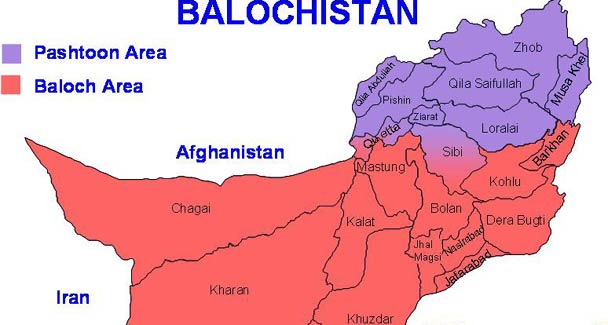
Re: History of Pashtuns series

Raymond Chickrie Journal of Muslim Minority Affairs, Vol 22, No 2, 2002 Publishing Date: Wednesday, November 3 2004
IntroductionGuyana and Suriname are located on the northeast coast of South America and are twoof the three non-Hispanic enclaves that make up the Guianas. Suriname is also one ofthe most ethnically and culturally mixed countries in the world. In Paramaribo, thecapital of this Dutch speaking nation of about 450,000 people, architecture graphicallyreflects this synthesis of peoples. A beautiful Mughal style mosque shares the samestreet with an imposing nineteenth-century wooden synagogue; several Hindu templesand the Roman Catholic cathedral can be found in the capital as well. Suriname andGuyana are colourful mixtures of African and Asian influences.
Guyana and Suriname’s rich cultural mosaic is the legacy of the Dutch and Britishplantation economy, which after the abolition of slavery brought many indenturedworkers from British India, Indonesia, and China (see Figure 1). They joined thedescendants of African slaves, a large Jewish community, a European and MiddleEastern business and professional elite and the remnants of the indigenous Arawak andCarib peoples. Dutch, Hindustani, Hakka, Mandarin, and Javanese are also spoken inSuriname. Islam, Hinduism and Christianity are part of the cultural mosaic. In GuyanaEnglish is the medium of exchange. Hindi and Urdu are used only for religiouspurposes by Hindus and Muslims (see Figure 2). In both countries the majority of theAsian immigrants settled in the fertile farming area near the coast, while the African-descendedCreoles tended to move into the cities. Some Surinamese who were formerslaves from West Africa escaped the Dutch sugar plantations into the jungle. Theserunaway slaves are called boschnegers.
The Political SceneBoth Suriname and Guyana experienced political turmoil after independence fromHolland and England. Guyana had an Afro-dominated dictatorship, which marginalizedEast Indians, while in Suriname several coups rocked the country’s peacefulhistory. Remarkably, this cosmopolitan mixture held together under Dutch rule, but asindependence approached, ethnically based political parties took shape, rallying supporterson racial lines. In Guyana racial tensions have spilled over into ethnic violenceseveral times, but in Suriname consoctional democracy has worked. The Dutch pulledout in 1975, promising continued aid, but many Surinamese who were fearful of whathappened in neighbouring Guyana to East Indians decided to accept the offer of Dutchcitizenship. Some 40,000 migrated to Holland in the months preceding independence.Today over 400,000 Surinamese live in Holland. In Guyana over half of its populationmigrated to the United States, Canada, England, Suriname and Trinidad.The dictatorship in Guyana ended in 1992 after the United States decided to supportthe democratic movement. With the end of the Cold War, the United States was nolonger afraid of the opposition People’s Progressive Party as the leadership of the PPPwas accused of being communist sympathizers.

http://www.khyber.org/publications/006-010/guyana3.gif

http://www.khyber.org/publications/006-010/guyana4.gif

FIG. 1. Ethnic distribution.

http://www.khyber.org/publications/006-010/guyana6.gif

http://www.khyber.org/publications/006-010/guyana5.gif

FIG. 2. Religious distribution.

http://www.khyber.org/publications/006-010/guyana7.jpg

Click on Map to View Larger Version
FIG. 3. Map of the Guianas.
Their fears were in part justi? ed, for Guyana and Suriname underwent a series ofpolitical and economic traumas in the 1980s. A coup in 1980 brought Colonel DesiBouterse to power, and when 15 opposition leaders were executed in 1982, theNetherlands imposed sanctions. Then, from 1986, a guerrilla war broke out betweenboschnegers and the Paramaribo-based military regime. Civilian rule was only solidlyre-established in 1991, and since then the country’s fractious ethnic parties haveformed more or less unstable coalition governments. The former dictator, Bouterse,who has remained an influential presence, was indicted for cocaine smuggling by aDutch court in 1997; the Surinamese government refused to extradite him but in 1999he was sentenced in absentia to 16 years of imprisonment.
Guyana and Suriname remain dependent on a handful of commodities: bauxite,sugar, timber, rice and bananas. Suriname continues to rely on Dutch ? nancialsupport, which is decreasing and ever more conditional on democratic reforms. Abouthalf the population is estimated to live in poverty, and remittance payments fromrelatives in the Netherlands keep many families alive. This material poverty, deepeningover the last decade, contrasts ironically with the country’s extraordinary wealth ofcultural diversity. Guyana, on the other hand, has been experiencing positive economicgrowth since the liberalization of the economy in the 1990s. Violence continues toplague Guyana in which people of South Asian decent are mostly the victims. Thepolice have also become victims of armed gangs. Suriname, however, has remainedrelatively safe and stable.
Muslims in Guyana and SurinameIn Suriname, there are a large number of Muslims, and they constitute 20% of the totalpopulation of 425,000 of the country. Three distinct Muslim communities live inSuriname. The Javanese from the Indonesian Archipelago have been living in thecountry for more than 50 years. Indo-Pakistanis came as indentured labour over 100years ago. Besides, there is a growing Afro-Surinamese community here.[1] In Guyanathe Muslim community is close to 12%, and is made up primarily of South Asians anda growing Afro minority. In both countries the South Asians are Sunni Muslims of theHanafi School (mazhab) of fiqh.
The Africans were the first Muslims in this region. Today with the diligent efforts ofscholars and researchers, the role of Muslims as an indigenous people in this part of theworld is receiving serious attention. Thanks to the efforts of scholars such as ShaykhAbdullah Hakim Quick of Toronto, Dr Sulayman Nyang of Howard University, AdibRashad of Washington, DC, and Abdullah Bilal Omowale of Trinidad, the history ofthe African Muslims of the Western hemisphere is now coming to light.[2] One sourcepoints out that:
Until recent years, the presence of Muslims in the Western Hemisphereduring the pre-Columbian and antebellum periods was known only to themost disciplined of researchers and historians. Intellectual dishonesty andlethargy and Euro-centric conceptions of history were the primary culpritsbehind this conspiracy of silence that virtually erased Islam from the pages ofWestern formative history.
The impact of Islam on the lands of the Caribbean may have begun with WestAfrican Mandinka seafarers and adventurers landing on the tropical isles wellover a century before Columbus ‘accidentally discovered’ the New Worldislands. The Islamic practices of the ‘black’ Carib Indians and the appearanceof Indian women with face veils chronicled in the diaries of Columbus screamloudly that the Moors (read Muslims), so dreaded by the Spanish, had left anindelible mark before the Christianization of the West.[3]
The transatlantic slave trade brought millions ofMuslims into the Caribbean, and somecame to Suriname. ‘The “Bush Negros” in Surinam, led by Arabi and Zam-Zam,defeated the Dutch on many occasions and were ? nally given a treaty and their ownterritory (near French Guyana) which they control until today.’[4] Apart from Muslimsof South Asian descent, Muslims from Java brought by the Dutch settled in Suriname.Suriname is isolated from the Caribbean because of its geography and colonial legacy.The Javanese are an integral part of Surinamese society. There is also a handful ofimmigrants from the Middle East settled mainly from Syria, Lebanon and Palestine inSuriname. All ethnic groups in Suriname have maintained their space.
Islam was reintroduced to Suriname in 1873 when the ship Lalla Rookh arrived with37 Hindustani Muslims. The 37 were from Bareilly, Gorakhpur, Mirzapur, Lucknow,Allahbad, Jansi, Jaunpur, Azamgargh, Gaya, Faizabad, Sewree, and Benares (Varanasi)in India. From 1873 to 1916 Muslims from the Indian provinces of Uttar Pradesh,Punjab, the Northwest Frontier and Bihar continued arriving in Suriname. Thesemainly Urdu speaking Muslims were from the Sunni Hanafi mazhab, and they celebratedthe Eids as well as Muhurram and Milad-un-Nabi. The strong influence of theShia’ and the Sunni’s of North India could be felt in Suriname. Urdu is the functional language of the Hindustani Muslims of Suriname to this day and the community hasresisted ‘arabization’. The Ahmadhiyya movement has penetrated Suriname’s Muslimcommunity. They have built some of the finest mosques reflecting Mughal architecture.On the other hand, the Sunnis have built one of the largest mosques in the region usinga combination of arabesque and Mughal architecture. They also support one of thefinest Islamic learning centres in the region for children and future imams.
The Javanese Muslims from Indonesia began arriving in Suriname in the 1890s. TheSurinam-Javanese community are kejawen, following the syncretic practices and beliefsof Java.[5] In this community the keblat (qibla) expresses a unique diasporic experienceand identity. From the Dutch East Indies (now Indonesia) villagers were recruited fromJava as contract workers for the plantations in another Dutch colonial land, Surinam.Most of them were kejawen Muslims. Kejawen Islam, which was dominant in Javanesevillages, is a syncretic Islam that incorporated old Javanese beliefs, including Hindu-Buddhist elements.[6]
The Afghan MuslimsLittle is known about the Afghan Muslims of Guyana and Suriname. In fact, some maybe amazed to learn that Afghans made their way to Guyana and Suriname among theIndian Muslims from 1838 to 1916. When Indian indentured labourers began arrivingin Guyana and Suriname in 1838, India was already conquered and assimilated byPersians, Central Asian Turks, Arabs, Afghans, Greeks, Hazaris and Baluchis, amongother Muslim clans who settled in India’s large cities. The dominant minority, theMuslims, settled in large cities such as Ahmadabad, Allahabad, Delhi, Karachi, Lahore,Bihar, Ghazipur, Lucknow, and Hyderabad. These exotic people found great economicopportunities in India and they were encouraged to migrate to the Metropolis by theMughal Emperors. In India in 1857 many Afghan Pathans rose up against the Britishand many were executed, jailed or sent overseas. Many of these ‘trouble makers’ weresent to Guyana and Suriname.
There was always a strong Afghan presence in Bareilly, Muradabad and Badayun inIndia. These districts had strong Afghan townships, where over 9000 Afghans settled.It was with the immigration of Daud Khan, an Afghan slave (who originally hails fromRoh in Afghanistan), to the region that the Afghan Rohillas had come into prominence.His adopted son Ali Muhammad Khan succeeded in carving out an estate for himselfin the district with his headquarter at Aonla. He was ultimately made the lawfulgovernor of Kateher by the Mughal emperor, and the region was henceforth called ‘theland of the Ruhelas’. Eventually after the end of the Mughal Empire many Pathansmigrated from Rohilkhand. Bareilly as a ruined city became crowded with unemployed,restless Rohilla Pathans. Many urban cities in Uttar Pradesh were experiencing economicstagnation and poverty. Naturally, this led to heavy migration overseas.
The slightest weakening of the central authority provoked acts of de? ance from theKatehriya Rajputs. Thus the Mughals initiated the policy of allotting lands for Afghansettlements in Katiher.[7] Afghan settlements continued to be encouraged throughout thereign of Mughal emperor Aurangzeb (1658-1707) and even after his death. TheseAfghans, known as the Rohilla Afghans, caused the area to be known as Rohilkhand.[8]The Mughal policy of encouraging Afghan settlements for keeping the Katehriyas incheck worked only as long as the central government was strong. After Aurangzeb’sdeath, the Afghans, having themselves become local potentates, began to seize andoccupy neighbouring villages.
Immigration records indicate that the majority of Muslims who migrated to Guyanaand Suriname came from the urban centres of Uttar Pradesh: Agra, Ahllahbad,Bahraich, Fyzabad, Gonda, Gorakhpur, Ghazipur, Mirzapur, Lucknow, Muradabad,Bareilly, Rampur, and Sultanpur. Small batches also came from Karachi in Sindh;Lahore, Multan and Rawalpindi in the Punjab; Hyderabad in the Deccan; Srinagar inKashmir; and Peshawar and Mardan in the Northwest Frontier (Afghan areas).Immigration certi? cates reveal major details of Muslim migrants. Their place of originsuch as district and village was recorded. Their physical features such as colour andheight were recorded as well. Their Immigration Certi? cate indicated their caste/religion as well. Under caste Muslims are identi? ed as Musulman, Mosulman,Musalman, Sheik Musulman, Mahomedaan, Syed, Sheik, Jolaba, Mughal, Pathan,Pattian, and Musulman (Pathan). Religion and caste identi? ed many Muslims. Fromlooking at their district of origin one can tell of their ethnicity, whether they wereSindhis, Biharis, Gujarati, Punjabi, Pathans or Kashmiri. Their physical pro? le on theImmigration Certi? cate also helps in recognizing their ethnicity. There are enormousspelling mistakes on the Immigration Certi? cates. Musulman, the Urdu word forMuslim, is spelled in many different ways and sometimes Muslims were referred to asMahomedaan. Peshawar is spelled Peshaur and Nowsherra is Nachera, among manyothers.
The Afghan Pathan clan was among the Muslim migrants. Immigration Certi? catesclearly indicate this under the category of ‘caste’ Pathans, ‘Musulman Pathan’ Pattanor Pattian. The fact that there were Pathan settlements in northern India explains thismigration. Immigration Certificates further substantiate this. Pathans migrated fromPeshawar, Nowsherra, and Mardan in the Northwest Frontier as well as from Kashmir.Some Pathans also came from Dholpur, Rajasthan. From Uttar Pradesh they migratedfrom Agra, Bareilly, Lucknow, Rohtak, Janhora, Jaunpur, Gonda, Shahjahanpur,Barabanki, and Delhi, among other cities in this province. The Pathans also migratedfrom Multan, Rawalpindi and Lahore in the Punjab. Again the spelling of districts,towns and villages varies. With considerable knowledge, the writer was able to recognizethese places. A few name places remain an enigma and are unrecognizable inreading the Immigration Certi? cates.
History and Culture of the AfghansPathans were always respected by the Mughals and were heavily patronized by MughalEmperors in order to pacify them. The Afghans also acted as the buffer zone in theNorthwest Frontier; they kept invaders out of Mughal India. And in the nineteenth andtwentieth centuries they kept the Russians at bay. Without the support of the Pathansthe Mughal Empire would not have lasted for as long as it did.
The Pathan, or Puktun, are a race of warriors who live primarily in Afghanistan andPakistan. They consist of about 60 tribes, each with its own territory. Although theirorigin is unclear, their legends say that they are the descendants of Afghana, grandsonof King Saul. However, most scholars believe that they probably arose from ancientAryans intermingling with subsequent invaders.
The people of Afghanistan form a mosaic of ethnic and linguistic groups. Pashto(Pashtu) and Dari, a dialect of Persian (Farsi), are Indo-European languages; they arethe of? cial languages of the country. More than half of the population speaks Pashto,the language of the Pashtuns, while about half of the population speaks Dari, thelanguage of the Tajiks, Hazaras, Chahar Aimaks, and Kizilbash peoples. The otherIndo-European languages, spoken by smaller groups, include Western Dardic (Nuris-tani or Ka? ri), Baluchi, and a number of Indic and Pamiri languages spoken principallyin isolated valleys in the northeast. Turkic languages, a subfamily of the Altaiclanguages, are spoken by the Uzbek and Turkmen peoples, the most recent settlers,who are related to peoples from the steppes of Central Asia. The Turkic languages areclosely related; within Afghanistan they include Uzbek, Turkmen, and Kyrgyz, the lastspoken by a small group in the extreme northeast.
The Afghans who came to Guyana and Suriname were mostly Pathans and a fewwere Hazaris. The Pathans come from Afghanistan and the wild west of Pakistan: theNorthwest Frontier Province that borders Afghanistan. In his text, Warrior Race, ImranKhan writes, ‘physically the Pathan has more in common with the people of CentralAsia than with those of the subcontinent. The ? ne, aquiline features, high cheek-bonesand light skin reflect the Pathan’s origins in Afghanistan and Turkey’.[9]
Pathans from various areas such as the Mahsuds from South Waziristan and theWaziri tribe from North Waziristan, differ in complexion, hair and eye colour. Some aretaller and fairer while some have green and blue eyes. ‘Many of the tribal elders dyetheir grey beards red with henna’,[10] a practice that some elder Afghans kept in Guyana.Pathans are very competitive and determined; they show no fear. They are honest,digni? ed, and uncompromising in their promises. Money does not impress a Pathan. ‘Itis the Pathan’s sense of honour that makes him conduct himself with such dignity, anda fiercely independent spirit that makes even the poorest tribesman walk like a king.’[11]
To understand the Afghans, one has to look carefully at their culture in context oftheir geographical landscape. Why are they so rebellious and dif? cult to conquer?Originating from Afghanistan, the Pathans are one of the greatest warrior races onearth; they have never been conquered. For centuries the Pathans have ‘existed byraiding, robbing and kidnapping’.[12] But one has to understand the physical terrain ofthe Pathans. ‘In the mountainous terrain, hardly anything grows, and whatever isproduced is insuf? cient to sustain the population of the area.’[13] Sometimes it is difficultto sustain the family without raiding and kidnapping from the afluent lowlands to feedthe family. ‘It is not the nature of such a proud race of people to resort to begging.’[14]Consequently, robbing and kidnapping became a means of survival.
The Pathans are the majority in Afghanistan. The British in 1893 created the DurandLine separating Afghanistan from India and ‘slicing right through the Pathan’s territory’.[15] The southern part of Afghanistan is predominantly Pathan. Due to tribalrivalries many Pathan tribes settled along the banks of the Indus, the Waziristan, andthe Vale of Swat, Peshawar and between the Sutlej and Beas rivers. ‘There were Pathansettlements in Northern India in Hoshiarpur, Pathankot, near Lucknow, Rohailkandand many other areas.’[16] This explains the presence of Afghans among the Indians whowent to Guyana as well. Some Pathan tribes are the Yusufzai, Afridi, Niazis, Lodhis,Ghoris, Burkis, Waziri, Mahsud, Marwats and Khattaks.
A Common AncestryPathans believe that they are all descended from a common ancestor, Qais. He is saidto have met the Prophet Muhammad. The Prophet gave Qais the name, Pthun, andQais was to take Islam back to his home. One of Qais’s sons was named Afghana, whohad four sons. Every Pathan traces its descent from one of these four sons.
The ? rst of these four Pathan branches is the Sarbani; this includes the largest Pathantribe, the Yusufzai, which settled in Swat, as well as the Tarkalani, Mohmands andMuhammadzai. The second grouping is the Bitani. The Niazis, Ghilzais, Lodhis, Suris,Marwats, Lohanis, and Nuhranis belong to this group. The third branch is the Karlani,which includes some of the wildest tribes, such as the Mahsud, Waziri, Afridi, Orakzai,Dawar and Bangash. The fourth branch is still being researched by the author thoughsome say there are only three branches in all.
The Code of HonourPathan is a corrupted version for Pukhtun. This word means ‘backbone, hospitality,bravery and honour’. The culture of the Pathan is based on the latter principles. ‘Whichis enshrined in a code of honour known as Puktunwali, or the way of the Pathans.’[17]According to Imran Khan, a Pathan is recognized by other Pathans not so much byfacial characteristics as by his adherence to ‘Pukhtunwali’. If he does not follow thecode, he is not a Pathan. The wilder tribes adhere to the code more strictly.
Pushtunwali is followed religiously, and it includes the following practices: melmastia(hospitality and protection to every guest); nanawati (the right of a fugitive to seekrefuge, and acceptance of his bona ? de offer of peace); badal (the right of blood feudsor revenge); tureh (bravery); sabat (steadfastness); imamdari (righteousness); ‘isteqamat(persistence); ghayrat (defence of property and honour); and mamus (defence of one’swomen).
Pukhtunwali is closely linked to the spirit of Islamic justice and rejection of unfairness.It is not a coincidence that Pathans rose up against British injustice on the sugarplantations of Guyana. Khan writes, ‘The criterion by which a man is judged is not theamount of money he has but how honourable he and his family are’.[18] A Pathan will goat length to maintain his honour. ‘Any slight to his honour has to be avenged … there isno question of turning the other check.’[19] Revenge is taken only on male members ofa family.
Religious ZealThe majority of Pathans are Sunni Muslims. Islam came to them as a great liberatingand unifying force. For this reason, their underlying faith and steadfast devotion toIslam remain very strong. Pathans are staunch believers and would go at length todefend Islam. They practise Islam according to the Qur’an without deviation. It is nowonder that we see the Afghan play a prominent role in the history of Guyana andSuriname. The building of the Queenstown Masjid was initiated by the Afghans inGuyana, while a leading Afghan immigrant, Munshi Rehman Khan, nurtured hiscommunity.
Afghans and the Queenstown MasjidAn Afghan with a typical Afghan name, Gool (Gul) Mohammad Khan, who was anindentured labourer, took the initiative to build the Queenstown Jama Masjid. The ? rstimaam of the Masjid was reported to have been Gool Mohammad Khan. GoolMohammad Khan, after serving his indenturedship, returned to India. It is alsoreported that another Muslim bearing the name Jilani was the ? rst imaam. ‘The Jamaatcomprised Muslims from India and Afghanistan; the latter apparently arrived in thiscountry via India.’[20]
Gool Mohammad Khan persuaded another Afghan, Goolam-uddin, to purchase theplot of land for the building of the Masjid. Mr Goolam-uddin lived on the property ofthe Masjid and was the caretaker of the property. This Afghan was reputed to have a’dominant personality and kept a full beard coloured reddish brown with henna’.[21] Likemost Afghans, Goolam-uddin also had a stern and ‘forceful nature’. Thus, disputesrose among the Afghan and Indian Muslims and ‘eventually around 1923-1924 theIndian members decided to leave the Masjid…’[22] However, the Afghan control of theMasjid lasted for only a few years because of their small number and reemigration toIndia.
Afghan ResistanceThe Story of Mazar KhanMazar Khan arrived in British Guiana in 1883 to work as an indentured labourer. Hewas sent to Plantation Caledonian on the Essequibo Coast. His descendants werenostalgic for the past and in 1998 journeyed to Northern India to retrace his roots. Thisexpedition took them to the village of Somdutt in Meerut. This information was ofcourse taken from his Immigration Certi? cate. After consultation at a mosque inSomdutt, they were taken to meet the oldest person in the village. With translation andthe help of a few members of the mosque the ‘old man’ was reached. With greatamazement they learnt that this old man, Hurma Khan, who in 1998 was 110 years old,is the son of Chand Khan, who was the brother of Sujati Hassan Khan, father of MazarKhan. In other words, Hurma Khan is the ? rst cousin of Mazar Khan.[23]
It was then learnt that Mazar Khan was a ‘freedom ? ghter’ during the 1880s mutinyagainst the British. Meerut holds a special place in Indian history as the place where themutiny started. In an attempt to retaliate, the British rounded up the 'trouble makers’and sent them to ‘kalla-paanie’, or black waters.[24] The Khans have been known inhistory for their tenacity to resist tyranny and to ? ght for izzat, jaan aur maal (honour,life and property) and wherever they went they upheld these values not only forthemselves but also for all others. While in the Guyanas, they advocated for Indians,Hindus, Pathans or Muslims. Mazar Khan’s resistance had led to his exile from India.
Making History: Munshi Rehman M. KhanAt age 24, Rehman M. Khan (1874-1972), a young Pathan, arrived in Suriname in1898 on the steamship Avon. In his autobiography he discusses his Pathan roots. Hecame from Hammirpur, a district in Uttar Pradesh, under strange circumstances. Hewas an educated Pathan Muslim and found employment as a munshi (teacher) in agovernment middle school at Maudha, a tehsil headquarters (revenue sub-division) ofthe Hamirpur district. ‘But after six months of teachership he somehow or other gotfed-up and gave it up.’[25] After a long contemplation of three months at the depot inCalcutta he sailed for Suriname arriving there on 13 April 1898. In Suriname he wasassigned to Plantation Alliance and became known as Munshi Rehman M. Khan.
This young Khan knew the Qur’an as well as the Ramayana very well. He soonbecame popular in his plantation and among the surrounding Indians of the otherplantations as a Ramayan specialist. He started propagating the Ramayana ideology andtaught Hindi to the children of the Indian community. He was also attached as aninterpreter and sardar (head of the labour force) in a plantation. He wrote many booksbut only two of his small books were published in India in the 1950s. According to theinterpreter of some of his literary works, Mohan K. Gautham, there are manymanuscripts available which he wrote in Suriname dealing with the Muslim problemsin Suriname, the language issues and his own biography in four volumes. Coming froma middle class Pathan family, Khan was very educated. His knowledge of Urdu andHindi helped his literary prose. He was also a poet and could compose poetry instandard Hindi ‘with a favour of Braj’.[26]
Rehman Khan trained Muslims and Hindu priests as well as interpreters. At the endof his ? ve-year contract, he left Plantation Alliance and moved to Dijkveld near the cityof Paramaribo along the Suriname River. He used his knowledge to educate the Hinduand Muslim community and to reconstruct the ‘Indian identity’. Khan kept in touchwith India constantly and was always craving for news from his homeland. Hecontinued his correspondence with family and friends in India and remitted money tohis parents. He was always eager to know the latest situation in India and for thispurpose he not only kept correspondence with friends, but also with many publishingconcerns, such as the Venkateshwar Press in Bombay. From his autobiography we seehow attached he was to Suriname since he decided to remain in the colony after he wasa free man. He bought a piece of land and sold vegetables and dairy products. Khan gotmarried and had children. He was rewarded for all his efforts and ? nally the Queen ofthe Netherlands honoured him with the highest order for his literary and socialactivities.[27]
From his autobiography, one gets the story of his life and how he went to Suriname.He narrates how he was recruited for Suriname. Khan went to the parade grounds ofKanpur and was met by two men who were ? nely dressed. ‘Thinking them to besympathetic gentlemen, I greeted them. Because they were wearing clean and ? nedresses, they were looking nice.’[28] After discovering that Khan was educated, theyoffered him a job with a great salary that he could not resist. He was offered a job asa ‘saradara’ (headman) with a salary of ‘12 annas’. A job as a supervisor making a lotof money was an offer that he could not resist.[29]
Khan was informed about the nature of his job, which was to supervise labourers ona sugar plantation. ‘There you will have to supervise the labourers and you will have totravel on the government’s boat on the expenses of the government.’[30] He was told thatthe plantation was in Sriram Tapu (Suriname) and that the ship from Calcutta takesthree months to reach there. Quickly, the men convinced him to get registered in thegovernment of? ce. The fact that this was going to be a government job and that he wasgoing to register with the government further convinced Khan. He was brought to theCalcutta Depot where he saw the labourers he would supervise. The young Pathan wasalso promised other perks like free food and expenses. ‘You will not have any sort ofproblem. Enjoy your drink and food happily, live comfortably and carry on thegovernment work honestly, this is the only way of getting your own promotion.’[31] Khanwas now convinced. ‘Hearing such tempting words I became very happy. I just forgotmy own self, got separated from my own family and fell into the trap of my luck.’[32] Helived in the depot and thought of changing his mind several times, and at one point hefelt like a ‘trapped bird’. Little did he know that he could have said ‘no’ to theMagistrate. But that was not meant to be ‘**ecause the Great Allah had removed mysubsistence from India and transported it into Suriname. And He had banished meforever from Hindustan. It was sad and very sad’.[33]
Khan kept close contact with friends and family in India. He was the only son of hisparents and they nagged him constantly to return to India. A letter he received from hisfamily on 1 January 1908 begged him to return to India. His parents were very ill andhis mother had become very old and blind. They wrote to him, ‘The money, which youwant to send to us, it is the opinion of all people here that with the same money pleasecome for one time (to India) and meet us. Everyone wants to see you’.[34] But Surinamewas now home and he had to nurture the Indian community there. He was a very piousMuslim like the Pathans and at the same time reached out to the entire community. Hewas a Muslim at home but also a staunch Indian, proud of his Indian background andthe Indian community. According to Gautam, Hindus and Muslims to him were linkedby one motherland, Hindustan. Gautam quotes Khan: ‘Dui jati bharata se aye, HinduMusalmana Kahalaye, Rahi priti donom maim bhari, jaise dui bandhu eka mehatari’ (‘Twocommunities came from India, They were called as Hindus and Muslims; Betweenthem existed an intense love. As they were two brothers from the same mother’).[35]
The Rose Hall UprisingThe Rose Hall sugar worker strike of 1913 saw Afghans and Muslims resistant toindenturedship. This is nothing new; the Pathans had resisted the British in India andsome were sent to Guyana and Suriname, where they continued this resistance. SomeMuslims who challenged the British bore the last name Khan, a typical Pathan(Afghan) name. Moula Bux, Jahangir Khan and Dildar Khan ? t the pro? le of thePathan. Three other Muslims were also involved; Chotey Khan, Aladi, and Amirbaksh.According to Mangru in his text, Indenture and Abolition, ‘Moula Bux was nicknamed"munshiji" (scribe or writer) and was formerly an of? ce worker in a jute factory inIndia’.[36] Dildar Khan according to Mangru was recruited in Kanpur, India.
It would seem from the tenacity of these Khans who were involved in the Rose Halluprising that they ? t the pro? le of the ? rebrand Pathans. Pathans never let tyranny togo unpunished. It is part of their ‘code of honour’ to root out injustice and defend theweak from exploitation. And this is exactly what the Pathans did in Guyana.
Food and ClothingThe Pathans are meat lovers. Many were meat handlers in Guyana and some ownedbusinesses in Georgetown. There was always a mince mill in the home of the Pathansto grind meat to make kebabs. They substituted the tandoor oven for the local ? residein Guyana to cook their kebabs. The famous ? rni (rice pudding) for dessert was servedon all auspicious occasions. Some Muslims call it sirni and cook it differently from thePathans. The diet of the Pathan Afghan Guyanese was quite different from that of theIndian Muslims but eventually the authentic cuisine of the Afghans died as the fewremaining Afghans interbred with non-AfghanMuslims. Never can I forget Begum BibiHannifa Khan Hussein from my town. She had strong Afghan roots. Her family’sphysical features, culture and diet stood out amongst their Muslim brethren in thecommunity. She always had an entourage of people cooking at her home. Lavish meatdishes and Afghan bread were prepared. Meat was always ground for kofta kebab.During her lifetime she hardly set foot on the grounds of the plantation that herhusband Ishaq Hussein managed for Amin and Ahmad Sankar. From a distance, whilemaintaining the tradition of purdah, she gave orders to the men with her resoundingvoice.
The clothing of the Afghan Guyanese Muslims was quite different from that of theMuslim Indian. While the Muslim Indian men wore the Indian Shirt and Pajama, theAfghan wore the baggy shalwar (pants) and kameez (shirt). The Afghan prefers loosebaggy wear; both males and females wore baggy modest clothing. Indian Muslims worebrighter colour clothing, while Afghan Muslims wore subtle colours. Pathans also worethe pagri or the head wrap.
Due to the fact that scholars have not explored deeply the history of Muslims inSuriname and Guyana, not much is known about this subject and much less about theAfghans Muslims. While we know that Afghan Pathans speak Pashto, there is noevidence of Pashto or Persian written literature in neither Guyana nor Suriname. Butthere can be no doubt that Pashto was spoken by some of these Pathans, especiallythose who migrated directly from the NWFP. And who knows, such literature may stillexist today among local Afghan families.
Not All Khans Are PathansToday a well-known Indian Muslim community is of Pathan heritage. The Pathansarrived in India from Afghanistan. They normally have their surname as Khan.Regardless of how far the Pathans travel, ‘Puktunwali’ is kept. The Pathans in India stillhave an image of being brave, honest and righteous. Many Indians who adopted Islamadopted the surname Khan and they claim that they are Pathans, which is not alwaystrue, but a considerable amount of them live in northern India. Guyanese are veryfamiliar with some Indian celebrities of Pathan nomenclature: Feroz Khan, ShahrukhKhan, Amjad Khan, Saif Ali Khan, Aamir Khan, and Salman Khan, among manyothers, and not all of them are Pathans.
Like some of the Khans of India, not all the Khans of Guyana are Pathans. Manylater converts to Islam adopted this noble title as their surname. The true Khans of thePathan race are obvious because of their physical traits and phenotype. In trying toresearch this subject, a number of Guyanese Muslims have discussed with the authortheir Pathan heritage. Their recollections are vague but not farfetched. However, thereare Pathans not bearing the last name Khan who made it to the shores of Guyana andSuriname as well. One family traced their great grandfather to the Pakistan/Afghanborder. In fact, this family still had artefacts and clothing belonging to their greatgrandfather, and by using his Pathan shalwar kameez, they were able to trace the villagefrom where he migrated. Many others with Pathan features spoke of their Pathanheritage but had limited facts to enrich their history. This has frustrated many of themwho yearn to hold on to this heritage.
ConclusionThe Pathans have played an important role in the history of their region and in thecountries of their adoption. From their community came Muslim rulers, administrators,and soldiers. While many of them have moved out of the highlands in search ofan easier life in the plains and across oceans, their mountainous homeland continues tobe their citadel of strength and freedom. Many races came to Hindustan and settled.The Afghan Pathan clan quickly became Indian and assimilated. With the coming ofthe British to India and the need for labourers in British and Dutch Colonies, manyPathans opted for better lives or to seek fast cash in the former colonies of British andDutch Guiana in South America. These Pathans have introduced their indomitablespirit into these lands. The story of Mazar Khan, Rehman Mohammad Khan and theleaders of the Rose Hall uprising in Guyana are just a few examples of Pathan braveryand commitment to justice, honesty and integrity of the community that they live in.The building of the Queenstown Jama Masjid in Guyana and Munshi Rehman M.Khan’s role in the preservation of Islam among his native Hindustanis again illustratesthe religious zeal of the Pathans. From Afghanistan they came to India, and from Indiathey graced the landscape of Guyana and Suriname with ‘Pushtunwali’ - the way of thePathans.
NOTES

  1. ‘Muslim Situation in the Caribbean’, Muslim World League Journal, available online at:, Islam web - English Fatwa | Articles | Quran Recitation | Prayer Times | News
  2. ‘Muslims in America & the Caribbean - Years before Columbus’, available online at: , http:// www.shef.ac.uk/ics/whatis/articles/carib.htm
  3. Ibid.
  4. Ibid.
  5. Moch. Nur Ichwan, ‘Prayer in the Surinam - Javanese Diaspora Experience’, available online at:, http://isim.leidenuniv.nl/newsletter/3/regional/21.html (29 July 1999).
  6. Ibid.
  7. ‘The Eleven Illustrations of Ghulam Yahya Mehr Afshan Farooqi’, available online at:, http://www.library.upenn.edu/etext/sasia/persian-mss/crafts1820/introduc.html . .
  8. Ibid.
  9. Imran Khan, Warrior Race: A Journey Through the Land of the Tribal Pathans, New York:Random House, 1993, p. 10.
  10. Ibid., p. 11.
  11. Ibid., p. 12.
  12. Ibid., p. 15.
  13. Ibid.
  14. Ibid.
  15. Ibid., p. 16.
  16. Ibid., p. 17.
  17. Ibid., p. 33.
  18. Ibid.
  19. Ibid.
  20. Centennial Magazine, brochure, Queenstown Jama Masjid, Georgetown: Guyana, 1995, p. 9.
  21. Ibid.
  22. Ibid.
  23. Search of the Khans, available online at: , http://home.nyc.rr.com/khanmain/myarticles/firstcontact.htm
  24. Ibid.
  25. Mohan K. Gautam, ‘The Construction of the Indian Image in Surinam: DeconstructingColonial Derogatory Notions and Reconstructing of the Indian Identity’, available online at:, http://www.saxakali.com/indocarib/sojourner7b.htm
  26. Ibid.
  27. Ibid.
  28. Ibid.
  29. Ibid.
  30. Ibid.
  31. Ibid.
  32. Ibid.
  33. Ibid.
  34. Ibid.
  35. Ibid.
  36. Basdeo Mangru, Indenture and Abolition, Toronto: Tsar Publications, 1993, p. 86.

[HR][/HR]Appendix 1. Translation of the Immigration Certificate

  1. GIVEN NAME
  2. GENDER
  3. AGE
  4. SKIN COLOUR
  5. PHYSICAL HEIGHT
  6. DISTINGUISHING FEATURES
  7. NATIONALITY
  8. DISTRICT OF ORIGIN
  9. DISTRICT/POLICE STATION/VILLAGE
  10. VILLAGE
  11. PROFESSION
  12. CASTE/RELIGON
  13. CHILDREN
  14. SHIP NAME
  15. SIGN UP NUMBER
  16. RECUITMENT AGENCY
  17. PLACE OF DEPARTURE
  18. DATE OF DEPARTURE
  19. PLACE OF ARRIVAL
  20. DATE OF ARRIVAL
  21. RECRUITMENT AGENCY
  22. PLACE OF ARRIVAL
  23. PLANTER
  24. PLANTATION
  25. IMMIGRATION REGISTER
  26. CONTRACT STARTS
  27. CONTRACT ENDS
  28. RENEWAL OF CONTRACT
  29. RESISTANCE ACTIVITIES
  30. MEMO FIELD

Appendix 2. Sample Immigration Certificate of PathansSample # 1

  1. Jamin Shaw, Modut Khan Relaties:* van; van; van
  2. GESLACHT M
  3. LEEFTIJD 25
  4. HUIDSKLEUR lichtbruin
  5. LENGTE 1.756
  6. HERKENNINGSTEKEN geen
  7. NATIONALITEIT Brits Indie
  8. DISTRICT Peshawar
  9. POLITIEPOST Moteekundan
  10. DORP Shawajgunah
  11. BEROEP veld of fabriekarbeid
  12. KASTE Mahomedaan
  13. KINDGEGEVENS N
  14. SCHIPNAAM Engels schip ‘Clive’
  15. MONSTERNUMMER 44
  16. WERVINGSINSTANTIE het koloniaal gouvernement
  17. AFREISPLAATS Calcutta
  18. AFREISDATUM 7/4/1877
  19. AANKOMSTPLAATS Paramaribo
  20. AANKOMSTDATUM 8/29/1877
  21. PLANTER W.G.H.Barnet Lyon prive 299
  22. PLANTAGE Pl.Jagtlust(Ben Sur)
  23. CODENR F/156
  24. BEGIN CON 8/30/1877
  25. EIND CON 8/30/1882
  26. HERBEGIN
  27. HEREIND
  28. REBEGIN
  29. REEIND
  30. KLSTATUS vertr
  31. VERZET
  32. MEMO-INFORMATIE Vertrokken naar Calcutta per Ss Kilda op 30 oct 1879. Vw.c. zie c.dd 1877 te Calcutta gesl. at contractnumber X/157.

Sample # 2

  1. Gulamjan, Saith KhanRelaties:* van; van; van
  2. GESLACHT M
  3. LEEFTIJD 19
  4. HUIDSKLEUR
  5. LENGTE 1.63
  6. HERKENNINGSTEKEN pokdalig; moedervl. R borst
  7. NATIONALITEIT Brits Indie
  8. DISTRICT Peshaur
  9. POLITIEPOST Nachera
  10. DORP Nachera
  11. BEROEP
  12. KASTE Mosulman
  13. KINDGEGEVENS N
  14. SCHIPNAAM Engels schip Sutlej III
  15. MONSTERNUMMER 62
  16. WERVINGSINSTANTIE het koloniaal gouvernement
  17. AFREISPLAATS Calcutta
  18. AFREISDATUM 11/27/1913
  19. AANKOMSTPLAATS Paramaribo
  20. AANKOMSTDATUM 1/7/1914
  21. PLANTER T.Folmer Beheerder
  22. PLANTAGE Pl. Jagtlust
  23. CODENR Qq/98
  24. BEGIN CON 1/7/1914
  25. EIND CON 1/7/1919
  26. HERBEGIN
  27. HEREIND
  28. REBEGIN
  29. REEIND
  30. KLSTATUS
  31. VERZET
  32. MEMO-INFORMATIE C.V.O. afgegeven 23-1-1919 no 43. Premie ontvangen uit i Immigr.fonds, zie akte D.C. van Ben.Com. d.d. 5/4/1919. Bij i besch. van 17-1-1921 no 71 in huur afgestaan perceel no—

Sample # 3

  1. Jandaz, MiraliRelaties:* van; van; van
  2. GESLACHT M
  3. LEEFTIJD 22
  4. HUIDSKLEUR
  5. LENGTE 1.67
  6. HERKENNINGSTEKEN litt.rechter scheenbeen,grijze ogen
  7. NATIONALITEIT Brits Indie
  8. DISTRICT Peshaur
  9. POLITIEPOST Peshaur
  10. DORP Peshaur
  11. BEROEP
  12. KASTE Musulman
  13. KINDGEGEVENS N
  14. SCHIPNAAM Engels schip Sutlej III
  15. MONSTERNUMMER 614
  16. WERVINGSINSTANTIE het koloniaal gouvernement
  17. AFREISPLAATS Calcutta
  18. AFREISDATUM 11/27/1913
  19. AANKOMSTPLAATS Paramaribo
  20. AANKOMSTDATUM 1/7/1914
  21. PLANTER T.Folmer Beheerder
  22. PLANTAGE Pl. Jagtlust/Rust en Werk
  23. CODENR Qq/102
  24. BEGIN CON 1/7/1914
  25. EIND CON 1/7/1919
  26. HERBEGIN 2/10/1919
  27. HEREIND 2/10/1924
  28. REBEGIN
  29. REEIND
  30. KLSTATUS
  31. VERZET
  32. MEMO-INFORMATIE

Sample # 4

  1. Zizan, MazidRelaties:* van; van; van
  2. GESLACHT V
  3. LEEFTIJD 24
  4. HUIDSKLEUR bruin
  5. LENGTE 1.45
  6. HERKENNINGSTEKEN
  7. NATIONALITEIT Brits Indie
  8. DISTRICT Barelli
  9. POLITIEPOST Bar
  10. DORP Bar
  11. BEROEP
  12. KASTE Pattan
  13. KINDGEGEVENS N
  14. SCHIPNAAM SS. Mutlah
  15. MONSTERNUMMER 409
  16. WERVINGSINSTANTIE het koloniaal gouvernement
  17. AFREISPLAATS Calcutta
  18. AFREISDATUM 5/12/1913
  19. AANKOMSTPLAATS Paramaribo
  20. AANKOMSTDATUM 6/23/1913
  21. PLANTER H.M.D.Robertson(gemachtigde v/d erven R.Kirke, beheerder van
  22. PLANTAGE Pl. Hazard
  23. CODENR Pp/130
  24. BEGIN CON 6/23/1913
  25. EIND CON 6/23/1918
  26. HERBEGIN
  27. HEREIND
  28. REBEGIN
  29. REEIND
  30. KLSTATUS
  31. VERZET
  32. Kind: Jhuman, j, geb. 23 oct. 1914 op pl. Hazard (Ag. 1914 No. i 2149/O). Jhuman overleden 5 nov. 1914 op pl. Hazard (Ag. 1914 No. if 2328/O). Vertrokken naar Calcutta op 5 maart 1920 per Ss Madioen.

Sample # 5

  1. Rehman, Mahomed KhanRelaties:* van; van; van
  2. GESLACHT M
  3. LEEFTIJD 24
  4. HUIDSKLEUR bruin
  5. LENGTE 1.738
  6. HERKENNINGSTEKEN litteeken op rechterwang
  7. NATIONALITEIT Brits Indie
  8. DISTRICT Hamirpore
  9. POLITIEPOST Beewa
  10. DORP Bherkharri
  11. BEROEP
  12. KASTE Musulman
  13. KINDGEGEVENS N
  14. SCHIPNAAM Engels schip ‘Avon’
  15. MONSTERNUMMER 153
  16. WERVINGSINSTANTIE het koloniaal gouvernement
  17. AFREISPLAATS Calcutta
  18. AFREISDATUM 1/25/1898
  19. AANKOMSTPLAATS Paramaribo
  20. AANKOMSTDATUM 4/13/1898
  21. PLANTER J.D. Horst
  22. PLANTAGE Pl. Lust & Rust (Ben. Suriname)
  23. CODENR Aa/452
  24. BEGIN CON 4/13/1898
  25. EIND CON 4/13/1903
  26. HERBEGIN
  27. HEREIND
  28. REBEGIN
  29. REEIND
  30. KLSTATUS
  31. VERZET
  32. Ontslagen 2e Kw 1903. C.V.O. op 17-6-1903 No 435. Premie ontvangen uit de Kol.kas; zie akte D.C.Ben.Para dd 31 Oct i 1903. Bij res van 22 aug 1903 No 9276 overgenomen van G.F. de Ziel de i huur van perc. No 117 van La Recontre; overgedragen aan H.A. i Tjon-A-Kiet bij res van 30 Juni 1909 No 8144. Bij besch van dd 1-12-1920 No 1697 overgenomen perceel 50 van i Livorno; ingetrokken bij besch van 6-4-1929 No 1084. Gehuwd met Joomenie d/v 697/M in Ben.Comm op 5 April 1911 (Ag’11 i No 1118/O). Rehman heeft zich op 11 jan 1956 gekozen de gesl.naam van Rahman i en de voornaam van Moenshi Mahomedkhan en voor de kinderen, zie i reg N.V. 7-1-1956 No 8.

Re: History of Pashtuns series

Quote

"

  • Until 1940s the white Burqa (shuttle cock like shroud which women of Afghanistan wear when they go out) was abandoned by many women of Uttar Pradesh 20 years ago but it is in fashion now in an Arab style, due to the Identity crises."

The older generation women from Matrah still wear this type of burka in parts of Karachi.

Re: History of Pashtuns series

Pashtun belt of Baluchistan