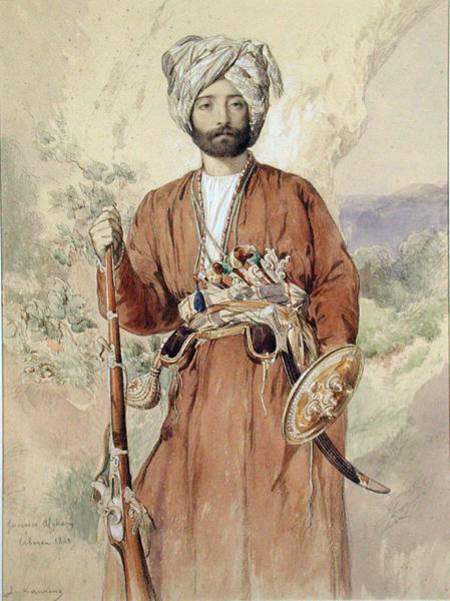
Re: History of Pashtuns series
yes I agree
Re: History of Pashtuns series
yes I agree
Re: History of Pashtuns series
All is well if, end is well 
Re: History of Pashtuns series
[admin] please use PMs, for discussing personal histories. keep public forums for public history [/admin]
Re: History of Pashtuns series
lulz @this thread; From what I gather, Baloch and Pashtuns are pretty feisty people…
Re: History of Pashtuns series
Bahmani Sultanate was founded in 1347 by Zafar Khan, an Afghan general in the service of Mohammad-bin-Tughlaq. According to persian historian Firishta (1560-1620), zafar khan was Afghan by birth.

Against Muhammad bin Tuqhlaq ,the nobles of Deccan rose into rebellion who occupied the city of
Daulatabad and one of them an Afghan chief—Ismail Mukh became the King of Deccan. He assumed the title Nasir-ud-din Shah. Nasir-ud-din Shah was an old man and hence he resigned from the post and the nobles nominated Hasan Gangu or Zafar Khan as the new chief under the title Abul Muzaffar Alauddin Bahman Shah.
Bahmani Kingdom (Bahmani Sultanate) - Important India
Re: History of Pashtuns series
:k:
Re: History of Pashtuns series
Suri Afghans of Ghor
It was at the time of this bounty of Sultán Bahlol, that the grandfather of Sher Sháh, by name Ibráhím Khán Súr,[The Súr represent themselves as descendants of Muhammad Súr, one of the princes of the house of the Ghorian, who left his native country, and married a daughter of one of the Afghán chiefs of Roh.] with his son Hasan Khán, the father of Sher Sháh, came to Hindu-stán from Afghánistán, from a place which is called in the Afghán tongue “Shargarí,”* but in the Multán tongue “Rohrí.” It is a ridge, a spur of the Sulaimán Mountains, about six or seven kos in length, situated on the banks of the Gumal. They entered into the service of Muhabbat Khán Súr, Dáúd Sáhú-khail, to whom Sultán Bahlol had given in jágír the parganas of Hariána and Bahkála, etc., in the Panjáb, and they settled in the pargana of Bajwára.*
—Abbas Khan Sarwani, 1580
Abbas Khan Sarwani (1580). “Táríkh-i Sher Sháhí; or, Tuhfat-i Akbar Sháhí, of 'Abbás Khán Sarwání. CHAPTER I. Account of the reign of Sher Sháh Súr.”. Packard Humanities Institute
" The Suri tribe of the Afghans inhabited the mountains of Ghor east of Furrah and their principal cities were Ghore, Feruzi and Bamian."
A Gazetteer of the World: Or, Dictionary of Geographical Knowledge …, Volume 5 page 61
Amir Suri
According to Minhaju-S Siraj, Amir Suri was captured by Mahmud of Ghazni, made prisoner along with his son and taken to Ghazni, where Amir Suri died by poisoning himself.
“ It was also the last stronghold of an ancient religion professed by the inhabitants when all their neighbors had become Muslim. In the 11th century AD Mahmud of Ghazni defeated the prince of Ghor Ibn –I-Suri, and made him prisoner in a severely-contested engagement in the valley of Ahingaran. Ibn-I-Suri is called a Hindu by the author, who has recorded his overthrow; it does not follow that he was one by religion or by race, but merely that he was not Muhammadan
The Kingdom of Afghanistan: a historical sketch By George Passman Tate Edition: illustrated Published by Asian Educational Services, 2001 Page12
The History of India: As Told by Its Own Historians. The …, Volume 2 By Sir Henry Miers Elliot
Sultan Mahumud now went to fight with the Ghorians, who were infidels at that time. Suri, their chief, was killed in this war, and his son was taken prisoner; but he killed himself by sucking poison which he had kept under the stone of his ring. The country of Ghor was annexed to that of the Sultan, and the population thereof converted to Islam. He now attacked the fort of Bhim, where was a temple of the Hindus.
Tarikh -I-Guzida of Hamdu-lla-Mustaufi. Page 65 from The History of India told by its own Historians H M Eliot and Dowson Volume 3
”
“ 'In the following year AH 401 (AD 1010), Mahmood led his army towards Ghoor. The native prince of the country, Mahomed, of the Afghan (Pashtun) tribe of Soor (the same race which gave birth to the dynasty that eventually succeeded in subverting the family of Sebüktigin), occupied an entrinched camp with 10,000 men. Mahmood was repulsed in repeated assaults which he made from morning till noon. Finding that the troops of Ghoor defended their entrenchments with such obstinacy, he caused his army to retreat in apparent confusion, in order to allure the enemy out of his fortified position. The Ghoorians, deceived by the stratagem, pursued the army of Ghizny; when the king, facing about, attacked and defeated them with great slaughter. Mahommed Soor, being made prisoner was brought to the king, but having taken poison, which he always kept under his ring, he died in a few hours; his country was annexed to the dominions of Ghizny. The author of the Towareekh Yumny affirms, that neither the sovereigns of Ghoor nor its inhabitants were Mahomedans till after this victory; whilst the author of the Tubkat-Nasiry, and Fukhr-ood-Deen Moobarik Shah Lody, the latter of whom wrote a history of the Kings of Ghoor in verse, both affirm, that they were converted many years before, even so early as the time of Ally
Ferishta-Translation John Briggs, p. 28 vol 1
“Ghor - Also called Ghoristan. The mountainous country between Hirat and Ghazni. According to Istakhri and Ibn Haukal it was a rugged mountainous country , bounded by the districts of Hirat, Farrah, Dawar, Rabat, Kurwan, and Gharjistan back to Hirat, which were all Muhammadan countries. Ghor itself was a country of infidels, containing only a few Musulmans, and the inhabitants spoke a language different from that of Khurasan”
The History of India as told by its own Historians by Eliot and Dowson, Volume 2 page 576
http://defence.pk/attachments/6c038d4604a868008169458db26708bd-jpg.51435/
Historical background of Sur
In the ancient Vedic Arian language the word sura meant sun or figuratively, an enlightened and scholarly person. The roots of this word are seen in the Rig-Veda and Avesta. The ancient Arians regarded Suray as the Sun-god. Sur also meant a representation of a divinity or idol or sun,[1] which has firm roots in the ancient mythology and names of persons and places of India.
This same word has sometimes meant hero,[2] and in the form of sura has had a strong figurative meaning in Avesta.[3]
According to Christiesen when the Kasis occupied Babylon in the 18th century (B.C.), the worshippers of this same Surya in Avesta were the (Hvar) and after that in the 14th century (B.C.) in the writings of the Arian Mithanis, this divinity is Mitra-Mehr or Shums,[4] the Babylonian Ezid.
The worship of the sun and the images of Ezid i.e. God (Sur=Hur=Khur=Khir of which the “waw” is changed into a “ya” in one of the Pashto dialects) was also practiced since olden times among those of the Aryan race of Aryana and India, and they regarded its ray as the source of Khura (divine illumination) and heat and life. In the history of Afghanistan we have evidence that sun worship and sun-god statues were prevalent until the Kushan period and the introduction of Islam into this land (7th century). Because in the relics discovered at Surkh Kotal (7th century) and the marble idols of the present day Khair Khana pass (5th century) traces of this creed could be observed.[5] It could therefore be said that the real name of Khair Khana should be Khur Khana or Khurshed Khana (home of the sun), whence the remains of the Surya temple and two marble statutes of this deity were discovered, and the boundaries and foundations of its temple were unearthed as a result of archaeological diggings.[6]
Huen Tsang, the Chinese pilgrim, who in May 630 A.D. and then upon his return from India in June, 644 (24 A.H.) had visited Kabulistan mentions a temple 70 Ii (about 23 miles) to the south of Kapisa in which the heavenly spirit Suna[7] (i.e. the same deity Surya) was worshipped. But later he went to the Sunagir (Tsu-na-hilu) mountain which is located in the country of Tso-ku-cha, i.e. Zabulistan, and people were worshipping and bestowing gold, silver, and enormous offerings to it.[8]
It seems that the Nepthalites of the 5th century also worshipped the ancient sun-god and destroyed Buddhist temples. The bust of this deity is engraved on some of their coins with flames bursting out from the back of its head. Jonker also shows coins of this type on which the names of Dawar-Zabal can be observed,[9] which proves the prevalence of this faith in this land as in the time of the first and second century Kushans also one of the deities engraved on their coins was this same Surya (sun).[10]
The name of one of the victorious kings of the Hepthalites inscribed on the tablet discovered at Dara-i-Shali of Uruzgan to the north of Kandahar was Mer Kula=Mehr Kul=Mir Gul, i.e. from the Mehr family, which signifies the connection of the 5th and 6th century Hephtalite kings and their remnants till the beginning of the Islamic era with the faith of sun worship and the Surya deity.
During the period when Huen Tsang talks about the temples and the faith of Sura worship in Kabulistan and Zabul, we read in the Arabian and Islamic histories what Ahmad bin Yahya Bilzury (died 275 H/892 A.D.) writes in the chapter of Islamic conquests in Siestan and Kabul:
In the year 30 H./650 A.D., Rabe bin Ziad Harithi, the Arab governor, came to Siestan and two and a half years later Abdur Rahman bin Samara was appointed governor of Zaranj. He took the regions of Rokhaj and Dawar, besieged the people of Dawar in the Zur mountain, and confiscated the idol of Zur which was made of pure gold and had ruby eyes. He cut off its hands and took out the rubies, and giving them to the margrave he said, “my intention was to show you that this idol can do neither any harm nor good.”[11]
Researchers had located this Surya temple in Zamindawar.[12] But when some time later I inquired from the people of Zamindawar (present-day Zindawar) about it, I found out that there exists, to this day, a village known as Deh-e Ar at a distance of three miles to the south of Musa Qala (capital of Zamindawar). In this village divided into the Zari Ulya and Zari Sufl[13] (upper and lower Zar) we can observe traces of the ruins of ancient buildings which are known among the local people by the name of Kafir Qala (fort of the infidel).
The Suris Of Ghor
As described in the foregoing pages the word Surya—the subsequent Sur and Suri has an ancient background in the history of religions of Afghanistan whose altered form in the western dialects of Khurasan is Zur and Zuri. The exchange of Sur to Nur (khurshed or sun) is also characteristic of the eastern and western dialects. For example, Suma-Numa, Sind-Hind, whose ‘s’ has been changed into ‘z’ in western Khurasan, and hence we call the well-known Afghan Suri tribe, who migrated from the slopes of Kisey Ghar (Sulaiman Mountain) to the east and India, Suri (Indian Kings of the Suri race such as Sher Shah Suri, belonged to this tribe) while in the western part of Ghor and Herat and Badghis they are called Zuris. The name Zur also influenced the denomination of cities and tribes. For instance Zurabad was the name of a city which still exists by this name to the south of Sarakhs and the farthest north-western corners of the Afghan border in Herat province. Yaqut has considered it Zurabz from the regions of Sarakhs[14] and its relative is Zurabzi.[15] Abu Bakr Mohammad bin Atiq bin Mohammad Surabadi Herawi, author of "Tafseer-ul- Surabadi and a contemporary of Alp Arsalan (445-465 H./1062-1072 A.D.) came from this place.[16]
One of the persons related to the Suri tribe was Mahawi Suri, the margrave of Merv who had the last Sassanid King Yazdi Gurd, killed by a miller in 31 H./651 A.D., and according to Tabari, had an audience with Hazrat Ali (the fourth Caliph) and obtained a letter from him authorizing Suri to collect tributes and taxes.[17]
This Mahawi Suri was a powerful ruler and, according to Firdowsi, conquered the citics of Balkh, Herat, and Bukhara.
To his first born he gave Balkh and Hari
And sent his armies in every direction,
He gave the soldiers money to prosper
Then toward Bukhara they marched
The warriors of the brave army.
If this legendary narrative of Firdowsi is not entirely true, at least its main points such as Mahawi’s relationship with the Suri tribe and his contention with Yazdi Gurd are in accord with the relations by other historians. For the letter that Hazat Ali (May Go be pease with him) had issued and bore the date of 36 H./656 A.D is itself recorded by Jabari.[18]
Shihab al-Din of Ghor
[1] Sanskrit-English Dictionary, p. 1234. Oxford 1964.
[2] Hindi-English Dictionary, p. 488, London, 1866.
[3] Daudpoor, Yashtha. Vol. 1, p. 265. Tehran, 1968.
[4] The worship of Mazda in ancient Iran, p.32. Tehran 1947.
[5] Rosenfield. The Royal Art of the Kushans, p. 192.
[6] Hacken. Relics of Khair Khana pass, translated, Kohzad, Kabul, 1936.
[7] Suna, which in Arabic has been changed into Zun (see Majame-ul-Buldan, 4/28 and Al-Muraba of Jawaliqi, p 166 was the same idol of the sun goddess which in the Indo-European languages had the root (su-en or sa-uen) and in the Anglo Saxon it was (sunne, in German (sonne) and was changed to sun. English (Webster’s New Dictionary 146, 1957). Hence (sunagir) in Pashto is (sughar) and the present day (chunghar) is also from the remnants of this denomination meaning (sun mountains). The Snarod (Seistan) or Sunabad (Toos) and Suna Khan or Suna Kheil (names of Afghan distinguished men) are also from this category.
[8] Si-yu-ki, 1st book on Kia-pi-shi, 12th books on Tsu-su-cha (Zabul).
[9] Kohzad, History of Afghanistan, Vol. 2, pa. 577.
[10] Rosenfield. The art of the Kushanid Period. 294.
[11] Bilazuri. Futuh-ul-Buldan, p. 486.
[12] Lee, Strange. Geography of the Eastern Caliphate. Urdu translation, p. 521. Hyderabad, 1930.
[13] Habibi, A.H. Afghanistan after Islam. P. 1054, Kabul 1978.
[14] Marajiat-ul-Ittlas, Vol. 1, p. 512, Cairo, 1978.
[15] Ibid.
[16] Haji Khalifa. Kashf-uz-Zunon, Vol. 1, p. 310.
[17] Futuh, 505. Tarekh-e Yaqubi, Vo,. 2, p. 184.
[18] Tarekh-ul-Ummame wal Mulook, Vol. 3, p. 557.
Re: History of Pashtuns series
**Umra Khan Jandul**
Many British writers, including Winston Churchill, have written about Umra Khan but HC Thomson’s book, The Chitral Campaigngives the most detailed and objective account of his life.
Khan was born in about 1860, in a place called Barwa (renamed as Samar Bagh in the 1980s) in Jandul, Lower Dir. At that time, different areas in Bajaur and Dir were ruled by Khans. His father, Aman Khan, ruled the valley of Jandul. On his death, in 1879, Umra Khan’s elder brother succeeded him. Fearing for his life, Umra Khan fled Jandul, performed Hajj and then went to Peshawar. He stole a rifle from a British regiment and came back to Jandul in 1881. Dressed in women’s clothes, with a few of his friends, he shot his brother dead outside the Barwa Fort and became the ruler of Jandul.
Umra Khan obtained rifles, raised an army and a horse cavalry and embarked on a series of conquests. He captured Dir and expelled Sharif Khan, the then ruler. He then attacked and captured Asmar. By 1892, he was in control of all of Dir, Bajaur, Malakand, some portions of Swat, and his influence extended up to Buner.
Chitral, at that time, was ruled by Mehtar Aman ul Mulk. To guard against any aggression by the Afghan amir, he had placed Chitral under the nominal suzerainty of his neighbouring ruler, the Maharaja of Kashmir and also developed good relations with the British. In February 1895, Umra Khan entered Chitral, despite heavy snow and severe weather, and captured the Drosh Fort. The British political agent at Chitral asked Umra Khan to leave but he disregarded this warning. He instead wrote back to the British agent asking him to leave Chitral. Umra Khan’s forces laid siege to the Chitral fort and a number of attacks were launched in which both sides suffered casualties. Two British officers were captured and brought to Drosh.
In March 1895, the British mobilised a division size force at Nowshera. Once Umra Khan received this news, he retreated to Jandul, taking the two captured officers with him. The British held negotiations with the Khan of Dir, Nawagai and other powerful tribes of Swat, Buner, Mohmand and Bajaur, to remain neutral in the fight against Umra Khan. The British faced resistance at Shakot, Malakand Pass, Chakdara, Ramorha and Kotkali.The final battle was fought at Jandul Valley. Finally, Umra Khan, realising that his men could not fight such a large, well-armed British force, released the two British officers and retreated to Kabul.
Umra Khan was always well-dressed but without ostentation. He led a simple life and was a very popular leader. He was religious but not a fanatic. Hindu traders living in Jandul were never discriminated against. The women did not observe purdah and mingled freely with men. He treated the two British captives with generosity. He prevented bloodshed by avoiding a hopeless conflict against an overwhelming force. He died in Kabul in 1903, after ruling for 14 years.
Umra Khan of Jandul – The Express Tribune
Umra khan of Jandul | History of Pashtuns
Re: History of Pashtuns series
Sher Ali Afridi
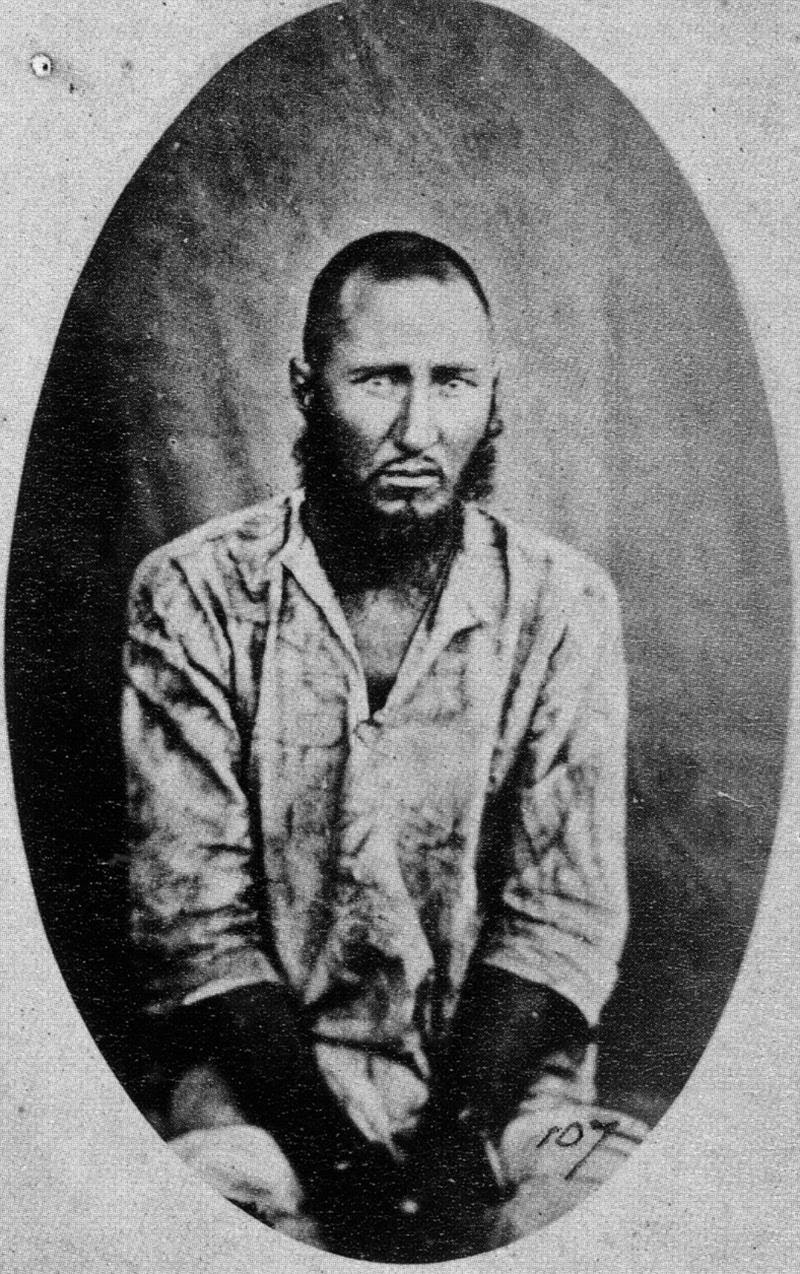
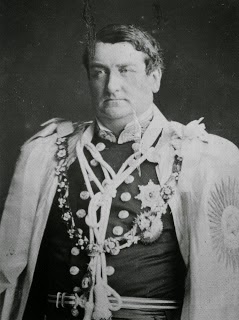
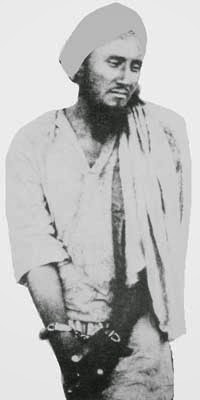
The assassination of Viceroy Lord Mayo by an Afridi convict in Andaman Islands (known in India as Kala Paani – Black Water) was also not due to some grand nationalist ideology but simple Pushtun code of honour was at stake. The attacker Sher Ali had served loyally and bravely in a cavalry regiment and served during the 1857 Rebellion in Rohilkhand and Oudh. He then joined Peshawar Mounted Police and fought bravely in Ambela Campaign saving the lives of British officers twice. Sher Ali had a blood feud and killed a man in British territory not in tribal area. He was found guilty by Deputy Commissioner and sentenced to transportation for life to the Andaman Islands. Sher Ali addressing the court, narrated all his services to British strangely enough not to beg for his life but for a death sentence rather than transportation to Black Water. It was a dishonour for a Pushtun to be sentenced to life imprisonment. Death penalty will be an honour. The British officer considering the loyal services of the accused was avoiding the capital punishment but the accused himself was demanding a death penalty. When he was told that he would be sent to Black Water, he said, “You will hear of me again, and so will my people”. Surely, everybody all over India and abroad heard him when he killed the British Viceroy of India, Richard Bourke, the 6th Earl of Mayo, who had stopped off to visit the convict settlement at the Andaman Islands.
In “Sarguzasht e Mujahideen”, Maulana Ghulam Rasool Mahar explains the incident in great detail:
“Sher Ali was a man who would come down to anything to fulfil his ambitions. On one occasion, he had broken his heavy chains and handcuffs that were meant to restrain him and injured a prison guard after snatching his rifle. After killing the viceroy, he was asked by the courts about who had hired him to do this job. He would simply reply that I killed him by the Order of Allah!”
Sher Ali was again tried for murder and was given the death penalty once again. On the 11th of March 1873, when he was brought to the gallows, there was a look of satisfaction in his eyes. He kissed the rope from which he would be hanged and exclaimed, “When I made this intention [of killing the viceroy], I had already envisioned myself over here”. He addressed the Muslims who had come to watch the penalty being enforced, “Brothers, I killed your enemy. You be witness that I am a Muslim.” With this, he recited the Kalma Shahadah. Twice he was able to complete it. The third time, he was not able to do so because of suffocation.
http://4.bp.blogspot.com/-ztIZdfnG-gA/U7XpAY8FePI/AAAAAAAAAWo/7Q0do03BOYE/s320/sher+ali+afridi.jpg
Sher ali afridi
http://2.bp.blogspot.com/-p0_BWU4zy0U/U6FKVUoOAzI/AAAAAAAAAKM/c5x0U11gn_Y/s1600/Lord-Mayo.jpg
Lord mayo
http://1.bp.blogspot.com/-O_0vxzc9Gbs/U6FGIZaydOI/AAAAAAAAAJw/_4AvmDKVnwM/s1600/Sher_Ali_Afridi.jpg
Re: History of Pashtuns series
Mehsuds and Wazirs, the King-makers in a game of thrones
In some respects the adventures of Mehsuds and Wazir contingents which accompanied Nadir to Kabul in 1929 present a picture even more significant. For on that occasion they were not defending their country from occupation, but acting on the offensive within Afghanistan. .The position was that after Amanullah fall in 1928, power had fallen into the hands of a tajik freebooter named habibullah, known as bacha-i-saqao , and nadir khan had come from France in an attempt to recover throne for Muhammadzais.
On arrival on the frontier , nadir resorted to kurram whence he endeavored to mobilize aid from Afridis and Orakzais , but found his efforts severely discouraged by government of India., who, occupying kurram as they did, were able to prevent Tirah tribesmen from crossing into afghan territory. He then turned his attention towards Mahsuds and Wazirs, some of whom, previously encouraged by Amanullah in hostility to the british government, had lands on afghan side of Durand line. Here he met with success, and was joined by considerable lashkars, including number of both tribes living in Waziristan. There are also wazirs whose permanent homes are on the afghan side of line, in birmal and elsewhere. Those on the British side of line went in defiance of warnings from government of India not to meddle in afghan affairs. This lashkar formed the spear-head of nadir’s advance. It was they who took Kabul for him and made it possible for durranai dynasty to be restored. They were in fact king-makers of the day. Neither they nor others up and down the frontier have forgotten the lesson. King-makers can easily be king-breakers.
http://2.bp.blogspot.com/-xEbcQP6ozPw/U7MoyRjMizI/AAAAAAAAAQU/kZGJ-N6zbRE/s1600/Mehsud+waziristan+tribesmen.jpg
As payment to wazir and mahsud tribesmen, nadir khan, faced with an empty treasury, was forced to allow them loot his own capital and rather empty grant of honorary rank in afghan army.. These tribesmen returned home by the end of year with great amount of loot, rifles and ammunition. Shortly after , an insureection almost in the suburbs of kabul among the followers of dead bacha saqao forced nadir khan once again to call these tribes to his support. This time he was able to get them home without having let them loot kabul in recompense. Within a few years the same tribesmen were denouncing nadir khan and were arguing that they had supported him only for the purpose of restoring Amanullah, the rightful king.
The waziristan tribes , aware that king-makers can easily be king-breakers, felt ready for yet another exercise of king-making. In 1933, while nadir was still alive, a strong lashkar of both tribes crossed the Durand line and invested matun in khost. The government of India attempted to prevent the movement by establishing a cordon of troops, but this proved ineffective and it was not until air action was taken by Delhi against the homes of those who had joined the lashkar that it was broken up. Only with great difficulty, afghan army led by hashim khan, the king’s brother, repelled them , otherwise they might well have repeated the story of 1929.
Sources The Pathans, 550 B.C.-A.D. 1957 - Sir Olaf Kirkpatrick Caroe - Google Books
Tribe and State in Iran and Afghanistan (RLE Iran D) - Richard Tapper - Google Books
Re: History of Pashtuns series
Afghan principality of Kasur and Sikhs
A large potion of Kheshgis and Zamands accompanied Mughal king Babar to hindostan and fought for him in first battle of panipat in 1526. For their services, Kasur region was awarded to them by Babur. In kasur they formed two villages which were called Bar kalay and Lar kalay. At that time it is said they had a population of about 3,500. The Pashtuns of Kasur constructed 12 small forts called as “Qasar” in Persian language so the city was later on named as Qasoor (A city of Qasars(Forts)) There were about twelve Kots named after the heads of various families. Hasanzais became the chiefs of kasur and founded a considerable principality, including territory on both banks of the Sutlej River.
In December 1747, Ahmed Shah set out from Peshawar, and arrived at the Indus river-crossing at Attock. When Ahmed Shah reached the bank of the Ravi on 8th January, 1748, the Lahore army of 70,000 of Shah Nawaz prepared to oppose the invader. The Afghans crossed over on the 10th of January and the battle was joined on the 11th. Ahmed Shah had only 30,000 horsemen, and no artillery. But during the battle, a force of 5,000 Pashtunss of Kasur under Jamal Khan defected to his side, and he was able to crush the poorly trained forces of Lahore. Shah Nawaz fled to Delhi, and Adina Beg was equally fast in running away to the Jalandhar area.
Ahmed Shah entered the city on the 12th January 1748, he appointed Jamal Khan of Kasur Governor of Lahore, and Lakhpat Rai his minister, and restoring law and order around the town by February 18, he set out towards Delhi.
Pashtuns of Kasur were greatest menace to Sikhs, they were loyal to Kandahar. During the Abdali attacks, they took side with him and plundered the Sikh territory. Sikhs also sacked the Afghan principality of Kasur in May 1763. In 1794, two Pashtun brothers, Nizam ud Din and Kutab ud Din reestablished the Afghan rule over Kasur.
Shah Zaman made attempts to recapture the Punjab in 1797 and 1798, each time managing to take Lahore with the help of Nizamuddin Khan, the ruler of Kasur. In 1796 Shah Zaman moved, crossed Indus for the third time with intention of capturing Delhi to aid Tipu sultan. He was again helped by Nizam-ud din. A rebellion by his brother Mahmud caused Shah Zaman to return hastily to Kabul.
Kasur had long been a thorn in the side of Ranjeet Singh’s power because of its proximity to his capital city. He had alreay made three unsuccessful attempts to conquer Kasur. Its location and battlements afforded Kasur special protection, it stood on the upland bank overlooking the alluvial valleys of beas and sutlej. It contained fortified hamlets surrounded by a wall. In 1807 Sikh forces under surrounded Kasur and cut off all communications. The entire land was laid waste. Sikh artillery reduced Kasur to rubble. Kutab ud Din was forced to give way to Ranjit Singh and fled to his territory at Mamdot, beyond the Sutlej River. Kasur was then incorporated into the dominion of Ranjit Singh, Pashtun element in Kasur declined after this conquest. It was the last stronghold of the Afghans in upper half of the bari doab.
In 1818, many Kasuri Afghans fought for Nawab Muzaffar Khan Sadozai in defending Multan from Ranjeet singh forces
The following are some of the distinguished personalities of Kasuri Afghans.
Saleem Khan Zamand – Head of the Zamand Clan, who was a Commander of Mughal Army in the first battle of Panipat, 1526. Emperor Babar entered into an agreement to grant ¼ of Delhi’s revenue to Saleem Khan Zamand and his Clan.
Nawab Nazar Buhadar Khan Kheshgi – he was q Hasht-Hazzari of Mughal army.
Nawab Qutab-Ud-Din Khan Kheshgi, he was the Mughal Military Governor of Haiderabad Daccan.
Nawab Shamas Din Khan Kheshgi, he was Mughal Military Governor of Surat and Jona Garh.
Arzani Kheshgi, he was the great poet of Pushto history, a contemporary of Pir Roshan. He is the first ever poet in Pushto history having a Deewan of his own about Pushto poetry. Khushaal Khan Khattak drew his certification from the poetry of Arzani Kheshgi.
Abdullah Khan Kheshgi, the author of Kitaab-Ul-Aulia, written in 1640.
Re: History of Pashtuns series
Ahmad Shah Durrani against Qing China
Ahmad Shah Durrani was attempting to form alliance of muslim central asian khanates and kazaks in order to mount military campaign against the Qing expansion into central asia. The powerful muslim ruler was upset at the murder of muslim saints, the kashghar khojas. According to the report of valikhanov, such central asian rulers as irdana of khokand and tashkent, fadil bi of khojent and uratepe, and a sultan of the kazaks, had earlier sent a letter to Ahmad Shah to ask him “to deliver the muslim world from attack of non-believers”. In the spring of 1763 were deployed in the area between khokand and Tashkent, and Ahmad shah dispatched letters to many leaders of islamic countries urging them to join in the holy war.According to valikhanov this provoked atleast one revolt in 1765 in a town called ush within kashgharia itself where mulsims had risen with expectation of receiving help from the wider muslim world.
This plan for a coordinated attack against Qing territory also appears in Russsian records. according to their reports , irdana had sent letter to kazak sultan, ablai, notifying him that Ahmad shah’s emissary has arrived in khokand with a message that Ahmad Shah has agreed to aid khokand in case of a Qing attack. A merchent from khojent who visited orenburg in january 1764 informed the Russians that Ahmad Shah has concentrated one hundred thousand troops to the north of kandahar in case of war against Qing.The Qing court received similar reports about such military movement in central asia.
Holy War in China: The Muslim Rebellion and State in Chinese Central Asia …
By Hodong Kim Holy War in China: The Muslim Rebellion and State in Chinese Central Asia … - Hodong Kim - Google Books
In kashghar troops were also ready for expedition against Afghanistan.
(The Empire And the Khanate: A Political History of Qing Relations with …
By L. J. Newby page 35)
…
After his withdrawal from hindustan in the spring of 1761, the Afghan ruler was free to respond to Qing expansion. He sent a letter to the Qing court in 1762 demanding it withdraw from muslim territories, and, when this ultimatum was rejected, began to assemble a huge invasion force.
From Frontier Policy to Foreign Policy: The Question of India and the … - Matthew Mosca - Google Books
…
Central asian and Qing sources that in late 1762, Ahmad shah of afghanistan sent an embasy to Beijing with a letter. The Afghan letter stated that “Maratha khan (probably the Maratha Peshwa) had amassed force of several hundred thousands troops to respond to his own seizure of Delhi. When they heard that he was approaching, however, they fled into the fortress of panipat. After six month siege, Ahmad shah defeated them, killing over a hundred thousand.”…This had overtones of a veiled threat.
From Frontier Policy to Foreign Policy: The Question of India and the … - Matthew Mosca - Google Books
…
The Afghan envoy failed to make the good impression because he refuse to perform kowtow. The qianlong emperor dispatched a letter to afghan ruler instructing him on folly of war with the reminder that he, the qainlong emperor, is “lord of all under heaven who watches over every thing inside and outside the empire, and who rewards good and punishes evil”
The Empire And the Khanate: A Political History of Qing Relations With … - L. J. Newby - Google Books
Ahmad Shah of Afghanistan massed his troops and corresponded with other central asian rulers to raise a united resistance. These efforts came to naught When Qing appeared content to stop at pamirs. but Ahmad shah , in alliance with bukhara, invaded badakhshan, killing its ruler sultan shah for betraying buhan ud din and khoja jahan to the Qing and dispatched his head to the Qing authorities in Xinjiang.
Eurasian Crossroads: A History of Xinjiang - James A. Millward - Google Books
Xinjiang and China’s Rise in Central Asia - A History - Michael E. Clarke - Google Books
The Afghan envoy to Beijing presented the Qing emperor with four splendid horses.
Milanese Jesuit missionary artist Giuseppe Castiglione (Lang Shinin in pinyin)painted the horses for the Qing emperor by the in the 18th century. The original paintings of the Afghan steeds are kept at the National Palace Museum in Taiwan.
http://2.bp.blogspot.com/-sGD-rmh96cY/U2nSyL4XR2I/AAAAAAAAAHI/VpEF4mXO05I/s1600/1.jpghttp://3.bp.blogspot.com/-W1iL01LnpEM/U2nTJBloTII/AAAAAAAAAHQ/WkWKMxQbIyk/s1600/2.jpghttp://1.bp.blogspot.com/-zKabjdCFOco/U2nTPC-yPnI/AAAAAAAAAHY/ejjy1seZ2Oc/s1600/3.jpghttp://2.bp.blogspot.com/-6KcyeNXJqzE/U2nTnDUS0qI/AAAAAAAAAHg/_lLa44VATuQ/s1600/4.jpg
Re: History of Pashtuns series
Pashtun rule of South-Westren Burma, Arakan state
http://www.travel-myanmar.net/images/map-rakhine.jpg
Chittagong and Arakan proper (Burma)were conquered by Muhammad khan Sur, Afghan ruler of Bengal in 1554.
South East Asia - Burma
Mohammed Shah Sur’s General forced Arakan king (perhaps Min Dikka (1553-1554) or Min Saw HIa (1554-1555) to submit to the authority of Bengal Sultan. Perhaps the Pathans conquered the principality of Ramu and some portion of modern Akyab Division. He ordered the striking of coins in 1555 A.D. The mint of these coins mentioned as Arakan. Eminent numismatist such as Mr N. B. Synyal, points out from the reading of the coins that Mohammed Shah’s conquered Arakan . He pointed out that the afore coins were not only the specimen of Mohammed Shah’s Arakan coins, but the coins preserved in British Museum also indicate the same reading. In this connection Dr. Kunango referred to Numismatists, Rodgers Lamepole, and Wright who expressed the same idea about the coins of Mohammed Shah, which were minted in the name of Arakan.
…
.According to eminent numismatists like Lanepole, Rodgers and Wright, Bengal king Sultan Muhammad Khan Sur struk coins bearing the date 962 A.H.(1554-55 A.D.) styling himself Sultan Shamshuddin Muhammad Shah Ghazi, the name of mint is read as Arakan. A few of these coins are preserved in the London British Museum.The coins are similar to those published by Marsden, Lane Pole and Wright.
The successor of Mohammad Shah Suri, Giyathuddin Bahadur Shah (1555-60) also struck coins in his name in Arakan proving that Arakan remained under the effective control of Bengal Sultan till 1560.
But how long the Pathan rulers after Bahadur Shah’s death could hold on Arakan given the internal political crisis in Bengal remains in the dark.
A History of Chittagong: From ancient times down to 1761 - SunÄ«ti BhÅ«shaṇa KÄnunago - Google Books
The sturdy and warlike race of Afghans had once held sway over Bengal. Their authority extended not only up to Chittagong but as far south as Arakan.
Towards Understanding Arakan History ( Part II) - Kaladan Press Network
There is a sizable muslim minority in arakan known as rohingyas, meaning “native born”.however they are thought to be descendants of suri soldiers by some, who fled there when Mughals defeated them in 1555.
Historical Dictionary of Bangladesh - Syedur Rahman - Google Books
When Bengal was seized by Mogul emperor Akbar in 1572, from the hand of Afghan king, many Muslim high-ranking officers had to flee into Arakan kingdom where they were warmly welcomed and offered high-ranking official posts. In early Mrauk-U period a steady influx of population of Islamic faith, chiefly meicenaries from Afghan, Persia and even from Turkey as well as traders from other parts of the Muslim world reached Arakan. Dr. Kanungo adds to it that Arakanese required their (the exile’s) services in fighting out the enemies, the Mogul and the Portuguese, all of who were the enemies of Pathans too.
During the year 1538-39 Sher Shah’s General Noazish occupied Chittagong and till 1580 it was ruled by the Afgans. Though the Afghans left Bengal in 1575, Jamal Khan Panni ruled Chittagong up to 1580. In 1580 she was re-captured by the Arakans
The problems and possibilities of Chittagong
Earlier Conquest of Arakan by Pashtuns
As Naramaikhla agreed to six point conditions (Arakanese kings also followed and practised them while they were independent and under no obligation), in 1429 AD, Sultan Nadir Shah sent Gen. Wali Khan as the head of 20,000 Pathan army with Naramaikhla to restore the throne of Arakan to Naramaikhla. The Pathan army conquered Arakan from the control of Mon and Naramaikhla ascended the throne. Soon Wali Khan and Naramaikhla had a dispute over the No. 5 condition of introduction of Persian language as court language of Arakan. Gen. Wali Khan arrested king Naramaikhla and locked up at Balutaung fettering him. Gen. Wali Khan ruled Arakan for one year and introduced Persian in his court which continued as state language up to 1845 AD and appointed Qazis. But some time after that Narameikhla succeeded in re-conquering Arakan with the help of a second army supplied by Nadir Shah headed by Gen. Sandi Khan. The accession of Min Sawmon to the throne ushered a new era in the history of Arakan. Upon his return, Narameikhla founded a new city, Mrauk-U on the bank of the Lembro River, now known as Mrohaung, which remain the capital until 1785 when Arakan was conquered by Burma. Narameikhla’s Muslim soldiers, who came with him from Bengal, settled in villages near Mrohaung and built the Sandi Khan Mosque, which still exists today. Muslim influence in Arakan, they may be said to date from 1430, the year of Narameikhla’s return. As a result of the close land and sea ties between the two countries, which continued to exist for a long time thereafter, the Muslims played a decisive role in the history of Arakan Kingdom.
Arakan ~ TSR News
In 1430, after nearly three decades in exile in the Bengali Royal city of Gaur, king Narameikhla also known as Min Saw Mun (1404-1434) returned to Arakan at the head of a formidable force largely made up of Afghan adventurers, who swiftly overcame local oppositions and drove off the Burmans and Mons. This was the start of a new golden age for this country – a period of power and prosperity…This cosmopolitan court became great patrons of Bengali as well as Arakanese literature. Poet Dulat Qazi, author of the first Bengali romance, and Shah Alaol, who was considered the greatest of seventeenth-century Bengali poets, were among the eminent courtiers of Arakan.
Muslim influence in the kingdom of Arakan
Narameikhia shifted his capital to a new site known as Mrauk-U or Patthri Quilla in 1433. As the Pathan soldiers of Gen. Sandi Khan was faithful to him, king Narameikhia deployed them to all important and strategic places and all bordering areas to defend the state. These Pathan soldiers were unable to return to their motherland. They served in Arakan with the posts-ranked from ministers to soldiers and built many monuments. Among them the most prominent mosque is the Sandi Khan mosque which was built in the year 1433 at Kawalong, in Mrohaung City.
https://encrypted-tbn1.gstatic.com/images?q=tbn:ANd9GcSjtRs-S7M2_7ZaVoiGpsPg8EaGD-ynVX1J8AyqtToe5L5f-q120Q A mosque in Mrauk-U (Mrohaung). The Sandi Khan mosque - called the “Santikhan” mosque - which was built by Pashtuns coming from Bengal has been destroyed by the Burmese.
Though the religion of Islam and the culture of Muslim began with the arrival of Arabs in Arakan, but it came to prominence with the arrival of Gauri (suri) Pathans. In U Kyi’s “The Essential History of Burma”, he wrote that “Rakhine Maghs became Muslims after embracing Islam in 15th century. For hundred years, from 1430 to 1530 A. D. Arakan was under the suzerainty of Muslim Bengal.”
Re: History of Pashtuns series
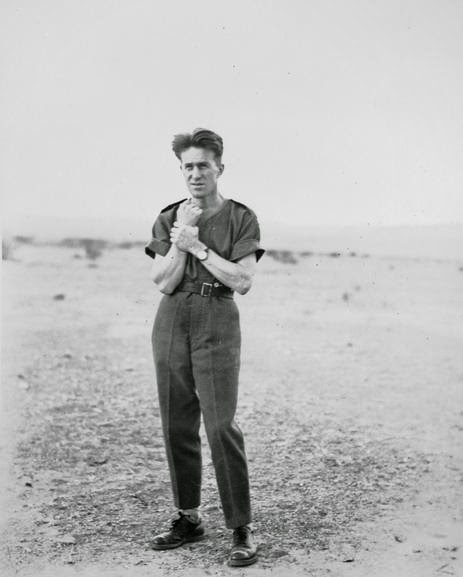
Lawrence of Arabia in Waziristan
The Jandola Mess acquired a reputation for hospitality and served numerous guests. Among the earliest in 1924, were a party of VIPs including Arlfred Mond, Chairman of ICI and Lord Incheape, Chairman of the P and o Line, touring India, during the cold weather.
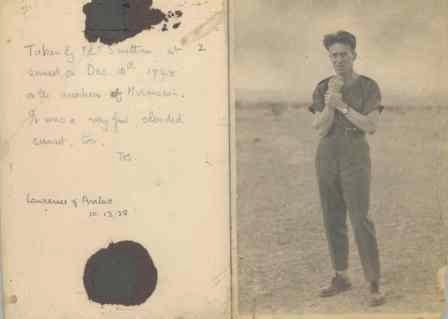
Another early visitor to Jandola was, Lawrence of Arabia. He visited the area in 1928 in the guise of an Aircraftsmans Show; benighted there by a broken down truck and accommodated in Officer’s Mess. He kept them enthralled by tales (some, perhaps, almost true) of far Arabia and left them a volume which is still treasured by the South Waziristan Scouts officers. “This book, he inscribed on the flyleaf , was written by me, but its sordid type and squalid blocks are the responsibility of the publisher. It is, however, the last copy in print of Revolt in the Desert, and I have much pleasure in presenting it to the officers of the South Waziristan Scouts in memory of a very interesting day and night with them”. This book today is lying in the South Waziristan Scouts Officer’s Mess, Wana.
http://4.bp.blogspot.com/-6ArQ6RMAzd0/U6qGAruCJfI/AAAAAAAAALQ/Gx52y4nFurQ/s1600/standard.jpg
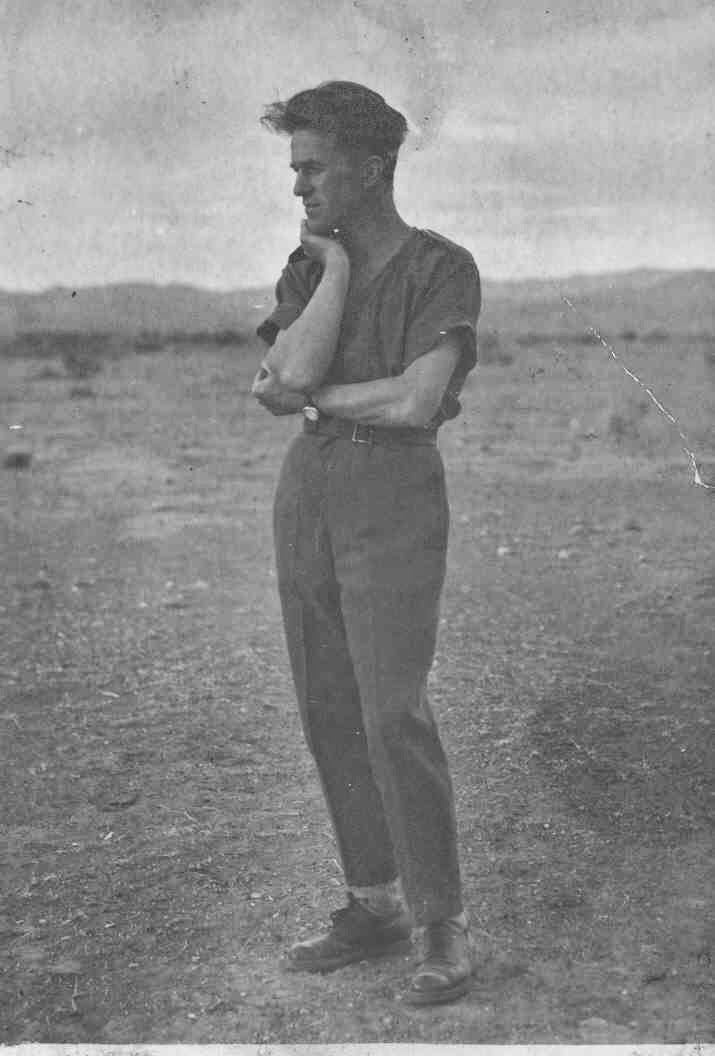
T E Lawrence as Aircraftman T E Shaw on the aerodrome at Miranshah Fort in Waziristan, India (on the North West Frontier) during his service in the Royal Air Force. Lawrence was employed as a clerk in the wireless station at Miranshah. He is seen nursing his wrist which he had broken at RAF Cranwell in 1926. Lawrence wrote that the wrist “hurt for so long that nursing it became a habit”.
Gilbert C. G. Lewis, a soldier in the Indian Army, remarked in a letter in 1928:
‘…You know Colonel Lawrence, the one who made such a name for himself in Arabia during the war? He is, at present with the R.A.F. at Miranshah – the people we play hockey with at Idak – as an office clerk! You had probably heard that he had joined the R.A.F. as a private in order to escape publicity. I tried to persuade them to bring him down with their team next time they come, but apparently he doesn’t take much interest in games! One would have thought that he could have found many better ways of avoiding publicity, as the life of a private must be rather irksome to one who always [has] done more or less as he pleased. They say he spends most of his spare time learning to type-write! …’
Lawrence was apparently taking a two year break in India to write his book The Mint. Enlisted as a lowly aircraftman under the name T. E. Shaw, he corresponded with Charlotte Shaw, wife of George Bernard, on anything from literature to politics. A few small photographs of him were enclosed in one of his letters.
http://1.bp.blogspot.com/-GToKQUH-Y70/U6qA2-QKBXI/AAAAAAAAAKs/cLIIynOnG3o/s1600/laaaaaaaaaaaaa.jpg
http://3.bp.blogspot.com/-zxt2KFItuZQ/U6qCFwC8kbI/AAAAAAAAAK8/AcpUWZi2lVQ/s1600/kussssssssssssss.jpg
http://1.bp.blogspot.com/-lIEU7kPpvxo/U6qE37n94yI/AAAAAAAAALI/zazrhaCDMbs/s1600/hurray.jpg
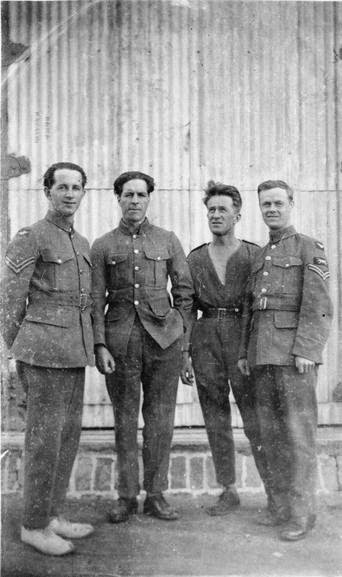
T E LAWRENCE OF ARABIA (THIRD FROM LEFT) WHILE SERVING WITH THE RAF AT MIRANSHAH FORT, WAZIRISTAN, NW FRONTIER OF INDIA, 1928
Having spent eight months flying and driving over the North-West frontier, Lawrence of Arabia had come to the conclusion that air control was applicable to Waziristan not to the Mohmand country, and becoming less and less effective as you approach to Peshawer.He went on to say that although a strong supporter of “Air” he would have reservations over North West Frontier Province - “I would take over bits, evacuating Razmak tomorrow.”
Lawrence of Arabia By B. H. Liddell Hart page 357
A note in T.E Lawrence’s hand thanking the South waziristan scouts for their hospitality is enshrined in a glass box in the wana mess library.
Discovering Islam: Making Sense of Muslim History and Society By Akbar S. Ahmed
Lawrence about Miranshah, “Round us…are low bare porcelain-coloured hills, with…a broken-bottle skyline…the quietness is so intense that i rub my ears, wondering if i am going deaf”.
T.E. Lawrence: Biography of a Broken Hero By Harold Orlans page 83
There were rumours that Lawrence was active in Afghanistan, a self-appointed agent provocateur. ‘Clad in the most picturesque Oriental garb, silken Kerchiefs of diverse hue tied round his head, with long “Jhubba” of silk with designs of different colours and a “lungi” of the same material…’, he was ‘intimate with the tribes and began subsequently to distribute among the tribes money and arms and provoked them against (King) Amanullah’.
Daily Herald, january 5th, 1929.
Lawrence of Arabia
Arrest ordered by Afghan authorities
Startling report
Lawrence was sent back to England by order of the Foreign Office in early 1929, just a few days after King Amanullah was overthrown by the rebels. So, did Lawrence engineer the insurgence in Afghanistan to bring down the anti-British Amanullah?
Re: History of Pashtuns series
Poonch uprising and reasons for Pashtun’s jihad
Why Poonchis revolted?
In the spring of 1947, the Poonchis had mounted a vigorous campaign against the oppressive tax regime imposed by Dogra ruler on every hearth & every window. Even buffalo and sheep were taxed besides every wife. An additional tax was imposed to finance for the salaries of taxmen, rent of tax offices etc. In July 1947, Muslims of Poonch were directed to surrender their arms only to be handed over to Hindus & Sikhs of the area.
Poonch Rebellion And Tribal Incursion Of Kashmir By Abdul Majid Zargar
In September 1947, in the southern Kashmir region of poonch and jammu, mobs of hindus , aided by maharaja’s soldiers, began slaughtering muslims. Muslim sources claim 200,000 of the region’s total muslim population of 500,000 were killed and the rest drived as refugees to Pakistan.
War at the Top of the World: The Struggle for Afghanistan, Kashmir and Tibet - Eric Margolis - Google Books
British daily The London Times quoting its special correspondent in India stated that the Maharaja, under his own supervision, got assassinated 2,37,000 Muslims, using military forces in the Jammu area.
KASHMIR - THE UNTOLD STORY - Christopher Snedden - Google Books
It seems only Poonchis were armed and capable of offering armed resistance, as many of them had served in British indian army in world war, so Maharaja hari singh began with disarming them first before the crisis of partition and after partition encouraged hindu mobs , assisted by his soldiers, to cleanse Jammu from muslims.
The muslim revolt merits a special note as it was originally an autonomous jagir and more than 60,000 poonchis of Pathan Sudhan tribe had seen action in the second world war.
Strategic Studies - Google Books
My research says in 1947 there were 50,000 Poonchis who had served in the British Army. Poonch was one of the major recruiting grounds for the British. These people would always think of themselves as fighters. There were no economic opportunities and inadequate landholdings in this area. So, most of them fought alongside the British, unlike Kashmiri Muslims, who had enough land to till and were involved in economic activities. Poonchis had military and combat skills. Although the Maharaja’s forces disarmed them, they went across the border to arms manufacturers in North-West Frontier Province and Dera Ismail Khan in Pakistan. They had a lot of local support; they managed to liberate their own area, defeated the Dogra army and even captured their arms.
Christopher Snedden’s interview.
‘Nehru didn’t want to publicise the Poonch rebellion because it would have strengthened Pakistan’s case’ | Tehelka.com](http://www.tehelka.com/nehru-didnt-want-to-publicise-the-poonch-rebellion-because-it-would-have-strengthened-pakistans-case/)
**Ties of Poonchis with Pashtun Tribesmen
**
In July 1947, Muslims of Poonch were directed to surrender their arms . Fearing that these will be used to carry out a massacre of Muslims, which fears later turned out to be true, Poonchis, among whom many had matrimonial relations with various pashtun tribes ,sought fresh weapons from them as they were well known for manufacture of arms. This laid the basis for direct contact between the members of Poonch resistance and the pashtun tribesmen. And when the stories of Muslim massacre in Jammu started reaching them, they offered their assistance for liberation of their co-religionists in Kashmir. And that is how an incursion started to take a definite shape
Poonch Rebellion And Tribal Incursion Of Kashmir By Abdul Majid Zargar
The martial people of Poonch , sudhans, were related to Pashtuns.
…any Pakistani support or leadership for jammuites was probably not officially sanctioned. Rather Punjabi or NWFP muslims, with whom Jammu muslims had close ethnic, familial, cultural, geographical and economic links. For example Sudhans from poonch considered themselves to be sudhu zai pathans (pakhtoons), which for them, explained why the pathans lost no time coming to help J&K muslims. Furthermore and importantly poonch muslims had the capability, given their military abilities and experiences, and the intent, given their anti-maharaja’s grievances, to foment and sustain anti-maharaja actions themselves. They didn’t need any Pakistani encouragement or assistance…
KASHMIR - THE UNTOLD STORY - Christopher Snedden - Google Books
The muslim revolt merits a special note as it was originally an autonomous jagir and more than 60,000 poonchis of Pathan Sudhan tribe had seen action in the second world war.
Strategic Studies - Google Books
Poonchis were in touch with Pashtun tribesmen and they directly asked them to assist them against Maharaja’s dogra forces which had started killing jammu muslims.
Pashtun’s reasons for assisting poonchis
The Pathans who had for months hearing hindu and Sikh outrages against their muslim brothers and sisters in the Punjab, were already gearing up for what they did best: making war. The tribesmen , mosty Afridis and Mahsuds, tied a bright strip of cloth around their rifles, a sign of their oaths not to return home until they had avenged the deaths of muslims in Punjab.
Indian Summer: The Secret History of the End of an Empire - Alex von Tunzelmann - Google Books
It seems they were in the mode of avenging massacres and rapes of Muslims of east punjab
The telegram from prime minister of Pakistan to prime minister of India, October 30,1947.
For Pandit Nehru from liaqat Alki Khan,
I have received your telegrams including that of 28th October to which I reply. The position is that sikh attacks on muslims on east Punjab greatly inflame feeling throughout Pakistan and it was only with greatest difficulty the Pathan tribes were prevented from entering west Punjab to take revenge on Hindu and Sikhs…
Modern History of Jammu and Kashmir: Ancient times to Shimla Agreement - J. C. Aggarwal, S. P. Agrawal - Google Books
Syent smith , a reporter for daily express, had managed to get himself kidnapped by pathans near baramula, confirmed on his release that tribal leaders chanted prayers every night for the success of their jihad against Sikhs. ‘Every tribal leader agrees on the war aims’, wrote smith.’They are: To wipe out Hari Singh minority rule in Kashmir; to march on and exterminate the chief Sikh state Patiala and; to capture Amritsar and try-one day-to reach New Delhi”
Indian Summer: The Secret History of the End of an Empire - Alex von Tunzelmann - Google Books
http://www.andrewwhitehead.net/uploads/3/5/0/5/3505647/6693220.jpg?460
Re: History of Pashtuns series
Kashmir during Pashtun rule (1752-1819)
Ahmad Shah Abdali received an invitation from the leaders of Kashmir to rid the kingdom of cruel governors of the decadent Mughal emperors, and bring it directly under his rule. He sent a strong force of Afghans under his lieutenant Ishk Aqasi on this mission, who after overcoming stiff resistance put up by the Mughal forces in Kashmir, annexed the territory to the expanding kingdom of Abdali.’ Even during the most difficult times of Afghan rule, poverty and starvation did not exist in Kashmir. People were healthy and ate well. In the early years, there was much hygiene and
sanitation.
History of the Muslims of Indo-Pakistan Sub-continent, 1707-1806 - Abdur Rashid
**
Afghan architecture in Kashmir**
While the Mughals built gardens across Kashmir, the Afghans built fortresses and erected some buildings as well. The most famous fortress and complex, Sher Garhi Palace, built in 1772 by the Afghan governor, Jawan Sher Khan, was later used by all their successors, including the present Indian occupied Kashmir government. Amir Khan Jawan Sher built the Amiran Kadal, the bridge which stands at the entrance of Srinagar, and constructed the palace of the Shergarhi. A canal linking the dal lake with anchar lake was also built in his time.
(The Valley of Kashmir by Walter Lawrence
1895).The Valley of Kashmir - Sir Walter Roper Lawrence
http://4.bp.blogspot.com/-Kx5Lp_Ne7uE/U6xAkCt6wdI/AAAAAAAAALw/aark3FbZD7g/s1600/rrrrrrrrrrrrrrr.jpg
Sher Garhi Palace, 1907
**
Trade and Commerce during Afghan period**
In Kashmere are seen merchants and commercial agents of most of the principal
cities of northern India, also of Tartary, Persia and Turkey, who at the same time
advance their fortunes and enjoy the pleasures of a fine climate
(A Journey from Bengal to England by George Forster 1786)
A Journey from Bengal to England: Through the Northern Part of India … - George Forster
Writing Paper of Kashmir during Afghan rule, 1783.
George foster, writing in 1782, says that the kahmiris fabricated the best writing paper of the east”. The kashmiri paper possessed the quality that once the ink had been washed off , it could again be used for writing.
Kashmir Under the Sultans - Mohibbul Hasan
Flourishing of shawl industry during Afghan rule
It was during Mughal rule, the Shawl industry first assumed an enormous international standing and increased output. It was during Afghan Muslim rule the Shawl industry in addition to other commodities and trades received newer customers still in the form of Iran, Turkistan and Russia as well as Afghanistan. Kashmiris as well as merchants from abroad could meet and trade with one another without being worried most of their profit would go to the state. In later Sikh and Hindu rule, in respect to the Shawl industry alone, foreign merchants largely traded not with Kashmiri shawl weavers but the State. By the 1900s, the Shawl industry in Kashmir was dead
During the close of 18th century, when Kashmir was under the afghans, the shawl industry thrived, with the market even extending even as far as turkey. In 1796 kashmiri shawl reached the hands of napoleon. His wife Josephine was immensely pleased and she set a new trend in fashion among women not only in paris but also in Europe and England. By 1800 AD the shawl trade between Kashmir and west was well established.
Arts and Crafts, Jammu and Kashmir: Land, People, Culture - D. N. Saraf
With the establishment of Afghan reign in Kashmir valley in 1753, the
shawl industry received a boast. It was during this period the Kashmiri shawls
were in demand in iran, Afghanistan and Russia. During sikh rule , the condition of silk weavers was not so good, because the heavy imposition of tax by the government. With the arrival of maharaja gulab singh 1846, conditions for the artisans and and of the shawl industry worsed. The impoded annual tax levied by maharaja on each shawl weaver was Rs.47.8.
Paintings and Lifestyles of Jammu Region: From 17th to 19th Century A.D. - Raj Kumar
During the mughal and Afghan rule, the shawl industries of Kashmir , were at their zenith and this factor contributed towards the growth of urban population in the valley.
Kashmir Under Maharaja Ranjit Singh - C. Baron V. Hugel, Annotated By D.C. Sharma
Kashmiri Pandits during Afghan rule
It was in the afghan period that kashmiri pandits attained proficiency in Persian and not began to form part of the administration of the land. One such kashmiri pandit poet, dayaram kachru (1747-1811), came from a family known for its scholarship in persian and Sanskrit and for service as civil officials to the afghans.
Languages of Belonging: Islam, Regional Identity, and the Making of Kashmir - Chitralekha Zutshi
Due to their education and integrity, Afghans used to appoint Pandits as
kardars, who were responsible for collecting ‘agricultural tax’ from the peasants on the behalf of the governor.
Kashmir: Its Aborigines and Their Exodus - Colonel Tej K Tikoo
George Forster also noted there was a toleration of religion during Afghan rule. Hindus, Sikhs, Christians and Jews pursued their occupations without molestation; When describing the Hindus of Kashmir, he continued-;Among the foreign nations who frequent this city (Kabul) the Hindus chiefly of Peshawar contribute more than any other to enrich it by a superior industry and knowledge of commerce; and they enjoy under the Afghan Government a liberty and protection little short of that experienced by the inhabitants of our Indian possessions. The benefits derived by a State from the residence of any class of people usually ensure to them a security of person and property, but the Hindus of Kabul are indebted I believe for special indulgence to one of their own sect, who controls the revenue of the Shah and stands high in favour;.
The people in general were described as; the Kashmiris are gay and lively people with strong propensities to pleasure.; This is hardly a description of people in severe oppression with nothing to look forward to and possessing no future.
(Bibliography A Journey from Bengal to England by George Forster 1786).
Re: History of Pashtuns series
When Pashtun Soldiers refused to fight against Ottomans
The Pathans were not eager to fight Ottoman Tturkey. This was evident among the Pathan personnel in the 20th infantry when the unit was destined for Mesopotamia in late 1914. Infact on 19 November and 26 November 1914, some kamber khel Afridis deserted to the ottoman Turks. Arthur barret cabled to GHQ India that this unit be sent from Mesopotamia to India. John Nixon was also against the north-west frontier pathans and afghans against Ottoman Turkey. On 12 April, during the Turkish attack at shaiba, the bajauri and bunerwal Pathans deserted from the unit.
The Army in British India: From Colonial Warfare to Total War 1857 - 1947 - Kaushik Roy - Google Books
…………………………..
…Members of Pathan tribes of North-West frontier (Pakhtunkhwa) , however, raised strong objections on the religious grounds. Abstentions and desertions among pathans in the initial stages of campaigns exceeded those among all other martial classes. In early 1915, two Pathan units refused even to embark for service in Mesopotamia, with members of one unit opening fire on their officers.
Omissi has observed : "By march, major general Arther Barret, the original commander of 6th indian division in Mesopotamia, had twice requested the replacement of four companies of pathans which he didn’t trust. The authorities in India refused on the grounds that they could not depend on muslim troops to fight on North-West Frontier (Pakhtunkhwa) either, and therefore couldn’t spare non-Muslim units for service overseas.
In February 1915, the pathans who advanced upto the tigiris with the relief force, refused to fight the ottomans, consequently, in late February, all trans-indus pathans were removed from the force and sent back downriver.
The Indian Army in the Two World Wars - Google Books
…
In December 1914 some trans-indus Pathans deserted to Turks in Mesopotamia, the remainder of regiment was withdrawn from frontlines.
British Strategy and War Aims 1914-1916 (RLE First World War) - David French - Google Books
…
In 1914 there were nearly 5000 trans-indus Pathans in the Indian Army, of whom about half were Afridis. By June 1916 over 600 Afridis had deserted to Turks. In November 1915 all recruitment of trans-indus Pathans was stopped.
World War I - Michael S. Neiberg - Google Books
15th Lancers
The 15th Lancers was a cavalry regiment of the British Indian Army which existed from 1858 to 1921. The regiment was one of the single class regiments, with all troops being recruited from the Multani Pathan community. In 1915, 15th lancers were detached from the Lahore Division and sent to the Middle East. On landing at Basra from Europe, 429 soldiers of 15th lancers refused to fight fellow Muslims, i.e. the Turks, in the Holy Land of Islam.
Izzat: historical records and iconography of Indian cavalry regiments, 1750-2007 - Ashok Nath - Google Books
The incident of 15 Lancers Pathan rebellion is mentioned in one of the volumes of the British official history of Operations in Mesopotamia but at the moment I don’t have the exact page number and volume number. This 15 Lancer was an Alizai dominated unit and was one of the very few units of Indian Cavalry to have an ‘Honorary Native Commandant’ Nawab Abdullah Khan who was the Head of the Alizai clan of Dera Ismail Khan Pathans (Refers-Page- 153-The Armies of India-Major G.F Macmunn- Adam and Charles Black- London 1911).
Letter
http://s400910952.websitehome.co.uk/germancolonialuniforms/photos/pathans.jpg
Pathan Volunteers, Mesopotamia 1915
http://2.bp.blogspot.com/-C_cdY_UKZe0/U6E8-DQpyZI/AAAAAAAAAJg/uK7q3NcGq_M/s1600/pathans.jpg
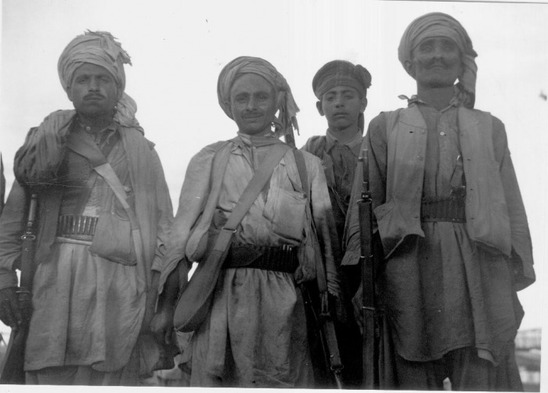
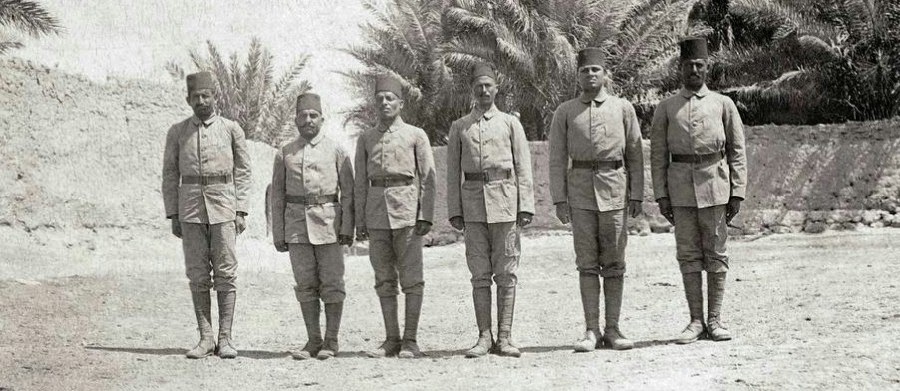
From left to right they are Mirmast, Itbargul, Mohabad Khan, the cook Seyed Ahmed and the two volunteers that had arrived from America, Abdur Rahman Khan and Abdul Subhan Khan. They wear simple khaki uniforms with red fezzes. The Afghan Mission was a collective of Indian, German and Ottoman military and diplomatic personnel sent to Kabul to try to convince Emir Habibullah of Afghanistan to join the Central Powers and rise up in a Jihad against the British in India. These six pathans were recruited to protect the mission.
Re: History of Pashtuns series
Mir Mast Afridi, recipient of Germany’s Iron Cross, a forgotten hero
A forgotten hero in Pakistan is Jemadar Mir Mast Afridi from the 58th Frontier Force (Vaughan’s Rifles). Mir Mast was an Afridi Pathan from tribal areas of modern Pakistan. In 1914 his unit was shipped to France as part of the Indian Infantry Corps, which played a major role in stopping the German advance in France in 1914 in Ypres Sector . Mir Mast Afridi seems to have been a far more politically aware and resolute man as compared to many Muslims educated at MAO College Lahore, Aligarh or at many prestigious British universities and Legal Inns! Mir Mast decided that he must not fight the Britisher’s war and crossed over to the German lines on a rainy night in March 1915 along with 14 other Afridi Tribal Pathan. Mir Mast was awarded one of the highest German gallantry award Iron Cross by the German Kaiser Willhelm II . The British in order to equalize the insult awarded Mir Mast’s real brother Mir Dast Afridi (from 55th FF Coke’s Rifles) a Victoria Cross in April 1915.
The Forgotten Regiments
Mir Mast was sent to Turkey by the Germans, to meet with the Mufti, and by late in the war was back in Afghanistan apparently trying to discourage his Muslim countrymen from joining up to fight for the Raj.
A matter of honour - Philip Mason - Google Books
Philip Mason well summed up the loyalty assessment of the Indian Army by saying that “A faint question mark hung over the Pathans throughput the war but the Punjabi Muslims were steady as a rock”. Many Pathans defected to the Turkish lines in Mesopotamia and Egypt. Jemadar Mir Mast Afridi deserted to the German lines in France with 14 other Afridi sepoys in France in 1915 and was awarded the German Iron Cross. In retaliation but on some outward pretext the British awarded the Victoria Cross to Mir Mast’s brother Mir Dast who was fighting in the same sector! A unique incident where two brothers were awarded by two different European masters fighting against each other in the same sector!" (agha h amins)
…
The Turko-German mission failed in 1915 to gain the support of the Afghan government. However, the Mission members succeeded in establishing a centre for the anti-British activities in Bagh (Tirah), in the tribal belt. In June 1916 two Turkish emissaries arrived Tirah; one was Khired Bey, a staff colonel of the Turkish army and the other Mohammad Abid (alias Abidin), an Arab, a former employee of the Turks as a drill’ instructor at Kabul. Mir Mast accompanied the Turko-German Mission. He was already busy in propaganda against the British in Tirah, he had already prepared ground for the mission
On their arrival in Tirah, the emissaries were welcomed by Mast. They delivered anti-British speeches and unfurled a flag, a blessed and sent by the Turkish Sultan. By the middle of 1916 a large number of the Pashtoon soldiers, mainly deserters from the British Indian army had swelled the ranks of the Turkish emissaries. They started recruitment of the locals as well.. By July 1916, the total number of the Afridi recruits was reported to have reached about four hundreds.. They were posted in three different places and and drilled every day by Mir Mast Khan under the supervision of Kharid Bay, a Turkish Colonel.
The Turks also wrote letters to the neighbouring tribes, and in the month of August some Turkish emissaries visited the Mohmand areas where Hajji Sahib was busy in waging war against the British.
As a result of the growing popularity of the Sultan’s army in Tirah, Sir George Roos-Keppel, then Chief Commissioner NVVFP, found the tribes being virtually divided into two camps: anti-British and pro-British. The former consisted of deserters and discharged soldiers from the Indian army and other pro-Afghan elements, while the latter was composed mainly of Maliks and elders who were in favour of maintaining friendly relations with the British in lieu of their allowances and other emoluments from the British Indian government. Roos Keppel believed that the Turkish agents were responsible for creating the troubles in the tribal belt, but he could not ask the Government to take any stern action against them lest he feared aggravation in the already tense situation.
The tribes who were supporting the Turkish emissaries inflicted losses on those who were accused of supporting the British. In retaliation, other tribes also organised themselves under the leadership of Khan Bahadur Zaman Khan Kuki Khel and attacked and burnt the village in which the two Turkish emissaries and their Afghan followers were living in Tirah. This action of the Afridis made them unpopular among the people. The British rewarded the tribes by sanctioning a bonus of one year’s allowances.
Abdul Karim Chamarkandi, Sarguzisht-i-Mujahid (ed.) Mohammad Hamid, Lahore, Idara Matabua’t-i-Sulamani, 1981, p.67.
General Report on Border Affairs in the North West Frontier Province for the Year 1916-17, p. 2.
Lal Baha, “Activities of Turkish Agents in Khyber during World War I”, Journal of Asiatic Society of Pakistan, Vol. xiv, No 2 .
August 1969, pp. 188-89.
General Report on Border Affairs in the North West Frontier Province for the year 1916-17, p. 2.
Rauf, p.424.
The Border Administration Report of the North-West Frontier Province for the year 1917-18., p.3.
Ibid.
Re: History of Pashtuns series
Azad Khan Afghan - Pashtun ruler of Azerbaijan
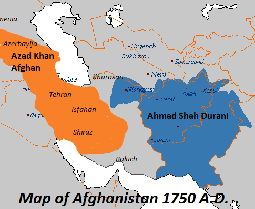
http://www.azadkhanafghan.com/sitebuilder/images/Durrani_Empire_1747_1862_AD_-_Copy-255x209.png
Map of area ruled by Azad khan shown in orange.
Azad Khan Afghan (Āzād Khan Afḡān; Pashto: آزاد خان افغان) (died 1781) was a Pashtun military commander and a major contender for supremacy in western Iran after the death of Nader Shah in 1747.
Azad Khan Afghan was the son of Suleiman Khan from Andar, Ghazni, who became the Shah of Iran after death of Nadir Afshar. Following the murder of Nadir Afshar in 1747, there were two Afghan cavalry brigades commanded by two Afghan generals In Persia (Iran). One was Ahmad Khan Abdali who returned to Kandahar and established the Durrani Empire; the other general, a much senior and more powerful, was Azad Khan Afghan with 12,000 Afghan Ghilzai (Ghilji) Pashtuns stationed in Azerbaijan.
**
Rise to power**
Azad Khan was determined to reestablish the Hotaki dynasty in Iran. First he secured his position in Azerbaijan and made the citadel of Uremia his base. He conquered Kerman and the surrounding areas north-east of Iran. The Georgian king, Taymoraz, and his son, Heraclios (Erakli) invaded Azerbaijan but Azad Khan defeated them and conquered Georgia (Gurjistan) and married the daughter of the Georgian king. Then, Azad Khan focused towards the south and decided to return to Afghanistan. Dr. Gandasingh, an Indian historian in his book of Ahmad Khan Durrani writes: “Azad Khan had a much greater plan. He wanted to unite Iran, Afghanistan, and Hindustan under one rule and create a vast Empire.” In 1750, Azad Khan defeated his rivals, Karim Khan Zand, and Hasan Khan Qajar and conquered Isfahan, the Capital of the Safavid Empire. He sat on the throne of the Safavid Empire and proclaimed himself as the king of Persia in 1751.
Professor John Perry in his book, “Karim Khan Zand” writes: “The Durrani king (Ahmad Shah Durrani) while in Niashapur sent friendly letters to Karim Khan Zand promising army and wealth if Karim can prevent Azad Khan from coming towards the east, Afghanistan.” According to Prof. John Perry, the two, Ahmad Khan Durrani and Karim Khan Zand made a treaty to divide the Persian Empire among themselves, keeping Azad Khan in the north and Khursan as the buffer zone. But Azad Khan, although 17 years older than Ahmad Shah Durrani and a much senior leader, never wanted to face Ahmad Khan Abdali and fight another Afghan army.
During 1759-60 Āzād made at least one further attempt, with the encouragement of Solaymān Pasha of Baghdad and Erekle of Georgia, to regain his hegemony in Azerbaijan; but his erstwhile allies, including Fatḥ-Ali Khan Afshar, combined to defeat him decisively near Marāḡa. Āzad took refuge at the court of Erekle in Tbilisi for the next two years. In 1762 Karīm Khan, having subjugated all of northern Iran, invited Āzad to surrender. Karim khan then spent 1763-65 consolidating his power in central and western iran, as part of which he killed or ran off all of the Afghan tribes he could find in his realm.
The Oxford Handbook of Iranian History
The Afghan ended his days comfortably in Shiraz as an honored pensioner of the generous Zand ruler, and on his death in 1195/1781 was taken to Kabul to be buried in accordance with his will.
Azad khan was reputedly a fair and honest warrior, and had treated the women amnong his zand captives frpm pari with chivalry. His surrender to Karim khan, when he was already beyond persuit, is a rare example in this period of good sense and trust between adversaries who acknowledged that their compeitition was over.
Karim Khan Zand By John R Perry
The Ghilzai in Afghanistan had been destroyed as a power by Nadir, and were replaced in the 1750s by the Abdālī (later known as Durrānī). Most of Āzad’s Ghilzai followers in Iran, both troops and non-combatant settlers, were massacred in 1171-72/1758-59 during his Baghdad exile—first by the Qajar governor of Mazandarān (Nāmī, op. cit., pp. 67-68) and then by the Zands (Golestāna op. cit., p. 322).
http://upload.wikimedia.org/wikipedia/commons/0/07/Azad_Khan_Afghan,_Gold_Mohur_11.0_grams_1168_AH_Isfahan.jpg
Azad Khan Afghan, Gold Mohur
Re: History of Pashtuns series
Afghan-Ottoman war (1725-1727)
http://2.bp.blogspot.com/-s48Ryrmg6eY/U7Xtkos0k8I/AAAAAAAAAW0/khvv1KFtw8Y/s320/ottoman+afghan.jpg
In 1725 Ashraf Hotaki despatched his ambassador to Constantinople, to obtain a recognition of his authority from the Porte. The person employed in this delicate mission was Abool Azeez Khan.the Turkish monarch, as the true succcessor of the Khalifs and head of the Mussulmans, claimed jurisdiction over the Afghans, and therefore Ashruf was not on an equality of footing with the Ottoman potentateOn obtaining possession of the letter,* the ministers of the Porte were struck with indignation at the arrogance and haughtiness of Ashruf, who claimed the title of Imam in Persia, and styled himself King of Kings. Abool behaved with such intrepidity in his negotiations, that the Turks were embarrassed ; more especially as the Afghan demanded, with great firmness, the restitution of the Turkish conquests in Persia, (a.d. 1726.)
**
The Turks declare war against Hotakis**
Matters came to a crisis. The Turks maintained there could be but one Imam, unless the countries were so separated by the sea that there could be no communication with Constantinople. .The differences every day grew wider, negotiation was at an end, and the sword called in to decide the quarrel. Abool Azeez was dismissed with very little ceremony (March 31st), and was arrested on his journey to Bagdad by the commandant of Kerkisia on the Euphrates, under the pretext that Ashruf had previously confined, in a common jail, an officer sent to him by Ahmed Padshah.
War between Turks and Afghans
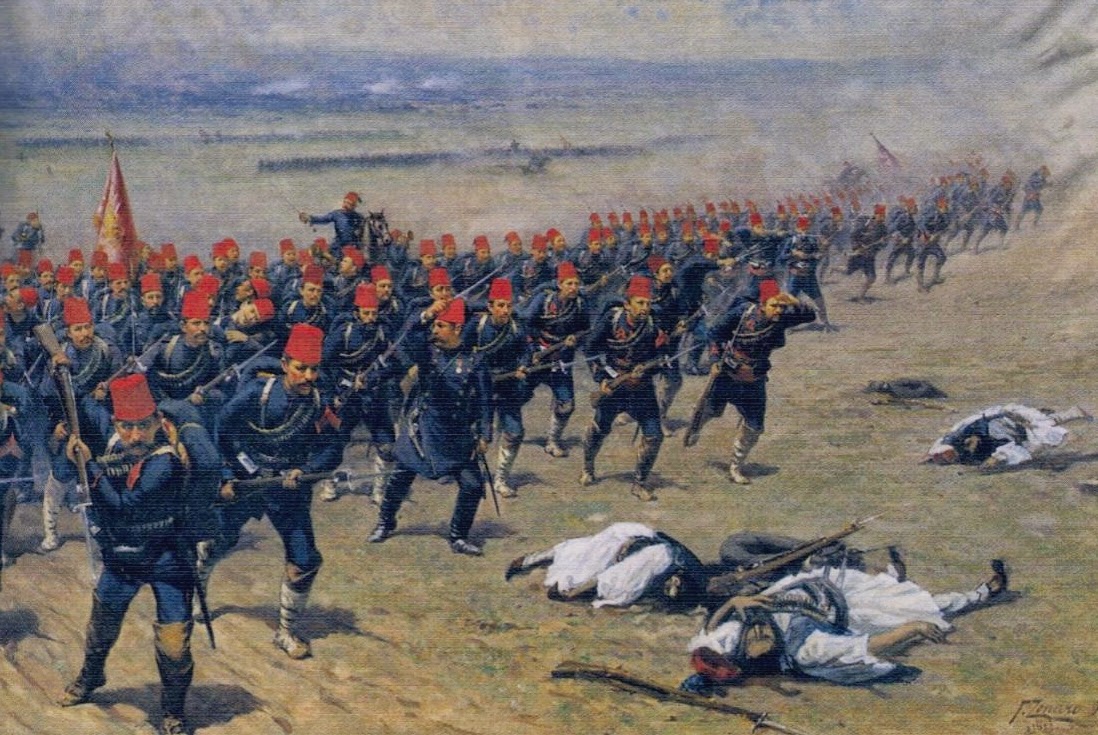
We see in the history of the world that religious wars are generally attended with more bloodshed than those which originate in the disagreement of states in their political relations with each other. Of these the various Crusades for the recovery of the " Holy City" from the hands of the Saracens afford a melancholy proof in which hundreds of thousands of undisciplined men fell victims to the zeal which hurried them on to meet a numerous and well disciplined foe, whom the chivalry and prowess of a Coeur de lion, a Philip, or a Godfrey, vanquished with great difficulty. The wax now on the eve of bursting into flames, about the division of the authority of Imam, was also a religious one, with this essential difference, that the Turkish forces, deluded by the artifices of Ashruf, evinced great diffidence in engaging against a prince who like themselves was a Sunni, and professed great zeal for religion. Ashruf selected four nobles, venerable alike for their age and knowledge, and sent them into the Turkish camp to protest his innocence of the Muslim blood about to be shed. These envoys presented themselves unarmed, and were conducted to Ahmed Padshah, the Ottoman general In the province of Diabekir.
Received in full assembly, they laid the whole of the responsibility of the war upon the Turks; and when the muezzin announced the noontide hour of prayer, they prostrated themselves with the invaders, and besought God aloud to turn the hearts of their fellow-professors, and open their eyes to the iniquity of the invasion. This artful conduct was followed, on their return, by the desertion to the Afghans of five thousand Kurds. It was during this period that the “Tareekh-i-Seeah” was compiled at Constantinople.
Defeat of Turks
In the meanwhile the inhabitants of Casween made an offer of submitting to Abdallah Padshah, on condition that a Turkish governor should be sent them, but no troops. This general, however, dispatched Ally Padshah with twelve thousand men, who took possession of the place in the name of the Grand Seignior. Ashruf having fortified his palace, the great square and citadel, thus building a fortress within the heart of Isfahan, ravaged the country from the capital to the very gates of Casween. The townsmen, incited by the emissaries of the Afghans, rose upon the troops who had been quartered on them against the conditions of the treaty, and declared for Ashruf. Ahmed Padshah marched within twenty leagues of Hamadan, when news was brought into his camp that the enemy were approaching. Having detached six thousand men to meet the Afghans, these troops were surrounded, and cut to pieces ; and Ahmed, discouraged at this, ordered his army to entrench themselves. Alarmed, however, at the desertion among the Kurds, he determined on giving battle to the foe. Ashruf though very inferior in point of numbers, did not refuse the challenge. Seventy thousand Turks marched out of the lines, supported by seventy pieces of artillery ; whilst the Afghans mustered but thirty- three thousand, and forty harquebusses on camels. At six in the morning* the Turks began the contest, by opening a fire from ten guns. The Afghans returned these with five. Three several times the Seraskier bravely charged them with his right wing, and was as often repulsed, though supported by a furious cannonade : and at three m the afternoon was forced to retire to his entrenchments, after a loss of twelve thousand men. The Kurds having mutinied, Ahmed retired during the night to Kermanshah, leaving his artillery and baggage in the hands of the conqueror. Hither Ashruf pursued him, and by a generous artifice succeeded in implanting amongst the Ottoman troops a greater repugnance to fight against him. On his approach Ahmed retreated on Bagdad, and Ashruf sent deputies to him, not to propose a negotiation for peace, but to inform the Padshah of his readiness toreturn all the foils of his camp, with the exception of ajms ; and to that act of generosity he added another, not less calculated to serve his end — that of liberating his prisoners.
The Porte, alarmed at this defeat, raised immense reinforcements among the Albanians, Bosnians, Egyptians, and Syrians. These vast preparations, however, were unproductive of any important results ; for the troops having been deceived in regard to the place to which they were ordered to march, positively refused to pass the frontiers. Ahmed Padshah had in the meanwhile collected an army of sixty thousand men, and burning with anxiety to revenge the defeat in the campaign of last year, had entered the plains of Hamadan, when Reshid Effendi arrived in his camp. This minister had been dispatched by the Turkish court to negotiate peace, as it was alarmed by the obstinacy of the troops newly collected to reinforce its General in Persia. Zowla Khan, Ashruf 's Etimad-Dowlet, advanced to repel the invasion. The Seraskier sent a messenger to this officer, informing him that the time had arrived for the decision and termination of the question at issue, that the only alternative to the acceptance of the conditions he was authorized to offer, was to prepare for battle. Peace was equally acceptable to both of the belligerent nations; and this abrupt method of opening negotiations was followed, in a short time, by their termination, and the subsequent peace. The principal articles of this treaty were — that the Grand Seignior should be acknowledged Head of the muslim faith, and true successor of the Khalife ; that he should retain his conquests in Persia; and that Ashruf should be recognized as the lawful sovereign of that country. This treaty was signed at the camp near Hamadan, about the end of September 1727, and peace proclaimed at Constantinople on the 18th of the following November. Thus Ashruf having freed himself from his most powerful enemy, seemed to all human foresight firmly established on the throne of Xerxes and Noorshevan.
http://www.art-prints-on-demand.com/kunst/jules_joseph_augustin_laurens/study_afghan_warrior_tehran_1_hi.jpg