Re: History of Baloch and Balochistan
**State of Kalat Currency **
Re: History of Baloch and Balochistan
**State of Kalat Currency **
Re: History of Baloch and Balochistan
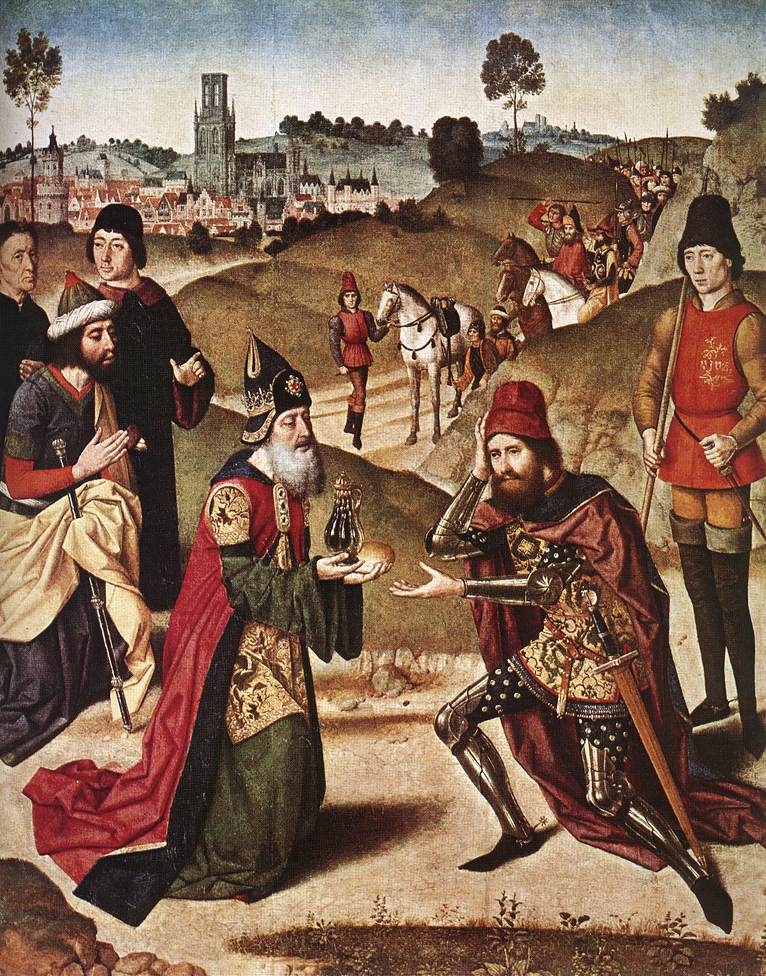
Baloch follow the Practice of Hazrat Abraham to judge the Truth and Falsehood by moving the suspicious person on the live coal (Baloch use Specially wood of “Kaheer” (because its coal does not turns into ash within about 24 hours) . Briefly describing, first of all a channel (about 10 ft (3.0 m) in length, 4 ft (1.2 m) in width and 3 ft (0.91 m) depth) is dug and wood of Kaheer (commonly) is burnt to prepare coal during this time a reciter recites some verses of the Qur’an, after that the suspicious person is asked to walk on the blazing coal in the presence of Above All (Muqadams, white beard men). If he is true then coal never burns his feet, a blameless Baloch has faith in this fact to that day. It is known by “Patt” in Balochi
Re: History of Baloch and Balochistan
](Khanate of Kalat - Wikipedia)**Mir Khudadad Khan Ahmedzai Baloch (1857-1863)
Khan of Kalat Mir Khudadad Khan Ahmedzai Baloch (1857-1863) was the ruler of Balochistan during the nineteenth century and during his reign the country experienced numerous revolts, and even his rule was usurped for more than a year by Sherdil Khan Ahmedzai Baloch
**
**Khudadad’s predecessor was his half brother Mir Nasir Khan II who also had experienced tribal unrest during his rule. Mir Nasir Khan II was poisoned to death when Khudadad Khan was a boy of sixteen.
**
**In 1863, a general revolt broke out with most of the tribal chieftains siding against Khudadad Khan. Khudadad was forced to flee and the chieftains elected his cousin, Sherdil, as khan. Sherdil Khan did not last long as Khan being killed by his own mercenary guard. Despite being returned to the throne by the tribal chieftains, Khudadad continued to have troubles administering the kingdom, and revolts continued.
**
**In 1875, British influence and money through the able assistance of Robert Sandeman resulted in the Mastung Agreement which formed the basis for the Baloch confederacy. That agreement succeeded in calming the revolts and they were over within a year.
**
In 1893, Khudadad has his chief accountant and staff murdered for allegedly planning to assassinate him. In the scandal that followed, Khudadad agreed to abdicate, and did so on 15 August 1893.
http://oi58.tinypic.com/2n6hkbl.jpg
http://oi60.tinypic.com/301fzts.jpg
http://oi59.tinypic.com/28m0315.jpg
**
Shrine of Mir Khudadad Khan Baloch in Pishin Balochistan
**
[Mir Khudadad Khan Ahmedzai Baloch](http://en.wikipedia.org/wiki/Khudadad_Khan_%28Kalat%29)
Re: History of Baloch and Balochistan
Quetta also spelled as Kuwetaha a balochi word means under the Mountain
Quetta District
****HISTORY OF QUETTA(SHAL)
Quetta District was held in turns by the Ghaznavids, Ghurids, and Mongols, and towards the end of the fifteenth century was conferred by the ruler of Herat on Shah Beg Arghun, who, however, had shortly to give way before the rising power of the Mughals. The Ain-e-Akbari mentions both Shal and Pishin as supplying military service and revenue to Akbar, however these areas passed with Kandahar to the Safavids. On the rise of the turkish origin afghanized Ghilzai Hotak tribe power in Kandahar at the beginning of the eighteenth century, simultaneously with that of the Baloch in Kalat, Quetta and Pishin became the battle-ground between Afghan and Baloch, Ahmed Shah Durrani Finally handed Quetta over to the Khan of Kalat Mir Noori Naseer Khan Baloch for helping him with his Baloch Army against Persians in iran in 1751 and 1770 against Marathas in Battle of Panipat (1761) and against Sikh in 1765 .****
Bugti Stadium Quetta(Shal) balochistan
Re: History of Baloch and Balochistan
**Marriabad in quetta(Shal) balochistan which is named after Marri Baloch Tribe and where hazaras live now
**
Re: History of Baloch and Balochistan
New Kahan Quetta(Shal) balochistan pakistan where one lakh Marri baloch Tribesman live

http://www.pakistantumhetoho.com.pk/images/gallery-img/admin/University%20of%20Balochistan.jpg
University of Balochistan in quetta(Shal) Balochistan Pakistan
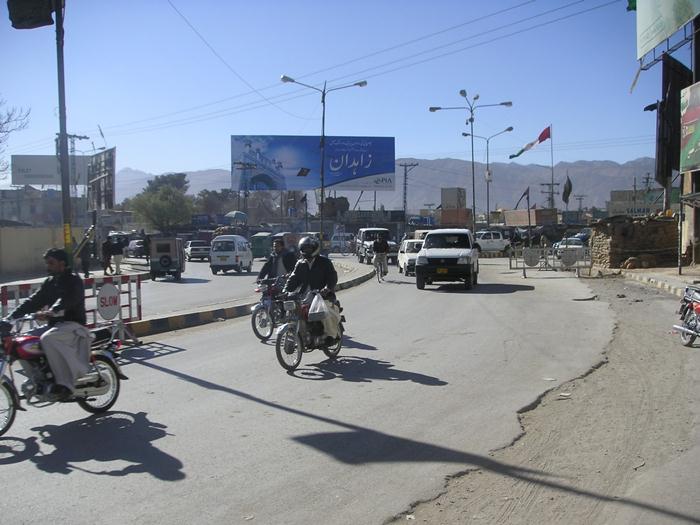
Saryab Road A Baloch Majority Area in quetta(Shal) Balochistan Pakistan
Re: History of Baloch and Balochistan
Ahmed shah Abdali Pathan Granted quetta(shal) to khan of kalat Mir Nasir khan baloch at his request
http://oi58.tinypic.com/29psok9.jpg
Reference books :- 1) ** Later Mughal history of the punjab by Hari Ram Gupta page number 217
2) Ahmed Shah Durrani by Ganda Singh page number 307
**
Re: History of Baloch and Balochistan
History of Kachi Bolan Balochistan
The Kachhi Plains are the home of Mehrgarh civilization. one of the most important Neolithic (7000 BC to c. 2500 BC) sites in archaeology, lies on what is now the “Kachi plain” of today’s Balochistan, Pakistan. It is one of the earliest sites with evidence of farming (wheat and barley) and herding (cattle, sheep and goats) in South Asia.".[SUP][3]](Kachhi District - Wikipedia)[/SUP]
Until the end of the 15th century the district had been a dependency of Sindh[SUP][4]](Kachhi District - Wikipedia)[/SUP] Around 1500 it was taken by Shah Beg of the Arghun Dynasty from Samma Dynasty of Sultan Of Sindh.[SUP][5]](Kachhi District - Wikipedia)[/SUP] The territory was conquered by Mir Chakar Rind then it fell into the hands of the Kalhoras cause of civil war between rind and lashari Kalhoras were displaced by the Nadir Shah of Persia and he made it the part of Kalat Khanate in 1740 as blood money for Khan of Kalat Mir Abdullah Khan till then its been under complete baloch control
Demograpics
99 pecent of population is baloch muslim
major baloch tribes of bolan district are Rind,Lashari,Satakzai,Raisani,Kurd,Bangulzai and abro sindhis also live in it and current chief of bolan is sardar Mir Yar mohammad khan Rind Baloch

Re: History of Baloch and Balochistan
Ethnic Majority Regions Iran ,Pakistan ,Afghanistan
** The Baloch land in Red Baloch Diaspora
http://oi57.tinypic.com/aox7k.jpg
**
Re: History of Baloch and Balochistan
History of Sibi Balochistan
15th century the district had been a dependency of Multan and had been part of Ghaznavid Empire ruled by petty chief named Nasiruddin Kubacha it Around 1500 it was taken by Shah Beg of the Arghun Dynasty from Samma Dynasty of Sultan Of Sindh it was ruled by Mir Chakar Rind civil war started between baloch during the period of Mughal rule the territory was once again ruled from Multan. In 1714 the territory was conquered by the Kalhoras Amirs of Sindh,[SUP][3]](Sibi District - Wikipedia)[/SUP][SUP][4]](Sibi District - Wikipedia)[/SUP] but they were then displaced by the Brozai Pathans and barozai were displaced by Marri and bugti To finish rebellion in the area as raised by Marri & Bugti Tribes, the British signed the treaty with Khan of Kalat in late 19th century where under the Sibi, Quetta and Chagai territory leased out to British India by Khan of Kalat. and Current Chief of Sibi is Mir Dostain Domki Baloch
major Baloch tribes in Sibi
Rind,Raisani,Domki,Marri,Bugti,Bangulzai,Lehri, Chandio, Gorgai, Ghishkori,Lashari,jatoi etc

Re: History of Baloch and Balochistan
HISTORY OF NUSHKI
Rakshani Baloch are the Real Owner Of Nushki. Khan of Kalat Mir Noori Naseer Khan Baloch certified Sardar Mir Jeeand Rakshani Baloch as the Prince of Nushki in 1750.
Re: History of Baloch and Balochistan
**Princely States Of Balochistan
Las Bela (princely state)**
** Las Bela was a princely state in a subsidiary alliance with British India (later a princely state of Pakistan) which existed until 1955. The state occupied an area of 18,254 km[SUP]2[/SUP] (7,048 sq mi) in the extreme southeast of the Balochistan region, with an extensive coastline on the Arabian Sea to the south. Las Bela was bordered by the princely states of Kalat and Makran to the north and west. To the east lay the province of Sind and to the southeast lay the Federal Capital Territory around the city of Karachi.**
History The State of Las Bela was founded in 1742 by Jam Ali Khan I. His descendants ruled Las Bela until 1955 when the state became part of West Pakistan. For a period of three years between 3 October 1952 and 14 October 1955, Las Bela was part of the Baluchistan States Union but retained internal autonomy. In 1955, Las Bela was incorporated into the new province of West Pakistan and became part of Kalat division. In 1962, the area of Las Bela was detached from Kalat division and merged with the former Federal Capital Territory to form the division of Karachi-Bela. When the provincial system was changed in 1970, Las Bela became part of the new province of Balochistan.
Demographics The main ethnic groups in Las Bela are Baloch and Sindhis . The population was mainly Muslim Baloch and Sindhis but there was a small population of Hindus.
Geography and climate Las Bela has a hot, dry tropical desert climate. It is only a few degrees north of the Tropic of Cancer. The sea breezes though make the weather less extreme than inland Balochistan, where 50 °C (122 °F) in the summer.
Rulers The hereditary rulers of Las Bela were styled as Jam Sahib. The Samma Dynasty took the title of Jam, the local equivalent of “King” or “Sultan”.
[TABLE=“class: wikitable”]
[TH]Tenure[/TH]
[TH]Jams of Las Bela[SUP][/SUP]
[/TH]
1742–1765
Jam Ali Khan I (surnamed Kathuria)
1765–1776
Jam Ghulam Shah
1776–1818
Mir Khan I
1818–1830
Ali Khan II
1830–1869
Mir Khan II (CIE, KCIE) (1st time)
1869–1886
Sir Ali Khan III (KCIE) (1st time)
1886 - 21 January 1888
Sir Mir Khan II (KCIE) (2nd time)
21 January 1888 - May 1896
Sir Ali Khan III (2nd time)
May 1896 - March 1921
Kamal Khan (CIE)
March 1921 - 1937
Ghulam Mohammad Khan (GCIE)
1937 - 14 October 1955
Ghulam Qadir Khan (CIE)
14 October 1955
State of Las Bela dissolved
**
Prominent members of the family after the end of the princely state included:**

Las Bela (princely state) - Wikipedia, the free encyclopedia
Kharan (Princely State)
The State of Kharan was an autonomous princely state in a subsidiary alliance with British India, until the departure of the British from the subcontinent in August 1947. it was fully independent, until March 1948, when its ruler signed an Instrument of Accession to Pakistan, retaining the state’s internal self-government. In 1955 Kharan was incorporated into Pakistan.
The territory once covered by Kharan is today part of the province of Balochistan, in the southwest of Pakistan.
History The state of Kharan was established in about 1697 CE as a vassal state of Kalat, a status which remained until 1940. On 17 March 1948, Kharan acceded to Pakistan and on 3 October 1952 it joined the Baluchistan States Union. The state was dissolved on 14 October 1955 when most regions of the western wing of Pakistan were merged to form the province of West Pakistan. When that province was dissolved in 1970, the territory of the former state of Kharan was organised as Kharan District of the province of Baluchistan (later Balochistan).
Demographics The population of the state was mainly Baloch tribes
Government The hereditary rulers of Kharan held the title of Mir and from 1921 were also styled Sardar Bahadur Nawab.
[TABLE=“class: wikitable”]
[TH]Date of Reign
[/TH]
[TH]Rulers of Kharan[SUP][/SUP]
[/TH]
1810-?
Mir Abbas Khan Baloch
1833–1885
Mir Azad Khan Baloch
1885–1909
Mir Nowruz Khan Baloch
1909–1911
Mir Mohammad Yaqub Khan Baloch
1911–1955
Nawab Mir Habibullah Khan Nousherwani Baloch
14 October 1955
State merged into West Pakistan

Kharan (princely state) - Wikipedia, the free encyclopedia
** Khanate of Kalat**
The Khanate of Kalat (Balochi: قلات) was a princely state that existed from 1666 to 1955 in the centre of the modern-day province of Balochistan, Pakistan. Prior to that they were subjects of Mughal emperor Akbar in Delhi. Ahmadzai Baloch ruled the state independently until 1839, when it became a self-governing state in a subsidiary alliance with British India. It was briefly independent from August 1947 till March 1948, when its khan acceded his state to the new Dominion of Pakistan. It remained a princely state of Pakistan until 1955, when it was incorporated into the country.
The state capital was the town of Kalat.
Geography The Khanate of Kalat occupied the central part of the territory of modern-day Balochistan province in Pakistan.
The principal mountains are the Central Brahui, Kirthar, Pab, Siahan, Central Makran and Makran Coast Ranges, which descend in elevation from about 10,000 to 1,200 feet (370 m). The drainage of the country is almost all carried off to the south by the Nari, Mula, Hab, Porali, Hingol and Dasht rivers. The only large river draining northwards is the Rakhshan. The coast line includes Gawadar, Pasni, Sonmiani and Geewani in Pakistan and Chahbahar, Bandar Abbas in Iran.
History The Khanate of Kalat was founded in 1666. The Khanate reached at its peak during the period of Mir Noori Naseer Khan Ahmedzai Baloch I, who unified Kalat region under his flag. The territories controlled by the state fluctuated over the centuries but eventually were established by treaties with the British Agent Robert Sandeman in the late 19th century. Parts of the state to the north and northeast were leased or ceded to form the province of British Baluchistan which later gained the status of a Chief Commissioners province.
From 15 August 1947 to 27 March 1948, the region was de facto independent before acceding to Pakistan on 27 March 1948. The Baluchistan States Union was formed on 3 October 1952 with three neighbouring states. The Khanate of Kalat ceased to exist on 14 October 1955 when the province of West Pakistan was formed.
Rulers of Kalat The rulers of Kalat held the title of Wali originally but in 1739 also took the title (Begler Begi) Khan usually shortened to Khan. The last Khan of Kalat (Balochi: خان قلات) had the privilege of being the President of the Council of Rulers for the Baluchistan States Union.
[TABLE=“class: wikitable”]
[TH]Tenure[/TH]
[TH]Khan of Kalat[SUP][1]](Khanate of Kalat - Wikipedia)[/SUP][/TH]
1638-1666
Mir Hassan Khan Mirwani Baloch 1st wali of Kalat
1666–1667
Mir Ahmad Khan I Qambrani Baloch
1695–1696
Mir Mehrab Khan Ahmedzai Baloch
1697–1713
Mir Samandar Khan Ahmedzai Baloch also known as Amir al-Umara Amir of Amirs
1713–1714
Mir Ahmad Khan II Ahmedzai Baloch
1715–1730
Mir Abdullah Khan Ahmedzai Baloch also known as Eagle of the Mountain
1730–1749
Mir Muhabbat Khan Ahmedzai Baloch
1749–1794
Mir Muhammad Nasir Khan I Ahmedzai Baloch also known as Noori Naseer Khan the Great
1794–1831
Mir Mahmud Khan I Ahmedzai Baloch
1831 - 13 November 1839
Mir Mehrab Khan II Ahmedzai Baloch
1839–1840
Mir Shah Nawaz Khan Ahmedzai Baloch
1840–1857
Mir Naseer Khan II Ahmedzai Baloch
1857 - March 1863
Mir Mir Khudadad Khan Ahmedzai Baloch (1st time) during his period of rule, there were seven major and many minor rebellion took place.
March 1863 - May 1864
Mir Sherdil Khan Ahmedzai Baloch (usurped throne)
May 1864 - 15 August 1893
Mir Khudadad Khan Ahmedzai Baloch (2nd time)
10 November 1893 - 3 November 1931
Mir Mahmud Khan Ahmedzai Baloch II
3 November 1931 - 10 September 1933
Mir Mohammad Azam Jan Khan Ahmedzai Baloch
10 September 1933 - 14 October 1955
Mir Ahmad Yar Khan Ahmedzai Baloch
12 March 1955 - 30 March 1955
State of Kalat ceded to Pakistan

Khanate of Kalat - Wikipedia, the free encyclopedia
**
Makran (Princely State)
**
**Makran was an autonomous princely state in a subsidiary alliance with British India until 1947, then from 1948 a princely state of Pakistan. It ceased to exist in 1955. It was located in the extreme southwest of present-day Pakistan, an area now occupied by the districts of Gwadar, Kech and Panjgur. The state did not include the enclave of Gwadar, which was under Omani rule until 1958.
**History The state of Makran was established in the eighteenth century. Ruled by the Sardars of the Gichki Baloch family[SUP]citation needed][/SUP] of Makran, who remained sovereign until 1948. On 17 March 1948, Makran acceded to Pakistan, and on 3 October 1952 it joined Kalat, Kharan and Las Bela to form the Baluchistan States Union. The state was dissolved on 14 October 1955, when most regions of the western wing of Pakistan were merged to form the province of West Pakistan. When that province was dissolved in 1970, the territory of the former state of Makran was organised as Makran District and later Makran Division of the province of Baluchistan (later changed to Balochistan).
Demographics The population of the province was mainly Baloch tribes with some Arabs and Iranians.
Government The rulers of Makran were originally styled as Sardar and from 1922 as Nawab. Details on earlier rulers are sketchy with the first definite dates from 1898 CE onwards. The Gichki Baloch family ruled this region before the Makran State and after when the Makran State was formed the Gichki Sardar of Kech was made the Nawab of Makran.
[TABLE=“class: wikitable”]
[TH]Date of Reign[/TH]
[TH]Rulers of Makran[SUP][/SUP]
[/TH]
1898–1917
(Sardar) Mir Mehrullah Khan Baloch
1917–1922
Interregnum
1922 – 17 March 1948
(Nawab) Mir Azam Jan Baloch
17 March 1948 - 14 October 1955
(Nawab) Mir Bai Khan Gichki Baloch
14 October 1955
State of Makran dissolved

Re: History of Baloch and Balochistan
Balochi Betak in Balochistan
Re: History of Baloch and Balochistan
**miri Fort Kalat balochistan **
Re: History of Baloch and Balochistan
**Balochi and Brahui Manuscripts of Maktaba-e-Durkhan
**
We are digitizing rare Balochi and Brahui language manuscripts from Maktaba-e-Durkhan (Durkhani School). The Maktaba was a religious reform movement started by Baloch ulema based in the village of Durkhan near Dhadar (Kachhi) who resisted colonial rule and sought to counter Christian missionary propaganda. The founders of Durkhani school such as Maulana Fazil Durkhani translated the Holy Quran, Hadith, and other religious texts in Brahui and Balochi languages to make it easy for ordinary people to understand the tenets of Islam. Here we share Kalmat-ul-Kufr, a book of advice written by Maulana Abdul Hayee Durkhani ca. 1900 in Balochi that warns Muslims to guard against saying words (Kalmat) that may compromise their faith
http://oi58.tinypic.com/24n3b69.jpg
http://oi57.tinypic.com/sb3k3d.jpg
Re: History of Baloch and Balochistan
**This is a copy of the infamous and cruel proclamation issued against the Bugti tribe by the District Magistrate of Shikarpoor on 8th of August, 1846. According to this proclamation, a head-money of Rs. 10 was placed on every Bugti tribesman captured dead or alive. This proclamation was followed by a blockade of the entire Bugti territory later on which reduced the tribesmen to starvation.
http://oi59.tinypic.com/2dagitj.jpg
**
Re: History of Baloch and Balochistan
Why did they do so?
Re: History of Baloch and Balochistan
One ballad each from Eastern, Central, and Western Balochistan. Posting the first few lines from the ballads of Khan of Kalat Mir Mehrab Khan Ahmedzai Baloch, Arando Khan Bugti, and Malik Dinar Gichki. The source is Hittu Ram’s Tarikh-e-Balochistan
http://oi61.tinypic.com/351x2z4.jpg
Ballad about the Fall of Kalat 1839. Balochi/ Farsi with Urdu translation
http://oi61.tinypic.com/ic38zn.jpg
Ballad of Arando Khan Bugti about the fight between the British under William Mereweather and the Bugti tribe under Arando Khan ca. 1841
http://oi60.tinypic.com/1pw0o5.jpg
Ballad about Malik Dinar Gichki, ruler of Makran, and Persian forces ca. 16th century.
Re: History of Baloch and Balochistan
cause bugti revolted against them
Re: History of Baloch and Balochistan
them? British Government?