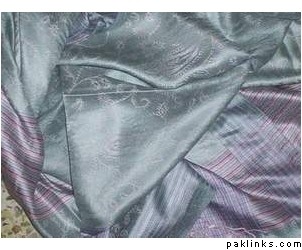
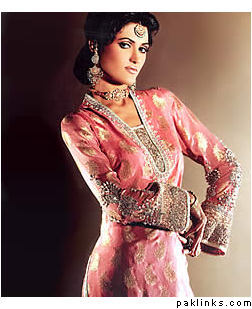
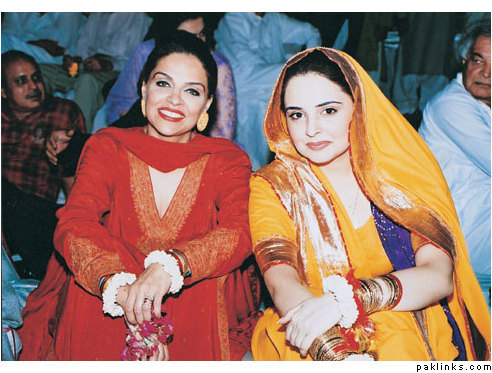
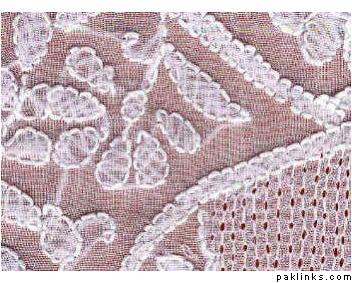
I have been googling and what not..trying to find appropriate photos…to go with the following terms…i would appreciate any effort put in by the lovely guppians…experienced and all!!
if possible…please specify the fabric used for each respective style…
Dabka
Nakshi
ganga jamni
kundani
zari
zardozi
ari
kora
cut glass
swarovski crystals/beads
square cut diamonties (not sure where they would be used…and how they d be incorporated into the embroidery of a dress)
Re: Help with Embroidery Terminology with Pictures
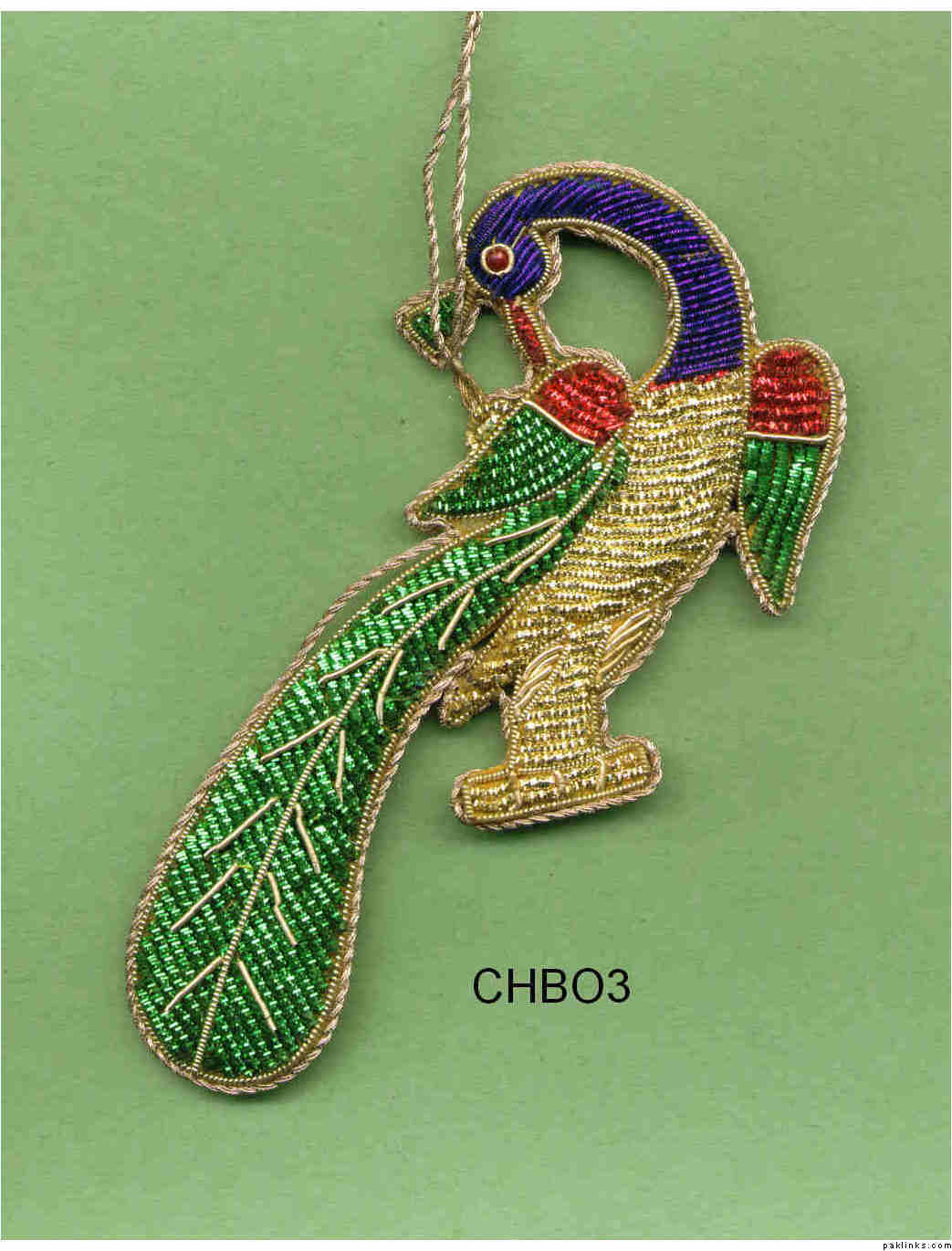
As far as I know, zari and zardozi are fairly generic terms referring to gold thread embroidery. There is an endless variety of specific technical terms referring to various different styles of zari and zardozi work…dabka, aari, nakshi, etc. Dabka refers to embroidery done with tightly coiled golden wire…it’s very commonly used in Pakistani clothes. Kora work is a plain gold colored stitch. Aari work is a kind of flat chain stitch that’s done with a special hooked needle (a lot of traditional Kashmiri embroidery is aari work)…it can be done in metallic or colored thread. Nakshi work is done with a special kind of very shiny thread. Ganga Jamuni work just refers to the use of designs that incorporate both silver and gold colored embroidery. Kundan is the use of “gems” (usually plastic or glass) in the embroidery…if you use glass, it becomes “cut glass” work, if you use swarovski crystal, it becomes “swarovski work”…
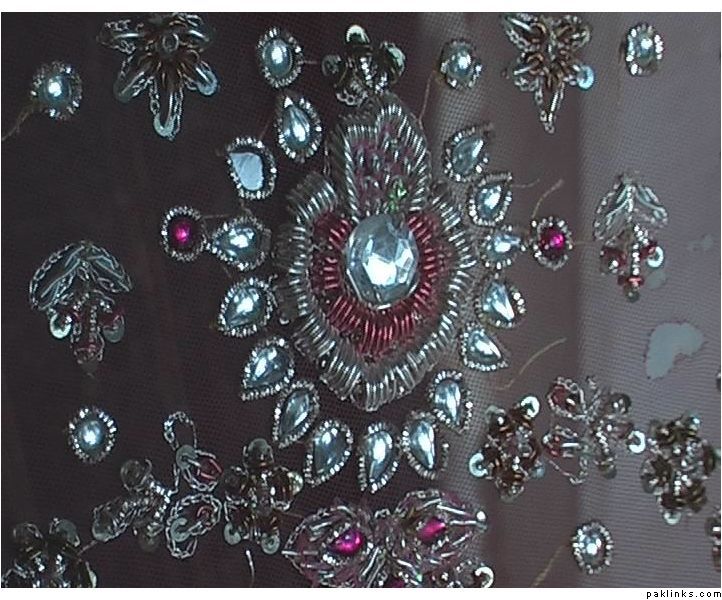
The use of “gems” makes this kundan work. The coiled wires (they look like springs) on the edges of the central blue stone are dabka work. If you look closely at the “jaals” theyre made of a delicate chainstitch…that’s aari work.
Re: Help with Embroidery Terminology with Pictures
i have a really pretty kashmiri kurta (maroon with orange,yellow,and gold kaam on it)
its all 'dhaga' and some tiny sheeshas...looks beautiful...i am never getting rid of it..even if its unwearable... :)
Re: Help with Embroidery Terminology with Pictures
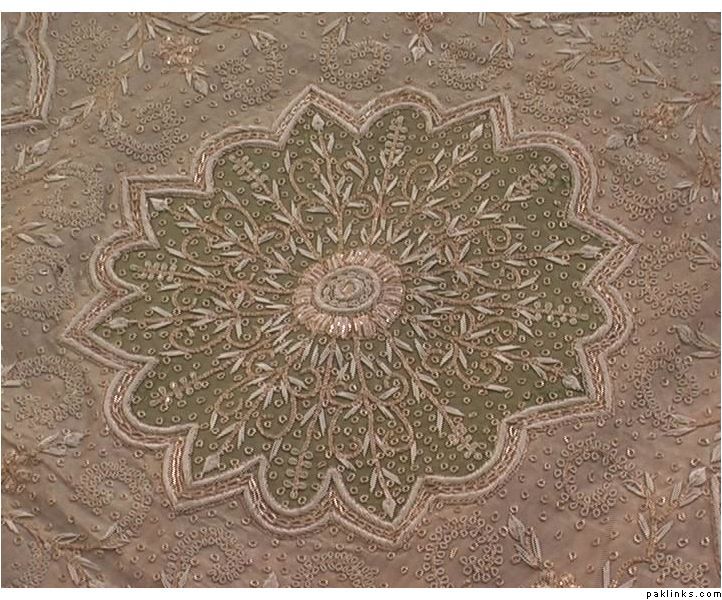
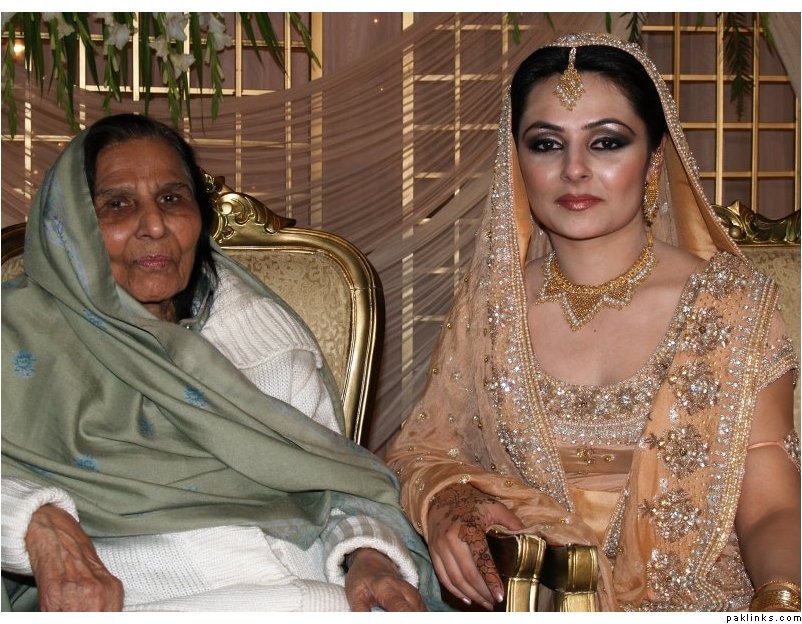
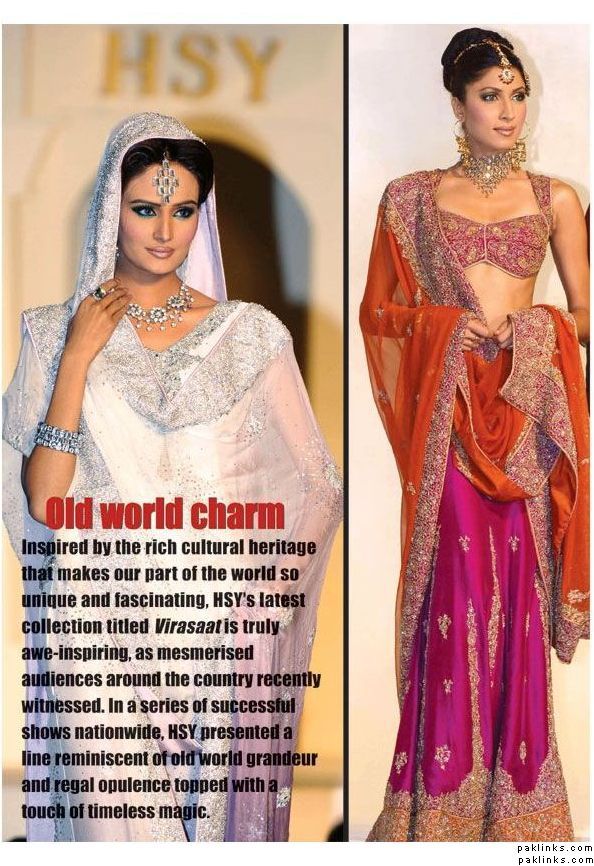
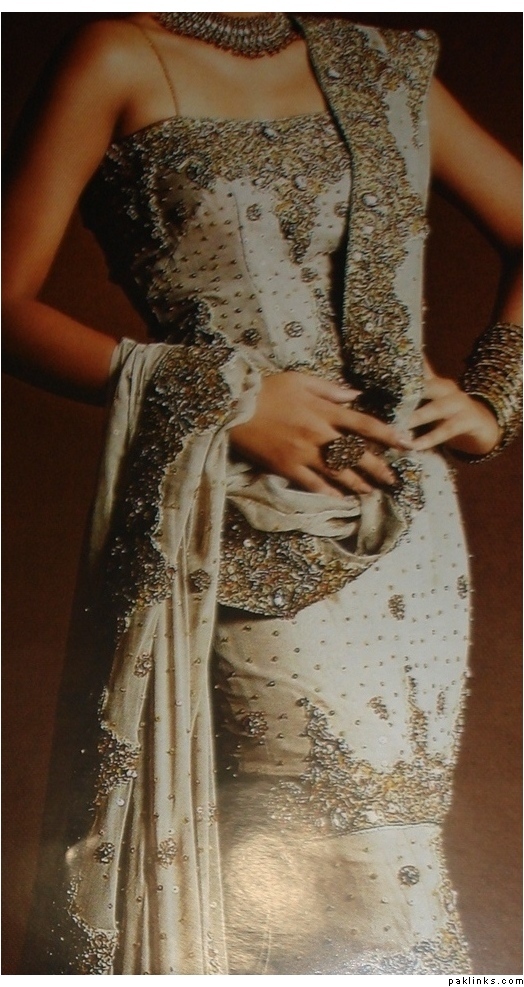
It’s very difficult to say what techniques have been used on an outfit just from looking at a picture. Most outfits aren’t going to have just 1 or 2 styles of embroidery…the kaarigars use several different stitches together for a combined effect, and it’s next to impossible to distinguish between them unless you have a closeup of the embroidery.
http://www.paklinks.com/gsmedia/files/53952/drheryer.jpg
This has the ganga jamuna effect going on with the combination of gold & silver colored work. The motifs are made up of several different zardozi stitches…and I believe there’s some sort of cut glass embroidered onto the fabric to make it sparkle like that (though they may be really shiny sequins…I can’t tell without seeing it up close)…
Re: Help with Embroidery Terminology with Pictures
i have a really pretty kashmiri kurta (maroon with orange,yellow,and gold kaam on it)
its all 'dhaga' and some tiny sheeshas...looks beautiful...i am never getting rid of it..even if its unwearable... :)
I love Kashmiri embroidery...especially the single stitch "sozni" style in silk thread. It's so beautiful and delicate looking...our kaarigars are some of the best in the world.
I think my favorite outfit ever is the saree I had made in Srinagar...its black silk with delicate multicolored jaal work all over it...I absolutely love it.
Re: Help with Embroidery Terminology with Pictures
i know!!! my nani ama has a gorgeous shawl...the embroidery on it looks like an imprint....but its verrrry fine kashmiri embroidery....she has had if for 40 years...and it looks 2 days old...
Re: Help with Embroidery Terminology with Pictures
janab-e-ali...thank you soo much for such an informative response....if you ever think of anything else....please do post it...since people like us who have very little exposure to such information....will be very grateful...!!
i am going to send my rukhsati dress to lahore soon..inshallah!!
Re: Help with Embroidery Terminology with Pictures
I guess I’m just an avid shopper, and I’ve read up on it a little too. Ritu Kumar wrote an interesting book on traditional attire in South Asia…I learned a lot from it.
As far as other terms are concerned…
Mukesh work refers to small, polished, silver colored, star shaped dots scattered all over…

Salma & Sitara work refers to sequined embroidery.
Jamavar is a type of handwoven fabric (usually in silk or pashmina), that has a design woven into it. Nowadays, some stores will cut corners and just print or machine embroider the design on and call it jamavar…
Kamkhaab is silk brocade…its fabric that has been hand embroidered over with flat gold thread. The classic Banarsi saree is made of kamkhaab silk.
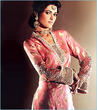
Gota is metallic ribbon applique.
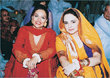
Chikan is a Persian style of embroidery that came to India during the Mughal era…its traditionally done in plain white cotton thread on fine muslin fabric, but it can be done in other colors too.
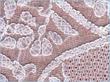
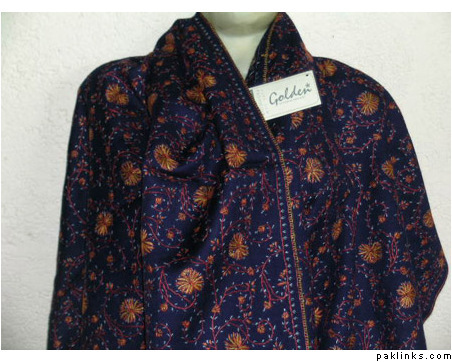
Sozni is the typical single stitch style of Kashmiri embroidery that you often see on shawls:
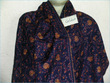
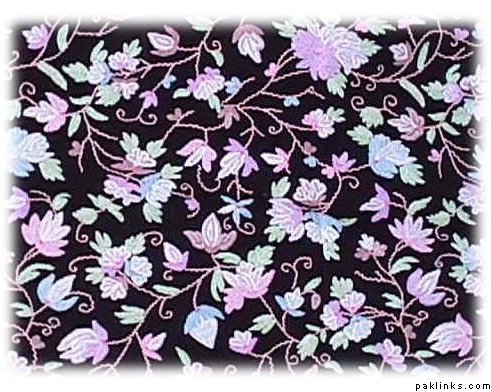
As opposed to the aari chainstitch:
Thats all I can think of off the top of my head…
I love antique shawls! My naani once showed me one of the shawls my great-grandmother got in her jahez. The embroidery was so incredibly fine that when you flipped the shawl over, I swear you couldn’t even see the stitches…it was literally as if the the embroidery had been glued on.
Re: Help with Embroidery Terminology with Pictures
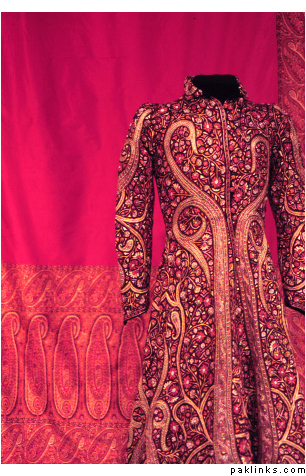
Speaking of Kashmiri embroidery…take a look at this Shervani. It’s part of a museum collection, and I can see why…the embroidery on it is absolutely stunning…
I kinda want one…even though its meant to be a mens garment
Re: Help with Embroidery Terminology with Pictures
cool im glad i know the last fabrics......u r talking abt texlies from royal india (something like that) by ritu kumar--ive been wanting that book for the loooooooooooongest...where did u find it?????
Re: Help with Embroidery Terminology with Pictures
did u see the pic of the queen that i posted in bridal pixx.........the kaam is so intricate on that dress and that too is a museum piece...think its more or less dapka and gota...:)
It was featured in an exhibit at Kent State University Museum in Ohio.
It still is possible to get that kind of craftsmanship, but you’ll pretty much have to go to Kashmir yourself and commission the piece. I don’t think many of the commercially available pieces will match that quality…
There are only a handful of libraries in the US that have it. But if you go to your library and ask them to do an interlibrary request, they can get the book for you…it may take them a week or two to get it in, but it’s free.