Re: From Meluhha To Pakistan: The Embodiment Of A Civilization
For correct map representation of Indus Valley Civilization spread, as this map presents a more accurate view.
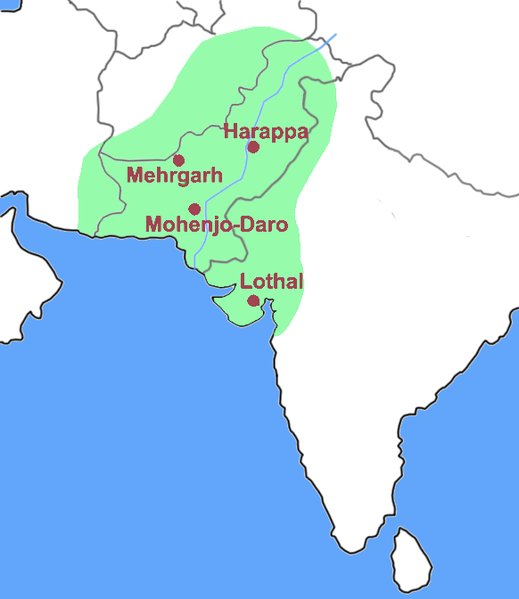
The decline of Indus Valley Civilization (IVC) started in 1900 BC there were no longer references to Melluha (People of Indus Valley Civilization) in Mesopotamian writings, and no IVC seals are found in Mesopotamia with whom the Melluha conducted a bustling trade, after that date. Even after the fading out of IVC, its people continued to live in places like Harappa and Mohenjodaro long after that.
Some of the aspects that Pakistan can still trace their legacy to are the commerce routes they developed. Traders from the highlands of Pakistan’s Baluchistan and northern Afghanistan brought in copper, tin and lapis lazuli. The Makran and southern coasts of Pakistan provided decorative shells. Timber was floated down the rivers from the Himalayas and gold from southern Central Asia. Skilled IVC artisans and specialized craftsmen turned such raw materials into useful and beautiful products for regional distribution and—as finds elsewhere have shown—for export by land and sea to Mesopotamia, Persia and Central Asia.
The southern parts of IVC controlled the sea trade, just as Karachi does today. Ships from Meluhha [the Mesopotamian name for the land and people of IVC] regularly sailed from ports near modern-day Karachi, Pakistan for the ports of Babylon. And they evidently made stops all along the way as the IVC seals have been found in Oman, Abu Dhabi and Bahrain etc as well.
The modern city of Peshawar lies on what is thought to have been one of the IVC’s main overland trade routes. That route is now a major highway that constitutes the eastern approach to the Khyber Pass and links the northwestern Indus Plain to the highlands of Afghanistan and Central Asia. An old branch of the route runs from Peshawar south into rugged tribal territory, through the modern towns of Pakistan’s Kohat and Bannu and the foothills of the Pakistan’s Sulaiman Mountains, and on down across the Gomal Plain to the early IVC site of Rehman Dheri, where an important excavation was conducted from 1976 to 1980.
Vedic Hindu culture was distinctly different than the culture of the Indus Valley Civilization, who followed monotheism.
The IVC was mostly restricted to the Indus Valley and its adjoining planes—however at the tail end of the civilization some of it dispersed into areas beyond the IVC.
The 3 Major IVC cities Mehrgarh, Harappa and Mohenjodaro are all located in Pakistan. One in Balochistan, one in Punjab and the last one in Sindh and there have been numerous linked sites that have been discovered. Recently, grave sites as old as 3000 year old were discovered near Swat as well.
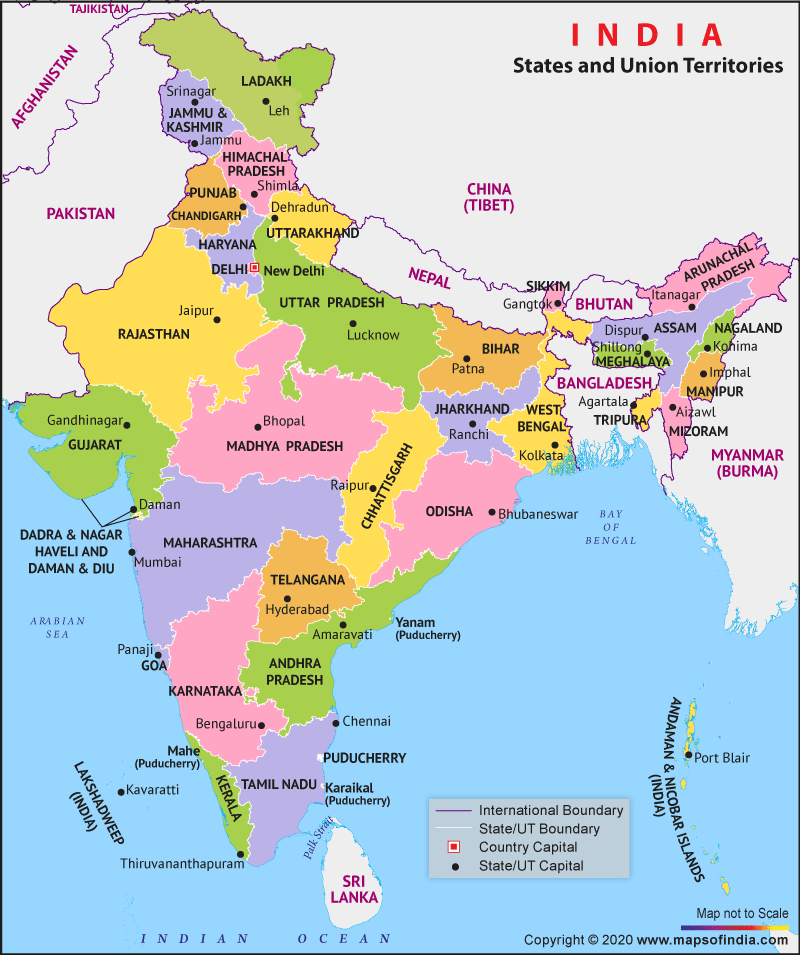
Current day India didn’t exist during IVC, and their religion had nothing to do with IVC, and major IVC settlements are not even located in India. However, Indians still refer to India as the “Home of Indus Valley Civilization” which is indeed surprising and a wrong representation.
Indus Valley Civilization’s legacy is linked to Pakistan and it cannot be denied, because various peoples after their decline ruled or invaded the area.
Therefore, we the people of Pakistan rightly claim ourselves to be the scions of and holders of Indus Valley Civilization.
Let me also highlight the importance of Gurdaspur – Kathiawar salient. The line drawn through Gurdaspur – Kathiawar and extended to the Arabian Sea generally defines a prominent watershed that separated the Indus Valley, it westerly flowing tributaries and the adjoining planes and the Ganges valley with its easterly flowing tributaries and its adjoining planes.
This is pronounced by the fact that after the last river that flows in to Pakistan from India, because of this watershed, no other river flows north east to south west which could links these two river valleys. And thus this salient and watershed formed the natural boundary between these two river valleys.

 Anyways, the author’s emphasis was where the Indus Valley civilization’s relics have been found and who uses its name.