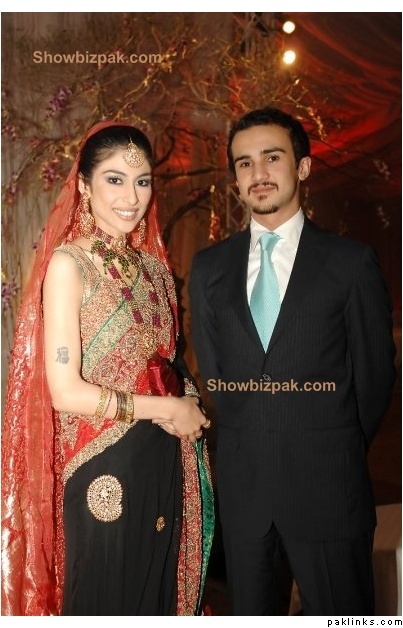
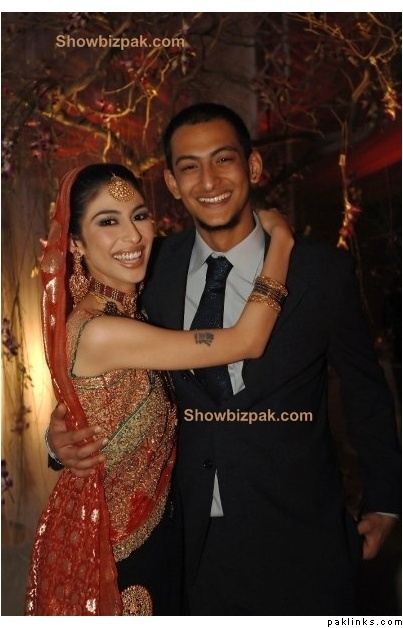
Barring the brides who actually practice hijab (including the h0jabis who practiced hijab only up until their wedding days), I haven’t seen too many Desi brides covering their heads/faces and the fact that people are arguing that a bride SHOULD wear a ghoongat/dupatta is a perplexing one. Everyone who insists brides should cover their heads bandies around one reason or another but I’ve yet to see a single argument that actually holds water, including:
**
A)The bride doesn’t look as good without a ghoongat/dupatta**.
That may be true, if the bride is half as ugly as the Desi brides I’ve seen. That said, a brown paper bag serves the same purpose without being pretentious.
B)The bridal look is incomplete without a ghoongat/dupatta.
You’re right: contrary to popular opinion, you don’t need a bride to conduct a wedding ceremony, just a ghoongat or dupatta. Why even invite the bride to her wedding since her ghoongat/dupatta itself is more important than her presence? As long as she doesn’t try to upstage the ghoongat/dupatta, she’s still welcome to attend her own wedding (but only as a guest).
**C)Your nikkah/walima/mendhi/mayoun/etc. is the only time in your life that you will able to wear a ghoongat/dupatta. **
Why only at the nikkah/walima/mendhi/mayoun/whatever? Why not move to someplace like Rajastan immediately after the festivities, so that you and your ghoongat can never be parted?
**
D) A bride without a ghoongat/dupatta doesn’t look as special without it.**
A unicorn without wings doesn’t look as special without them, but if I was fortunate enough to come across a unicorn, the last thing I would do is bemoan its lack of wings.
E) Wearing a ghoongat/dupatta is more traditional.
Clearly, even brides who pair ghoongats/dupattas with sleeveless cholis, Western-style bouquets and/or Firangi grooms are more traditional than the mavericks that don’t. Our tolerance is exceeded only by our hypocrisy, apparently.
**
F) Without her ghoongat/dupatta, I can’t tell the bride from anyone else.**
The majority of the time, the groom shuffles into the hall wearing little more than a business suit and a clean pair of shoes (despite the fact that his wedding is one of the few times a man can wear a tuxedo), yet I hear few people complaining about that. Yet, there is this belief that without a head-covering, you simply won’t recognize the bride. Do you walk into the wedding hall, wondering “Who ARE those two clowns seated on the stage?”. Do you simply run to the first hijabi you see, congratulate her and hand her the wedding gift, assuming that anyone with a head-covering MUST be the bride? I prefer to see dogs wearing collars but if I saw a dog without one I wouldn’t automatically assume it was a cat; neither would I pretend a ghoongat-less bride was some random party reveler.
G) Ghoongats/dupattas make brides look more modest.
That they do. Thankfully, facial-piercings, skimpy cholis/backless qameezes and/or 10 lbs. of hooker makeup often work to undo that damage. Unfortunately, I’ve seen too many brides don ghoongats or dupattas that failed to wipe their numerous questionable Facebook outfits and escapades from my mind; skanks of the world beware: the ghoongat/dupatta can only do so much.
H) It seems like only Indians/Hindus/Sikhs have abandoned the ghoongat/dupatta, and Pakistani Muslim brides who forgo a head-covering a simply copying them.
Of all the explanations I’ve read so far, this one takes the cake. I’ve only ever attended Muslim weddings, where only 50% or so of the brides covered their heads in some manner, but perhaps the bare-headed look really is more prevalent among Sikh and Hindu brides. I personally wouldn’t know. I find this line of reasoning bizarre, nonetheless; from mendhis, dholkis and bharats, to sarees, teekas and matha-pattis: the fact that something is associated with or attributed to Hindus or Sikhs has rarely proved an effective deterrent to Muslims. It’s a wonder that the folks who complain about bare-hair being a primarily Sikh/Hindu trend don’t also advocate divesting themselves of all Hindu/Sikh/Indian customs entirely and adopting another culture altogether (Arab perhaps, for those of us so blessed? Persian, for those of Persian descent? Tough luck for everyone else?). Good luck with that, btw.
G) “as gori’s wear veils to cover their heads, so we wear dupattas”
I compared the choice of wearing a dupatta for us to the choice of wearing veils for Western brides, but even I didn’t go so far as to compare the actual dupatta/ghoongat to the bridal veil itself! My understanding is that the western bridal veil (when it is worn) is worn during the walk down the aisle and the recitation of the vows, and then the bride is unveiled by her spouse (groom or bride, depending on preference), after which the veil is usually removed and set aside, (though I applaud any bride who chooses to dance and/or hold her reception still veiled). On the other hand, the folks on this thread are advocating the use/wear of the ghoongat/dupatta both before and after the Muslim wedding ceremony (or Nikah) itself (when a Muslim bride, ostensibly, is *compelled *to cover her hair).
Ultimately, I’m neither for, nor against, the practice of brides wearing ghoongats/dupattas, and feel there are many valid reasons why a bride would choose to do so (shyness, tradition, religious belief) or not (personal choice, fashion, comfort). Unlike other posters on this thread, though, I’m not foolish enough to suggest that a dupatta or ghoongat (or the lack, thereof) is what makes or breaks a bride. Though we all have our quirks and preferences when it comes to bridal fashion and are not afraid to share them (or even mock them openly  ) modern Desi brides enjoy a freedom of choice seldom seen in other cultures. We’re all welcome to praise or mock the choices of others, as long as we don’t expect to make those choices for them.
 HAHAHAHAH
 Never forget your roots, people!