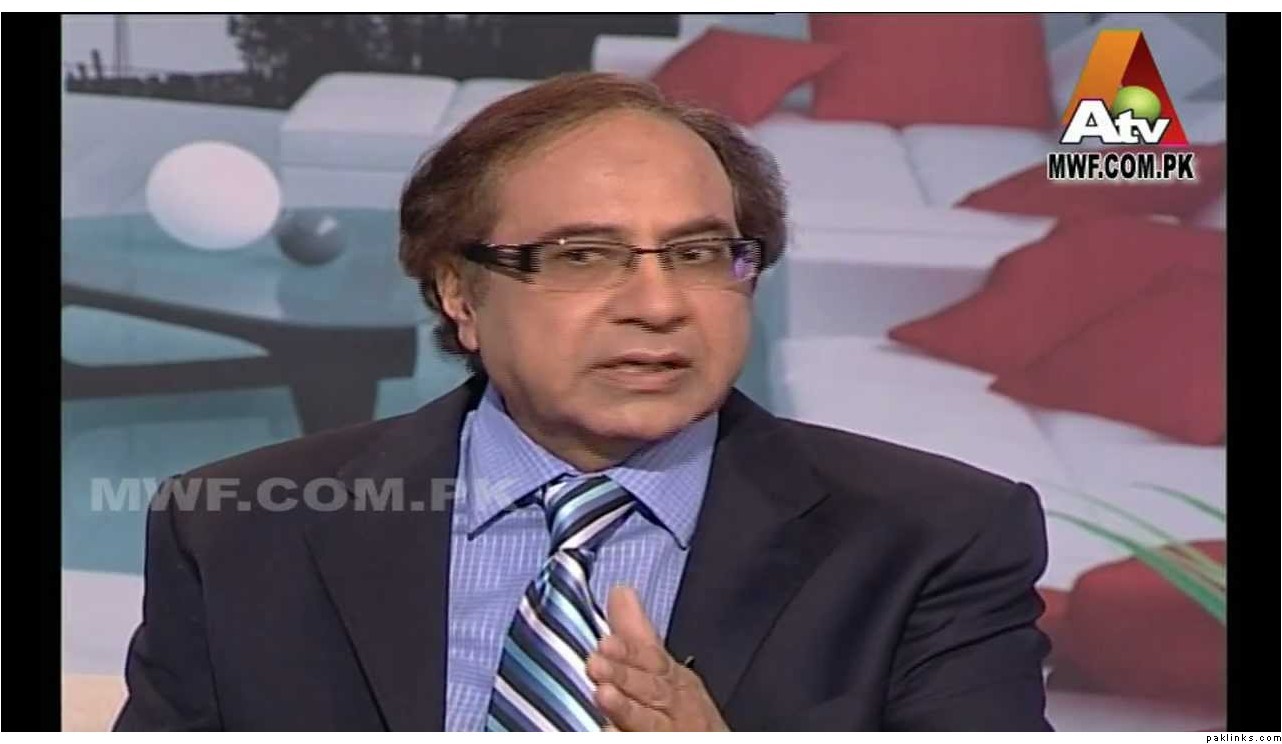
Re: Zubair Umar : new Chairman BOI
INVESTMENT

Apparently appalled by the dramatic downswing in investment over the last five years, the PML-N government is planning to invite all stakeholders to firm up a long-term investment policy. Insiders say the government has already mapped the broad contours of the policy – including a ‘comprehensive’ energy sector policy – and is hoping to pull significant local and foreign investment, including portfolio investment.
To this end, the government is providing investors with assurances regarding the security of investment, promising to improve the overall law and order situation and also extending fiscal and non-fiscal incentives.
But this courtship will be difficult. “Given the escalating levels of violence that have become the order of the day in Pakistan, most investors are too scared to come here for any meaningful business activity,” confesses an insider. “Most foreign investors are waiting for local investors to take the plunge first.”
Over the last five years, Pakistan has witnessed a significant fall in foreign direct investment. From $5.4 billion in FY08, FDI inflows have been reduced to a dribble: just $760 million in FY12.
http://magazine.thenews.com.pk/upload_image/10/5620_7_8_2013_2.gif
But with a $5.3 billion IMF Extended Fund Facility tantalizingly close – and predicated on structural economic reforms – the government seems to have woken up to the fact that it needs to draw investors and fast. And there’s also the pressure of proving itself worthy of the ‘business-friendly’ title.
Accordingly, the government is said to have prepared a three-year plan for effecting structural reforms, which aims to accelerate economic growth from the three-percent-of-GDP average for the last five years to a more respectable seven percent of GDP. The government’s also hoping to enhance the** investment-to- GDP ratio to 20 percent over this time.**
Central to this enterprise is said to be the Pakistani diaspora, which reportedly owns between an estimated **$90 billion and $100 billion, **and could theoretically, help rebuild Pakistan’s economy. But these potential investors are conditioning their support on the resolution of the energy crisis and a revamp of the Board of Investment (BoI) so that it can function as a one-window operation for both local and foreign investors.
**“You can’t have a real economic turnaround without local and foreign investment **and we’re currently finalizing short-, medium- and long-term goals,” says Zubair Umar, a prominent member of the PML-N economic thinktank, who’s waiting for the government to issue his BOI chairman notification. “Militancy and terrorism are making it difficult to attract investment but we’re looking to provide necessary security and protection to both local and foreign investors, which are sure to draw others as well.”
Umar, who has worked at prominent positions in both local and multinational companies in the Middle East and Africa (and also happens to be the brother of PTI whizz kid Asad Umar), says that his first priority as BOI head will be bringing back those Pakistani investors who’ve set up shop on other shores.
“The energy crisis was a huge issue but since the government is paying off the **Rs 500 billion **circular debt, there’s only the law and order situation left to resolve,” he says. “We’re also streamlining processes and procedures, with a view to improving governance.”
According to Umar, the government needs some time to deliver on the ambitious structural changes it’s planned. “The investment-to -GDP ratio has come down from 23 percent to 13 percent and we intend to take it up to 20 percent initially,” he shares. “It’s a tall order but not impossible, given that the PML-N leadership is ready to take the unpopular decisions required to put the economy back on track.
On the cards is a small team of dedicated professionals whose job will be to eliminate the red tape and facilitate investors. “We’ll have a relationship manager at each important desk in the ministries; it’s the job of the state to provide all necessary facilities such as land, electricity, gas etc. to the investors,” says Umar.** “Setting up an efficient one-window operation is a difficult task but we have no other option.”**
A central plank of the new investment strategy will be a move towards public-private partnership. “The government will have to offer incentives to promote investment, which has been declining for the last many years,” says Umar, “and we intend to encourage Built-Operate-Transfer projects.”
According to some, the pro-investment tilt of the PML-N government is already yielding results –
as evidenced by the recently-concluded *US Pakistan Business Opportunities Conference conference in Dubai. About 200 Pakistani, American and Emirati companies – including Gillette, Citibank, GE, Procter and Gamble, Abraaj group, Coca Cola, Conoco Phillips, Engro, Estee Lauder, Goldman Sachs, IBM, Monsanto, Nishat and Saif groups – participated in the conference and many presented investment plans for Pakistan.
*
Meanwhile, the government continues focusing on enhancing trade and business relations with UK and China. Over** 200 UK companies are operating in Pakistan and both countries want to ramp up the volume of trade from 2.5 billion pounds to 3 billion pounds by 2015**.
Similarly, in his four-day trip to China last week, PM Nawaz Sharif signed a host of agreements and deals with Chinese businesses, moves which are expected to push up the current** $12 billion** annual trade to $15 billion in the next two to three years.
Insiders also say that the** US, China, Saudi Arabia and Gulf nations** are expected to form an international consortium or a platform that will attract public and private investment in Pakistan’s key sectors: energy, industry, tourism, financial services and agro-based industrial sectors.
These efforts are being accompanies by some movement on the SOEs front as well. The government has appointed a new board of directors for PIA, which has been asked to improve the financial health of the national carrier. On the board now are Aslam Khaliq, Nasser Jaffar, Mian Muhammad Mansha, Arif Habib, Sarfaraz A Rehman, Imran Khan, Aviation Secretary Muhammad Ali Gardezi and Dr Waqar Masood Khan, the former secretary finance who will serve as an ex-officio member.
However, even these appointments are being greeted with skepticism by some insiders. “Aslam Khaliq was in the tobacco industry; Nasser Jaffar is a trader; Imran Khan is from the beverage industry; Sarfaraz Rehman is from Engro; Arif Habib is a stock broker; Mian Mansha is a banker,” gripes one PML-N leader. “None of them have any aviation experience but since they enjoy considerable clout in the ruling party, they got themselves inducted in the new PIA board.”