Zapping Mosquitoes and Corruption
***Jun 1st 2013
Technology and Government: How the clever use of mobile phones is helping to improve Government Services in Pakistan
LIVE in a crowded South Asian city and a host of problems—smog, contagious disease, corruption—may plague you. Each winter, the air grows foul. The monsoon season brings mosquitoes, bloodsuckers capable of carrying nasties such as dengue and malaria. As cities expand and people are packed closer, they are more likely to pass on infections. Overwhelmed municipalities, especially if weakened by corruption, offer a weak response. In Lahore, Pakistan’s second-most populous city, there were** 21,292** confirmed dengue patients in 2011, a particularly dire year. At least 350 of them died, victims of associated haemorrhages or shock.
The usual response is to send out fogging lorries to spray a choking mixture of insecticide (such as DDT) and kerosene to kill mosquitoes. Public officials also advise residents to drain every reservoir of water near their homes. Mosquito larvae flourish in puddles, even inside old tyres or old flower pots. But foggers sometimes spread their helpful poison too liberally, where no dengue-infected mosquitoes are present, or too rarely, perhaps neglecting poor neighbourhoods . Municipal workers skip puddle-hunting, or fail to tip chemicals into ponds to kill the larvae. Crooked workers sell their insecticides or refuse to spray without bribes from residents.
After their especially grim spell, Lahore’s authorities last year looked for ways to use technology—in particular cheap, widely available smartphones—to help them put up a better fight against the mosquitoes. They equipped 1,500 city workers with $100 smartphones and asked them to take** “before and after”** photographs of their anti-dengue tasks and to upload images, tagged by location, so that they could be plotted on an online map, made available to the public. They also recorded where larvae were spotted (usually in traps), and reported the locations of known dengue patients.
The resulting data were then analysed to create a** visualisation showing where and when dengue was infecting people. It was then possible to predict where dengue-infected mosquitoes would buzz up next, so that fogging and larvae-hunts could be targeted appropriately. The use of smartphones also had more subtle effects. Knowing they were being monitored and tracked in public, municipal workers** also applied themselves more assiduously to their tasks. Anyone looking at the online map could see if the work being done in a particular area was adequate—and complain if it was not.
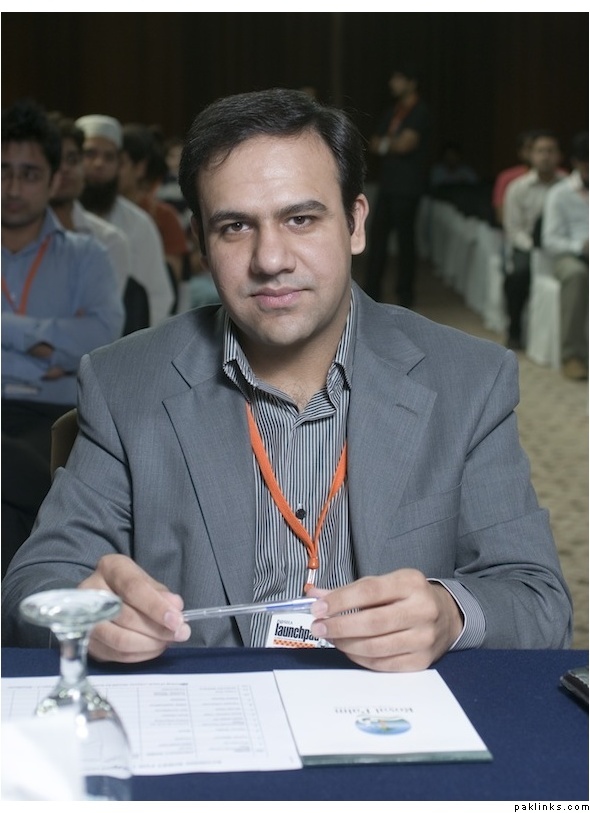
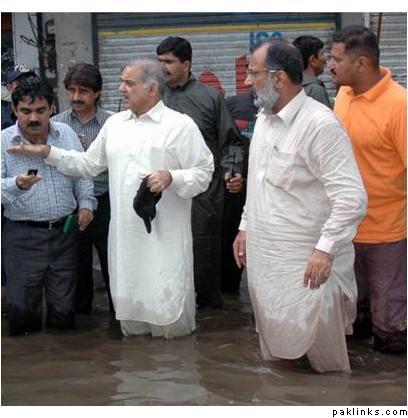
All this seems to have worked. Last year Lahore suffered just 255 dengue cases, and no deaths, says** Umar Saif, a computer scientist seconded to the Punjab provincial government who oversaw the tracking side of the project. Strong political interest helped, too. The Chief Minister of Punjab, Shahbaz Sharif, who was re-elected in May, led daily meetings on the anti-dengue fight. Of course, 2012 might simply have been a milder year for dengue than 2011, so the effectiveness of the new approach will become apparent only after a few more years. Already, however, the Punjab government is extending the use of mobile phones to gather data and improve broader public services.**
Other officials, such as veterinarians who are paid to travel to farms to deworm cows, have to take smartphones to record themselves at work and upload geotagged self-portraits to an official website. This makes it possible to check that they are actually turning up for work. They are also required to record the phone numbers of farmers they visit, some of whom are randomly called afterwards to be asked if the service was up to scratch.
Mr Saif is also trying out a model devised by Zubair Bhatti, a former Pakistani local-government official who now works for the World Bank. It involves making random calls to users of public services—including the police, health services and administrative services such as registering property—to inquire about the quality of service and whether they were asked to pay a bribe. Anyone who volunteers his mobile-phone number (so far, more than 1.3m people have signed up) will get a two-minute robocall fromMr Sharif, the chief minister****. He explains that they will shortly receive a text message reviewing their encounter with a local official.
Even among the poorest fifth of households, 80% now use phones, so the technology can reach almost everyone. Illiteracy is a problem, but the Chief Minister’s call alerts a recipient to get help, if needed, with reading the text message when it arrives. It contains a specific question: did the police respond, as required, within 15 minutes of your emergency call? Were you asked for a bribe at the hospital, or when registering property? By collating the responses it is possible to spot problem departments and crooked officials.
Around** 25,000-30,000** automated calls are now being made each day, and** “we are gathering remarkable data on who is corrupt and where,” says Mr Saif**. It is heartening that in the first two months after the scheme began, 60% of respondents said they were happy with their recent experiences of public services. That could help put anger over corruption into perspective. It is striking, too, that many complaints were over unclean offices, unclear fees for official services and petty frustrations, rather than corruption alone.
Either fight, against dengue or shoddy public services, could yet be reversed in Lahore. Smartphones, geotagged photos and canvassing for public feedback only help if the data gathered are acted upon. But phones are letting sunlight shine brighter on the workings of** public services in Lahore.** If they work as a disinfectant there, others may follow its lead.