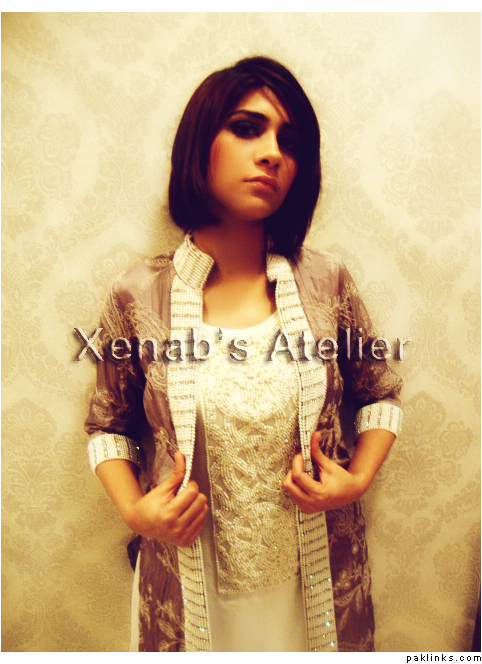
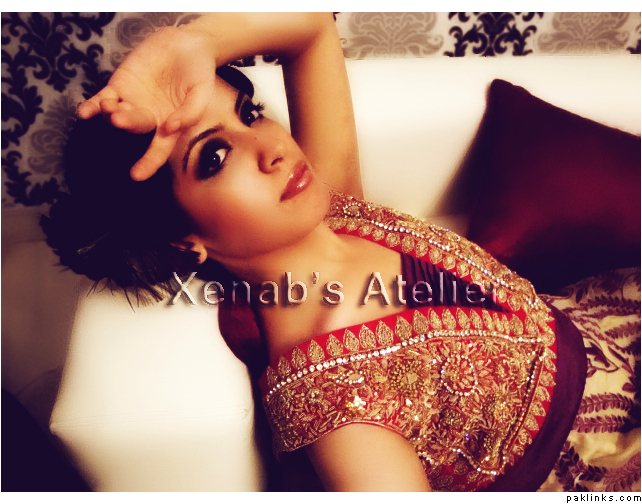
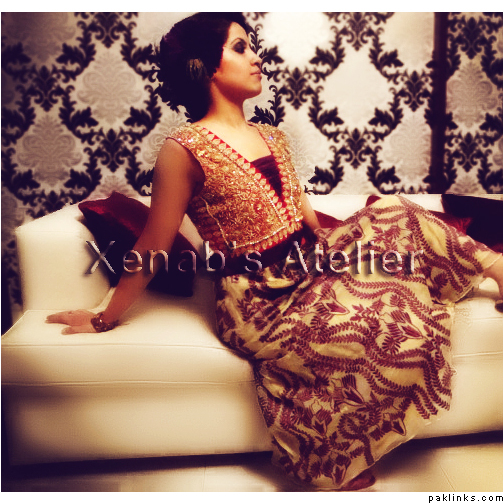
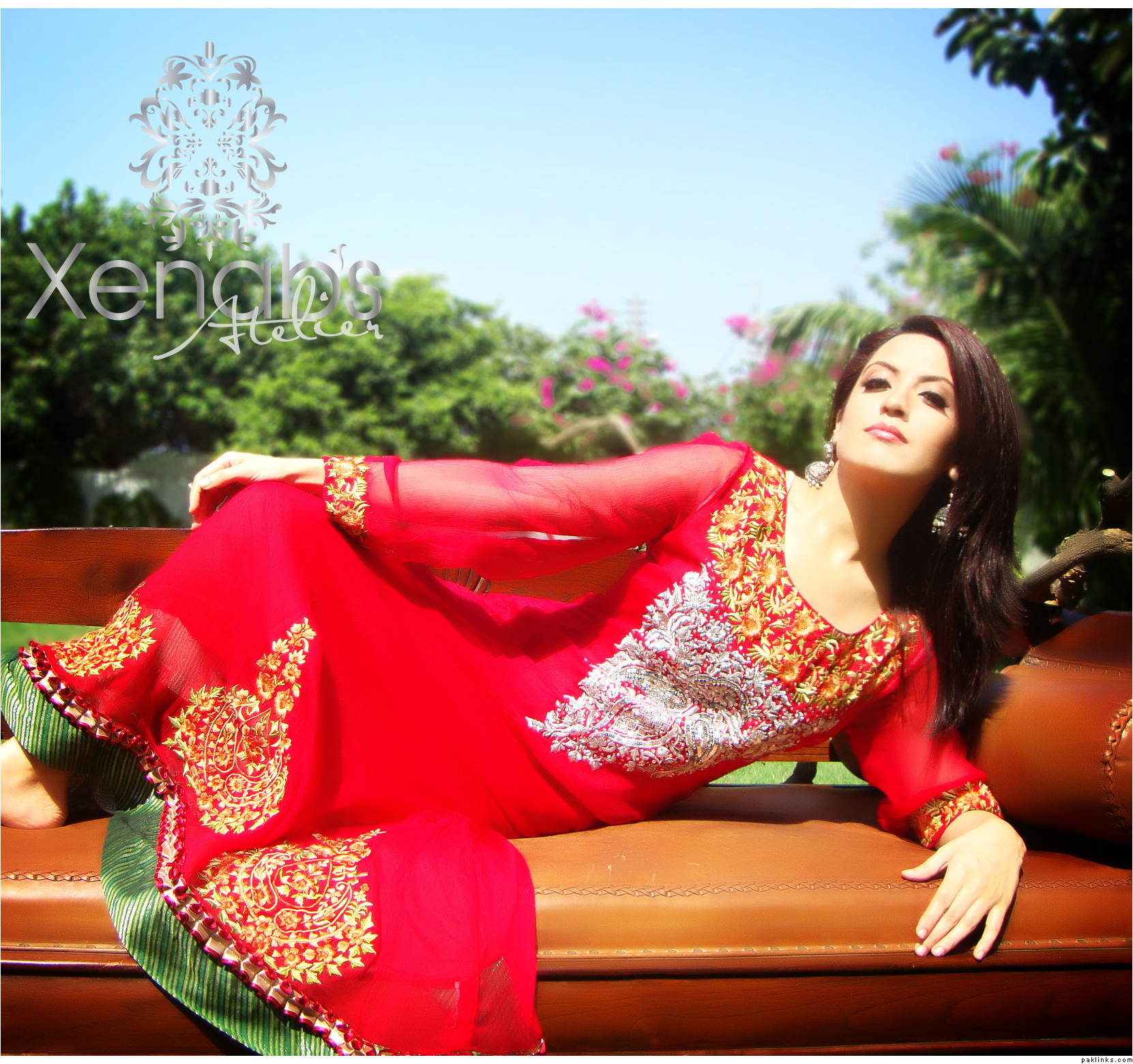
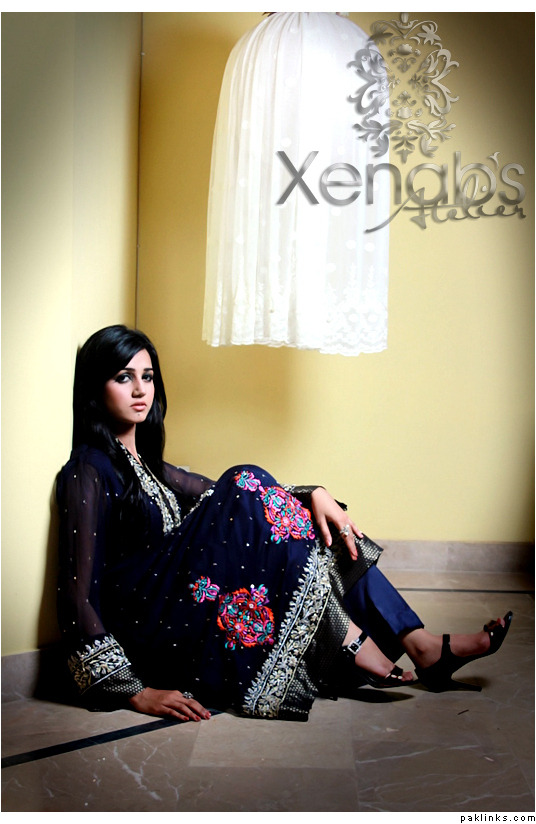
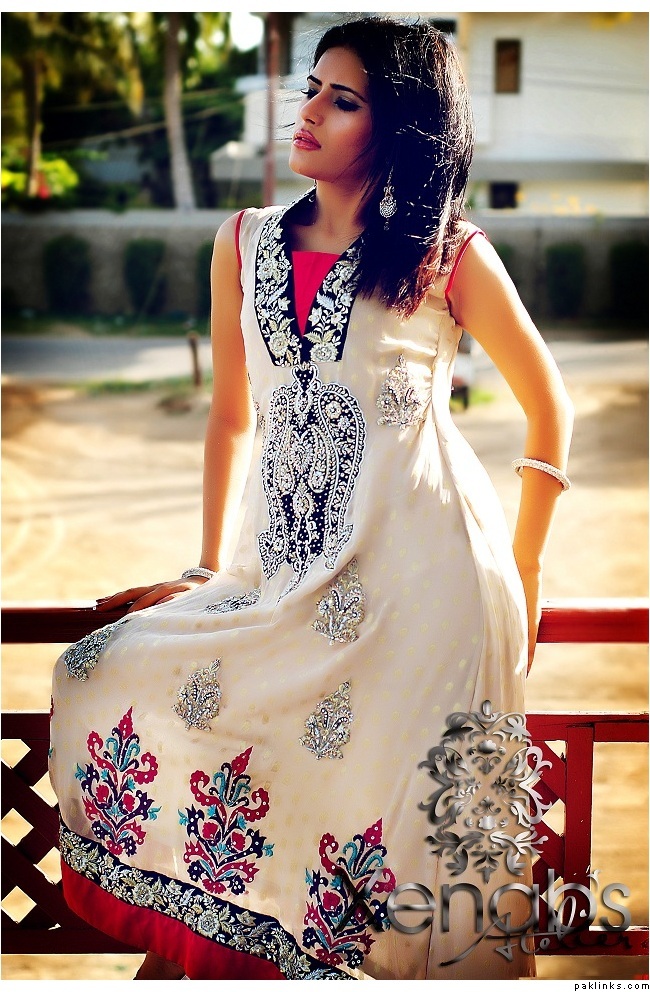
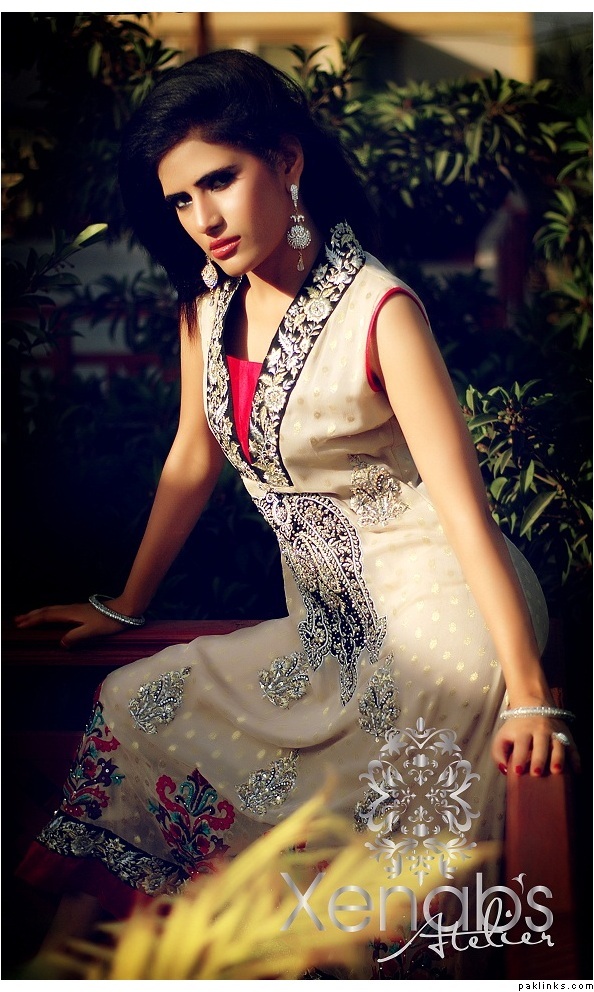
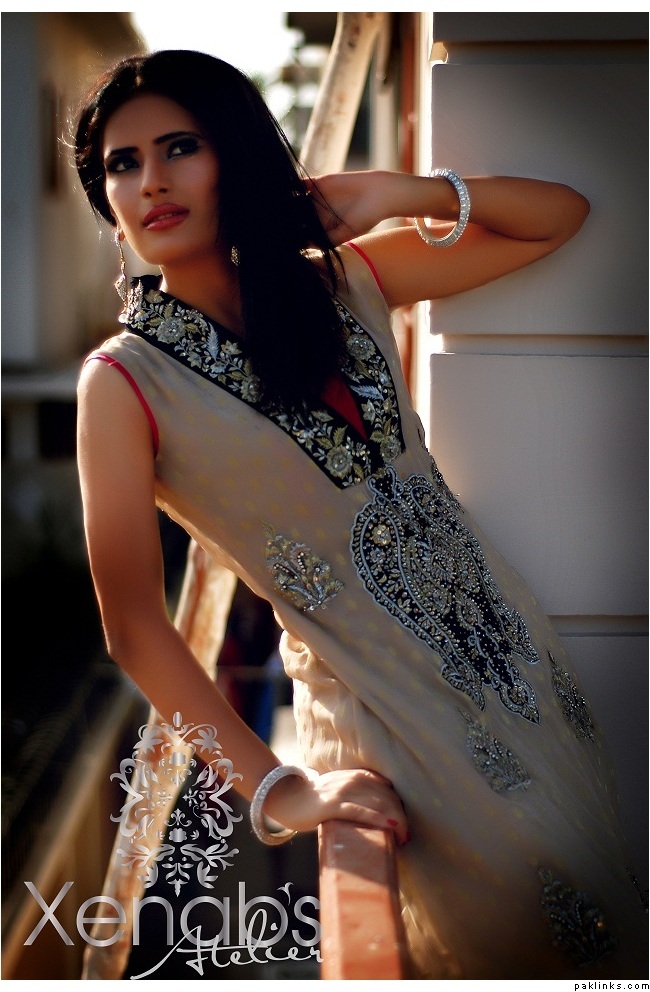
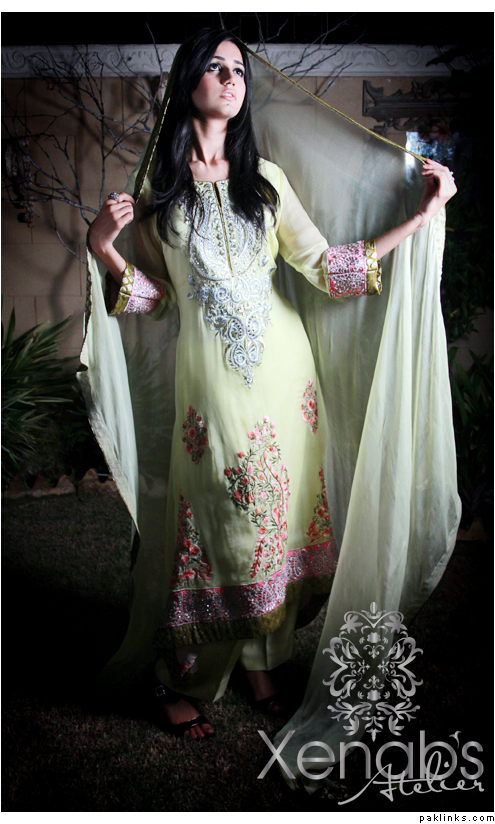
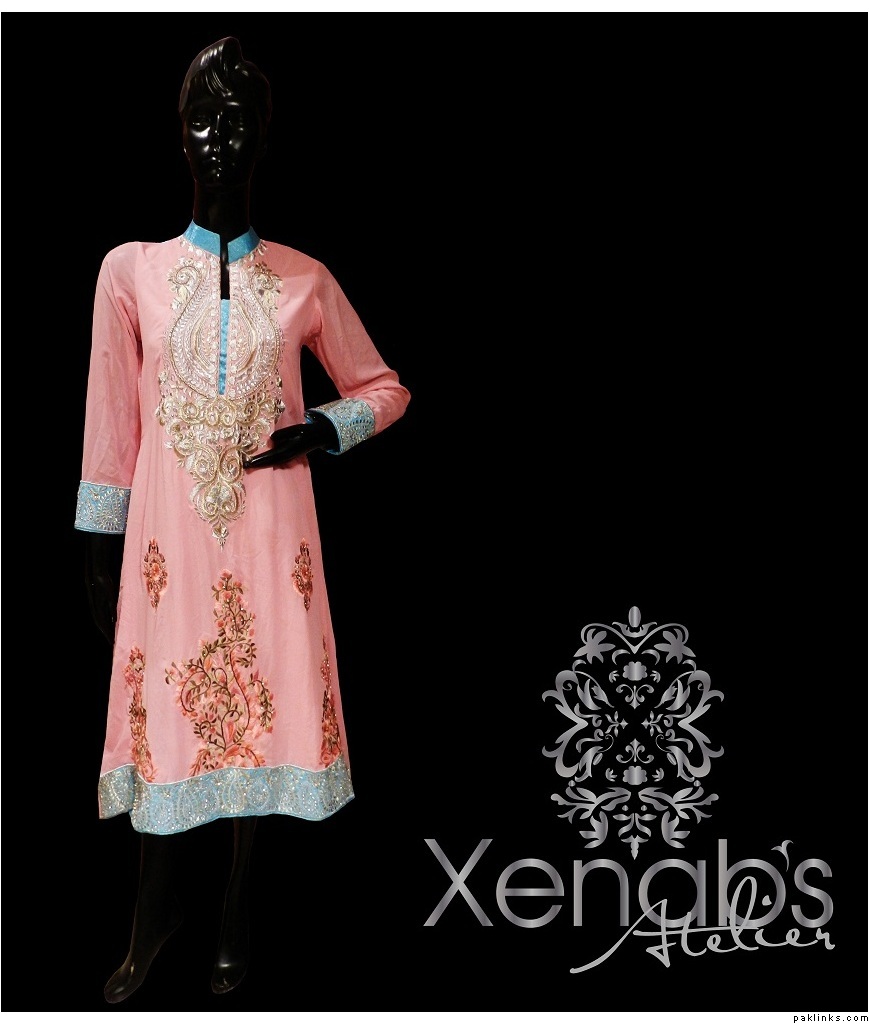
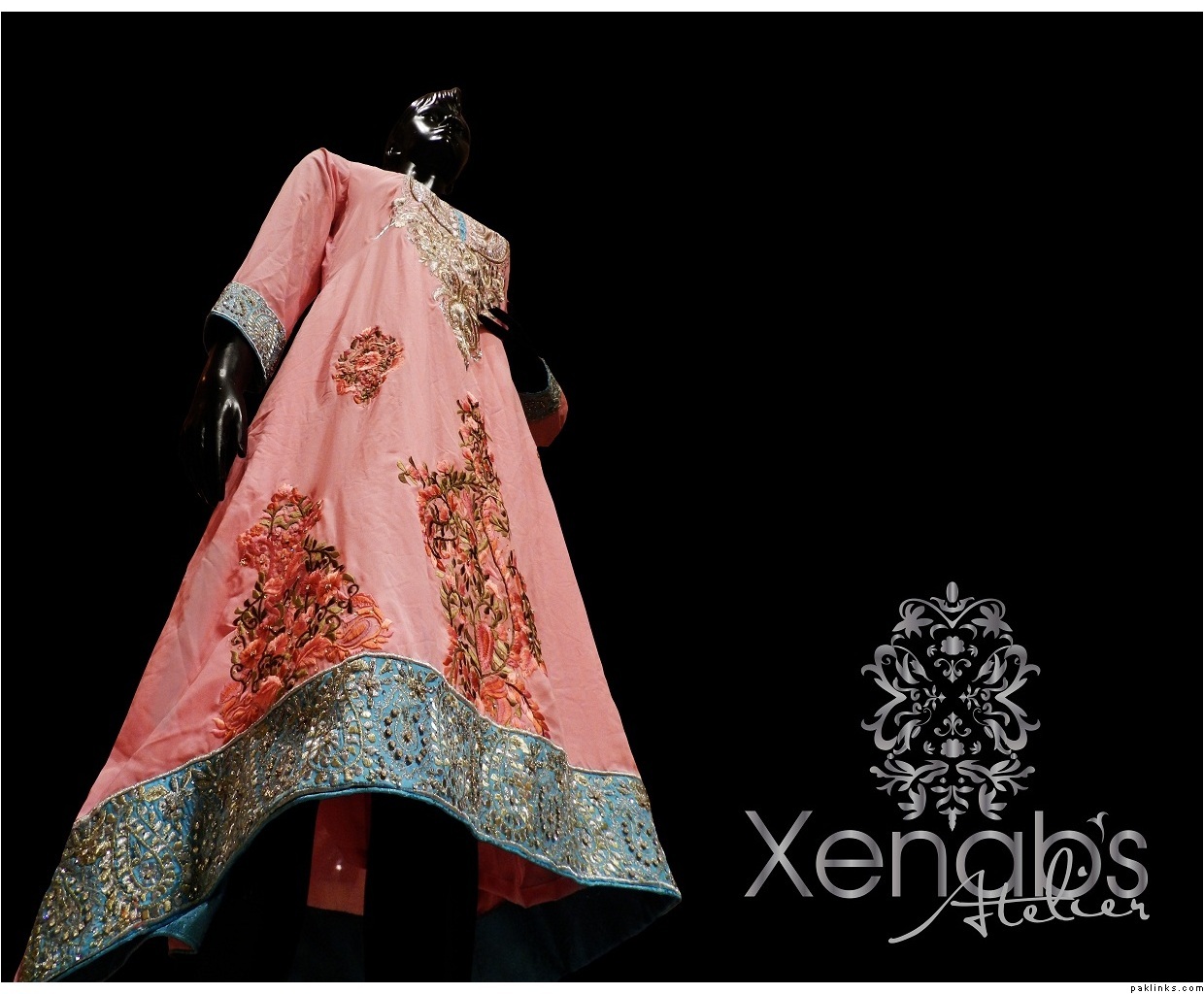
Re: Xenab’s Atelier: Pret|Couture|Trousseau|Bridal
How to be a Xenab’s Atelier bride

Get in touch with us at [EMAIL=“[email protected]”][email protected] to have an exclusively made bridal outfit. The steps are simple, and you’ll get your ideal bridal look as you like while keeping it unique.
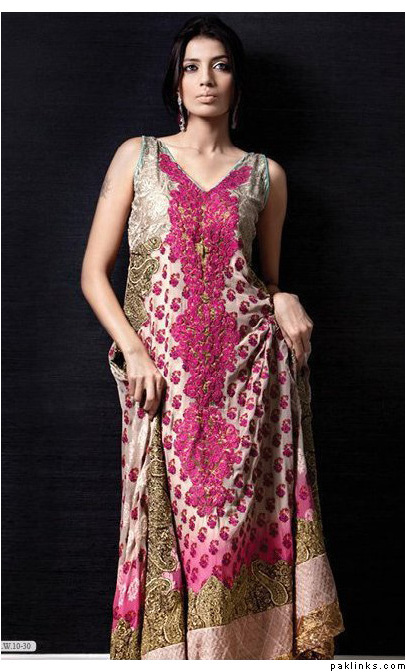
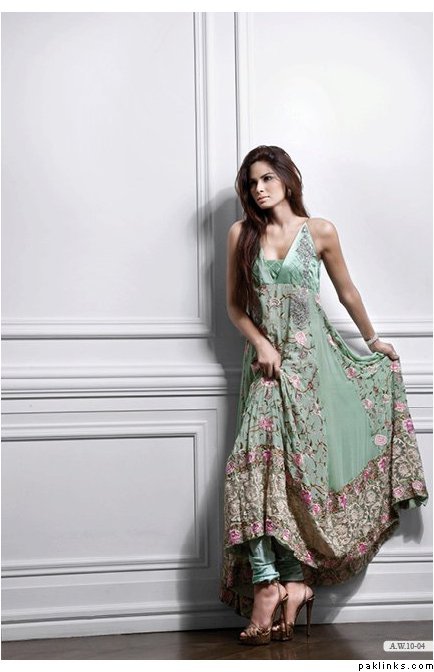
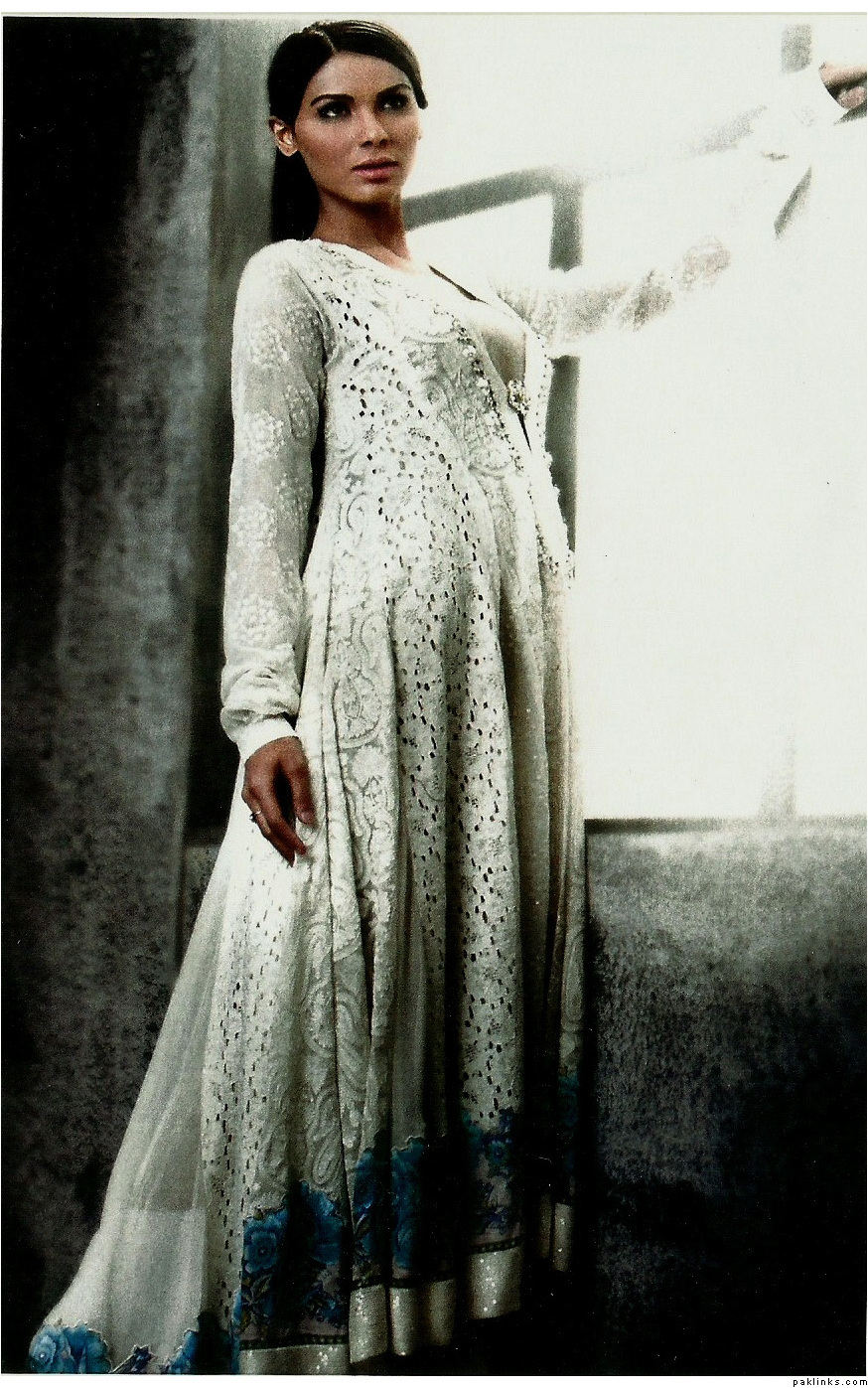
Step 1: Keep in mind the colors you would like to wear on your big day as well as the Valima. Red is a traditional color, but more and more brides are opting varied color choices. Want it to look elegant and sophisticated? Look around in whites and nude colors. Want to maintain a complete feminine look? Choose pastel shades of peach, pink or peppermint green. Want to make a statement without going OTT? Choose Magenta for your shirt, with a combination of rust, antique gold and olive green. If you’re indecisive, choose a base color you like and let us guide you on where to go with the colors.
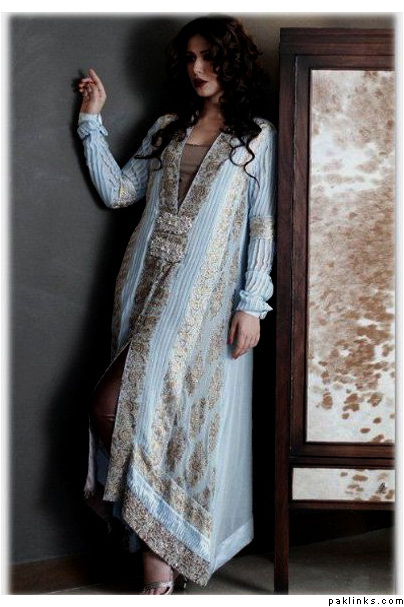
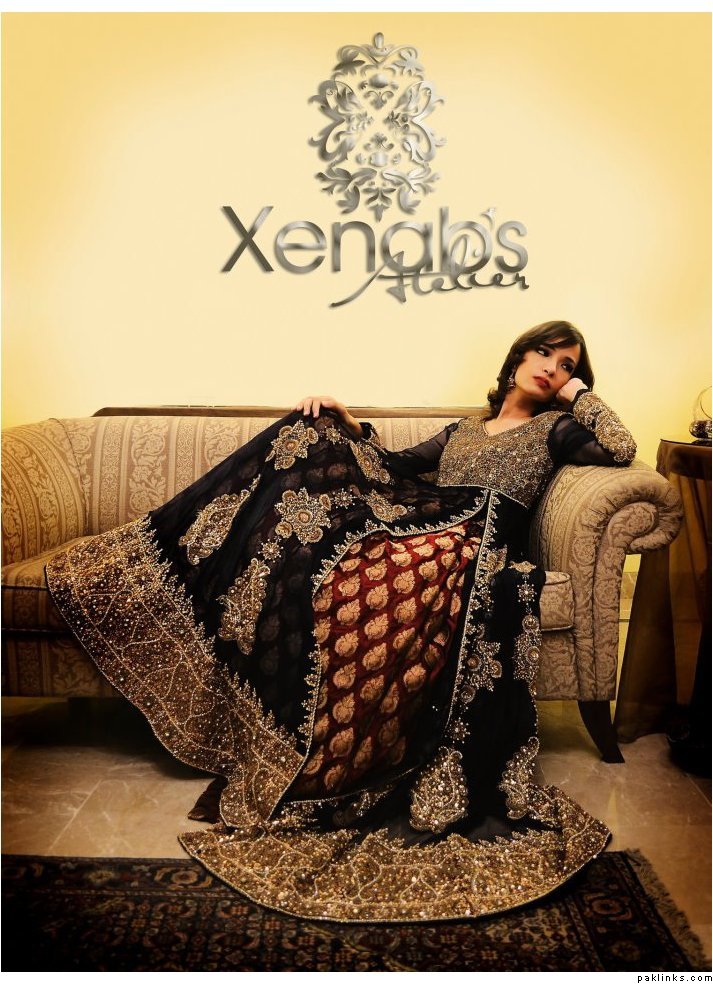
Step 2: Choose the style of the shirt. Many brides opt for the traditional short kameez over a lehenga look, but we encourage our brides to let loose and experiment with jacket styles, trains, bodices and much more. If you have photos of bridals you have in mind, send them to us. We don’t make replicas, but a photo can make it a lot easier for us to create the look you want.
Step 3: Choose the lowers. While most of our Valima brides choose long flowing shirts on top of churidaar pajamas, brides on their Baraat day opt for either a lehenga, gharara, sharara, dhaka pajama or a bombay cut pajama. Want to look regal? Go for something with a train.
**Step 4: **Choose your dupatta type. A typical bridal dupatta consists of work on all four borders in a uniform style. Where brides have budget constraints, its best to choose a thick border on the matha patti (the part that covers your head), and thinner strips of embroidery on the other three, as most brides are draped in a way that the matha patti is mostly shown. If you’re a traditional bride, you should opt for a 5 yard long dupatta with a uniform border on all four sides. This dupatta can be draped across both shoulders and over the arms in a hyderabadi style. Other dupatta types include thin lines of work on the longer sides, with heavy work on the pallu; Thick borders, with a cluster of embroidery extending inside from it, and thick embroidery in the middle for those brides who choose to walk around during the function rather than just sit throughout; thick borders, with diagonal stripes of work; dupattas with a “jaal” (cross-pattern), and many more.
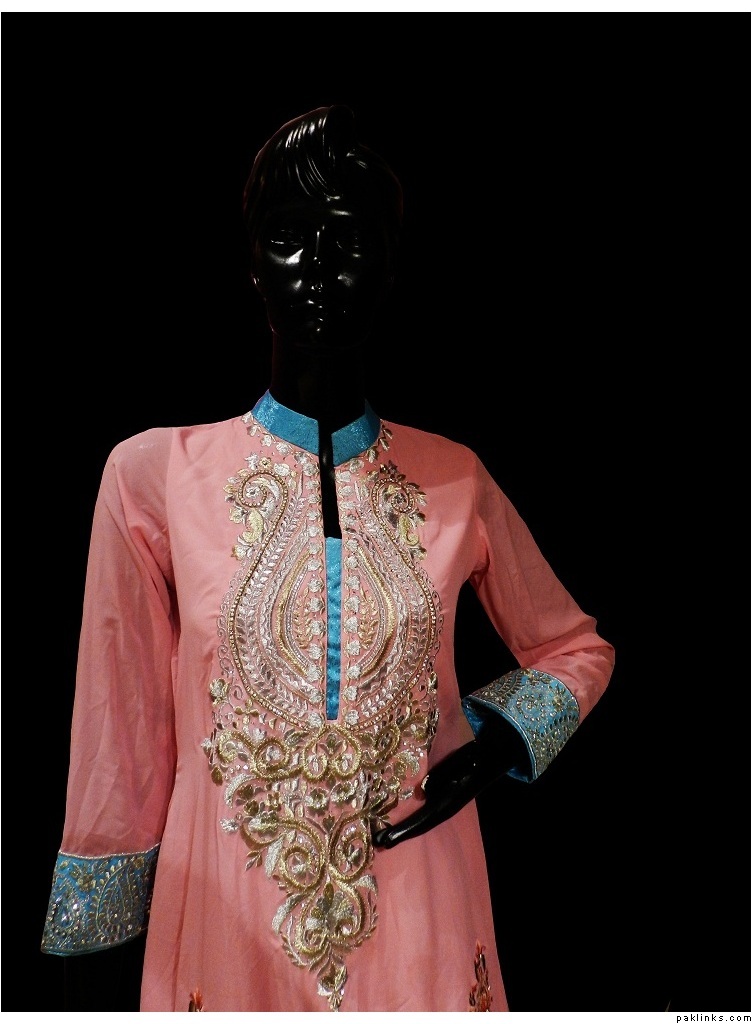
Step 5: Choose the sort of embroidery you like. First comes the colors. We prefer a mix of antique gold and silver usually, but you can use embroidery types like resham embroidery to be incorpated as the base to bring out other colors. If you have a beige outfit, you can choose pink embroidery with antique zardosi on top. Most brides are not as aware of the different forms of embroidery available, and you can look through this thread to see another post where we have posted different photos of our outfits using different forms of embroidery with their descriptions given. If you like floral designs or paisleys, let us know, and we can come up with a form of embroidery that suits your personality and the colors of the outfit.
Once these steps have been completed, you can mail us with what you have in mind and we can give you suggestions on how to go forward with your outfit. We will then send you a sketch of the expected outfit as well. Once the sketch has been approved, we will create a small sample of embroidery to show you what to expect out of your outfit and ship it to you. The outfit will then start after the sample has been approved. Keep in mind that the sample takes the longest time to create, sometimes even as long as the outfit itself, so order in advance accordingly.
To view more of our collection, click the following link:
Xenab’s Atelier | Facebook