Re: Who exactly is Zulqurnain, as mentioned in Quran?
I'm going to quote in exact words what a good friend has to say on the subject:
[quote]
Bros/Sis,
It's about time that we study the Quran as the ultimate source of historical contexts. You can be assured that no history has been falsified to serve interest of certain parties. It is the living proof and witness of events in the past, present and future.
WHO IS DZULQARNAIN?
The discussion about Dzulqarnain has to start with determining his real identity.
1st Viewpoint:
- He lived in the same age with Prophet Ibrahim a.s.
It is thought that he met Prophet Ibrahim a.s. in Palestine
Professor Muhammad Khayr Ramadhan Yusuf agrees with this view based on similar views by tsiqah Islamic Historians: Abu Hayyan (author of al-Bahr al-Muhith), al-Qurtubi (author al-Jami’ li Ahkaam al-Quran), Sheikh Ege (author Tafsir Jami’ al-Bayaan), az-Zamakhsyari (author Tafsir al-Kasyaf), an-Nasafi (Tafsir Madarik at-Tanzil), al-Alusi (author Ruh al-Ma’aani), al-Azraqi, Ibnu Iyas (penulis Bada’ie az-Zuhoor fi Waqa’ie ad-Duhoor) and Ali Duka (author Muhadharah al-Awa’il).
However, there were no conclusive evidence by all mentioned above.
2nd Viewpoint:
- Dzulqarnain is Alexander the Macedon, born in Macedonia 356BC
His father is King Philip of Macedonia
King Philip put Alexander under the tutor of Aristotle
King Philip died when Alexander was 20 years old and took the throne in 336BC
2 years later he launched a campaign against the Persian Empire and defeated it on 333BC and subsequently conquered Syam and Iraq, eventually India
In his brief reign over 10 years, he has conquered almost every known empires that existed at that time.
Returned to Greece, on the way stopped over in Babylon, Iraq to rest.
Fell into high fever for 11 days and died on 323BC at the age of 33.
Known as Dzulqarnain (Having two horns) for his victories over the 2 major empires at the time, Persia and Greece.
Those who believed that Alexander is Dzulqarnain mentioned in the al-Quran include many well known Mufassirin and Historians such as:
Al-Mas’udi, al-Maqrizi, ats-Tsa’labi, al-Idrisi, ar-Razi, Abu Hayyan, an-Nasafi, Abu al-Mas’ud, al-Alusi, al-Qasimi and Muhammad Farid Wajdi
However, this view is incorrect because the al-Quran explicitly mentioned characteristics of Dzulqarnain as someone who is a god fearing believer, fair, pious and just ruler.
- However this contradicts with characteristics of Alexander the Macedon who is a known Musyrik, idol worshiper, adulturous, and consumes liquor.
3rd Viewpoint:
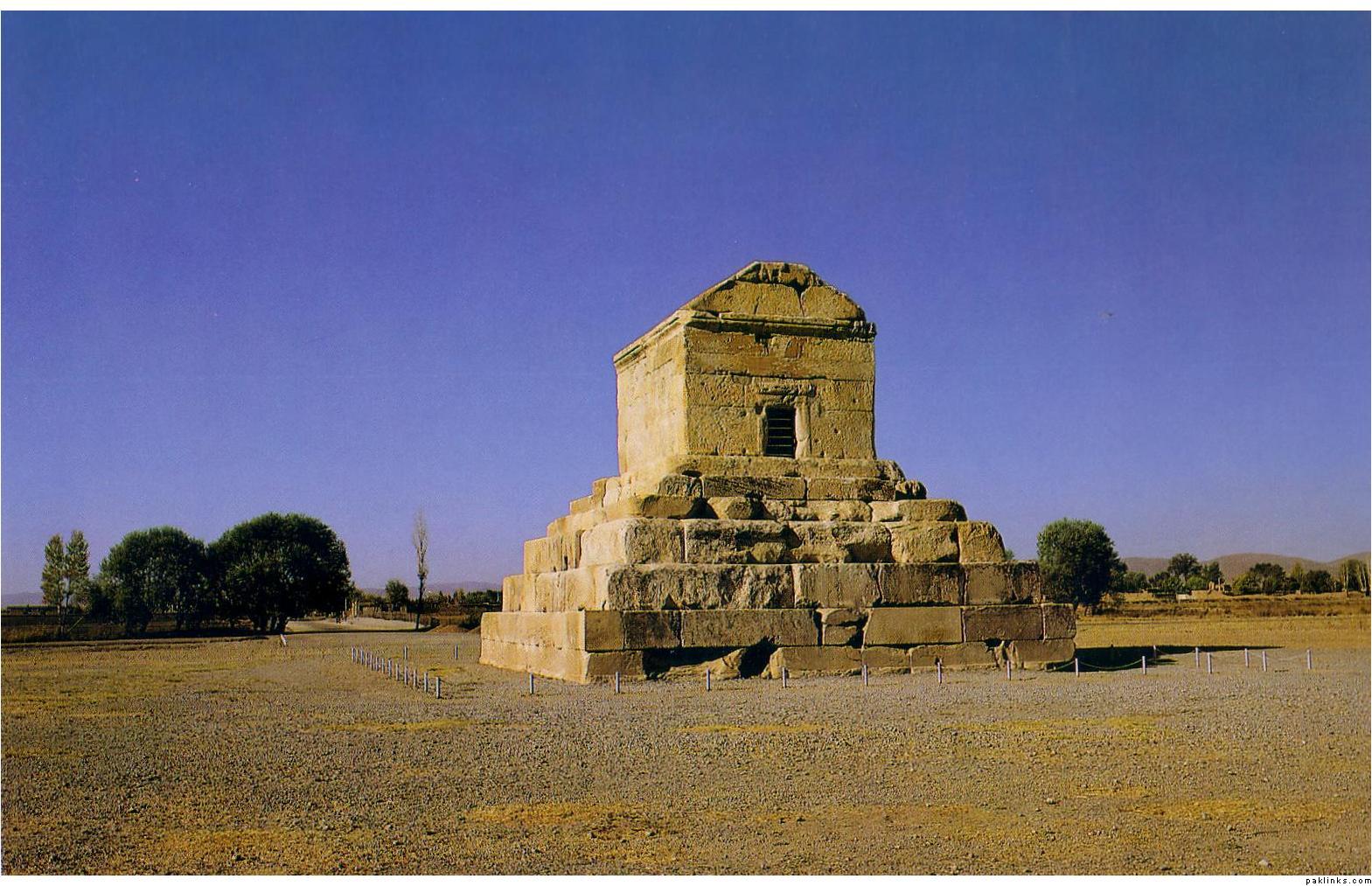
- Dzulqarnain is King Kaurush / Cyrus the Great from Persia
- He united the kingdoms of Lydia and Media
- Reigned for 30 years 559BC – 539BC
- Scholars who hold this view include:
Abu al-Kalam Aazad in his book Yas’aloonaka ‘an Dzil Qarnain and Dr. Abdul ‘Aleem Abdul Rahman Khadar author of Qissah Dzil Qarnain.
CYRUS / KAURUSH
- Kaurush ruled Persia during the early periods of Persian Iranian history before the conquest of Alexander the Macedon
Persia was divided in two at the time: Faris at the South and Media at the North
When Kaurush took the throne in 559BC, he united the two kingdoms.
He expanded his empire with the intention of freeing oppressed people
Famous wars fought:
1. Rome in the west
2. Eastern campaigns
3. Northern Campaigns
WAR AGAINST GREECE IN THE WEST
Greece at the time was a neighbor with Lydia situated in Northern Asia Minor that stretched all the way to the Black Sea and the Aegean Sea
There were constant wars between the two powers Lydia (Greece) dan Media (Persia)
Lydia at the time was ruled by King Croesus
When Kaurush took the throne, Croesus announced war with Kaurush
Kaurush prepared an army and mobilized to the West towards Lydia until two major battles ensued at Patria dan Sardis.
Croesus was defeated and Lydia Kingdom became a vassal of Kaurush.
Kaurush treated the Lydians fairly and justly
This war is the first campaign waged by Kaurush as stated in the al-Quran. The capital city of Lydia is Sardis located at Aegean sea near Izmir in present day Turkey.
Dr Abdul Aleem Abdul Rahman Khadar describes the Aegean sea near Izmir as having the similar description of the sun setting in black muddy waters by al-Quran surah al-Kahf verse 86.
EASTERN CAMPAIGN
- At the Eastern borders there were nomadic people who were conducting acts of fasad (wickedness) at the edge of King Kaurush empire
After defeating Croesus, Kaurush heads East to crush the nomadic uprising
His conquests in the East reached the Sind River, Isfahan, Khurasan, Qum and others.
The nomadic nature of these tribes saw little needed for permanent residences. Due to this they did have permanent shelter to weather the heat as mentioned in surah al-Kahf verse 90.
CAMPAIGN IN THE NORTH AGAINST GOG AND MAGOG- After securing his position in the West by defeating Lydian Kingdom and the East and also the Southern borders after conqueirng Babylon, Kaurush mobilized to the North to strengthen his positions there
The Northern regions include Georgia, Adzerbaijan and Armenia located South of the Caucasus Mountains
The Caucasus Mountains is a continoues mountanous range and there are no roads through it except for one solitary pass called the Daryal Pass
South of the Caucasus is inhabited by Kochian tribes while North of the mountains is inhabited by Turkic tribes known as Scythians or Gog & Magog who lived very barbaric livestyle as described by al-Quran.
The Kochia tribe as mentioned by surah al-Kahf verse 93 were speaking in tongue not known elsewhere in the world.
The requested that Kaurush help them to fight the Scythians to the North.
Kaurush stayed with the Kochia tribes for 9 years and built the barrier to cover the Daryal Pass from the attacks of Gog & Magog.
DZULQARNAIN’S WALL AT DARYAL PASS
- Al-Qasimi described “This barrier existed in Dagestan which is now part of Russia between the towns of Darband dan Khuzar. Between these towns lies a mountanous pass which is known for so long as “The Barrier”. Here there is one wall known as the “The Iron Gate”, a very old gate in between the mountain pass. These mountains is very well known to Arabs as the Qaf Mountains.
- The Caucasus mountain peaks are extremely high that ranges continously from the East and West. The only passable trail is the Daryal Pass located right in the middle of the mountain range. The mountain range spans 1200km and is only passable through the Daryal Pass.
*END OF CYRUS AND HIS EMPIRE *
- Cyrus took the throne in 559BC and ruled for 30 years.
- His empire covered vast swathes of land, Palestin, Jordan, Lebanon, Syria, Turki, Iraq, Iran, Armenia, Georgia, Azerbaijan, North Pakistan, Afghanistan dan Turkistan.
- He died in the year 529BC.
- He is succeeded by his son Cambyses.
- Cambyses conquered Eqypt 525BC.
- Medians under leadership of Gaumata revolted.
- Cambyses went Egypt to quell the revolt but died along the way in Syam.
- Cyrus had no other heir, so his nephew Darius succeeded the throne.
- After Darius, the throne went to Ardashir (Artaxerxes) and he is the one attacked by Alexander the Macedon until his death, with the Empire established by Cyrus (Kaurush) came to an abrupt end.
CHARACTER OF CYRUS AND CHARACTER OF DZULQARNAIN
- Dzulqarnain as portrayed by the Al-Quran is a just and kind king.
Cyrus is known to be just, kind, and merciful as shown during the conquest of Lydia and his hospitality towards King Croesus.
Father of Greek Classical History, Herodotus had this to say: “Cyrus was a great and merciful king. He was not preoccupied with amassing great wealth and booty as other Kings would. On the other hand he was a very charitable and liked to help the oppressed and needy, always looked out for the best in humanity.”
Xenophon, another Greek historian, concurred with Herodotus regarding Cyrus as a just ruler.
CYRUS FAITHFUL TO ALLAH
- Al-Quran explicitly mentioned that Dzulqarnain was a God fearing ruler, always in remembrance of Allah, always thankful for all the bounties and power granted by Allah swt.
Abu al-Kalam Aazar said that Cyrus’s akidah was based on Tauhid to Allah, he worships Allah and remain sincere to his religion.
Cyrus was a follower of Zoroaster (Zoroastrian) which initially was based on Tauhid.
He abandoned the old religion of Medes which is the Majusi religion.
After the death of Cyrus, Majusi followers revolted and attacked Zoroaster religion.
Zoroastrian during Cyrus’s time is based on Tauhid which believed in Allah. However that religion was infiltrated and corrupted by the Majusi community.
The Muslim Ummah has never forgotten the basis of Tauhid in Zoroastrian. Rasulullah SAW himself said, “Do what you may unto them like what you do with Ahlul Kitab among the Yahudi dan Nasrani”. It is for this reason that the Muslims collected Jizyah from them.
In other words, Zoroastrian was a Samawi religion suffered through the same fate of Judaism dan Christianity, which were corrupted by man.
Abu al-Kalam Aazad concludes that Zoroaster was a Prophet sent to the Persians and Cyrus who were followers of this religion and which was eventually corrupted.
Wallahu A’lam.....
-Source: A friend; asralfarhi
[/quote]
 may be I am wrong