Which Khan can save Pakistan?

Pakistan is blessed to have individuals like Shoaib Sultan who are working hard to improve the country on their own, when will they be given the deserved importance and their support sought to impove the country?

Which Khan Can Save Pakistan? - Le Monde diplomatique - English edition

To say that Pakistan is at a crossroads is something of a truism. Over the last decade, the country has jumped from one political, constitutional and economic crisis to the next, with little sign of stability on the horizon. With parliament having issued its ultimatum to the US last week with a resolution demanding an end to drone strikes and military intelligence operations on Pakistani soil, among other things, the future of the country appears as uncertain as ever.

Despite that, prospects seem to have changed with the sudden meteoric rise of Pakistani cricket legend and opposition leader Imran Khan. When he first entered politics fifteen years ago to found Tehreek-e-Insaf (the Justice Party), he struggled to translate his sporting fame into votes. But in October last year, when up to 250,000 people turned out to support him in Lahore and Karachi — an unprecedented number — it became clear that Khan was a force to be reckoned with. No wonder that earlier this year Khan himself predicted his party would win a landslide victory at the upcoming national elections in 2013.

Khan’s grassroots popularity is driven by the very essence of his political campaign. As a relative newcomer to Pakistani politics who has never held office before, he is the only candidate to remain untainted by allegations or rumours of corruption. This lends unique credibility to his core campaign pillars — fighting corruption through political reform, promoting real democracy, transforming Pakistan’s relationship with the United States and, most of all, creating a meaningful welfare system and generating a robust and vibrant economy.

However, as Pakistanis look to Imran Khan as the country’s best — if not only — hope, questions remain about how much one man can really do to transform decades of accumulating social, political and economic challenges. Perhaps the biggest challenge of all is poverty. Currently 61 per cent of the population lives on less than $2 a day. Adult literacy is at 56 per cent, with overall female literacy even lower at 36 per cent. Sanitation coverage is only 58 per cent, and 40 per cent of the population lack access to safe drinking water. Overall, Pakistan ranks 145 in the human development index — a slide down from its position at 138 in 1999.

Why all the gloom? Pakistan has an unfortunate tradition of privileging military over development spending. In 2011, defence spending comprised a total of 22 per cent of the budget whereas health, education, infrastructure, and social spending amounted to a measly 2.1 percent of the total budget.

So despite his obvious popularity, many fear that Khan’s political plan lacks substance in dealing with such entrenched issues. Pakistani journalist Farooq Sulehria, writing in The News, points out that Khan’s political ideology simplistically “blames corruption for all the ills plaguing this country”, but lacks a clear manifesto for transformation. “The external debt is approaching $70 billion. Population growth and environmental catastrophes are depriving an increasing number of Pakistanis of their livelihoods. Nuclear waste holds our future hostage. Will Mr Khan solve all these problems by persuading politicians to make their bank accounts public?”

**But perhaps this criticism goes too far. In a recent discussion on GEO TV, the prospective presidential candidate promised that his party would “bring into existence such a system that will free the people.” His source of inspiration for this endeavour? “Dr. Akhtar Hameed Khan”, declared Imran. “He was a great man. He proved that if you give people the tools, they will be empowered to take care of themselves and be less vulnerable to the corruption of politicians.”

****Dr. Akhtar Hameed Khan (1914-1999) was a pioneering Pakistani social scientist and development activist. Among his many achievements, most salient was his founding in 1959 of the Pakistan Academy for Rural Development at Comilla Victoria College. **The groundbreaking principle of the Comilla model was that truly sustainable development must be driven by grassroots cooperative participation by the people. Only by creating “vigorous local institutions”, Akhtar Hameed said, could local infrastructure be sustained by the community long after the cessation of external funding.

**Imran Khan’s referral to the late Akhtar Hameed is a heartening indication that there may be more to his politics than his domestic critics realise. Yet he did not mention an equally significant figure in the Pakistani development sector — a man who, thankfully, is still alive and kicking: Dr. Shoaib Sultan Khan.
**
Shoaib Sultan was effectively Akhtar Hameed’s principal apprentice in rural development, working with him on the Comilla Project from 1959. **Under the guidance of his mentor, Shoaib established the Daudzai Pilot Project of the Integrated Rural Development Programme in 1972. In 1978, he was seconded to Nagoya, Japan, to consult for the United Nations Center for Regional Development. He went on to work as a UNICEF consultant in Sri Lanka, adapting his mentor’s insights. Then in 1982, he was asked by the Aga Khan Foundation to return to Pakistan to establish a Rural Support Programme (RSP) designed to create income-generating activities for nearly a million people. One thing led to another, and the resounding success of Shoaib’s work in the northern Chitral and Gilgit-Baltistan regions, led him to replicate the programme across three quarters of Pakistan’s districts. Shoaib oversaw the establishment of a further ten autonomous RSPs up and down the country.

**Today, Shoaib is chairman of the Rural Support Programmes Network (RSPN) — a position that has won him a Nobel Prize nomination. The RSPN is the umbrella structure conjoining its ten sub RSPs into what is now Pakistan’s largest nongovernment civil society organisation. Over the last thirty years, the RSPN’s unique participatory approach to grassroots development has had a staggering success rate - mobilising 4 million Pakistani households through local community organisations, providing skills training to nearly 3 million, and reaching approximately 30 million people.

Wajahat Ali — an American playwright, attorney and public affairs consultant returning from a field trip to investigate RSPN’s work in Sindh this March — recounts that the village women he met explained to him “how the village of 500 people and 48 village huts has become self-sufficient” with the assistance of the RSPN member organisation, the National Rural Support Programme. “They have been taught community organisation, management skills, and vocational training. Within one year, they have used these skills to organise, mobilise and invest their community’s wealth in local infrastructure. The results are mindblowing. After learning specific trades, each individual household is making its own profit, and all of their daughters between the ages of 6 to 12 are now literate. And even more inspiring, the community project manager is a woman.”

The one distinction between Shoaib’s model, and that of his mentor’s, is that Shoaib learnt from the latter’s mistake. Akhtar Hameed himself conceded that too much dependence on government foiled efforts to develop strong cooperative institutions at the local level. Government officials were frequently ill-equipped and unwilling to plan alongside citizens, and to report to them directly. That is not to say the RSPN model belittles the essential role of government — rather, it emphasises that the government’s relationship with citizens should be one of equal partnership, not unaccountable overlord. It is this distinction which explains the RSPN’s singular capacity to mobilise the poor so successfully.

But is Imran Khan ready to work with Shoaib in tackling the nation’s biggest challenges? It is widely suspected that Imran may well win a sweeping victory in upcoming elections. But everything rises and falls not simply on the ex-cricketer’s short-term political success, but on his capacity to deliver. The big question is whether Imran has learnt the very lesson that his development idol, Akhtar Hameed, learned: that government alone is not the answer. A truly democratic Pakistani state must be grounded in strong local civil society institutions capable of holding it to account and engaging with it constructively. Such a vision cannot be delivered without working in partnership with civil society networks like Shoaib Sultan’s RSPN. Only time will tell whether Imran has the wisdom to follow in the footsteps of the two senior Khans.

Re: Which Khan can save Pakistan?

here is the profile of Shoaib Sultan Khan, the governments should try to use the expertise of these people to improve the lives of the rural communities of the country.

Shoaib Sultan Khan - Wikipedia, the free encyclopedia

**Shoaib Sultan Khan (SSK) is widely recognized as one of the pioneers of rural development programmes in Pakistan.[1]
**

He served for 59 years in various development organizations including Aga Khan Foundation, UNICEF, UNDP, and Rural Support Programmes Network. As a CSP Officer, he worked with the Government of Pakistan for 25 years, later on he served Geneva-based Aga Khan Foundation for 12 years and UNICEF and UNDP for 14 years. Since his retirement, he has been involved with the Rural Support Programmes (RSPs) of Pakistan full-time, on voluntary basis.

Shoaib Sultan is a recipient of numerous awards including the distinguished the United Nations Environment Programme Global 500 Award in 1989, the Sitara-i-Imtiaz in 1990, theRamon Magsaysay Award in 1992, the WWF Conservation Medal in 1994, “Man of the Year” Rotary International (Pakistan) Gold Medal in 2005, Sitara-e-Eisaar and Hilal-i-Imtiaz by the President of Pakistan in 2006. In 2009 he was elected as Senior Ashoka Fellow. He has penned numerous research papers and books and is considered as an authority in the field of ‘rural development’.[2] In 2009, he was nominated for the Nobel Peace Prize[3] for “Unleashing the power and potential of the poor”.[4]

Shoaib Sultan Khan was born on July 11, 1933 in Moradabad, a town in Uttar Pradesh, India. His childhood was spent traveling in the companionship of his elder brother, two uncles and his grandfather through the most beautiful rural areas of India, from Shahjehanpur, to his ancestral village Muslim Patti, Dera Dhun.

http://bits.wikimedia.org/skins-1.19/common/images/magnify-clip.png

Shoaib Sultan Khan with his teachers and Class fellows

[edit]Education

http://bits.wikimedia.org/skins-1.19/common/images/magnify-clip.png

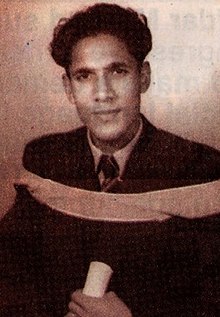
At the time of Graduation from Lucknow University

He pursued academic studies from the Universities of Lucknow, Cambridge, Oxford, Birmingham and Peshawar. This includes Bachelor of Law degree from Peshawar University, Master of Arts in English from Lucknow University in 1953, and a Public Administration Course from the University of Cambridge, UK in 1956-57. He has also done academic work at University of Birmingham as well as at the Queen Elizabeth House, Oxford.[5]

[edit]Career

He started his career as a lecturer in 1953, however in 1955 he joined the Civil Service of Pakistan and remained in it till 1978. During his tenure with the Government of Pakistan he served at various senior level positions which includes service as Deputy Director of Civil Service Academy, Deputy Commissioner Kohat and Peshawar, Commissioner of Karachi Division: Secretary Department of Health, Education and Social Welfare, Government of North West Frontier Province and Director for the Pakistan Academy of Rural Development.

His career in rural development started in 1959 when he came in contact with Dr. Akhter Hameed Khan. Under his guidance he established the Daudzai Pilot Project of the Integrated Rural Development Programme in 1972 on the pattern of Comilla Project. In 1978, he was deputed to Nagoya, Japan, as a consultant to the United Nations Center for Regional Development. As the UNICEF consultant, he worked in Sri Lanka during 1979 and 1982 on the Mahaweli Ganga Development Project.

http://bits.wikimedia.org/skins-1.19/common/images/magnify-clip.png

With his mentor, Dr. Akhter Hameed Khan

He learned from Dr. Akhter Hameed Khan that democratic village institutions can play a significant role in empowering the rural poor to become masters of their own development. He adapted his mentor’s insights to mountain communities in the northern areas of Pakistanand in Sri Lanka, where he lived in a forest village to assist UNICEF devise an effective social development program for the rural settlers. He was thus an experienced development professional when, in December 1982, the Aga Khan Foundation asked him to introduce income generating activities for nearly a million people in Pakistan’s vast and rugged northern areas.

[edit]Rural Support Programmes: Evolution & Success

http://bits.wikimedia.org/skins-1.19/common/images/magnify-clip.png

Dialogue with the community in the northern areas of Pakistan

**In 1982, he laid the foundation of Aga Khan Rural Support Programme (AKRSP), a citizen sector organization that targets poverty-stricken villages and engages their inhabitants in development programmes, with the larger goal of involving the public in policy change. Based on the philosophy that the poor are willing to overcome barriers to sustainable livelihood but lack the capacity to do so, the interventions of AKRSP have particularly focused on monetary independence through community organization, capacity building and fostering human capital.
**

http://bits.wikimedia.org/skins-1.19/common/images/magnify-clip.png

During a Field Visit with Dr. Akhter Hameed Khan

He believes that investment in community organization projects can prove to be the best catalysts for collective decision making and accountability in the underprivileged rural communities. In his initial dialogues with the community, he clarified that the Programme would give each village a one-time-only grant for such a project—but on certain conditions. He guided them to choose the project collectively keeping in view that the project must benefit everyone; for that they must form a community organization to plan, build, and maintain the project; they must meet regularly with everyone present; and they must make systematic contributions to a common fund so that there would be savings and collateral to help meet future needs.

As the projects got underway, his team carefully monitored the construction of each new irrigation channel and link road, and subsequently funneled equipment, supplies, and essential expertise to the villagers. As the new land was opened to irrigation, he urged them on to the next stage. “The sooner you develop the land,” he used to inform them, “the sooner you will benefit from it.” The programme also introduced new strains of plants, taught villagers new skills, and encouraged the illiterate and ever-toiling women of the area to assert themselves and participate in collective initiatives of their own.

As a result, more than one thousand local projects funded by AKRSP brought 100,000 hectares of new land under irrigation. More than seven thousand community members were successfully trained as managers, accountants, and specialists in farming, animal husbandry, forestry and marketing. Local organizations of around 1,400 villages are now managing livelihood projects, generating their own capital, and conserving local resources. In addition to that, millions of trees provided by the programme anchor the thin mountain soil and yield apricots and apples for selling “down country,” as well as fuel and timber for the future.

**His efforts have clearly made a difference to the livelihood of millions in the Northern Areas of Pakistan. As his working method is attracting the attention of other development professionals globally, his vision is spreading.[6]

At the behest of United Nations Development Programme, he undertook through South Asian Poverty Alleviation Programme (SAPAP), setting up demonstration pilots on the pattern of AKRSP in Bangladesh, India, Maldives, Nepal and Sri lanka and replication of AKRSP in Pakistan. AKRSP is now a national programme in Pakistan. In South Asia, India has now launched a countrywide programme called National Rural Livelihood Mission based on SAPAP principles of development, to benefit over 300 million poor.
**
[edit]Positions he holds

He has been closely associated with policy making and development planning in Pakistan and is currently serving as honorary Chairman, Board of Directors of the Rural Support Programmes Network, National Rural Support Programme, Ghazi Brotha Development Organization, Sindh Rural Support Organization and Director of the Aga Khan Rural Support Programme, Institute of Rural Management, Sarhad Rural Support Programme, Punjab Rural Support Programme and Balochistan Rural Support Programme. He also served as the Director of the International Centre for Integrated Mountain Development, Member of the Advisory Group of the World Bank sponsored Community Development Carbon Fund, Member of the Government of Pakistan Advisory Committee on Millennium Development Goals and Chairman of the Pakistan Government’s Vision 2030 Group on Just Society.

[edit]Awards and Honors

In recognition of his services, he has been awarded at various platforms including the United Nations Environment Programme Global 500 Award in 1989, Sitara-i-Imtiaz by the President of Pakistan in 1990, the Ramon Magsaysay Award by the President of Philippines in 1992 and the World Conservation Medal by the Duke of Edinburgh in 1994, the Rotary International (Pakistan) awarded Man of the Year 2005 Gold Medal in 2006, Sitara Eisaar for earthquake work and Hilal-i-Imtiaz on Pakistan Day in 2006 by the President of Pakistan. In 2009 he was elected as Senior Ashoka Fellow.

Re: Which Khan can save Pakistan?

Brilliant and very inspirational read, Ali_Syed.:hat:Thanks for sharing these special articles!

Re: Which Khan can save Pakistan?

There are brilliant people available in the country due to which it has survived all these torrid times, I just hope that some one could bring all of them together as a team to take Pakistan where it should have been by now.

Re: Which Khan can save Pakistan?

Agreed, but for that you’ll need an umbrella organization that establishes roots all over the country. :hoonh: Without any political affiliation, and without taking part in politics. Just a pure selfless platform to help the common people. Jamat-e-Islami could have been that one, but the basturds there have turned JI into a greedy pressure group, and nothing more. Sad.