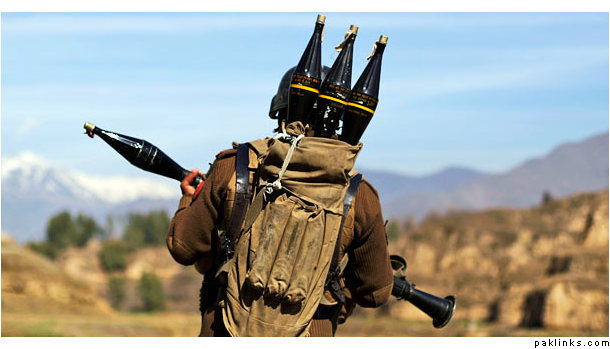
Victory Celebrations of Bajaur

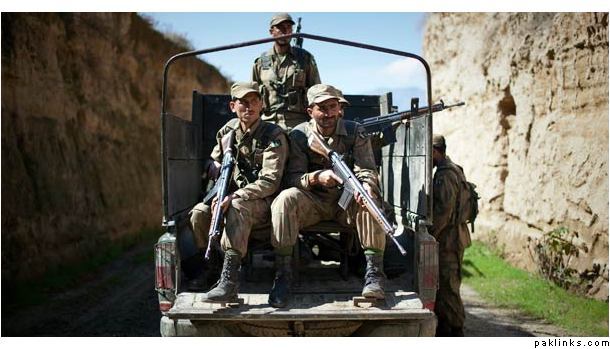
Pakistan has driven out al Qaeda and the Taliban from one of their main nerve centres near the Afghan border, where it has been fighting militants for nearly two years, a top commander said on Tuesday. Pakistan’s military took reporters to the former militant bastion of Damadola located in Bajaur Agency in Pakistan’s Federally Administered Tribal Areas (FATA) along the Afghan border, where al Qaeda deputy leader Ayman al-Zawahri was in recent years believed to have been hiding.
By **Iftikhar A. Khan **
Wednesday, 03 Mar, 2010

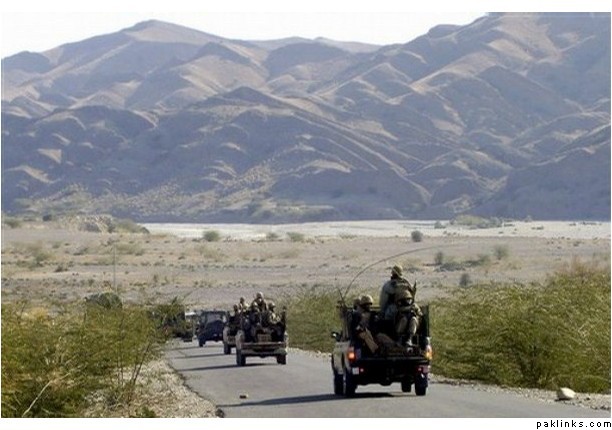
DAMADOLA: Security forces have taken control of Bajaur’s Damadola, known as the nerve-centre of Tehrik-i-Taliban Pakistan, and are now bracing themselves for an offensive in Orakzai Agency and Tirah valley of Khyber Agency.

“We are facing problems in Orakzai and Tirah and will launch operations there in the near future,” Frontier Corps Inspector General Maj-Gen Tariq Khan told a media team from Islamabad here on Tuesday. The ISPR’s director general, Maj-Gen Athar Abbas, was also present.

The capture of Damadola, near the Afghan border, has boosted the morale of troops and the military leadership is now contemplating an all-out offensive in other agencies where militants are strengthening their positions.

With the success in Damadola, once a no-go area and thought to be insurmountable, the entire Bajaur agency stands cleared of militants.

The most significant feature of the episode was the capture of a key Taliban complex in Damadola, the stronghold of TTP leader Maulvi Faqir Mohammad. The complex had a number of caves used by militants as hideouts and ammunition dumps.

A large quantity of explosives, weapons and currency notes were found in the caves. The complex faces ice-capped mountains straddling Pakistan’s border with eastern Afghanistan.

**
FLAG FLIES HIGH: **

Maj-Gen Tariq said the Pakistan flag had been raised in the region for the first time since independence.

Damadola has served as the main route for cross-border activities of militants. The area came into the limelight after the first US drone attack that killed 18 people in 2006. The strike was aimed at Ayman al Zawahri, Al Qaeda’s No 2.

The Frontier Corps IG said that about 75 militants, including foreigners, had been killed in the offensive. “Among the dead were Egyptians, Uzbeks, Chechens and Afghans.”

He said there were over 150 caves dug into the mountains over a period of five to seven years.

Maj-Gen Tariq stressed Damadola’s strategic importance as a link to Afghanistan, Chitral, Swat and the main highway to China.

He said the entire Bajaur agency and adjoining areas were controlled from Damadola and Maulvi Faqir was receiving help from the Wali of Kunar province in Afghanistan.

He said the area, which had been turned into safe havens for militants, was cleared up to the Afghan border. “Now the Taliban leadership does not exist. Twenty-five per cent of them have fled to Afghanistan and 15 per cent to Swat and other areas. Others have either been killed or captured,” he said. In reply to a question about the destruction of the house of Jamaat-i-Islami leader Haroonur Rasheed in Damadola, Maj-Gen Tariq said there was no doubt that the house was ‘the terrorists’ headquarter’.

He said documents found in the house, including minutes of a meeting of the TTP held in Makeen and a list of participants with signatures, were a clear proof against Mr Rasheed.

Maj-Gen Tariq said the house had been blown up under an FCR law, adding that Mr Rasheed was an absconder and would be tried under the law when arrested.

People in Damadola told Dawn that militants had made their lives miserable before the military offensive and had “subjected us to the worst kind of atrocities”.

Haji Malik Sher Ali Jan, a leader of the local lashkar, urged the government to arrange a special electricity line for the region because the entire electricity system had been disabled after the operation.

Reconstruction of roads, provision of drinking water and rehabilitation of health and education facilities were badly needed, Malik Sher Jan added.

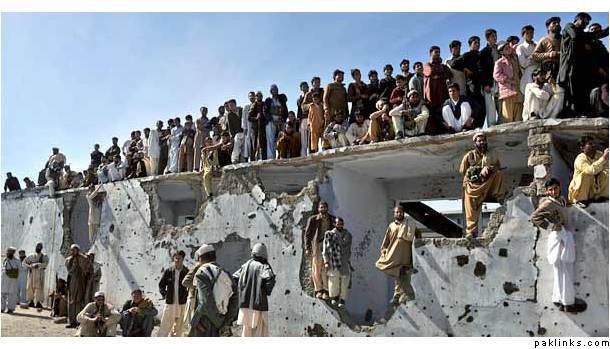
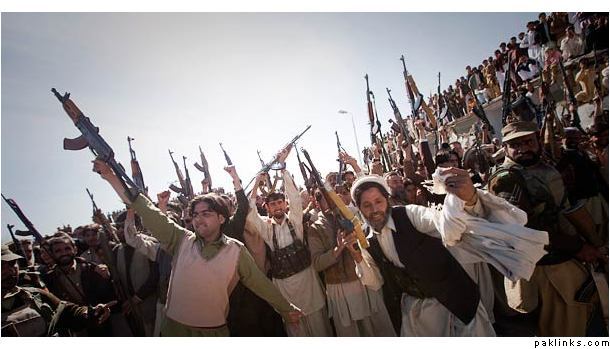
Journalists were later taken to Bajaur, where locals were reported to have raised a 10,000-strong lashkar. About 2,000 armed men were seen guns, dancing and chanting slogans in favour of Pakistan. Most of them belonged to the Mamond tribe. Business activities have remained suspended in Khar, the main town in Bajaur, for the past one month.

“We have concluded operations up to the Afghan border. We think the Bajaur operations have now more or less ended as dedicated military operations,” Maj-Gen Tariq said.

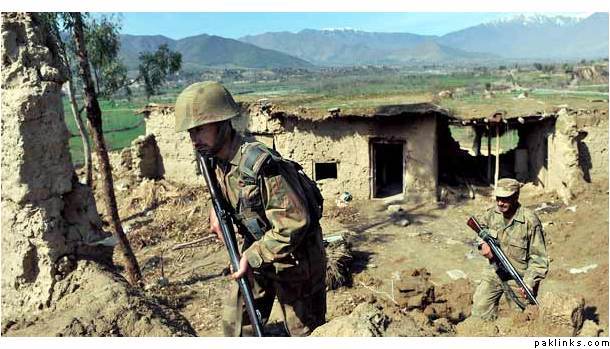
The village of Damadola has been largely destroyed in the fighting.

In 2008, the Army mounted an offensive in Bajaur and later said it had largely cleared militants from the area, but clashes erupted again in recent months.

In Khar, hundreds of members of the lashkar held a show of force in support of the military in a battle-scarred market. Many people stood on the roof of a pock-marked shell of a building, looking on as militiamen banged drums, danced with their assault rifles held aloft and chanting “Long Live Pakistan”.

http://www.dawn.com/wps/wcm/connect/dawn-content-library/dawn/news/pakistan/04-army-bajaur-qs-10

Re: Victory Celebrations of Bajaur

With the Taliban defeated, the people of Damadola have raised a 10,000-strong tribal militia to ensure they do not return. Around 1,000 members of the militia, known as a lashkar, danced and waved their Kalashnikov rifles as they greeted the first group of journalists to visit Damadola since it was taken last month.

"The Taliban used to slit peoples' throats, burn schools and hospitals," said Malik Abdul Aziz Khan, a leader of the militia. "We have now understood what kind of people the Taliban are. We formed this lashkar for our own sake, for the sake of our country."

The army says it has flushed the militants out of the tribal region of Bajaur, where it has been fighting since August 2008. The Taliban nerve centre was in an area called Damadola, in the shadow of snow-capped peaks. The Pakistani flag now flies here, for the first time in the history of the state. The militants had planned on a long stay. They dug in, quite literally, carving about 150 caves and tunnels deep into the rock. We were given access to this labyrinth, which the army believes might have taken five or six years to build.

Crouching low to enter the complex we found traces of the fighters who fled in haste. At the entrance to one cave there was a pair of training shoes. Further inside, the floor was lined with abandoned bedding. A few fighters had etched their names into the rock.

A steep winding tunnel led from this cave to a foxhole from where militants could have fired on anyone approaching. The cave complex might have sheltered the al-Qaeda number two, Ayman al-Zawahri. Pakistani and American intelligence officials believe he was in the area in the past. He was the target of an American drone strike in Damadola in January 2006.

'Not effective'

Pakistani troops now stand guard over the headquarters where the militants once trained and networked, and even had a playing field. Maj Gen Khan says the militants have lost the support of the locals.The general in charge insists they have been defeated, though he admits that up to 40% of the Taliban leadership managed to flee - including top commander Fakir Mohammad. (Failing to arrest the top leaders has been a hallmark of recent offensives).

"I would give a rough estimate that about 25% must have gone across the border, another 10% or 15% might have melted back into areas of Swat where they'd come from," said Maj Gen Tarik Khan, head of Pakistan's paramilitary Frontier Corps.

"But the thing is they have lost their support. They've lost the terrain where they could operate and they've lost the population, who they were coercing. So they are not really effective anymore."

The army has claimed victory here before, in February of last year, only for the militants to re-emerge and fight another day.

Gen Khan says the army will be watching out, in case they try to come back.

"They're going to be looking over the shoulder," he said.

Pleas for jobs

With Bajaur subdued, Pakistani forces want to see a lot more action across the border in Afghanistan.

"They need to do much more," said Abid Mumtaz, who led the Bajaur operation.

"What we have done up till now, they need to replicate on their side. More presence of troops, more control of the area and more presence of the state of Afghanistan in those areas, where at this point in time there is virtually none."

Army commanders are getting a hero's welcome in Bajaur.

At a meeting of tribal elders, they were greeted with handshakes and embraces.

Bearded local leaders thanked them for the sacrifices they had made, but they also presented the military with a long list of demands - including help in rebuilding roads, bridges and homes damaged by the army during the fight.

Most of all they want jobs. They say employment is the most effective weapon against the Taliban.

"When people don't have work, and they don't have amenities, when they are dissatisfied with their lives, then, of course, they will adopt another way," said Abdul Sattar, a tribal elder.

"If they get these things they will be busy, they will be working, and they won't go towards other ways".

Strategic shift

But locals are siding with the army, for now. Hundreds of tribesmen danced by the roadside, when army chiefs arrived. It was part celebration, part show-of-force.

The tribesmen were holding their machine guns aloft. They say they'll fight the militants themselves if they try to return.

They have formed a lashkar, or militia, led by five battle-ready locals, who have lost loved ones to the Taliban, and have been targeted themselves.

The army will be relying on the help of men like this to keep the Taliban at bay. The military has already set its sights on neighbouring parts of the lawless tribal belt, and the next stage of the fight.

The White House is watching the army carefully, and we understand that officials are happy with the robust action they see.

A senior administration official has told the BBC that there has been "a significant strategic shift in Pakistan in the past nine months", with the military taking the fight to the Pakistani Taliban.

There is also satisfaction at the recent surprise arrests of several senior leaders of the Afghan Taliban.

Privately, army commanders here admit they could be battling the militants for years to come.

"We let them take root for years," one said, "and it will take years to uproot them."

Re: Victory Celebrations of Bajaur

BBC Reporter

Mighty Hindukush

Re: Victory Celebrations of Bajaur

Re: Victory Celebrations of Bajaur

Malik confirms TTP Vice Ameer Maulvi Faqir dead | Pakistan | News | Newspaper | Daily | English | Online

Re: Victory Celebrations of Bajaur

Alhumdulilah, All praises to Allah All Mighty, who blessed us with this open victory against the enemy of our religion and state.

Praises to the souls of Martyr of Pakistan Army..