Turkey - radical revision of Islamic Texts

Salaam/Bonjour/Hello/Namaste/Azul … :slight_smile: :slight_smile:

I was reading a text from the BBC News about Koran and Hadiths and a possible revision about the link between the two corpus and I thought it could be interesting to share it with you in this forum. Tell what do you think about that, what are your opinions, your objections, do you think it is a good or a bad initiative ?

BBC NEWS | Europe | Turkey in radical revision of Islamic texts

                                **  Turkey in radical revision of Islamic texts**

By Robert Pigott
Religious affairs correspondent, BBC News
Turkey is preparing to publish a document that represents a revolutionary reinterpretation of Islam - and a controversial and radical modernisation of the religion.
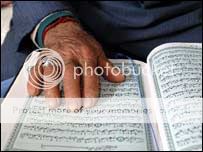
The scholars say they are returning to the original values of Islam

The country’s powerful Department of Religious Affairs has commissioned a team of theologians at Ankara University to carry out a fundamental revision of the Hadith, the second most sacred text in Islam after the Koran.

The Hadith is a collection of thousands of sayings reputed to come from the Prophet Muhammad.

As such, it is the principal guide for Muslims in interpreting the Koran and the source of the vast majority of Islamic law, or Sharia.

But the Turkish state has come to see the Hadith as having an often negative influence on a society it is in a hurry to modernise, and believes it responsible for obscuring the original values of Islam.
**
It says that a significant number of the sayings were never uttered by Muhammad, and even some that were need now to be reinterpreted.
**
*‘Reformation’ *

Commentators say the very theology of Islam is being reinterpreted in order to effect a radical renewal of the religion.

Its supporters say the spirit of logic and reason inherent in Islam at its foundation 1,400 years ago are being rediscovered. Some believe it could represent the beginning of a reformation in the religion.

Turkish officials have been reticent about the revision of the Hadith until now, aware of the controversy it is likely to cause among traditionalist Muslims, but they have spoken to the BBC about the project, and their ambitious aims for it.

The forensic examination of the Hadiths has taken place in Ankara University’s School of Theology.

**Fr Felix Koerner, a Christian theologian who has observed the project, says some of the sayings - also known individually as “hadiths” - can be shown to have been invented hundreds of years after the Prophet Muhammad died, to serve the purposes of contemporary society.

“Unfortunately you can even justify through alleged hadiths, the Muslim - or pseudo-Muslim - practice of female genital mutilation,”** he says.

**“You can find messages which say ‘that is what the Prophet ordered us to do’. But you can show historically how they came into being, as influences from other cultures, that were then projected onto Islamic tradition.” **

 **"Many Hadiths relate to life in the Middle East 1,400 years ago and are no longer relevant**"

Brian, London

The argument is that Islamic tradition has been gradually hijacked by various - often conservative - cultures, seeking to use the religion for various forms of social control.

Leaders of the Hadith project say successive generations have embellished the text, attributing their political aims to the Prophet Muhammad himself.

Revolutionary

**Turkey is intent on sweeping away that “cultural baggage” and returning to a form of Islam it claims accords with its original values and those of the Prophet.
**
But this is where the revolutionary nature of the work becomes apparent. Even some sayings accepted as being genuinely spoken by Muhammad have been altered and reinterpreted.

Prof Mehmet Gormez, a senior official in the Department of Religious Affairs and an expert on the Hadith, gives a telling example.

**"There are some messages that ban women from travelling for three days or more without their husband’s permission and they are genuine.

“But this isn’t a religious ban. It came about because in the Prophet’s time it simply wasn’t safe for a woman to travel alone like that. But as time has passed, people have made permanent what was only supposed to be a temporary ban for safety reasons.”**

The project justifies such bold interference in the 1,400-year-old content of the Hadith by rigorous academic research.

Prof Gormez points out that in another speech, the Prophet said “he longed for the day when a woman might travel long distances alone”.

So, he argues, it is clear what the Prophet’s goal was.
*
Original spirit*

Yet, until now, the ban has remained in the text, and helps to restrict the free movement of some Muslim women to this day.

As part of its aggressive programme of renewal, **Turkey has given theological training to 450 women, and appointed them as senior imams called “vaizes”.
**
They have been given the task of explaining the original spirit of Islam to remote communities in Turkey’s vast interior.

One of the women, Hulya Koc, looked out over a sea of headscarves at a town meeting in central Turkey and told the women of the equality, justice and human rights guaranteed by an accurate interpretation of the Koran - one guided and confirmed by the revised Hadith.
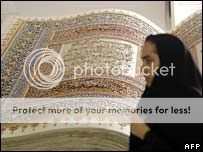
Women are re-examining their portrayal in the scriptures

She says that, at the moment, Islam is being widely used to justify the violent suppression of women.

“There are honour killings,” she explains.

"We hear that some women are being killed when they marry the wrong person or run away with someone they love.

“There’s also violence against women within families, including sexual harassment by uncles and others. This does not exist in Islam… we have to explain that to them.”

‘New Islam’

According to Fadi Hakura, an expert on Turkey from Chatham House in London, Turkey is doing nothing less than recreating Islam - changing it from a religion whose rules must be obeyed, to one designed to serve the needs of people in a modern secular democracy.

He says that to achieve it, the state is fashioning a new Islam.

“This is kind of akin to the Christian Reformation,” he says.

"Not exactly the same, but if you think, it’s changing the theological foundations of [the] religion. "

Fadi Hakura believes that until now secularist Turkey has been intent on creating a new politics for Islam.

Now, he says, “they are trying to fashion a new Islam.”

Significantly, the “Ankara School” of theologians working on the new Hadith have been using Western critical techniques and philosophy.

**They have also taken an even bolder step - rejecting a long-established rule of Muslim scholars that later (and often more conservative) texts override earlier ones.

“You have to see them as a whole,” says Fadi Hakura.

"You can’t say, for example, that the verses of violence override the verses of peace. This is used a lot in the Middle East, this kind of ideology.

“I cannot impress enough how fundamental [this change] is.”
**

Re: Turkey - radical revision of Islamic Texts

I agree with Hadith revision or exclusion. The Prophet (PBUH) told people not to take down anything from him except the Quran, but we had to do as we were told not to do. Secondly all the 4 schools and their Imams are seperated from the time of Prophet (PBUH) by several generations.

SOunds like a good idea if executed honestly

I tend to agree too ... This revision could be negate some practices that never appear in the Holy Quran and give to Islam a very bad reputation (the death of the apostles, the stoning, the female circumcision for example etc) But I hope that the Turkish Ulama will be coherent in their approach. I mean, some people who follow the Quran only use sometimes some hadeeths to support their arguments or the historical/social context to understand or reject some verses ... this is totally illogical and dishonest. If we want to follow the Quran only, we must to follow it in the light of arabic ( then, good translations ) and respect its timelessness.

In fact, this debate about the legitimacy or not of the hadeeths isn't new. (see the letters of Imam Chafi', the opinions of ulama like Zamakhshari or Al Razi, people who were called "ahl al Ra'y etc)

Others points of view about this topic ? :)

Re: Turkey - radical revision of Islamic Texts

This is a very good idea and if their attentions are good & reviews will be fair, then i have no problem at all. I personally found Hadiths some time totally opposite to Islamic spirit.

Me too , but not all of them. Some of them.

First of all, governments (especially governments that pride themselves on their strict secularism) have no business interfering in religion to the extent of revising/altering doctrine. Such actions only serve to further blur the boundaries between mosque and state…if you don’t like it when Afghanistan and Iran do it, then its intellectually dishonest to support it when Turkey allegedly does too, even if Turkey’s goals seem more palatable to you.

In any case, the officials working on the project were quick to denounce BBC’s spin on it. Apparently, this nearly year-old story turned out to be a whole lot of hoopla over nothing:
**
BBC claims of hadith reworking unfounded**

As a Directorate of Religious Affairs project nears completion, a resurgence in Western media coverage on the topic, including a BBC report, has focused on an alleged Turkish attempt to re-invent Islam to suit the political aims of the secular republic – but the directorate says that the project is a return, not a re-creation.

Turkey’s Directorate of Religious Affairs launched the “Thematic Hadith Project” in 2006 to re-evaluate the hadith, the second most important source of jurisprudence in Islam after the Quran, with the objective of determining incorrect hadith attributed to the Prophet Mohammed, correctly interpreting misinterpreted ones and re-explaining certain hadith so that they may be better understood by Muslims.

A recent BBC report, titled “Turkey in radical revision of Islamic texts,” asserts that the Turkish directorate’s project is of a “revolutionary nature” and has “altered and reinterpreted” prophetic statements heretofore agreed upon as authentic. Speaking with Today’s Zaman on Wednesday, Dr. Mehmet Görmez, the directorate’s deputy director, said: “Our project is not aimed at effecting a radical renewal of the religion, as is claimed by the BBC. Our objective is to help our citizens attain a better understanding of the hadith. Though I underlined several times during our interview with a BBC reporter that our project cannot be considered a reformation of Islam, he distorted the facts, saying Turkey is preparing to publish a document that represents a revolutionary reinterpretation of Islam – and a controversial and radical modernization of the religion.”

The hadith comprise the sayings and actions of the Prophet Mohammed. Six canonical hadith collections possess a semi-sacred place in Sunni Islam and are the most important source of Islamic law (Shariah) after the Quran, serving to clarify and illustrate the text. Though made up of collections gathered at different times by different scholars, they are often collectively referred to as the hadith. The two largest of these six collections are Sahih Bukhari (collected by Muhammad al-Bukhari, d. 870) and Sahih Muslim (collected by Muslim Ibn al-Hajjaj, d. 875).
An attempt to alter these texts as part of a “radical modernization of the religion,” as the BBC put it, would certainly be a highly controversial move. The online BBC article alone had generated over 1,500 reader comments as of Thursday evening. For many Muslims, though, there is a crucial difference between altering hadith texts and reinterpreting them.

The hadith texts are not considered by Muslims to be God’s word, as the Quran is. Regardless, they are seen as qualified attempts to collect a body of reliable texts for Muslim scholars to use in adjudication. Scholars such as Bukhari and Muslim traveled throughout the Muslim world gathering and evaluating oral reports that had been passed down through generations from the Prophet Mohammed and his contemporaries. Each of these scholars then evaluated the chain of transmission of each saying, taking into account each individual reporter’s reputation, memory, etc. Hadith that conflicted with the Quran were discarded, as were those related by personalities deemed to be untrustworthy. Since that time, Muslim scholars have agreed and disagreed about the relevance and importance of certain hadith to certain rulings and situations.

A fresh look at the hadith collections – the gathering of which began some 200 years after the death of the Prophet Mohammed – and how they are utilized and interpreted within the framework of Islamic jurisprudence, while sure to generate a degree of criticism and controversy, is a far cry from attempting to change, in effect, some of Islam’s most important historical records.

On Thursday the Directorate of Religious Affairs issued a press release that expressed frustration with the coverage of the project by the BBC and other Western and domestic media outlets, rejecting the descriptions of “reform,” “revision” and “revolution.” “We believe that this academic and scientific hadith project, being conducted independent of domestic and foreign politics, will be an important step taken to convey the universal message of the Prophet Mohammed to the 21st century,” the statement read. Also on Thursday directorate head Ali Bardakoğlu spoke to the press at İstanbul Atatürk Airport while on his way to Saudi Arabia and commented that some foreign press organs had covered the project without doing sufficient research to back their claims.

The directorate’s Görmez said the project is a scientific one aimed at better understanding the content of the hadith. “It would neither be scientific nor correct to expurgate certain hadith. Sometimes insufficient information could be used to reach to precise information. Thus, we will not expunge certain hadith; we will make a new compilation of the hadith and re-interpret them if necessary,” he noted.
The directorate vehemently denies that it is attempting to create a new form of Islam for secular Turkey or for political motives, as the BBC report suggests. Instead, it contends that it is taking a long-overdue look at the classical sources of Islam, contextually re-evaluating them for the 21st century to ensure that the texts can continue to be a guiding, relevant spiritual source for Turkey’s millions of Muslims. In essence, a return to an original form of Islam that has been diluted over the centuries by various developments.

Görmez underlined that the project is being conducted by the directorate with the assistance of 35 hadith scholars from several Turkish universities and expressed disappointment over seeing distorted news articles in Western media related to their project.
“I had an interview with BBC reporter Robert Pigott around two months ago about the project. I underscored during our interview that it cannot be termed a revolutionary reinterpretation of Islam. But, his article read ‘the very theology of Islam is being reinterpreted in order to effect a radical renewal of the religion.’ This does not reflect the truth. We are going to take the appropriate legal measures for redress,” he added.

The directorate’s project will produce a six-volume text that includes Quran exegesis (tafsir) and hadith evaluation. Some 400 topics will be interpreted in the light of the Quran and the hadith. The project is expected to be completed by the end of this year.

Turkey’s Directorate of Religious Affairs was established in 1924, replacing the Şeyhülislam (also Shaykh al-Islam) post in the Ottoman state, which was succeeded by the Republic of Turkey in 1923. Among the directorate’s objectives is to “provide religious services … illuminated by knowledge and good conduct, benefiting from today’s technological developments and communications facilities and our historical experiences.”

BBC claims of hadith reworking unfounded

Today we are in such grieve troubles is because of radical/un-human ideologies of these so called flag barriers of Islam including but not limited to talibans (afghanistan), Iran, Saudi Arabia & other extremeists religious organizations. These creatures whom i don't even wanted to call humans use Hadith to promote their so called true Islam. Quran is divine word of GOD, not Hadith and Turkish model is so far proven to be a correct one which promote peace & unity between west & east. If you have any other model except turkey which can absorb western influence and still standing true with Islamic identity then please enlighten me !

Sorry i had to specify in reply that some of them only, which are also know as "zaheef" or not confirmed etc. !

Re: Turkey - radical revision of Islamic Texts

Yes we do have a model which is far superior to Turkey.. that model is an Islamic state. This secular circus has no place in this world.

Re: Turkey - radical revision of Islamic Texts

cricketplaya leave Canada (secular country) and go to saudi or something

Edited: writing only first alphabet of an immoral word does not make it difficult for common people to understand what word you intended to use for the person you were adressing.

...and where is this state located on planet earth ?

I think this state will never exist … There are so much “ikhtilaf”(differences) and schools of thought between muslims, how can we establish a good islamic state based on the Quran ?

I had read some articles from the website “ahlul quran” by Ahmed Mansoor about the state and Islam, it is interesting if you want :

Islamic state, or state of Islam?
The contradiction Between the Islamic State and the Religious State

Re: Turkey - radical revision of Islamic Texts

i read about that..

ps: that bbc article is dated Tuesday, 26 February 2008, 14:43 GMT