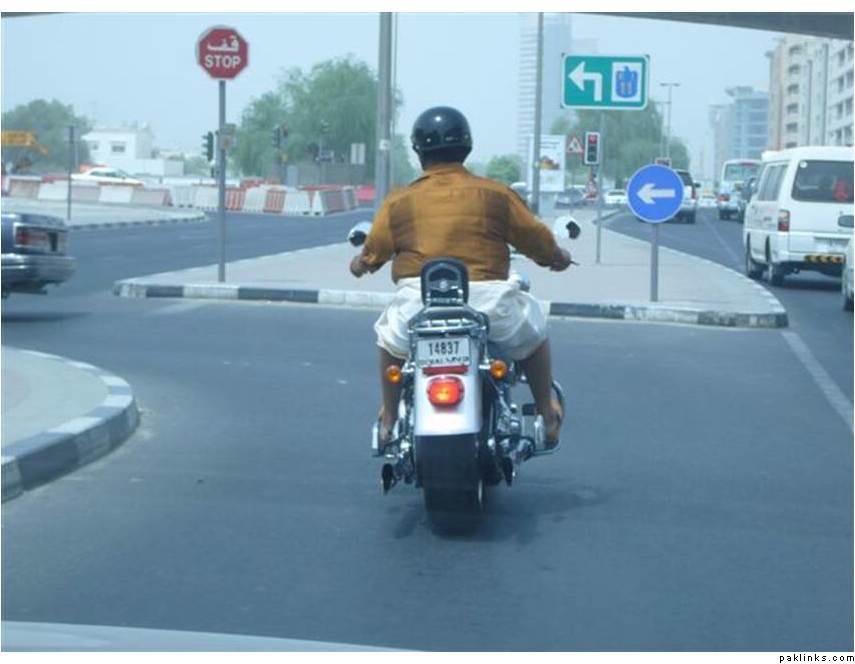
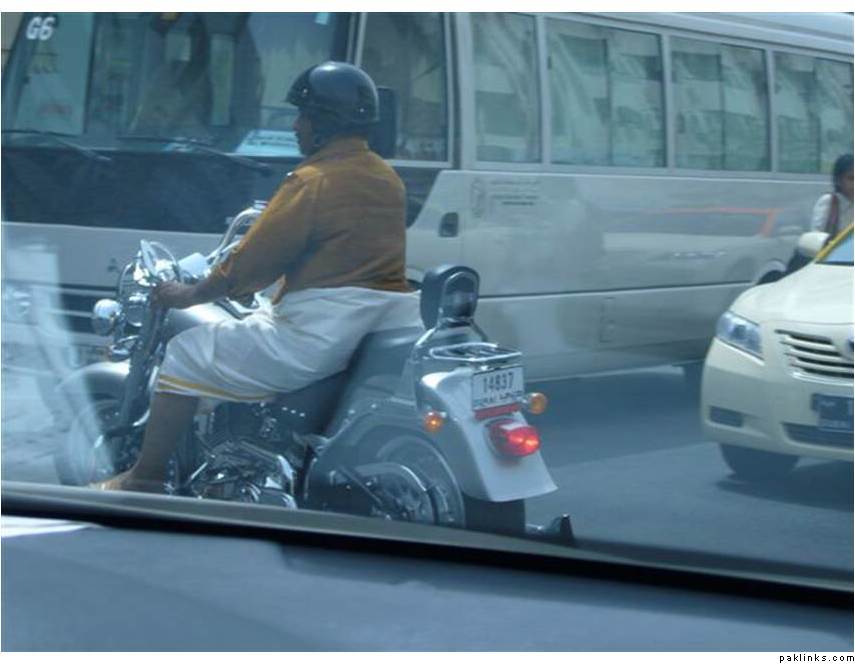
what should be allowed in this case?
similar thing ever happened in pakistan?
NEW DELHI // Auto-rickshaw drivers and other public transport workers in the southern state of Kerala have vowed to fight for their right not to wear trousers to work.
Police said they would enforce an obscure law this month that has been on the books since 1989 and prohibits drivers of public vehicles from wearing a mundu - a traditional sarong-like piece of cloth that ties around the waist and hangs loosely down to the ankles.
K Srinivasan, 49, an auto-rickshaw driver in Kalpetta, a northern town in Kerala’s Waynaad district, said he will “join whatever group that is protesting this implementation”.
“I am not ready to wear pants,” Mr Srinivasan said. “For 20 years, I have driven an auto wearing the mundu. What is wrong with what we have been wearing for so long?”
On June 15, police will start enforcing the dress code against the mundu, a favourite form of attire for most of Kerala’s bus and rickshaw drivers, said TA Reji, president of the Motor Workers Union of Kerala.
The the government and police “are suddenly imposing this uniform over what has been traditional for decades if not longer”, said TA Reji, president of the Motor Workers Union of Kerala. “We will protest by whatever means we can.”
The dress code requires all male auto-rickshaw and bus drivers to wear a khaki shirt and khaki trousers while on duty, said AV George, the district police chief of Kerala’s Waynaad district, which will be the first district to enforce the law.
“For those who drive tourist vehicles, they will be required to wear a white shirt and pants,” Mr George said. “There is a specific law and it must be respected. This is a rule to show you are a professional.”
Women will be required to wear a white or khaki jacket over their traditional attire, but it is the dress code for men that has faced the most objection.
While the dress code has been on the books for more than two decades, police are only now enforcing it because of a recent rise in complaints from “school-going girls and ladies”, Mr George said.
They complain that drivers hike up their mundu to mid-thigh, a common way to combat the heat and humidity in Kerala, “causing discomfort and embarrassment to the ladies”, Mr George said.
“The women are of the opinion that this way of exposing the legs and thighs at work is not respectable.”
Not all women in Kerala were supportive of the dress code.
“This is a difficult decision, no doubt,” said MS Sheilaja, from Kalpetta. “On one hand we have to respect our tradition and on the other hand, we have to think about safety.”
Ms Sheilaja, 37, said she had never seen a driver hike his mundu too high in front of her.
The trade unions oppose the trousers law, saying it is an affront to “the Kerala way of life”, said Mr Reji.
The transition will be particularly hard on the older generation of men who are set in their sartorial ways.
“It is impossible for older men to switch now, for they have known no other form of dress,” Mr Reji said. “The younger men, they are OK with wearing pants but we will protest.”
Mr Reji said it had come as a bit of shock to drivers in Waynaad who felt “singled out” as the place from where the law would start to be implemented.
The new law will be enforced in gradual steps, said Ajith Kumar, the regional transport officer. For the first two weeks, drivers caught wearing the mundu would be given a written warning. After two weeks, police will issue fines of 100 rupees (Dh6.52).
“We are hoping for a gradual and peaceful process,” Mr Kumar said. “First we will tell them, we will insist that they change their mind. Then we will start the fines.”
The driver Mr Srinivasan said the fines will weigh heavily on drivers from smaller towns such as Kalpetta, where he earns an average of up to 200 rupees a day.
There are an estimated 10,000 auto-rickshaw drivers in Waynaad, and 20,000 more bus and taxi drivers.
The unions have planned protests as the law comes into force. Mr Reji said all workers, not just drivers of buses and auto rickshaws, but also those who work in the union would wear the mundu as a form of protest to work.
“Every time they fine one of our drivers, we will all don the traditional dress,” he said.
In Kerala, the mundu is also common on formal occasions. Politicians and film stars attending official events often wear a white, starched mundu.
The trade unions also threatened to stop work if the fines continue.
“Most drivers don’t want to be seen in a uniform when they take a break between their job to go pick up their child from school or visit their family. They are not comfortable being in uniform,” Mr Reji said. “We are working closely with the drivers and are equally concerned about the well-being of our customers, but we must also respect what is tradition.”
Kerala’s auto-rickshaw drivers vow to fight dress code - The National