**
**
americas-biggest-ripoffs: Personal Finance News from Yahoo! Finance
America’s Biggest Rip-offs
by Julianne Pepitone
Tuesday, February 2, 2010provided by
Are you infuriated every time you open your cell phone bill? Livid when you buy a snack at the movies? These are some of the rawest deals around.
©John R. Coughlin Text Messages – 6,500% Markup
Text messages are short, quick and cheap to transmit. So why are they adding so much to your wireless bill?
The messages are such a tiny piece of data that they cost carriers only about one-third of a cent to deliver, according to computer scientist Srinivasan Keshav, who testified before U.S. senators on the issue last summer.
But on a pay-per-text plan, the 160-character messages typically cost 20 cents outgoing and 10 cents incoming. That’s a markup of as much as 6,500%. OMG!
“It’s pretty much pure profit,” Keshav says. “Carriers would argue they put that money toward investing in new technology.”
Even if customers sign up for an unlimited texting plan for, say, $10 a month, carriers are still cashing in considering that their overhead is basically $0. That’s a lot to pay for a few LOLs.
©Jupiter ImagesMovie Theater Popcorn – 900% Markup
A medium bag of popcorn costs just 60 cents to make but retails for $6, a whopping 900% markup. That’s enough to make “Avatar” fans turn blue.
Richard McKenzie, an economics professor at University of California-Irvine, says theater owners mark up the snack so much because they don’t make a profit elsewhere.
McKenzie, author of the 2008 book “Why Popcorn Costs So Much at the Movies: And Other Pricing Puzzles,” says that out of your $10 movie ticket, only a tiny percentage goes to the theater’s profits.
“Popcorn is what pays for a lot of stuff in the movie theater,” McKenzie says. “A lot of theater owners tell me, ‘I consider myself working in concessions, not movies.’”

©Neil Harris / CNNMoney.com ‘Free’ Credit Reports That’ll Cost You
There’s nothing free about forking over $179 a year for information at Freecreditreport.com.
Instead you can go to AnnualCreditReport.com, which is run by the Federal Trade Commission, and get a truly free report once a year from each of the credit agencies: Equifax, Experian and TransUnion.
Freecreditreport.com’s catchy ditties can get stuck in your head for days – but subscribing to the service will haunt your credit card bill for a year. When you sign up, you’re asked for your credit card number. Then the site automatically enrolls you in its “Triple Advantage credit monitoring,” which pledges to continuously track your credit status for $14.99 per month.
A rep for Experian, which owns Freecreditreport.com, says: “We do realize there are a very small percentage of consumers who genuinely do not understand they have signed up for a credit monitoring service. We work to resolve issues with these consumers on a case by case basis.”
****[ firmly behind the value Advil brings to consumers."
But at a time when many of us are already feeling the pinch financially, a fancy package just doesn’t seem worth the headache.
©Jupiter Images Wine at Restaurants – 500% Markup
Ordering wine in a restaurant can cost six times as much as drinking the same bottle at home. At the Olive Garden in Manhattan’s Times Square, a bottle of Sutter Home’s White Zinfandel goes for $24 – but it retails online for as little as $4 per bottle.
Restaurants mark up cheaper bottles by an average of three times the retail price, while the prices of higher end wines are typically doubled, says Ronn Wiegand, a master sommelier who runs the industry newsletter RestaurantWine.
For instance, a 1985 “La Grande Dame” Veuve Cliquot that goes for about $495 online is marked up 222% to $1,600 at the swank New York City restaurant Per Se. Olive Garden didn’t return calls for comment, but for its part Per Se says: “The total cost of the wine and service is calculated up front…the beverage team sets the highest standards to be sure that the quality of the wine and experience exceeds our guests’ expectations.”
Think that’s rough? Prices for wine sold by the glass are tripled or even quadrupled, Wiegand says, since restaurants have to account for the chance that they won’t sell the whole bottle before it spoils.
At prices like that, guess we’ll be skipping dessert.

©Jupiter Images College Textbooks – $900 a Year!
Each semester, college students shell out hundreds of dollars on textbooks they’ll use for only a few months. According to a House Committee on Education and the Workforce, the average estimated cost of books and supplies is approximately $900 per year.
And a separate study conducted by the Government Accountability Office found that textbook prices nearly tripled from 1986 to 2004 – a jump that’s twice the rate of annual inflation over the last two decades.
Public-interest groups say this is a rip-off. They blame greedy publishers and bookstores for driving up prices by issuing unnecessary new editions that render older texts worthless without adding much new information, as well as by “bundling” books with other materials like CD-ROMs.
Students have no choice but to buy the textbooks for their courses. But don’t worry, kids – at the end of the semester, you can probably sell that $250 calculus tome back to the bookstore for a buck or two.
Super gasoline - 15% markup
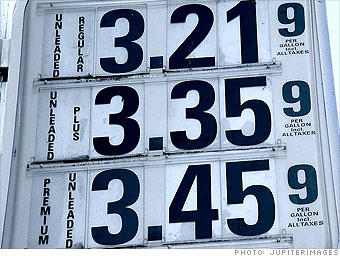
If you’re filling up your tank with super gasoline, chances are your wallet will soon be running on empty. The special stuff costs up to 20-40 cents more per gallon than regular gasoline, even though it doesn’t do anything to improve the performance of most cars. With regular gas averaging about $2.72 a gallon, that translates to a 15% premium.
“It’s like feeding your dog more expensive food and expecting it to jump higher,” says Gabriel Shenhar, senior auto test engineer at Consumer Reports.
When Shenhar tests cars, he doesn’t put much stock in the manufacturer’s “recommendations for optimal performance” – instead, he uses the fuel grade that’s explicitly required. You can find the requirement printed on the inside flap of your car’s gas tank.
The bottom line: Read your owner’s manual. While some high-performance or luxury cars may need super gas, your average Celica doesn’t.
Hotel mini-bars - 1,300% markup
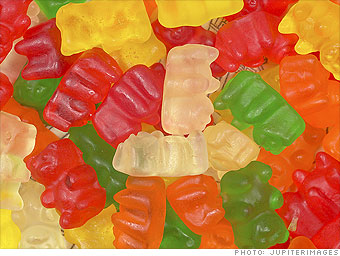
The chocolate bars and sodas in a hotel mini-bar can look alluring to tired and hungry travelers. But you’ll rack up a huge bill if you open up that fridge. Gummy Bears for $14, anyone? Oyster Hotel Reviews (oyster.com) sends senior editor Will Begeny to hotels across the country, undercover, to get the skinny on hotel stays – and he’s found some egregious examples of price-gouging. Across the board, items are usually marked up by 3-4 times the retail price.
Among his findings in Manhattan: a $10 pint of water at the Mansfield Hotel; $150 “wood-smoke” candles at the Gramercy Park Hotel; and a $12 toothpaste kit at W New York’s The Tuscany.
“The minibar has turned into a sort of status symbol, especially for higher end hotels,” Begeny says. “They’ll include rarer products, like those candles, so people don’t realize how overpriced they really are.”
And yes, there really is a 1,300% markup on Gummy Bears at the luxury Manhattan hotel Omni Berkshire Place. None of these hotels returned requests for comment, but a rep for the American Hotel & Lodging Association said guests pay a premium for the mini-bar’s convenience.
“People have started to realize this is a scam, that they can walk to a store a block away and spend half as much,” Begeny says. “Of course, if hotels have to toss some of the older inventory because no one’s buying it, they could mark it up even more.”
Hotel in-room movies - 200% markup
In addition to the overpriced mini-bar, in-room movies are another quick way you can jack up the cost of your stay without even leaving the hotel. That’s because there’s a high premium on the convenience: You could find yourself paying anywhere from $10-$15 based on how new and popular the movie is, says a rep for LodgeNet, a company that provides hotel programming.
By comparison, Blockbuster rents DVDs for about $5. LodgeNet notes that some of its offerings are still in theaters and not yet available for home viewing.
So instead of shelling out money to sit in bed and watch “The Hangover” for the tenth time, bring your own DVDs. Many hotels include DVD players in the rooms and some will even let you borrow a unit.](“http://finance.yahoo.com/family-home/article/108723/e-book-pricing-put-into-turmoil”)