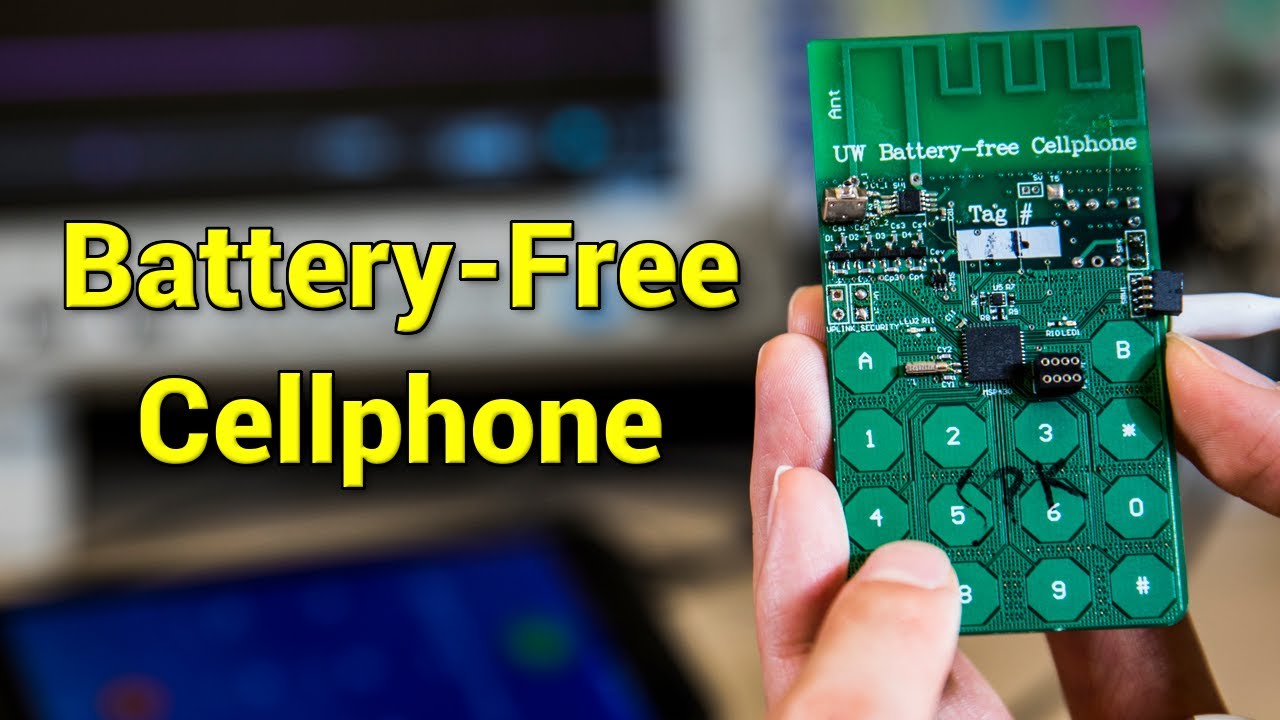
University of Washington researchers have invented a cellphone that requires no batteries — a major leap forward in moving beyond chargers, cords and dying phones. Instead, the phone harvests the few microwatts of power it requires from either ambient radio signals or light.
The team also made Skype calls using its battery-free phone, demonstrating that the prototype made of commercial, off-the-shelf components can receive and transmit speech and communicate with a base station.
The research team eliminated a power-hungry step in most modern cellular transmissions . i-e It eliminated the process of converting analog signals that convey sound into digital data that a phone can understand. This process consumes so much energy that it’s been impossible to design a phone that can rely on ambient power sources.
The battery-free phone does still require a small amount of energy to perform some operations. The prototype has a power budget of 3.5 microwatts.
The UW researchers demonstrated how to harvest this small amount of energy from two different sources. The battery-free phone prototype can operate on power gathered from ambient radio signals transmitted by a base station up to 31 feet away.
Using power harvested from ambient light with a tiny solar cell — roughly the size of a grain of rice — the device was able to communicate with a base station that was 50 feet away.
Next, the research team plans to focus on improving the battery-free phone’s operating range and encrypting conversations to make them secure. The team is also working to stream video over a battery-free cellphone and add a visual display feature to the phone using low-power E-ink screens.
Watch some more details from this video
Restored attachments:
