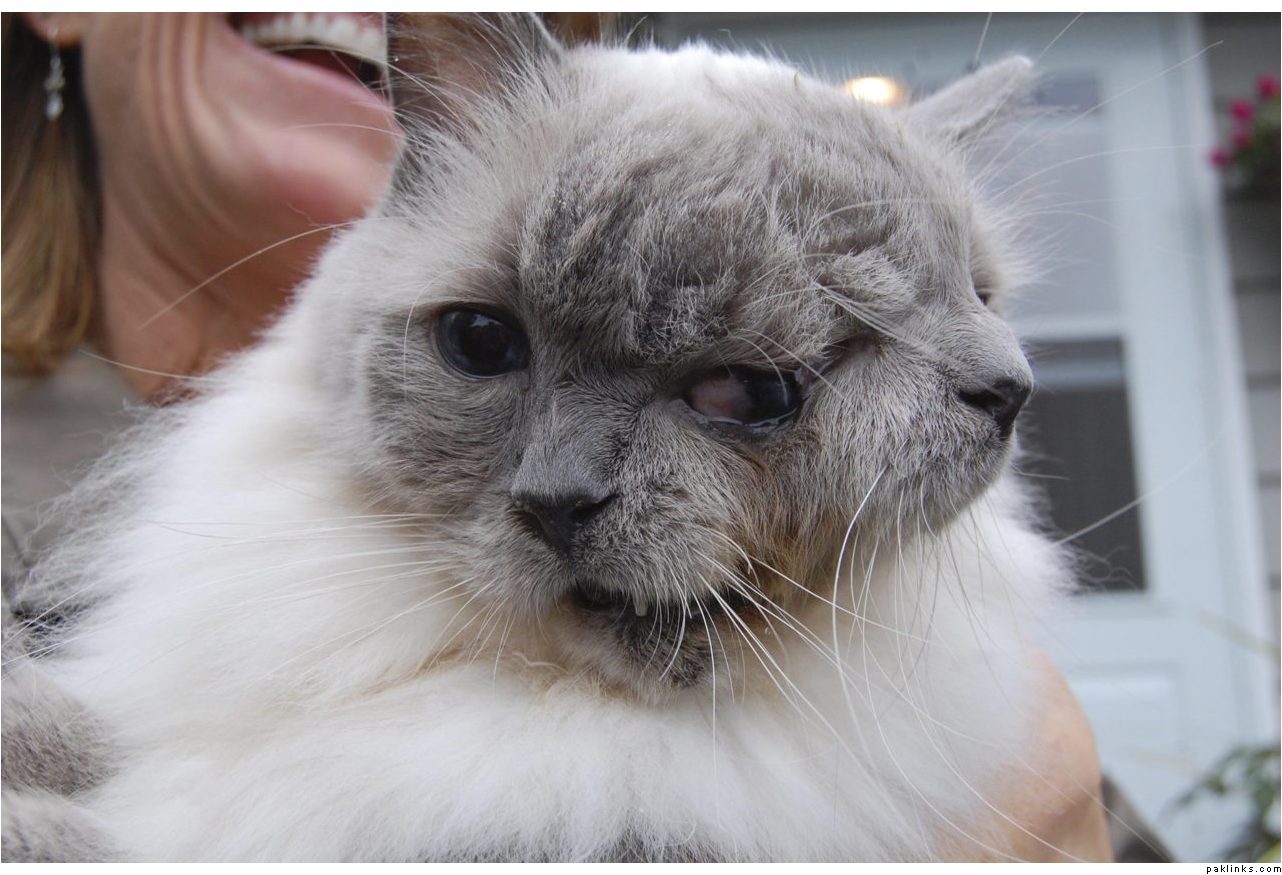
A cat with two faces, named Frank and Louie, is held its owner Marty, at their home in Worcester, Massachusetts
**
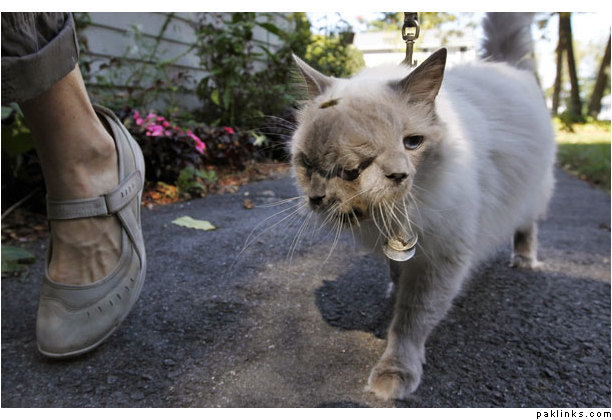
A Massachusetts cat with two faces has become the world’s longest surviving so called “janus” feline at 12 years of age. The cat, who is named Frank and Louie, has two mouths, two noses and three eyes. Frank and Louie have one brain, so the faces react in unison.**
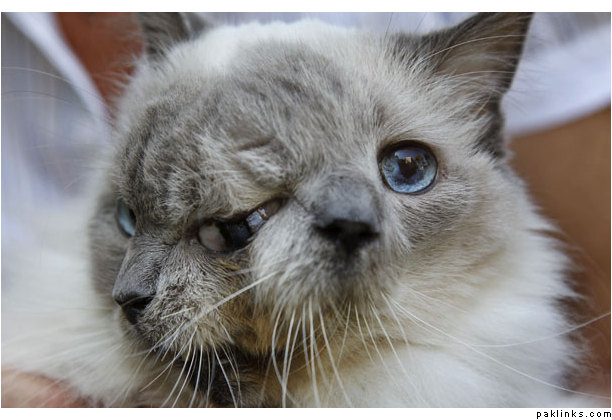
Frank and Louie the cat was born with two faces, two mouths, two noses, three eyes - and lots of doubts about his future.
Now, 12 years after Marty Stevens rescued him from being put to sleep because of his condition, the exotic blue-eyed rag doll cat is not only thriving, but has also made it into the 2012 edition of Guinness World Records.
Frank and Louie is the longest-surviving member of a group known as Janus cats, named after a Roman god with two faces.
“Every day is kind of a blessing; being 12 and normal life expectancy when they have this condition is one to four days,” said Ms Stevens, of Worcester, Massachusetts, stroking Frank and Louie’s soft fur as he sat on her lap purring.
“So, he’s ahead of the game; every day I just thank God I still have him.”
Frank and Louie’s breeder had taken him to the Cummings School of Veterinary Medicine at Tufts University, where Ms Stevens was working at the time, to be put down when he was just a day old. Ms Stevens offered to take him home, but experts told her not to get her hopes up.
Janus cats almost never survive and most have congenital defects, including a cleft palate that makes it difficult for them to nurse and often causes them to slowly starve or get milk in their lungs and die of pneumonia. The condition is the result of a genetic defect that triggers excessive production of a certain kind of protein.
But Frank and Louie did not suffer from most of the common Janus problems. Ms Stevens used feeding tubes to nourish him for three months, hoping that would also save him from the danger of choking on food going down two mouths.
But she need not have worried - Frank and Louie used just one of his mouths to eat.
“The condition itself is very rare, and I think that the fact that this cat became an adult, a healthy adult, is remarkable,” said Dr Armelle deLaforcade, an associate professor at Cummings and head of the emergency services section.
Colleagues at the veterinary hospital told Ms Stevens that trying to raise Frank and Louie might not be good for him - or her.

