I often see comments about Junagarh state
Here is an article about by an Indian Muslim Journalist and most recent .
https://encrypted-tbn1.gstatic.com/images?q=tbn:ANd9GcQdcF4-GHXxWTigs-jGWL6Iqexj7HZI86ktQEs3-G8BKgPnfKG6Tw
The Accession Of The Princely State Of Junagar
The Story Of The Accession Of The Princely State Of Junagarh
By Syed Ali Mujtaba
31 January, 2011
Countercurrents.org
The story of the integration of the Princely States of India continues to fascinate the researchers and authors who diligently wade though the piles of manuscripts and record books kept in the archives to reconstruct a picture of the bygone era.
The latest addition to such literature is a booklet on the Princely State of Junagarh by SM Pasha, an academic and journalist based in Chennai. The author is engaged in a self assigned project to write afresh the story of the controversial Princely States of India that had problem with signing the instrument of accession. This is the second in the series, the first being on the Princely State of Hyderabad.
The author feels that the present generation is unaware of some hard facts of the contemporary and they should be fed with correct information so that can develop their perspective on such issue and help them make their own judgment.
SM Pasha has named his booklet “The Princely State of Junagarh Dead or Alive.” This is because the princely state which is geographically dead in India, is politically alive in Karachi, Pakistan, where at “Junagarh House” the Junagarh state flag flies on its mast.
The Pakistan government still recognizes Nawab Mohmmad Jahngir Khanji, the grandson of the last Nawab Mohmmad Mahabat Khanji as the present Nawab of Junagarh and installed him with all pomp as the eleventh Nawab of a State in exile on October 9, 1991. It has an official website Welcome to JunaGadh State
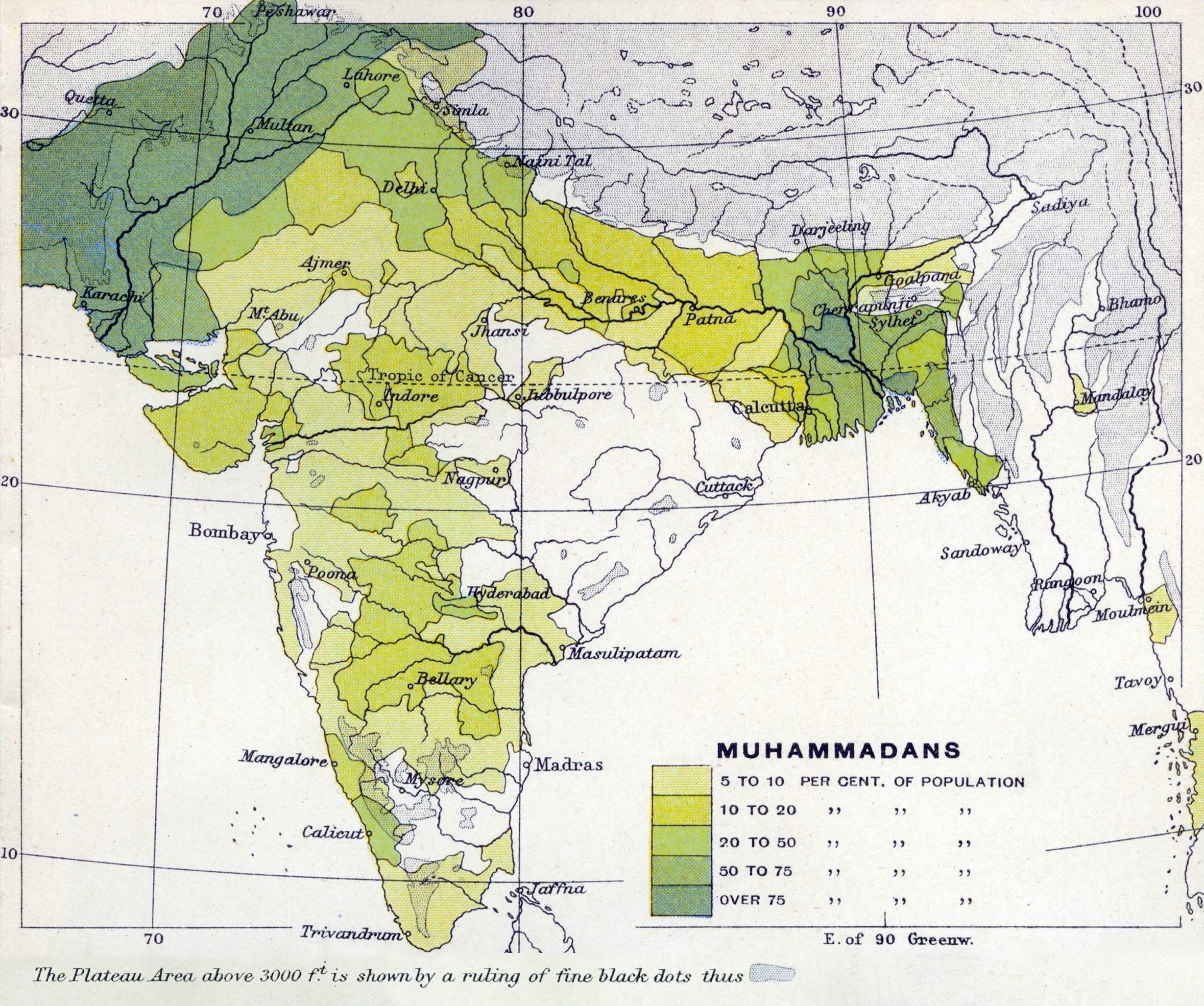
Junagarh State was located at the foot of the Girnar hills, 355 km south west of Ahmedabad and is currently, the district headquarters of Gujarat state. It had an area of about 3,336 sq. miles and was bounded on the south by the Arabian sea and had sixteen ports of which the main one was Veraval. It had a population was about five lakhs and forty five thousand, of them 80% being Hindus.
The ninth and the last Nawab Mohmmad Mahabat Khanji III ascended the throne as a minor on the January, 22, 1911. He was educated at Mayo College, and ruled under regency until his formal accession on 31 March 1920. He was at the helm of affair till 1947, when the drama of the instrument of accession unfolded at Junagarh.
Nawab Mohmmad Mahabat Khanji was known for his extreme love of animals, particularly dogs. At one point, the Nawab possessed over 300 canines. His love for animals extended to the regional wildlife, particularly the Asiatic lion, and is credited for preserving vast tracts of the Gir forest to provide the lions with a stable habitat. He was also interested in animal husbandry, and made efforts to improve the breeding stock of the local Kathiawadi stallions and of the Gir cows. The Nawab also saw the opening of the Willingdon Dam, the construction of the Bahadur Khanji library and the Mahabat Khan College. During his reign, not a single Hindu-Muslim clash occurred in Junagarh.
When the letter of instrument of accession was sent to the Nawab with choices to opt between India and Pakistan, he on August 15, 1947, announced the accession of Junagarh state to the newly created country Pakistan.
The rulers of the adjoining States particularly the Hindu Rajah of Dharanggadhra protested against Junagarh state’s decision to the accession to Pakistan as serious threat to its security. The Government of India also described the accession as a threatening cloud over the western horizon of India.
Rabidly communal Hindus went about delivering lectures and writing articles that it was a unpardonable act and called upon their co-religionists to beware of the “modern-day Mahmood Ghaznvis and to save Somnath”.
To all such criticism, the Nawab curtly replied: “The Indian Independence Act did not and does not require a Ruler to consult his people before deciding on Accession. I think we are making unnecessary fetish of the argument of geographical contiguity. Even then, this is sufficiently provided by Junagarh sea with several ports, which can keep connection with Pakistan.”
Pasha writes that for diplomatic and strategic reasons, Indian forces did not entered Junagarh State and chalked out a different plan to action to avoid criticism of naked aggression.
Under such plan, on September, 17, 1947, V.P. Menon, the then Secretary of States rushed to Junagarh with a special message from the Government of India that advised the Nawab to withdraw his accession to Pakistan. However, Menon could not meet the Nawab as he was indisposed, but construed this ruse to avoid him and expressed his displeasure to the Dewan of the State of Junagarh, Shah Nawaz Bhutto.
Bhitto explained to Menon that since the Instrument of Accession was duly signed, and the accession was complete and cannot be withdrawn, the proper course could be to talk to the Government of Pakistan on this issue.
Menon left Junagarh fuming and warned the Dewan of dire consequences. He went to Bombay from there and called for a press conference to announce the formation of Provisional Government of Junagarh that was formally formed on September, 25 1947 with Saamar Das Gandhi, a relative of Mahathma Gandhi, as its president.
Meanwhile, the Government of India made preparations for the annexation of Junagarh asking the army of the States in Kathaiwar to be suitably dispersed around Junagarh. On the 4th of October, the Chiefs of Staff were directed to instruct the Commander of the Kathiawar Defence Forces to prepare a plan for the occupation of Babariawad and Mangrol, the two pockets inside Junagarh state but outside its suzerainty and had acceded to the Indian Union.
As a part of the preparation for the annexation of Junagarh, the Government of India constituted a “Kathiwar Division” of the Indian Army with Brigadier Gurdial Singh as the Chief with Rajkot as Headquarters. Besides, three War Ships were anchored at the port of Porbunder and eight Tempest War planes were stationed at the Rajkot Airport.
Babariawad and Mangrol were first to be reclaimed on November 1, 1947 and the civil administration was quick to march to occupy the ‘Junagarh House,’ at Rajkot.
While all this was going on, Shah Nawaz Bhutto, wrote to the Government of India, on November 8, 1947 to avoid bloodshed, hardship, loss of life and property and to preserve the dynasty seeking assistance to maintain law and order before a settlement of the Junagarh’s accession to Pakistan was reached.
The Government of India did not care about such request and took over ‘Sardargarh,’ a neighboring town of ‘Bantava’ first and then ‘Bantva’ on November 9, 1947, before completing the occupation of Junagarh state on the same date. Many Muslims by then had fled to Pakistan and that included the Nawab of Junagarh, his dogs, and his Dewan.
A plebiscite was organized by the Government of India on February 29, 1949 where out of 2, 01,457 registered voters, 1,90,870 exercised their franchise, of which only 90 cast their votes in favor of Pakistan.
Psasha writes that two things are little known to the public of this high voltage drama, one, the Government of India at that time was strongly in favor of a plebiscite to be held in Junagarh, so that it can lay its legal claim over the state, second, the case between Pakistan and India, a prop of the accession of Junagarh to Pakistan, is still pending before the United Nations for disposal and is not formally withdrawn as in the case of Hyderabad state.
Pasha further writes that India’s move to annex Junagarh was just and fair, however he rues that India’s decision to hold on “Kashmir” is morally wrong and legally unjust. He cites a cable note by the American Embassy, New Delhi on October, 28, 1947, to its State Department that says: “the obvious solution before the governments of India and Pakistan is to agree to the accession of Hyderabad and Junagarh to India and of Kashmir to Pakistan.”
Pasha says had the then government of India headed to such an advice, the “Kashmir problem” that fangs with its entire vicissitudes today may have long been put to rest. He prophases that carrying the baggage of history too far may momentarily halt the process, it no way can stop the ‘inevitable.’
Any queries regarding the booklet “The Princely State of Junagarh Dead or Alive” can be obtained by directly writing to SM Pasha to his E mail ID [EMAIL=“[email protected]”][email protected]
Syed Ali Mujtaba is a journalist based in Chennai. He can be contacted at [EMAIL=“[email protected]”][email protected]
 wolly AP uncle’s presence doesn’t mean that this is a Bhutto bashing thread
 you mean India behaved like Big Brtoher