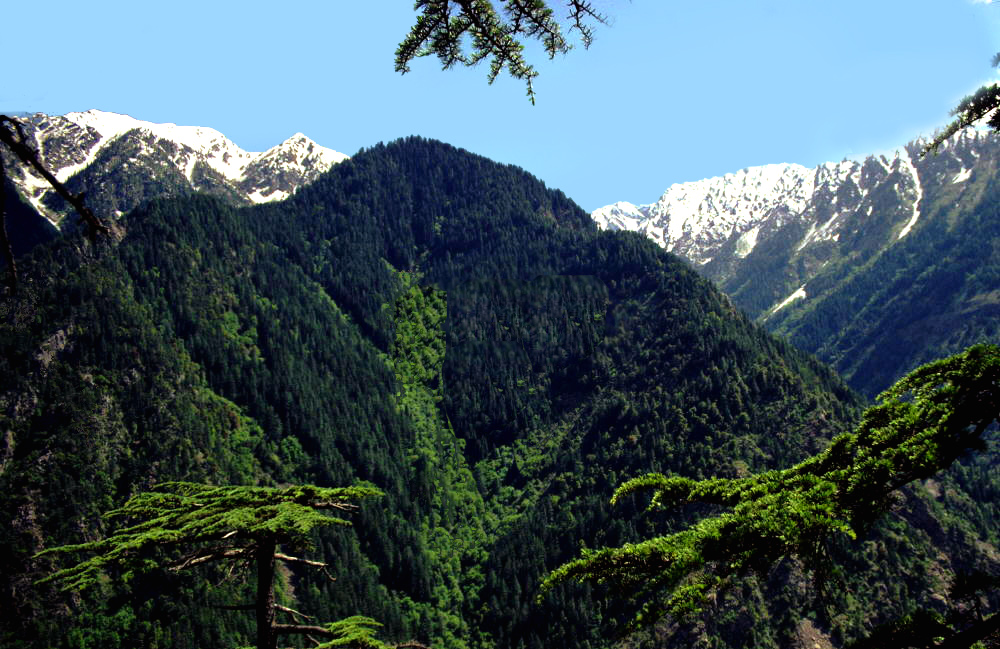
Valley bulletinAmong other remote areas in Pakistan, the Palas Valley in district Kohistan is a natural reserve that should be preserved in its pristine state. The
forests of Palas have not only regional but also global ecological significance. There are extensive alpine rangelands with prospects of promoting eco-tourism, besides providing grazing grounds to the livestock of the graziers.
With a view to protect the ecological significance of the valley with active participation of the local communities, a project called Palas Conservation and Development Project (PCDP) was implemented from 1998 to 2004 with financial assistance of foreign donors and the government of Pakistan. Before this a project called the Himalayan Jungle Project was implemented that paved the way for PCDP to work with
the same approach. The valley has diversity of both flora and fauna, which includes more than 140 bird species, with largest known population of the globally threatened Western Tragopan Pheasant. The valley is also home to several other mammal species of the Western Himalayas, like Kashmir grey langur, black bear, wolf, snow leopard, common leopard, leopard cat, musk deer, rhesus monkey to mention a few. Palas also contains the largest known population of the threatened West Himalayan elm Ulmus wallichiana.
The importance of the Palas Valley tract can be gauged from the fact that it is being considered for declaration as a Man and Biosphere Reserve by the United Nations Education and Scientific Committee (UNESCO).
**
***-- Mohammad Niaz
*