The Legend of Salahuddin

The Legend of Salahuddin

A thousand years ago, the Christian nations of Europe embarked upon a war from which we get the term Crusades. Yet in the midst of battle, the Christians acknowledged the scruples of a great and just Muslim leader, Salahuddin Ayyubi (known to them as Saladin), who fought them hard but with dignity. As we will see, his example is one we could all learn from.

The Spread of Islam
Following the death of the Holy Prophet(sa) in 632 CE, his successors took the message of Islam across the Middle East, Northern Africa and Southern Europe. By 634, all of Arabia had accepted Islam, by 635 Damascus followed, and by 640, Egypt had joined the fold.

The Muslims provided security to the Christians and Jews wherever the Muslims gained influence, and were well regarded by the Christians and Jews. Examples were in Palestine, Spain and Egypt where outside influences had kept the Christians and Jews subjugated for years before the arrival of the Muslims.

When Khalid bin Waleed took Damascus in 635 CE, he set the precedent for the way that the conquering Muslims dealt with their non-Muslim subjects. The non-Muslims, largely Jews and Christians in Damascus for instance, were afforded full protection of their lives, possessions and places of worship in return for a tax known as Jizya.

In 638, Jerusalem capitulated in a bloodless episode. Again the city dwellers and their Greek Christian Patriach Sophronius were offered the same Jizya terms. The people of Jerusalem were shocked that the Jizya was less cumbersome than the tax they had been paying previously to their Byzantine masters. They then expected a grand entrance by the powerful Muslims, but instead were even more shocked to see Caliph Umar(ra), the leader of the fastest expanding empire in the world, arriving walking barefoot and sharing a camel with his slave. This was the spirit of simplicity and brotherhood of the zealous Muslims.

News of the rapid advance of the Muslims in the Middle East would have been greeted with concern and interest by the Christian Kings of Western Europe. But that concern would have reached fever-pitch when they heard the news that the Muslims had taken Spain in 711 CE and were advancing towards Paris in the West, and the heartland of China in the East.

It was only after a defeat to Charles Martel in Tours in 732 CE, a mere 150 miles from Paris and less than 250 miles from the British coast, that the Muslims decided that they had overstretched themselves, and retrenched to the borders of Spain.

The Crusades
Christianity was starting to fare badly at the hands of politicians who launched programmes (Inquistions) against any Christians that they thought to be heretical. In Spain, these Inquisitions were later to be launched against the Muslims and Christians as well.

The Popes yielded great power in the Catholic faith. It was Pope Urban II who called for the Christians to launch an expeditionary war at the Council of Clermont on 27 November 1095. The aim was to repel the Muslims and to reclaim the Holy Land, and also to protect Constantinople (ironically it was the Crusaders themselves who ransacked Constantinople in 1204 and this lead to the taking of the city by the Ottomans). The Pope urged action, and promised a reward of God’s favour and a seat at His Throne.

In part this resurgence was sparked by the Fatimid Caliph al-Hakim who had tampered with the Church of the Holy Sepulchre in Jerusalem in 1009 against the teachings of the Holy Qur’an. The Qur’an teaches that, to denigrate the deities of other faiths or to harm their places of worship is not just evil, but would attract reprisals on Muslims.

Soon, in 1099, the Crusaders captured Jerusalem and created a Christian kingdom, planting Godfrey of Boulogne as the new prince. The attack on Jerusalem had been horrific, with no mercy shown to even women and children. Rivers of blood ran through the narrow streets of the city. More than seventy thousand people were massacred at this occasion by the ruthless Crusaders.

The Crusaders, drawn from several European countries, and organised into Knights Orders such as the Templars and Hospitaliers, found themselves with a city full of booty. Not only were they told that their sins would be forgiven, but they now had the chance to be rich merchants.

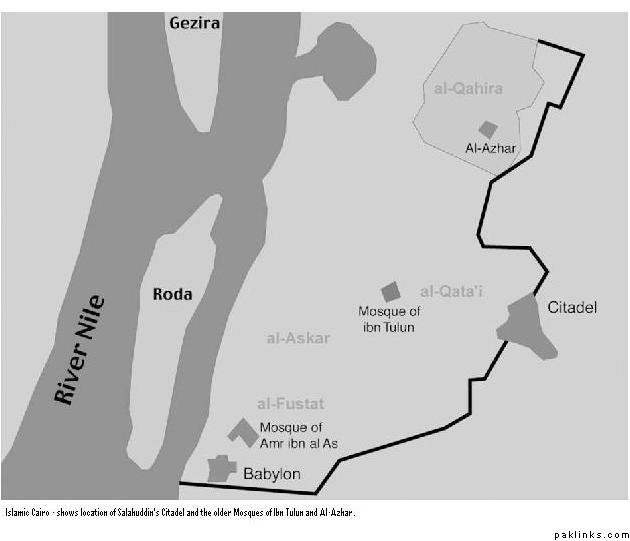
The Christian Crusaders from Western Europe had been ransacking the Middle East. When they reached Cairo led by Amaury the 1st of Jerusalem, they burnt down the old Muslim quarter of al-Fustat. The city would have fallen to the Crusaders but for the intervention of the Sultan of Syria.

Far from uniting the Muslims, some of the Muslims used the Crusades as an opportunity to gain revenge on local rivals, and some allied themselves with the Franks. It was in this dire scenario that renewed and urgent action was needed to unite and lead the Muslims. The Jews also sought protection for just as they were finding under the Inquistion, the Crusaders had no need to spare them also. The Jews also found their old alliance with the Muslims useful once again.
…More to follow in next posts.

Salahuddin


Salahuddin Yusuf ibn Najmuddin Ayyub ibn Shadlhi Abu’l Muzaffar Salah al-Din al-Malik al-Nasir, better known as Salahuddin Ayyubi in the Muslim World or just Saladin in the West, was born in Tikrit in modern Iraq in 1137 CE.

He was born into a Kurdish clan known as the Ayyubids who had originated from Armenia. His father Najmuddin Ayyub, was a Kurdish general serving in the army of the Sultan of Mosul.

Salahuddin’s early career


Salahuddin was given an excellent education and began to show promise at a early age. His father was a Governor and moved to Mosul. He gave his son a strict and disciplined upbringing. Even at that age, young Salahuddin had made an impression on Nooruddin Mahmud, the monarch of Syria. He became a lieutenant under his uncle Asaduddin Sherkoh. He was known for his leadership skills and also for his sense of duty and honesty.

He was a devout Muslim, and so preferred a modest lifestyle and simplicity. The pomp and show that others around him were attracted to was not for him.

Salahuddin defends the Muslims


As events unfolded around Salahuddin, he saw the attacks by the Crusaders, but instead of the unity he would have expected, he saw the Muslim world disintegrating and brothers fighting amongst themselves. By this time, there had been almost two centuries of attacks and rule in the Middle East by the Crusaders.

The Crusaders had been pushing out from the Holy Land in several directions, and Egypt was now very weak. As Cairo too came under attack, the Sultan despatched his Commander Sherkoh and his vizier, Salahuddin. After his uncle Sherkoh had defeated the Crusaders in the city, Salahuddin was appointed Prime Minister of Egypt in 1171 and strengthened the administration and army in Egypt. He then used Cairo as his base to repel the Crusaders in Jerusalem and Syria.

He repelled the Crusaders in Syria and took Damascus in 1175. His army then pushed into Turkey and took Konya (better known as the home of Rumi). He managed to exert greater pressure on the Crusaders by uniting the tribes and regions around their troop settlements, and surrounding them from various sides. There followed six years of relative calm between 1176 - 1181 in which various agreements that he had negoitiated held firm. It gave both sides time to re-group and consider their tactics.

Salahuddin controlled most of North Africa up to Libya, Mesopotamia and Arabia, but it irked him that the Muslims still had no freedom in Jerusalem. He was taunted bout this by the Crusaders.

....some more to follow in next posts.

Salahuddin reclaims Jerusalem

In earlier years, Salahuddin would have been wary of other Muslim factions stabbing him in the back while he sought to deal with the Crusaders. But he had used his time wisely to create alliances, and therefore could now plan his capture of Jerusalem with a great deal more confidence.

Even under a truce, Lord Reginald of Chatillon, based at the castle of Karak (modern Jordan) had broken the truce by attacking and looting caravans heading from Makkah to Syria. He had not even spared the women and children. They were all booty to him. He even sent his troops into Arabia to within striking distance of Makkah and taunted ‘since they trusted in Muhammad, let Muhammad come and save them!’

The Christians were divided, as many leaders such as Reginald sought the throne vacated by the death of Baldwin V.

Salahuddin gathered a massive army and gradually reduced the Crusaders to a shambles. His army then took Tiberias where he allowed the Christians nobles
to escape in peace.

By 1187, he had re-taken Jerusalem by agreeing surrender terms with the Crusaders. The leaders and Knights managed to pay off their freedom but left thousands of poorer Christinas to fend for themselves when the time for the treaty had expired. But Salahuddin freed the poor people even though they thought that he was going to take them into captivity.

When the Crusaders attacked Jerusalem about 90 years before, they had annihilated all of the inhabitants of the city. When Salahuddin eventually recaptured Jerusalem, not a single person was killed.

The Crusaders managed to get reinforcements under the leadership of Richard the Lionheart and in 1191, he took Acre in Palestine and butchered the local Muslim population. Then there followed a series of encounters between Salahuddin (Saladin) and Richard which spawned the legend of Saladin’s chivalrous behaviour in battle.

Salahuddin ruled Egypt for 22 years, and in order to secure his position, he built the Citadel fortification on one of the hills overlooking the city. He also established Madrasas and Khanqahs (Islamic schools and Sufi monasteries) in the city. He was intent that Sunni Islam become strong in the region again.

In the west, Salahuddin is best known for the way in which he fought the Crusaders. When the Crusaders had captured Jerusalem, a river of blood had engulfed the city. When Salahuddin re-captured the city, not a drop of Christian blood was spilt.

In response, Richard the Lionheart, Frederik of Germany and the Emperor Phillip of France sent a huge army to defeat the Muslims. With his modest force, Salahuddin held off and defeated the Crusaders. He did not just win, but the manner of his victories impressed the Crusaders. Even during the height of battle, he still allowed the Christians to enter Jerusalem as pilgrims and in peace.

When Richard was ill and distressed, Salahuddin sent him fruit and gifts and made a treaty with him. These two great leaders had grown to respect each other. Salahuddin died in Damascus in 1193 at the age of 56 years.

Re: The Legend of Salahuddin

d-toxed

Are you the author of this material or are you copying it from somewhere?

Re: The Legend of Salahuddin

I read a bok a while back that focused on Salahuddin's campaign and the Third Crusade. One amazing ability of his was how, despite being militarily outmatched by the Crusaders and winning few of the battles against them, he still destroyed their spirit to fight through constantly keeping pressure on them throughout the campaign until they concluded they could not defeat him in the war and gave up.

His genius was such that despite losing many battles, he comprehensively won the war - King Richard's Third Crusade accomplished nothing.

In one battlee in particular, Salahuddin's army ambushed King Richard and caught them unaware in their camp. As he surveyed the battle he realised that his army had so surprised the Crusaders that King Richard did not even manage to get mounted onto his warhorse (which was killed in the ambush).

At that point Salahuddin ordered his army to pull back, and sent a messenger with a warhorse to King Richard, telling him "It is unbecoming for a King to fight on foot". Once King Richard was mounted, Salahuddin resumed the attack.

I am not the author..I will update the post with source tomorrow.

Re: The Legend of Salahuddin

cop pasting articles is not allowed