Sindh Through Centuries!

Re: Sindh Through Centuries!

Well I think I might be in a wrong thread then, I appreciate the glorification of Sindh's history, but I am more interested in their decline and current state of passivity and backwardness, because it seems like a big jump from the top? Of course, just like Sindh, all ethnic groups or regions have a 'glorious' past. All major groups in subcontinent are proud of their history to various extents. Punjab for one is happily proud of the fact that they hosted different invaders throughout the course of history and allowed those invaders to became powerful rulers and gave the province a unique identity and sense of preeminence. But my issue here is present day Pakistan.

You have mentioned names of some intellectuals, and what percentage of Sindhi population can study those books? And that's exactly my point. Why is that most or even some Sindhis today feel an obsession like urge to pay far more attention to cultural props and debate tirelessly about the 'chronology' of their existence than dedicate that time genuinely struggling for something greater? Why isn't the fact that over 60% of Sindh is illiterate a matter of great frustration and concern for a group of people who appear so proud of their 'intellectual' history and Oxford graduate Prime Ministers? Why don't they rise against lack of development? Or their Sindhi - Sindh born, Sindh bred, Sindhi speaking, Sindhi looking - rulers? Where is their uproar on modern day slavery enclosed in wadera culture? I do see this as sense of misplaced pride and misplace priorities.

You do know that when human frustration collectively explodes to achieve a cause, it takes the form of revolution/agitation. For a person like you who is so into perfect mannerism, routine like order and feel good romanticism, what would be your take if Sindh produces a popular agitation tomorrow? For agitation in Sindh to get approval, does it matter if the leading agitator is Sindhi or non Sindhi? I'm just trying to understand the extent of history effecting the political dynamics of Sindh today. Considering Sindh had witnessed meaningful agitations in the past and you seem to acknowledge and respect that. If Sindh agitation was not a bad thing and a source of shame and disgust back in the day or for people who study it today, would it be such if similar agitation is produced today?

Re: Sindh Through Centuries!

First of all thanks for such a detailed post and starting an interactive session in this thread. You are definitely in right thread, because just posting some pieces of rich history of Sindh is not my purpose. I myself is learning and when people like you contribute raise questions, I’ll be able to learn more to make this thread ‘Paisa wasool’.

Coming to your questions, its a natural phenomenon in any nation’s history to see a fall, where it feels like there is no agitation against the atrocities.

I agree your point about the general attitude of Sindhi society towards education. But you can understand this situation if you look at 19th Century India, where Sir Syed Ahmed Khan had to make lot of efforts to promote need of modern education in Muslims. Before partition in 1947, Sindhi Hindus were dominating education sector in Sindh. They built schools and most of teachers were Hindus. Sindhi Muslims have the same attitude towards education as Muslims in other parts of the united India. At the time of partitions, Sindh’s literacy rate was higher in areas forming Pakistan (some statistics says it 5 times higher than other areas). When Hindu population was made to migrate, the schools they ran became deserted. Then came a blow, when many Sindhi medium schools were closed across the province (Sindhi was medium of instruction in all the institution upto college university level). While Sindhi Hindus who migrated to India, built schools in Bombay, Gujrat within months (management of D J Sindh College Karachi was able to built Jai Hind College Bombay within 4 months after their migration to India), Sindhis in Pakistan had to face shortage of teachers coupled with their general attitude towards education.

The situation became worst when education institutes were politicized. I don’t say that students shouldn’t be involve or at least be aware of current affairs, but the kind of politics that prevailed in Sindh’s education institutes (which I myself observed in 1990s) was limited to boycotts of classes. These politically motivated students (locally known as comrades) use to close down primary schools every other day after they boycotted their classes in college.

This all contributed towards destruction of education system which also intensified due to booti maafia. I remember the problem, when I didn’t took booti with myself and invigilators coming to ask me ‘have you completed that question. If done, give us the kartoos (micro-notes) to provide to someone needy’. I do remember listening to students in Islamiyat paper (requiring to write a note on Risaalat), ‘falan mujhe Risaalat (note on Risaalat) de’ :smack:

So Sindhi society did destroyed its education system, coupled with no interest from the authorities and ministers who didn’t think it as necessary. They actually used it for their political mileage. As you gave example of Oxford graduate PM, he did opened schools, gave grants to Sindh university, but there was no emergency for primary education. I don’t want to be suspicious about Mr Bhutto’s intention after reading his interest in improving Sindh university in Shaikh Ayaz’s book, but it appears that these politicians have never been interested to bring changes at gross root level. Primary education is facing more problems in Sindh, though today we got a private school in each street, but affordability still remain the problem for many parents. My chacha decided to withdraw his intelligent daughter from a private school and admitted her in government school (he himself is a teacher, but he had to take this decision due to financial problems and education expense of other children). The quality of government schools has deteriorated in recent years. I myself got education from government schools and college from rural Sindh and I had no difficulty to pursue my professional education in Karachi. But I don’t think so that government schools are providing that quality education now.

These are some problems that have resulted decline of literacy rate in Sindh. Those who can afford send their children to private schools and those who can’t send their children to government schools. In recent years, after introduction of entry tests at university / medical colleges level, students now try to avoid booti source, which is a good sign, but a lot has to be done for primary education. May be Public-Private sponsorship can bring some changes alongwith the accountability of ghost schools and teachers. Recently, Sindhi media followed ghost teachers and many lost their jobs. A good sign, I would say and it should be done to mega level.

In respect of your question about book reading, I saw an interest in Sindhi youth to show their presence at book fairs, festivals related to history and literature. Its a good sign. Apart from Sindhi news channels have started highlighting the works of intellectuals, which will also contribute to the society. As you mentioned that every part of Pakistan is proud of their history and culture (and it should be, I’m all for it), having media sources in your mother tongue do have an impact on society. I really admire Sindhi intellectuals who stood for their language and now we have dozen of Sindhi dailies and around 10-12 TV channels to create awareness among those who can’t understand other languages properly. My own Mom can understand Urdu, but she can’t speak that, so her source of information is KTN News most of the times :slight_smile:

About your question, whether Sindhis will accept a non-Sindhi their revolutionary leader, I would take you to history of Sufis in Sindh. Who was Qalandar Shahbaz by birth? He migrated from Marwand (Afghanistan) and now he is SindhRi da shahbaz. Who was Shah Latif Bhitai? His ancestors migrated frome Hiraat (Afghanistan). Now Latif is Sindh and Sindh is Latif. So, there is a tendency in Sindhi society to accept outsiders as their leaders / role models if their concern for mistrust is addressed. Look at Sindhi media’s coverage of Imran Khan’s jalsa in LaRkana. They highlighted it when he announced his dissent over controversial issues of Division of Sindh and Kala Bagh dam.

Re: Sindh Through Centuries!

1947 happened good 67/68 years ago. In the meantime, Sindh had produced two extremely popular Prime Ministers, and an all powerful and influential 'national party' which had been voted into power at least five times, and continuously ruling the Sindh province for good 40 years. So it is height pathological audacity, moral decay and intellectual bankruptcy when I see proud Sindhi representatives as known as PPP ministers who still have the nerve to moan and blame 'outsiders' for Sindh's miserable condition? Does this sense of victim complex and xenophobia really sells in Sindh? Is it really 'outsiders' fault - be it from hundred of years or contemporary political rivals - that the city of Larkana resemble an ancient village?

The whole of Pakistan suffered from immediate economic loss and some kind of collapse of communal structure after the 1947. However, in fact, the Partition of India was quite literally the partition of Punjab. Punjab had also lost its resources, an affluent non Muslim class. And in return hosted a huge group of migrants who came with nothing but handful of belongings. Why is that migrants who came with nothing but trunks full of clothes have found socio-economic mobility in both Punjab and Karachi, but the situation of native Sindhis in interior Sindh is regressing back to dark ages? Why haven't they found such socio-economic mobility?

Re: Sindh Through Centuries!

The answer to your question in second para lies in first paragraph. Producing popular Prime Ministers didn't help much to common men. Pakistan People's Party is not people's party in real sense. Look at their elected members. 99% elite waderas and you will find the answer about the miseries of masses.

PPP has always hijacked movemnets in Sindh. Be it MRD or movemnet against One-Unit. ungli katwa kar shaheedon main naam likhwana thing.

There is also no doubt that Sindh faced many wrong decisions during fist 25 years of Independence and later when PPP got power it didn't deliver to the extent it was supposed to do. It played Sindh card to be elected again and again, but kept on compromising main issue. Just remember agitation against local bodies bill in Sindh, which later PPP revoked just around election time. PPP's coming into power again and again is also due to rigging and those who think that PPP will have same seats after true and fair elections, they are living in fool's paradise.

Re: Sindh Through Centuries!

Back to history… while the archaeology department has to do lot of work in Sindh, the general perception that people of Indus valley were not advanced in war strategies (based on no arms found from Moen jo DaRo) seems incorrect when we see the forts of Sindh. the major being Rani Kot.

Mysterious Ranikot: ‘The world’s largest fort’ - Multimedia - DAWN.COM

Re: Sindh Through Centuries!

Reality of Talpurs rule - - DAWN.COM

I would like to say that originally Sindhi lacked an authentic script/alphabet. It was written in more than eight different scripts, i.e. Thattai, Khudabadi, Luhaniki, Memonki, Khojiki, Devnagri, Gurmukhi, Hatkai (Hatvaniki).

When the British arrived, they found the pandits writing Sindhi in Devnagri script. Traders, including Khojas and Memons, were using a variety of ‘Modi’ or ‘Vanika’ scripts, without any vowels. Hindu women were using Gurmukhi and government employees were using some kind of Arabic script.

In 1849 the British produced an English-Sindhi dictionary in Devnagri. A year later they translated the Bible in Sindhi, again in the Devnagri script. Majority of government servants were Hindus who favoured the Arabic script because they did not know Devnagri, and had to learn a new script.

A big debate started, with Capt Burton favouring the Arabic script and Capt Stack favouring Devnagri. Sir Bartle Frere, the then commissioner of Sindh, referred the matter to the British East India Company’s Court of Directors, who ruled in favour of the Arabic script on the ground that Muslim names could not be written in Devnagri.

Thereafter, Sir Richard Burton, an Orientalist, with the help of local scholars Munshi Thanwardas and Mirza Sadiq Ali Beg evolved a 52-letter Sindhi alphabet. Therefore, my giving credit to Sir Bartle Frere in development of modern Sindhi script is not without basis.

Re: Sindh Through Centuries!

Interesting read.

The Straight Dope: How come we can’t decipher the Indus script?

What do we know about the language the Indus script wrote? We can say little for certain, but the best guess is that it’s a language of the Dravidian family, an idea that has been around since at least the 1920s. Today most Dravidian speakers live in Sri Lanka and southern India, 800 miles or more from the Indus valley where the bulk of the Indus inscriptions have been found. But about a hundred thousand speakers of one Dravidian language, Brahui, live in western Pakistan and neighboring parts of Iran and Afghanistan, not too far west of the Indus. Contrary to earlier speculation about recent migrations, linguistic and genetic analyses show that they have been separated from other Dravidian speakers for at least several thousand years.

Further evidence that Dravidian or related languages were once spoken in the general area comes from Linear Elamite inscriptions, found in the ruins of the ancient city of Susa in southwestern Iran. The script has been deciphered from a phonetic standpoint because of its similarity to Mesopotamian cuneiform, but as with Etruscan, the language remains largely unknown. A significant percentage of words in Linear Elamite appear to be of Dravidian origin, which could mean it is descended from a hypothetical Elamo-Dravidian ancestor language, or just that it borrowed a lot of words from a Dravidian language spoken nearby. In either case, the Elamite connection makes it seem more likely that a Dravidian or related language was spoken in the Indus valley when the inscriptions were made.

Many Indian nationalists, and some serious scholars, believe the Indus script writes a language of the Indo-Iranian (Aryan) branch of the Indo-European family, which includes Farsi (modern Persian), Sanskrit and Hindi. All things considered, this seems unlikely. The inscriptions go back to about 3200 B.C., which according to mainstream archaeological thinking is before any Indo-Europeans had come that far southeast. Another problem is that Indo-European peoples kept domesticated horses and used chariots and had other cultural traits not shared with the ancient Indus civilization. Indeed, according to the mainstream thinking, the arrival of the Indo-Europeans in the Indus Valley around 1800 B.C. is more likely to have been the end of the Harappan culture than the beginning of it.

Re: Sindh Through Centuries!

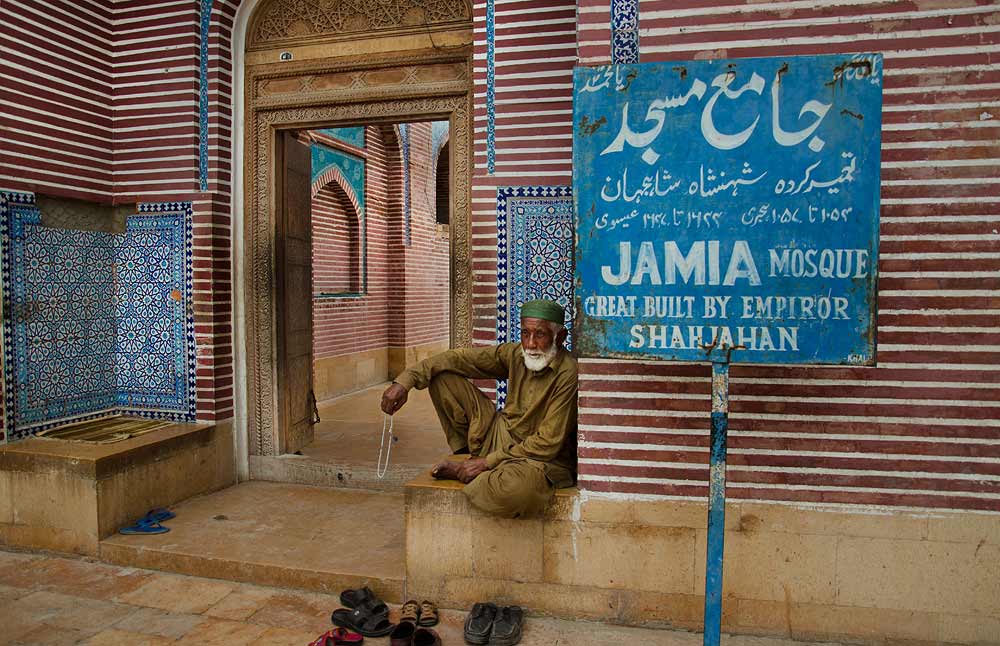
@mahool Have you visited this mosque in Thatta?

Re: Sindh Through Centuries!

A simple grave on a platform, with a sign that says ?Mai Makli jo Qabar? - or the grave of Mai Makli. The grave is situated adjacent to the southern wall of the Jamia Mosque. Makli means Little Mecca or Mecca-like; some relate it with a devout and pious woman “Mai Makli”. It is believed that her prayers averted Sultan Firuz Shah Tughlaq’s conquest of Thatta. He could only seize it three days after her death.

Re: Sindh Through Centuries!

Thatta: the ancient city of kings - Pakistan - DAWN.COM

Thatta is an ancient city of the Indus delta. The city is situated about 100 kilometers from Karachi, Pakistan via the national highway. It had great importance in history and today is famous for its archeological sites and centuries old monuments, which are great tourist attractions.

According to historians Thatta may have been the main port on the Indus in the time of Alexander the Great’s invasion. The river Indus has changed its course many times since the days of Alexander, and this ancient site of Patala has been subject to much conjecture (the river changes course slowly due to a process called “siltation” which is essentially water pollution by fine silt particles).

Thatta was the capital of three successive dynasties, the traces of which are evident in the Makli necropolis, which spreads over a twelve square kilometer area. These dynasties are: Samma (1335-1520), Arghun (1520-1555) and Tarkhan (1555-1665).

There are archeological sites in the city and on its outskirts. The most famous of these sites is the Makli Hill, which is the biggest necropolis in the world and about three kilometers from Thatta.

Because of its cultural and archeological importance, in the 1980s UNESCO listed the Makli necropolis as a World Heritage Site. The most preserved area of the necropolis is Makli Hill, which comprises about 35 monuments and contains four different schools of architecture and art made from stone to brick and glaze.

The monuments here also tell the story of external cultural influences in Lower Sindh, including Hindu, Central Asian and Persian cultures.

Later on, the city of Thatta was ruled by the Mughal emperors of Delhi through its governors, leaving an indelible mark on the shape of the monuments there. The most famous example of Mughal architecture is the Shah Jahan Mosque, constructed in the latter half of the seventeenth century.

Thatta played an important role in the history of Sindh and the city was constantly renovated from the 14 to 18 century. But in 1739, when the province of Sindh was taken over by Nadir Shah of Persia, Thatta entered into a period of decline. However the four centuries that comprise the golden age of Thatta have left their traces on the form of monuments in the region. - Text by Mukhtar Azad

@Arleitter

Re: Sindh Through Centuries!

@**Arleitter

Is it true? why inferiority complex?

**Sindhi - The language of refugees | The Alternative

Re: Sindh Through Centuries!

^I will come back to this tomorrow.I would like to have detailed discussion. My mood is not alright now.

Re: Sindh Through Centuries!

sure :)

Re: Sindh Through Centuries!

Hmm interesting. I thought sindhi was very well developed (assumed with script as well) and arabic influenced it just like it ended up doing to Farsi.

I guess that farsi and Persia was much more advanced than sindh. I guess that it does make sense since they were a major power to reckon with for a long time and you don't get there by being a fluke.

Re: Sindh Through Centuries!

No, but I would like to visit.

Re: Sindh Through Centuries!

didn't get your point. Persian influence on Sindhi is due to Persian invasions and then dynasties of Arghun, Turkhan and Muhals, but thanks to Shah Latif who opted for using Sindhi in his poetry in 18th century (while Persian was being used by other poets of Sindh mainly darbari qaseeda go), Sindhi was able to retain much of its original vocabulary. This was further strengthen by 20th century poet Shaikh Ayaz (Its 17th anniversary of Shaikh Ayaz today).

Re: Sindh Through Centuries!

A hero of Sindh who fought against Khiljis.

This contains references to practice of Johar in Sindh and giving refuge to ladies (known as Saam).
@Arleitter Ask your parents meaning of ‘MuRs ta ko dodo aaheen’.

The legend of Dodo Chanesar – The Express Tribune

South of Badin (Sindh), in the heart of the Great Rann of Kutch, there is a place called Rupa Mari — Palace of Rupa. In that vast emptiness there sits a low conical mound of clay and an unpretentious grave under a timber canopy. The land around is strewn with pottery shards to remind us of a now forgotten town. They say the ruins are named after the queen of Bhongar, the second of the Soomra kings of Sindh who built the town. The grave is that of their grandson Dodo II.

Legend relates that the first Dodo had two wives: one a blacksmith’s daughter and the other a Rajput woman. The former bore the king a daughter and a son called Bhagi and Chanesar respectively. The other wife was pregnant when Dodo fell in battle, and when the child was born the aged Bhongar named him Dodo after the fallen king.

Upon the death of Bhongar, the chieftains gathered to decide who should wear the crown. Since Bhagi and Chanesar were of so-called low birth, the lot fell in favour of Dodo. However, seeing her own brother deprived, Bhagi contrived to get a resignation from Dodo. The courtiers on their part were adamant that the country should only have a high-born Rajput ruler and opposed Chanesar. In the end, the will of the majority prevailed.

With Dodo confirmed on the throne, Chanesar went to Delhi to seek the help of the Khilji Sultan to gain the crown he thought was rightfully his. The sultan proved indulgent and so Chanesar returned to Sindh via the Thar Desert with a Turkish army. At Virawah, the Turks were confronted by the Rajputs under Dodo and his valiant general Nangar. Peace was almost negotiated when the Turks demanded that Bhagi be made over for the harem of the Khilji sultan.

Declaring that they were men enough to defend the honour of not just their princess, but of every common maiden too, the incensed Sindhis drew battle lines. The conflict that ensued raged, so the ballad goes, for a full fortnight. After many a worthy man was cut down on both sides, the brave Nangar went down in desperate combat. The Rajputs withdrew to Vighekot where Dodo made a second stand. Greatly outnumbered, he fell at the head of his army. It is sung that even in death he did not relinquish his hold on the sword in either hand.

Bhago Bhan, poet and historian, who had ridden in the king’s train, left the lost battle to gather the royal women and take them to the fort of Abro Jam and there, in Rajput fashion, deposit them as saam. This meant that the Abros would defend their guests even to the last drop of their blood. As the Turks came down against the Abros, another battle took place. When defeat seemed imminent, the Abros committed johar: they set alight their fort with the women and children inside and rode out to battle knowing there was no withdrawal that day.

That is the romance of Dodo and Chanesar as passed down through the generations. History tells a slightly different tale, however.
In 1297-98, when the country was ruled by Chanesar the son of Tai Soomra, the imperial army did indeed come down on Sindh under the command of one Zafar Khan. The purpose of this inroad was to dislodge a roving, marauding army of Mongols then engaged in its depredations in the vicinity of Sehwan.

The Mongols were ousted and the imperial army withdrew to Kutch on its circuitous way back to Delhi. We do not know if this expedition to expel the Mongols was undertaken on a request from Chanesar. It may well have been. Over the years as the tale passed through the generations, the kernel of truth was ensconced in a thick layer of fable. Some of which, like the heroic role of the Abros, could have been later historical events.

Be that as it may, something seems to have gone awry. According to historian (the late) MH Panhwar, Kutchi traditions tell of a migration of Sindhi Rajputs to Kutch at the end of the 13th century. This is indicative of some trouble between the Sindhis and the Delhi army.

Re: Sindh Through Centuries!

A freedom fighter lost in the pages of history – The Express Tribune

Hemu Kalani, originally from Sukkur, was given the option of relaxing his sentence for a simple written apology — but he remained steadfast and unapologetic.

His valour still echoes in the pages of history, his determination, many say, knew no bounds.

**Just 18 years old when he was caught red-handed, imprisoned and tortured for attempting to loosen the fixings of the railway track in his hometown in a bid to derail the train which was carrying special troops of the European battalions.
**
**Young Kalani was informed on October 23, 1942 that a train was carrying weapons which would be used against freedom fighters in Sindh. He along with friends decided that the train will not be allowed to go ahead.
**
Perhaps lost in history, it is still unclear who caught him.

But according to writer Dr Amir Abbas Soomro, a security guard of a biscuit factory near the track caught him and handed him over to the police (information the writer says he gathered from Kalani’s younger brother Tekchand).

Accounts of his story reveal that Kalani asked his friends to run away before being caught by authorities and never disclosed their names despite being tortured mercilessly.

His case was being heard in a Martial Court and his lawyers, Pirzado Abdul Sattar, failed to prove him innocent before the British Raj.

Sattar made an offer to Kalani’s paternal uncle, Dr Manga Ram: If Kalani could sign a written apology, the British would relax his death sentence but Kalani simply refused.

Upon hearing the news his mother, Jethi Bai, rushed to the Sukkur jail and begged her son to accept the terms of the apology.

Kalani refused to apologise for saving his land.

Today, 70 years on it seems the hero of Sindh has been lost in translation.

**While India pays homage and celebrates his death anniversary as a sign of resilience, very few are aware of his sacrifices here except a few nationalist parties who take him as a hero.
**
**A post stamp of Kalani’s name was issued by former Indian premier Indira Gandhi in 1983 and several roads, schools and parks have been named after him in different cities of India.
**
So highly placed is this historical legend that the Indian parliament boasts a statue of Kalani on its premises.

His uncle Dr Manga Ram was also a freedom fighter and Kalani was inspired by his struggle against the British Raj.

According to Kalani’s neighbours, his family migrated to India after the partition of the subcontinent and resided in Chamber Camp, Mumbai. His younger brother, Tekchand, still lives in Mumbai and is 71 now.

At one point in time, Jawaharlal Nehru himself visited Kalani’s family and announced pension for his mother after his death.

Today, Iftikhar Shah possesses the house that once was home to Kalani in old Sukkur.

Re: Sindh Through Centuries!

A quote from Sir VS Naipual

It's very attractive to people to be a victim. Instead of having to think out the whole situation, about history and your group and what you are doing... if you begin from the point of view of being a victim, you've got it half-made. I mean intellectually.

Re: Sindh Through Centuries!

sometimes knowing ground realities and discussing them with your next generations lead to taking steps for solution. It does take time to sort out the things and may be solution chosen don't work and give desired outcome. Look at the Pakistan movement. For some it might be victimised card played by Muslims of India, but at the end they achieved their objects in form of separate homeland. Whether or not this solution worked is another discussion.