Re: Significant / Prominent Personalities in Indo-Pak History..
Very informative, as always. One question - what does Khilafat mean?
PS - Masih-ul-Mulk - really like that title.
Re: Significant / Prominent Personalities in Indo-Pak History..
Very informative, as always. One question - what does Khilafat mean?
PS - Masih-ul-Mulk - really like that title.
Re: Significant / Prominent Personalities in Indo-Pak History..
Quaide Azam. I like his political philosophy, and I like him for being a straight person with no hypocrisy of any kind.
Buddha. He is responsible for keeping alive the dying religion of Harappan civilization. (some will disagree)
Re: Significant / Prominent Personalities in Indo-Pak History..
^ Interesting I think we might need a thread on the Historical Budha too… 
Re: Significant / Prominent Personalities in Indo-Pak History..
Actually, I had a very interesting thread (at least interesting to me) opened on the exact same topic. Please do read that thread. 
Re: Significant / Prominent Personalities in Indo-Pak History..
Thanks. Read and enjoyed the thread. Interesting theory. Buddhism is our favorite religion - and I say this as a Hindu.
Re: Significant / Prominent Personalities in Indo-Pak History..
Wow thanks for that Khoji Bhai. :k:
Yeah Buddhism is a very interesting Religion but I like to learn about all religions including ones which seem odd, whatver floats your boat I guess… 
Re: Significant / Prominent Personalities in Indo-Pak History..
Sardar Vallabh Bhai Patel - had he become the PM instead of Nehru, the history of India would have been very different (in a positive way).
Re: Significant / Prominent Personalities in Indo-Pak History..
sardar bhagat singh: for clarity of thought
Re: Significant / Prominent Personalities in Indo-Pak History..
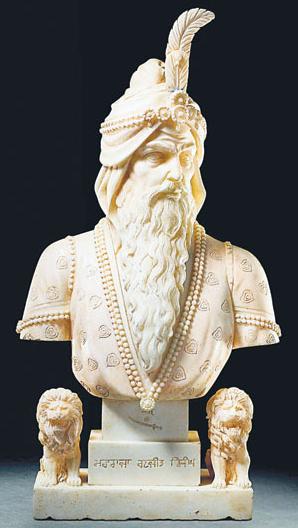
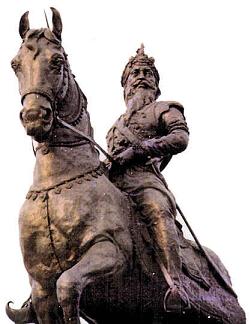
Maharaja Ranjit Singh aka Sher-e-Punjab
(13 November 1780 – 20 June 1839)
http://www.sherepunjabmaharajaranjitsingh.info/image300.gif
Summary
Ranjit Singh belonged to a Sikh clan of Northern India. He was born in Gujranwala, now in modern Pakistan, according to some historians, into a Jatt Sikh family and others believe that he was born intoa Sansi Sikh family who were Sukerchakia Misldars. As a child he suffered from smallpox which resulted in the loss of one eye. At the time, much of Punjab was ruled by the Sikhs under a Confederate Sarbat Khalsa system, who had divided the territory among factions known as Misls. Ranjit Singh’s father Maha Singh was the Commander of the Sukerchakia Misl and controlled a territory in the west Punjab based around his headquarters at Gujranwala. After his father’s death he was raised under the protection of Sada Kaur of the Kanheya Misl. Ranjit Singh succeeded his father at the age of 18. After several campaigns, he conquered the other Misls and created the Sikh Empire.
**
The Maharaja**
Ranjit Singh was crowned on 12 April 1801 (to coincide with Baisakhi). Sahib Singh Bedi, a descendant of Guru Nanak Dev, conducted the coronation. Gujranwala served as his capital from 1799. In 1802 he shifted his capital to Lahore. Ranjit Singh rose to power in a very short period, from a leader of a single Sikh misl to finally becoming the Maharaja (Emperor) of Punjab.
He then spent the following years fighting the Afghans, driving them out of the Punjab. He also captured Pashtun territory including Peshawar (now referred to as North West Frontier Province and the Tribal Areas). This was the first time that Peshawari Pashtuns were ruled by Punjabis. He captured the province of Multan which encompassed the southern parts of Punjab, Peshawar (1818), Jammu and Kashmir (1819). Thus Ranjit Singh put an end to more than a thousand years of Muslim rule. He also conquered the hill states north of Anandpur Sahib, the largest of which was Kangra.
When the Foreign Minister of the Ranjit Singh’s court , Fakir Azizuddin, met the British Governor-General of India, Lord Auckland, in Simla, Lord Auckland asked Fakir Azizuddin which of the Maharaja’s eyes was missing, Azizuddin replied: “The Maharaja is like the sun and sun has only one eye. The splendour and luminosity of his single eye is so much that I have never dared to look at his other eye.” The Governor General was so pleased with this reply that he gave his gold watch to Azizuddin.
There was strong collaboration in defense against foreign incursions such as those initiated by Ahmed Shah Abdali and Nadir Shah. The city of Amritsar was attacked numerous times. Yet the time is remembered by Sikh historians as the “Heroic Century”. This is mainly to describe the rise of Sikhs to political power against large odds. The circumstances were the hostile religious environment against Sikhs with a tiny Sikh population compared to other religious and political groups.
Ranjit Singh’s Empire was secular, none of the subjects were discriminated against on account of their religions.The Maharaja never forced Sikhism on his subjects.
Secular Rule
The Kingdom of the Sikhs was most exceptional in that it allowed men from religions other than their own to rise to commanding positions of authority. Besides the Singh (Sikh), the Khan (Muslim) and the Misr (Hindu Brahmin) feature as prominent administrators. The Christians formed a part of the militia of the Sikhs. In 1831, Ranjit Singh deputed his mission to Simla to confer with the British Governor General, Lord William Bentinck. Sardar Hari Singh Nalwa, Fakir Aziz-ud-din and Diwan Moti Ram ― a Sikh, a Muslim and a Hindu representative ― were nominated at its head.
http://www.sikh-history.com/sikhhist/images/portraits/drbr-ran.jpg
Externally, everyone in the Sikh kingdom looked alike; they supported a beard and covered their head, predominantly with a turban. This left visitors to the Punjab quite confused. Most foreigners arrived there after a passage through Hindustan, where religious and caste distinctions were very carefully observed. It was difficult for them to believe that though everyone in the Sarkar Khalsaji looked similar, they were not all Sikhs. The Sikhs were generally not known to force either those in their employ or the inhabitants of the country they ruled to convert to Sikhism. In fact, men of piety from all religions were equally respected by the Sikhs and their ruler. Hindu sadhus, yogis, saints and bairagis; Muslim faqirs and pirs; and Christian priests were all the recipients of Sikh largess. There was only one exception – the Sikhs viewed the Muslim clergy with suspicion.
The Generals of Maharaja Ranjit Singh
Ranjit Singh encircled himself with an array of strong generals and soldiers. They were men from different clans, castes and regions
These included:
Hari Singh Nalwa
Dewan Mokham Chand
Jassa Singh Ahluwalia and his son Fateh Singh Ahluwalia
Veer Singh Dillon later Jallaha of Gurdaspore
Sawan Mal
Sirdar Gulab Singh Pahuwindia
Sham Singh Attariwala
Sardar Sangat Singh Saini
Sher Singh
Shaikh Elahi Bakhsh
General Ghause Khan (Mian Ghausa)
Sultan Mahmud Khan (Son of Ghause Khan)
Zorawar Singh
Chattar Singh Attariwalla
Balbhadra Kunwar – Gorkhali General who served for Ranjit Singh after the Anglo-Gorkha war (1814–1816).
Mahan Singh Mirpuri
Misr Diwan Chand
Among his European Mercenary Generals were:](Jean-François Allard - Wikipedia)
Jean-François Allard](Jean-Baptiste Ventura - Wikipedia)Jean-Baptiste Ventura – Italian (Modena)](Paolo Avitabile - Wikipedia)Paolo Di Avitabile – Italian (Naples)
Claude August Court – French
Americans of note:](Josiah Harlan - Wikipedia)
Josiah Harlan – American general and later governor of Gujrat](Alexander Gardner (soldier) - Wikipedia)Alexander Gardner – American (Scotch – Irish)
**
Geography of the Sikh Empire**
The Sikh Empire was also known as Punjab, the Sikh Raj, and Sarkar Khalsaji, was a region straddling the border into modern-day People’s Republic of China and Islamic Republic of Afghanistan then popularly referred to as the Kingdom of Cabul. The name of the region “Punjab” or “Panjab”, comprises two words “Punj/Panj” and “Ab”, translating to “five” and “water” in Persian. When put together this gives a name meaning “the land of the five rivers”, coined due to the five rivers that run through the Punjab. Those “Five Rivers” are Beas, Ravi, Sutlej, Chenab and Jhelum, all tributaries of the river Indus, home to the Indus Valley Civilization that perished 3000 years ago. Punjab has a long history and rich cultural heritage. The people of the Punjab are called Punjabis and they speak a language called Punjabi.

The following modern day political divisions made up the historical Sikh Empire:
Punjab region till Multan in south.
Punjab, India
Punjab, Pakistan
Haryana, India. Including Chandigarh.
Himachal Pradesh, India
Kashmir, conquered in 1818, India/Pakistan/China
Jammu, India
Gilgit, Northern Areas, Pakistan (Occupied from 1842–1846)
Khyber Pass, Afghanistan/Pakistan
Peshawar, Pakistan (taken in 1818, retaken in 1834)
North-West Frontier Province and FATA, Pakistan (documented from Hazara (taken in 1818–22)to Bannu)
Parts of Western Tibet (1841), China
**
Legacy
**Maharaja Ranjit Singh died in 1839, after a reign of nearly forty years, leaving seven sons by different queens.
Maharaja Ranjit Singh is remembered for uniting the Punjab as a strong nation and his possession of the Koh-i-noor diamond. Ranjit Singh willed the Koh-i-noor to Jagannath Temple in Puri, Orissa while on his deathbed in 1839. His most lasting legacy was the golden beautification of the Harmandir Sahib, most revered Gurudwara of the Sikhs, with marble and gold, from which the popular name of the “Golden Temple” is derived.
He was also known as “Sher-e-Punjab” which means the “Lion of Punjab” and is considered one of the three lions of modern India, the most famous and revered heroes in Indian subcontinent’s history. The other lions are Rana Pratap Singh of Mewar and Chhatrapati Shivaji, the greatMaratha ruler. The title of “Sher-e-Punjab” is still widely used as a term of respect for a powerful man.
Captain William Murray’s memoirs on Maharaja Ranjit Singh’s character: Ranjit Singh has been likened to Mehmet Ali and to Napoleon. There are some points in which he resembles both; but estimating his character with reference to his circumstances and positions, he is perhaps a more remarkable man than either. There was no ferocity in his disposition and he never punished a criminal with death even under circumstances of aggravated offence. Humanity indeed, or rather tenderness for life, was a trait in the character of Ranjit Singh. There is no instance of his having wantonly infused his hand in blood."
Many famous folk stories about Maharaja portray a leader and the inspiration Maharaja Ranjit Singh was. In one famous incident, when Maharaja was about to cross the badly flooded river near Attock (now in Pakistan and called Kabul River). One of Maharaja’s generals reported this fact to Maharaja, saying that the river cannot be crossed and it is now an Atak (an obstacle in Hindi) for us. Maharaja retorted “eh Attock uhna lai atak hai, jehna de dillan wich atak hai” or “This river Attock is an obstacle for those, who have obstacles in their hearts”, then crossed the river successfully. The army and other generals followed his lead.
Another famous folk story about the Maharaja is that he was accidentally hit by a stone thrown by a 5 year old boy, who actually wanted to hit a fruit tree to knock down some of its fruit. When he was brought before the Maharaja, Ranjit Singh gave him a gold coin. He said, “How can I punish him for hitting me with a stone, when this tree will give him fruit for the same?”
This is a Wikipedia dump but there are other resources of information. I’ve listed a few respectable links here for those interested.
Maharaja Ranjit Singh @ Sikh History (Most Favoured)
Maharaja Ranjit Singh @ Sikh Lions
Re: Significant / Prominent Personalities in Indo-Pak History..
Thanks for this excellent post GDISA :k:
I agree Ranjit singh was indeed a significant personality of the modern subcontinent. I think he is made out to be a bit nicer than he really was in this Wiki post but indeed whatever the facts may be he was a very good millitary leader. Though his army was forever doomed by his choices of relying on foriegn officers, after his death his empire imploded and to this day the Sikhs lament the lost glories like us Muslims. 
Re: Significant / Prominent Personalities in Indo-Pak History..
Just thought I’d drop him in there. He’s a significant figure in the Sikh history in particular and Punjabi history.
Well its not just the Wikipedia entry but if you read the other resources and some background on him, it seems he was different from the usual breed of leaders in the Sub Continent. I don’t believe it was the choice of foreign officers because that never caused him trouble in his lifetime. True about the legacy, his heirs were incompetent and lacked the competence which Ranjit Singh is renowned for.
Aye! Muslims, Hindus and Sikhs are still suffering because of decisions that were taken and some that weren’t. :hinna:
Re: Significant / Prominent Personalities in Indo-Pak History..
Since today is 23rd March and I have dedicated a whole thread to this great day let us not forget this day is also the day in which one of the bravest revolutionaries of Modern Indian history passed from this World.
On this day a man who inspired a generation of Indian youths to struggle for thier freedom, a man who gave up food and water and went on hunger strike for his belief left us on this day… life he lost but triumph he gained.
His name was Shaheed Bhagat Singh and this is his story…
Please follow the ling to one of the bravest men of the Subconitnent.
Bhagat Singh was a very instrumental personality to the Indian freedom movement and his devotion to the cause led us to freedom both sides of the border.
I salute the courage of a fellow determined fighter Bhagat Singh Shaheed. :salute:
Pakistan Zindabaad!
Hindustaan Zindabaad!
Haq Haq Allah Allah,
Allah, Ram, Isa, Guatama saab merey chal bewakoof thera kya hain! :jhanda:
Re: Significant / Prominent Personalities in Indo-Pak History..
Chhatrapati Shivaji
The only ruler to effectively thwart the invading Moghals in India. Though he was a Hindu king, he treated all religions with the utmost respect. The practices of treating women as spoils of war, destruction of religious monuments, slavery and forceful religious conversions were firmly opposed under his administration. He established Hindavi Swaraj (which means self-rule by the Indian people, not Hindu rule as it is often misinterpreted. Note the term India is used loosely, it basically means self-rule by people of the land rather than rule by foreign invaders).
The Maratha empire he established was the single largest empire in India till the British seized power. A large part of present day Western and South India has retained its character owing to this great king.
Re: Significant / Prominent Personalities in Indo-Pak History..
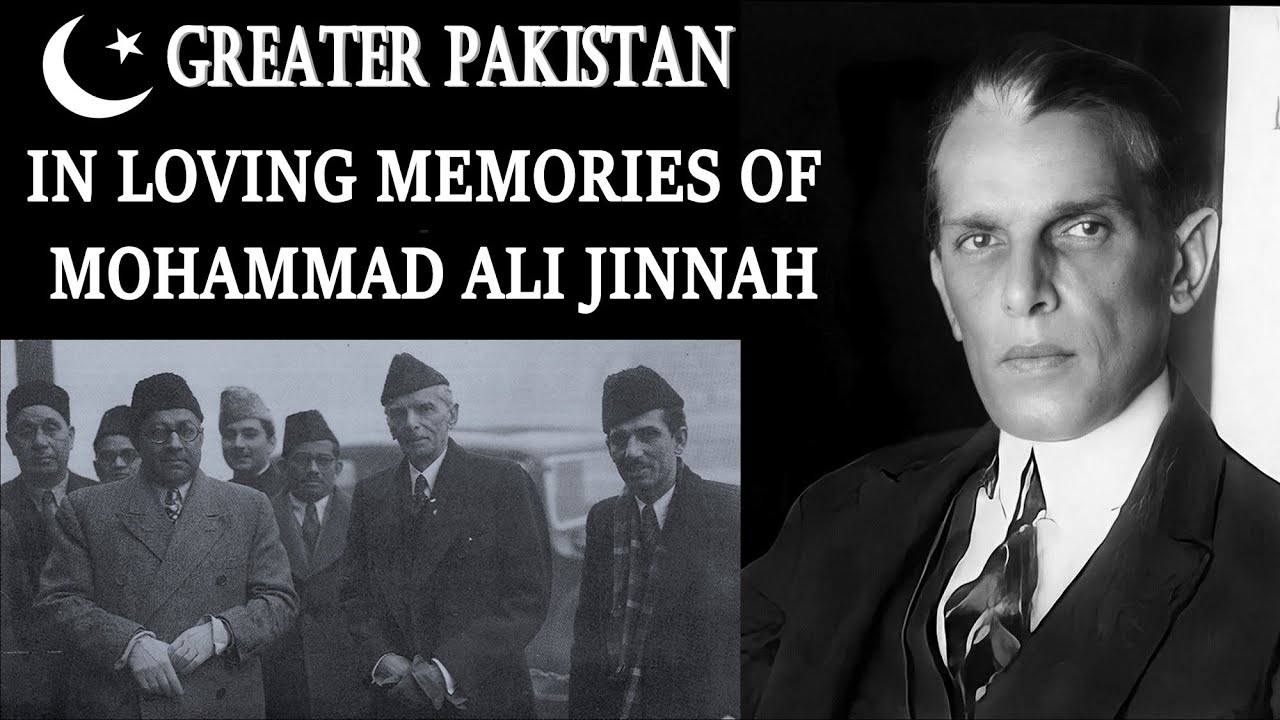
Quaid-i-Azam Muhammad Ali Jinnah - Great leader who guided the indian muslims to achieve their separate and Independent country. Enough has been said already.
Prof. Dr. Abdus Salam - First one to become Nobel laureate from the muslim world. An inspiring towering figure for many pakistani scientists whom he mentored. Founding father of the Atomic Energy program of Pakistan. Never gave up his pakistani citizenship despite being ostracized by pakistani political leadership and getting citizenship offers from many countries.
Sir Syed Ahmed khan - For his political vision and laying the foundations of educated and capable muslim leadership.
Zafar Khan - A General of Allauddin Khilji who successfully defended his country against Mongols under extraordinary ods and instilled awe in the hearts of mongols when they were considered invincible.
Re: Significant / Prominent Personalities in Indo-Pak History..
Re: Significant / Prominent Personalities in Indo-Pak History..
My all time favourite, Mrs Indira Gandhi, undaunted and invincible:k:
Re: Significant / Prominent Personalities in Indo-Pak History..
Bahadur Shah Zafar, not sure about the authenticity
https://fbcdn-sphotos-a.akamaihd.net/hphotos-ak-snc7/396034_239488979504099_1635209037_n.jpg
Re: Significant / Prominent Personalities in Indo-Pak History..
I think KKF may have an idea
Re: Significant / Prominent Personalities in Indo-Pak History..
Yes this is authentic photo of Bhadur Sha Zafar, same is in print in Willaim Dalrymple’s the last mughal:)
Re: Significant / Prominent Personalities in Indo-Pak History..
Rani Abbakka Chowta who ruled in the 16th century. She was also one of the earliest Indians to fight the colonial powers and is sometimes regarded as the ‘first woman freedom fighter of India’. She kept the Portuguese in control for over four decades.  She reportedly had 2 daughters who fought along side her. Abbakka is portrayed as dark and good looking, always dressed in simple clothes like a commoner. She is portrayed as a caring queen who worked late into the night dispensing justice.
Her treacherous husband was the prince consort since she was the ruler. He betrayed her for power and she was finally arrested and jailed . However, even in prison she revolted and died fighting.
India’s First Inshore Patrol Vessel ICGS which was recently commissioned is named ‘Rani Abbakka’ after her.