Re: Significant / Prominent Personalities in Indo-Pak History..
Udham Singh, a revolutionary nationalist, was born Sher Singh on 26 December 1899, at Sunam, in the then princely state of Patiala. His father, Tahal Singh, was at that time working as a watchman on a railway crossing in the neighbouring village of Upall. Sher Singh lost his parents before he was seven years and was admitted along with his brother Mukta Singh to the Central Khalsa Orphanage at Amritsar on 24 October 1907. As both brothers were administered the Sikh initiatory rites at the Orphanage, they received new names, Sher Singh becoming Udham Singh and Mukta Singh Sadhu Singh. In 1917, Udham Singh’s brother also died, leaving him alone in the world.
Udham Singh left the Orphanage after passing the matriculation examination in 1918. He was present in the Jallianvala Bag on the fateful Baisakhi day, 13 April 1919, when a peaceful assembly of people was fired upon by General Reginald Edward Harry Dyer, killing over one thousand people. The event which Udham Singh used to recall with anger and sorrow, turned him to the path of revolution. Soon after, he left India and went to the United States of America. He felt thrilled to learn about the militant activities of the Babar Akalis in the early 1920’s, and returned home. He had secretly brought with him some revolvers and was arrested by the police in Amritsar, and sentenced to four years imprisonment under the Arms Act. On release in 1931, he returned to his native Sunam, but harassed by the local police, he once again returned to Amritsar and opened a shop as a signboard painter, assuming the name of Ram Muhammad Singh Azad. This name, which he was to use later in England, was adopted to emphasize the unity of all the religious communities in India in their struggle for political freedom.
Udham Singh was deeply influenced by the activities of Bhagat Singh and his revolutionary group. In 1935, when he was on a visit to Kashmlr, he was found carrying Bhagat Singh’s portrait. He invariably referred to him as his guru. He loved to sing political songs, and was very fond of Ram Prasad Bismal, who was the leading poet of the revolutionaries. After staying for some months in Kashmlr, Udham Singh left India. He wandered about the continent for some time, and reached England by the mid-thirties. He was on the lookout for an opportunity to avenge the Jalliavala Bagh tragedy. The long-waited moment at last came on 13 March 1940. On that day, at 4.30 p.m. in the Caxton Hall, London, where a meeting of the East India Association was being held in conjunction with the Royal Central Asian Society, Udham Singh fired five to six shots from his pistol at Sir Michael O’Dwyer, who was governor of the Punjab when the Amritsar massacre had taken place. O’Dwyer was hit twice and fell to the ground dead and Lord Zetland, the Secretary of State for India, who was presiding over the meeting was injured. Udham Singh was overpowered with a smoking revolver. He in fact made no attempt to escape and continued saying that he had done his duty by his country.
[FONT=Times New Roman]On 1 April 1940, Udham Singh was formally charged with the murder of Sir Michael O’Dwyer. On 4 June 1940, he was committed to trial, at the Central Criminal Court, Old Bailey, before Justice Atkinson, who sentenced him to death. An appeal was filed on his behalf which was dismissed on 15 July 1940. On 31 July 1940, Udham Singh was hanged in Pentonville Prison in London.
Udham Singh was essentially a man of action and save his statement before the judge at his trial, there was no writing from his pen available to historians. Recently, letters written by him to Shiv Singh Jauhal during his days in prison after the shooting of Sir Michael O’Dwyer have been discovered and published. These letters show him as a man of great courage, with a sense of humour. He called himself a guest of His Majesty King George, and he looked upon death as a bride he was going to wed. By remaining cheerful to the last and going joyfully to the gallows, he followed the example of Bhagat Singh who had been his beau ideal. During the trial, Udham Singh had made a request that his ashes be sent back to his country, but this was not allowed. In 1975, however, the Government of India, at the instance of the Punjab Government, finally succeeded in bringing his ashes home. Lakhs of people gathered on the occasion to pay homage to his memory.
Re: Significant / Prominent Personalities in Indo-Pak History..
Yes, you are right.. but Sufis moved to subcontinent along with the Muslim conquerors.. Secondly, as mentioned in the explanation above, he didn’t use his sword to rule ppl..
Re: Significant / Prominent Personalities in Indo-Pak History..
My Hero: Guru Tegh Bahadur
Guru Tegh Bahadar undertook the supreme sacrifice for the protection of the most fundamental of human rights - the right of a person to freely practice his or her religion without interference or hindrance. In the modern day we tend to take this freedom for granted – but in 1675, millions of people were denied this basic right.
However, what is even more astonishing is the fact that the Guru was not protecting the right of the Sikhs to practise their religion but instead the rights of non-Sikh peace-loving people from Kashmir. These people from Kashmir were very respected Hindus who were being converted to Islam under the threat of death by the “Muslim” Emperor, Aurangzeb. In 1669, the Mughal ruler Aurangzeb departed from the policy of tolerance practised by his predecessors and unleashed instead a policy of religious persecution against non-Muslims. This caused large-scale demoralisation, fear and panic among the people.
The commitment by the SikhGuru to protect and support the liberty of all the people of a country was unprecedented. This type of supreme sacrifice had never previously been recorded in human history. On May 25, 1675 in answer to an appeal of a large group of revered Kashmiri Pandits, Guru Tegh Bahadur made the momentous decision that has forever changed the level of moral commitment, dedication and sacrifice required by followers of God. The Guru made this critical decision to risk laying down his life if necessary to protect the right of the Hindus to follow their religion freely without interference or duress.
Re: Significant / Prominent Personalities in Indo-Pak History..
Truly a Gem..
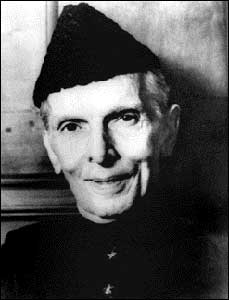
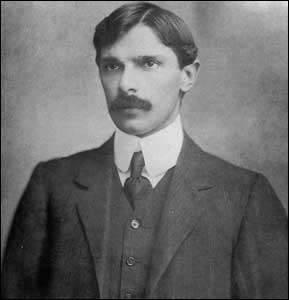
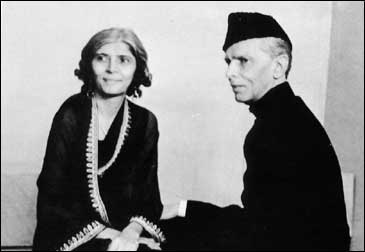
Muhammad Ali Jinnah [1876-1948]
Pakistan, one of the largest Muslim states in the world, is a living and exemplary monument of Quaid-i-Azam Muhammad Ali Jinnah. With his untiring efforts, indomitable will, and dauntless courage, he united the Indian Muslims under the banner of the Muslim League and carved out a homeland for them, despite stiff opposition from the Hindu Congress and the British Government.
Muhammad Ali Jinnah was born in Karachi on December 25, 1876. His father Jinnah Poonja was an Ismaili Khoja of Kathiawar, a prosperous business community. Muhammad Ali received his early education at the Sindh Madrasa and later at the Mission School, Karachi. He went to England for further studies in 1892 at the age of 16. In 1896, Jinnah qualified for the Bar and was called to the Bar in 1897.
Muhammad Ali Jinnah started his political career in 1906 when he attended the Calcutta session of the All India National Congress in the capacity of Private Secretary to the President of the Congress. In 1910, he was elected to the Imperial Legislative Council. He sponsored the Waqf Validating Bill, which brought him in touch with other Muslim leaders. In March 1913, Jinnah joined the All India Muslim League.
As a member of the Muslim League, Jinnah began to work for Hindu-Muslim unity. In 1917, the annual sessions of both the Congress and the League were held at Lucknow. The League session was presided over by Muhammad Ali Jinnah. It marked the culmination of his efforts towards Hindu-Muslim unity. Here, both the League and the Congress adopted a scheme of reforms known as the Lucknow Pact.
On April 19, 1918, Jinnah married Rutanbai. Their daughter, Dina was born a year later. In 1919, Jinnah resigned from his membership of the Imperial Legislative Council as protest against the “Rowlatt Act”.
Until the publication of Nehru Report, Jinnah continued his efforts for Hindu-Muslim unity. The Nehru Report, published in 1928, was severely criticized by all sections of the Muslim community. In December 1928, the National Convention was called to consider the Report. Jinnah proposed some amendments, but they were all rejected. He finally parted ways with the Congress.
In 1929, Jinnah presented his famous Fourteen Points in response to the Nehru Report. When he returned from England, he reorganized the Muslim League. In 1934, he was elected as its permanent president.
The Provincial Assembly elections of 1937 swept the Congress to power in eight provinces. After almost two years of oppressive rule, Muslims under the leadership of Jinnah, celebrated the Day of Deliverance at the end of Congress rule.
The Muslim League held its annual session at Lahore in March 1940. This was presided over by Quaid-i-Azam. The demand for Pakistan was formally put forward here. This goal was realized on August 14, 1947. Quaid-i-Azam Muhammad Ali Jinnah was appointed as its first Governor General.
The establishment of Pakistan brought even greater responsibilities for Jinnah. The refugee problem, the withholding of Pakistani assets by India, and the Kashmir problem were a real test for the Quaid. However, his indomitable will prevailed. He worked out a sound economic policy, established an independent currency and the State Bank for Pakistan. He chose Karachi as the federal capital.
However, he did not live long to witness the progress of the state that he had founded. On September 11, 1948, he died after a protracted illness at Karachi. He was buried in Karachi that witnessed the entire nation mourning over an irreparable loss.
Re: Significant / Prominent Personalities in Indo-Pak History..
Dr. Allama Muhammad Iqbal [1877-1938]
Allama Iqbal, great poet-philosopher and active political leader, was born at Sialkot, Punjab, in 1877. He descended from a family of Kashmiri Brahmins, who had embraced Islam about 300 years earlier.
Iqbal received his early education in the traditional maktab. Later he joined the Sialkot Mission School, from where he passed his matriculation examination. In 1897, he obtained his Bachelor of Arts Degree from Government College, Lahore. Two years later, he secured his Masters Degree and was appointed in the Oriental College, Lahore, as a lecturer of history, philosophy and English. He later proceeded to Europe for higher studies. Having obtained a degree at Cambridge, he secured his doctorate at Munich and finally qualified as a barrister.
He returned to India in 1908. Besides teaching and practicing law, Iqbal continued to write poetry. He resigned from government service in 1911 and took up the task of propagating individual thinking among the Muslims through his poetry.
By 1928, his reputation as a great Muslim philosopher was solidly established and he was invited to deliver lectures at Hyderabad, Aligarh and Madras. These series of lectures were later published as a book “The Reconstruction of Religious Thought in Islam”. In 1930, Iqbal was invited to preside over the open session of the Muslim League at Allahabad. In his historic Allahabad Address, Iqbal visualized an independent and sovereign state for the Muslims of North-Western India. In 1932, Iqbal came to England as a Muslim delegate to the Third Round Table Conference.
In later years, when the Quaid had left India and was residing in England, Allama Iqbal wrote to him conveying to him his personal views on political problems and state of affairs of the Indian Muslims, and also persuading him to come back. These letters are dated from June 1936 to November 1937. This series of correspondence is now a part of important historic documents concerning Pakistan’s struggle for freedom.
On April 21, 1938, the great Muslim poet-philosopher and champion of the Muslim cause, passed away. He lies buried next to the Badshahi Mosque in Lahore.
Re: Significant / Prominent Personalities in Indo-Pak History..
my cousin’s father worked with A P J Abdul kalam, I’ll ask at which company but i thought it was incredible when she told me
how true is benazir’s neice’s book when she talks about her aunt benazir, she didn’t have a very good opinion of her as a politician and in relation to her father’s death.
Re: Significant / Prominent Personalities in Indo-Pak History..
Dina daughter of late Mohammed Ali Jinnah was born in London shortly after midnight on the morning of August 15, 1919. As Stanley Wolpert’s Jinnah of Pakistan records: “Oddly enough, precisely twenty-eight years to the day and hour before the birth of Jinnah’s other offspring, Pakistan”. Her premature arrival was unexpected—her parents were at the theatre, but “were obliged to leave their box hurriedly.”
According to Wolpert, referring to Jinnah’s time in London in 1930-33, “Dina was [Jinnah’s] sole comfort, but Dina was away at school most of the time and home only for brief holidays. She was a dark-eyed beauty, lithe and winsome. She had her mother’s smile and was pert or petulant as only an adored, pampered daughter could be to her doting father. He had two dogs, one formidable black Doberman, the other a white West Highland Terrier”.
In November 1932, Jinnah read H. C. Armstrong’s biography of Kemal Atatürk, Grey Wolf, and seemed to have found his own reflection in the story of Turkey’s great modernist leader. It was all he talked about for a while at home, even to Dina, who consequently nicknamed him ‘Grey Wolf’. Being only thirteen, her way of cajolingly pestering him to take her to High Road to see Punch and Judy was, “Come on, Grey Wolf, take me to a pantomime; after all, I am on my holidays.” [Wolpert]
Jinnah raised his daughter as a Muslim, according to Jinnah’s chauffeur Bradbury, Jinnah asked his sister, Fatima, “to teach her niece, Dina (Jinnah’s only daughter) about Islam and The Holy Qur’an”.
The rift with her father
Dina’s relationship with her father became strained when Dina expressed her desire to marry a Parsi-born Indian Neville Wadia. Jinnah, a Muslim, tried to dissuade her, but failed. Mahommedali Currim Chagla, who was Jinnah’s assistant at the time, recalls: “Jinnah, in his usual imperious manner, told her that there were millions of Muslim boys in India, and she could have anyone she chose. Reminding her father that his wife (Dina’s mother Rattanbai), had also been a non-Muslim, the young lady replied: ‘Father, there were millions of Muslim girls in India. Why did you not marry one of them?’ And he replied that, ‘she became a Muslim’”.
It is known that when Dina married Neville, Jinnah said to her that she was not his daughter any more. Jinnah disowned her and the father-daughter relationship became extremely formal after she married. They did correspond, but he addressed her formally as ‘Mrs. Wadia’. Dina and Neville lived in Mumbai and had two children, a boy and a girl. Dina’s son Nusli Wadia became a Christian, but converted back to Zoroastrianism and settled in the industrially wealthy Parsi community of Mumbai. Dina did not travel to Pakistan until her father’s funeral in Karachi in September 1948.
The Jinnah mansion dispute
After Jinnah returned to Mumbai from England to take charge of the Muslim League, he built himself a palatial mansion in Mumbai, which became his residence during the politically momentous decade preceding the creation of Pakistan. The house was designed by Claude Batley, a British architect, and was built in 1936 at a total cost of Rs. 200,000/-. The 2.5 acre (10,000 m²) property, “South Court”, overlooking the sea and located at 2, Bhausaheb Hirey Marg (then Mount Pleasant Road), Malabar Hill, is in Mumbai’s most expensive real estate. In 1948, it was leased to the British Deputy High Commission which occupied it till 1982.
Successive Pakistani governments have often expressed deep interest in acquiring the property for sentimental reasons. During his visit to India, President Pervez Musharraf had renewed Pakistan’s claim to the house which the president had suggested to Indian Prime Minister Atal Behari Vajpayee should be given to Pakistan so that it could be turned into a consulate.
However, this came to naught: Dina Wadia (who lives in New York City), the disowned daughter of Jinnah, wrote to the Indian prime minister demanding that the house on the Malabar Hill, now worth $60 million, be handed over to her.
Present times
In March 2004, Dina came to Lahore, Pakistan to watch a cricket match between Pakistan and India. She considered “cricket diplomacy” to be an enthralling dimension that illustrated an entirely new phase in relations between India and Pakistan. But she and her son Nusli Wadia chose not to share their thoughts with the public on what was certainly a highly emotional encounter. Dina had not travelled to Pakistan since her father’s funeral in September 1948. A great sense of drama was embedded in an old woman’s visit, as a foreigner, to a country that was founded by her father.
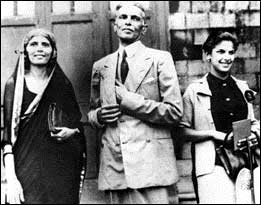
Dina along with her son, Nusli Wadia and grandsons Ness Wadia and Jehangir Wadia visited the mausoleum of her father to pay homage. She also visited museum located within premises of the mausoleum and saw the articles used by her illustrious father. In the visitors’ book, Dina wrote: “This has been very sad and wonderful for me. May his dream for Pakistan come true.” This would appear to be a very appropriate summation of a life-experience that is essentially inexplicable. Reports said that she asked for copies of three pictures she saw in the mausoleum’s antiquities room. In one picture, she is standing with her father and aunt, Fatima Jinnah. The other is a painting of her mother, Rattanbai Petit. In the third, her father is dictating a letter, showing, in a sense, Mohammad Ali Jinnah’s political persona. Recently she has been involved in litigation regarding Jinnah House claiming that Hindu Law is applicable to Jinnah as he was a Khoja Shia.
Re: Significant / Prominent Personalities in Indo-Pak History..
“Thou didst create the night, but I made the lamp. Thou didst create clay, but I made the cup. Thou didst create the deserts, mountains and forests, I produced the orchards, gardens and groves. It is I who made the glass out of stone, and it is I who turn a poison into an antidote.”
Iqbal
Re: Significant / Prominent Personalities in Indo-Pak History..
Dr. Hakim Ajmal Khan
Dr. Hakim Ajmal Khan was a noted Indian freedom fighter, renowned physician and educationalist. He was the founder of the Jamia Millia Islamia in Delhi. Hakim Ajmal Khan was born in 1863 in Delhi. His family, a distinguished line of physicians descended from the army of Babur, the founder of the Mughal Empire in India. Khan studied the Qur’an and traditional Islamic knowledge, before studying medicine at home, under the tutelage of his relatives. After launching himself in practise, Khan was appointed chief physician to the Nawab of Rampur from 1892 to 1902. In Rampur he met Syed Ahmed Khan and was appointed a trustee of the Aligarh college, now the Aligarh Muslim University.
Hakim Ajmal Khan took much interest in the expansion and development of the indigenous system of medicine, Tibb-i-Yunani, or Unani. Khan’s family established the Tibbiya school in Delhi, in order to expand the research and practise of Unani. In recognition of his services in this field the Government of India conferred on him, in 1907 the title of ‘Haziq-ul-Mulk’. But in 1910, Dr. Khan was organizing Indian physicians in protest of a Government decision to revoke official recongition for the practioners of Indian systems of medicine, of Unani and Ayurveda. Dr. Khan’s involvement in politics began with writing for the Urdu weekly ‘Akmal-ul-Akhbar’, which was founded in 1865-70 and was run by his family. Dr. Khan was in the deputation of Muslims that met the Viceroy of India in Shimla in 1906, presenting him a memorandum on behalf of the community, and in 1907 was present in Dhaka where the All India Muslim League was created. Dr. Khan also backed the British during World War I, encouraging Indians to support the government, but the situation changed with the entry of Turkey. Upon the arrest of many Muslim leaders, Dr. Khan came to Mahatma Gandhi for support, who joined Khan and other Muslim leaders like Maulana Azad, Maulana Mohammad Ali and Maulana Shaukat Ali in the Khilafat movement. Dr. Khan resigned from the AMU when the authorities refused to endorse or participate in the Non-Cooperation Movement launched by Mahatma Gandhi and the Indian National Congress. He was elected the President of the Congress in 1921, and fiercely condemned the Amritsar Massacre and the British response to the Khilafat. He was imprisoned for many months by police authorities. Dr. Khan had left the AMU owing to its historic resistance to the Indian National Congress. Along with many prominent Muslim nationalists like Dr. Mukhtar Ahmed Ansari, he laid the foundations of the Jamia Millia Islamia (Islamic National University) in Aligarh in 1920, in response to Mahatma Gandhi’s call for Indians to boycott government institutions. The JMI grew into a prominent and prestigious university, and was moved to Delhi, where it stands today. Dr. Khan served as its first Chancellor, and was a key patron of the institution.
Dr. Khan died of heart problems on December 29, 1927. Dr. Khan had renounced his government title, and many of his Indian fans awarded him the title of ‘Masih-ul-Mulk’ (Healer of the Nation). He was succeeded in the position of JMI Chancellor by Dr. Mukhtar Ahmed Ansari.

 :k:
:k: