S&P Follows Moody’s to Raise Pakistan Outlook:Bloomberg

Another feather in the cap of economic managers of Pak … first Economist report and now S&P raised credit rating outlook from stable to positive

S&P Follows Moody’s to Raise Pakistan Outlook as Growth Quickens

by Faseeh Mangi

12:04 AM PDT
May 5, 2015

Standard & Poor’s raised Pakistan’s credit rating outlook to positive from stable, as lower energy costs and an IMF loan boost growth and improve finances.

“The positive outlook reflects our expectations of Pakistan’s improved economic growth prospects, fiscal and external performance, and the supportive relationship of external donors over the next 12 months,” the company said in a statement on Tuesday.

It affirmed its B- rating, which is among the so-called junk grades, and raised the 2015-2017 average growth projection to 4.6 percent from 3.8 percent. Risks include higher oil prices, weakness in key trading partners and violence, S&P said.

The move follows a similar step by Moody’s Investors Service in March as Prime Minister Nawaz Sharif looks to resolve Pakistan’s crippling power shortages and boost investment. The nation’s foreign exchange reserves have almost doubled to $12.6 billion with the help of an International Monetary Fund loan and its stocks are among Asia’s best performers this quarter.

“Foreign inflows can be expected in the country and more dollars would mean more economic stability,” Saad Khan, an economist at Arif Habib Ltd. said by phone from Karachi after the upgrade.

The benchmark KSE 100 index has risen** 10.7 percent **this quarter, trailing only Chinese and Hong Kong equities, according to data compiled by Bloomberg. The gauge fell 0.8 percent as of 12:24 p.m. in Karachi on Tuesday and Pakistan’s rupee was little changed.
**

China Pledge**

China pledged $45 billion for roads, ports and power plants when President Xi Jinping visited Pakistan last month. The planned investment, 28 times more than the foreign direct investment Pakistan received in year ended June, will spur investment activity and help ease the country’s growing energy shortage, Moody’s said in a report on Monday.

Pakistan took a $6.6 billion loan from the IMF in 2013 to avert a balance-of-payments crisis and has cleared six program reviews. Oil prices have fallen 38 percent over the past year, lowering Pakistan’s import bill, easing price pressures and giving the central bank room to cut interest rates.

S&P forecasts Pakistan will report an average budget deficit of **3.5 percent of gross domestic product **during **2016-2019 with interest costs falling to about 25.5 percent of revenues from an estimated 30.6 percent in 2015.
**
Inflation is expected to average 4.8 percent over 2015-2019.

http://www.bloomberg.com/news/articles/2015-05-05/pakistan-outlook-upgraded-at-s-p-as-oil-imf-loan-boost-economy

Re: S&P Follows Moody’s to Raise Pakistan Outlook:Bloomberg

Does that mean govt is going to take further more loans? :bummer:

Re: S&P Follows Moody’s to Raise Pakistan Outlook:Bloomberg

Good for Pakistan, good job so far by govt :k:

True, but that would also means loans will be with relatively easier terms and also investors will have some confidence with these reports.

Re: S&P Follows Moody’s to Raise Pakistan Outlook:Bloomberg

Now this is a better news.. hoping the statistician is not the PM’s personally paid employee.. :chai:

Pakistan inflation rate falls to 2.11 per cent in April on year - Pakistan - DAWN.COM

Pakistan inflation rate falls to 2.11 per cent in April on yearDAWN.COM | REUTERS — UPDATED a day ago

WHATSAPP

[TABLE=“class: media media–stretch one-whole palm–one-whole, width: 698”]

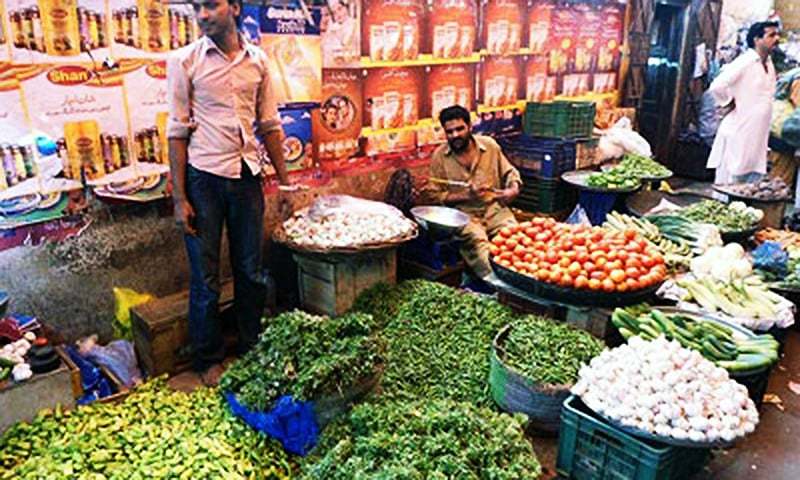
On a month-on-month basis, prices rose 1.32 per cent in April over March. — File photo by Miqdad Sibtain and Anika Dyer

ISLAMABAD: Pakistan’s annual inflation rate fell to 2.11 per cent in April from 2.49 per cent in March, the Pakistan Bureau of Statistics said on Monday.
On a month-on-month basis, prices rose 1.32 per cent in April over March.
The average annual inflation rate for July through to April was 4.81 per cent.
“If the price of oil doesn’t increase again and there are no other outliers or unexpected incidents, we expect that inflation will stay in this range,” said the bureau’s chief statistician, Asif Bajwa.
Read: Inflation at lowest since Sept 2003
Inflation has been on an 11-year low owing to various factors including decline in global oil prices and its impact on Pakistan and the State Bank of Pakistan cutting discount rate by 200 basis points since October 2014.
Falling oil prices decrease the marginal cost of production for firms which in return encourages firms to increase their output, capital and hire more labour.
The developments have resulted in a significant upsurge in the country’s business and investor’s confidence.
The International Monetary Fund had also predicted that the Average inflation will ease to below 8pc in fiscal year 2014-15 and fall further thereafter, as inflation expectations will be anchored by tight monetary policy and sustainable fiscal policy.
Jeffrey Franks, the IMF’s outgoing mission chief for Pakistan, had said last month: “The economy grew about 4 per cent last year, and we’re expecting a similar figure this year. That’s a good performance considering the country was carrying out major fiscal consolidation.”
“But it’s not enough to substantially improve income levels because of the high population growth rate,” he added.
Understanding inflation rate numbersThe inflation rate for the current fiscal year is 4.8% with the rate in April 2015 reported at 2.1 per cent as compared to April 2014.
When inflation rates fall it does not mean that commodity prices are falling alongside, it rather shows that the pace of increase in prices is less than previously. Therefore, in Pakistan prices are still increasing but the rate of increase is not as steep as before.
This time around, a combination of low fuel prices, close monitoring of cash flow by the State Bank of Pakistan and better supply position of essential commodities due to good crop and limited scope of export (on account of depressed international commodity market) have contributed to bring the inflation rate down to an 11-year-low in Pakistan.
The independent business association (OICCI, ABC, etc.), however, consider the current inflation rate around 10% on the basis of their own calculations of cost of living in the country. They concede that inflation has indeed eased as according to their projections it was around 13% last year.
Experts suspect creative engineering of information by the government to arrive at key data that projects the government and its policies in a positive light. They hint at the choice of items in the consumer basket and the base year used by the Statistical Bureau of Statistics to get politically desired statistics.
With oil prices crawling up, prices in the local market may start rising at a greater pace over the remaining two months of the current fiscal year.