Please share books (new or old) review here.
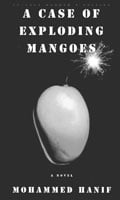
The Case of Exploding Mangoes
Author
Muhammad Hanif
Review: Arif Waqar
Joseph Heller, the famous author of the legendary ‘Catch 22’ was once asked by a reporter, “how come in all these years you never again wrote anything as good as Catch-22.”
“Did any body else?” came the rebuttal from the author. The reporter had no answer.
But this conversation took place years ago; had it happened today, the reporter would have probably said "Of course Mr. Heller, some body finally did it, not in Europe or America but in an unlikely country called Pakistan, please read – ‘A case of Exploding Mangoes’.
Yes, in its wit and wisdom it is potentially a Catch 22, Pakistani style, but the similarity ends here
because in terms of its time, scope and purpose, Mohammad Hanif’s novel has much more to it and certainly falls in a different category. Heller’s book has the anti-war rhetoric of the 1950s; it is a wild protest on stupidity of war and, in general, on the absurdity of life itself. Hanif’s book, on the other hand, is a warm and affectionate tribute to life and a smiling glance at death.
‘A case of Exploding Mangoes’ is a hilarious comedy on the military culture of Pakistan and a biting satire on American intervention in her affairs. There’s no plot as such in the Heller book but Hanif’s novel has a plot as compact and taut as that of a suspense thriller or a whodunit.
The time is summer 1988 when Soviets are vacating their last bunkers in Afghanistan and Mujahideen are at the verge of a hard-earned victory.
In Pakistan, army generals are making sure that despite the Soviet wind-up, the unhindered supply of American arms, and more importantly US dollars, continues for as long as possible.
Taking groups of newly trained guerrillas across the border into Afghanistan, and bringing back crates full of dollars, is a high risk assignment but the Pakistani top brass has full confidence in Colonel Shigri, who’s been doing the nasty job to their complete satisfaction until one evening when the conscience-stricken colonel thinks enough is enough. The very next morning he’s found hanging from the ceiling fan of his room.
His young son Ali Shigri can not believe for a moment that it was a suicide, as the military chiefs would lead him to believe. A senior cadet at the Air Force Academy, Ali Shigri has now a definite mission before him: to avenge his father’s cruel murder. He chalks out an ambitious plan to eliminate the kingpin who, according to the young cadet, is the root cause of all troubles.
While half the story is revealed through Ali Shigri’s brash but world-weary voice, the other half is exposed by an omniscient narrator who has the inherent power to take us to the remotest quarters of the Army House in Islamabad, where we have the unique privilege to enter Zia-ul-Haq’s bedroom, the First Lady’s kitchen, the president’s guest room, his back lawn and even his bathroom. We are at liberty to eavesdrop on his conversation with his security chief, who’s assuring the frightened president that his life is not in danger. We see the browbeaten Zia-ul-Haq standing timidly before the First Lady who is scolding him for being a tit-ogler.
The man we meet in the Army House of Islamabad is not quite the Zia-ul-Haq our media presented to us in the 1980s – a modest soldier of Allah, quoting generously from the holy Quran in his public speeches, determined to make Pakistan a model Islamic state and a beacon of light for the whole Islamic world.
What we see instead is a man trembling with fear of an imminent death, using the Holy Book as an instrument of augury – opening and closing it at random, in a desperate attempt to find a good omen. A henpecked husband, a spineless army chief and a caricature of a president whose only obsession is to somehow become a life president of his country.
Of all the leaders in the world, his ideal is President Ceausescu of Romania who’s been ruling his country for 23 long years. Zia-ul-Haq envies him and, during an international conference, tries to learn the tricks of the trade from him in a secretive meeting. His mentor advises him never to believe his intelligence agencies and contact his people directly.
On his return Zia-ul-Haq fires his Intelligence chief and decides to mingle with the masses to get first hand information. The result is unpredictably hilarious!
Parallel to this lighter vein of events is a chain of serious, fast-paced developments, each pushing Zia-ul-Haq to his final destiny in a grotesque manner. Every potential assassin of the president has a strong reason for his action. Ali Shigri wants to avenge his father’s death, the ex-Intelligence chief is dying to get his unlimited powers back. He can perhaps order the ventilation system of the C-130 to be contaminated with a poisonous gas. The new Intelligence chief is already entangled in an arms deal scandal, possibly involving huge kickbacks. He won’t fly with the President; his own Cessna awaits him at the same airport. His eyes are betraying his deadly plan, that’s why he has covered them behind his dark Ray Ban glasses.
Among the president’s beloved masses, is a blind woman who is accused of fornication and waiting for her stoning to death sentence in a prison cell, after her final appeal has been rejected by the highest authority – the President of Pakistan. She’s been feeding birds in the courtyard of her prison and among the beneficiaries is a crow who would take her curse to a place hundreds of miles away where a C-130 is taking off with the top military brass of the country in it.
The rest is history, but let's not forget that it's Ali Shigri who carries a deadly warning on the tip of his sword that he wields at a parade ceremony; there's also an Arab doctor who told Zia-ul-Haq months ago that he had tape worms in his stomach that would soon eat up his liver and then his heart. As the novel reaches its explosive climax, and we keep guessing who will get to Zia first, we are sure of one thing: Pakistan's small world of fiction has found a new voice which is completely original.