May Allah bless him with Paradise and save his Pakistan and make all his dreams for Pakistan come true, amen. 

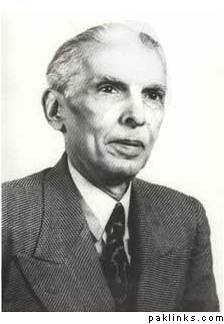
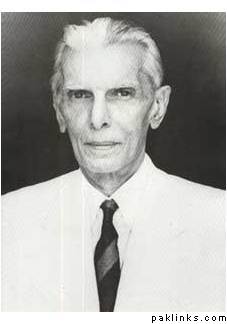
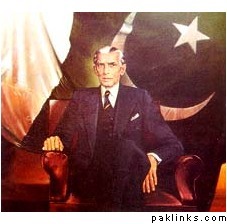
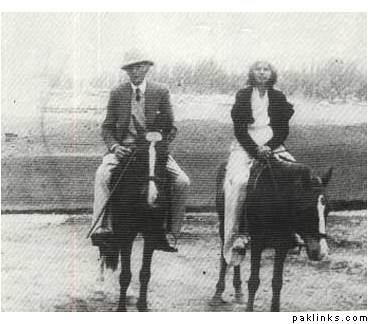
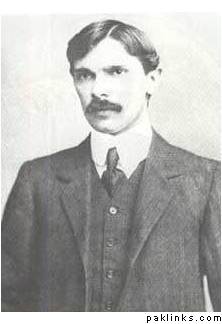
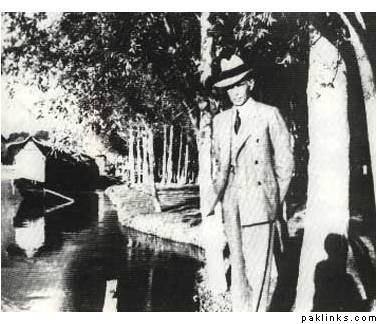
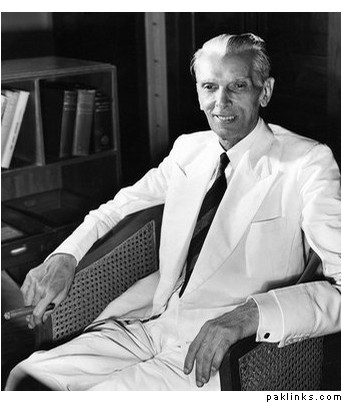
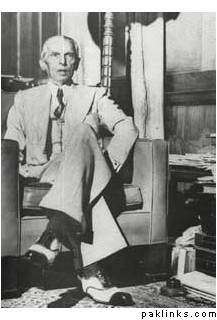
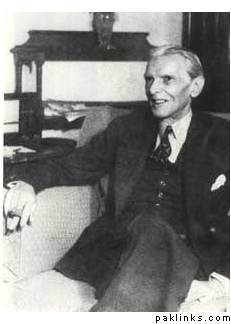
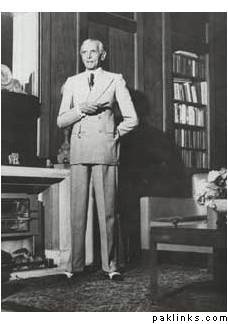
May Allah bless him with Paradise and save his Pakistan and make all his dreams for Pakistan come true, amen.
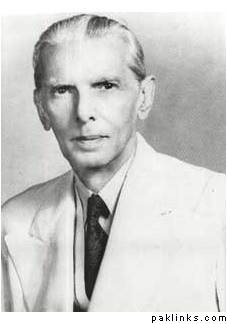
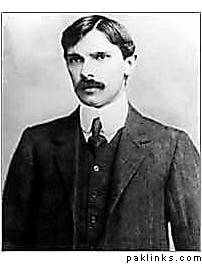
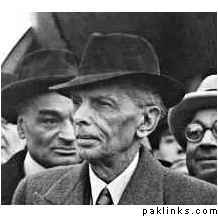
Re: Quaid-e-Azam - The Great Leader
Truely a great leader and a gentleman.
Re: Quaid-e-Azam - The Great Leader
..............................................
Re: Quaid-e-Azam - The Great Leader
One day we will Inshallah regain his dream and his Pakistan back.
Re: Quaid-e-Azam - The Great Leader
ameen:)
Re: Quaid-e-Azam - The Great Leader
Summa Ameen!
Re: Quaid-e-Azam - The Great Leader
InshAllah n ameen
He sure was a great leader.
May his soul rest in peace.
Re: Quaid-e-Azam - The Great Leader
We are paying for the consequences of not adhering to his principles of Unity, Faith and Discipline.
Re: Quaid-e-Azam - The Great Leader
Ameen. All credit to Quaid for giving us our distinct identity, we are a young nation and we will survive current obstacles and come out victorious, the vision he had will be fullfilled, inshallah.
This article was published in the Dawn Special Report on Quaid-i-Azam Muhammad Ali Jinnah’s birth anniversary on 25th December 2009 : website www.dawn.com
**Drifting from, and to — Quaid’s Pakistan?
by
Javed Jabbar
Two events occurred in December 2009 that notably slow the rapid drift from Quaid’s Pakistan. The National Finance Award of 11th December signals a new chapter in inter-provincial harmony during a period of inter-provincial discord. Then, on the darkest day of our history, 16th December, marking the disintegration in 1971 of the original Pakistan, the Supreme Court lessened the pain of memory when it rendered a landmark verdict to reject a crude attempt through the NRO to legitimize corruption, thus reinforcing one of the Quaid’s fundamental values. Yet without detracting from the significance of these two constructive developments, there remains an aura of deep uncertainty as we celebrate the founder’s birthday.
Through a prolonged, on-going catharsis that may go from 6 decades to over 10 decades, we are drifting from a Quaid’s Pakistan which never actually existed towards a Quaid’s Pakistan of the future that will, hopefully, be the practical expression of a part of his dream. The future Pakistan is likely to incorporate some elements which are good, and some not-so-good elements which emerged after the Quaid’s demise and are likely to shape our tomorrow.
In theory, the Quaid’s Pakistan is the ideal Pakistan. A place where an overwhelming majority of Muslims ensures equity for a very small number of non-Muslims (about 3% of the population). Where there is approximately equal access of all people, of all the nationalities and sub-nationalities that constitute the totality of the nation: to the basic services and opportunities for health care, water, clean air, energy, qualitative education and gainful livelihoods.
Where the State ensures effective security, law and order, justice, governance and participation in democratic processes. Where the fundamental freedoms of thought, speech, expression, worship and other individual choices are enforced. Where citizens exercise their rights and citizens also fulfil their own responsibilities.
Where there is peaceful transfer of power from one elected government to the next. Where the civil, democratic principle determines the use of executive authority. Where the military works under the discipline of the political system. Where religion serves as a source for guidance and enables new knowledge to facilitate rationality in application of original principles without religious interpretations by some being imposed on others.
Where creativity, art, culture, scholarship, sports, science and technology enhance innovation, enjoyment and productivity. Where the name of Pakistan is respected around the world for its contribution to humanity’s betterment and the health of the planet.
In the brief 13 months of the Quaid’s actual Pakistan, traumatized by the caesarean section-type implementation of its creation at only 10 weeks’ notice, (3rd June- 14th August 1947) it was not possible for the fledgling State or the Quaid –– or even reasonable to expect –– to achieve a single one of the above elements, in part or in whole. The sheer scale, variety and complexity of problems were too sudden and intense to be quickly resolved.
Some actions, including a few by the Quaid-i-Azam himself, as well-meant as they were, initiated divisive and authoritarian trends. As a human being, the Quaid was also capable of making decisions which, in retrospect, were not quite right. To name 3 : his statement in East Pakistan on 21st March 1948 that Urdu would be the sole State language. The dismissal of Provincial Governments in NWFP and Sindh. The tolerance of General Gracey’s refusal to move troops to Kashmir
The creation of Pakistan was a political miracle virtually single-handedly forged by Mr. Jinnah. His qualities of personal integrity, unshakeable determination and progressive modernity are a profound legacy of principles and actions worth emulation by each Pakistani. He has left behind him a large number of speeches and statements that powerfully express the rationale of a separate homeland for Muslim nationalism in British-occupied India.
Yet we are without the benefit of learning from him at sustained, reflective length an in-depth examination of how to prevent Muslim nationalism from degenerating into a creeping religiosity. This latter ailment, on the one hand, deters full-blooded intellectual development in Islam through “ijtehaad”. Books and interpretations of the Holy Quran and the Prophet’s life (peace be upon him) written in the pre-medieval and medieval times hundreds of years ago are still used by the religious establishment as the exclusive aids to interpretation. Whereas knowledge has achieved phenomenal growth in the past 100 years in particular. So instead of encouraging a humane spirituality that is inclusive and respectful of all humanity and all knowledge, we are increasingly subject to self-appointed “priests” who promote a showy, shallow piety. They exclude even other co-religionist Muslim sects from being acknowledged as human, or Muslim. Fortunately, Parliament, Government, the Council of Islamic Ideology and some other elements sometimes conduct a counter-vailing “ijtehaad” which partially arrests the primitive tendencies of the “priests”.
On the other hand, the Muslim nationalism of Mr Jinnah has, for a variety of reasons, regressed into narrow provincialism. Neither before the birth of the country nor in the 13 months he lived after its birth did Mr. Jinnah develop a comprehensive and detailed structure for how Muslim nationalism could grow into a stable system of political governance. He rightly asked the Constituent Assembly to do so. And it was not able to do that during his life-time. Neither was he able to write a book and present his grand design in depth. He was critically ill and weakened yet courageously faced formidable odds that would have defeated a healthy young person.
Leaders are not obligated to write books. But Pakistan is the only country other than the Vatican (a ceremonial micro- state) and Israel (a territorially small but militarily strong power fully supported by the USA and allies) which were created on the basis of religious identity. The Vatican and Israel both had rich patrons. They also had centuries of written history potentially usable for the context of independent Statehood. The prior separation of State and Church led directly to the Roman Catholic retreat into the Vatican. In Israel, though some sects of Judaism oppose the creation of Israel, the Jewish faith and Zionism together use a vigorous democracy to deflect the religious bias of the State.
Pakistan had a very short genesis both as a name and as the concept for an independent State. K.K. Aziz, the late great Pakistani historian who passed away in July 2009 in his book: “A history of the idea of Pakistan” (Vanguard Books, Lahore, 1987 & 1997) identified as many as 170 landmarks in the history of the idea. Ironically, they start on 24th June 1858 with a speech made in the House of Commons in London by MP John Bright who called for “..5 or 6 large (Muslim) presidencies with complete autonomy ultimately becoming independent..” And the landmarks end with the Lahore Resolution of 1940. In which the word “Pakistan” did not appear even though the word, spelt without the “i”, as “Pakstan” had already been invented and launched by Chaudhry Rehmat Ali on 28 January 1933.
Allama Iqbal, the poet-philosopher of Pakistan never used the word “Pakistan” in his writings even though he lived for over 5 years after it was introduced into public discourse. Nor did Mr. Jinnah and the Muslim League use the word “Pakistan” regularly till some time after the Lahore Resolution. These 2 giants were visionary individuals responsible for promoting Muslim identity in South Asia but there was a very short, uncertain run-up to an independent entity with the same name.
Though the idea that eventually became the idea of Pakistan evolved over a period of 89 years, the actual formation of Pakistan comprising East and West Pakistan posed unprecedented conceptual and operational challenges for creating a stable political order.
The exact territorial composition of the new country remained uncertain up to just 8 months before Independence. Pakistan’s territory was not even fully demarcated at the time of its birth. For example, the Radcliffe Award precisely marking the partition of Punjab came after 14th August 1947 ! And if we take account of Kashmir, neither at birth nor even now, 62 years later, have the original physical features of Mr. Jinnah’s Pakistan been fully delineated. The Line of Control remains, for Pakistan, a temporary arrangement reluctantly accepted. No wonder Mr. Jinnah himself called its form: “a moth-eaten” Pakistan.
It was like a baby being born with incomplete facial and physical features. As regards the flesh inside the outline, just more than half the body left us in 1971 when East Pakistan became Bangladesh. And since then, over the past 38 years, the remaining flesh is growing in directions quite different from the features the original flesh tried to portray. Some bizarre new anatomical parts have evolved that threaten to disfigure the soul and body of Pakistan.
Despite 9 decades of evolution as an idea, Pakistan as a State and nation was almost an “overnight” State and “overnight” nation. Under the Cabinet Mission Plan which survived up to January 1947, Mr. Jinnah was willing to accept a confederated Indian Union.
As late as May 1947, Mr. Jinnah addressed a strongly-worded letter to the British Cabinet urging it to prevent the proposed partition of Punjab and Bengal. If the 2 Muslim-majority provinces in their undivided form had retained large non-Muslim populations within Pakistan, small religious Muslim political parties could not have gradually and incrementally blackmailed the timid leadership that succeeded the Quaid into distorting the State’s secular orientation. These religious parties used the one-sided composition of the population to promote religious chauvinism. A pre-dominantly Sufi and secular-minded Muslim majority was betrayed at the hands of obscurantist and retrogressive elements. We could have become a truly secular republic in the best Muslim sense of being secular. i.e. respectful of all religions, with the State using the principles of Islam for guidance in law-making without excluding the lessons to be learnt from new knowledge, from new conditions and experience, from other religions and sources for the benefit of all citizens. After all, it is Allama Iqbal who said in his lectures on “Reconstruction of Religious Thought in Islam” in about 1920: “All that is secular is deeply sacred at the roots of its being”.
As recently as 9th December 2009, during a joint sitting of Parliament to discuss the Balochistan package, this writer heard and saw a serving Muslim Minister of State from Balochistan call for the replacement of the title of the State from being an “Islamic Republic” to becoming an authentic “Peoples’ Republic of Pakistan”. The Minister of State did not refer to Mr. Jinnah but was closer to the founder’s vision than he may have imagined.
So we are drifting from an ideal version of Pakistan that was never fully spelt out to another version shaped by the hard realities of life and actual experience. We are adrift because, in any case, Mr. Jinnah’s Pakistan was only a vision. And when one says “only” it is by no means to devalue the nobility of the vision. It is to say that Mr. Jinnah’s Pakistan was an outline, not defined and described in detail.
What we fondly call “Quaid’s Pakistan” existed in the mind of one man, and in the hearts of millions. It did not exist in external, objective reality. But now the eventual destination of our drift is somewhat, but not wholly closer to the Pakistan that the Quaid visualised.
For better or for worse, some themes of duality are already shaping the emerging Pakistan. These can only be stated briefly in the space of a newspaper article. There are several other determinant themes at work, better stated on another occasion.
One is a new assertion of the nexus between territoriality and nationality. At its most basic level, this is evident in the stridency of the Baloch and Sindh nationalist parties. At a secondary level, it is visible in the ostentatious participation of post-1947 migrants in the celebration of Sindhi culture on 6th December 2009. At a formal level, the State itself has ended the nebulous status of the Northern Areas and introduced self-governance to Gilgit-Baltistan, thereby “adding” this territory to Pakistan. At a national level, there is a composite identity of “ Pakistaniyat” that binds territory and nationality which is best celebrated when a Pakistani cricket team wins against an Indian team.
A second theme of the new Pakistan is: co-existence with corruption, almost as an undeniable, unavoidable fact of life. The Supreme Court and the Federal and the Provincial Governments in the NRO case and the Bank of Punjab scam took a commendable stand to oppose the sanctification of corruption. But on a de facto basis, far from castigating corruption with the relentless passion of Mr. Jinnah, the present democratic system attempts to merely contain the fall-out from corruption.
In one sense, there is a sublimation of corruption by the people themselves and their elected representatives when they elect to some of the highest public offices, individuals unable to credibly explain the accumulation of vast wealth.
The third theme of the emerging Pakistan is the duality of a functioning system and a partly dysfunctional State. The functioning system is evident in the “other” Pakistan, “other” than the country in which there are food shortages, suicide bombings, mis-governance, poor public health, illiteracy, poverty and acrimony.
This “other” Pakistan is a throbbing, working, vibrant country, in the streets of large cities and in the lush, rolling fields of the rural areas, continuing to produce goods and services despite the paucity of water, the de-gradation of the environment, the load-shedding and the congestion of traffic.
The trains run, the planes fly, the sea-ports operate, the highways hum, the media proliferate, the banks and most businesses make profit every day. Though an under- performing economy, it is just about able to support the rate of population growth, without descending into famine and mass starvation. Yet this is also a State unable to enforce the law equitably and efficiently, in which crime and violence erupt regularly in several parts, which has only belatedly woken up to the threats from religious extremism and terrorism.
The fourth theme is a wishful new integrative ethnicity of Pakistani identity. Historically, this has partly in existed in the nexus between, say, many Baloch tribes who have throughout history settled in different parts of Sindh and Punjab. Or the mingling of the Seraiki-speaking people, originally from southern Punjab, but also settled in parts of Sindh, NWFP and Balochistan. As inter-marriages in urban areas between different ethnicities increase in the years ahead, we will evolve, for the first time, probably in a few generations to come, a truly composite new Pakistani ethnic identity, a fitting way to erode the provincialism abhorred by Mr. Jinnah.
The fifth theme is that Pakistani people are capable of producing islands of excellence and individuals of brilliance in the midst of decay, despair or mediocrity.
One of the youngest persons in the world to become a certified Microsoft IT specialist is a school boy from Pakistan educated without a rich family’ s privileges. Some institutions both in the public and the private sectors operate high technology systems with superb efficiency. Others offer free public health services of international standard. When disasters like the 2005 earthquake occur or when hospitals need blood for the victims of bomb attacks, spontaneous public response overwhelms with generosity and compassion that would do Mr. Jinnah proud. And this, side by side with a degraded standard of public behaviour and crude traffic manners. Overseas Pakistanis excel in a wide range of professions. From within and outside Pakistan, tens of thousands of its original citizens place deposits of billions of dollars in overseas banks.
The sixth theme is how we reform all segments of our education system. The madrassahs which indoctrinate and robotize millions of minds. The government schools in most of which millions are deprived of qualitative education and facilities. (There are some remarkable exceptions eg., both civil and Armed Forces schools). The 3 kinds of private schools: one, deficient and profiteering; another, Pakistani in idiom and of a high standard; the third, cosmopolitan but Anglicized and alienated from immediate surroundings.
Pakistan’s state in 2009 epitomises our dualities. The Armed Forces engaged in bloody, over-due combat with barbarians and subversives. An intense relationship with the USA that walks the fine line between mutual dependence and mutual distrust. Festering dangers from a large neighbour with a small heart. Unpredictable eruptions of suicide bombings and blasts that kill and maim hundreds of innocents. A validly elected system in which the majority of members do not attend legislatures regularly. A uniquely twice-restored Supreme Court at the apex of a judicial system in which justice at the grass-roots is delayed and often denied. Governance and bureaucracy partly mired in bribe-taking and red tape yet placing the country far higher than India in the global “ease of doing business” index. The enormous disparity between the feudal and the peasant, the urban business baron and the young unemployed. Unresolved issues of local government, provincial autonomy and a bloated centre. There is plenty to do on the way to the Quaid’s Pakistan.
We cannot reach back into the past and expect to find a ready-made, original, pure, “Quaid’s Pakistan” that can be recovered and, after intense struggle and effort, implanted into a new century. We can only recover some principles and pointers as we pick our way through a future likely to be turbulent and unstable, yet challenging and irresistible. A future that may well see the fulfilment in flesh and bone, in body and soul, of the original ideal vision of Mr. Jinnah’s Pakistan.
Though it never existed in the past, this ideal Pakistan could be created in the future: by the actions each of us takes today and tomorrow. On a collective level, the realization of the Quaid’s dream will inevitably include elements which he did not tolerate. Even to get anywhere close to that vision will require a Great Revolution in every negative aspect of our society and state. Perhaps we are already on the way… !**
(the writer has served as Minister in three Federal Cabinets and as Senator)
Raju’s Roses Club
Live Well, Love Much, Laugh Often and Forgive Quickly
We love to receive emails
If you wish to unsubscribe then just say NO
Conversations with Jinnah?s djinn : They Call Me Muslim
From Zia Haq’s blog “They Call Me Muslim”
Conversations with Jinnah’s djinn
***Once upon a time, there was a Muslim who loved his ham and pork; seldom prayed; had raven hair and was a dandy as a movie star; took his daughter to theatres, who quoted her father as ridiculing Muslims, saying, ‘a Muslim with Rs 10 will buy a headscarf and eat biryani, but a Hindu will save it’; but who ultimately settled for a Muslim nation.
Nationalist poet Sarojini Naidu paints this picture of him:
“Tall and stately, but thin to the point of emaciation, languid and luxurious of habit, Mohammad Ali Jinnah’s attenuated form is a deceptive sheath of a spirit of exceptional vitality and endurance. Somewhat formal and fastidious, and a little aloof and imperious of manner, the calm hauteur of his accustomed reserve but masks, for those who know him, a naive and eager humanity, an intuition quick and tender as a woman’s, a humour gay and winning as a child’s. Pre-eminently rational and practical, discreet and dispassionate in his estimate and acceptance of life, the obvious sanity and serenity of his worldly wisdom effectually disguise a shy and splendid idealism which is of the very essence of the man.” (Jinnah, Pakistan and Islamic Identity, 1997, Akbar S. Ahmed, Routledge, ISBN: 0-415-14965-7)
That Jinnah, for whom religious identity was the preoccupation of jejune janabs and whose immaculate wardrobe of 200 silk ties was rivaled only by Motilal Nehru’s. That unmentionable name, one that still gives collective anathema and goes on to show how free thought is never a package deal. It does not come free with a free democracy.
Great leaders, as we know, have been men of blatant inconsistencies. Jinnah, not man enough to resist a tenderly fall at the feet of a ravishing Rattanbai (Ruttie) Petit’s feet but the lanky joist who would hold a community up.
On that side of the inevitable border, there is still nobody quite like him; on this side, he continues to be a favourite whipping boy.
As we bicker over Jinnah, we have seldom asked the most vital question. It is not what Jinnah is credited with creating that matters any more, but that what he has left — a state so weak that it would begin to crumble 60 years or so after his death. Qiad-e-Azam (Jinnah’s well-known Urdu-Arabic epithet meaning “great leader”) could not have been aware of the mess he would leave.
One thing about Jinnah and Muslims that ought to be cleared up: post-Independence Indian Muslims have largely ignored him though he strongly upheld the rights of minorities.
Birth pangs are inevitable, but here are a set of my own beliefs: that Partition could have been avoided. That Jinnah did not always have a Muslim state in mind. And as it ought to be, even now, he did look to reconcile Muslim interests in the context of Indian nationalism. And for this view, I too may have to pay a price. It is alright, as long as it is not the label of a ‘Pakistani’, without any prejudice to that country.
But regardless of all this and the price paid, it is a good thing that India was partitioned. Has anybody thought of this yet? Had it not happened, we would have ended up taking the Taliban head on, facing the world’s fiercest insurgency and possibly the ignominy of being Al-Qaeda chief Osama bin Laden’s adopted home.
It is not difficult to guess where I would have chosen to be, had I been born then. On this side. Heartland Muslims, Punjabis and Sindhis included, and tribal Afghans and Pashtuns, without any prejudice to them, have very different DNA-makes. I have never believed that turning towards Mecca for namaz makes for a Muslim monolith.
The Partition could not have been so surgical. Our roots lie strewn across the border. BJP leader L.K. Advani was born in Lahore, erstwhile Pakistani military ruler Pervez Musharraf in Delhi.
India and Pakistan have come far and fanned out into divergent political directions, though aspirations of the common man on either side may be the same: a good life or at least two square meals a day.
Jinnah may have had pulled off the great idea of a separate state but history proves that the idea of India has proved to be more viable, tenable, secure and bigger than the idea of Pakistan.
There is a problem with the study of history. Unless you are a historian yourself, you inevitably have to choose one. Having read her, met her and then interviewed her, I have relied, without any compunction, partly on history professor at Tufts University, Ayesha Jalal, a Pakistani who teaches Indian history, and partly on Harvard historian Sugata Bose.
Between them, the duo has co-authored Modern South Asia: History, Culture, Political Economy. Jalal, along with Bose and Amartya Sen, are also the main movers of Harvard University’s prestigious “South Asia Without Borders Collaborative Research Program”.
History is seldom black and white, has ample shades of grey, and ironically though cast in stone, it never makes full sense until its threads are extrapolated.
Jalal mainly emphasizes two points: Jinnah’s original intentions were not to have a separate state and two, when a separate state became inevitable, he wanted a secular Pakistan.
Jinnah’s crusade for a separate state was not merely the result of a singular need for a separate Muslim homeland. How many kinds of Muslims was he to unite? Dravidians, northeasterners, Punjabis, Gujaratis and Bengalis too. Jinnah never represented all Muslims, of this there is sufficient historical evidence.
Jalal’s book, The Sole Spokesman: Jinnah, the Muslim League and Demand for Pakistan, is a definitive work that traces the circumstances leading to Pakistan’s creation.
From being a champion of “Hindu-Muslim unity” (in Gopal Krishna Gokhale’s words) to his later-life separatist epiphanies, Jinnah did undergo a massive change of heart. What was the trigger? It was his view of Muslim political representation and the way he wanted power for minorities and his deepening suspicion of being marginalized.
Jinnah may have had his pound of flesh, but it is in India that Muslims could unite, flourish and find true cultural and political representation, despite threats from a Hindu Right. In Pakistan, the Balochis, Pashtuns, Turwalis, Kalashis, Burushos, Hindkowans, Brahuis, Kashmiris, Khowars, Ahmediyas and Shinas, and many more, are no more united than North and South Koreans.
According to Jalal, it was during the Cabinet Mission Plan of 1946 to discuss the transfer of power from the British to Indians that Jinnah’s resolve for a separate state steeled. Sugata Bose too has toed this line. (Modern South Asia, Sugata Bose and Ayesha Jalal, Routledge, 2003).
For better part of his life, Jinnah’s quest was a united India as long as he saw it capable of guaranteeing equal rights to Muslims.
The Muslim majority provinces of the northwest and northeast were to be leveraged for negotiating power. Bose and Jalal’s view is that, during discussions on the Cabinet Mission Plan, the Congress rooted for more central powers while Jinnah rooted for federalism based on grouping of states.
There was to be a three-tier arrangement: a Centre, the groups of provinces and the provinces themselves as the lowest tier. (Modern South Asia, Sugata Bose and Ayesha Jalal, Routledge, 2003).
The Congress was against this grouping and that was the ultimate trigger. For Jinnah, this was evidence that Congress was against sharing of power. This is what Jaswant Singh seems to have pointed out in his uproarious book (going by media reports, since I have not read the book yet).
Nehru was right in rooting for a more authoritarian centre. A new-born nation had to coalesce. My wishful thinking is that Jinnah ought to have looked after Muslim interests from the perspective of greater Indian nationalism. It was already a great civilizational cauldron. He got West and East Pakistan. But he got the crumbs. Limbs that are bleeding and trembling, severed from an organic whole. As we know now, it was not worth the fight.***
Re: Quaid-e-Azam - The Great Leader
All his dreams had been shattered much before his death and it went to its pinnacle in 1971 when Pakistan was broken apart by Bengalis.
Mohammad Ali Jinnah the Leader who subdued the likes of Nehru....and saw through his smoke screen!
Come forward as servants of Islam, organise the people economically, socially, educationally and politically and I am sure that you will be a power that will be accepted by everybody.
Muhammad Ali Jinnah
Expect the best, Prepare for the worst.
Muhammad Ali Jinnah
Failure is a word unknown to me.
Muhammad Ali Jinnah
Islam expect every Muslim to do this duty, and if we realise our responsibility time will come soon when we shall justify ourselves worthy of a glorious past.
Muhammad Ali Jinnah
My message to you all is of hope, courage and confidence. Let us mobilize all our resources in a systematic and organized way and tackle the grave issues that confront us with grim determination and discipline worthy of a great nation.
Muhammad Ali Jinnah
No nation can rise to the height of glory unless your women are side by side with you.
Muhammad Ali Jinnah
All his dreams had been shattered much before his death and it went to its pinnacle in 1971 when Pakistan was broken apart*** by Bengalis***.
COMPLETELY DISAGREE WITH YOU...
Perhaps you were not even born then--hence you dont know the history!
Re: Quaid-e-Azam - The Great Leader
^Haha, I agree. India and Nepal share the same majority religion. Heck they are not even separated by 2000 kms. I wonder why Nepal does not consent to becoming part of India.
Re: Quaid-e-Azam - The Great Leader
Quaid-e-Azam was indeed a great leader who almost single handedly led to Pakistan's creation, much, of course, to the dismay of millions in the sub-continent!
:D