we had a few old bandooqeN in which you had to fill the barrel with explosives [baarood] and pack it down then you would put a trigger cap and fire. it was so cumbersome so people stopped using them once they got newer version with cartridges in them [kaartoos]
btw, kartoos kin bandoN ko kahte haiN?
ek Pakistani drama dekhaa thaa jis meN ek adheR 'umr kii PaThaan laRkii apne mehmaan [potential rishta] ko deevaaroN par lagii 3 bandooqoN ke baare meN faKhriya bayaan kar rahii thii k:
is bandooq se Abba jii ne teen ek sher maaraa thaa
is waali bandooq se Abba jii ne ek bhaaloo maaraa thaa
aur, is waali bandooq se Abba jii ne 3 bhateeje maare the
imagine paThaanii accent!
we also had a chivalry set [zang aalood] at our ancestral home…i dunno hamaare aabaa o ajdaad ne us talvaaroN se makkhiyaaN maarii thiiN yaa bhateeje!!!
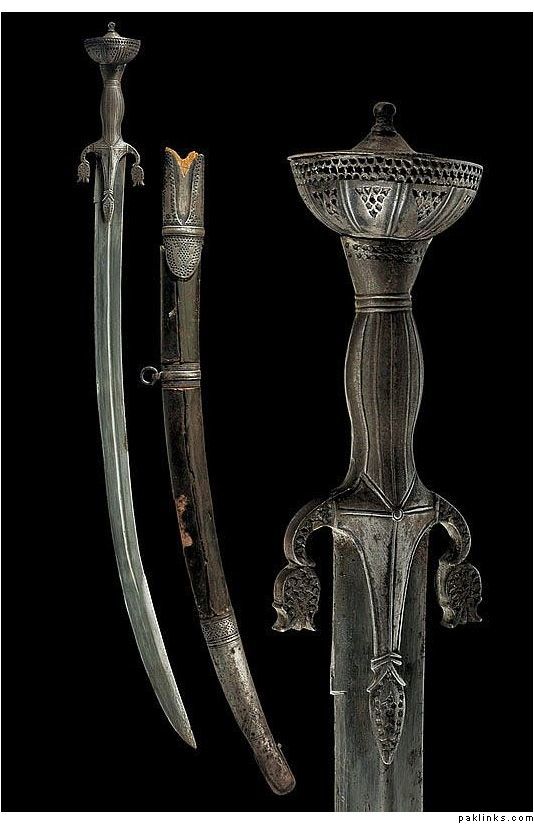
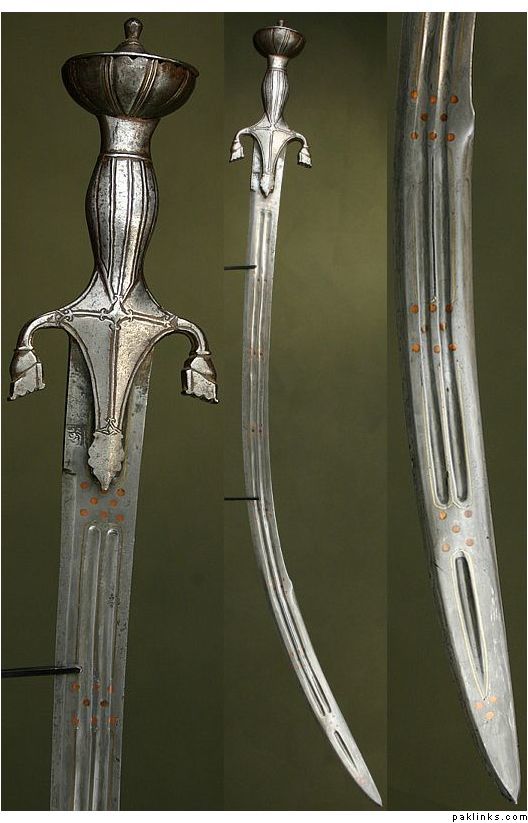
My father-in-law collects antique pulwars (the traditional sword in Afghanistan). As a wedding gift, my husband got two antique swords that had been in their family since the 1880s. We have them displayed on the wall in our house.
They’re similar to this (except that the pommel and grip were a bit more intricate):
Interesting. So how long swords were in use in Afghanistan. Afgahns and Pathans gave tough time to British and I have a feeling that they got access to guns earlier than other communities in the region.
Dakus of the past used 12-bore guns and those guns were double barreled with each barrel holding one cartridge [kaartoos in urdu]…it was good for two rounds. often Dakus carried a cartridge belt around their waist. once the belt was empty, the gun was used as a laaThii
we also called rolled copying-material as ‘kaartoos’ … when police raided those examination centres, they used to confiscate piles of ‘kaartooses’…
Interestingly, the pulwar is meant to be held with one hand. The downward pointing quillion make it easier to grip and handle with only one hand and allows for a firmer grip. The curved blade makes it easier to strike a target, even from horseback. This gave an advantage over most British blades of the time, which were straight and required one to be quite close to the target for accuracy.
It is beyond me how anyone can pick one up with only one hand though. They’re rather heavy and the blades are usually around 88cm (around 3 ft) long.
did anyone ever see a ‘GUPTI’ (Hiddi word for ‘hidden’) [a small straight sword hidden in a baton]…i’ve seen one…one of my childhood friend who turned out to be a bandit later on] used to sport one…he used to carry that with him all the time…he used to show us before he turned into a bad guy.
i made a mistake in my earlier post…it’s called Guptii and NOT Bugtii…Gupt means hidden…
…baniyas in India usually have their last name as Gupta…does it mean that they have hidden quality of trading skills? waaqe’atan, Baniya vaise baRe hii ‘chhupe rustam’ huaa karte haiN.
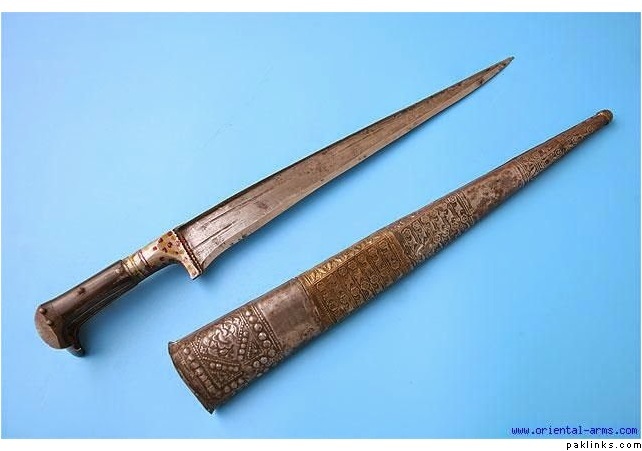
here is one:
Guptii as seen outside and beside it’s case. the case and handle is usually intricately decorated.
yeh Khabar agar shakki mizaaj Brits ko lag gaii to phir saare Londoners kii chhatriyoN ke handle kheeNch kheeNch kar dekhaa jaayegaa k aayaa yeh sab Haqeeqatan chhatriiyaaN haiN yaa in meN posheeda GuptiyaaN haiN…
Guptaa Jiis kii musiibtii aa jaayegii k iskaa to naam hii Guptii/Gupta hai!