Pre-Partition Pics of Lahore..

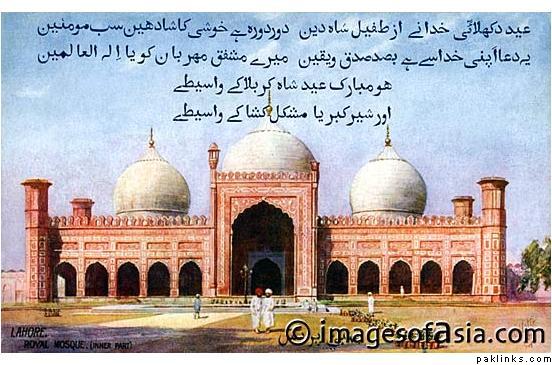
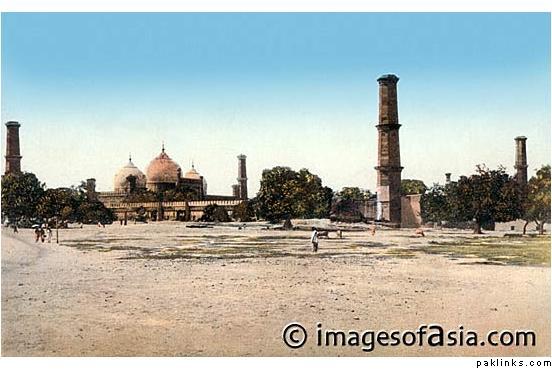
1910 - Royal Mosque (Full View)

Also known as the Badshahi mosque, it is one of the most beautiful landmarks of Lahore.

The Badshahi Mosque or the ‘Emperor’s Mosque’, was built in 1673 by the Mughal Emperor Aurangzeb in Lahore, Pakistan. It is one of the city’s major tourist attractions and epitomizes the beauty and grandeur of the Mughal times. It is the largest mosque in Pakistan and one of the largest in the world. The architecture and design of the Badshahi Masjid is closely related to the Jama Masjid in Delhi, India, which was built in 1648 by Aurangzeb’s father and predecessor, emperor Shah Jahan.

Over 150,000 people pray inside the mosque and surrounding grounds during the annual Eid festivals. Today the mosque is lit up at night, providing a spectacular view from afar.

1905 - Royal Mosque

This mosque is popularly known as the Badshahi (Royal) Mosque.

This Tuck’s postcard was overprinted with Eid greetings in Urdu from the Bombay Press. This shows how cards published for the English-speaking market could be re-appropriated by local manufacturers for their own audiences.

Royal Mosque (Inner Part) Lahore. The mosque of red sandstone was built by Aurangazeb in the 17th century, with the funds derived from the confiscated estates of his eldest brother, whom he put to death: it has consequently never been popular as a place of prayer. The cupolas of the four minarets were so injured by an earthquake that it was necessary to take them down. The mosque has one large and ten small archways facing the court, and is surmounted by three marble domes.

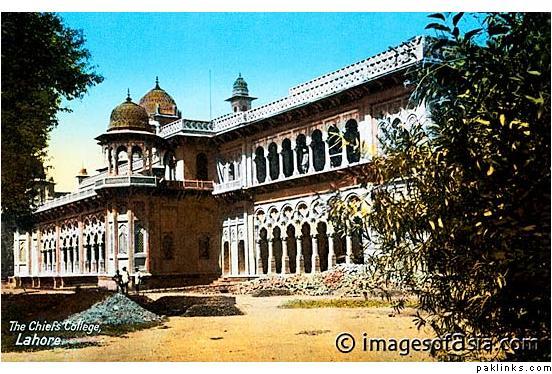
1910 - The Chief’s College

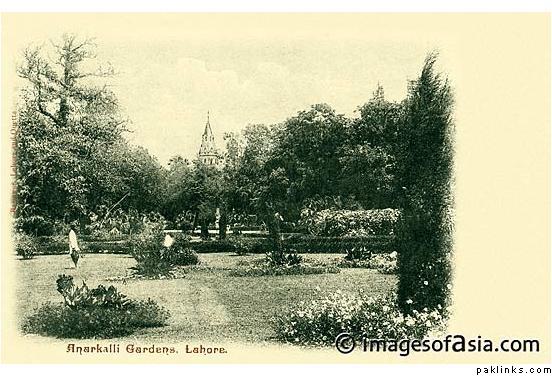
1901 - Anarkali Gardens

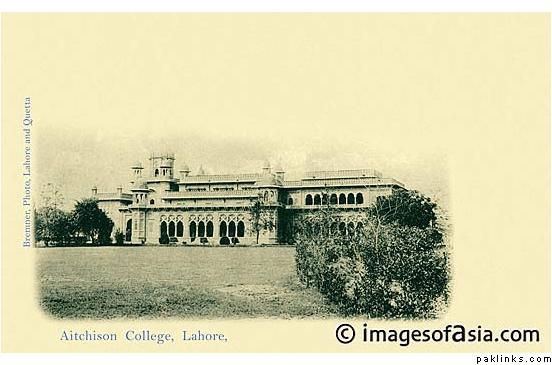
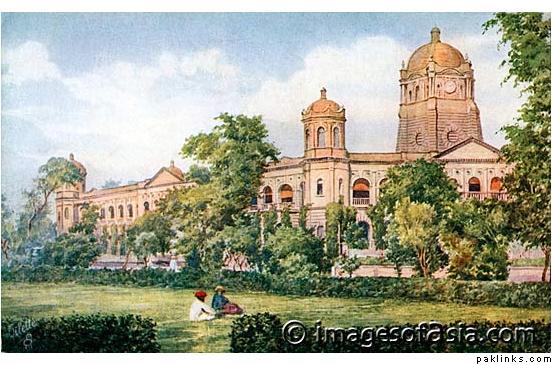
1905 - Aitchison College

Re: Pre-Partition Pics of Lahore..

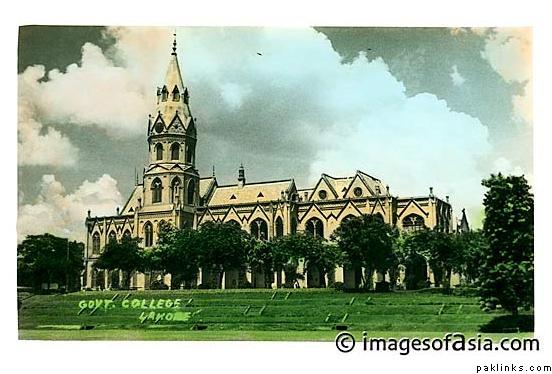
1915 - Govt. College Lahore

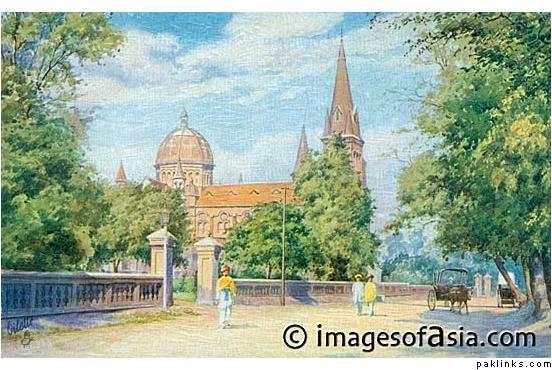
1905 - Roman Catholic Cathedral

The Roman Catholic Church, Lahore.

Catholic Cathedral, Lahore. Among the many fine buildings in modern Lahore the noble church in the picture is well worthy of notice. The many trees in its vicinity give quite an English appearance. There are more than two million Catholics in the Indian Empire.

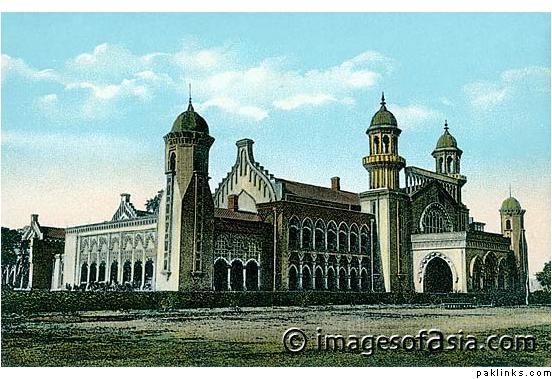
1910 - Chief Court

The Lahore High Court on the Mall.

The Lahore High Court on the Mall is a central location for city lawyers and houses numerous offices and departments. Despite the many ups and downs of democracy in Pakistan, lawyers associated with this institution have often played a major role in campaigning for democracy and the rule of law in Pakistan.

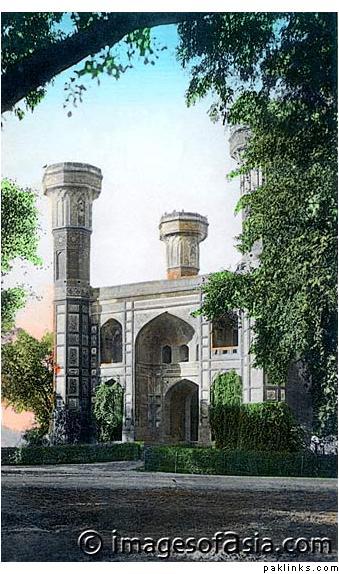
1912 - Char Burji

The Chaburji gateway was once the entrance to a lost Mughal garden.

Apparently built around the 1640s, its construction is linked to the Mughal Emperor Akbar’s daughter, Zebunnissa Begum. Only three of the four (Char) towers remained in the mid-19th century. It was partially restored in the 1880s, and, surrounded by a meta-city today, remains a melancholy reminder of the past.

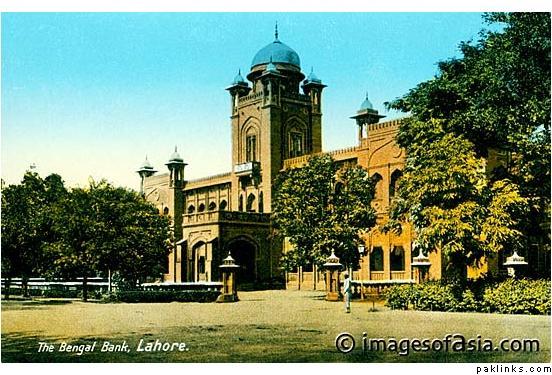
1910 - The Bengal Bank

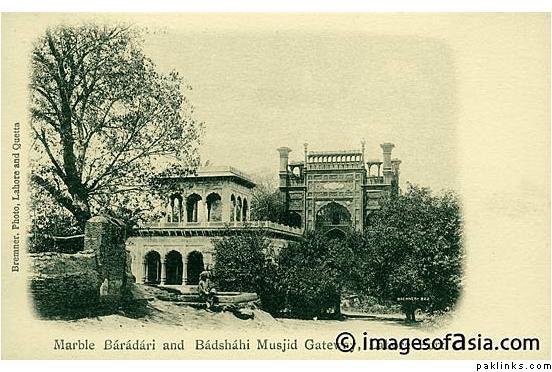
1902 - Marble Baradari and Badshahi Musjid Gateway, Lahore Fort

Re: Pre-Partition Pics of Lahore..

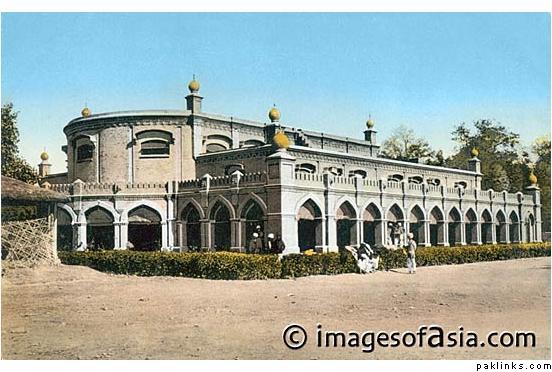
1910 - The Central Model School

A 114 year old educational institution in the heart of Lahore.

Started in the year 1883, the Central Model School, Lahore is one of Pakistan’s premier educational institutions. Originally founded as a middle school it was upgraded to a High School in 1891. At present the school spreads over an area of 23155 sq. meters, with a covered area of 14139 sq.meters. It has 96 rooms, 2 halls, 1 library and 7 laboratories and workshops. Currently it has its own Board of Governors and gained autonomous status in 1990. Many of Pakistan’s leading government and business officials, especially those in Punjab, studied here.
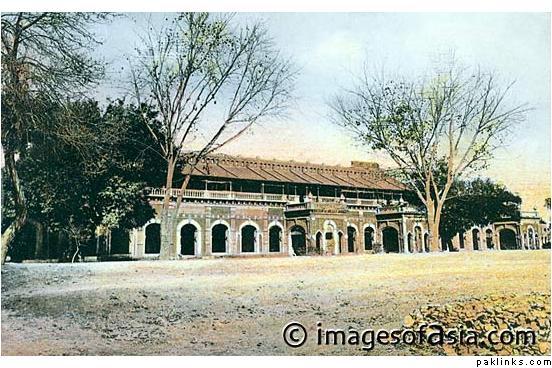
1910 - Rai Mela Ram’s Building

At this central location now stands the WAPDA, or Water and Power Development Authority headquarters, one of the modern architectural gems of Lahore.

Rai Mela Ram, a popular socialite and 19th century businessman a major role as contractor in the laying of the Lahore-Amritsar Railroad in 1880. Mela Ram Road in Lahore is named in his memory. His son Rai Bahadur Ram Saran Dass, a great patron of the arts, celebrated all major Hindu, Muslim and Sikh festivals with great fanfare at his residence.
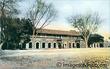
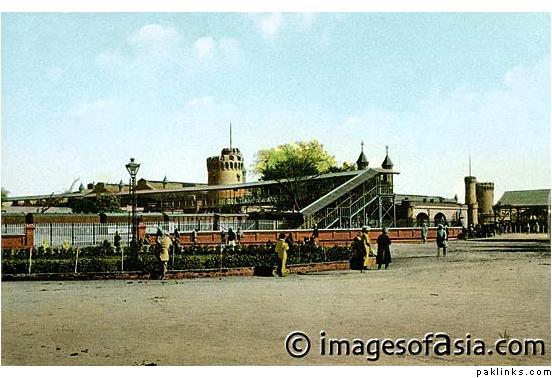
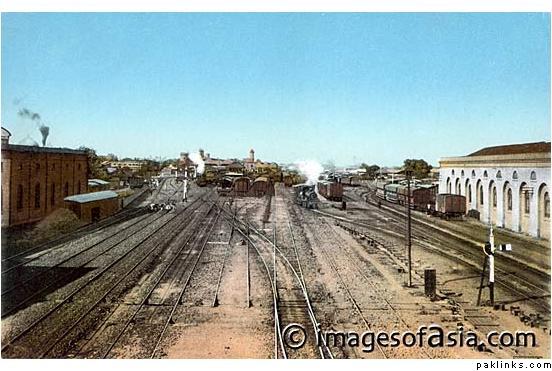
1915 - Lahore Station

John Lawrence laid the foundation stone of Lahore Station in 1859

Built after the 1857 Sepoy Mutiny or War of Independence, Lahore Station was conceived of as a fortified railway station. If one looks closely at the walls, crosses have been inscribed in it. The sense of a defensive structure is overwhelming.

During the Second Anglo-Afghan War (1878), Lahore Railway Station played a major logistical role. Dozens of trains with troops were left the station every day for the Afghan frontier.

Today the station is surrounded by hotels and restaurants, and it remains the primary railway nexus of Punjab and Pakistan.
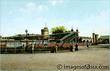
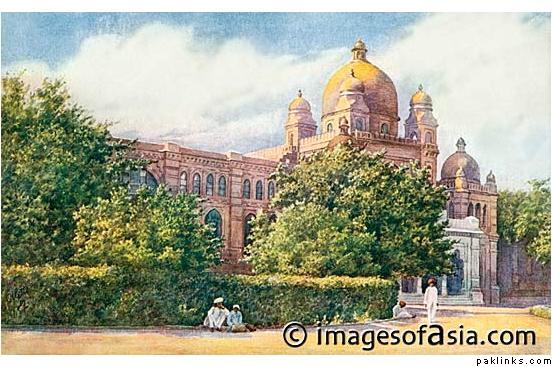
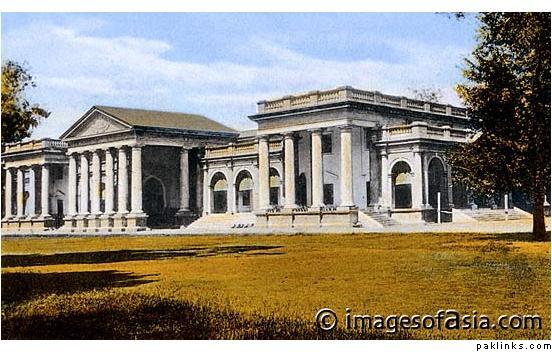
1910 - Central Museum

One of the most famous museums in South Asia, the Central Museum in Lahore.

General Post Office, Lahore. Lahore is the capital of the Punjab Province of India. Its origin is legendary and uncertain, but it is referred to by a Chinese pilgrim in the 7th century. Since British rule commenced in 1849, many fine buildings have been erected in the modern city and the General Post Office is a stately and commodious pile with attractive surroundings. [end] Established in 1894 in Lahore, Pakistan, the Lahore Museum was previously known as Central Museum, and is located on The Mall near the High Court. Rudyard Kipling’s father, John Lockwood Kipling, was the founding curator of the museum.
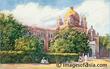
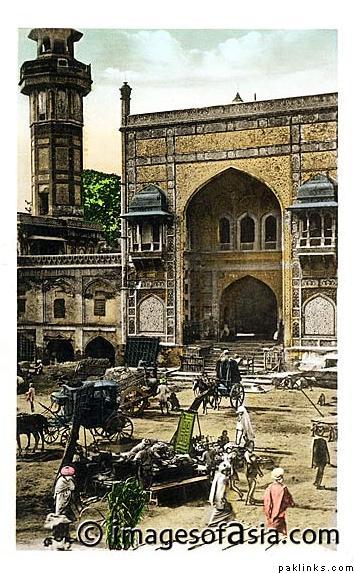
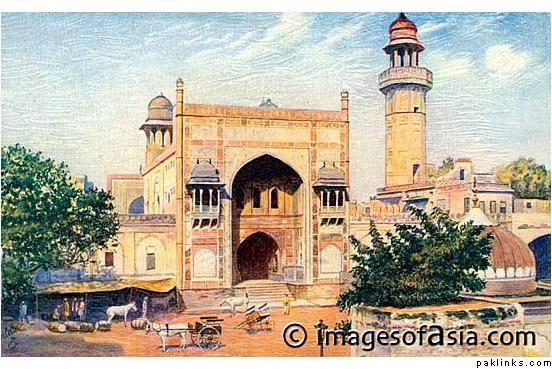
1915 - Wazur Khan’s Mosque

Shaikh Ilm-ud-din Ansari, known as Wazir Khan, built this mosque in the 17th century.

Wazir Khan’s mosque is in the heart of Lahore’s walled inner city, surrounded by narrow lanes and crowded bazaars. Coming up to this grand edifice can be a startling and rewarding experience.

The view of Lahore from the minarets is fabulous and was a favorite spot for early photographers like Samuel Bourne in the 1860s. Even Kipling wrote an early short story about wandering up here in the dead of night and watching the denizens of the city toss and turn before rising at dawn. The view provided an early version of his famous City of Dreadul Night story.

Today many part of the mosque have been restored with the original art, though to the dismay of some who claim that the restoration is not authentic. That it remains one of Lahore’s gems however is indisputable
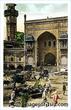
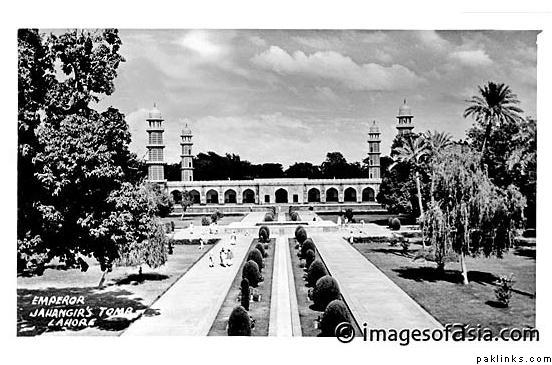
1905 - Emperor Jahanghirs Tomb
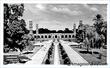
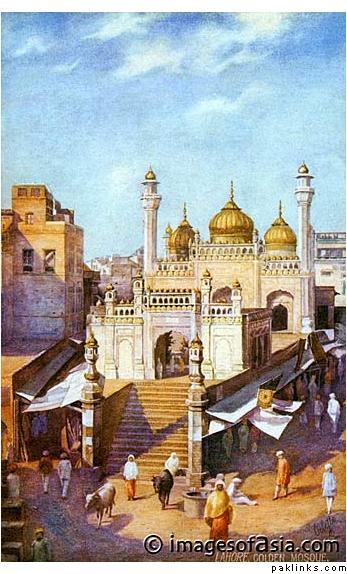
1905 - Golden Mosque

Golden Mosque, Lahore. This mosque has three gilt domes and was built in 1753 by Bikhari Khan, a favorite of the widow of Mir Mannu, who governed Lahore a short time after her husband’s death. He is said to have displeased the lady, and her female attendants beat him to death. The mosque is picturesquely located at the junction of two streets. In a courtyard behind is a large well with steps descending to the water.
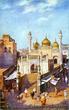
1910 - General Post Office

One of several buildings built by the British, the G.P.O. dominates one end of the Mall near Anarkali.

General Post Office, Lahore. Lahore is the capital of the Punjab Province of India. Its origin is legendary and uncertain, but it is referred to by a Chinese pilgrim in the 7th century. Since British rule commenced in 1849, many fine buildings have been erected in the modern city and the General Post Office is a stately and commodious pile with attractive surroundings.
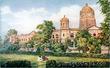
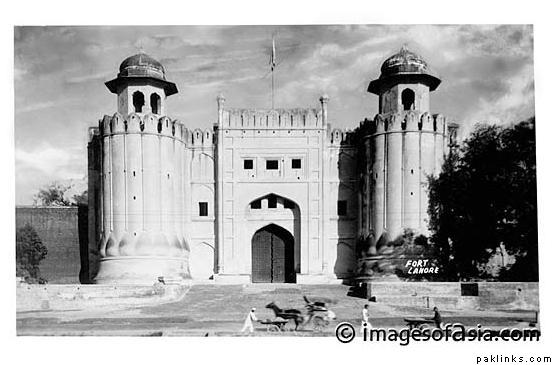
1905 - Fort Lahore
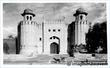
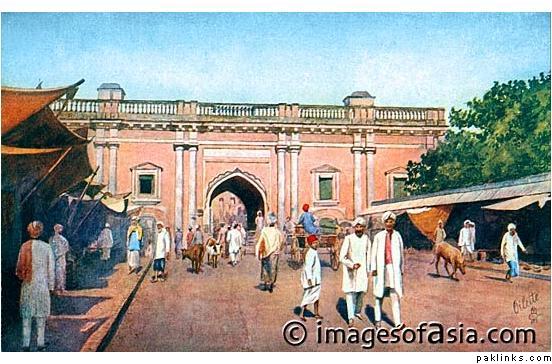
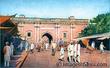
1910 - Delhi Gate

Lahore’s Historic Delhi Gate is one of the most crowded parts of the walled city and faces the city of Delhi in India.

Delhi gate, Lahore. The inner part of Lahore is a walled city with forts and other defenses. A moat has been filled in and turned into a garden which encircles the city on every side, except the north west. A road runs round the ramparts and gives access to the City by thirteen gates. [end] The Delhi Gate one of the thirteen gates of the Inner City was built during the Mughal period. The area near the gate is a historical place, in which a number of old buildings, havelis and markets are located. The Wazir Khan Mosque, famous for its extensive faience tile work and built during the reign of the Mughal emperor Shaj Jehan can be accessed from this gate. Delhi gate, named because it faces the Indian city of Delhi, is one of the most crowded entrances to Lahore’s walled city. City gates facing key trading locations are a feature of South Asian cities that reach back to ancient Indus times.
Re: Pre-Partition Pics of Lahore..

**Amazing pix :slight_smile:
Thanks :jhanda:
**

Re: Pre-Partition Pics of Lahore..

very nice :k:

thanks for sharing.

Re: Pre-Partition Pics of Lahore..

thank you jee.. :D

stay tuned for more.. i am uploading them in a while :)

Re: Pre-Partition Pics of Lahore..

Indeed, a very impressive work with great information …:k:

Re: Pre-Partition Pics of Lahore..

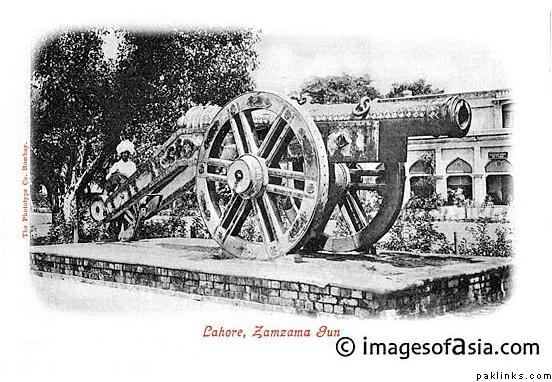
1900 - Lahore, Zamzama Gun

The gun in front of Lahore Museum that was made famous in Rudyard Kipling’s novel Kim.

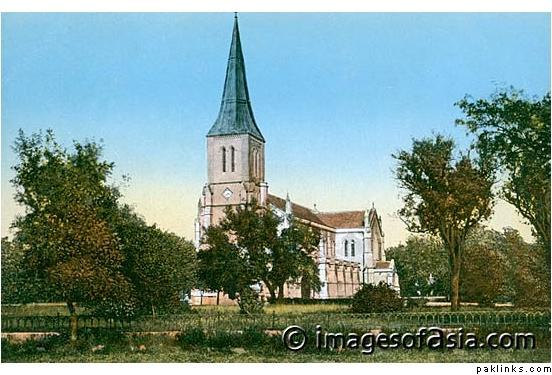
1905 - The Railway Church

The Railway Church, Lahore which is over a hundred years old

Built in 1899 by the British for the Christian employees of the Railway it serves thousands of Christians within Lahore where it is popularly known as St. Andrews

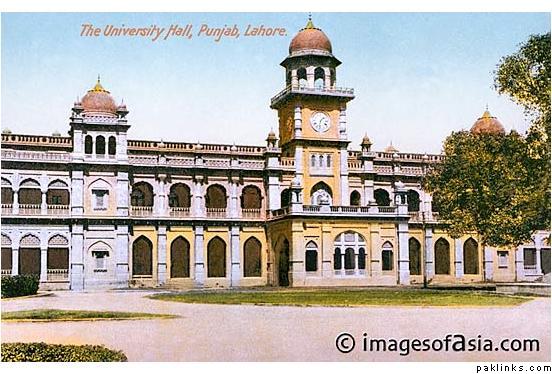
1910 - The Punjab University Hall

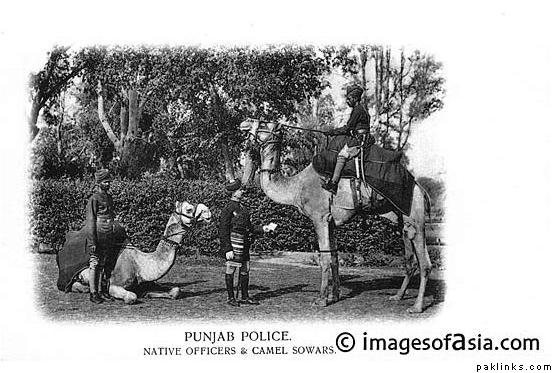
**1904 - Punjab Police. Native Officers and Camel Sowars **

Also published in Bremner’s book Types of the Indian Army.

1910 - The Punjab Club

Now Pakistan’s Administrative Staff College, on the Mall in Lahore.

The famous Punjab Club has moved to a secluded bungalow the nearby GOR (Government Officer’s Residence) district. It is still the most prestigious local Club to gain membership in. The former Club building today is the Pakistan Administrative Staff College, where members of Pakistan’s civil service come for training during their careers.
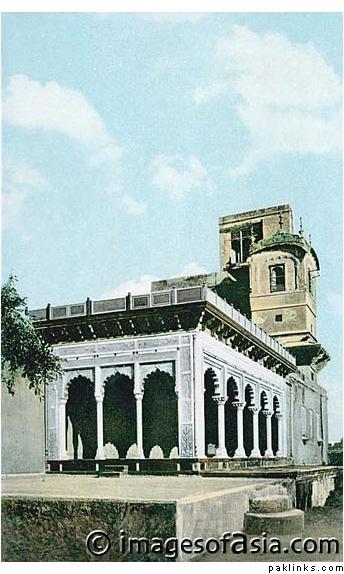
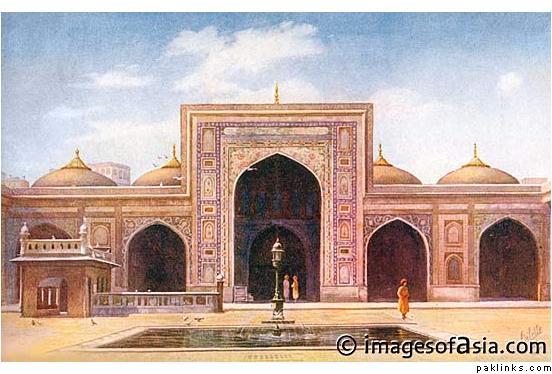
1910 - Wazir Khan Mosque (Inner part)

The design of the Mughal period Wazir Khan mosque contains the finest known examples of khashi, or inlaid pottery.
The Wazir Khan Mosque in Lahore, Pakistan, was constructed in seven years, starting around 1634-1635 A.D., by Hakim, Viceroy of Punjab during the reign of the Mughal Emperor Shah Jehan. It was named after Lahore governor Ilam-ud-Dinansari, known as Nawab Wazir Khan (‘Wazir’ means minister in Urdu) and designed by his faithful servant Hidayat-ut-lah. The Mughal-Gothic-style Wazir Khan mosque exhibits the heavy influence of Thatta mosaic work that became popular in the 16th century; its brick walls are covered with the finest known examples of khashi, or inlaid pottery in intricate inlaid mosaic patterns. Verses from the Koran appear in panels along the facade. The use of octagonal minarets is among the earliest in Mughal architecture; and its unique design comprises a 22-shop bazaar.

Lahore is the second largest city of Pakistan and is the capital of the province of Punjab. The name Lahore means “Fort as strong as Iron.” According to a legend, Lahore was named by Loh, son of Rama, the hero of the Hindu epic the Ramayana. Located near the river Ravi and the Indian border, Lahore has up to 9 million inhabitants. The multitude of festivals, multicultural events and countless examples of pre-Mughal, Mughal and British architecture make it the cultural center of Pakistan.

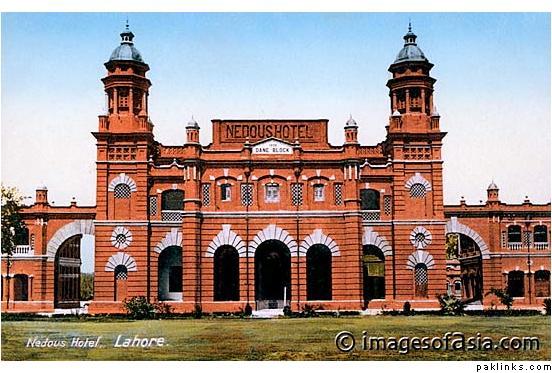
1910 - Nedous Hotel

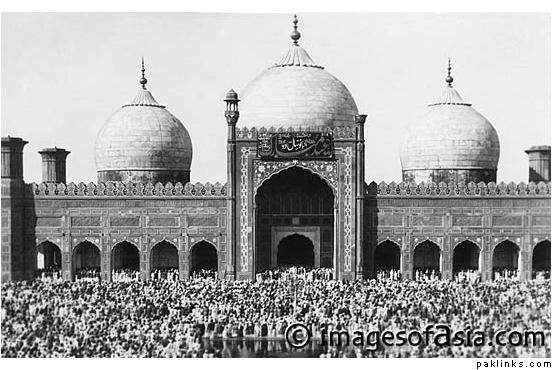
1930 - Eid Prayers Badshahi Masjid

The Mughal Emperor Aurangzeb built the Badshahi Masjid in the 17th century

The Badshahi Mosque is one of the largest mosques in the world. It can accommodate more than 55,000 people, although over 100,000 are usually found in the mosque and surrounding garden area today during Eid prayers. This photograph was likely taken during the 1930s. In the early 1940s, the main minarets were restored at the behest of Punjab’s Chief Minister Sir Sikander Hayat Khan. Further work has restored the mosque to much of its former glory.

Today a sound-and-light show illuminates the walls of the mosque, the adjacent Lahore Fort and Maharajah Ranjit Singh’s tomb, offering a spectacle from nearby rooftop restaurants that has become a big tourist attraction.

Re: Pre-Partition Pics of Lahore..

thank you :slight_smile:

em glad k aap logo ko acha lag raha hai :slight_smile:

Re: Pre-Partition Pics of Lahore..

1910 - Wazir Khan’s Mosque (Outer Part)

This beautiful building is also known as the “Mole on the cheek” of Lahore’s landscape

Wazir Khan’s Mosque (Outer Part) Lahore. This beautiful mosque was built in 1634 by Hakim Alau-ud-din, Governor of the Punjab under Shah Jehan, Over the noble entrance is written in Persian “Remove thy heart from the gardens of the world and note that this building is the true home of man.” From the gallery round the minaret in the picture there is a fine view over the City of Lahore.

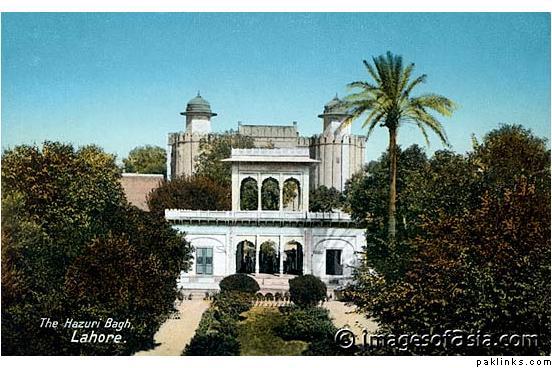
1910 - The Huzuri Bagh

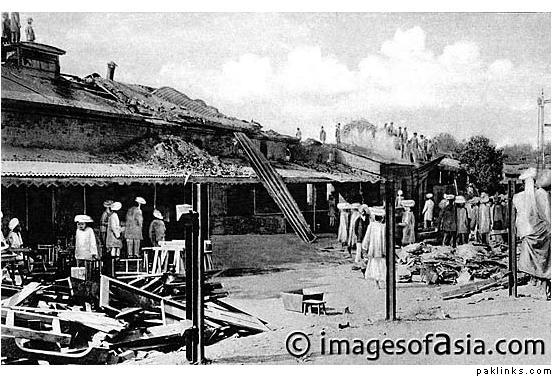
1910 - Fire near by Lahore Station

A famous fire around 1910 whose significance is forgotten

The fire clearly destroyed some of the many stores near the central railway station, completed during the 1860s. Rare is the postcard that shows the aftermath of a disaster like this one, which likely happened around 1910. It must have been of widespread concern and caused major devastation to be so memorialized.

1910 - Shish Mahal Fort

One of the most ornate and lavish rooms within the Lahore Fort.

Built during the Mughal emperor Shah Jahan’s 17th century reign, the Shish Mahal (“Shish” means mirror) is noted for its beautiful mirror work. The pieces of glass and mirror are in colour and extremely ornate.

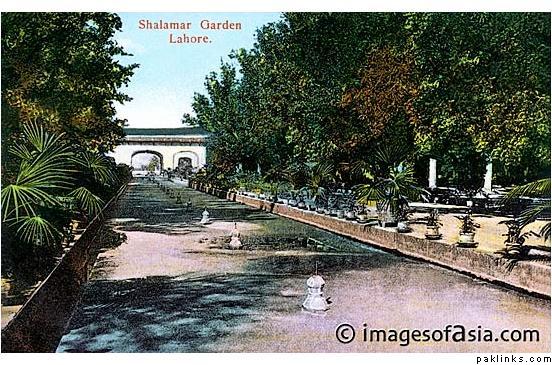
1910 - Shalimar Garden

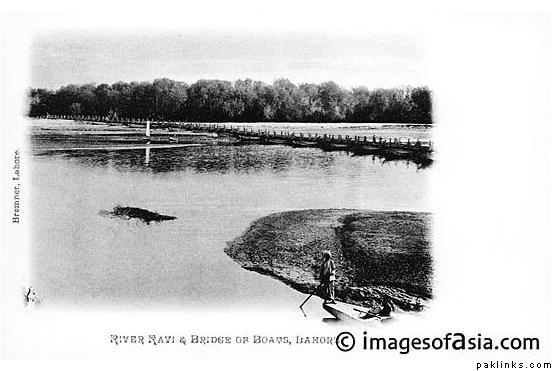
1904 - River Ravi and Bridges of Boats

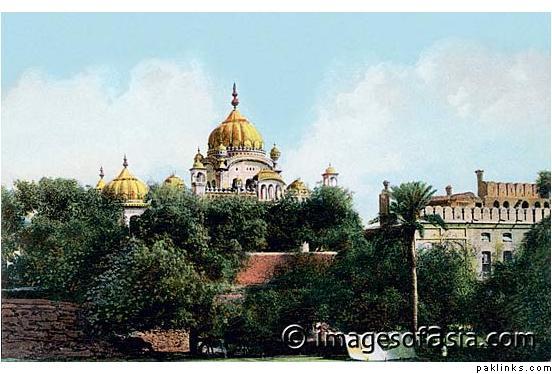
1910 - Ranjit Singh’s Tomb

The Mausoleum of the great Sikh ruler of Punjab, Maharajah Ranjit Singh.

Built by his son Karak Singh and completed by Duleep Singh under British rule, this beautiful mausoleum is where Ranjit Singh was cremated in 1839. The mausoleum features typical Sikh architecture with gilded fluted domes and cupolas. Today it remains a major pilgrimage site for Sikhs from all over the subcontinent.

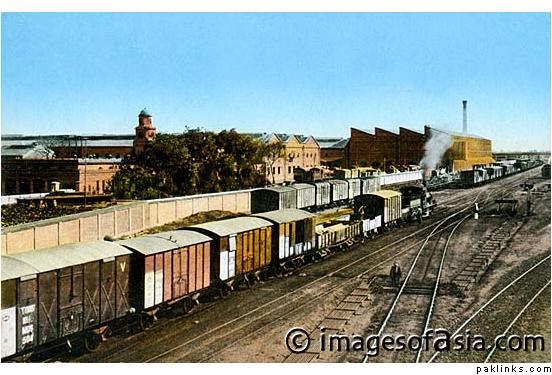
1915 - The Railway Carriage Shop

The Pakistan Railways is the most important transport institution in the country.

The first railway line in Pakistan was built in Karachi in the 1860s. Over the next century it was gradually expanded almost one thousand miles north to the Afghan border areas in the North-West Frontier province (NWFP). To a large extent, the railway line followed the Indus River up north.

Originally composed of four separate railway sections in provinces along the Indus, it became known as North Western State Railways in 1886. Most of the line was received by Pakistan at Independence in 1947.

The workshops in Lahore were some of the most important in British India. They were able to undertake the manufacture and repair or rolling stock cars and engine cars. They have since become the primary workshops for Pakistan Railways.

1910 - The Railway Shed

The primary locomotive shed for the Pakistan Railways.

Built during the British Raj and as an instrument of its economic and military power, railway sheds are spread across the railway networks in India and Pakistan. Many of them continue to be used, as is this one by the Pakistan Railways, still the major transport authority in the country.

Re: Pre-Partition Pics of Lahore..

^ humein tau aap bhi ache lagtay ho … :jano:

Re: Pre-Partition Pics of Lahore..

lolx.. :hayaa:

zarra’nawazi :halo:

Re: Pre-Partition Pics of Lahore..

Nice information with nice pics:k:

Re: Pre-Partition Pics of Lahore..

Great Thread Redi …Awesome Pics :k:

:jhanda:

Re: Pre-Partition Pics of Lahore..

Thanks for sharing Redi! :k:

Re: Pre-Partition Pics of Lahore..

thank you so much :blush:

@UZ;
@maroush;
@waleedhbk;

Re: Pre-Partition Pics of Lahore..

like

Re: Pre-Partition Pics of Lahore..

thanks for such brief comment.. :@:

Re: Pre-Partition Pics of Lahore..

I have to say this. Lahore has captured the imagination of many Indians.

And this thread only validates that.

Jai Lahore! :dannyboy:

Would love to see some modern pics of Lahore here: http://www.paklinks.com/gs/video-gallery/445175-share-pics-vids-of-your-cities.html#post7636988

Re: Pre-Partition Pics of Lahore..

thanks Ruzaan :)