PML-N Govt: On the Move

Re: PML-N Govt: On the Move

1st things first: I’m no PTI/IK supporter nor am i affiliated with any other political parties … I’m not out to get anyone banned but this sugar coating is too much and same goes with thread started by any other political party supporter as well as centcom/fawad/abdul Quddus and what not

Hmmm… just look back how much improvement Punjab has gone through ever since “Shahbaz Sharif is on the move” ???

**Loadshedding?

Sewerage system?

Measures to counter floods?

Justice system?

Police misusing its powers?

price hikes?

Health system?**

I guess that’s enough for a start … If 7-8 years of governance are not enough to improve atleast some of the above mentioned then what the heck are you trying to prove/highlight??

The things that you (and others as well) try to highlight are what the PPL in power ought to do by definition of the oath they take and their respective job description …

So what is so special about it??

Re: PML-N Govt: On the Move

I don’t dislike him or any party but simply asking what he is trying (and other as well) trying to prove?

The reality out there is anything but the sugar coating he (and others as well) try to portray … Is it wrong to point out and ask uncomfortable questions?

I’m not for a ban and coming from a highly discriminated minority i know better than most what intolerance means

BTW i’ve put forward a few questions for him to answer since he himself is claiming to highlight SS performance ever since 2008 … waiting for him to reply :slight_smile:

Re: PML-N Govt: On the Move

Current account deficit shrinks by 72%

By Our Correspondent
Published: November 20, 2015

http://i1.tribune.com.pk/wp-content/uploads/2015/11/995011-Currentaccountdeficitcopy-1448027126-739-640x480.jpg

CREATIVE COMMONS

KARACHI: Pakistan’s current account deficit in the first four months of 2015-16 remained $532 million, according to data released by the State Bank of Pakistan (SBP) on Thursday.

The current account deficit shrank 71.9%, or $1,365 million, year on year in July-October, as it amounted to $1.9 billion in the same four-month period of the preceding fiscal year.

The notable improvement in the current account balance in the last four months was mainly because of shrinking trade deficit in both goods and services. It amounted to almost $6.3 billion in Jul-Oct as opposed to $8.4 billion recorded over the comparable period of the last year.

A deficit or surplus reflects whether a country is a net borrower or lender of capital with respect to the rest of the world.

As a percentage of the gross domestic product (GDP), the current account deficit decreased from 2.1% in July-Oct 2014 to 0.5% in July-Oct 2015.

The country recorded a current account deficit of $2.28 billion in the last fiscal year, which was significantly smaller than the deficit of $3.13 billion in 2013-14. Analysts believe the encouraging trend in the country’s current account balance in the recent past is a consequence of major inflows under the Coalition Support Fund (CSF), substantial growth in workers’ remittances and a sharp reduction in the oil import bill.

Pakistan’s total imports of goods in July-Oct were valued at $13.1 billion as opposed to $15.5 billion in the same months of the preceding fiscal year, which shows an annual decrease of 15.6%.

Pakistan exported goods worth over $7.1 billion in July-Oct as opposed to the exports of goods valuing over $8 billion in the same four months of 2014, reflecting an annual decline of 10.6%.

Workers’ remittances remained** $6.5 billion in July-Oct,** up 5.2% from the same months of the last year. Remittances have played a significant role in improving the country’s external sector, as they make up for almost 50% of the country’s import bill and fully cover the deficit in goods and services accounts.

In the last monetary policy statement, the SBP noted that a current account deficit of the size of end-fiscal 2015 “seems manageable” in 2015-16. “This is supported by the expected surplus in the capital and financial account in 2015-16 on the back of planned Euro/Sukuk bonds inflows, official disbursements, and the remaining IMF funding under the EFF programme,” it said, adding that the lower global oil prices have yet to find their bottom.

Declining oil prices are going to result in a year-on-year drop of over 23% in Pakistan’s oil import bill in 2015-16, as per the estimate of the IMF. However, many analysts believe the deficit in the current account is unlikely to change into a surplus by the end of 2015-16 despite a massive drop in international oil prices.

Exports, which are continuously declining, will not be able to sustain the pressure on the current account balance once inflows from the IMF dry up in mid-2016 and Pakistan starts making Paris Club loan repayments, they say.

Re: PML-N Govt: On the Move

^ That has happened ONLY due to lower import bill of Pakistan because of lower oil prices and has nothing to do with PML(N)'s policies. You know that right? I thought I should ask.

Re: PML-N Govt: On the Move

^^ $ 44/barrel Brent Crude is not the only factor as cash inflows of $18.5 bn remittances in FY 2014-15 played major role in shrinkage of deficit and Govt trying to increase this with aim of 500K+ manpower export to GCC in next 3 years especially for Dubai Expo 2020 and Qatar FIFA 2022. Due to global slowdown, exports of many countries including Pakistan suffered a alot. Remittances,Diversification in Exports instead of heavy dependence on low value added Textiles & Tax Net Expansion etc is the only way forward ..

Re: PML-N Govt: On the Move

When is govt going to pay its bills? like circular debt? :faizy:

Re: PML-N Govt: On the Move

first they have to move all the money abroad to their personal accounts.

maybe then they will get loan from imf and pay that and tax the people

Re: PML-N Govt: On the Move

22 wind power projects in pipeline

PARVAIZ ISHFAQ RANA — UPDATED ABOUT 3 HOURS

KARACHI: Wind power generation capacity of the country is projected to increase from 250 to 1,530MW within a year as 22 windmill projects are in the pipeline.

The cheap and environmental-friendly wind energy, introduced late in Pakistan, is gaining popularity as it ensures quick return in a short cycle of three years.

Sources in the Ministry of Water and Power told Dawn that Pakistan has a 1,046km coastline in the South (Sindh and Balochistan), but most of the wind power projects are currently being installed at Gharo-Keti Bander and Hyderabad wind corridor.

Official sources said that nine wind turbine generator (WTG) projects are in advanced stage of development, while the other nine are under-construction and four have got their letters of intent (LoIs). Many more are under process and documentation. The estimated energy potential of the wind corridor is 50,000MW. Besides Gharo, several other sites have been identified in coastal areas of Balochistan and Northern areas.

Presently five WTG projects each with 50MW capacity are operating at Gharo-Jhampir wind corridor. However, the nine other WTG projects which are in the phase of development will produce 450MW and those in the stage of construction will produce 480MW wind energy. Similarly, four projects which have been given LoIs will produce 350MW.

Responding to a question, Mohammad Kasim Hasham, whose company Uni-Energy has recently been LoI, said that with 100 per cent foreign financing the total cost of wind power project comes to $107.50 million, and in case of local financing the cost is estimated at $113m. The annual operational and maintenance cost in both the cases is only $2.196m.

Javed Akhtar group in joint venture with Tapal and Candyland is also setting up 30MW capacity WTG project that will become functional early next year. He lamented the loss of time in introducing wind power, but was optimistic that private sector would actively engage and pull the nation out of energy crisis.

He said his other company Dairyland with over 300 cow-heads is nearby in the Gharo-Jhampir area and will get the power from wind which is cheap and pollution free.
*
Published in Dawn, December 20th, 2015*

Re: PML-N Govt: On the Move

PM inaugurates TAPI gas pipeline project in Turkmenistan

By AFP
Published: December 13, 2015

http://i1.tribune.com.pk/wp-content/uploads/2015/12/1009190-TAPI-1450020373-724-640x480.JPG

Prime Minister Nawaz Sharif at the ground-breaking ceremony of TAPI gas pipeline in Turkmenistan on December 13, 2015. PHOTO: PID

MARY, TURKMENISTAN: Leaders of Turkmenistan, Afghanistan, Pakistan and India broke ground Sunday on a $10 billion gas pipeline expected to help ease energy deficits in South Asia and stem tensions in the divided region.

Presidents Gurbanguly Berdymukhamedov of Turkmenistan and Ashraf Ghani of Afghanistan attended the ceremony in the Karakum desert outside the southeastern Turkmen city of Mary, marking the beginning of work on the Turkmenistan-Afghanistan-Pakistan-India (TAPI) link.

They were joined by Prime Minister Nawaz Sharif and Indian Vice President Mohammad Hamid Ansari.

“Today we were participants and witnesses of a historic event. Today marks the start of a project of great scale – the TAPI pipeline,” said Berdymukhamedov during the ceremony, which took place in a pavilion imitating a traditional Turkmen nomadic dwelling.

Turkmenistan has said it expects the gas link with an annual capacity of 33 billion cubic metres to be completed by the end of 2018.
Turkmenistan begins work on TAPI pipeline

Afghanistan, India and Pakistan have all repeatedly stated their commitment to the natural gas project despite the bilateral tensions Delhi and Kabul have with Islamabad.
On Sunday, the leaders praised the pipeline as a political project that will help bring about better relations in the volatile region.

“The TAPI gas pipeline project will help promote peace and trade amongst the regional countries,” said PM Nawaz.

The Indian vice president said TAPI was “more than a project” and described it as “the first step to the unification of the region”, in translated remarks.
Afghanistan’s Ghani, for his part, said the project demonstrated the countries’ political will.

“We are committed to the stable development of the entire region which will develop in an active and stable manner if we cooperate,” he said in translated remarks.

http://i1.tribune.com.pk/wp-content/uploads/2015/12/TAPI-groundbreaking-e1450020508697.jpg

Prime Minister Nawaz Sharif with president of Afghanistan and Turkmenistan and Indian vice president at the ground-breaking ceremony of TAPI in Turkmenistan on December 13, 2015. PHOTO: PID

Energy experts say the project does indeed have potential to ease relationships in the divided region.

“TAPI is a challenging project, partly because of these bilateral tensions,” said Charles Hendry, Britain’s former energy and climate change minister.

“But I think it is precisely this kind of big multi-state project that can bind countries together geopolitically,” Hendry, chairman of London-based Eurasia Partners consultancy, told AFP at an energy conference in Turkmenistan’s capital Ashgabat last month.

Berdymukhamedov also said Sunday marked the beginning of the third phase of development of the Galkynysh gas field which will provide the resource base for the TAPI pipeline.

The next phase of development at Galkynysh – the second largest natural gas field in the world — will be overseen by a consortium of Japanese and Turkish companies in addition to Turkmenistan, Berdymukhamedov said.

Uncertainty hangs over the costly TAPI project, however, with both security and the lack of a major commercial investor stymieing optimism.

“Initially the questions were about whether Turkmenistan had enough gas and whether the demand was there in India and Pakistan,” Luca Anceschi, a Central Asia expert at the University of Glasgow, told AFP by telephone on Sunday.

“With the assessment of the Galkynysh field and the situation in both those countries, those questions have now been answered positively. But the question of security is one that really hangs over the project and increases its costs.”

Several major Western energy firms have appeared to back away from the project, with only Dubai-based Dragon Oil, which works in Turkmenistan’s petroleum sector, confirming interest.
Nevertheless, a spokeswoman for the company’s Turkmenistan office said in emailed comments last month that “nothing had formally been decided” regarding its participation in the project.

The isolated Central Asian state has shown increasing will to get the project off the ground amid a worrying dependence on China, which imports around three-quarters of its national gas output via the Central Asia-China pipeline, completed at the end of 2009.

Turkmenistan once suffered from a similar dependence on former master Russia, which was the country’s main customer before China came to the fore.

But Moscow’s energy giant Gazprom announced its intention to wind down purchases of Turkmen gas and was blasted in a Turkmen government publication as an “unreliable partner” this year amid ongoing contractual disputes.

Re: PML-N Govt: On the Move

Maryam Nawaz Sharif ‏@MaryamNSharif](https://twitter.com/MaryamNSharif) Dec 10
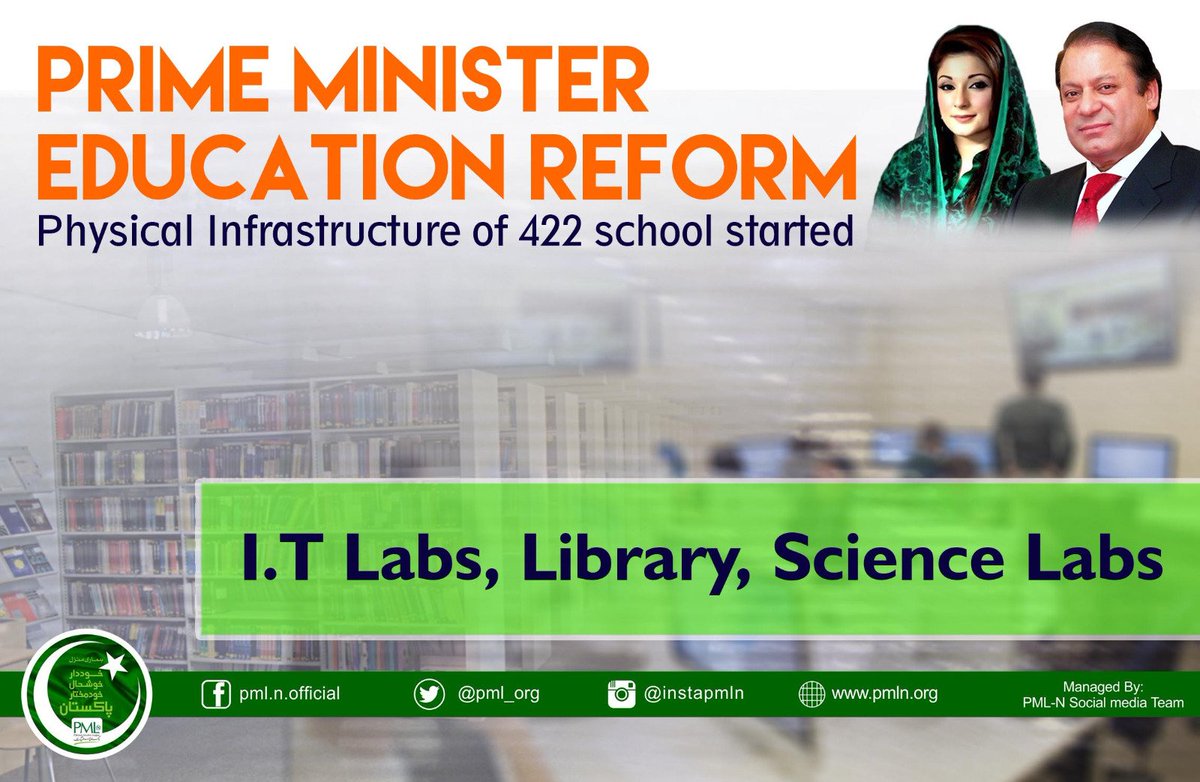
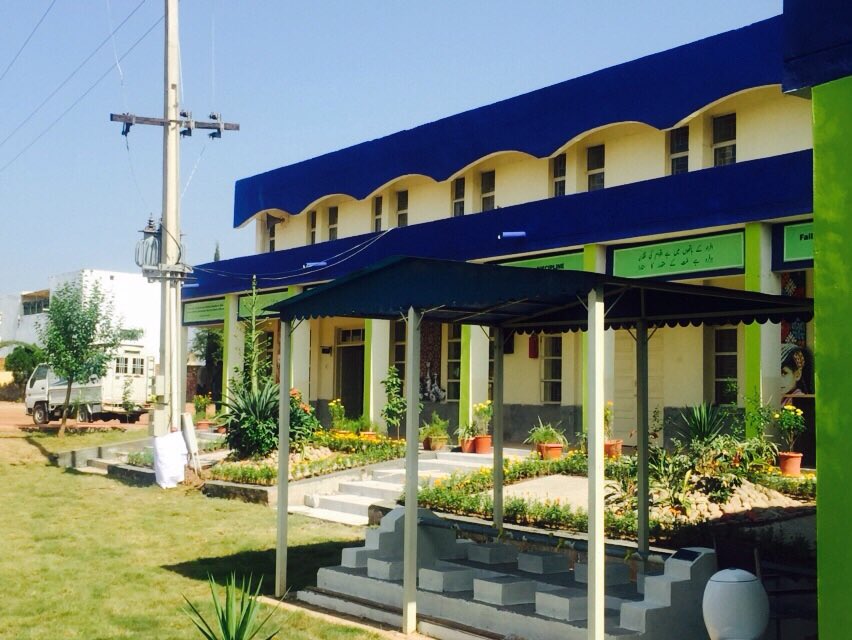
Upgraded science and computer labs. Pentium 3 (2/12 functional) computers replaced with flatscreen Dell desktops.

Maryam Nawaz Sharif ‏@MaryamNSharif](https://twitter.com/MaryamNSharif) Dec 14
**Prime Minister Health Prog will provide 100% cash free treatment to deserving at the best private & public hospitals **

Re: PML-N Govt: On the Move

“deserving” will be all the khushamdi’s of this pml-n ?

Right now its chaos at the hospitals, many dont have medicines or even beds for ordinary people

Re: PML-N Govt: On the Move

$1.5bn loan pacts signed for first Thar coal mining, power project](http://www.dawn.com/news/1227907/15bn-loan-pacts-signed-for-first-thar-coal-mining-power-project)

THE NEWSPAPER’S STAFF REPORTER — UPDATED ABOUT 5 HOURS AG

ISLAMABAD: Pakistan and China on Monday signed a formal agreement on about $1.5 billion financing for a 3.8 million tonnes per year coal mining project and a 660-megawatt coal-fired power plant in Tharparkar, Sindh.

The agreements were signed by two syndicates of Chinese and Pakistani banks with Sindh Engro Coal Mining Company (SECMC) and Engro Powergen Thar Limited (EPTL) in Beijing for local and foreign loans to finance mining of Thar Coal Block-II and utilisation of its coal for 660MW power generation, according to an official announcement.

Negotiations for the loan financing had been ongoing since signing of term sheets during Chinese President Xi Jinping’s visit to Pakistan in April this year.

Under the loan agreements, a syndicate of local banks including conventional and Islamic financing institutes will be providing Rs52 billion for the mining project being undertaken by the SECMC and Rs22bn for associate power plant of 660MW being established by Engro Powergen Thar Limited.

The syndicate is led by Habib Bank Limited and comprised United Bank Limited, Bank Alfalah Limited and Faysal Bank Limited.

The foreign syndicate comprised Chinese banks including China Development Bank (CDB), Construction Bank of China (CBC) and Industrial and Commercial Bank of China (ICBC). They are providing loans amounting to $820m.

The agreements were cleared by the Ministry of Finance earlier this year followed by approval by the Economic Coordination Committee (ECC) of the Cabinet to issue $700m worth of sovereign guarantee to underwrite the loan taken by the SECMC.

The project’s addition to the China-Pakistan Economic Corridor (CPEC) as ‘priority’ earlier this year paved the way for its early financing.

Separately, the project sponsors have also signed Sponsor Support Agreements for both projects, under which the Sindh government, Engro Powergen Limited, Thal Limited, Hub Power Company, HBL, and China Machinery Engineering Corporation agreed to inject $490m into the project to ensure that the companies have the funds available.

The project is expected to be commissioned by 2018. In phase two of the project, the mine will be expanded to an annual capacity of 7.6 million tonnes and another 660MW power plant facility will be added. This expansion has also been included into the CPEC.

Earlier this month, the Sindh government signed an implementation agreement with the SECMC and water utilisation agreement with EPTL to provide the required infrastructure to facilitate the mining project amounting to $600m (Rs60bn).

An official said financing by local banks had been arranged at Karachi Interbank Offered Rate plus 1.7 per cent and Chinese lending at London Interbank Offered Rate plus 3.3pc.
Arrangement of finances and completion of lending documents are the most critical parts in any project, signifying starting point of actual work on the project.

This is the largest project on the top priority list (early harvest programme) of the $46bn CPEC agenda and the first to have reached such an advanced stage after the signing of CPEC energy project agreements in November last year.

The CPEC accords envisage 14 projects of 10,400MW in the first phase, which are targeted for commercial operation by 2017-18.

The two governments initially focused on the Thar coal mining and power project and completed regulatory approvals between November 2014 and March 31, 2015. The arrangements included a power generation policy approval by the Council of Common Interests, followed by standard security package, including approval of implementation and power-purchase agreements.

To facilitate the project, a supplemental agreement particularly designed for Chinese investment under the CPEC was approved by the Economic Coordination Committee of the Cabinet that entailed creation of a revolving account to provide for a minimum of 22pc of monthly power purchases and a sovereign guarantee recently issued by the federal government.

Total cost of the coal mine upgradation to 3.8 million tonnes a year has been estimated at about $900m and that of the 660MW power plant at $1bn. Pakistan and China have already entered into an agreement for laying a transmission line for evacuation of electricity from the Thar plant to the national grid near Matiari and then onwards up to Lahore.

This will ensure that the first power project begins commercial operation by December 2017 at
levellised tariff or 9.5 cents per unit.
*
Published in Dawn, December 22nd, 2015*