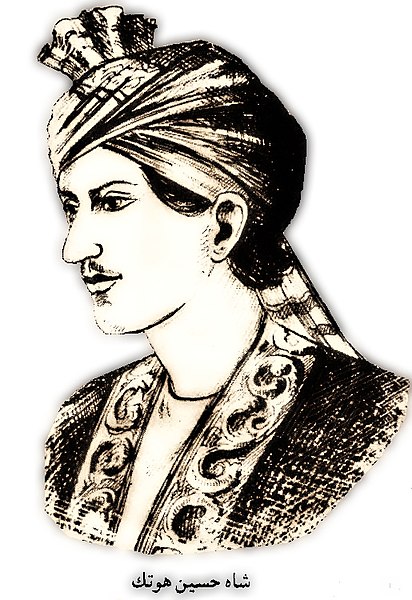
The Hotaki dynasty was established in April 1709 by Mir Wais Hotak after leading a successful revolution against the Persian Safavids in Kandahar.[SUP][1]](Hotak dynasty - Wikipedia)[/SUP] It was an Afghan monarchy that lasted until 1738 when Nader Shah of Khorasan defeated Hussain Hotaki during the long siege of Kandahar.[SUP][2]](Hotak dynasty - Wikipedia)[/SUP] At its peak, the Hotaki dynasty ruled over a wide area which is now Iran, Afghanistan, and northwestern Pakistan.
In 1715, Mir Wais died of a natural cause and his brother Abdul Aziz succeeded the monarchy. He was quickly followed by Mahmud who conquered Persia in 1722 and ruled it until his death in 1725. Ashraf Hotaki took over but was defeated at the Battle of Damghan in 1729 by the Afsharids. Hussain Hotaki became the last ruler until he was also defeated in 1738.
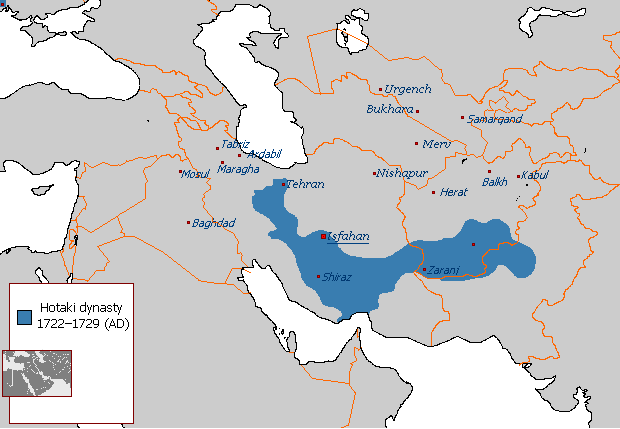
Hotaki Empire at its peak (1722-1729)
Rise to power
Kandahar province was ruled by the Shi’a Safavids during the early 18th century and the native Afghan tribes living in the area were Sunni Muslims. Immediately to the east began the Sunni Mughul Empire, who occasionally fought wars with the Safavids over the territory of southern Afghanistan.[SUP][3]](Hotak dynasty - Wikipedia)[/SUP]
In 1704, the Safavid Shah Husayn appointed George XI (Gurgīn Khān), who is believed to have converted to Islam.[SUP][4]](Hotak dynasty - Wikipedia)[/SUP] Gurgin began imprisoning and executing Afghans, especially those suspected of organizing rebellions.[SUP]citation needed][/SUP] One of those arrested and imprisoned was Mir Wais who belonged to an influential Hotak family in Kandahar. Mir Wais was sent as a prisoner to the Persian court in Isfahan but the charges against him were dismissed by Shah Husayn, so he was sent back to his native land as a free man.[SUP][5]](Hotak dynasty - Wikipedia)[/SUP]
In April 1709, Mir Wais along with his followers revolted against the Safavid rule at Kandahar. The uprising began when Gurgīn Khān and his escort were killed during a feast that was organized by Mir Wais at his farmhouse outside the city. It is reported that drinking of wine was involved. Next, Mirwais ordered the killings of the remaining Persian military officials in the region. The Afghans then defeated a twice as large Persian army that had been dispatched from Isfahan (capital of the Safavids), one which included Qizilbash and Georgian troops.[SUP][6]](Hotak dynasty - Wikipedia)[/SUP]
Several half-hearted attempts to subdue the rebellious city having failed, the Persian Government despatched Khusraw Khán, nephew of the late Gurgín Khán, with an army of 30,000 men to effect its subjugation, but in spite of an initial success, which led the Afgháns to offer to surrender on terms, his uncompromising attitude impelled them to make a fresh desperate effort, resulting in the complete defeat of the Persian army (of whom only some 700 escaped) and the death of their general. Two years later, in A.D. 1713, another Persian army commanded by Rustam Khán was also defeated by the rebels, who thus secured possession of the whole province of Qandahár.[SUP][6]](Hotak dynasty - Wikipedia)[/SUP]*
—Edward G. Browne, 1924
Refusing the title of king, Mirwais was called “Prince of Qandahár and General of the national troops” by his Afghan countrymen. He died peacefully in November 1715 from natural causes and was succeeded by his brother Abdul Aziz; the latter was murdered later by Mirwais’ son Mahmud. In 1720, Mahmud’s Afghan forces crossed the deserts of Sistan and captured Kerman.[SUP][6]](Hotak dynasty - Wikipedia)[/SUP] His plan was to conquer the Persian capital, Isfahan.[SUP][7]](Hotak dynasty - Wikipedia)[/SUP] After defeating the Persian army at the Battle of Gulnabad on March 8, 1722, he proceeded to and sacked the city of Isfahan.[SUP][8]](Hotak dynasty - Wikipedia)[/SUP] On October 23, 1722, Sultan Husayn abdicated and acknowledged Mahmud as the new Shah of Persia.[SUP][9]](Hotak dynasty - Wikipedia)[/SUP]
Majority of the Persian people, however, rejected the Afghan regime as usurping. For the next seven years until 1729, the Hotakis became the de facto rulers of Persia, but the southern and eastern areas of Afghanistan still remained under their control until 1738.
The Hotaki dynasty was a troubled and violent one as internecine conflict made it difficult to establish permanent control. The dynasty lived under great turmoil due to bloody succession feuds that made their hold on power tenuous, and after the massacre of thousands of civilians in Isfahan – including more than three thousand religious scholars, nobles, and members of the Safavid family – the Hotaki dynasty was eventually removed from power in Persia.[SUP][10]](Hotak dynasty - Wikipedia)[/SUP] On the other hand, the Afghans had also been suppressed by the Safavid government under Gurgin Khan before their uprising in 1709.[SUP][5]](Hotak dynasty - Wikipedia)[/SUP]
Decline Ashraf Hotaki, who took over the monarchy following Shah Mahmud’s death in 1725, and his soldiers were defeated in the October 1729 Battle of Damghan by Nader Shah, a soldier of fortune from the Sunni Turkmen background and the founder of the Afsharid dynasty that replace the Safavids in Persia. Nader Shah had driven out the remaining Ghilzai forces from Persia and began enlisting the Abdali Afghans of Farah and Kandahar in his military. Nader Shah’s forces (among them were Ahmad Shah Abdali and his 4,000 Abdali troops) conquered Kandahar in 1738. They besieged and destroyed the last Hotaki seat of power, which was held by Hussain Hotaki (or Shah Hussain).[SUP][7]](Hotak dynasty - Wikipedia)[/SUP][SUP][11]](Hotak dynasty - Wikipedia)[/SUP] Nader Shah then built a new town nearby, named after himself, “Naderabad”. The Abdalis were also restored to the general area of Kandahar, with the Ghilzai’s being pushed back to their former stronghold of Kalat-i Ghilzai—an arrangement that lasts to the present day.
List of rulers
http://upload.wikimedia.org/wikipedia/commons/thumb/4/44/Mirwais-Hotak.jpeg/450px-Mirwais-Hotak.jpeg
Mir Wais Hotak - Wikipedia, the free encyclopedia
Abdul Aziz Hotak - Wikipedia, the free encyclopedia

Mahmud Hotaki - Wikipedia, the free encyclopedia
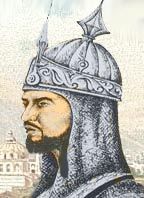
Ashraf Hotaki - Wikipedia, the free encyclopedia