Re: Pakistan’s Middle Class Soars as Stability Returns: WSJ
DB bhai garmian any wali hain…power generation kay khwab chor kar bijli na honay kay bahanon par kaam shuru karr dain… garmion main jhoot bolny may asani hoo gi.
Re: Pakistan’s Middle Class Soars as Stability Returns: WSJ
DB bhai garmian any wali hain…power generation kay khwab chor kar bijli na honay kay bahanon par kaam shuru karr dain… garmion main jhoot bolny may asani hoo gi.
Re: Pakistan’s Middle Class Soars as Stability Returns: WSJ
**
FINANCIAL TIMES**
Carmakers eye production in Pakistan as local market accelerates
**Surging sales and improving security lure companies such as Renault and Hyundai
**FEBRUARY 27, 2017
Farhan Bokhari in Karachi and Kiran Stacey in New Delhi

When Naeem Khan went into his local automobile dealer in Karachi to replace his five-year-old taxi with a rickshaw, he was not expecting to leave with a brand new air-conditioned car instead..But after getting a financing package that was cheaper than he expected, Mr Khan became one of an increasing number of Pakistanis who have recently bought vehicles they previously only dreamt of owning.
The national surge in sales has prompted three global carmakers to commit in the past few months to starting production in Pakistan, potentially doubling the number of foreign carmakers in the country.
“The dealer told me it was the right time to get a loan to buy a car,” says Mr Khan. “Five years ago he said he would have told me to buy a second-hand car or a rickshaw, but today I could afford to buy a new car.”Pakistan’s car market is still small, and dominated by the three Japanese brands that have local manufacturing plants: Toyota, Honda and Suzuki.
The trio made all but seven of the country’s domestically manufactured cars in 2015-16, according to the Pakistan Automotive Manufacturers’ Association, though the figures are just a fraction of their total global car sales.In the past, analysts say, manufacturers have been put off by the country’s relative poverty, as well as political instability and concerns about security.
The dealer told me it was the right time to get a loan to buy a car. Five years ago he said he would have told me to buy a second-hand car or a rickshaw, but today I could afford to buy a new car Naeem Khan.
But in the past few months, France’s Renault and both Hyundai of South Korea and its affiliate Kia have announced they will soon start assemblies in Pakistan, in partnership with local companies. It marks a return for Kia and Hyundai, which left in the previous decade when their local partner suffered financial problems.The new and returning entrants are being drawn in by several factors.
The first is both the scale of the potential market in a country of 200 million people, as well as the rate at which it is already growing.
In 2012-13, carmakers sold 118,830 cars in Pakistan. By 2015-16, that had risen 52 per cent to 181,145.Analysts say the surge has left Toyota, Honda and Suzuki struggling to meet demand with their customers sometimes forced to wait as long as five months before their cars are delivered.
Yong Sohn, general manager at the Hyundai group, says: “Population and growth-wise, Pakistan is very promising.”Renault declined to talk about its plans while it is in negotiation with local partners.
**Part of the reason for the rise in car sales is that Pakistanis are getting richer. Between 2010 and 2015, the amount each person earned per year rose from $4,370 to $5,320 as measured in gross national income per capita at purchasing power parity.That trend is expected to continue, partly helped by China’s plans to invest more than $52bn in Pakistan’s infrastructure under the “One Belt, One Road” project.
**
**Hyundai forecasts that, consequently, car sales in Pakistan will hit 300,000 a year by 2020.Just as importantly, say analysts, has been the corresponding fall in interest rates. Since September 2000, the rate at which banks can borrow from the Pakistan central bank has fallen from 13 per cent to 6.25 per cent.
**
Saleem Memon, who sells finance packages for carsin central Karachi, says: “A few years ago, customers sometimes paid 16 or 17 per cent in annual interest rates. Now, if they are lucky, they can get a good deal for around 11 per cent.
**
”Another factor drawing carmakers to Pakistan is that security has begun to improve thanks to a two-year campaign by the army. Mr Khan remembers days when he and other taxi driverswere routinely stopped at gunpoint by armed extortionists. “The streets are now safe and people feel comfortable driving till late at night,”** he says.
Third, the government has drawn up policies aimed at attracting carmakers, such as cutting the duties applicable to parts shipped from abroad and making it easier to find a site to build a plant.“The auto policy has given a lot of incentives to new foreign players, especially opening up new greenfield opportunities,” says Zarak Khan, an analyst at Elixir Securities.
Despite the optimism, some analysts urge caution in a country where terror attacks are common and tensions remain between the civilian government and the army.Others note that foreign companies will still be subject to the fortunes of the local companies with which Pakistani law mandates they team up.“The reason we didn’t come back earlier is that we were trying to find the right partner to work with, which is very important in this part of the world,” says Mr Sohn.
Taxi driver Mr Khan, however, is already in a celebratory mood. Sipping a cup of sugary tea, he says: “I have wished for an AC car for 20 years. Now it is happening.”
Re: Pakistan’s Middle Class Soars as Stability Returns: WSJ
FORBES
Pakistan Is Getting Ahead Of India, Again
Re: Pakistan’s Middle Class Soars as Stability Returns: WSJ
Pakistan sees end to routine power outages by year’s end
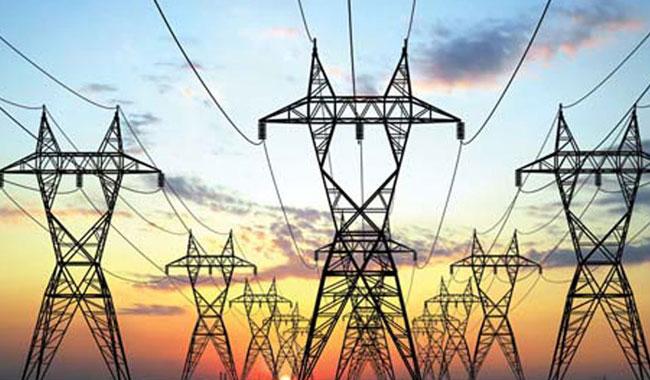
ISLAMABAD: Pakistan expects to end electricity shortages by the end of 2017, a senior government official said, in what would be a major electoral boost for the ruling party of Prime Minister Nawaz Sharif.
Sharif´s PML-N party swept to power in the 2013 polls by pledging to end crippling power shortages that have hobbled Pakistan´s economy and put off foreign investors. In recent months, Sharif has vowed that a system of scheduled electricity outages, known as “load shedding”, will be over in time for the next poll, likely in May 2018.
Mohammad Younus Dagha, the secretary, or top official, at the Water and Power Ministry, said the government was on course to increase generation by 8,000MW this year and plug a 6,000MW deficit.
“We should be able to keep to the timelines and achieve them … 2018 will be a load shedding-free year,” Dagha told Reuters over the weekend.
**Scheduled outages in capital Islamabad have been halved to three hours from six hours. Blackouts in major cities were as much as 12 hours a few years ago.
**
Sharif´s energy plans have been boosted by China, which is ploughing more than $36 billion into energy-related projects as part of the $57 billion China-Pakistan Economic Corridor (CPEC), a network of road, rail and energy links connecting Western China to Pakistan´s Arabian Sea port of Gwadar.
Critics, however, say the government´s desperation to end power shortages led to investors being offered far too generous tariffs, saddling consumers and industry with some of the most expensive electricity in the region.
Dagha said electricity costs should fall when the government begins to phase out expensive imported furnace oil plants and once large hydro projects come online in the 2020s.
“It is a big challenge to replace this expensive capacity with more efficient and low-cost generation. We are trying to do that but it will take a few years before we can compete with regional low prices of electricity,” Dagha said.
He added that Pakistan is now in a much stronger negotiating position and will be working to reduce tariffs on new coal, wind and solar projects to try to make electricity cheaper. “From availability, now we are moving towards affordability and energy security,” Dagha said.
Analysts say that while Pakistan may succeed in significantly boosting generation, there are question marks about how well the country´s ancient transmission systems will cope with this new influx of energy.
The government also plans to invest in several high-voltage electricity lines but it will take more than two years for them to come online. Pakistan has put a temporary moratorium on awarding contracts for new liquefied natural gas (LNG) plants and imported coal, and will instead focus on developing hydro and indigenous coal energy plants.
Re: Pakistan’s Middle Class Soars as Stability Returns: WSJ
Raja rental ki yaad taza karr di app nay:k:
Re: Pakistan’s Middle Class Soars as Stability Returns: WSJ
I want to put forward this question just out of curosity: If PML-N would be able to make Pakistan free of load shedding before May 2018, will you still vote for PTI or your choice would be PML-N ?
Re: Pakistan’s Middle Class Soars as Stability Returns: WSJ
**
German truck maker MAN SE to set up Assembly Plant in Pakistan**
By Farhan Zaheer
Published: March 2, 2017
https://c.tribune.com.pk/2017/03/1343204-manse-1488429265-607-640x480.jpg
Company also expected to export trucks from country, say industry officials. PHOTO: REUTERS
KARACHI: German truck maker MAN SE is at an advanced stage of setting up a plant in Pakistan, industry officials say.
Forecasting greater demand of heavy vehicles under the China-Pakistan Economic Corridor (CPEC), vehicle manufacturers are flocking to Pakistan to explore opportunities of investment with MAN SE being the latest addition to the growing list.
MAN SE, which has been watching the Pakistan market for over five years, is expected to officially announce its decision within a couple of months.
It is pertinent to mention that 75% of MAN SE’s ownership rests with the Volkswagen Truck and Bus GmbH, a wholly-owned subsidiary of Volkswagen AG.
Industry officials say this is a big development for Pakistan because the company is also expected to export trucks from the country.
The National Logistic Cell (NLC) is expected to give significant orders to MAN SE because Pakistan’s leading logistic company is looking to replace its old fleet, an auto industry official informed.
Officials from the German company are also coming to Pakistan to participate in the Pakistan Auto Show (PAPS) 2017, being held from March 3 at the Expo Centre, Karachi.
CPEC is expected to generate huge demand for trucks in Pakistan and industry officials say Pakistani companies like NLC would prefer to use German trucks due to quality concerns. Local industry officials say German trucks are better placed to commute on extraordinary high altitude of Karakoram Highway (KKH) – one of the highest paved roads in the world that connects Pakistan and China.
In February 2012, German Embassy’s Commercial Section Head Samy Saddi, while talking to media, said that German auto giant MAN was looking at Pakistan as a potential market.
The 250 year-old company operates through fully owned subsidiaries or joint ventures with local companies in India, Poland, Turkey, China, the US, the UAE South Africa, Uzbekistan, Portugal etc.
After years of stagnant economic activity and poor automobile sales, Pakistan is witnessing huge demand in heavy vehicles due to CPEC, macroeconomic stability and relative improvement in the country’s security situation.
Earlier, it was reported that Volkswagen Commercial Vehicles is in final talks with Premier Systems Private Limited – the authorised importer of Audi vehicles in the country – to set up a manufacturing/assembly plant for its Amarok and T6 (transporter range) models.
**](https://tribune.com.pk/story/1297634/17-predictions-pakistans-economy-2017/)**In the past year, a number of international auto makers have expressed interest to set up manufacturing plants in Pakistan.
France’s Renault and South Korea’s Hyundai and Kia have announced they will soon start assemblies in Pakistan, in partnership with local companies.
This will mark a return for Kia and Hyundai, which left in the previous decade when their local partner suffered financial problems.
*
Published in The Express Tribune, March 2[SUP]nd[/SUP], 2017.*
Re: Pakistan’s Middle Class Soars as Stability Returns: WSJ
I divorced PTI PML(A-Z) PPP waghaira waghaira long time ago.
aur agar load shedding khatam na hui tau kia app apny leadraan say zabardasti astifah lain gai? kanpati par pastool rakh karr?
banh maroor karr
tid may thuday mar kar…
Re: Pakistan’s Middle Class Soars as Stability Returns: WSJ
aja mahool palty join karly…
Re: Pakistan’s Middle Class Soars as Stability Returns: WSJ
wazarat kay saath chips milain gai?
chai kay saath sarkari gari milay gi?
Re: Pakistan’s Middle Class Soars as Stability Returns: WSJ
**
The Economist
**Pakistan confronts something Unfamiliar: Optimism
A cricket match and an obscure administrative reform are welcome signs of stability

Mar 9th 2017| ISLAMABAD
](http://www.economist.com/node/21718567/comments)
THE first thing to come back was the prime minister. Having twice held Pakistan’s highest office before the army toppled him in 1999, Nawaz Sharif returned from exile to win it back in 2013. This was a personal triumph but also a historic moment, marking the only time since Pakistan’s founding that one elected government has completed its term and passed power to another. It also turned out to be the first of a heartening series of signs that Pakistan itself seems to be returning, slowly and haltingly, to a more stable and prosperous state.
For the eight years since terrorists attacked a visiting Sri Lankan team, Pakistan’s cricket-mad citizens have forfeited the joy of watching top international matches on Pakistani soil. But on March 5th Lahore, the capital of the province of Punjab and site of the attack in 2009, hosted the final match of the Pakistan Super League, a lucrative franchise with many foreign players. For safety reasons the PSL’s matches had until now, embarrassingly, been staged in the United Arab Emirates. In February Pakistan also held its first international skiing competition since 2007, when Taliban militants overran its biggest ski resort, at Malam Jabba in the Swat Valley, and smashed the “heathen” lifts.
More broadly indicative is that Pakistan’s stockmarket has risen faster than any other in Asia over the past 12 months, by a heady 50%. Perhaps this is because annual GDP growth, having languished below 4% from 2008 until 2013, is now back to the long-term average of around 5%. Poverty has fallen and the urban middle class is growing. Nestlé, a giant maker of processed foods, says its sales in Pakistan have doubled in the past five years, to over $1bn.
Across much of the country, too, lights are coming on again. When Mr Sharif resumed office four years ago Pakistanis rarely enjoyed more than 12 hours of electricity a day. “It was so acute that private backup generators could not recharge the batteries that start them up,” says Ahsan Iqbal, the minister of planning. Big investments in power infrastructure mean that power cuts are now down to a more manageable 6-8 hours a day. The government hopes to eliminate them entirely in time for national elections next year.
That deadline has prompted another important step: over the next two months Pakistan is due to hold its first national census since 1998. Some 90,000 civilians and 200,000 soldiers are being mobilised to count the country’s 200m-odd inhabitants. The results will be used, among other useful things, to reapportion parliamentary districts. Until a recent revision, Pakistan’s constitution stipulated that a census should be taken every ten years. The fact that there have been only two in the past 45 years says much about the tragic drift under both military and civilian rulers.
Of anywhere in Pakistan, the part that may have got the shortest shrift is the Federally Administered Tribal Areas (FATA). British imperialists regarded this rugged region along the Afghan border as so untameable that its tribal chieftains were left to impose their own laws, a dispensation that has continued to this day.
One result is backwardness: in one district the proportion of girls enrolled in school in 2011 was a shocking 1%. Across FATA as a whole, female literacy in 2014 was estimated at just 13%. This contrasts with national literacy rates of 43% for women and 70% for men.
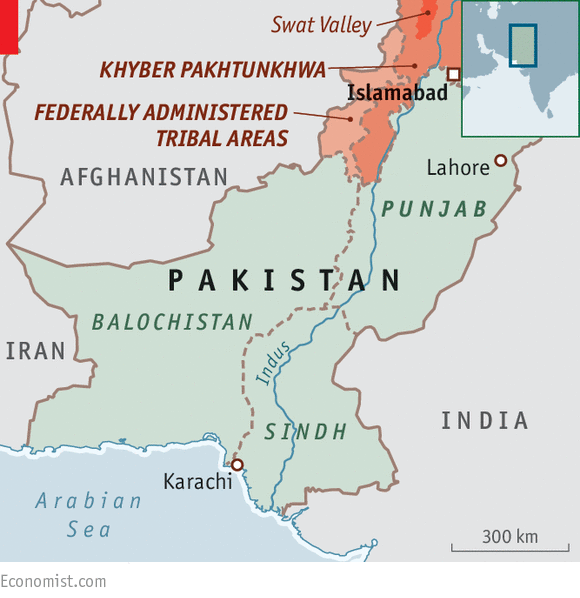
Another result has been insecurity. The endless war in Afghanistan flooded FATA with guns, refugees and radicalism, all of which Pakistan’s armed services unwisely sought to harness in pursuit of their own murky agenda, both in Afghanistan and at home. Having slipped completely out of control in the late 2000s, FATA has been pacified in recent years only by a mix of American drone strikes and Pakistani offensives on the ground. As many as a third of the region’s 4.5m people are believed to have fled. A government report in 2016 estimated that military operations over the previous decade had destroyed 67,000 houses and left 27,000 dead.
Given all this, the government’s recent announcement that it plans to normalise the administration of FATA is welcome. It will be absorbed into the neighbouring province of Khyber Pakhtunkhwa, giving it elected leaders rather than tribal elders, regular courts that apply national laws and ordinary police instead of tribal militias. Locals seem pleased: a recent survey found hefty majorities backing all these changes.
Despite all the good news, however, Pakistan’s progress remains unsure. Terrorist attacks, bombings, murders, kidnappings and brutal state retaliation continue at a brisk pace. Pakistan’s powerful military remains dominant and its secret services opaque. Take the case of the vanishing bloggers. Over three days in January, five obscure social-media commentators who had dared to criticise the army vanished from different parts of Punjab.
The army denied any involvement, but pro-military social media sites were quick to label the abductees blasphemers, apostates and traitors—in a country where blasphemy remains punishable by death. “Their crimes are so heinous that no one should say…that they suffered injustice,” tweeted one notoriously craven television host. Four of the men were eventually released, but have refused to talk about their ordeals.
Some Pakistanis question how much has really changed. Commenting on the elaborate security for the PSL final, Anjum Altaf, a columnist for the *Dawn *newspaper, harrumphed: “I fail to understand how spending hundreds of thousands of dollars to bribe a handful of foreigners to play a game in a nuclear bunker can be convincing proof that the country is back to normal…This is self-delusion carried to absurdity.” For Pakistan, however, even to be debating the subject is encouraging
Re: Pakistan’s Middle Class Soars as Stability Returns: WSJ
People r struggling for basic necessities like health, water, food, employment…
all these ‘feel good’ news is useless. Corruption will not stop from these looters and hence nothing will improve.
even cpec can’t change much. Just line up pockets of chinese and some rich businesses. Thats all