:salam2:
Pakistani cuisine is as diverse as it’s people. Most of Pakistani cuisine has Afghan-Turkic-Iranian roots, a legacy of Muslim rule in South Asia, which got subcontinent flavor due to the greater usage of spices. In a wider sense Pakistani cuisine is a blend of western (Afghan-Iranian) and eastern (Indian) neighbors, depending on the region and people, of which many have evolved into their own unique distinct characteristics. Meat is a major part of Pakistani diet, whereas vegetables and beans are as important. Wheat is also the main staple of Pakistani diet, whereas rice is also popular. The content of spices can range from very spicy/hot to mild, although spicy/hot seems more popular. In recent times some of the Chinese and American cuisine have also been adopted by a few segments of Pakistani urbanites as well.
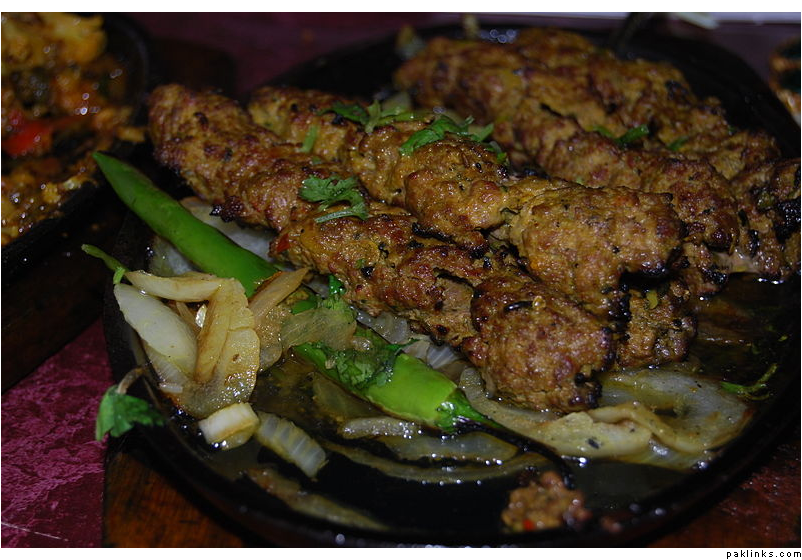
Within Pakistan, cuisine varies greatly from region to region, reflecting the country’s ethnic and cultural diversity. Food from the provinces of Sindh and the Punjab can be highly seasoned and spicy. Food in Western Pakistan particularly the Khyber Pakhtunkhwa, Balochistan, Gilgit-Baltistan and Azad Kashmir involves the use of mild aromatic spices and less use of oil.
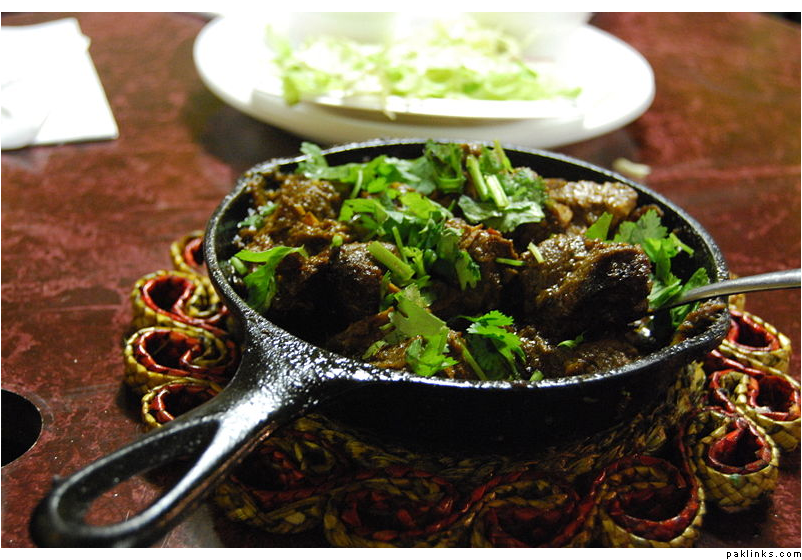
Given the diversity of the people of Pakistan, cuisines generally differ from home to home and may be totally different than the mainstream Pakistani cuisine.
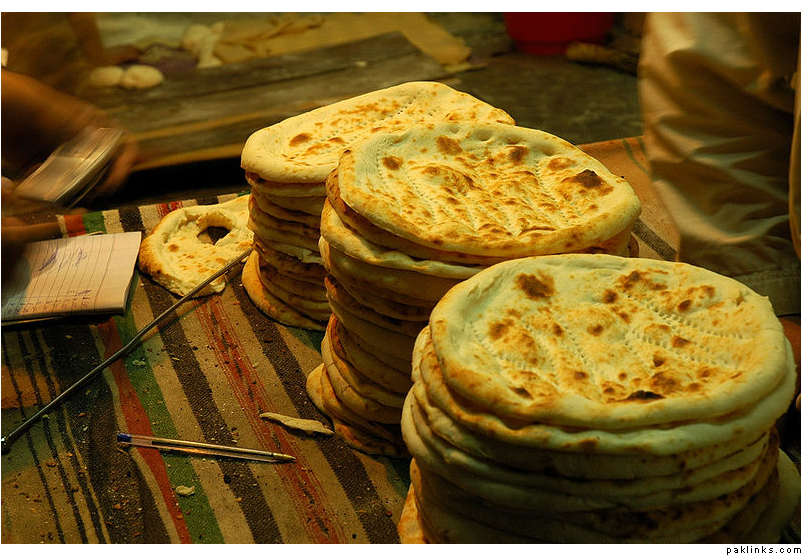
In Pakistan, main courses are usually served with wheat bread (either roti or naan), or rice. Meat plays a much more dominant role in Pakistani food, compared to other South Asian cuisines. Of all the meats, the most popular are goat or mutton, and chicken. Beef is also eaten, and is particularly sought after as the meat of choice for kebab dishes or the classic beef shank dish nihari. Seafood is generally not consumed in large amounts, though it is very popular in the coastal areas of Sindh and the Makran coast of Balochistan.
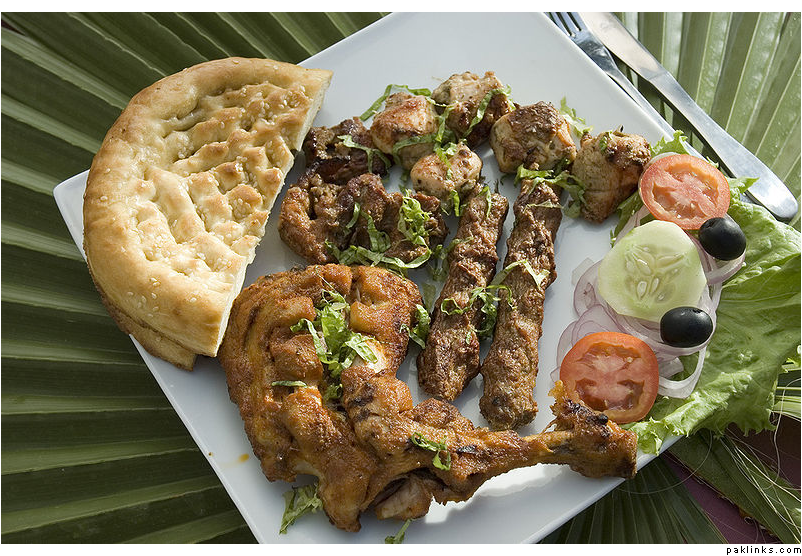
Kebabs are a staple item in Pakistani cuisine today, and one can find countless varieties of kebabs all over the country. Each region has its own varieties of kebabs but some like the Seekh kebab, Chicken Tikka, and Shami kebab are especially popular varieties throughout the country. Generally, kebabs from Balochistan and the Khyber Pakhtunkhwa tend to be identical to the Afghan style of barbecue, with salt and coriander being the only seasoning used. Regional kebab recipes from Karachi and the wider Sindh region is famous for its spicy kebabs, often marinated in a mixture of spices, lemon juice and yoghurt. Barbecued food is also extremely popular in some cities of Punjab such as Lahore, Gujranwala and Sialkot. Al-Hamra Restaurant and Bundu Khan kebab House are famous throughout Pakistan for their taste and variety of kebabs. Kebab houses are said to be the most profitable food businesses in Pakistan.
Biryani is a very popular dish in Pakistan and has many varieties such as Lahori and Sindhi biryani. Tahiri, which is also a form of vegetarian biryani, is also popular. All of the main dishes (except those made with rice) are eaten alongside bread.
In the Khyber-Pakhtunkhwa feasts using mountains of spiced rice combined with pieces of slowly roasted lamb are often served for guests of honour. These kind of pulaos often contain dried fruit, nuts, and whole spices such as cloves, saffron and cardamon. Such rice dishes have their origins in Central Asia and the Middle East.
Pakistani Desserts
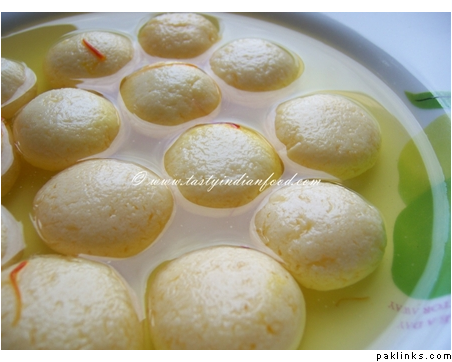
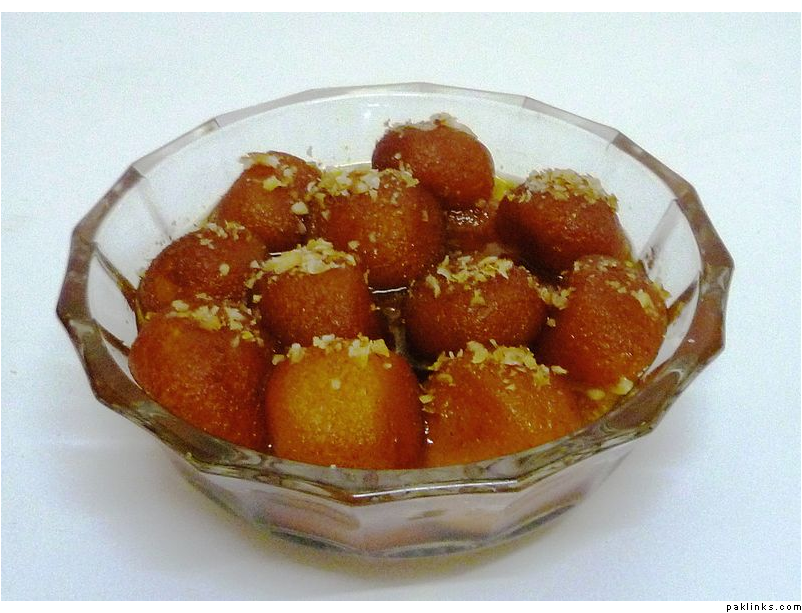
Popular desserts include Peshawari ice cream, sheer khurma, kulfi, falooda, kheer, rasmalai, phirni, zarda, shahi tokray and rabri. Sweetmeats are consumed on various festive occasions in Pakistan. Some of the most popular are gulab jamun, barfi, baklawa, kalakand, jalebi, and panjiri. Pakistani desserts also include a long list of halvah such as multani sohen halvah and hubshee halvah. Kheer made of roasted seviyaan (vermicelli).
**Pakistan Dances
**
There are so many dance and music. :shoaby: