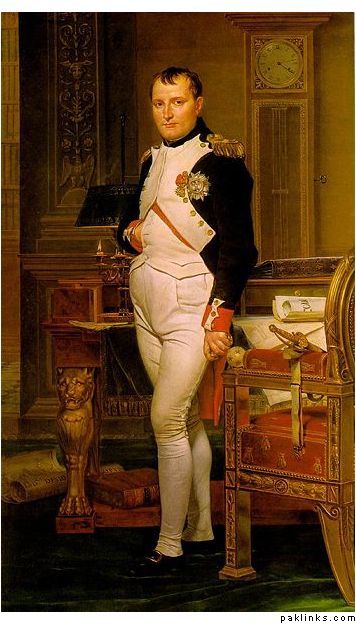
Napoléon Bonaparte
15 Aug 1769 – 5 May 1821
The legendary French General and Emperor, was commissioned into an Artillery Regiment as a Lieutenant in 1786 at age 17 and served till 1789 when the revolution broke out. After the revolution amidst chaos and confusion when tensions ran high among various factions he joined a regiment of volunteers as a Colonel. Later he was appointed Commander of Artillery for the French Forces.
From there onwards he moved from one camping to another, mingling with the right influentials, gaining their support for appointments at important campaigns and incident, at all of which he delivered exceptionally and gained popularity, support and fortune and rose in rank.
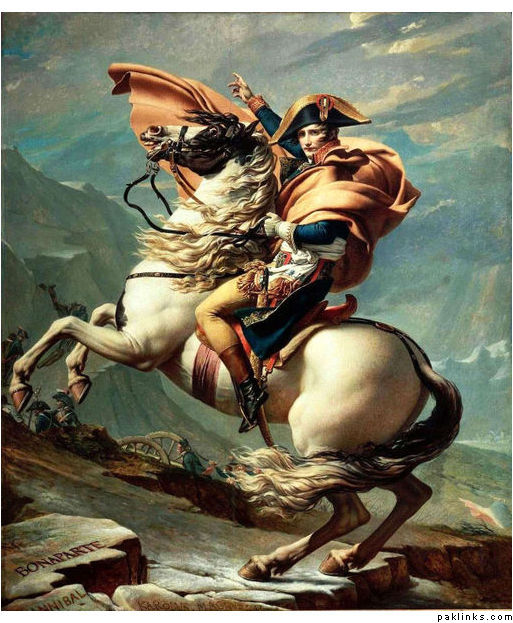
In 1796 he stepped into the Italian campaigns and with success after success his military genius was becoming evident, his war doctrines and strategic concepts gained popularity and to date are taught in theory to all military officers the world over.
After Italy Napoleon became highly popular and began delving into politics, both traits annoyed certain influentials.
In 1798 he went on to the campaign to seize Egypt and after various battles with the British, Ottomans and Arabs, and establishing control over various areas he left for France in 1799.
In Nov 1799 he was encouraged to stage a coup against the government and although he was not meant to dominate the new setup, he ended up being the most powerful man and as later elected the First Consul for life. His rule and reforms went popular and are held in esteem to this day.
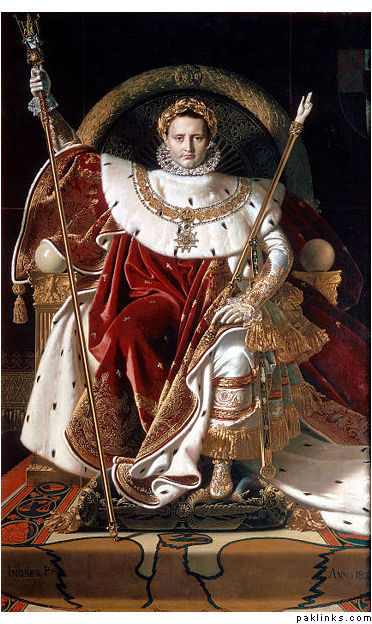
After another Italian campaign he was crowned Emperor in 1804 after he uncovered an assassination plot against him.
By 1805 Britain Austria and Russia created a coalition against him, in Oct he gained victories on land against the Austrians but in the sea the famous battle of Trafalagar on 21 Oct established British control after the sacrifice of famous Admiral Lord Nelson who fell during the battle.
In 1812 he attacked Russia, against many an advice to avoid attacking main Russian territory, but Napoleon advanced and seized victory after victory. The retreat from Russia was one of the most costly moments in his life and career. His troops are said to have decreased to half the original number and the fatigued and battle weary troops suffered a drop in morale under the harsh winter.
On 6 April 1813 Napoleon wished to step down and have his son in his place but the decision was widely opposed and his Marshals mutinied and sent him to exile to Elba island. At this point he tried to commit suicide but the poison he took was weak and he survived.
From Elba he escaped in 1815 and arrived in France where he was able to raise an army quickly of over 300000 men. And he governed for the renowned ‘100 days’. In June 1815 he was eventually defeated at the battle of Waterloo by Duke Wellington Arthur Wellesley and later captured. He was exiled to island of St Helena and there were various hopes and attempts to rescue him and later even the British began favoring him and opposing his imprisonment. His character became a legend while he was alive.
At last he died on 5 May 1821 at St Helena and was buried there. His remains were later moved in 1840 to France. Even in death there as been dispute and some believe he died of stomach cancer while many maintain he was a victim of slow poisoning.
He remains one of the world’s greatest military commanders and a genius at that. He is accepted as an exceptional ruler and strategist. His way of governance is also known theoretically as Bonapartism. He continues to inspire soldiers and non soldiers alike the world over and his life and wars are studied at ever military institution.
Sources:
Wikipedia
Memoirs of Merchand
http://napoleon.thepodcastnetwork.com/
Note:
- This is a general / bird’s eye/short view of General Emperor Napoleon Bonaparte’s life and times. I request ad encourage all members to kindly share thoughts, views, knowledge and information and further the discussion on the great commander. *