Adoption:
there are many children in Russia that are born out of so to say “muslim” parents (people who are of muslim decent, but are not practicing Muslims, and know little of Islam). Children have muslim names and are in orphanages for adotion, because their parents either left them or the government took parental rights out of them (because they didn’t care of the kids). These children desperatelly need muslim home. By Russian laws you may change their names and give them your last name. They are in poor conditions, and have NO future if left there. They were abandoned by their parents but they are dreaming of having home and parents and family! They are muslims because all children are born muslims. Also with these children you will never fear that upon learning where they come from, they would decide to follow Christian religion, because initially they come from Muslim families.
They need a lot of care, a lot of hard work, but they have a lot of love to share in exchange!
Russian families (non Muslim)sometimes take those children and they grow up not knowing anything of Islam, which is very sad.
If you have a heart to help out, please consider adoption of these children. They are called “nashional” (natsionalnij) children, and have muslim names (such as Islam, Madina, Muslim etc. - easy to figure out).
You will have to be prepared to wait (it takes a little time to go through with the process), it is also costly (you may want to ask for donations of your family, friend and community). All the adoptions from Russia are made through approved (accredited by government) adoption agencies (you cannot get over this rule - it’s a state law of Russia). You may easily find an agency (just google) that is close to you, and contact them if you are really interested and want to get more info (make sure thay are accredited and still work with Russian adoptions). You will have to travel 2 times to Russia to complete adoption process (think of tickets price and an overseas vacation you’ve always dreamed of : ), I’m just kidding). You may choose any region to adopt from (more remote areas - closer to borders with Kazakhistan and Turkmenistan) or even choose Moskov (where you will definetelly have to come anyway during the process of adoption, so this may even save you some time and money, if you choose to adopt from Moskov region)…
Just ask for this children (they call them nashional, because they are of different national origin than plain Russian), and you will find a child who is waiting for you and hoping to have parents!
Jazak Allahu khejran.
Unfortunatelly I cannot paste a link here, so just type in Googe: usinovite ru
It will show you the official web-site (it should be the fist one on your search page). Then translate page into English (do not click “english” option on languages, it does not have complete info), then choose “Databank orphans” from the top panel. Translate again.
There you may want to put parametres that you are looking for a child with black + brown eyes (check the square next to the word “eyes” first, to make it active), dark + brown hair, male or female, Possible forms of the device: for adoption, Region (scroll down menu) and year of birth.
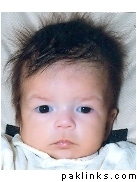
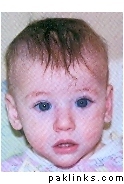
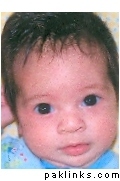
For example, I did put these parametres: black + brown eyes, dark + brown hair, female, born year 2008, Moscov. It gave me the page with pictures of tree girls, the bottom one happened to be Fatima : )) She is cute!
Or (same parameters), but “region of Krasnoyarsk” in the Region scroll menu. Will show you gorgeous girl with the name Muslima!
Same parametrs but Province of Omsk: second girl is Samira (exte-emely cute, blue eyes!) : )
If you put less parameters (I put just year 2008, female, Moscov), you may find more children with muslim names : )
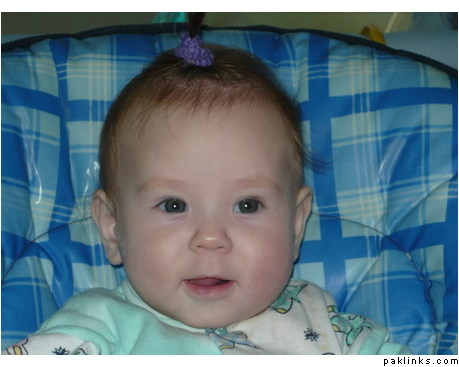
For example, this Go-o-rgeous blue-eyed, blond little girl with name Leila (№ 80al)! She is not Russian, Russians do not give this names to children, but her mother or father were of muslim origin…
Amina: № bce7
boys (Moscov):
born 2008
Muhammad: № 50u6
born 2009
Rasul: № c7zz
Said: № bvcv
Muhammad: № e5j3
Farid: № ei67
Muslim: № 1333z
Islam: № 1pk5c
And so on. I think you got it : )))
This way you may find many many more children with Muslim names.
I would paste a link here, but this web-site doen’t let me. Sorry, to make you follow my directions, if you choose. I hope it was helpful.
I would like to help in any way possible!
May Allah reward us in this life and in Akhiran!
Assalamu alejkum.
P.S. Hey, if you know anyone who might be interested, or who may post it on their web-site/ forum, please, do so!
Jazak Allahu khejran!
**Procedure**
**for adoption of children, who are Russian citizens, by foreign citizens, stateless persons and Russian citizens residing outside the Russian Federation **
The law of the Russian Federation allows foreign citizens, Russian citizens continuously residing outside Russia and stateless persons to adopt children who are citizens of the Russian Federation. The procedure is established by Articles 124 and 165 of the Family Code of the Russian Federation, Paragraph 29 of the Code of Civil Procedure of the Russian Federation and the Federal Law of April 16, 2001 No. 44-ФЗ “On the State Database of Children without Parental Custody,” as well as other regulatory legal acts.
According to the Russian government resolution of April 4, 2002 No. 217 “On the State Databank of Children without Parental Custody and Supervising the Terms of its Creation and Usage,” individuals who wish to adopt children have the right to apply for information on children left without parental custody to any regional (usually regional educational authority) or federal operator of the state databank on children without parental custody.
Foreign citizens must present the operator with identifying documents recognized by the Russian Federation. The documents might include the following:
a) an application form for adopting a child and a petition for a dossier from the database of children that would fit their requirements;
b) personal details forms;
c) a written commitment to register the adopted child with the local consular office of the Russian Federation according to the established procedure;
d) a written commitment to admit authorized officials to examine the living conditions of the adopted child;
e) a copy of an identification document of a Russian citizen residing outside the Russian Federation, a foreign citizen or a stateless person, recognized by the Russian Federation;
f) a document from an authorized agency in the country of citizenship of the adoptive parents (or for Russian citizens residing outside the Russian Federation, or for stateless citizens from the country in which they have permanent residency) describing their living conditions and their capacity to be adoptive parents. Photos of the adoptive parents’ family must be included;
g) a commitment from an authorized agency in the country of residence of a Russian citizen living outside the Russian Federation, foreign citizen or stateless citizen to supervise the living conditions of the adopted child and provide reports on the living conditions of the child in the adoptive family;
h) a commitment from an authorized agency in the country of residence of a Russian citizen residing outside the Russian Federation, foreign citizen or stateless citizen to guarantee that the adopted child be registered with a local Russian Federation consulate;
i) a copy of a license (or any other document) of the foreign agency confirming the authorization of the agency to issue the documents mentioned in paragraphs “f” to “h” of the present Procedure.
The documents mentioned in paragraphs “a” to “d” are valid for a year from the day they are produced. The documents mentioned in paragraphs “f” to “h” are valid from the issuing date.
If the legislation of the foreign country sets different terms of validity of the documents mentioned in paragraphs “f” to “h”, they will be considered valid for the period of time stated by the law of the country.
If they reside outside of their country of permanent residence during the adoption procedure for more than a year (for work or other reasons), Russian citizens residing outside the Russian Federation, foreign citizens or stateless citizens should present the following documents in addition to those mentioned in paragraphs “a” – “e”:
a) a report on the person’s capacity to be an adoptive parent and a commitment to monitor the child’s living conditions and registration with a Russian consulate on returning to the country of permanent residence, issued by a competent authority of that country;
b) a report on the person’s living conditions and a commitment to monitor the child living conditions and registration with a Russian consulate on arrival in the country where the person lives at the time the adoption, issued by a competent authority of that country.
All documents presented to court should be certified according to an established procedure, translated into Russian, with the translator’s signature authenticated either in a Russian consulate or diplomatic mission in the applicant’s country of residence, or by a notary in Russia.
Upon selecting a child, the operator will issue a permit for the applicant to visit this child and notifies, within 3 days, a custody or trusteeship authority or a regional databank operator in the child’s place of residence.
If a child is being adopted by foreign citizens with the help of a representative office specially authorized by a foreign state agency and/or Russian adoption agency, documents from the foreign applicant shall be presented to the federal operator by a representative office employee.
The appropriate operator must present the information about the child upon the request of the foreign applicant or an employee of the representative office. This information is incomplete. The adoptive parents can receive confidential information about the child only on arrival in Russia and meeting the child.
A foreign citizen shall visit the child without parental custody at the established time and shall inform the operator of the results of his/her visit and his/her decision on adopting the child. The applicants (both Russian and foreign) have the right:
- to obtain information about the child and information on whether the child has relatives or not, specifically on whether the adopted child is a “qualified” orphan;
- to have an independent medical examination of the child conducted at a medical institute.
Candidates shall:
- meet the child and establish contact with him/her;
- review the documents of the child;
- confirm in written form that they have reviewed the results of the child’s medical examination.
Consequently, the pre-trial preparation for the international adoption of a child can be carried out by the federal or regional operator of the state database, or an employee of the custody or trusteeship committee.
The adoption is performed by the supreme court of the republic, a regional court, a city federal court or an autonomous region’s court depending on the place of residence of the child, as listed on the adoptive parent’s application form (Article 269 of the Civil Code.)
In accordance with Article 271 of Russia’s Civil Procedure Code, the following documents have to be enclosed to the adoption application:
1) a copy of the birth certificate of the adoptive parent, if the child is adopted by an unmarried person;
2) a copy of the marriage lines of the adoptive parents (parent), if the child is adopted by a married couple (person);
3) the spouse’s consent to adoption, or a document confirming the spouses’ separation for over 12 months, if the child is adopted by one of the spouses. If no such documents are available, the application form should contain evidence confirming these facts; and
4) a physician’s conclusion on the prospective parent’s (parents’) health.
In accordance with Article 127 of Russia’s Family Code, individuals who cannot exercise parental care for medical reasons are denied adoption. A list of health problems which prevent an individual from becoming an adoptive parent was set by government resolution No. 542 of May 1, 1996.
Tuberculosis (active or chronic) in all clinical forms;
Disorders in internal organs, the nervous system, and the locomotor system (decompensated);
Substance abuse, alcoholism;
Infectious diseases until the end of follow up;
Mental disorders, if the applicant is legally disqualified or recognized as capable but with limitations; and
Health conditions or injuries which qualify for a medical disability certificate (groups 1 and 2, which means inability to work).
It follows therefore that a medical conclusion on the prospective parent’s health should contain information that he/she is not suffering from the above disorders.
5) a position and pay statement from the applicant’s employer, or a copy of the applicant’s income declaration, or another income statement;
6) a document confirming the applicant’s right to use a residence, or his/her ownership of an estate; and
7) a certificate that the applicant is registered as a prospective parent.
Two copies of each document have to be presented to court.
All documents presented to court should be certified according to an established procedure, translated into Russian, with the translator’s signature authenticated either in a Russian consulate or diplomatic mission in the applicant’s country of residence, or by a notary in Russia.
Prospective parents, as well as representatives of regional child adoption databanks and custody and guardianship authorities often ask how many times a foreign applicant needs to come to Russia. The law does not specify the number of visits, but as a rule, foreign citizens wishing to adopt a child in Russia have to come to the country twice: the first time, to select a child and get acquainted with him/her, and submit their application documents. Then they need to come to Russia to attend the court hearing. It happens because the period between the selection of the child and the hearing can be several months or longer. Adoption hearings are scheduled according to the general timeframe established by the Civil Procedure Code. The more carefully an applicant prepares the documents and collects the required evidence, the sooner the hearing will take place.
Child adoption applications are considered at a closed court hearing, with the compulsory presence of the prospective parent (parents), a representative of a custody and guardianship authority, a prosecutor, the child (is he/she is older than 14), and in some cases, the child’s parents, other parties concerned, and the child aged between 10 and 14. (Article 273 of the Civil Code).
The decision to grant or decline the applicant’s request for adoption is made by the court. If the request is granted, the court recognizes the child as adopted by the specific applicant (applicants) and produces a document stipulating the decision and containing all the data on the child and the foster parents required for state registration of the adoption with a Civil Registry Office.
If there are extraordinary circumstances in which a delay in the execution of the judgment could make the very execution impossible, the court is authorized (in accordance with Article 212 of the Civil Procedure Code, to demand immediate execution of the judgment, if the adopted child needs urgent hospitalization for treatment and/or surgery, and delay could threaten the child’s life and health.
According to Article 134 of the Family Code, the adoptive parent gives the child his or her last name and a new first name; the child’s patronymic is derived from the foster father’s name or, if the child is adopted by a single woman, from the name of the man she will indicate as the father of the adopted child. If the adoptive parents have different last names, the child is given the one the adoptive parents will agree on.
If a child is adopted by an unmarried person, he or she can choose the first name, patronymic and last name of the adopted child’s mother (father) to give to the registrar.
The last name, first name and patronymic of the adopted child aged ten and older, can only be changed with his/her consent, except in cases when the child had been living in the adoptive parent’s family before the latter applied for adoption.
The change of the adopted child’s last name, first name and patronymic should be stipulated in the court decision on adoption, as was mentioned above.
Article 135 of the Family Code provides for a possibility to change the date and place of the adopted child’s birth. According to that article, the date of birth can only be changed in order to keep the adoption secret, and only when the adopted child is 12 months or older. It can be changed by no more than three months, that is, the adopted child can be registered as born three months before or after his/her actual date of birth.
It is usually done when the gap between the adopted child’s date of birth and those of the foster parent’s own children is not long enough.
The adopted child’s place of birth may be changed if the adoptive parent’s actual place of residence is different from the child’s place of birth.
The option of changing the adopted child’s names does not depend on whether or not the applicant is registered as the child’s parent. For example, the court may decline the applicant’s request to register him/her as the child’s parent, but he or she still can change the adopted child’s first name, last name and patronymic.
If the adoption request is granted by court, the mutual rights and obligations of the adoptive parents and the adopted child are applied from the day the court decision takes effect (paragraph 2 of Article 274 of the Civil Procedure Code).
Therefore, the court, even if it grants the applicant’s (applicants’) adoption request, can still refuse to register him/her/them as the child’s parent (parents) and to change the child’s date and place of birth.
The court sends a copy of the decision on the child’s adoption, within three days from the day when it takes effect, to the local Civil Registry Office for official state registration of the adoption.
On the basis of the court decision on adoption and registration of the adoptive parents as the child’s parents, the local Civil Registry Office changes the child’s birth record (Paragraph 2 of Article 42, pages 44-45 of the Civil Registration Act).
The Civil Registry Office also issues an adoption certificate to the adoptive parents, while the local Interior Department’s visa and registration division issues a passport for the child. Finally, the adoptive parents obtain the required immigration documents for the child at their country’s embassy in Russia.
When a child, who is a Russian citizen, is adopted by foreign citizens, he/she retains his/her Russian citizenship anyway.
If the adoptive parents, or one of them, are foreign citizens, the adopted child’s Russian citizenship can be cancelled upon their request, and only if they guarantee him/her a different citizenship. The reliability of their guarantee, and the whole process of issuing the child a different citizenship, should be controlled by Russian consular offices.
This clause needs to be observed because the departure of a child, who is a Russian citizen, from the country with his/her adoptive parents creates a situation, in which the Russian agencies concerned will not be able to guarantee that the citizen’s rights and freedoms are fully observed there.
The rights and interests of children, who are Russian citizens, adopted by foreign citizens or stateless persons, are protected outside Russia within the limits set by international law, unless otherwise provided by Russia’s international agreement. Such protection is ensured by Russian consular offices, which keep files on adopted Russian children until they come of age (Paragraph 3 of Part 1 of Article 165 of the Family Code). The registration procedure is established by government resolution No. 275 of March 29, 2000 (revised 03.10.2005).
Children adopted in Russia have to be registered with a Russian consular office in their adoptive parents’ country of residence, within three days from arrival. It is also possible to register them before leaving Russia, through the consular service department at Russia’s Foreign Ministry.


The following documents must be presented to register the adopted child with a Russian consular office:


  - application form with the child’s photograph;
  - adoption certificate;
  - identification documents for the adoptive parents and the adopted child.

If the child’s adoption is being registered with the assistance of a representative office of an agency authorized by a foreign country, or an organization representing the adoptive parents’ interests, that agency or organization is responsible for the child being registered with a Russian consular office.

If the adoptive parents with the child change their place of residence, they should notify the local consular office and re-register the child at their new location.