These days, getting a hold of your favorite spice is simply a matter of heading to the grocery store and buying a bottle. If you want a particularly rare variety, you might need to drive to a specialty grocer. But only a few centuries ago, spices were a much bigger deal. Trade routes were established simply for the sake of spices. Monopolies were established to protect the value of these culinary specialties. And wars were even fought for them. Next time you reach into your spice rack, remember a few of these saucy facts about some of the most common seasonings.
Re: Mirch Masala
Saffron
Let’s kick things off with the world’s most expensive spice, the exotic saffron.
This colorful spice is the stigma of a beautiful purple/blue flower. Interestingly, the autumn-blooming plant with three highly valuable stigmas per flower doesn’t even exist in nature. It’s speculated that the sterile flower is a descendant of the Mediterranean flower Crocus cartwrightianus.
Whatever the true origins of the flower though, it was subjected to extensive artificial selection starting over 3000 years ago by growers seeking longer stigmas until the plant became sterile and was no longer the same species as its original source. If you’re wondering how they keep a species of sterile flowers alive, the process involves digging up the flower’s bulbs, breaking them up and then replanting them. Each plant can produce about ten blubs. This process, along with the relatively small bit of the flower actually used account for why saffron is so darn expensive.
About forty hours of labor are required to pick 150,000 flowers and each pound of saffron requires between 50,000 and 75,000 flowers. That’s about one week’s worth of work to pick about a football field worth of flowers all for two pounds of saffron. Once in the market, the price per pound of saffron ranges from $500 to $5,000.
**These days, saffron is most commonly used in paellas, but throughout history, the spice has been used to treat illness, to dye clothing, to bathe in, and as a yummy seasoning, of course.
**
**Alexander the Great used saffron in his rice and in his bath to help treat his battle wounds. His troops followed suit and brought the practice back to Greece where saffron baths became all the rage.
**
During the Black Plague, saffron was sold as a medicine to treat the illness. There was such a huge demand that when a shipment of the spice was stolen by noblemen, a fourteen-week long “Saffron War” broke out. The flower’s cultivation soon started spreading north and soon there were so many people selling counterfeit saffron in Nuremberg that the city issued a law that made it a crime punishable by death to sell adulterated saffron.
As it turns out, the spice is highly useful as a medicine although its effectiveness against the plague is still questionable. Recent studies have found that it can help treat Alzheimer’s, depression, obesity, PMS, breast cancer, allergies and help prevent heart and eye problems
Restored attachments:

Re: Mirch Masala
Vanilla
While you probably know vanilla comes from a bean, did you know that bean came from a beautiful orchid plant? Or that while we are now accustomed to “Tahitian vanilla” and “Madagascar vanilla,” the orchid is actually native to Mexico?
**In fact, even though vanilla was brought to Europe by Cortez in the 1520’s, it wasn’t until the 1840’s that a 12-year-old boy figured out a way to hand pollinate the flowers that previously could only reproduce with the help of Mexico’s native Melipona bee. Once little Edmond Albius figured out this process, the plant quickly started being grown commercially in tropical climates around the world.
**
These days, Madagascar is the largest supplier of the bean, responsible for 58% of the total vanilla production. Despite the fact that it can be grown in tropical areas throughout the world, the process to grow the plants is so labor intensive that vanilla is still the second most expensive spice in the world. Long before Cortez arrived in the New World, the Totonacs of the Gulf Coast were the first people to cultivate vanilla. According to their folklore, the orchid was born when the Goddess Princess Xanat was forbidden to marry a mortal. She fled to the forest with her lover, but both of them were captured and beheaded. When the blood hit the ground, the vines of the orchid plant magically took root.
Re: Mirch Masala
Nutmeg
The nutmeg tree is the only tropical tree that provides two different spices, nutmeg and mace. The tree is native to the Molucca Islands of Indonesia, which is also where cloves come from.
The first non-natives to discover the islands were Arab spice traders, who kept the location of the spice-bearing islands a secret. Eventually though, the Portuguese captured the natives and forced them to show them where the spices grew, but the Moluccans fought back, forcing the Portuguese to abandon the islands. **In the meanwhile, the Dutch and English led a bloody battle over the island’s spices, one which the Dutch eventually won after massacring huge numbers of the area’s natives. During Napoleon’s reign, the English took over the islands and transplanted a few nutmeg trees into their other colonial properties, Grenada and Zanzibar, effectively destroying the Dutch monopoly.
**
When the Dutch were in control, they would generally apply lime to the seeds they imported to Europe to prevent people from being able to grow their own spices and hurt their monopoly. At the time, all spices were called peppers and a pirate/horticulturalist named Pierre Poivre managed to raid a few of their stores hoping to get seeds to cultivate his own seasonings. Hence the origins of the Peter Piper rhyme. One of the compounds that gives nutmeg its particular taste is myristicin, which also happens to be a hallucinogen.
While most of us limit our intake of the spice so we never feel its effects, it is banned from most prison kitchens because of its popularity among drug users who can’t get a hold of other substances. While the initial feeling has been compared to smoking marijuana, side effects include headaches, nausea, convulsions, hallucinations and really short trips. In fact, the side effects are so bad that even William Burroughs swore the stuff off after one use.
Re: Mirch Masala
Fennel
Fennel is an incredibly useful plant. Its bulbs can be enjoyed as a vegetable, its leaves can provide a delicate flavor to a variety of foods and its seeds and pollen are used as an anise-flavored spice.
The history of the plant goes back millennia and there are even a few different Greek myths related to it. In one myth, Prometheus used the stalk of the plant to steal fire from the gods. In another, the god Dionysus fashioned a self-pleasuring toy out of a fennel branch to satisfy himself after one of his lovers died before he was able to consummate the relationship. Strangely, this myth is still directly connected to the plant in Italy, where the word for it, finoccio, is also a derogatory term for homosexuals. The term has been used all the way back since the Italian Inquisition. Of course, the word “fennel” itself is hardly offensive, coming from the Latin word “fenum,” which means hay.
Re: Mirch Masala
Salt
Salt is one of the world’s oldest food preservatives and evidence even shows that Neolithic people were extracting salt from salt-laden spring water all the way** back in 6050 B.C**.
Experts believe their salt extraction may have even had a direct correlation to the rapid population growth that occurred soon after the salt-removal process began. Back in Egyptian times, salt was used to preserve fish and birds, but it was also included in funeral offerings located inside their tombs.
The word “salary” comes from the Latin word “salarium” which was used to describe the money paid to Roman soldiers towards their purchase of salt. The word “salad” also comes from the spice, and refers to the Roman practice of salting leafed vegetables.
Poland was a massive empire in the 16[SUP]th[/SUP] century due to their many salt mines, but their kingdom was soon destroyed when the Germans started manufacturing sea salt. Venice and Genoa even fought wars over the mineral.
More recently, Mahatma Gandhi led over 100,000 people in protest of the British rule against making their own salt from the sea, as it allowed people to avoid paying their salt tax. The civil disobedience made international headlines and inspired millions of people to protest the British rule of their country and fight for Indian independence.
Re: Mirch Masala
Nice. Very informative thread. More please 
Re: Mirch Masala
Thanks Calypsodc 
Ginger
Ginger’s current name comes from the Middle English gingivere, but ginger dates back over 3,000 years to the Sanskrit srngaverammeaning “horn root” with reference to its appearance. In Greek it was ziggiberis, and in Latin, zinziberi.
**Although it was well-known to the ancient Romans, ginger nearly disappeared in Europe after the fall of the Roman Empire. Thanks to Marco Polo’s trip to the Far East, ginger came back into favor in Europe, becoming not only a much-coveted spice, but also a very expensive one.
**
Queen Elizabeth I of England is credited with the invention of the gingerbread man, which became a popular Christmas treat.
Ginger (botanical name Zingiber officinale) is in the same family as turmeric and cardamom. It is native to Southern Asia and has long been a staple addition to Asian cuisines.
Ginger is quite popular in the Caribbean Islands, where it grows wild in lush tropical settings. Jamaican ginger is prized for its strong, perky flavor, and this island currently provides most of the world’s supply, followed by India, Africa and China.
Restored attachments:

Re: Mirch Masala
Interesting :k:
Re: Mirch Masala
Thanks DA
**Cloves
**Like the history of many spices, the history of cloves goes back many centuries. In fact, this spice was one of the first to be traded and evidence of cloves have been found in vessels dating as far back as 1721 BC. Native to the Malucca Islands, as many spices are, cloves were once a treasured commodity prized by the Ancient Romans.
But it wasn’t just the Romans who enjoyed cloves. The Chinese were said to use them as far back as 226 BC. Apparently they chewed the flowerettes prior to having an audience with the Emperor so that their breath would not smell bad.
Along with nutmeg, cloves were one of the most precious spices of the 16th and 17th century, and control of them spurred expeditions as well as wars. In 1522, Magellan’s ship returned from its fateful trip around the world (Magellan himself was killed in the Philipines at the Battle of Mactan.) with a ship loaded with cloves and nutmeg, much to the delight of Spain. Of course, everyone wanted in on the trade since cloves were worth more than their weight in gold. In 1605 the Dutch found their way to the Moluccas and dipped their hand into the spice trade.
In fact, the Dutch wanted a monopoly on cloves, so they went about destroying clove trees that sprouted up anywhere outside of their control. This ended up causing quite an uprising because native tradition was to plant a clove tree upon the birth of a child and the life of the tree was psychologically tied directly to that of the child. If something happened to the tree, that did not bode well for the particular child with whom it was associated. The native islanders came to hate the Dutch wherever they extended their tree burning campaign.
But monopolies never last forever. It did not take long for others to try their hands at the clove trade. By the 18th century cloves were being grown in other places including Zanzibar, Madagascar, Brazil, Mauritius, Ternate, Tidore, and Tanzania, among other places. With the disolution of the trade monopoly, the price of cloves came down and eventually cloves became a favorite spice for all classes of society, the world over.
This spice gets its name from the French word “clou” which means nail, as many have remarked on how much cloves look like nails. The clove is the dried flower bud of an evergreen tree. The essential oil is said to have many medicinal properties and has been used for centuries to cure many ailments. Most interestingly, cloves have long been used to aid in dentistry as they have local anesthetic properties.
Although they are underappreciated for their medicinal uses today, cloves have been used historically to treat many ailments. They have antiseptic, antibacterial, antifungal, antispasmodic, antiviral, antiparasitic, analgesic, and simulative properties making them a great overall healer. They can be used to stimulate the mind as well as prevent nausea, diarrhea, ease coughs, aid in digestion, and even treat conditions like malaria and cholera. They can also be used topically to treat acne, styes and sores.
Re: Mirch Masala
**Garlic (used as currency in ancient Egypt)
**
The word garlic comes from Old English garleac, meaning “spear leek.” Dating back over 6,000 years, it is native to Central Asia, and has long been a staple in the Mediterranean region, as well as a frequent seasoning in Asia, Africa, and Europe.
Egyptians worshiped garlic and placed clay models of garlic bulbs in the tomb of Tutankhamen. Garlic was so highly-prized, it was even used as currency. Folklore holds that garlic repelled vampires, protected against the Evil Eye, and warded off jealous nymphs said to terrorize pregnant women and engaged maidens. And let us not forget to mention the alleged aphrodisiacal powers of garlic which have been extolled through the ages.**  **
**
Surprisingly, garlic was frowned upon by foodie snobs in the United States until the first quarter of the twentieth century, being found almost exclusively in ethnic dishes in working-class neighborhoods. But, by 1940, America had embraced garlic, finally recognizing its value as not only a minor seasoning, but as a major ingredient in recipes.
Quaint diner slang of the 1920’s referred to garlic asBronx vanilla, halitosis, and Italian perfume. Today, Americans alone consume more than 250 million pounds of garlic annually.
Restored attachments:

Re: Mirch Masala
Fenugreek (Methi)
Fenugreek was used by the ancient Egyptians in their embalming process, and in the Eber medical papyrus fenugreek is listed as one of the ingredients used to treat burns. Hippocrates, the father of medicine, thought it a valuable soothing herb, while Dioscorides used it in treating inflammation of the genitals. Now it is used as a tea to promote milk flow for breast-feeding mothers, and research has shown that it may inhibit liver cancer growth, and help in the treatment of diabetes. French researchers also believe it is a good aid to digestion.
The flowers and seeds are used for medicinal purposes, and the leaves are grown in Europe and parts of North Africa for animal feed. It has a long history of being used in this way, as its Latin name, foenum graecummeans Greek Hay. However in Pakistan, in the northern Punjab region, the fresh leaves are cooked as saag, sometimes on their own but more often with spinach.
Qasoori Methi is famous all over Pakistan :k:
Restored attachments:

Re: Mirch Masala
British people are fond of green fennel!
Re: Mirch Masala
These are not spices but I like to know if you know and post about Sindhi palak and Sindhi kheera here.
Re: Mirch Masala
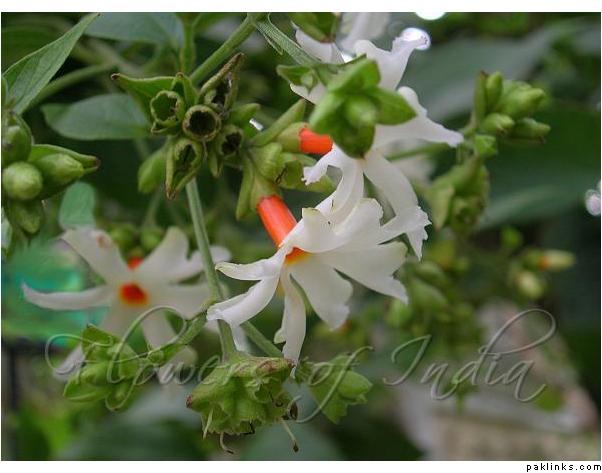
Zarday ka rang
From haar singhar flowers - *Nyctanthes arbor-tristis *Coral Jasmine
Re: Mirch Masala
Yes I know about these vegetable, which are used and liked by many people in rural Sindh.
Re: Mirch Masala
Me too!
Re: Mirch Masala
I think there is a specif variety of Turai (Tori) in Sindh, which is not available in other parts of Pakistan. It is more delicious than the normal tori.
Re: Mirch Masala
Yes indeed the light green tori from Malir. It is very tasty when they are baby ones. Last May I went to Karachi and brought its seeds, sowed here but the weather was extremely cold in June and they did not come out before late July and now when they are too young, summer is coming to end. May be I will get it next year.
One more thing - matar from Malir is also the most tastiest one in Pakistan.
Re: Mirch Masala
Malir’s Amrood is also tasty. LaRkana’s Amrood ki to kia hi baat hai 