Re: Macro Economic Indicators of Pakistan…
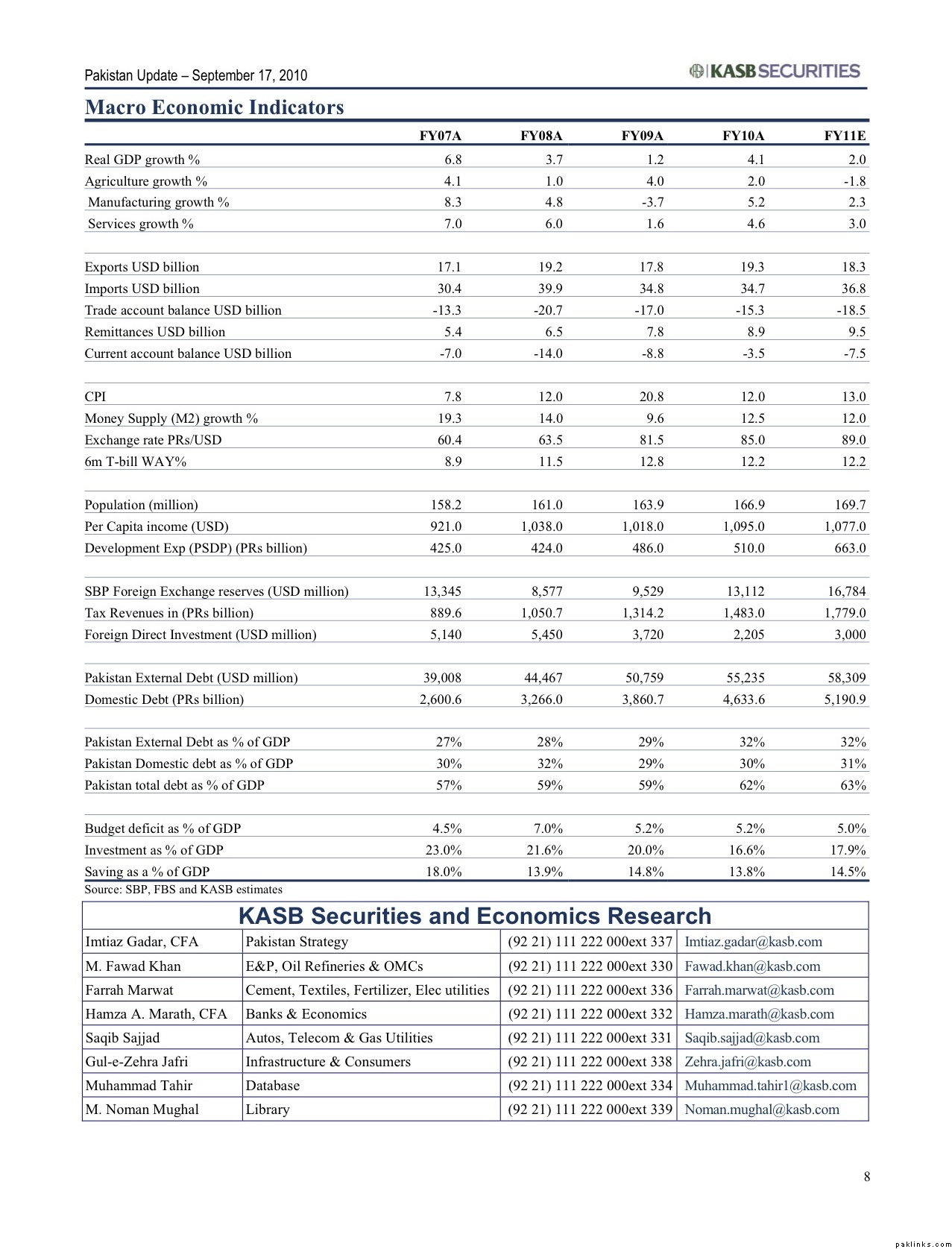
Agriculture growth negative by 1.8%? Current super flood might have destroyed Khareef crop but we are likely to have a good Rabih harvest, I think.
Re: Macro Economic Indicators of Pakistan…
Notice how everything has gone down after 2007 except external and internal debt.
Re: Macro Economic Indicators of Pakistan…
^ don’t forget the slump world is going thru since 2008, per capita income as well as tax revenues still going up :k:
Re: Macro Economic Indicators of Pakistan…
External + Internal debt at 63% of GDP is not as bad as some people think. A lot of countries have over 100%. The huge problem for the government is huge cost of these funds at prevailing interest rates..(foreign debt is subjected to devaluation costs as well)…
The biggest challenge for the government is to curb the CPI which directly increase the cost of borrowing. Moreover with revenue collection at under 10% of GDP it is a real challenge to manage any meaningful governance.
Re: Macro Economic Indicators of Pakistan…
What about inflation? That is almost killing people now. Since my childhood I have been hearing people moaning about inflation but now it has reached at it ever highest level.
Aab to daal roti khani bhi mushkil hogayee hia.
Re: Macro Economic Indicators of Pakistan…
I think its reflected by CPI
2007: 7.8
2008: 12.0
2009: 20.8
2010: 12.0
2011: 13.0
It was at its peak in 2009 but has come down this year.
Re: Macro Economic Indicators of Pakistan…
People make inflation/corruption an excuse to cry and restrict government from collecting taxes and reducing subsidies. Fact remains that with less than 10% tax collection Pakistan is one of the lowest in the world. Also with around 300 billion subsidy for power sector the GDP to subsidy ratio is one of the highest in the world.
If people can not afford electricity, they should reduce the running their air conditioners.
CPI is directly related to productivity, means too much money chasing fewer goods. In order to increase productivity we must invest in human resources development through education. With 10% tax collection and a lot of resources going for subsidies on electricity/atta/roti/fertilizers/gas/income support programs, there is very little left to invest in these vital sectors.