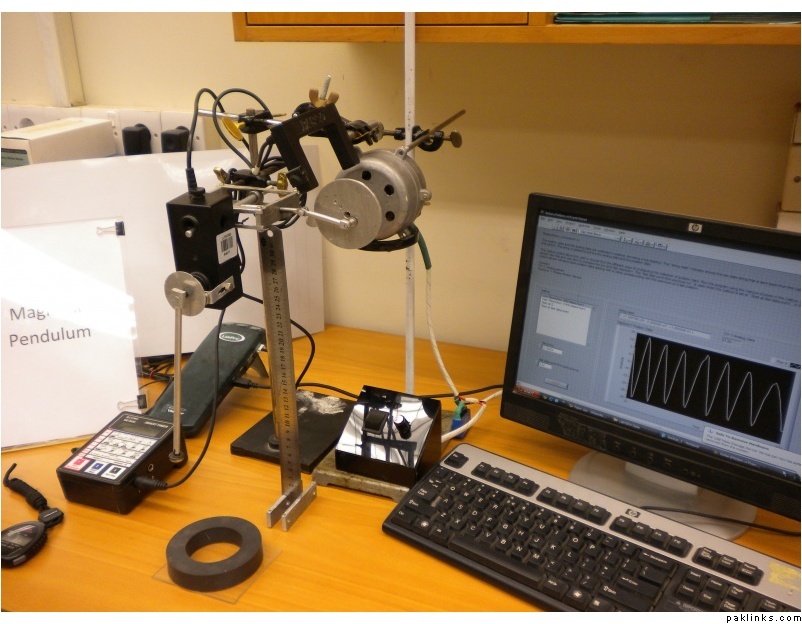
Re: LUMS
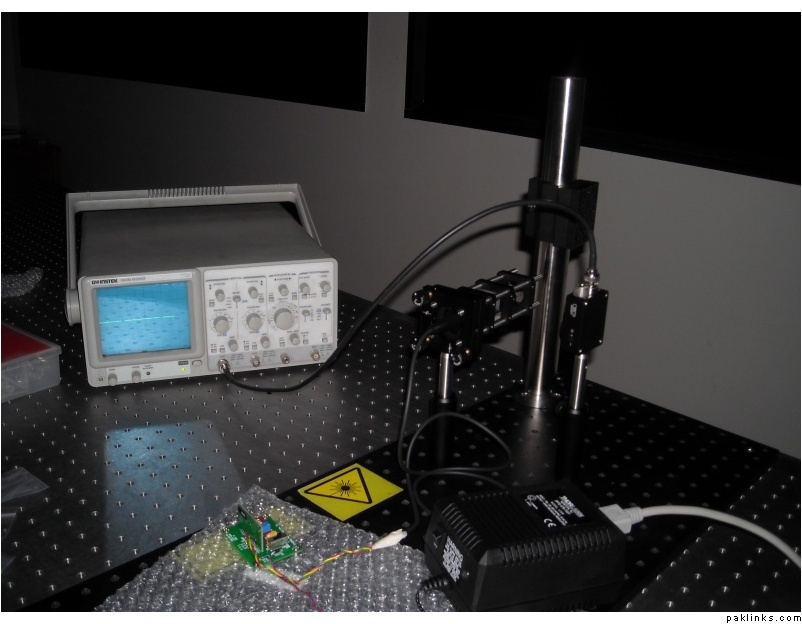

Re: LUMS

*** **Our robot design for mine-detection wins the first round of National Instruments robotics competition. (March, 2010)
**
*** Dr Abubakr visits ETH Zurich for building research collaborations. (March, 2010)

Re: LUMS
^ Lovely person. Interesting he uses Urdu as much as possible.
This needs to be shown to people who have given up any hope for Pakistan, sitting in comfy rooms abroad criticizing the country!
Re: LUMS
i heard of this group going around in villages, setting up telescopes to show planets etc.
good stuff :k:
he seems like a genuine and down-to-earth person :k: - proud to see people like him in Pakistan.
Re: LUMS
SSE to set up a lab at the Institute of Space Technology (IST)
Re: LUMS
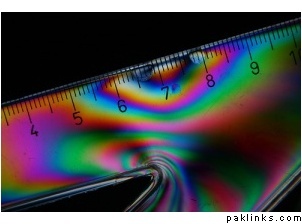
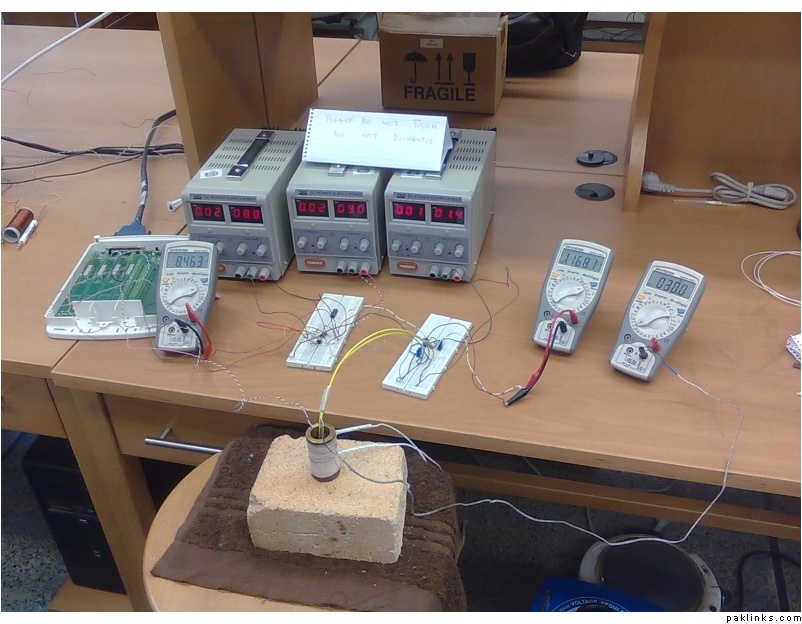
http://physlab.lums.edu.pk/index.php/Experiment_in_Lab-II
Lab at IST
Visitors from COMSATS, GCU, Punjab University and UET visited the lab and saw the experimentsThis culminated in a contract agreement with the Institute of Space Technology, SUPARCO under which the Physics Department will set up a freshmen physics lab at the IST. This i s an unprecedented initiative in the landscape of higher education in Pakistan, in which one University is charged with providing homemade equipment, experimental ideas, software, lab manuals and training to a sister Institute
**
Yearly Report**
http://physlab.lums.edu.pk/images/9/9a/Yearly_report_of_Physlab.pdf

Re: LUMS
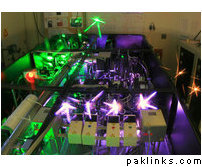
First National Symposium on Lasers
Date: Thursday, May 13, 2010
Time: 10:00am - 2:00pm
**Location: **Institute of Biochemistry and Biotechnology, New Campus ,Punjab University, Lahore.
Description
Continuing in its tradition of popularizing science, the Khwarizmi Science Society is now planning to celebrate 50 years of one of mankind’s most useful inventions - the laser. Join us for our first National Symposium on Lasers.
Title of Talk: **Lasers from Islamabad, CERN and Lahore: What Binds them together? **
**Keynote Speaker: **Dr. Shaukat Hameed Khan (Executive Director SOPREST and Rector GIKI)
Title of Talk:* Fundamentals of Fiber Optic Communications
Speaker: Dr. Mumtaz Sheikh (Assistant Professor of Physics and Electrical Engineering, LUMS)
Title of Talk: Laser Generated Pulsed X-Ray Sources
**Spearker: **Prof. Dr. Fida Khattak (Professor of Physics, Kohat University)
Title of Talk: *Light: Its Applications in Inteferometery, Polarimetry and Photodynamic Therapy
Speaker: Prof. Dr. Masroor Ikram (Professor of Physics, PIEAS, Islamabad)
http://www.facebook.com/event.php?eid=107053106004398&ref=mf
**
Dr.Shaukat Hameed Khan**
Dr.Shaukat Hameed Khan is a Pakistani nuclear-laser physicist, highly cited researcher and professor. He was the rector of Ghulam Ishaq Khan Institute of Engineering Sciences and Technology (GIKI).Khan has been associated with GIKI since its inception and serves as a member of the Board of Governors. He is a Fellow of the Pakistan Academy of Sciences.Like many prominent Pakistani scientists, Khan previously worked for the Pakistan Atomic Energy Commission (PAEC), where he retired as Chief nuclear physicist in 2005. Khan is a prominent nuclear physicist and a highly cited researcher in the field of laser produced plasmas; Ultrafast High Voltage Switching; Spectroscopy, laser isotope separation, and precision measurement with lasers. He now works with the Planning Commission in Islamabad. Shaukat Hameed Khan received his B.Sc in Physics with honors from The University of the Punjab in 1961. Khan attended Oxford University where he received his Ph.D in Nuclear Physics in 1968. He was educated at Oxford University where he was a Rhodes Scholar
 Dr.Faisal Habib Cheema
Among the participants of this First Laser Confernece is Dr.Faisal Habib Cheema coming from NYC…Dr.Sabieh’s old times friend of Crescent Model School and Government College Lahore, one of the founding member of his Science Society and organizer of many of events.Member of Coulmbia University Senate, Dr.Cheema is considered as the world’s renowned Cardiac and Renal Stem Cell Researcher with 600+ citations.
Re: LUMS

http://physlab.lums.edu.pk/index.php/Experiment_in_Lab-II
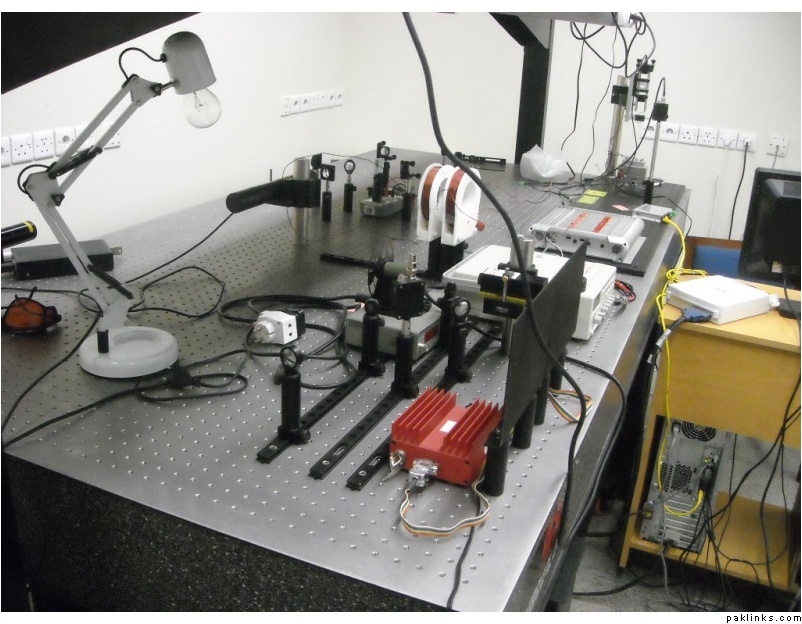
http://physlab.lums.edu.pk/index.php/Internship_Program_at_Physics_Lab
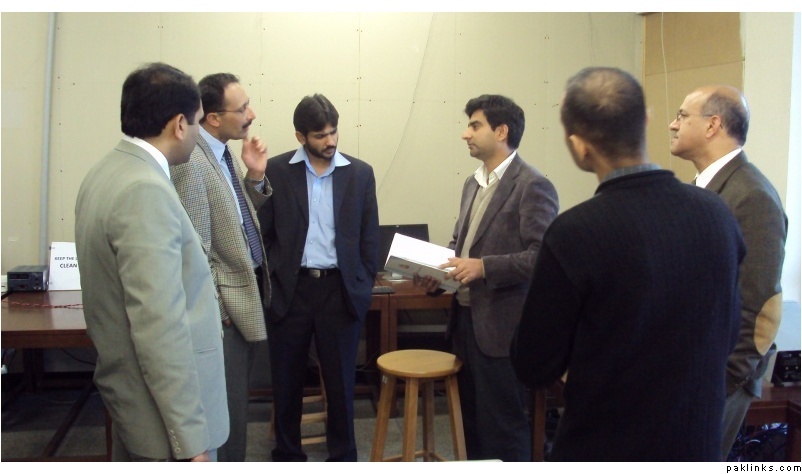
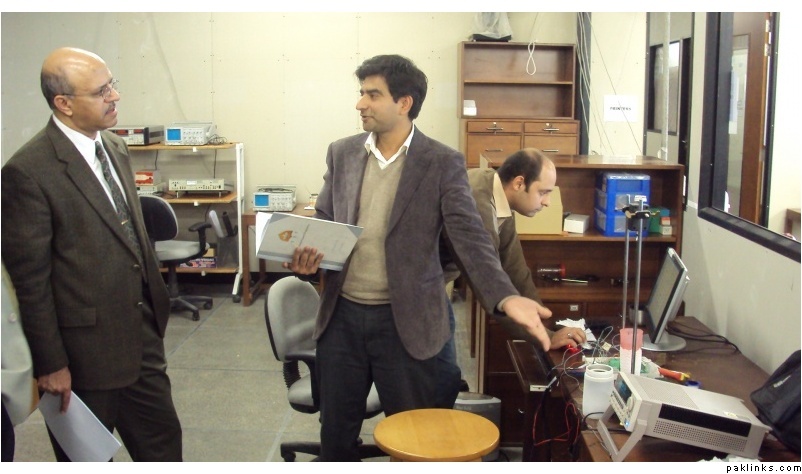
Re: LUMS
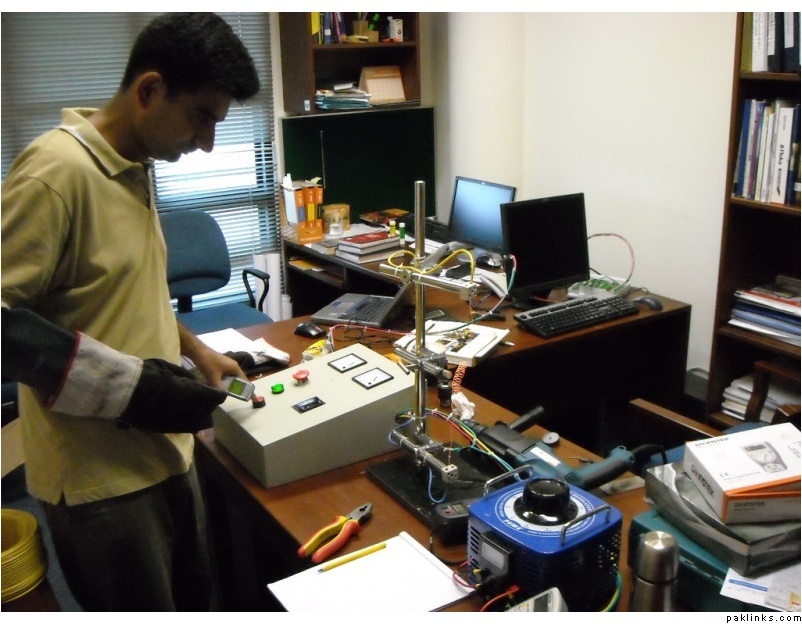
http://physlab.lums.edu.pk/index.php/Research_and_Development
Re: LUMS
**Epigenetic Cellular Memory
Polycomb group and Trithorax group paradigm in development
**
**Sponsors & Collaborators: **
Dr. Waheed Akhtar, School of Biological Sciences, Punjab University
Date: 16 August, 2010
Time: 10 am
**Venue: ** School of Biological Sciences, University of the Punjab, Quaid-e-Azam Campus, Lahore
**Speaker **
Dr. Muhammad Tariq
Department of Biology, School of Science and Engineering, Lahore University of Management Sciences (LUMS), Lahore
**
Abstract: **
How cell fates are established and how identities of different cell types are maintained during development of multi-cellular eukaryotes are questions of extreme biological significance at the heart of development. A single-celled zygote undergoes many rounds of mitotic divisions which ultimately lead to generation of over 200 different specialized cell types in human body during development. Although, each cell type contains same basic genetic information (DNA), yet their identity is different from one another which are maintained throughout development. It is known that differential gene expression programs lead to different cell lineages and each cell type remembers its identity due to maintenance of cell type specific gene expression program referred to as transcriptional cellular memory. Transcriptional memory involves changes in the chromatin state of lineage specific genes; changes that can persist through DNA replication and mitosis, which means they are inherited from mother to daughter cells. Such heritable changes are called epigenetic modifications and can be covalent marks on DNA and/or histones, and therefore would not alter the basic genetic information in a cell. However, epigenetic changes may either activate or silence the expression of lineage specific genes and set the stage for differential gene expression among different cell type. This explains how cells with same DNA can acquire different identity which is maintained through epigenetic inheritance during development. In Drosophila melanogaster (fruit flies), genetic analyses have uncovered two groups of genes, the Polycomb Group (PcG) and the trithorax Group (trxG), responsible for maintaining gene expression patterns stably and heritably. Importantly, PcG and trxG proteins are evolutionary conserved and most of our knowledge about their function was pioneered from studies in Drosophila. Molecular analysis showed that many of the proteins encoded by the PcG and trxG act in large complexes, and modify the local properties of chromatin to maintain transcriptional repression (PcG) or activation (TrxG) of their target genes. My lecture will primarily focus on introducing epigenetics, transcriptional cellular memory and how they affect our development.
Dr Tariq Webpage: