:salam2:
**Welcome: **Bahrain offers the most cosmopolitan and welcoming living environment anywhere in the region - blending the best of international and local elements across culture and community. With the cosmopolitan environment afforded by a modern Middle East capital, matched with the safety, security and hospitality of a caring community - Bahrain offers that rare chance to work at the cutting edge of global business while recreation and the importance of family are placed firmly at the heart of a balanced lifestyle.
**Background: **In 1783, the al-Khalifa family captured Bahrain from the Persians. In order to secure these holdings, it entered into a series of treaties with the UK during the 19th century that made Bahrain a British protectorate. The archipelago attained its independence in 1971. Bahrain’s small size and central location among Persian Gulf countries require it to play a delicate balancing act in foreign affairs among its larger neighbors. Facing declining oil reserves, Bahrain has turned to petroleum processing and refining and has transformed itself into an international banking center. King HAMAD bin Isa al-Khalifa, after coming to power in 1999, pushed economic and political reforms to improve relations with the Shia community. Shia political societies participated in 2006 parliamentary and municipal elections. Al Wifaq, the largest Shia political society, won the largest number of seats in the elected chamber of the legislature. However, Shia discontent has resurfaced in recent years with street demonstrations and occasional low-level violence.
Bahrain is an independent kingdom in the Middle East, comprising an archipelago of 33 islands in the southern Persian Gulf, between the Qatar Peninsula on the east, and the coast of Saudi Arabia on the west, one of the Persian Gulf states. Manama is the capital of Bahrain and the largest city of the nation.
**Independence Day: **August 15, 1971 (from United Kingdom)
Population: 1,039,297
Nationals: 527,433 (51%)
Non-Nationals: 511,864 (49%)
Location / Area Size Arabian Gulf: 741.4 Square Kilometers
Capital: Manama
Governorates Bahrain is split into five governorates: Capital, Central, Muharraq, Northern and Southern
Languages: Arabic, English, Farsi, Urdu (Arabic is official and English is commerical language)
Currency: Bahraini Dinar (BD.)
Fixed Exchange Rate: 1 BD = 2.65 US$
**Business Hours Government offices: **07:00-14:15 (Sunday to Thursday)
Banks 07:30-13:00 is the normal business hours (Sunday to Thursday)
Weekly holidays: Friday, Saturday
Time zone: 3 hours ahead of GMT (GMT+3)
Country Dialing Code: +973
Internet Code: .bh
**Climate Summer: **July-September, very hot and humid (Avg. 36°C).
Winter: December to February, cool or mild with occasional rain (10°C - 20°C).
Remaining months: March to May and October to November, warm with occasional pleasant breezes (20°C - 30°C).
**People: **The people of Bahrain are peaceful by nature. Family bonds run very high in Bahrain. Bahraini people are very fond of dance and music and their culture is rich in various art forms. Almost all the resident opulation of Bahrain is Muslims and Islam as their religion. Bahrain is notably moderate in contrast with other neighboring states such as Saudi Arabia .
Education: is compulsory from ages 6 to 17 and is free in Bahrain . In 2000–2001, Bahrain had a total enrolment of 79,407 primary pupils and 66,536 secondary pupils. Higher education is provided by the University of Bahrain and the Arabian Gulf University . The literacy rate is 89.7 per cent (2004). In 2000–2001, 3.1 per cent of the gross national product (GNP) was spent on education.
**Economy: **Bahrain is one of the most diversified economies in the Arabian Gulf, with its highly developed communication and transport facilities making Bahrain home to numerous multinational firms with business in the Gulf. Bahrain and the US in August 2006 implemented a Free Trade Agreement (FTA), the first FTA between the US and a Gulf state, as part of its diversification plans. Bahrain, however, continues to depend on oil with petroleum production and refining accounting for over 60% of Bahrain’s export receipts, over 70% of government revenues, and 11% of GDP (exclusive of allied industries). Other major segments of Bahrain’s economy are aluminum.
**Islamic Banking: **Bahrain is focused on Islamic banking and is competing on an international scale with Malaysia as a worldwide banking center.
To read more click of clickbahrain.com

 poppies how r u? so long never heard homee hi or ha 4rm ya
 thanx ji! there are lot of recent acitivites and development so i’m thinking to post it here or not what u say?
 i’m working on it
  Thanx.
 .. oh what fond memories!!!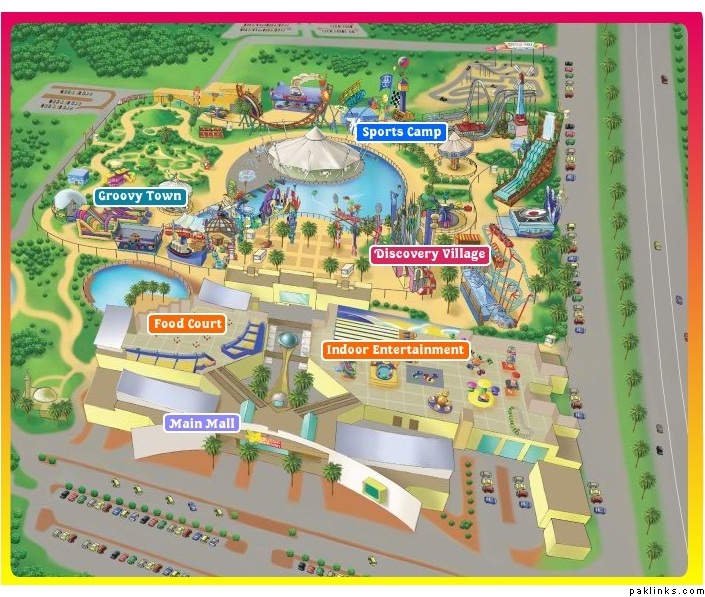
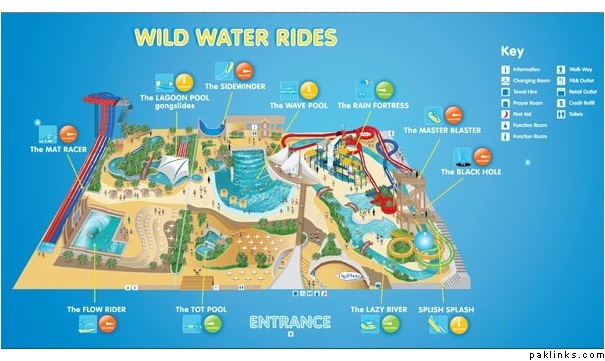
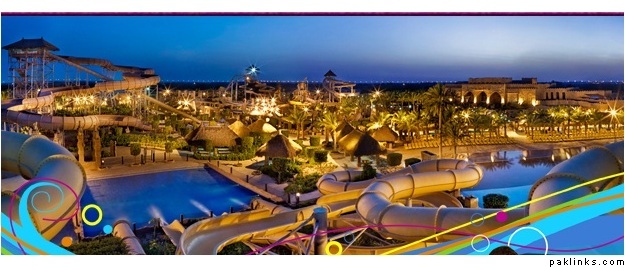
 …and what about the Four Seasons Hotel Resort??.. or any other 5 star hotel for that matter?.. Long Live the Ritz!!!


 :shoaby:


