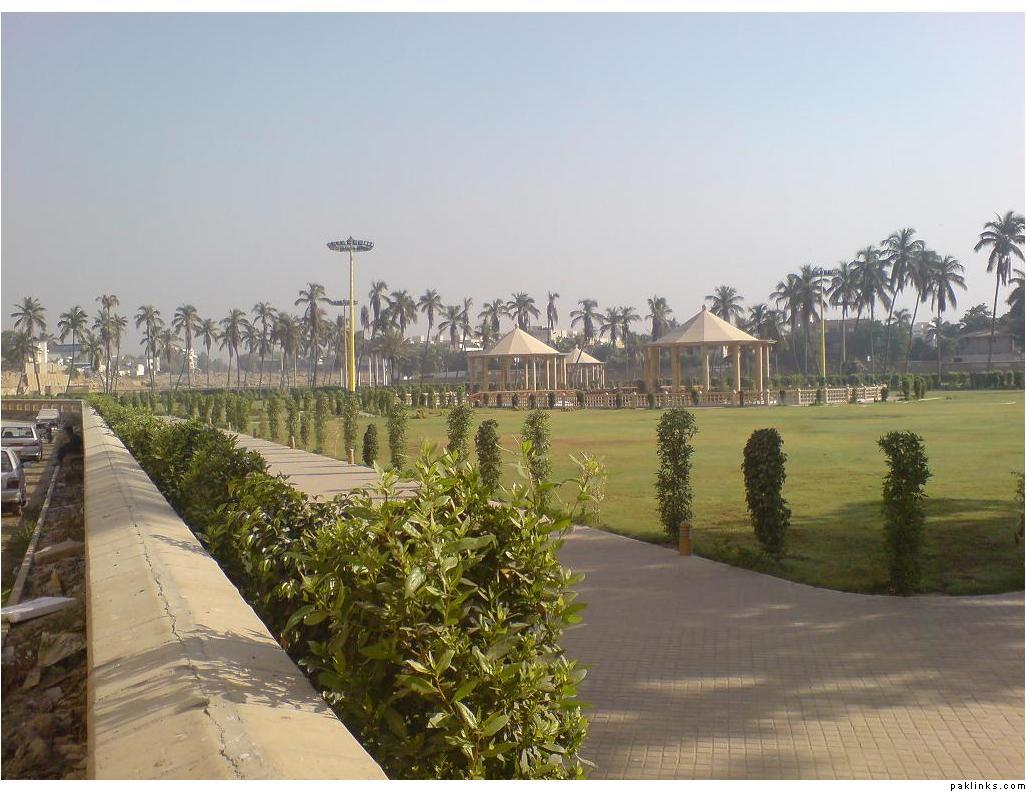
Shanayle, this is a beautiful view of the garden. 
KURRACCHEE 1850-1900
***Photograph of Empress Market in Karachi, taken by an unknown photographer, c.1900, ***
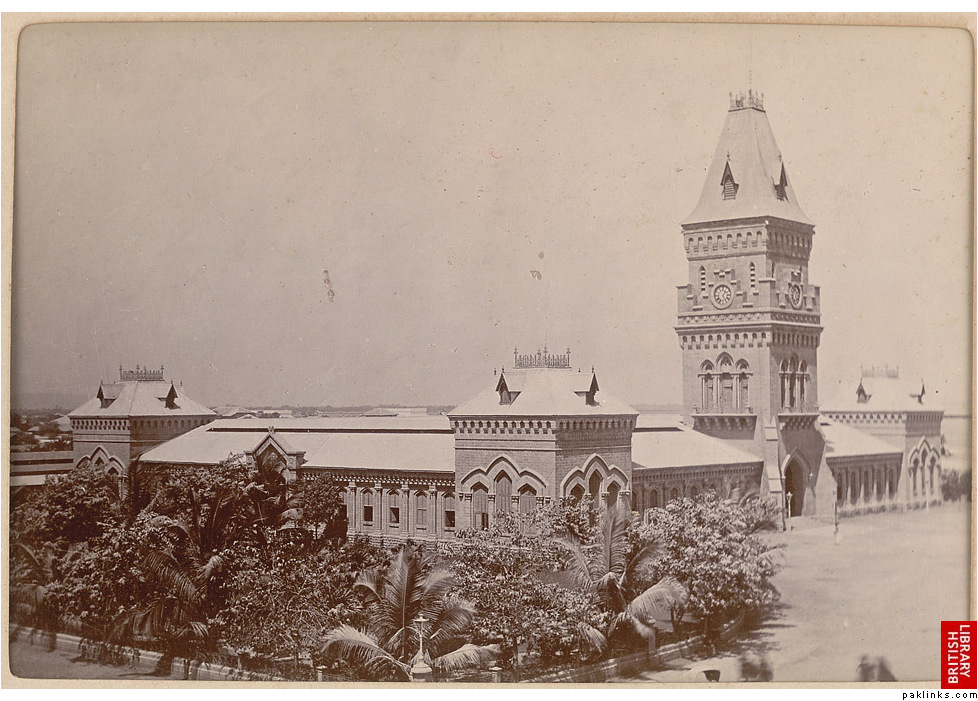
The Empress Market was constructed between 1884 and 1889 and was named to commemorate Queen Victoria, Empress of India. It was designed by James Strachan, the foundations were completed by the English firm of A.J. Attfield, and the building constructed by the local firm of ‘Mahoomed Niwan and Dulloo Khejoo’. The building was arranged around a courtyard, 130 ft by 100 ft, with four galleries each 46 ft wide. The galleries provided accommodation for 280 shops and stall keepers; at the time of its construction it was one of seven markets in Karachi.
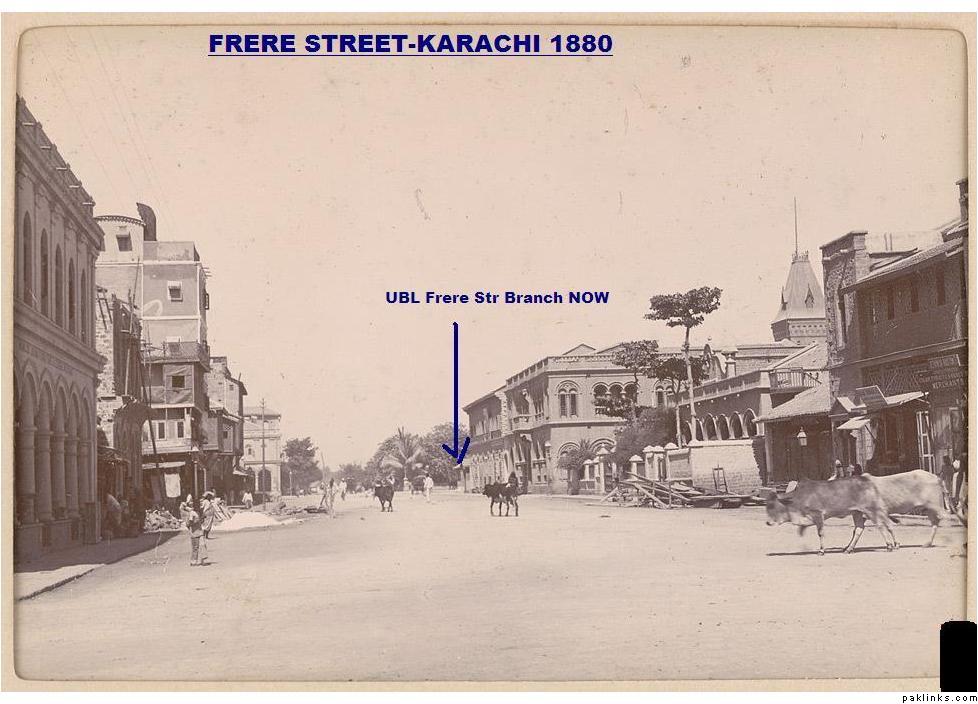
FRERE STREET-Saddar, Karachi 1890;
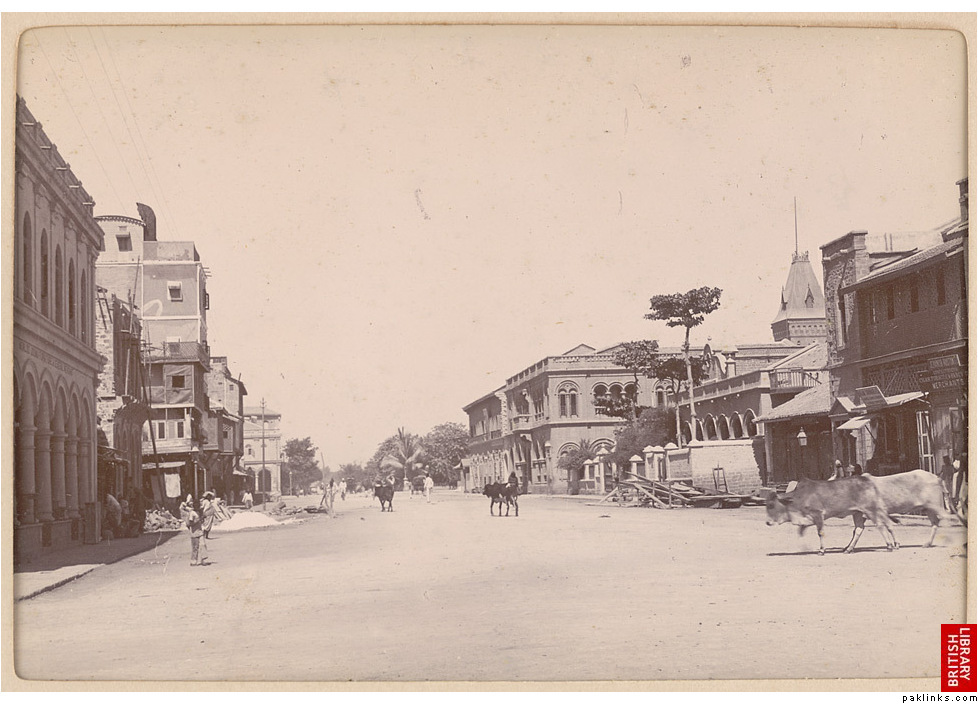
Photograph with a view of Karachi looking in a northerly direction along Victoria Road, with St Andrew’s Church visible in the distance, taken by an unknown photographer, c.1900
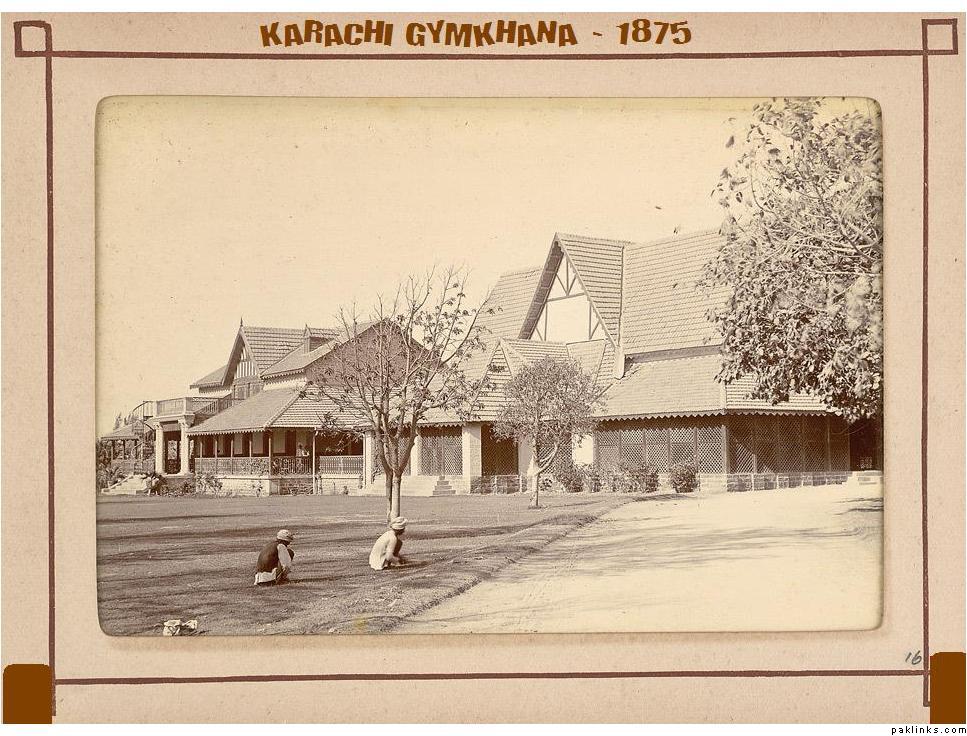
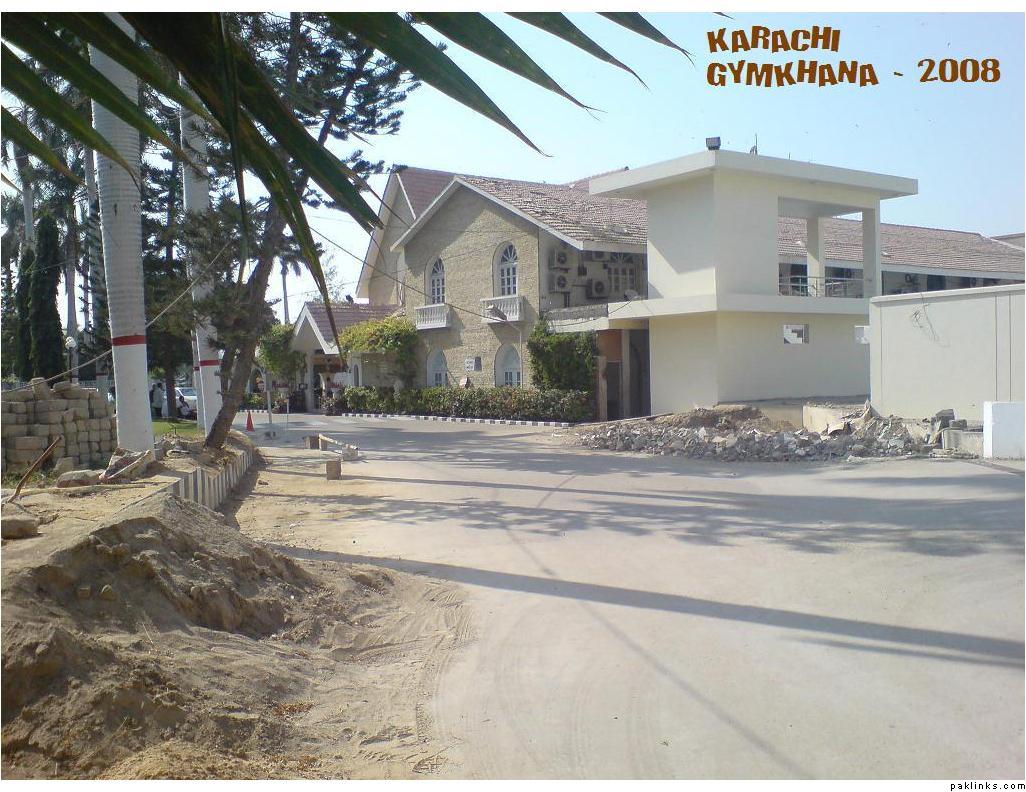
The British had also developed the concept of gymkhanas or sports-houses which provided facilities for all sorts of sports and games for the colonial population in the sub-continent. The Karachi Gymkhana Club, located on Scandal Point (later Club) Road, was a large Tudor-style building, constructed in 1886.
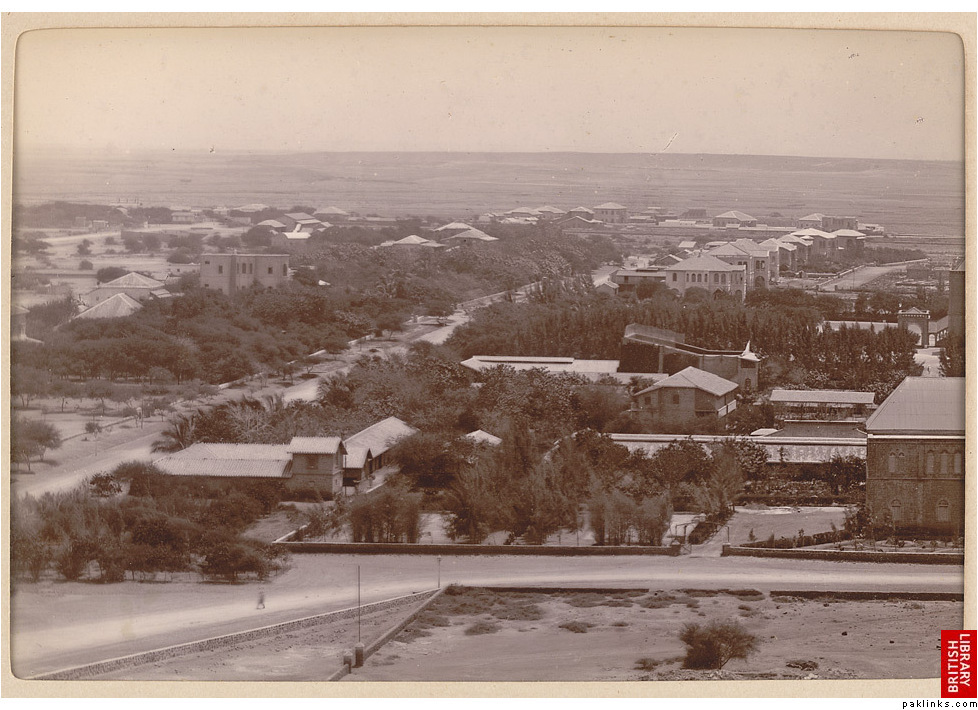
CLIFTON-Karachi 1888
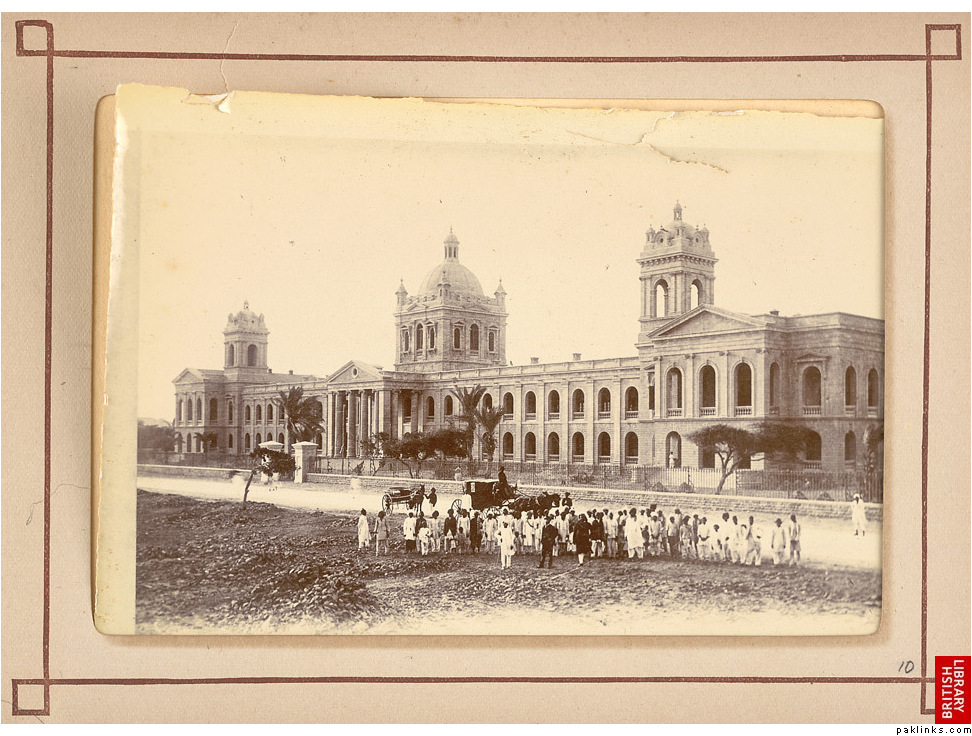
***Photograph of the D.J. Sind Arts College (now known as the D. J. Government Science College) of Karachi, taken by an unknown photographer, c.1900, from an album of 46 prints titled ‘Karachi Views’. Designed by James Strachan and considered this architect’s greatest achievement, the college was built between 1887 and 1893. Named after the Sindhi philanthropist Dayaram Jethmal, whose two family members contributed towards its cost, the building was constructed in the neoclassical, or ‘Italian architectural style’. A considerable amount of money was spent on the interior of the college; the floors comprised mosaic tiles imported from Belgium and the eight-foot wide main staircase was fitted with ornamental cast-iron work from McFarlane & Company of Glasgow. Karachi, once the capital of Pakistan, is now the capital of Sindh province and the major port and main commercial centre of the country. It was a strategically located small port at a protected natural harbour on the Arabian Sea north-west of the mouth of the Indus, and was developed and expanded by the British when they took over Sindh in the mid-19th century to serve the booming trade from the Punjab and the wheat and cotton regions of the sub-continent ***
are we talking about the Green land swimming pool ?
Thats the only one i remember .. in Motii mehal Gulshan area
No diva is on the left hand side of Rashid Minhas road and Green Land is on the right hand side of the road.
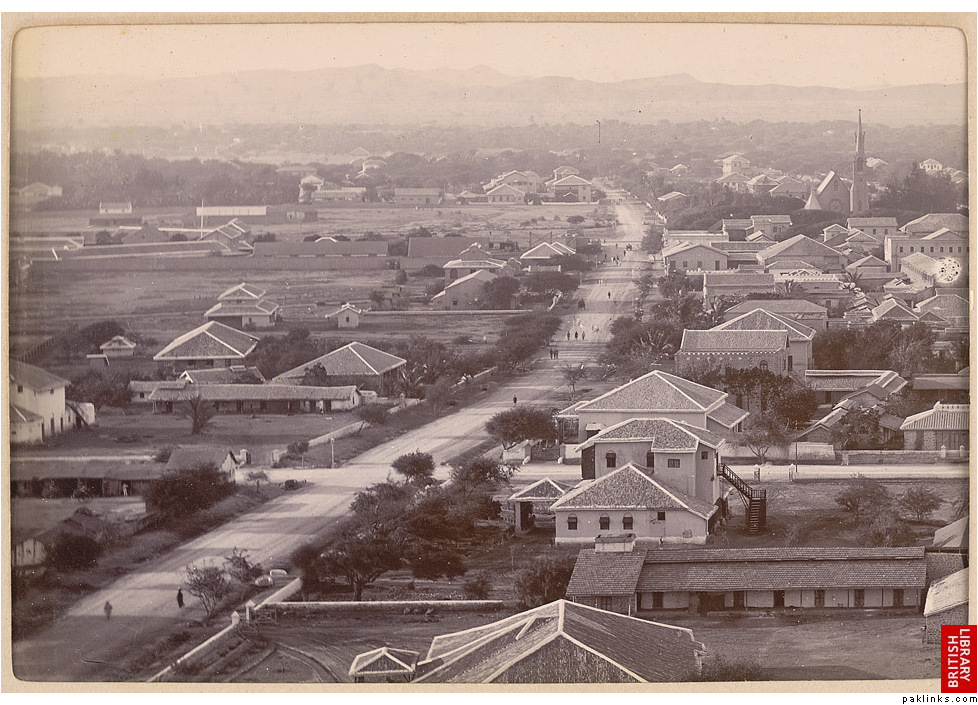
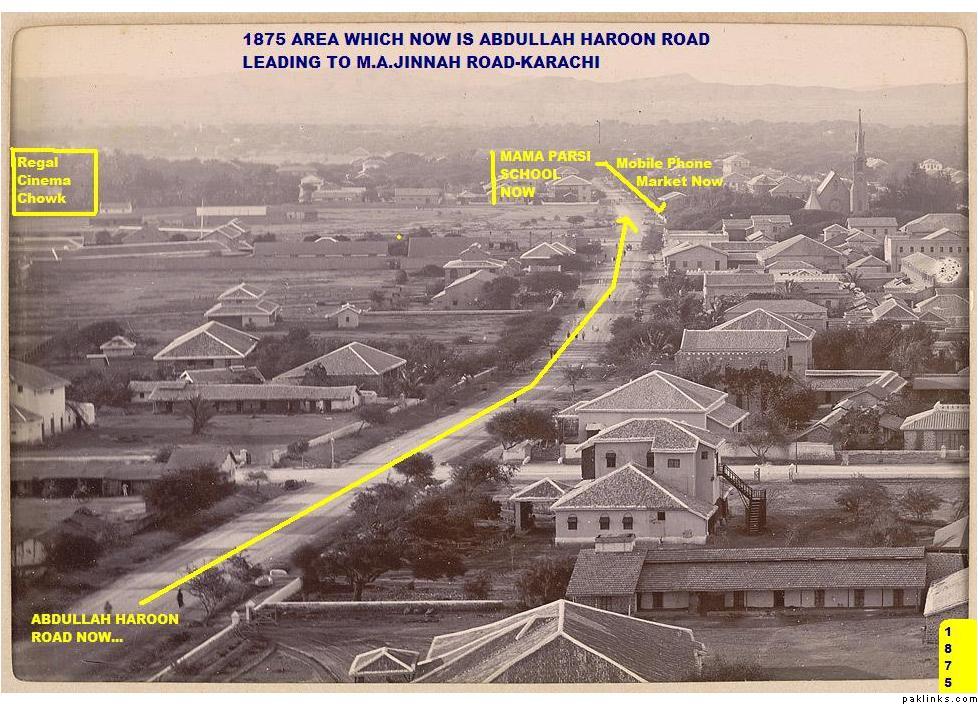
KARACHI-1875
ABDULLAH HAROON ROAD
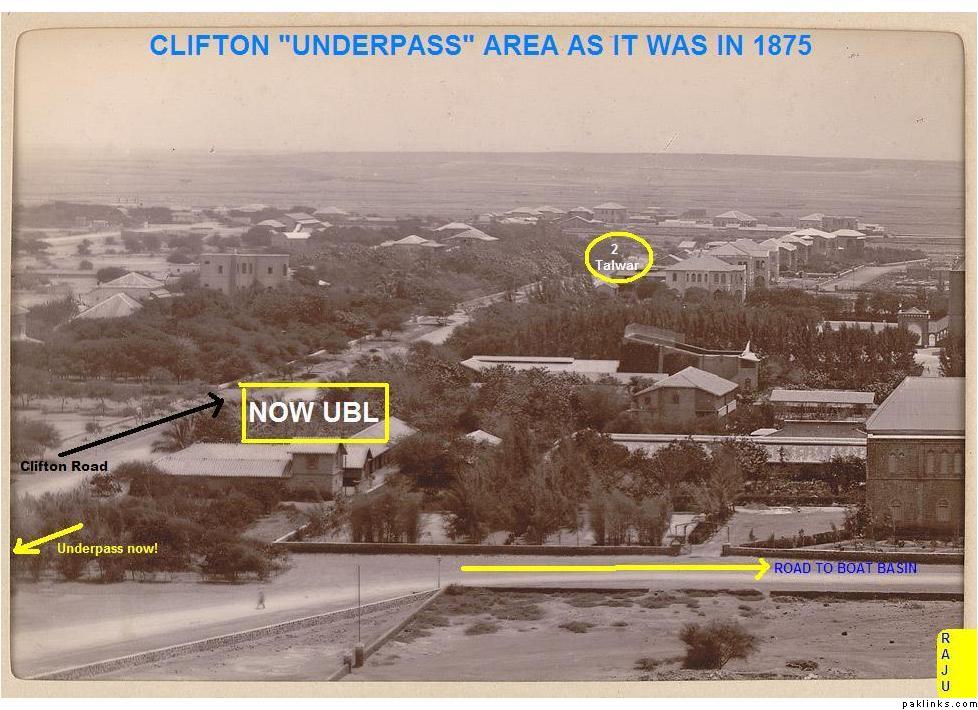
CLIFTON MAIN ROAD
FRERE STREET-1880
(Near Empress Market)
Re: KARACHI-KURRAACHEE-KOLACHI
Looks like that KPT fountain got stolen!
http://www.nation.com.pk/pakistan-news-newspaper-daily-english-online/Regional/Karachi/09-Oct-2008/KPT-fountain-stolen
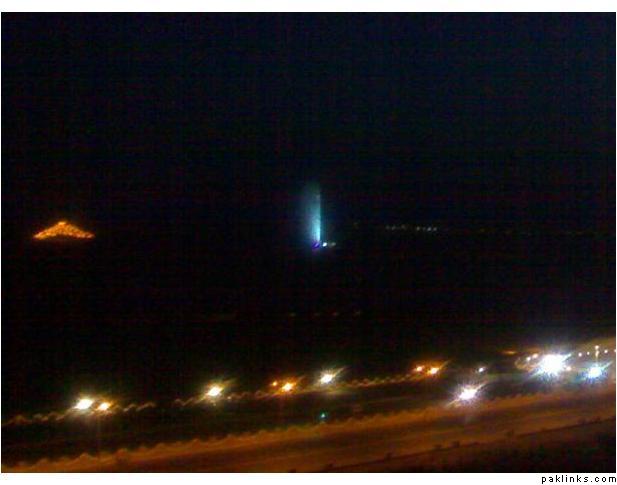
KARACHI - Unidentified thieves on Tuesday night stole the second highest fountain in the world from the Karachi Beach. The said fountain was inaugurated by former President Pervez Musharraf at the Karachi Port Trust on 15th January 2006 and KPT spent millions of rupees on its construction.
The fountain was scheduled to be switch on September 1 but concerned authorities failed to do so due to some technical reasons. On Tuesday night, unknown thieves managed to take away various expensive items including lighting, cables and mini generators from the site.
2006–FIREWORKS by City Govt., snapshot taken by my daughter from our 14th floor apartment balcony facing the fountain.
I reckon the fountain has been quiet due to power-shortage in Karachi.. in fact in the whole country!
Re: KARACHI-KURRAACHEE-KOLACHI
KPT fountain stolen | Pakistan | News | Newspaper | Daily | English | Online
Re: KARACHI-KURRAACHEE-KOLACHI
^ I already posted that?
KARACHI GYMKHANA
in
1875
KARACHI GYMKHANA
(same view)
21 October-2008
Gymkhana looks good in 1875, kind of sad that things are deteriorating…
Gymkhana looks good in 1875, kind of sad that things are deteriorating...:(
- **TOTAL MEMBERS OF KURRACCHEE GYMKHANA WERE; a little over 100 in 1875.... **
- Total Members of KARACHI Gymkhana..including yours truly, are 18000 as of 31 Dec-2007....****
Re: KARACHI-KURRAACHEE-KOLACHI
but with increasing members they are makig more money and they should maintain it better from outside....don't you think?
but with increasing members they are makig more money and they should maintain it better from outside....don't you think?
With increased number of people--anywhere--in the world, foremost thing required is-------order and manageability! that EVERYBODY follows the law......
B
U
T
If EVERYONE wants to be a COLONEL and NO-ONE ready to become a MAJOR......then things get bereft.
In PAKISTAN....everyone wants to be a COLONEL !
Re: KARACHI-KURRAACHEE-KOLACHI
^^ hmmm..... ok
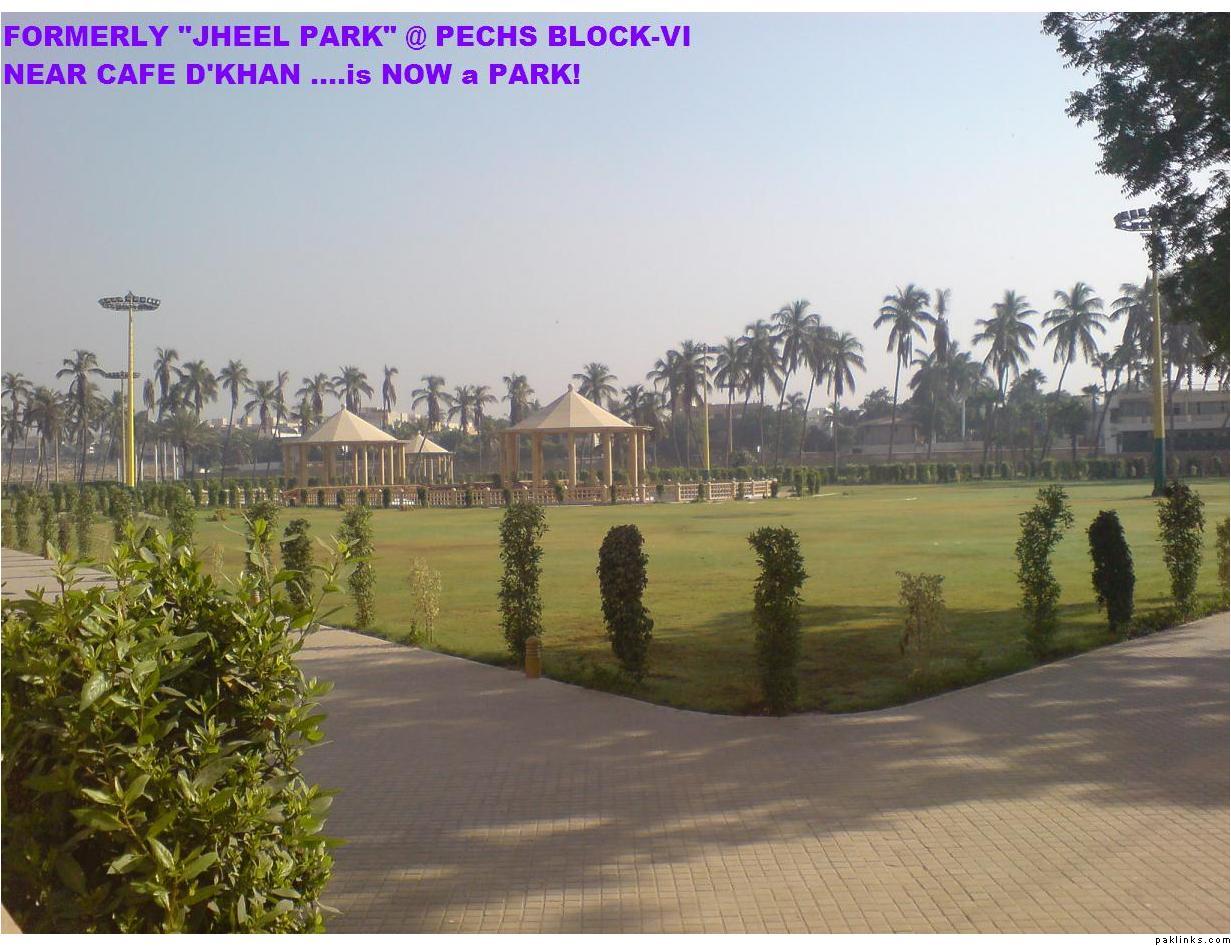
ONCE A SWAMP
WITH SNAKES &
AT LEAST TWO
DROWNINGS PER YEAR
THE FAMOUS
“JHEEL PARK”
OF PECHS BLOCK-VI
NEAR CAFÉ DE’KHAN
IN KARACHI HAS NOW
SHAPED UP LIKE THIS;
Re: KARACHI-KURRAACHEE-KOLACHI
Where's the lake gone? Is it still there?
Where's the lake gone? Is it still there?
LAKE is FLAKKED....into clouds...my friend.
BTW...by calling that SWAMP a LAKE....you bring smile:) on my face:) unless you talk of mid-60's!!
If I would know better....that "lake" turned into a nightmare/swamp of the kind they have at places around ALCATRAZ or the likes--full of snakes, scorpions and crocks for subject!!
Past 20 years--it use to 'eat' at least two humans per year....!!
Houses nearby had to take extra precautionery measures to avoid infilteration by salamander types....etc.
City Nazim Mustafa Kamal deserve accolades & kudos--for turning that horrendous place into something worth the visit.
Re: KARACHI-KURRAACHEE-KOLACHI
I did not see that lake. But we used to go Dr. Salman Sadiq's clinic during late 70's and early 80's. That was on the right hand street (dead one ) when you turn from Tariq Road towards Delhi Mercentile School.
So it was a natural lake in the 60s?
By the way, hills that run from Qaid's Mazar down to Safari Park (covering many parts of Gulistan e Johar, Gulshan, PECHS are named as "Mulery Hills" historically and used to have many lakes of rain and spring waters. Recently when they were cutting/digging up the Gori Lakki Hills (North Nazimabad ones) water came of out an under the hill spring.
If I would know better....that "lake" turned into a nightmare/swamp of the kind they have at places around ALCATRAZ or the likes--full of snakes, scorpions and crocks for subject!!
Past 20 years--it use to 'eat' at least two humans per year....!!
**Houses nearby had to take extra precautionery measures to avoid **
2 humans per year!!! So we had a mini Thar in Karachi.
Mahmoud Haroon’s legacy
By Our Staff Reporter (DAWN)
Friday, 07 Nov, 2008 | 09:11 AM PST |
KARACHI, Nov 6: Mahmoud A. Haroon, a veteran politician and chairman of the Dawn Media Group, died in Karachi on Thursday after protracted illness. He was 88. He is survived by daughter Ambar Haroon-Saigol.
*THE second son of Haji Sir Abdullah Haroon, Mahmoud was born in Karachi in 1920. Being the scion of the celebrated Haroon family, Mahmoud had politics in his blood and joined the Muslim League at a very early age. *
*After studying in D.J. Science College and C.S. Shahani Law College, he joined the Muslim League and had the honour of becoming ADC to Quaid-i-Azam Mohammad Ali Jinnah when he was only 17. He was also Salar-i-Ala of the Sindh Muslim League Guard and later became Deputy Chief of the All-India Muslim League National Guard. *
*He became a member of the All-India Muslim League in 1942 and president of the Karachi Muslim League in 1944. Three years later, he became the president of the Sindh Bar Association and was elected to the Sindh Assembly. *
*When Pakistan came into being in 1947, he was an elected member of the Sindh provincial assembly and remained so until 1950. Three years later, he was elected the Mayor of the Karachi Municipal Corporation and paid special attention to Lyari, which received 50 per cent of the municipal budget. In 1956 he became a member of the West Pakistan Assembly until its dissolution in 1958 when martial law was imposed, the Constitution was abrogated and all the assemblies dissolved. *
*He won a seat from Karachi in the first general election held in 1965 to the National Assembly but resigned his membership to join the Nawab of Kalabagh’s cabinet as labour minister. But his decision to support Mir Ghous Bux Bizenjo against Ayub Khan’s official candidate for the National Assembly would lead to his exit from the Cabinet. In 1968 he became Pakistan’s High Commissioner in Britain, and following the change of government in Pakistan he joined the federal cabinet under the Yahya regime as minister for agriculture, reportedly because Sheikh Mujibur Rehman had nominated him. *
*After the 1971 separation of East Pakistan, he remained in exile in London, only returning in 1974 when he suffered the bereavement of the loss of a daughter. The three years of his exile had seen what was described as the ‘battle for Dawn’ between the Government and the owners. But Zulfikar Ali Bhutto is reported to have made his peace with Mahmoud Haroon when he came to offer his condolences at the loss of the latter’s daughter. It was after this, in the mid-seventies, that Mr Haroon went to Dubai and set up the daily Khaleej Times. *
*Because of the Haroon family’s political role and the independent policies of their paper, Dawn, the Haroons and Mahmoud himself personally suffered political persecution. Both the Ayub and Bhutto regimes hit hard at the family’s industrial fortunes. The imposition of martial law in 1977 brought him back into important positions. He joined Ziaul Haq’s cabinet as minister of the interior in 1979 and remained with the government till 1984. *
*In 1988, he joined the federal government again as defence minister in the government headed by President Ghulam Ishaq Khan. In 1990, when the PPP government was dismissed, he was appointed the Governor of Sindh and remained in that position until July 18, 1993. On July 23, 1994, when the PPP government was in power, he became Sindh governor once again. He, thus, is the only person to have held Sindh’s gubernatorial office twice and chose to quit of his own accord each time. *
*Of late, Mahmoud Haroon had been keeping bad health. Throughout his life, he kept a low profile and hated publicity. Even though he was the owner of the Dawn group of publications, he never used any of the papers for his personal publicity and self-projection. The biggest legacy he leaves behind is Dawn, of which he was justly proud. In spite of being in the thick of politics and holding important positions in federal and provincial governments, Mahmoud Haroon never let the government of the day interfere in Dawn’s policies, and he himself let the editors pursue the paper’s policy according to the highest traditions of balanced journalism. He never aspired to edit the paper and placed his faith in professional editors. The authority and freedom he delegated to the editors enabled Dawn to become one of the region’s most respected newspapers, in a befitting tribute to his far-sightedness.
*