Re: Jiyo President General Pervez Musharraf!
What's their to prove? The anti mush side are upset ...
Re: Jiyo President General Pervez Musharraf!
What's their to prove? The anti mush side are upset ...
Re: Jiyo President General Pervez Musharraf!
err. OK. Being member of the ruling Muslim League, his partiality is completely above board.
tsk, so you're implying what he says is not worth anything? Even though M P Bhandara has a reputation of calling a spade a spade, even when he has to speak against the govt and society?
remember the Murree Brewery issues and debates etc last year or so.
And, when anti Mush articles, writers, leaders or MNAs blabber filth against the govt, none of that is worth any thing either, because the partiality is ever the more evident and over board there too!
I talked to my mother in Pakistan, she said people are very angry and sad over this manuplated election. Majority hate Mush to see him as president of the country.
Haris bhai....i want every Corp Commander..every Captain and major of Army to contest for Presidency.....also IGs and DIGs....what thier sin !!!!
But how would you like to respond to the points MNA Bhadara raises...?
Sure the *majority *(whatever that is right now) *might *be anti-Mush, sure he's a military ruler, but with Pakistan's harsh realities and M P Bhadara's strong arguments, translate.
Besides, does every single civilian contest presidential,parliamentary, provincial or local body election each time there is one? Why would/should every Gen, Corps Cdr, Maj, Captain contest elections then...!? :p
Re: Jiyo President General Pervez Musharraf!
Absolutely Reza!
Good article Khek :k:
Re: Jiyo President General Pervez Musharraf!
[quote=“Spock, post:29, topic:170241”]
Jiyo Musharraf chandh… keep ruling the country forever. quote]
Aap ki zaban aur ye dua mubarak ho - is mubarak maheenay mai. Ameen :k:
God Bless President Musharaf, the saviour of Pakistan. God Bless the Free Judiciary. God Bless Pakistan.
Re: Jiyo President General Pervez Musharraf!
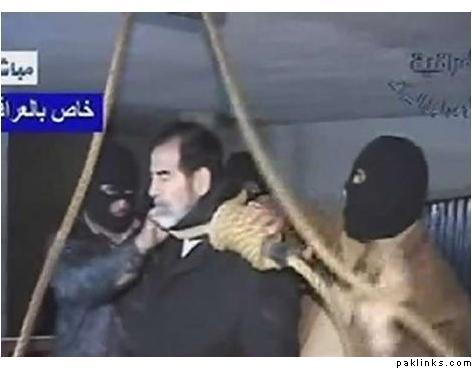
The hand around him looks like its Musharrafs! :omg:
http://farm3.static.flickr.com/2165/1500117746_1608f2abb0_o.jpg
Re: Jiyo President General Pervez Musharraf!
 Cool!
Cool! 
Re: Jiyo President General Pervez Musharraf!
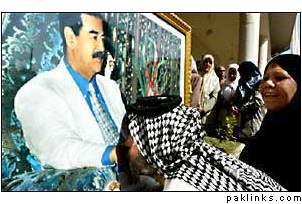
Seems the guy behind the one kissing is waiting his turn.
Some will bet they were “…paid Rs. 200 *deharri…” *
Re: Jiyo President General Pervez Musharraf!
book a room you two!!!!!
Re: Jiyo President General Pervez Musharraf!
In any case..mush's good outweighs his misdoings!!!!
Mush has done more good for the country than free civil govt did in past 60 years!
I dont agree with the BB deal thou!!! She will indeed pay for her greed! The people wont stand it!
Re: Jiyo President General Pervez Musharraf!
konsay Pakistan ki baatayn kar rahay ho bhai?
Re: Jiyo President General Pervez Musharraf!
mashhalah..sir..for the wonderful deduction…who says that i am happy..i am weeping due to Musharraf policies ..we are facing this…
and i still waiting for the answer ..from your side in thread" Breaking News ..Gen. Ashfaq kiyani appointed as new COAS"..here…
Re: Jiyo President General Pervez Musharraf!
I talked to my mother in Pakistan, she said people are very angry and sad over this manuplated election. Majority hate Mush to see him as president of the country.
O yea? Well I talked to all of my family and friends and they said, people are very happy and excited over his win in election. Majority likes to see Mush to see him as president of the country. :)
Re: Jiyo President General Pervez Musharraf!
Apart from MQM supporters, everyone else knew elections were a sham, the PML[Qlotaz] unlike the MQM has no real support, so you couldnt see this 'celeberation' outside of certain MQM dominated areas of Karachi...
Re: Jiyo President General Pervez Musharraf!
tsk, so you're implying what he says is not worth anything?
Yes, as long as it is something where conflict of interest is involved. Same as Condy Rice praising Jaba Bush. Otherwise I have great respect for Bhindara. He can write about the mating habits of Chimpanzees and I'll read up. Sure, why not.
Even though M P Bhandara has a reputation of calling a spade a spade, even when he has to speak against the govt and society?
Did he vote for a uniformed President? If he did, then I am sorry, I dont really buy into that calling spade a spade claim at all.
remember the Murree Brewery issues and debates etc last year or so.
I dont know what specific issue u r talking about. I know M.P. Bhindara owns Murree Brewery.
And, when anti Mush articles, writers, leaders or MNAs blabber filth against the govt, none of that is worth any thing either, because the partiality is ever the more evident and over board there too!
Sure. Go ahead. I am not defending anyone. Unless u talk abt any specific person or article I posted. I am careful enough not to post blatant propaganda by people with obvious biases/interests.
Re: Jiyo President General Pervez Musharraf!
Minocher Bhandara, popularly known as Minoo or M.P.Bhandara, is a Pakistani Zoroastrian businessman, owner of Murree Brewery. Minoo is also active as a minority representative to the Government. He is one of the lota who thrive on the shoulders of dictator. So his praising about Mush is not unusual.
I took his one point regarding lesser corruption in Pakistan during Mush tenure. According to Transparency International, the Coruption Perception Indices for Pakistan has gone from poor to worst. In 90’s Pakistan position was much better than 2007. Here are the yearly ranking how much Pakistan is corrupt as compared to other countries.
http://www.transparency.org/policy_research/surveys_indices/cpi/2007
1995 39
1996 53
1997 48
1998 71
1999 87
2000 No Figures
2001 79
2002 77
2003 96
2004 132
2005 148
2006 142
2007 138
You can see Pakistan has become more corrupt than in 90’s. These figures make sense. Every year I go to Pakistan, rate of corruption goes higher and higher. Now tell me should I believe Tranparencey International or Bhandara who is no more than a lota. Doesn’t he know that Ordinance has been passed by Mush to give clean slate to all corrupts and murderers. People do not want this kind of relaxation to criminals as this action will definitely move pakistan to be number 1 corrupt and criminal country in the world.
Re: Jiyo President General Pervez Musharraf!
In continuation of my above response, here is the report by Izzud-Din Pal publised in Dawn which is a direct response to Bhandara's praise.
A case of Musharraf regime’s economic failure
In this essay, I plan to deal with the issue of economic growth. In order to make a meaningful assessment of this question, it would be useful to briefly study the issue in the context of the claims made, and not by invoking comparisons with previous governments, which belongs to the realm of historical analysis. We could use a recent assertion made by a government spokesman suggesting that the country has experienced an unprecedented growth during the last six years as a focal point. According to him the important factor which promoted this growth was the beneficence of General Musharraf’s authoritarian rule over the country. Would the general agree, to be identified as an authoritarian ruler? The spokesman nevertheless emphasised that this was in fact a necessary condition to establish suitable environment for growth. This matter needs to be examined.
It is well known that economic growth refers to a change in the national product from one period to the next. It reflects the total expenditure on goods and services incurred (consumption+investment+net trade balance) and it is calculated on a quarterly and annual basis. The foundation of the economy then is its capacity to produce and it expands as its capacity to produce increases. The crucial factor is related to the issue of capacity which is ascribed directly to increase in fixed investment (net addition in machinery and equipment) in a given period of time. This is how the process of economic growth is sustained.
In all official reports, it is stated that under the leadership of General Musharraf and that of the prime minister, the economy has moved through a steady growth, reaching 7.0-7.5 per cent per annum in 2006-2007. Is the economy then on its path to emerge as another tiger, as the prime minister has said in several of his statements? A quick response, and an appropriate one, would suggest that the country has experienced some growth and a lot of Great Bubble on top of it. Great Bubbles have many common characteristics in economic history, including high consumption, inflation, stock exchange boom and real estate bonanza. Often they remain insipid over a long period of time but get out of control if not corrected through appropriate measures in monetary and fiscal policy.
Of course, a Great Bubble can turn into a real achievement, if a good part of the windfall incomes received is channelled into saving. Propensity to save, however, is not a habit among rich Pakistanis, according to available data. In fact, Pakistan’s saving rate is quite low, even by Asian standards.
The official reports admit that for the last five years, consumption has been the leading force in the economy. There has also been timely rainfall, bringing increase in agricultural output, not in productivity. What are the sources of finance which have encouraged the spurt in consumption? It seems that the flow of family remittances has not really much changed in its usual trend. Also, foreign assistance may have caused some statistical boost in the consumer value-added. Not all of this spurt can be then explained by these two factors. The issue, therefore, remains a mystery. It has, however, put a lot of pressure on price level. What is the real purchasing power, for example, of the suggested $925 per capita income is not difficult to calculate.
And the fundamental condition to turn the Great Bubble into economic growth is that there should be a significant net increase in real fixed investment in the country, as mentioned above. The high level of consumption can only deter the realisation of this objective. With the exception of foreign investment (made available in gross figures only) in highly capital-intensive sectors in utilities and natural resource exploration, there has not been a change in the situation in this regard.
Another consequence of this phenomenon has been that the gap between the upper and lower classes has been increasing. By itself this income inequality is unacceptable for a country where the standard of living is quite low. The available data also seems to indicate that the threshold of income at the middle and lower levels is quite frozen, unlike many other countries. And how much has poverty been reduced in the country is a controversial issue with not many national and international observers agreeing with the official position.
What is missing then in the story of Pakistan’s achievement in regard to economic growth is the lack of focus on the pre-requisites for achieving a sustained increase in income and output. The productive capacity, for example, was substantially increased in the Ayub Khan period, but the history has never repeated itself since. It was not because he offered stability to the economy by virtue of his authoritarian rule. The new international emphasis on development in the sixties had provided a challenge to which there was a suitable response, against the background of the new country’s potential for utilisation of its raw materials and manpower.
A policy of economic growth without emphasis on distribution was followed and openly admitted by economic advisors to General Ayub Khan. And under the authoritarian rule, the atmosphere was emendable for pursuing this objective, and it was facilitated by transfer of saving from agricultural sectors, in both East and West Pakistan, to the industry mainly situated in West Pakistan. With authoritarian rule and with no representative government in Karachi, a strong sense of alienation gradually developed in East Pakistan. The results are now well known.
During the Ayub Khan period, a policy to promote economic growth in its narrow sense (net addition in productive capacity) was pursued, as mentioned above. The state of under-development in the country, however, would have called for a comprehensive policy for economic development (the paradigm of development connoting a broader spectrum than growth) in the country. There is rich scholarly material on the subject available in the literature, known as the prerequisites of growth. Their list is long but I would focus briefly on one of them for reasons of space, the role of education in the economy.
Education at all three levels –– primary, secondary, and tertiary –– is intimately related to each other. In fact, the specialists agree that the skill for reading and writing acquired at the primary level is of fundamental importance. Education has several backward and forward linkages with productive capacity. In a production process many jobs, for example, call for basic skill which can be provided mainly by primary-secondary level education; and at the tertiary level, there is a role for innovation, to acquire, to create, or to do both.
This economic reality is well known and it was the secret of success for the 19th century development of Japanese economy. It has also been the secret of success for Taiwan and South Korea in the post-Second World War period. In the early fifties, according to a fad prevalent among social scientists, especially in the US, prospects for economic development in the Pacific region would be hampered seriously by Confucian teachings. This fad was soon etiolated by the changing reality. Shortly after the founding of the People’s Republic, the Chinese government took education as matter of priority and today 91 per cent of the country is under compulsory primary education.
In contrast, the officially claimed rate of 54 per cent in Pakistan is considered grossly inflated by many observers in the country. Besides, “literacy” is usually defined in a highly loose manner. Universal primary education in Pakistan is a myth. More than half of the children from age five to nine are not enrolled in schools, and either many of these schools do not exist or are counted in the figures but are in fact phantom institutions.
I would end my observations with the following excerpts from an address to the nation delivered by General Musharraf on March 5, 2002: “….I come to education…you know human resource development is one of our top priorities. We cannot progress unless we improve the quality of education….We want to improve our literacy level. We want to bring about a qualitative improvement in our education…..”
The writer taught economics at Pakistani and Canadian universities before his retirement. Email: [email protected]
Re: Jiyo President General Pervez Musharraf!
I don't care. I have only took the rankings from the web site, how in the hell I know what was the ranking when a number of countries were added? If you still think pakistan is in good shape as far as corruption is concerned, be contented.
Re: Jiyo President General Pervez Musharraf!
other than Mush & Shaukat Aziz, all the other people in this govt were part of other govts.... so are these people making an honest living now....
Re: Jiyo President General Pervez Musharraf!
lol so now making fun of this rather ‘gay’ picture isnt allowed?
Re: Jiyo President General Pervez Musharraf!
^ seems like an episode is being repeated 
Step 1:
Final step: