INTERESTING LIVES and INTERESTING FACTS

The Parsis of South Bombay

No Indian community internalized the civilizing mission of the British as did the Parsis. Only 50,000 remain, mainly in South Bombay, the most disciplined and cultured part of India. In South Bombay, the cutting of lanes by drivers is punished, jumping a red light is impossible, parking is possible only in allotted areas, roads are clean, service is efficient, the restaurants are unmatched - civilization seems within reach. South Bombay has some of the finest buildings in India, many of them built by Parsis.


The Parsis came to Bombay after Surat’s port silted over in the 17th century. Gerald Aungier settled Bombay and gave Parsis land for their Tower of Silence on Malabar Hill in 1672. The Parsi dead were fed, then as now, to vultures. The Parsis were traders armed with a high-trust Gujarati ethic and they profited from the biggest drug running operation in history: the British sale of Malwa opium to China.


They made millions through the early and mid-1800s and they spent much of it on public good. Hindu philanthropy means building temples. The Carnegies built 2500 libraries, the Birlas built 3 temples in Hyderabad, Jaipur and Delhi. The Mellons built the National Gallery of Art, the Ambanis built Dhirubhai Ambani International School, where fees are Rs348,000 and where the head girl is Mukesh Ambani’s daughter. Mukesh Ambani is worth US$ 43 billion and the world’s 5th richest man. His brother Anil is sixth on the list, worth US$ 42 billion.


***John D Rockefeller spent millions educating black women and eradicating hookworm disease. He built the University of Chicago, Johns Hopkins School of Public Health and Rockefeller University. He gave away $550 million ($13.5 billion in today’s money) over the years, always setting aside 10 per cent of his earnings. The Mallyas gilded the insides of the Tirupati temple with gold. ***


Bill Gates (who is 53) has given away $25 billion to combat malaria and poverty. In 2006, Warren Buffet gave away $30 billion to charity, the largest donation in history. Lakshmi Mittal, the fourth richest richest man in the world says he’s too young to think of charity. He’s 57 and worth $45 billion.


The Hindu’s lack of enthusiasm for philanthropy is cultural. The Hindu cosmos is Hobbesian and the devotee’s relationship with God is transactional. God must be petitioned and placated to swing the universe’s blessings towards you and away from someone else. Society has no role in your advancement and there is no reason to give back to it because it hasn’t given you anything in the first place.


Two centuries of British education was unable to alter this. The Parsis understood that philanthropy - love of mankind - recognizes that we cannot progress alone. That there is such a thing as the common good. They spent as no Indian community had on building institutions, making them stand out in a culture whose talent lies in renaming things other people built.


The Indian Institute of Science was built in 1911 by Jamshedji Nusserwanji Tata, the Tata Institute of Fundamental Research was built by Dr Homi Bhabha, the Tata Institute of Social Science was built in 1936 by the Sir Dorabji Tata Trust. The Wadias built hospitals, women’s colleges and the five great low-income Parsi colonies of Bombay. JJ Hospital and Grant Medical College were founded by Sir Jamsetjee Jejeebhoy. By 1924, two out of five Indians - whether Hindu, Muslim or Parsi - joining the Indian Civil Services were on Tata scholarships.


The Parsis patronized art and culture. They gave Bombay Jehangir Art Gallery, Sir JJ School of Art and Taraporevala Aquarium. The National Centre for Performing Arts, the only place in India where world-class classical concerts are held is a gift of the Tatas.


There are 161 Friends of the Symphony Orchestra of India (www.soimumbai.in](http://www.soimumbai.in)). Ninety-two of them are Parsi. For an annual fee of Rs 10,000, Friends of the SOI get two tickets to any one recital in the season, they get to shake hands with artistes after the concert and they get to attend music appreciation talks through the year. Donations of Rs1 million to the Tirupati Temple (www.tirumala.org](http://www.tirumala.org)) will bring the donor and his family three days of darshan in the year, one gold coin with the lord’s portrait and 20 laddoos.


With this money the temple runs charities for health and education, and feeds the poor. But the really rich do not want to give the temple cash. They know who their gift is for - not society - and so diamonds and gold are the preferred offerings, things that cannot be used other than as ornamentation to prettify the deity. The temple’s budget for 2007-8 was Rs 9 billion (Rs904 crore).


The Parsi dominates high culture in Bombay and this means that a concert experience in the city is unlike that in any other part of India. Classical concerts in Bombay are always full in halls that can seat as many as two thousand. Zubin Mehta, the most famous Parsi in the world, is in Bombay this month for a series of concerts. Mehta, director of the Israel Philharmonic Orchestra since 1969, will conduct the tenor Placido Domingo, the pianist Daniel Barenboim and the soprano Barbara Frittoli. Four concerts will be held at the Jamshed Bhabha Opera House and then one at Brabourne Stadium with a capacity of 25,000.


No other city in India has this appetite for classical music and in Bombay this comes from the Parsi. Despite their tiny population, the Parsi presence in a concert hall is above 50 per cent. And they all come. Gorgeous Parsi girls (remember that Jinnah only ever fell in love with one woman: a Parsi) in formal clothes - saris, gowns - children, men and the old. Many have to be helped to their seats. Most of them know the music.


The people who clap between movements, thinking that the ‘song’ is over, are non-Parsis. Symphony Orchestra of India concerts begin at 7pm. Once the musicians start, latecomers must wait outside till the movement ends. The end of each movement also signals a fusillade of coughs and groans, held back by doddering Parsis too polite to make a sound while Mendelssohn is being played. No mobile phone ever goes off as is common in cinema halls: his neighbors are aware of the Parsi’s insistence of form and his temper.


The Parsis were also pioneers of Bombay’s low culture. Gujarati theatre remains the most popular form of live entertainment in Bombay. Any week of the year will see at least a half dozen bedroom comedies, murder mysteries, love stories and plays on assorted themes on stage. The Parsis were the pioneers of this, writing and acting in the first plays of Bombay. They also built the institutions that supported this. Bombay’s first theatre was opened by Parsis in 1846, the Grant Road Theatre, donations from Jamshetjee Jejeebhoy and Framjee Cowasjee making it possible.


A Parsi gang also ran the illegal liquor business of Falkland Road in the 1880s, where now India’s largest brothel stands. The Parsi in Bollywood caricature is a comic figure, but always honest, and innocent as Indians believe Parsis generally to be, rightly or wrongly.


In the days before modern cars came to India the words ‘Parsi-owned’ were guaranteed to ensure that a second-hand car listed for sale would get picked up ahead of any others. This is because people are aware of how carefully the Parsi keeps his things. His understanding and enthusiasm of the mechanical separates him from the Hindu, whose horror of it comes from his culture. Most of the automobile magazines in India are owned and edited by Parsis.


The Parsis are a dying community and this means that more Parsis die each year than are born (Symphony concert-goers can also discern the disappearing Parsi from the rising numbers of those who clap between movements). As the Parsis leave, South Bombay will become like the rest of Bombay - brutish, undisciplined and filthy. The British left when they had to, presiding over a most incompetent famine management and leaving four million people to die in Bengal in 1943. But they left some of their civilisation behind and the best of it remains the possession of this great Indian community.
---------------------------------------------------------------------

MY BEST (PARSI) FRIENDS IN PAKISTAN (still in touch regularly):
1. Mahzarine Patel ( class fellow at Cantt Public School 1964-67 )
2. Rusi Jal Dubash (College mate at S.M.College 1967-68)
3. Kumall Modi (Family Doctor’s daughter)
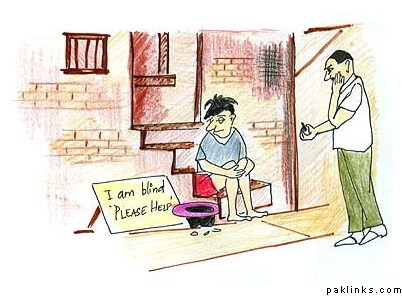
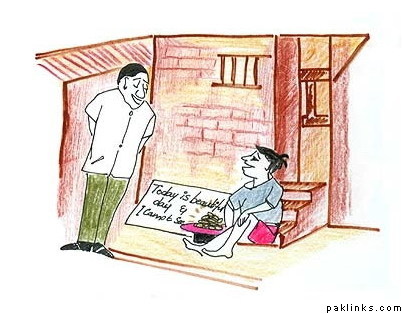
***A blind boy sat on the steps of a building with a hat by his feet. He held up a sign which said: ‘I am blind, please help.’ ***
***There were only a few coins in the hat.

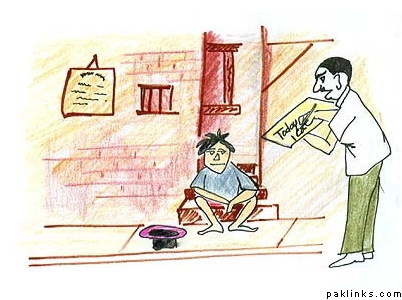
A man was walking by. He took a few coins from his pocket and dropped them into the hat. He then took the sign, turned it around, and wrote some words. ***

***He put the sign back so that everyone who
walked by would see the new words. ***

***Soon the hat began to fill up. A lot more people were giving money to the blind boy. That afternoon the man who had changed the sign came to see how things were. The boy recognized his footsteps and asked, ‘Were you the one who changed my sign this morning? What did you write?’ ***

***The man said, ‘I only wrote the truth. ***
***I said what you said but in a different way.’ ***

***What he had written was: ‘Today is a beautiful day and I cannot see it.’ ***
***Do you think the first sign and the second sign were saying the same thing? ***

***Of course both signs told people the boy was blind. But the first sign simply said the boy was blind. The second sign told people they were so lucky that they were not blind. Should we be surprised that the second sign was more effective? ***

**Moral of the Story: **
**Be thankful for what you have. Be creative. **
Be innovative. Think differently and positively.

***Invite others towards good with wisdom. Live life with no excuse and love with no regrets. When life gives you a 100 reasons to cry, show life that you have 1000 reasons to smile. Face your past without regret. Handle your present with confidence. Prepare for the future without fear. Keep the faith and drop the fear. ***


Great men say, ‘Life has to be an incessant process of repair and reconstruction, of discarding evil and developing goodness…. In the journey of life, if you want to travel without fear, you must have the ticket of a good conscience.’

***The most beautiful thing is to see a person smiling…
And even more beautiful is, knowing that you are the reason behind it!!! ***

This is the most EXPENSIVE mall in US history we are talking about !

The Last Shopping Mall? New Jersey Awaits Xanadu - TIME

***The Last Shopping Mall? New Jersey Awaits Xanadu
By Sean Gregory / East Rutherford, N.J. Monday, Mar. 09, 2009


***Xanadu, New Jersey’s new mall
Rob Bennett / The New York Times / Redux


**It rises out of the tidal murk of the Meadowlands — the polluted northern–New Jersey wetlands on which the sports complex of the same name was built some 33 years ago — like a garish species from a monster movie. What is that swamp thing? It’s a mishmash of big-box structures covered in aqua, blue and white tiles, with a little mustard yellow and brown thrown in to finish off the 1970s-nightmare look. Part of the complex, still under construction, is shaped like a ski jump, because what says industrial metropolitan America quite like a Nordic sport?

“Looks like bathroom tile from the 1970s,” one astute commenter wrote on nj.com, a website that covers New Jersey news. “I expect to see David Cassidy every time I drive by that thing because it looks like the Partridge Family bus!” wrote another. Are the construction workers wearing bell-bottoms? The commenter continued, "My ex-husband flew in from Florida and said, ‘That mall can be seen from space.’ " (See pictures of the Mall of America.)
Yes, that thing is a mall called Xanadu, located in East Rutherford. The name is a nod to the heavenly summer home immortalized by English poet Samuel Taylor Coleridge: “In Xanadu did Kubla Khan/ A stately pleasure-dome decree.” It’s also the name of a ridiculous 1980 Olivia Newton-John movie involving roller-skating muses and disco. Slated to open in August, Xanadu, a wannabe shopping paradise, will be a 2.4 million-sq.-ft. retail and entertainment complex located 3½ miles from the Empire State Building, across the Hudson River at the intersection of the New Jersey Turnpike and two heavily trafficked state roads through which 88 million vehicles pass each year.

Across the state, the project has taken a rightful beating for its exterior. The Meadowlands location isn’t scenic — it’s surrounded by weedy wetlands, decrepit factories, shipping containers and railroads — and Xanadu’s developers spent $2 billion on what seems like the most hideous spot on the lot. “It’s basically a lot of junk,” says former New Jersey Governor Brendan Byrne, for whom the basketball area at the Meadowlands was once named (it’s now the Izod Center). “I drive by with friends and we’re embarrassed.” (See pictures of the world’s longest yard sale.)

You’ve got to give the developers some credit for their tenaciousness. But this massive project, the most expensive shopping mall ever built in the U.S., has a more serious problem than its tacky exterior: the doors will open smack in the middle of the worst recession since the Great Depression. Malls are suffering a slow, painful death. The International Council of Shopping Centers (ICSC) has predicted that 73,000 stores will close their doors during the first half of 2009. Retail expert Burt Flickinger III, managing director of Strategic Resources Group, projects that 2,000 to 3,000 shopping malls and centers nationwide could go under this year. If Xanadu — which allegedly has leased 73% of its space thus far — does open in 2009, it would be the only enclosed mall to debut this year, according to the ICSC. Xanadu is the lone ranger, running straight into every possible horrible economic headwind. “It’s the poster child for bad timing,” says Howard Davidowitz, chairman of Davidowitz & Associates, a national retail-investment-banking and consulting firm.

What’s worse, according to Xanadu’s detractors, is that the mall will offer discretionary amenities at a time when consumers are in survival mode. For example, that ski jump structure will actually house a 165,000 sq. ft. indoor skiing and snowboarding facility. The mall will also include restaurants like the Cheesecake Factory, whose 2008 profits dropped nearly 30% amid the casual-dining meltdown; an 18-screen movie theater; fashion retailers such as H&M, Guess and Zara; and Cabela’s, an upmarket fishing, hunting, outdoor apparel and equipment outlet. Adrenalia, an extreme-sports store, is slated to have an indoor wave pool, and the mall includes a skydiving simulator. Xanadu will also offer rides on a 286-ft. Ferris wheel that is sponsored by Pepsi. The wheel will provide stunning views of the Manhattan skyline — as well as the north Jersey highways, toll booths, weeds, containers, smokestacks and steel bridges you see in the opening credits of The Sopranos. (See pictures from Black Friday.)

“Xanadu is the epic discretionary story,” says Davidowitz. “It’s the epicenter of ‘not needed.’ How can you have this when the consumer is completely decimated? It’s already one of the world’s biggest nightmares.”
Naturally, executives for Xanadu, which has been beset by prior delays and cost overruns, offer a different spin. “It’s not like people aren’t looking to recreate,” says Larry Siegel, president of Xanadu. “They are. But people may not be able to rent that house on the beach or pay a few hundred bucks for a three-day pass at Disney. But they can come here and spend $100. If people spend the time here, they’re going to spend the money.” (See what businesses are doing well despite the recession.)

Although Xanadu doesn’t have a pretty face, it’s what’s inside that counts for a mall. And if Xanadu can corral enough retailers to sign on for a grand opening, it has the potential to at least survive the downturn. If all goes according to plan, the mall could spice up the shopping experience, which would be a welcome change in this depressed retail environment. For example, a huge video screen in the sports area will broadcast games, which could draw shopping-averse men to the mall. The Children’s Science Center, Legoland Discovery Center and Wannado City — where kids can hold “jobs” as firefighters, cops and other professionals — may give families incentive to leave the house, head for the mall and maybe buy a shirt or two while they’re there.**


Another advantage: the huge, diverse New York City metro area hasn’t been hit quite as hard by the recession as the rest of the country has. Housing prices are dipping, but not collapsing like in other places. New York malls have held up relatively well. Xanadu’s location, amid the confluence of some of the country’s most congested road arteries, should also help. Surely a few curious drivers will want to check out the mega-mall. Plus, the state has built a rail line to the site; it’s now just a 23-min. ride to Xanadu from Manhattan. Traditionally, city residents without cars cringe at the thought of crossing the Hudson to the Meadowlands, since public transportation to the site has been so abysmal. (See 10 things to do in New York City.)
Xanadu’s president insists the mall is the real deal. “For people driving by who don’t like how the front of it looks, please, give yourself a chance to understand the whole package,” Siegel says. That would be a reasonable request from any mall developer. Unfortunately, it was reasonable back in 2006. Forget about paradise, Xanadu. Just try to stay out of hell.

This is so cool…

A different kind of clock…

***1st Line is Seconds


***2nd Line is minutes


***3rd line is Hours


***4th Line is Days


***5th Line is months


6th Line is Years

This is the COOLEST clock I have seen yet!!


A new one!! Look closely at it!! Amazing!!


http://home.tiscali.nl/annejan/swf/timeline.swf

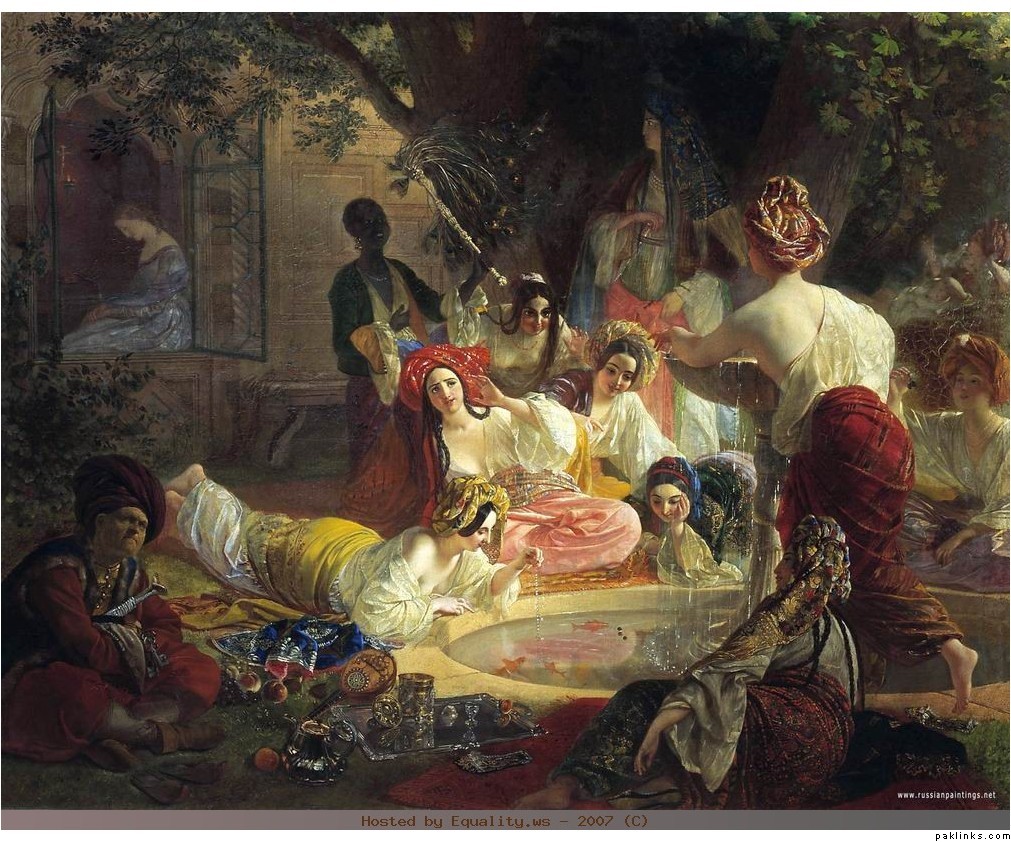
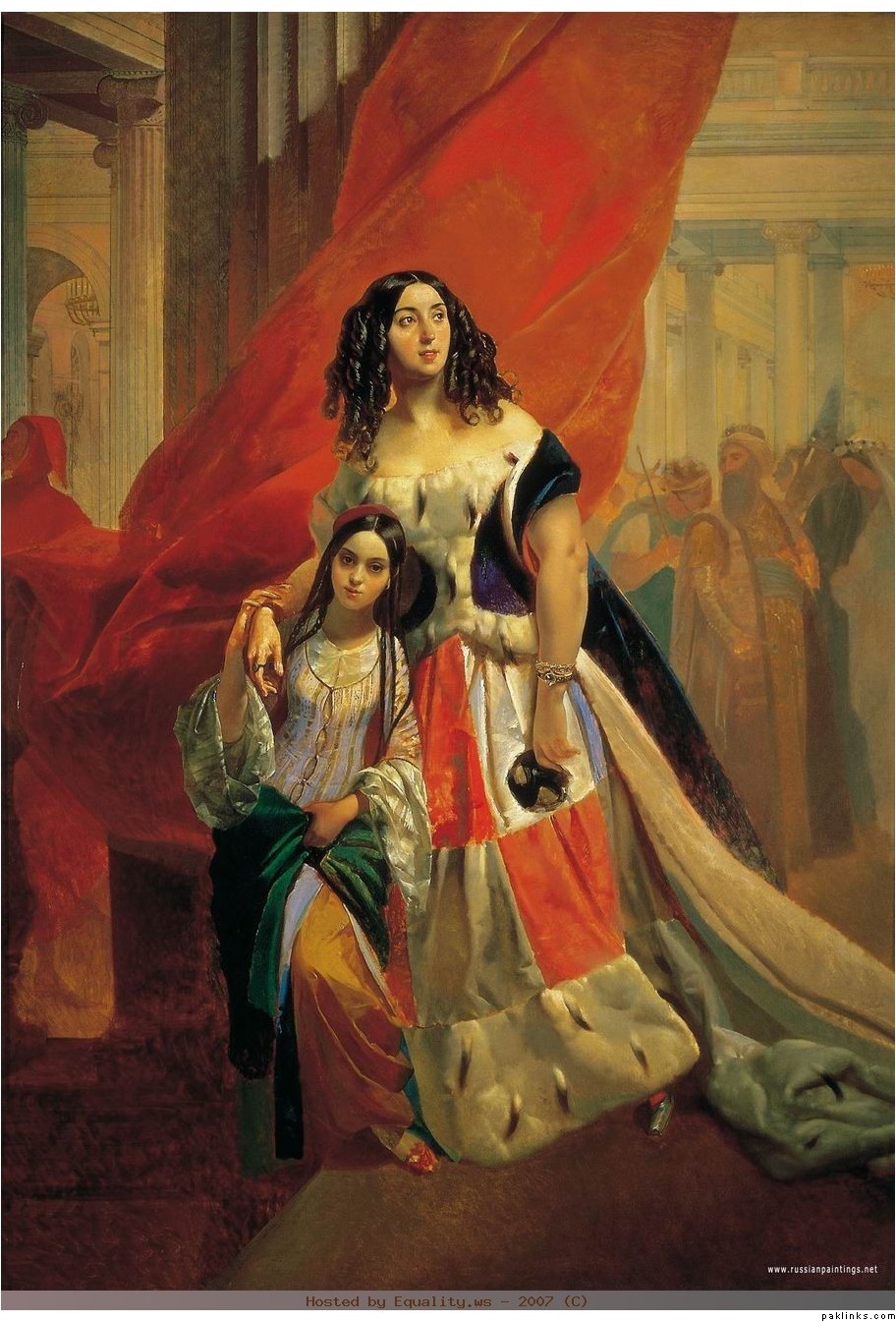
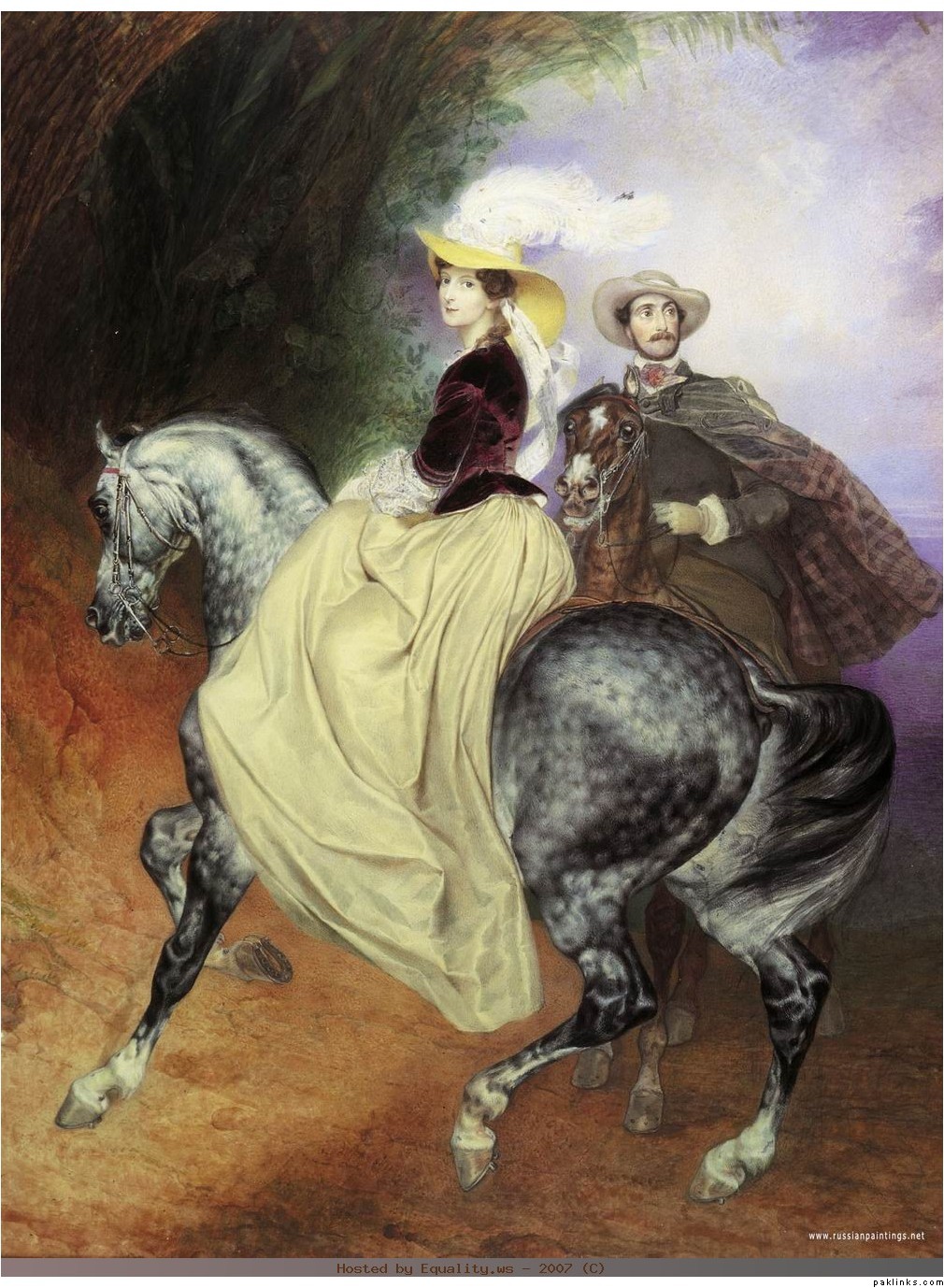
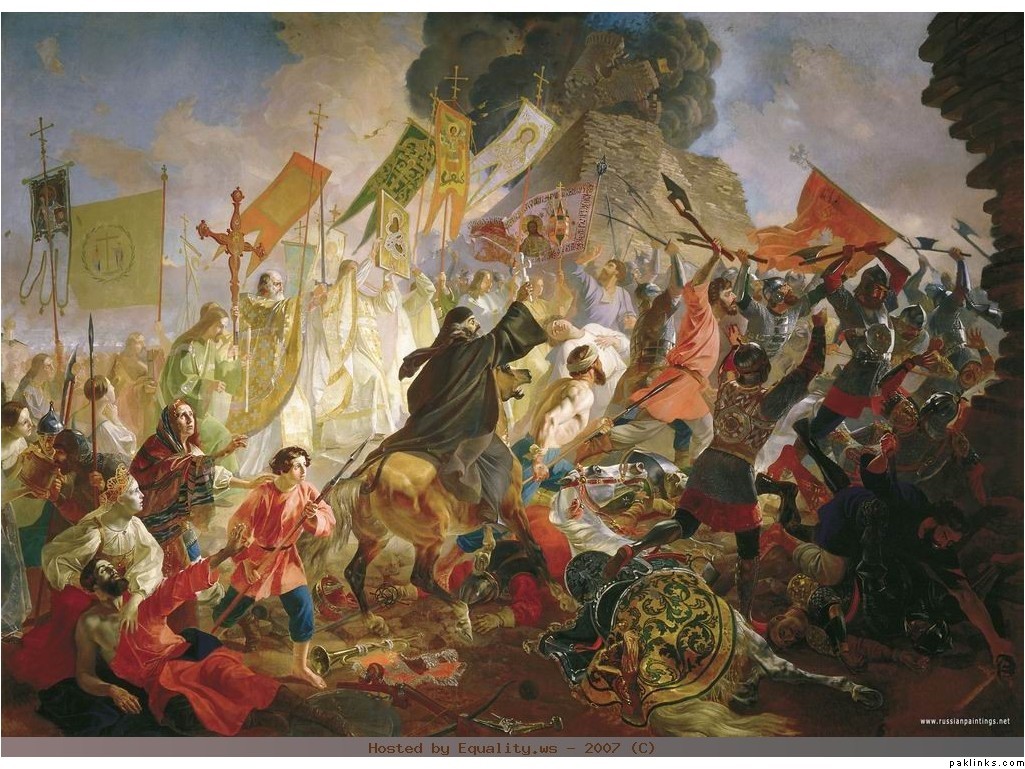
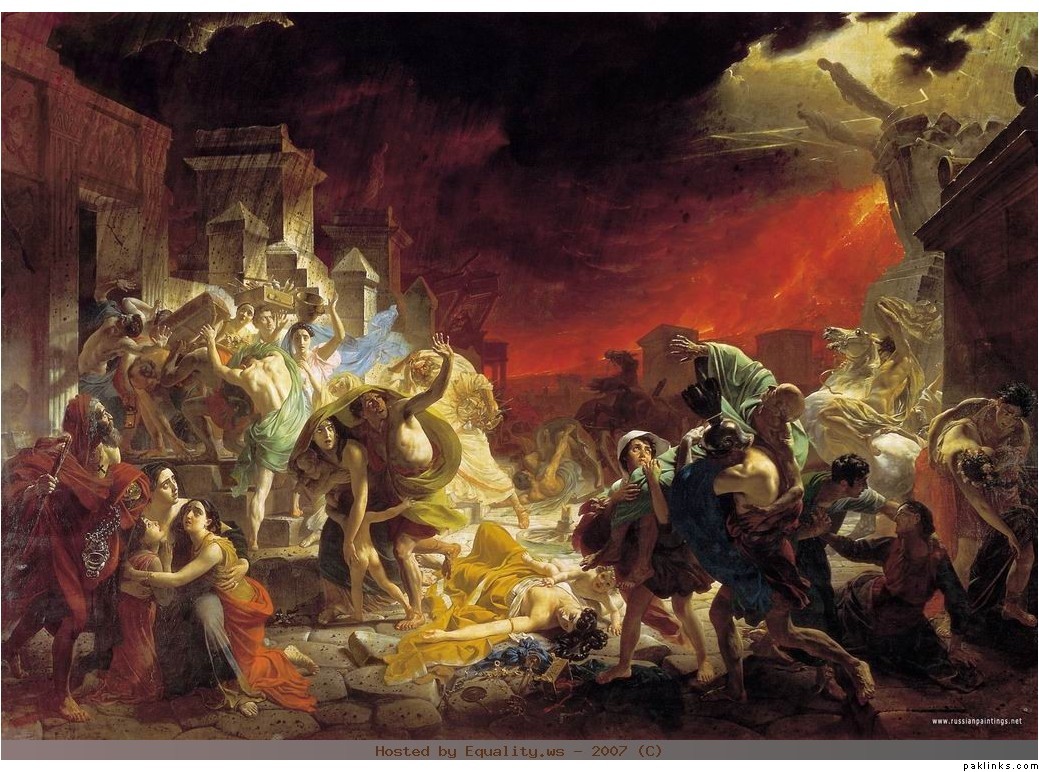
A most notable contribution to the Romantic spirit, was made by Karl Pavlovich Bryullov. He combined technical proficiency and classical academic training with a Romantic impulsiveness to produce some of the liveliest examples of Russian art of the period. Bryullov is celebrated for the unusual breadth of his artistic talent. He was a perfect historical painter, portraitist, and genre painter.

Bryullov descended from French Huguenots. His father was a sculptor. Karl Bryullov was educated at the St. Petersburg Academy of Fine Arts (1809-21). He studied in Italy from 1823, painting his monumental Last Day of Pompeii (1830-33), while there. It brought him an international reputation. Russia greeted him as a hero who had glorified the Motherland. Alexander Pushkin, Vassily Zhukovsky and Nikolay Gogol all warmly welcomed the artist.

Bryullov’s links with Romanticism are manifested in his desire to depict the most dramatic moments in the history of humanity, in his ability to show not only physical beauty, but the spiritual beauty of man during the most dramatic moments of his life. During his long sojourn in Italy he became fascinated by the life and customs of the Italians, their humour and lyricism.

Though he painted other monumental historical canvases, none was as successful as the Last Day of Pompeii. Much of his reputation rests on his more intimate portraits, water-colours, and travel sketches. Bryullov succeeded in asserting something new in all the genres he worked.**

THINK, THINK, THINK & THINK
AGAIN, AGAIN, AGAIN & AGAIN !
READ THE WORDS REPEATEDLY !

FOOD FESTIVAL
KARACHI
SHERATON


The 99 Club


**Once upon a time, there lived a King who, despite his luxurious lifestyle, was neither happy nor content.

One day, the King came upon a Servant who was singing happily while he worked. This fascinated the King; why was he, the Supreme Ruler of the Land, unhappy and gloomy, while a lowly Servant had so much joy. The King asked the Servant, "Why are you so happy ?"**


**The Servant replied, "Your Majesty, I am nothing but a Servant, but my family and I don't need too much - just a Roof over our heads and warm food to fill our tummies."

The King was not satisfied with that reply. **


*Later in the day, he sought the advice of his most trusted Advisor. After hearing the King's woes and the Servant's story, the Advisor said, "Your Majesty, I believe that the Servant has not been made part of The 99 Club.""The 99 Club? *

**And what exactly is that?" the King inquired.

The Advisor replied, "Your Majesty, to truly know what The 99 Club is place 99 Gold Coins in a bag and leave it at this Servant's doorstep."

When the Servant saw the bag, he took it into his house. When he opened the bag, he let out a great shout of joy... so many Gold Coins !

He began to count them. After several counts, he was at last convinced that there were 99 Coins. **

**He wondered, "What could've happened to that last Gold Coin ? Surely, no one would leave 99 Coins !"

He looked everywhere he could, but that final Coin was elusive. Finally, exhausted, he decided that he was going to have to work harder than ever to earn that Gold Coin and complete his collection.

From that day, the Servant's life was changed. He was overworked, horribly grumpy, and castigated his family for not helping him make that 100th Gold Coin. He stopped singing while he worked.

Witnessing this drastic transformation, the King was puzzled. When he sought his Advisor's help, the Advisor said, "Your Majesty, the Servant has now officially joined The 99 Club."

He continued, "The 99 Club is a name given to those people who have enough to be happy but are never contented, because they're always yearning and striving for that extra "1" telling to themselves: "Let me get that one final thing and then I will be happy for life."**

**We can be happy, even with very little in our lives, but the minute we're given something bigger and better, we want even more ! We lose our sleep, our happiness, we hurt the people around us; all these as a Price for our growing needs and desires.

That's what joining The 99 Club is all about."**

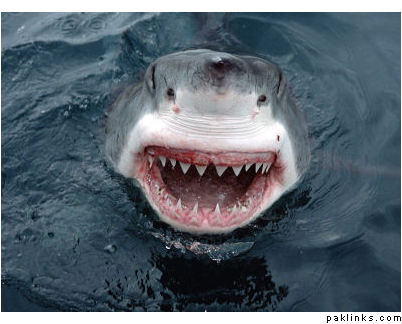
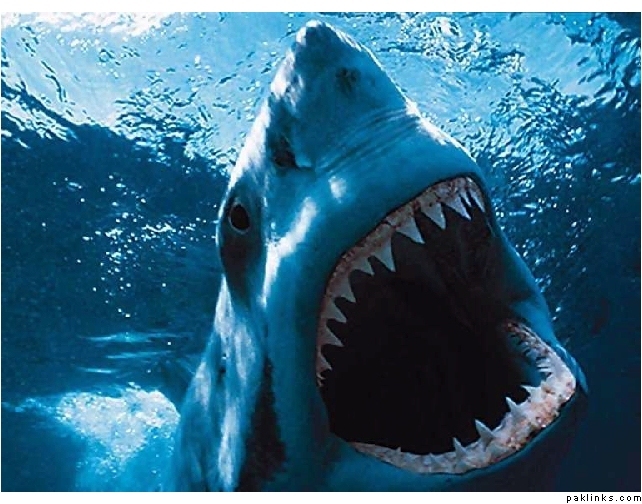
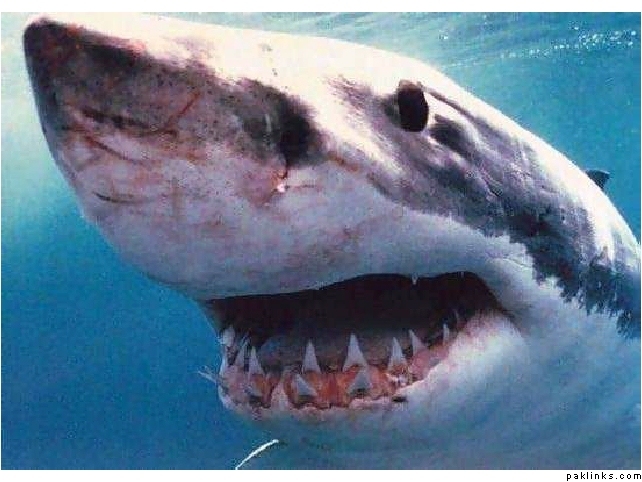
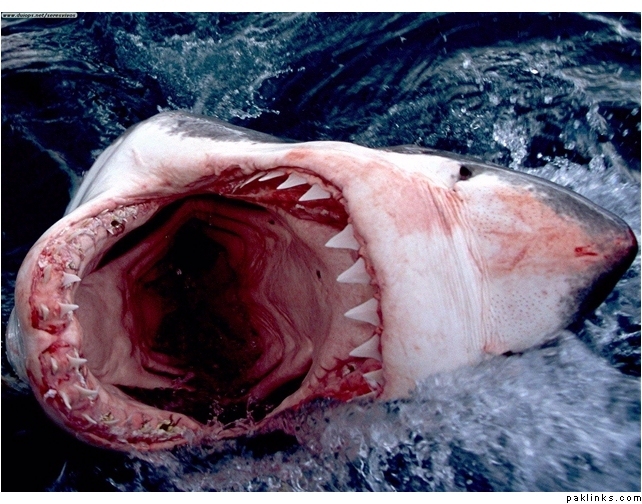
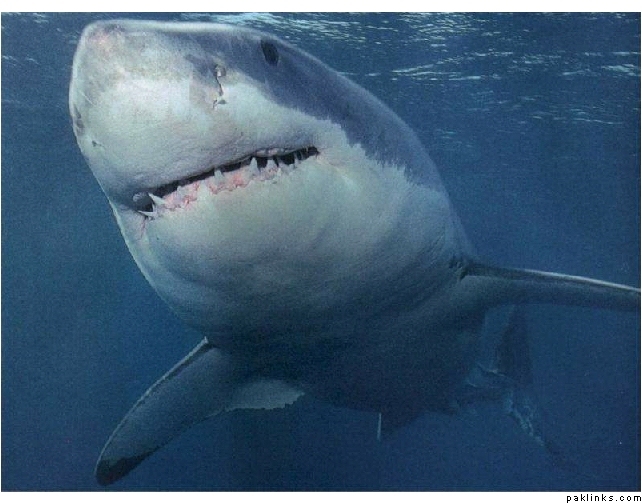
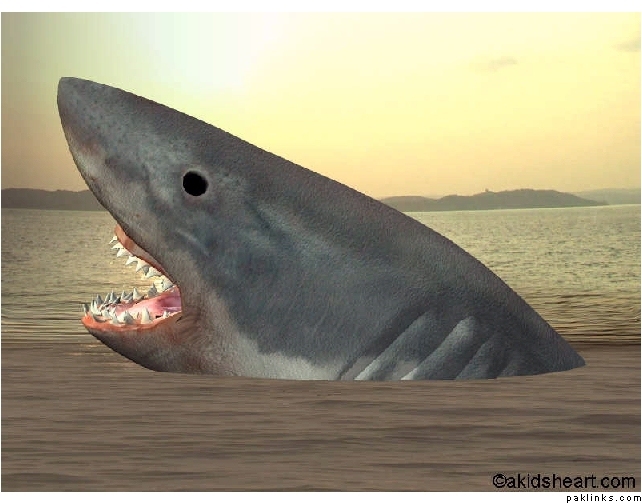
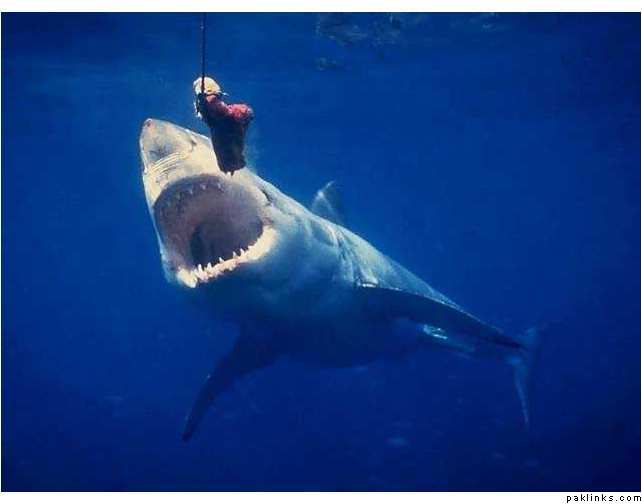
**GREAT WHITE SHARK! **

***Great whites are found throughout the temperate marine waters of the world, but they appear to prefer regions where there are or were substantial numbers of seals. Main populations of the great white are found in waters off southern Africa, Australia, New Zealand, Japan, the north-east and Californian coasts of America, southern Mexico, Chile and the Mediterranean. They can also be found in smaller numbers off the Brazilian coast, the Caribbean, the Azores, Hawaii, north-west Africa, the Philippines, Sri Lanka and the Seychelles. ***

***Most White sharks eat similar food. Though it is possible that different sexes and age groups eat different things. For instance it is mainly male sharks which migrate to the Farallon Islands to feed on young Elephant seals. White sharks are warm-blooded and so they mainly eat oily or fatty fish, which will give them lots of energy to keep them warm. It is impossible to tell which types they dislike; but they do seem not to like the taste of humans as they usually spit them out, if they attack one by mistake. Probably we do not have enough fat for them. ***

***White sharks are very unusual for sharks in hunting by sight. They cruise along well below the surface looking for the silhouette of potential prey above. They shoot up from below and strike at the head of the prey, taking one bite and then retreating to allow the creature to weaken before they go in to feed. ***

***I don’t think anyone has actually counted how many teeth a Great white shark goes through in its lifetime. We do know they replace their teeth every 6-8 weeks allowing the front row to drop out and a new row to come up behind. They typically have 2-4 rows of teeth showing at any one time. This means that the great white goes through thousands of teeth and hundreds of rows in a lifetime. ***

***Adult Great White Sharks do not have many enemies. Only man is likely to attack them, or dolphins and orcas if they feel threatened. They do not have much defence against these, except trying to bite if they get the chance. Young white sharks are quite large at birth (150 cm) and rely on speed and agility to avoid their predators, larger sharks. They do, however, have to avoid injury when they attack their prey. In general they attack at speed from below, roll their eyes so that only the tougher white sclera is exposed, and pull their delicate snout back out of the way as they bite. After a single bite they tend to stand off to let the prey weaken before feeding on it. ***

***There is much that remains a mystery concerning the Great White’s life cycle. Cameras are being fitted to sharks, and sharks are also tracked by satellite to unravel the mystery of this species. We know that they can travel thousands of kilometers wondering aimlessly, but also return with precision to favoured places perhaps to mate or feed. The species is found across the globe so it is highly likely that their life cycle will vary to different environmental conditions but we think they are all the same species of shark. ***

For the best information get the book:
The Field Guide to the Great White Shark - R Aidan Martin ISBN: 0-9732395-0- 6 Reef Quest Centre for Shark Research - USA, 2003. The book includes a DVD.


***"A relationship, I think, is like a shark, you know?
It has to constantly move forward or it dies.” - Woody Allen
***

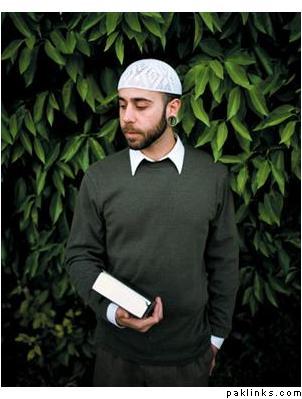
The Guard Who Found Islam

***Terry Holdbrooks stood watch over prisoners at Gitmo. ***
What he saw made him adopt their faith.

**By Dan Ephron | NEWSWEEK
Published Mar 21, 2009
From the magazine issue dated Mar 30, 2009
**
The Gitmo Guard Who Converted to Islam | Newsweek National News | Newsweek.com

Army specialist Terry Holdbrooks had been a guard at Guantánamo for about six months the night he had his life-altering conversation with detainee 590, a Moroccan also known as “the General.” This was early 2004, about halfway through Holdbrooks’s stint at Guantánamo with the 463rd Military Police Company. Until then, he’d spent most of his day shifts just doing his duty. He’d escort prisoners to interrogations or walk up and down the cellblock making sure they weren’t passing notes. But the midnight shifts were slow. “The only thing you really had to do was mop the center floor,” he says. So Holdbrooks began spending part of the night sitting cross-legged on the ground, talking to detainees through the metal mesh of their cell doors.


He developed a strong relationship with the General, whose real name is Ahmed Errachidi. Their late-night conversations led Holdbrooks to be more skeptical about the prison, he says, and made him think harder about his own life. Soon, Holdbrooks was ordering books on Arabic and Islam. During an evening talk with Errachidi in early 2004, the conversation turned to the shahada, the one-line statement of faith that marks the single requirement for converting to Islam (“There is no God but God and Muhammad is his prophet”). Holdbrooks pushed a pen and an index card through the mesh, and asked Errachidi to write out the shahada in English and transliterated Arabic. He then uttered the words aloud and, there on the floor of Guantánamo’s Camp Delta, became a Muslim.


When historians look back on Guantánamo, the harsh treatment of detainees and the trampling of due process will likely dominate the narrative. Holdbrooks, who left the military in 2005, saw his share. In interviews over recent weeks, he and another former guard told NEWSWEEK about degrading and sometimes sadistic acts against prisoners committed by soldiers, medics and interrogators who wanted revenge for the 9/11 attacks on America. But as the fog of secrecy slowly lifts from Guantánamo, other scenes are starting to emerge as well, including surprising interactions between guards and detainees on subjects like politics, religion and even music. The exchanges reveal curiosity on both sides—sometimes even empathy. “The detainees used to have conversations with the guards who showed some common respect toward them,” says Errachidi, who spent five years in Guantánamo and was released in 2007. “We talked about everything, normal things, and things [we had] in common,” he wrote to NEWSWEEK in an e-mail from his home in Morocco.


Holdbrooks’s level of identification with the other side was exceptional. No other guard has volunteered that he embraced Islam at the prison (though Errachidi says others expressed interest). His experience runs counter to academic studies, which show that guards and inmates at ordinary prisons tend to develop mutual hostility. But then, Holdbrooks is a contrarian by nature. He can also be conspiratorial. When his company visited the site of the 9/11 attacks in New York, Holdbrooks remembers thinking there had to be a broader explanation, and that the Bush administration must have colluded somehow in the plot.


But his misgivings about Guantánamo—including doubts that the detainees were the “worst of the worst”—were shared by other guards as early as 2002. A few such guards are coming forward for the first time. Specialist Brandon Neely, who was at Guantánamo when the first detainees arrived that year, says his enthusiasm for the mission soured quickly. “There were a couple of us guards who asked ourselves why these guys are being treated so badly and if they’re actually terrorists at all,” he told NEWSWEEK. Neely remembers having long conversations with detainee Ruhal Ahmed, who loved Eminem and James Bond and would often rap or sing to the other prisoners. Another former guard, Christopher Arendt, went on a speaking tour with former detainees in Europe earlier this year to talk critically about the prison.


Holdbrooks says growing up hard in Phoenix—his parents were junkies and he himself was a heavy drinker before joining the military in 2002—helps explain what he calls his “anti-everything views.” He has holes the size of quarters in both earlobes, stretched-out piercings that he plugs with wooden discs. At his Phoenix apartment, bedecked with horror-film memorabilia, he rolls up both sleeves to reveal wrist-to-shoulder tattoos. He describes the ink work as a narrative of his mistakes and addictions. They include religious symbols and Nazi SS bolts, track marks and, in large letters, the words BY DEMONS BE DRIVEN. He says the line, from a heavy-metal song, reminds him to be a better person.

The heart touching story. May be a Repeat story, Worth Sharing with

A Full Glass Of Milk

Very nice story to spread to...

One day, a poor boy who was selling goods from door to door to pay,
for his hungry stomach, decided he would ask for a meal at the next
house.


On the way through school, he found he had only one thin dime left
and he was very hungry.


However, he lost his nerve when a lovely young woman opened the
door.Instead of a meal he asked for a drink of water.


**The woman thought he looked hungry, so brought him a large glass of
milk. He drank it slowly, and then asked, 'How much do I owe you?' 'You
don't owe me anything,' she replied. 'Mother has taught us,never to
accept pay for a kindness.' *
*


He said...'Then I thank you from my heart.'


Year's later that young woman became critically ill.The local doctors were baffled.They finally sent her to the big city,where they called in specialists to study her rare disease. Dr. Howard Kelly was called in for the consultation.

When he heard the name of the town she came from, a strange light
filled his eyes.


Immediately he rose and went down the hall of the hospital to her
room.Dressed in his doctor's gown he went in to see her.He
recognized her at once.


**He went back to the consultation room determined to do his best to
save her life,from that day he gave special attention to the case. *
*


After a long struggle, the battle was won. Dr. Kelly requested the
business office to pass the final bill to him for approval.


He looked at it, then wrote something on the edge and the bill was
sent to her room.


The woman feared opening it, for she was sure it would take the
rest of her life to pay for it all.


***Finally she looked, and something caught her attention on the side
of the bill. She read these words...


'Paid in full with one glass of milk.' Signed, Dr.Howard Kelly.


Tears of joy flooded her eyes as her happy heart prayed: Thank You,
God,that Your love has spread abroad through human hearts and hands.'

Now you have two choices.
**
**You can send this page on and spread a positive message. Or ignore
it and pretend it never touched your heart.

*A SIMPLE INSPIRATION
*

*To fix a broken life, use the tools of the heart.' If you are
touched by this message, pass it on to as many people as you can *

G E N E R A L K N O W L E D G E
(Knowledge is POWER!)


Alaska
**
*More than half of the coastline of the entire United States is in Alaska


Amazon
**The Amazon rainforest produces more than 20% the world's oxygen supply. The Amazon River pushes so much water into the Atlantic Ocean that, more than one hundred miles at sea off the mouth of the river, one can dip fresh water out of the ocean. The volume of water in the Amazon river is greater than the next eight largest rivers in the world combined and three times the flow of all rivers in the United States . **


Antarctica **
***Antarctica is the only land on our planet that is not owned by any country. Ninety percent of the world's ice covers Antarctica . This ice also represents seventy % of all the fresh water in the world.. As strange as it sounds, however, Antarctica is essentially a desert. The average yearly total precipitation is about
* two inches. *Although covered with ice (all but 0.4% of it, i.e.), Antarctica is the driest place**** on the planet, with an***
**absolute humidity lower than the Gobi desert.*

*
BRAZIL:
**Brazil got its name from the nut, not the other way around. **

*Canada
*Canada has more lakes than the rest of the world combined. Canada is an Indian word meaning ' Big Village .' *
*

*Chicago
*Next to Warsaw , Chicago has the largest Polish population in the world. *
*

*Detroit
*Woodward Avenue in Detroit, Michigan carries the designation M-1, so named because it was the first paved road any where. *
*

*Damascus , Syria
*Damascus, Syria, was flourishing a couple of thousand years before Rome was founded in 753 BC, making it the oldest continuously inhabited city in existence. *
*

*Istanbul , Turkey
*Istanbul (AKA Constantinople) , Turkey, is the only city in the world located on two continents. *
*

Los Angeles
*Los Angeles' full name is El Pueblo de Nuestra Senora la Reina de los Angeles de Porciuncula -- and can be abbreviated to 3.63% of its size: L.A
*.

*New York City
*The term 'The Big Apple' was coined by touring jazz musicians of the 1930's who used the slang expression 'apple' for any town or city. Therefore, to play New York City is to play the big time - The Big Apple. *
*

**There are more Irish in New York City than in Dublin, Ireland; more Italians in New York City than in Rome, Italy; and more Jews in New York City than in Tel Aviv, Israel.. **

Ohio

*There are no natural lakes in the state of Ohio , every one is man made.
*

*Pitcairn Island
*The smallest island with country status is Pitcairn in Polynesia, at just 1.75 sq. miles. *
*

*Rome
*The first city to reach a population of 1 million people was Rome, Italy in 133 B..C. There is a city called Rome on every continent. *
*

*Siberia
*Siberia contains more than 25% of the world's forests. *
*

*S.M.O.M.
*The actual smallest sovereign entity in the world is the Sovereign Military Order of Malta (S.MO.M.). It is located in the city of Rome, Italy, has an area of two tennis courts, and as of 2001 has a population of 80, 20 less people than the Vatican. It is a sovereign entity under international law, just as the Vatican is. *
*

*Sahara Desert
*In the Sahara Desert , there is a town named Tidikelt, which did not receive a drop of rain for ten years. Technically though, the driest place on Earth is in the valleys of the Antarctic near Ross Island . There has been no rainfall there for two million years. *
*

*Spain
*SPAIN literally means 'the land of rabbits.' *
*
**St. Paul, Minnesota
St. Paul, Minnesota , was originally called Pig's Eye after a man named Pierre 'Pig's Eye' Parrant who set up the first business there. *
*

*Roads
*Chances that a road is unpaved in the U.S.A: 1%, in Canada : 75%. *
*

*Texas
*The deepest hole ever made in the world is in Texas . It is as deep as 20 empire state buildings but only 3 inches wide. *
*

United States
**The Interstate System requires that one-mile in every five must be straight. These straight sections are usable as airstrips in times of war or other emergencies. **

Waterfalls*
The water of Angel Falls (the World's highest waterfall) in Venezuela drops 3,212 feet. It is 15 times higher than Niagara Falls
*

Re: INTERESTING LIVES and INTERESTING FACTS

wow nice share :k:**

Ohio
*There are no natural lakes in the state of Ohio , every one is man made.

there are abt 3-4 lakes in ACT, Australia. and all them are man made being used as water reserve for daily usage.


***THIS COULD BE ONE OF THE MOST
COMPLETE INFO BASED POWERPOINT SHOW
I MAY EVER HAVE SEEN ON;


**“TITANIC”
**
Click on;
4shared.com - online file sharing and storage - download Titanic.pps

ENCHANTING JAIPUR
India;

4shared.com - online file sharing and storage - download Enchanting Jaipur.pps

:)OFFSHORE-OUTSOURCING:)
Offshore Outsourcing

**K
A
I
S
I

BULANDI

KAISI

P
U
S
T
E
E**


ALLAH SE HAMESHA
DARR NA CHAHHEAY


Pehalvi Dynasty-PPT;
Click & Download a MUST powerpoint program…
4shared.com - online file sharing and storage - download Pahlavi.pps


***A store owner was tacking a sign above his door that read: "Puppies For Sale". Signs like that have a way of attracting small children and sure enough, a little boy appeared under the store owner's sign.

"How much are you going to sell the puppies for?" he asked.

The store owner replied, "Anywhere from $30 to $50."


***The little boy reached in his pocket and pulled out some change.

"I have $2.37," he said. "Can I please look at them?"


***The store owner smiled and whistled and out of the kennel came Lady, who ran out in the aisle of his store followed by five teeny, tiny balls of fur. One puppy was lagging considerably behind.

Immediately the little boy singled out the lagging, limping puppy and said, "What's wrong with that little dog?"


***The store owner explained that the veterinarian had examined the little puppy and had discovered it didn't have a hip socket. It would always be lame.

The little boy became excited. "That is the puppy that I want to buy."


***The store owner said, "No, you don't want to buy that little dog. If you really want him, I'll just give him to you."

The little boy got quite upset. He looked straight into the store owner's eyes, pointing his finger, and said, "I don't want you to give him to me. That little dog is worth every bit as much as all the other dogs and I'll pay full price. In fact, I'll give you $2.37 now, and 50 cents a month until I have him paid for."


***The store owner countered, "You really don't want to buy this little dog. He is never going to be able to run and jump and play with you like the other puppies."

To his surprise, the little boy reached down and rolled up his pant leg to reveal a badly twisted, crippled left leg supported by a big metal brace. He looked up at the store owner and softly replied, "Well, I don't run so well myself, and the little puppy will need someone who understands."


Don't we all need someone who understands?

The Statue of Liberty Under Construction - Remarkable Photographs

The New York Public Library has recently unveiled some extraordinary pictures of the Statue of Liberty under construction. Take a trip back in time and see extraordinary behind the scenes images of the creation of this superlative structure.

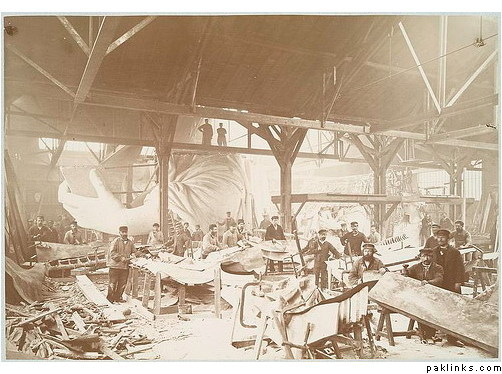
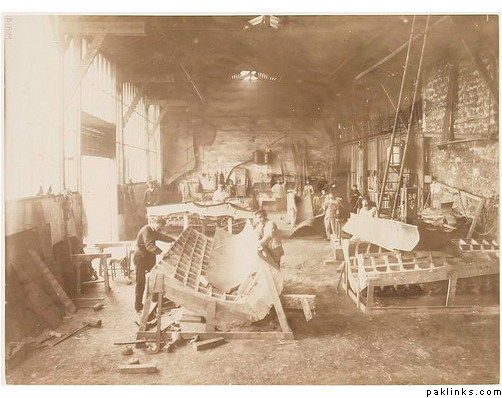
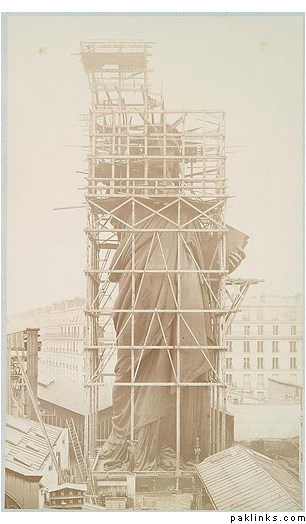
A giant is formed. The sheer scale of the statue under construction can be seen here, in contrast to the workmen posing woodenly for that fairly new invention, the camera.. The more formal name for the statue is Liberty Enlightening the World and it is constructed with sheets of pure copper, even though the picture makes it look something like marble. It is something of a miracle that we now have the finished product standing proudly on Liberty Island. Had it not been for the contributions of ordinary French and Americans then she would never have arisen in the first instance.

**Such is the immensity of the statue one can only wonder whether or not the workmen pictured above had any idea which part of the statue they were working on at any one time. The photograher Albert Fernique, who captured these pictures around 1883, must have been in a certain awe at the immensity of the statue and his images capture its sheer scale and size beautifully. The French had decided to give the United States of America something for their centennial independence celebrations that the Americans and the world would never forget. The process of building was painstaking, slow and fraught with financial difficulties. The copper shell’ was only what the public would see. **


Officials survey the workshop - models of statues can just be seen in the background. While they probably had an idea that their statue would become an icon of freedom the world over, the French politicians of the day had some rather more down to earth reasons for gifting the immense sculpture to the States. French politics. Perhaps for this reason the source of the copper has never been revealed. The rumor had always been that the copper was of Norwegian origin, from a village called Visnes, rather than a French source. In 1985 Bell Labs confirmed that this was fairly likely to be true.

At the time France was in political turmoil and, although at the time under their third republic, many people looked back at the time of Napoleon and the monarchy before that with fondness and wanted its return. The desire for a backwards step to authoritarianism was worrying. French politicians - as wily then as now - saw Lady Liberty as a way, albeit phenomenally huge, to focus the public’s imagination on republicanism as the best way forward. The USA and its centennial of independence from the yolk of England was the perfect focus.

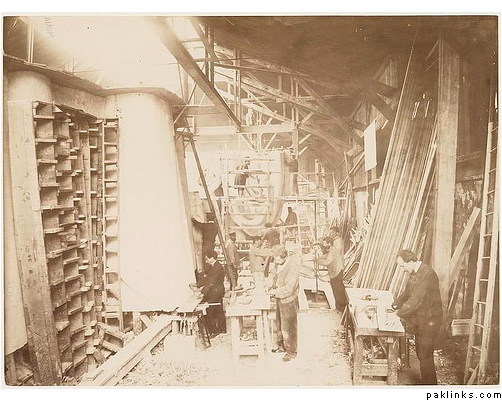
The plaster surface of the left arm and its hand take shape, the skeleton underneath revealed. As there is a deal of work under the carapace, so the French politicians had ulterior motives. Using the USA - which many saw as the ideal of government and populist aspirational politics - the French used the statue as a Trojan Horse in reverse, as it were. Its true purpose, in the eyes of the political gift givers, was to make republicanism the center of political ideology in the minds of the people. How greatly it succeeded can never fully be quantified but the French cannot be faulted for thinking big. It must be said here that the ordinary French, through their sunstantial buying of lottery tickets (and other fund rasing efforts) had a much purer purpose at heart than their politicians.


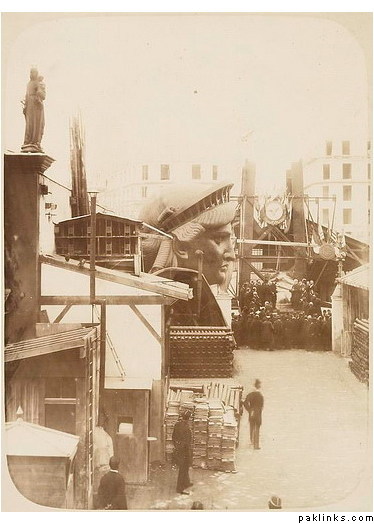
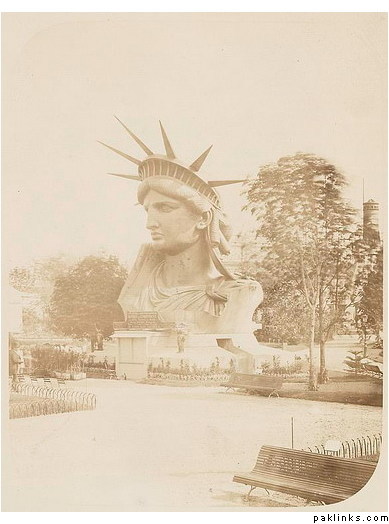
It must surely have been amazing for the workers to turn up each morning to the sight of a colossal head looking down upon them. The inspiration for the face seems to be the Roman god of the sun, Apollo or his Greek equivalent, Helios. More down to earth sources of inspiration center on the women in the life of the sculptor, Frederic Auguste Bartholdi. It may well have been Isabella Eugenie Boyer, a good looking and well-known figure in Paris at the time. More worrying, some believe the face of the statue actually belongs to Bartholdi’s mother. Bartholdi never revealed the true model of the face, but if this is the case Freud would have had a field day.

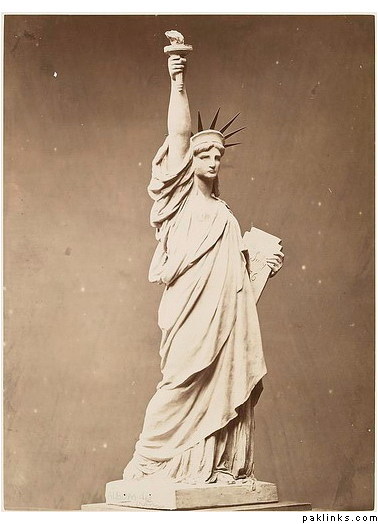
Bertholdi made a small scale model first, which is still displayed in the Jardin du Luxembourg in the city of the statue’s original construction, Paris. Before the statue was shipped to America, though, it had to be seen to be tested. If it had not been for money, it may never have landed in the states - particularly in the form we all know. On a visit to Egypt, Bartholdi’s vision of liberty expanded to its present proportions. Had his original idea received financial support, then whatever gift the French gave the Americans for the 1876 centennial could not possibly have been the statue.


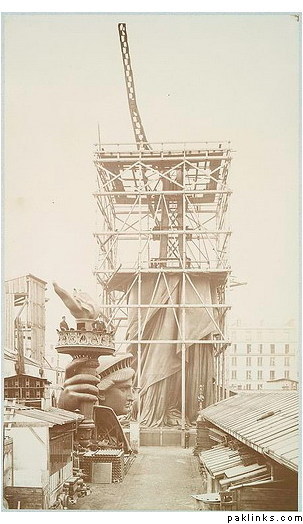
Little by little, the statue arises. Bertholdi saw the Suez Canal under construction in the eighteen sixties and was inspired to build a giant figure at its entrance. He drew up plans which bore a remarkable similarity to what now stands on Liberty Island but his ideas were rejected by the Egyptian ruling body of the time because of the financial problems the country was facing at the time. Had the staute been built in Egypt as a lighthouse, the idea would never have been taken up for America. The Statue of Liberty as we know it was in fact used as a lighthouse, from its unveiling in 1886 right until 1902 - the very first in the world to use electricity.


Almost there! There were huge structural issues that had to be addressed in the design and construction of a sculpture of such enormity. Enter a certain Gustave Eiffel, who would later go on to build that eponymous tower which still dominates the skyline of Paris. It was his job (which he delegated to Maurice Koechlin, his favored structural engineer) to ensure that Liberty’s copper sheath could move while still remaining vertical. Koechlin created a huge pylon of wrought iron and the famous skeletal frame to ensure that the statue would not fall down in high winds.


Money was always a problem. The plan had been to get the statue to the US by the fourth of July, 1876. Only the right arm and torch were finished by then. However, as the Americans had taken responsibility for the construction of the pedestal, these pieces of the statue were displayed to the American pubic at the Centennial Exposition (in Philadelphia) . Money raised by allowing people to climb this part of the statue (see here) started the funding efforts for the base of the statue. The French did their bit too, showing the head in their own exposition in 1878.


**1886 must have been one of those years that people remembered for the rest of their lives. A statue of gigantic proportions, symbolizing the ideas and aspirations of America, was unveiled by President Grover Cleveland at Liberty Island (renamed from Bedloe’s Island or Love Island). In an ironic twist, President Cleveland had vetoed the New York legislature from contributing fifty thousand dollars to help with the building of the statue’s pedestal. Letting bygones be bygones, President Cleveland was more than happy to officiate at the ceremony. This had not been the only problem to face the statue in the years before its final unveiling, of course. From the model stage, above, to its triumphant moment of revelation, the process was fraught with difficulty - mostly of a financial nature. However, thanks to the efforts of both the American and French people we now have a permanant reminder of what we should hold dear - liberty still symbolically steps forth from her shackles to protect, shelter and enlighten. **