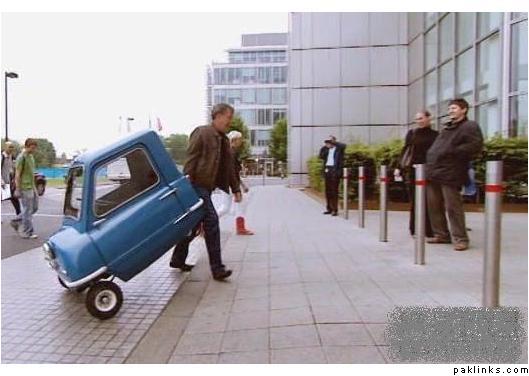
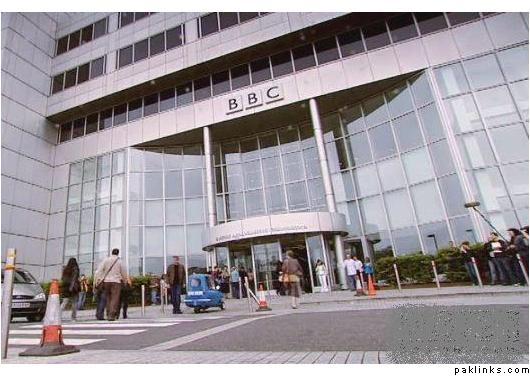
is this son or daughter , lol
Robin Ghosh & Shabnam kee aulaad 
PS: I found out about it through research on GS 
Re: INTERESTING LIVES and INTERESTING FACTS
wow, yahan tu school project ki info mil sakti hai. u made our life easier.
thx raju uncle :)
WHAT…Next!!!
SUBHAN’ALLAH
***Sunita Williams, an Indian origin astronaut and scientist at NASA in USA returned to the earth after her 197 days stay on satellite space station along with her other four crew members Sunita Williams accepted ‘ISLAM’
Masha Allah, because when they were on the satellite space station, they saw towards EARTH, the entire EARTH looked dark, but 2 places on the EARTH looked like SPARKS (Roshni). They were shocked to see that and saw them with the help of telescope and came to know that those two places were 'MECCA’and ‘MADINA’ Masha Allah.
The pictures by Sunita are also attached here***.

**The human body is a machine that is full of wonder. **
This collection of human body facts will leave you wondering
why in the heck we were designed the way we were;
1.. Scientists say the higher your I.Q., the more you dream.
2.. The largest cell in the human body is the brain cell.
3.. The smallest is the nail edge.
4.. You use 200 muscles to take one step.
5.. The average woman is 5 inches shorter than the average man.
6.. Your big toes have two bones each while the rest have three.
7.. A pair of human feet contain 250,000 sweat glands.
8.. A full bladder is roughly the size of a soft ball.
9.. The acid in your stomach is strong enoug h to dissolve razor blades.
10.. The human brain cell can hold 5 times as much information as the
Encyclopedia Britannica.
11.. It takes the food seven seconds to get from your mouth to your
stomach.
12.. The average human dream lasts 2-3 seconds.
13.. Men without hair on their chests are more likely to get cirrhosis
of the liver than men with hair.
14.. At the moment of conception, you spent about half an hour as a
single cell.
15.. There is about one trillion bacteria on each of your feet.
16.. Your body gives off enough heat in 30 minutes to bring half a
gallon of water to a boil.
17.. The enamel in your teeth is the hardest substance in your body.
18.. Your teeth start developing (in your gums) 6 months before you
are born.
***19.. When you are looking at someone you love, your pupils dilate, they
do the same when you are looking at someone you hate.
20.. Blondes have more hair than dark-haired people.***
***21.. Your thumb is the same length as your nose.
22.. At this very moment I know full well you are putting this last
fact to the test . . . now remove your thumb from your nose and
pass this on to the friends you think might be interested in comparing
their thumbs to their noses as well.
You did it -- I KNOW you did !!!!! ***
British Lord Macaulay at India (mid-1800)
He also prepared/drafted the PENAL CODE which still persists in INDIA & PAKISTAN.
*
**The term Macaulay's Children is used to refer to people born of Indian ancestry who adopt Western culture as a lifestyle. The term is usually used in a derogatory fashion, and the connotation is one of disloyalty to one's country and one's heritage. The passage to which the term refers is from his Minute on Indian Education , delivered in 1835. It reads, "It is impossible for us, with our limited means, to attempt to educate the body of the people. We must at present do our best to form a class who may be interpreters between us and the millions whom we govern; a class of persons, Indian in blood and colour, but English in taste, in opinions, in morals, and in intellect. To that class we may leave it to refine the vernacular dialects of the country, to enrich those dialects with terms of science borrowed from the Western nomenclature, and to render them by degrees fit vehicles for conveying knowledge to the great mass of the population.".
An argument is raging in Pakistan about the reform of religious education in Madaaris (Islamic name for primary level religious schools).
Lord Macaulay's infamous Minute on Indian Education, a treatise on imposing English-language education on India, anticipated many of the same arguments.***
Are there any good survey sites?
I found this site - reachsurveys dot com ; maybe someone can try this out and give your feedback.
What CEOs Can Learn
From Paul Newman
By JOHN C. WHITEHEAD and PETER L. MALKIN
**
***History will certainly remember Paul Newman as an icon of modern cinema. But he was far more than just an actor. Paul was a gentleman in the truest sense of the word who embodied the American ideals of extraordinary integrity, a tireless work ethic, a commitment to family, and a deep sense of responsibility to the people who made his success possible.*
Paul used to joke that he had to keep making movies to support all of his philanthropic projects -- and that wasn't too far from the truth. To millions he's perhaps better known as the face of Newman's Own food products than he is for his superb performances in "The Hustler," "Cool Hand Luke," "The Verdict" and scores of other films.
What many may not know is that he donated 100% of post-tax profits and royalties from the Newman's Own company to charities world-wide -- more than $250 million to date. He was also passionate about the Hole in the Wall Camps he helped found for children with life-threatening illnesses, and he was deeply involved with a variety of other innovative nonprofit organizations including his most recent undertaking, the Safe Water Network.
Newman's Own has been an inspiration for individuals and business leaders alike and helped launch a movement for greater corporate philanthropy. Paul always considered himself an outsider in the corporate sector. His vision was to see companies change the way they conducted business and learn from the Newman's Own model of giving back. He was reticent around CEOs, but he quietly aimed to revolutionize corporate America.
It was this ambition that motivated him to help found the Committee Encouraging Corporate Philanthropy (CECP).
We remember Paul's enthusiasm when he approached us in 1998 and asked how we could urge companies to commit greater resources to charitable investments. That question led us to recruit David Rockefeller, Paul Volcker, Henry Schacht and other business leaders to join in creating a new organization. CECP has since grown to include more than 175 CEO members, representing 150 major corporations and over $10 billion of annual corporate giving.
While Paul was truly modest about his talents, he understood the power of his celebrity and capitalized on his fame to help fund important social projects and address community needs. When we ran into difficulty getting on the calendar of a busy executive, Paul Newman's name on the attendance list always opened doors. We remember walking down the formal corridor of one particular corporate office as the staff flocked to get a good look at Paul. As soon as the elevator doors closed, he lowered his glasses on his nose, gave us a wink and said, "76 and still sexy."
Paul's passion for philanthropy was rooted in the strong belief that we had a great obligation as individuals and companies to give back some of the benefits that we were granted as free and prosperous citizens of the United States. He believed that corporations are granted a license to operate by their communities, and therefore have the responsibility to be good citizens in return.
In 2000, Paul addressed a group of students at a U.C. Berkeley conference on philanthropy and articulated his motivation behind giving by saying "it seems so human to hold your hand out to people less fortunate than you are." This quote embodies the generous spirit of a man committed to not only giving back, but to inspiring the world to see the value of social responsibility.
In today's economy Paul's ideals are even more salient. Business leaders should learn from his example and maintain or increase their corporate giving programs in these tough times.
Mr. Whitehead is former deputy secretary of State and former co-chair of Goldman, Sachs & Co. Mr. Malkin is chairman of Wien & Malkin LLP. They are both honorary chairs and directors of the Committee Encouraging Corporate Philanthropy.
Roses Club
Live Well, Love Much, Laugh Often
Smile is an inexpensive way to improve your looks
What CEOs Can Learn
From Paul Newman
By JOHN C. WHITEHEAD and PETER L. MALKIN
**
***History will certainly remember Paul Newman as an icon of modern cinema. But he was far more than just an actor. Paul was a gentleman in the truest sense of the word who embodied the American ideals of extraordinary integrity, a tireless work ethic, a commitment to family, and a deep sense of responsibility to the people who made his success possible.*
Paul used to joke that he had to keep making movies to support all of his philanthropic projects -- and that wasn't too far from the truth. To millions he's perhaps better known as the face of Newman's Own food products than he is for his superb performances in "The Hustler," "Cool Hand Luke," "The Verdict" and scores of other films.
What many may not know is that he donated 100% of post-tax profits and royalties from the Newman's Own company to charities world-wide -- more than $250 million to date. He was also passionate about the Hole in the Wall Camps he helped found for children with life-threatening illnesses, and he was deeply involved with a variety of other innovative nonprofit organizations including his most recent undertaking, the Safe Water Network.
Newman's Own has been an inspiration for individuals and business leaders alike and helped launch a movement for greater corporate philanthropy. Paul always considered himself an outsider in the corporate sector. His vision was to see companies change the way they conducted business and learn from the Newman's Own model of giving back. He was reticent around CEOs, but he quietly aimed to revolutionize corporate America.
It was this ambition that motivated him to help found the Committee Encouraging Corporate Philanthropy (CECP).
**We remember Paul's enthusiasm when he approached us in 1998 and asked how we could urge companies to commit greater resources to charitable investments. That question led us to recruit David Rockefeller, **
Paul Volcker, Henry Schacht and other business leaders to join in creating a new organization. CECP has since grown to include more than 175 CEO members, representing 150 major corporations and over $10 billion of annual corporate giving.
While Paul was truly modest about his talents, he understood the power of his celebrity and capitalized on his fame to help fund important social projects and address community needs. When we ran into difficulty getting on the calendar of a busy executive, Paul Newman's name on the attendance list always opened doors. We remember walking down the formal corridor of one particular corporate office as the staff flocked to get a good look at Paul. As soon as the elevator doors closed, he lowered his glasses on his nose, gave us a wink and said, "76 and still sexy."
Paul's passion for philanthropy was rooted in the strong belief that we had a great obligation as individuals and companies to give back some of the benefits that we were granted as free and prosperous citizens of the United States. He believed that corporations are granted a license to operate by their communities, and therefore have the responsibility to be good citizens in return.
In 2000, Paul addressed a group of students at a U.C. Berkeley conference on philanthropy and articulated his motivation behind giving by saying "it seems so human to hold your hand out to people less fortunate than you are." This quote embodies the generous spirit of a man committed to not only giving back, but to inspiring the world to see the value of social responsibility.
In today's economy Paul's ideals are even more salient. Business leaders should learn from his example and maintain or increase their corporate giving programs in these tough times.
Mr. Whitehead is former deputy secretary of State and former co-chair of Goldman, Sachs & Co. Mr. Malkin is chairman of Wien & Malkin LLP. They are both honorary chairs and directors of the Committee Encouraging Corporate Philanthropy.
Raju's Roses Club
Live Well, Love Much, Laugh Often
Smile is an inexpensive way to improve your looks
On 29th Sep 2008 Microsoft started bus service for employees at Bangkok .
Employees can start work from the bus itself and their office hours counts from the time they start work in the bus.
Traffic jam in Bangkok is quite normal and company do not want to waste the time of the employees in roads.


October 8, 2008
‘We need slaves to build monuments’
***It is already home to the world’s glitziest buildings, man-made islands and mega-malls - now Dubai plans to build the tallest tower. But behind the dizzying construction boom is an army of migrant labourers lured into a life of squalor and exploitation. Ghaith Abdul-Ahad reports
***Ghaith Abdul-Ahad
The Guardian,
The sun is setting and its dying rays cast triangles of light on to the bodies of the Indian workers. Two are washing themselves, scooping water from tubs in a small yard next to the labour camp’s toilets. Others queue for their turn. One man stands stamping his feet in a bucket, turned into a human washing machine. The heat is suffocating and the sandy wind whips our faces. The sprinkles of water from men drying their clothes fall like welcome summer rain.
All around, a city of labour camps stretches out in the middle of the Arabian desert, a jumble of low, concrete barracks, corrugated iron, chicken-mesh walls, barbed wire, scrap metal, empty paint cans, rusted machinery and thousands of men with tired and gloomy faces.
I have left Dubai’s spiralling towers, man-made islands and mega-malls behind and driven through the desert to the outskirts of the neighbouring city of Abu Dhabi. Turn right before the Zaha Hadid bridge, and a few hundred metres takes you to the heart of Mousafah, a ghetto-like neighbourhood of camps hidden away from the eyes of tourists. It is just one of many areas around the Gulf set aside for an army of labourers building the icons of architecture that are mushrooming all over the region.
Behind the showers, in a yard paved with metal sheets, a line of men stands silently in front of grease-blackened pans, preparing their dinner. Sweat rolls down their heads and necks, their soaked shirts stuck to their backs. A heavy smell of spices and body odour fills the air.
Next to a heap of rubbish, a man holds a plate containing his meal: a few chillies, an onion and three tomatoes, to be fried with spices and eaten with a piece of bread.
In a neighbouring camp, a group of Pakistani workers from north and south Waziristan sit exhaustedly sipping tea while one of them cooks outside. In the middle of the cramped room in which 10 men sleep, one worker in a filthy robe sits on the floor grinding garlic and onions with a mortar and pestle while staring into the void.
Hamidullah, a thin Afghan from Maydan, a village on the outskirts of Kabul, tells me: ‘I spent five years in Iran and one year here, and one year here feels like 10 years. When I left Afghanistan I thought I would be back in a few months, but now I don’t know when I will be back.’ Another worker on a bunk bed next to him adds: ‘He called his home yesterday and they told him that three people from his village were killed in fighting. This is why we are here.’
Hamidullah earns around 450 dirhams (£70) a month as a construction worker.
How is life, I ask.
‘What life? We have no life here. We are prisoners. We wake up at five, arrive to work at seven and are back at the camp at nine in the evening, day in and day out.’
Outside in the yard, another man sits on a chair made of salvaged wood, in front of a broken mirror, a plastic sheet wrapped around his neck, while the camp barber trims his thick beard. Despite the air of misery, tonight is a night of celebration. One of the men is back from a two-week break in his home village in Pakistan, bringing with him a big sack of rice, and is cooking pilau rice with meat. Rice is affordable at weekends only: already wretched incomes have been eroded by the weak dollar and rising food prices. ‘Life is worse now,’ one worker told me. ‘Before, we could get by on 140 dirhams £22] a month; now we need 320 to 350.’
The dozen or so men sit on newspapers advertising luxury watches, mobile phones and high-rise towers. When three plastic trays arrive, filled with yellowish rice and tiny cubes of meat, each offers the rare shreds of meat to his neighbours.
All of these men are part of a huge scam that is helping the construction boom in the Gulf. Like hundreds of thousands of migrant workers, they each paid more than £1,000 to employment agents in India and Pakistan. They were promised double the wages they are actually getting, plus plane tickets to visit their families once a year, but none of the men in the room had actually read their contract. Only two of them knew how to read.
‘They lied to us,’ a worker with a long beard says. ‘They told us lies to bring us here. Some of us sold their land; others took big loans to come and work here.’
Once they arrive in the United Arab Emirates, migrant workers are treated little better than cattle, with no access to healthcare and many other basic rights. The company that sponsors them holds on to their passports - and often a month or two of their wages to make sure that they keep working. And for this some will earn just 400 dirhams (£62) a month.
A group of construction engineers told me, with no apparent shame, that if a worker becomes too ill to work he will be sent home after a few days. ‘They are the cheapest commodity here. Steel, concrete, everything is up, but workers are the same.’
As they eat, the men talk more about their lives. ‘My shift is eight hours and two overtime, but in reality we work 18 hours,’ one says. ‘The supervisors treat us like animals. I don’t know if the owners [of the company] know.’
‘There is no war, and the police treat us well,’ another chips in, ‘but the salary is not good.’
‘That man hasn’t been home for four years,’ says Ahmad, the chef for the night, pointing at a well-built young man. ‘He has no money to pay for the flight.’
A steel worker says he doesn’t know who is supposed to pay for his ticket back home. At the recruiting agency they told him it would be the construction company - but he didn’t get anything in writing.
One experienced worker with spectacles and a prayer cap on his head tells me that things are much better than they used to be. Five years ago, when he first came, the company gave him nothing. There was no air conditioning in the room and sometimes no electricity. ‘Now, they give AC to each room and a mattress for each worker.’
Immigrant workers have no right to form unions, but that didn’t stop strikes and riots spreading across the region recently - something unheard of few years ago. Elsewhere in Mousafah, I encounter one of the very few illegal unions, where workers have established a form of underground insurance scheme, based on the tribal structure back home. ‘When we come here,’ one member of the scheme tells me, ‘we register with our tribal elders, and when one of us is injured and is sent home, or dies, the elders collect 30 dirhams from each of us and send the money home to his family.’
In a way, the men at Mousafah are the lucky ones. Down in the Diera quarter of old Dubai, where many of the city’s illegal workers live, 20 men are often crammed into one small room.
UN agencies estimate that there are up to 300,000 illegal workers in the emirates.
On another hot evening, hundreds of men congregate in filthy alleyways at the end of a day’s work, sipping tea and sitting on broken chairs. One man rests his back on the handles of his pushcart, silently eating his dinner next to a huge pile of garbage.
In one of the houses, a man is hanging his laundry over the kitchen sink, a reeking smell coming from a nearby toilet. Next door, men lie on the floor. They tell me they are all illegal and they are scared and that I have to leave.
Outside, a fistfight breaks out between Pakistani workers and Sri Lankans.
The alleyways are dotted with sweatshops, where Indian men stay until late at night, bending over small tables sewing on beads.
A couple of miles away, the slave market becomes more ugly. Outside a glitzy hotel, with a marble and glass facade, dozens of prostitutes congregate according to their ethnic groups: Asians to the right, next to them Africans, and, on the left, blondes from the former Soviet Union. There are some Arab women. Iranians, I am told, are in great demand. They charge much higher prices and are found only in luxury hotels.
Like the rest of the Gulf region, Dubai and Abu Dhabi are being built by expat workers. They are strictly segregated, and a hierarchy worthy of previous centuries prevails.
At the top, floating around in their black or white robes, are the locals with their oil money. Immaculate and pampered, they own everything. Outside the ‘free zones’, where the rules are looser, no one can start a business in the UAE without a partner from the emirates, who often does nothing apart from lending his name. No one can get a work permit without a local sponsor.
Under the locals come the western foreigners, the experts and advisers, making double the salaries they make back home, all tax free. Beneath them are the Arabs - Lebanese and Palestinians, Egyptians and Syrians. What unites these groups is a mixture of pretension and racism.
‘Unrealistic things happen to your mind when you come here,’ a Lebanese woman who frequently visits Dubai tells me as she drives her new black SUV.
‘Suddenly, you can make $5,000 £2,800] a month. You can get credit so easy, you buy the car of your dreams, you shop and you think it’s a great bargain; when you go to dinner, you go to a hotel … nowhere else can you live like this.’
Down at the base of the pyramid are the labourers, waiters, hotel employees and unskilled workers from India, Pakistan, Sri Lanka, Ethiopia, the Philippines and beyond. They move deferentially around the huge malls, cafes, bars and restaurants, bowing down and calling people sir and madam. In the middle of the day, during the hottest hours, you can see them sleeping in public gardens under trees, or on the marble floors of the Dubai Mosque, on benches or pieces of cardboard on side streets. These are the victims of the racism that is not only flourishing in the UAE but is increasingly being exported to the rest of the Middle East. Sometimes it reminds you of the American south in the 1930s.
One evening in Abu Dhabi, I have dinner with my friend Ali, a charming Iraqi engineer whom I have known for two decades. After the meal, as his wife serves saffron-flavoured tea, he pushes back his chair and lights a cigar. We talk about stock markets, investment and the Middle East, and then the issue of race comes up. ‘We will never use the new metro if it’s not segregated,’ he tells me, referring to the state-of-the-art underground system being built in neighbouring Dubai.
‘We will never sit next to Indians and Pakistanis with their smell,’ his wife explains.
Not for the first time, I am told that while the immigrant workers are living in appalling conditions, they would be even worse off back home - as if poverty in one place can justify exploitation in the other. ‘We need slaves,’ my friend says. ‘We need slaves to build monuments. Look who built the pyramids - they were slaves.’
Sharla Musabih, a human rights campaigner who runs the City of Hope shelter for abused women, is familiar with such sentiments. ‘Once you get rich on the back of the poor,’ she says, ‘it’s not easy to let go of that lifestyle. They are devaluing human beings,’ she says. ‘The workers might eat once a day back home, but they have their family around them, they have respect. They are not asking for a room in a hotel - all they are asking for is respect for their humanity.’
Towards the end of another day, on a fabulous sandy beach near the Dubai marina, the waves wash calmly over the beautiful sand. A couple are paragliding over the blue sea; on the new islands, gigantic concrete structures stand like spaceships. As tourists laze on the beach, Filipino, Indian and Pakistani workers, stand silently watching from a dune, cut off from the holidaymakers by an invisible wall.
Behind them rise more brand-new towers.
‘It’s a Green Zone mentality,’ a young Arab working in IT tells me. ‘People come to make money. They live in bubbles. They all want to make as much money as possible and leave.’
Back at the Mousafah camps, a Pakistani worker walks me through his neighbourhood. On both sides of the dusty lane stand concrete barracks and the familiar detritus: raw sewage, garbage, scrap metal. A man washes his car, and in a cage chickens flutter up and down.
We enter one of the rooms, flip-flops piled by the door.
Inside, a steelworker gets a pile of papers from a plastic envelope and shoves them into my lap. He is suing the company that employed him for unpaid wages. ‘I’ve been going to court for three months, and every time I go they tell me to come in two weeks.’ His friends nod their heads. ‘Last time the [company] lawyer told me, ‘I am in the law here - you will not get anything.’
Economically, Dubai has progressed a lot in the past 10 years, but socially it has stayed behind,’ says Musabih. ‘Labour conditions are like America in the 19th century - but that’s not acceptable in the 21st century.’
This incredible banana fruit tree was found in Bo. Lacub, Batac Ilocos Norte, Phils last Sept. 6, 2008.

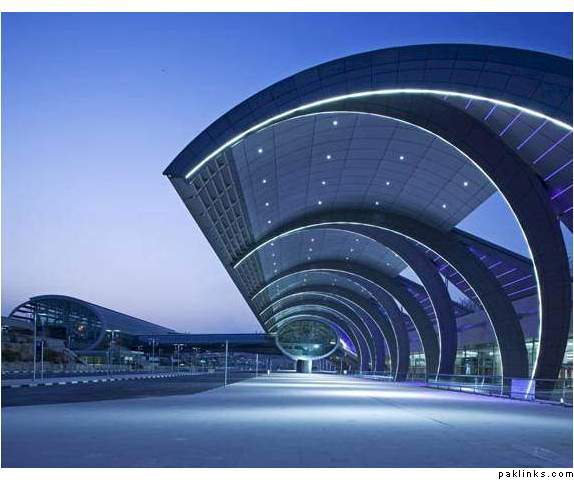
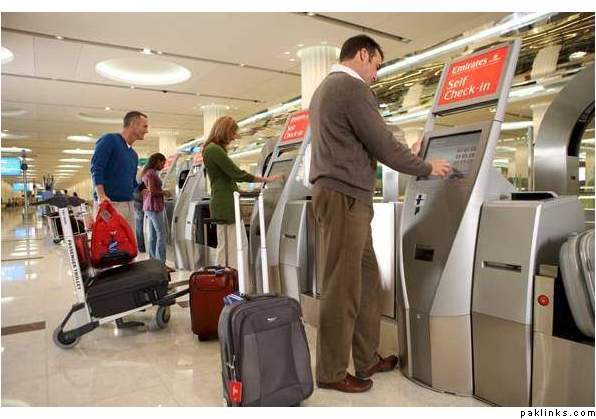
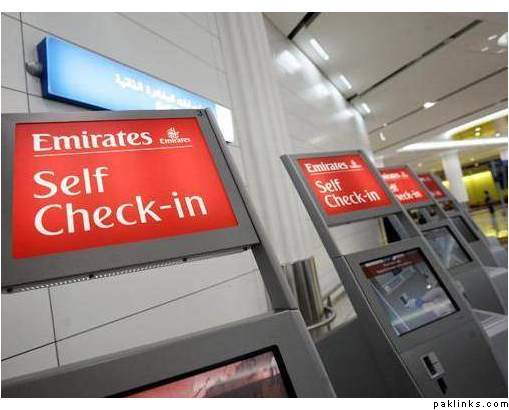
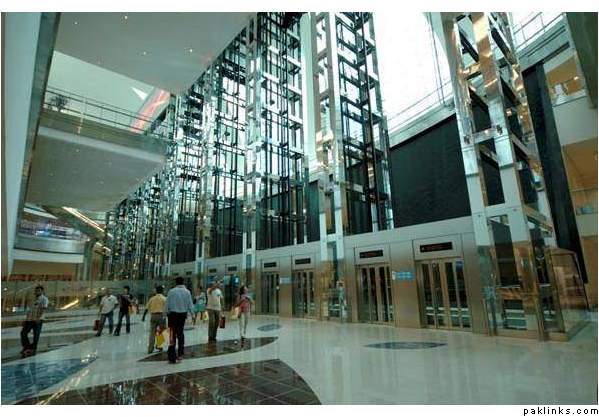
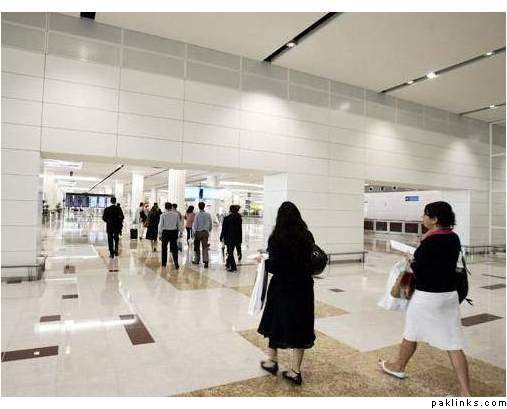
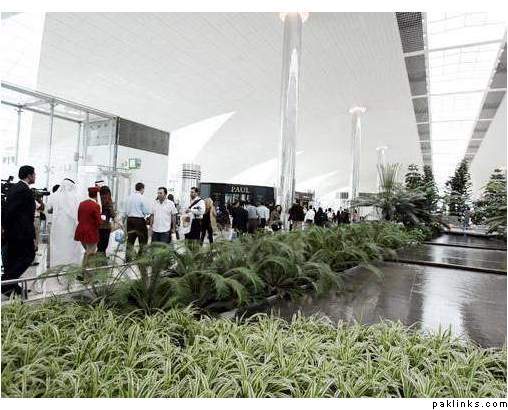
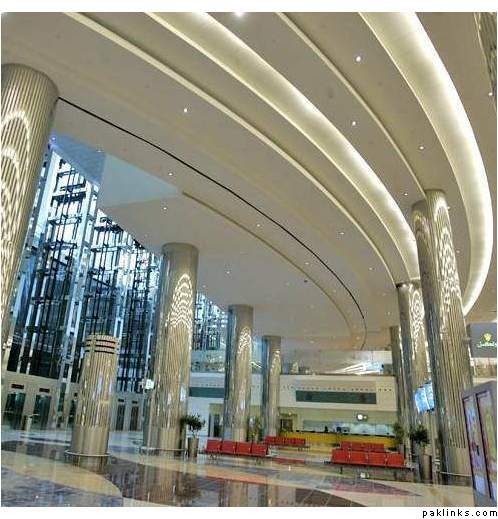
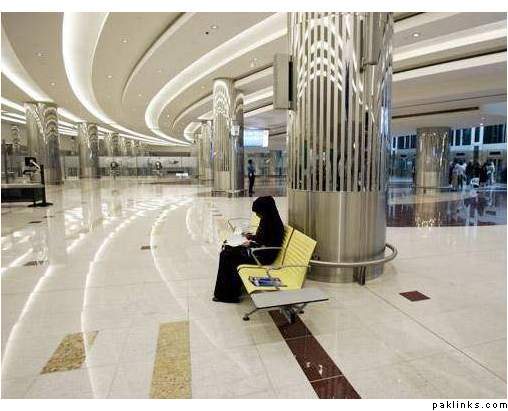
**EMIRATES AIRLINE
TERMINAL NO.3 WITH SELF CHECK-IN FACILITY
OPENS IT’S DOORS FROM 15th OCTOBER-08 AT **
DUBAI INTERNATIONAL AIRPORT.
WHAT NEXT?
***
*
*
*
*
*
*
*
*
*
*
*
*
*
*
*
*
*
*
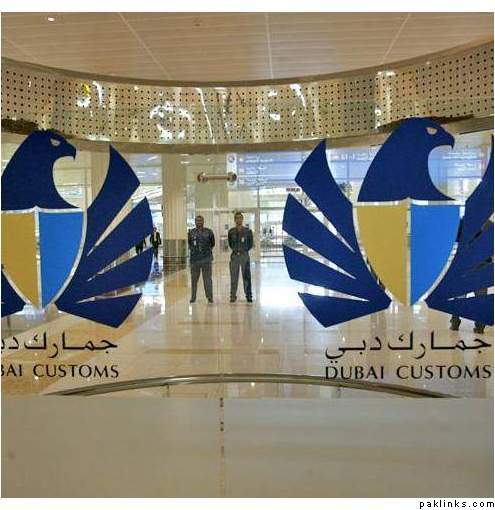
AISI JAGAH PE CUSTOMS KARWATEY HUAY BHI AIK AJAB
CI KHUSHEE MEHSOOS HO!!
*
*
*
*
*
*
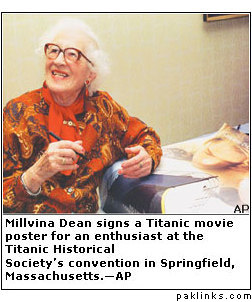
Last Titanic survivor to sell mementos
LONDON, Oct 16: As a two-month-old baby, Millvina Dean was wrapped in a sack and lowered into a lifeboat from the deck of the sinking RMS Titanic.
Rescued from the bitterly cold Atlantic night by the steamship Carpathia, Dean, her brother and her mother were taken to New York with nothing but the clothes on their backs. Before returning to their homeland of England, they were given a small wicker suitcase of clothing, a gift from New Yorkers, to help them rebuild their lives.
Now, more than 95 years later, Dean _ the last living survivor of the disaster _ is selling the suitcase and other mementos to help pay her private nursing home fees, which are not covered by Britain’s National Health Service.
Dean’s artefacts are expected to sell for about 3,000 pounds (US$5,200) at Saturday’s auction in Devizes, western England.
Dean, 96, has lived in a nursing home in the southern English city of Southampton _ Titanic’s home port _ since she broke her hip two years ago.
“I am not able to live in my home anymore,” Dean was quoted as telling the Southern Daily Echo newspaper. “I am selling it all now because I have to pay these nursing home fees and am selling anything that I think might fetch some money.”Dean’s items form part of a sale by Henry Aldridge and Son, an auction house that specializes in Titanic memorabilia.
Auctioneer Andrew Aldridge said the key item was the suitcase, “quite unremarkable if you look at it,” that was filled with clothes and donated to Dean’s surviving family members after the disaster.
“They would have carried their little world in this suitcase,” Aldridge said Thursday.
Dean also is selling rare prints of the Titanic and letters from the Titanic Relief Fund offering her mother one pound, seven shillings and sixpence a week in compensation.
In 1912, baby Elizabeth Gladys “Millvina” Dean and her family were steerage passengers emigrating to Kansas City, Missouri, aboard the giant cruise liner.
Four days out of port, on the night of April 14, 1912, it hit an iceberg and sank. Billed as “practically unsinkable” by the publicity magazines of the period, the Titanic did not have enough lifeboats for all of 2,200 passengers and crew.
Dean, her mother and 2-year-old brother were among 706 people _ mostly women and children _ who survived. Her father was among more than 1,500 who died.
Dean did not know she had been aboard the Titanic until she was eight years old, when her mother, who was about to remarry, told her about her father’s death.
She had no memories of the sinking, and said she preferred it that way.
“I wouldn’t want to remember, really,” she told an interviewer in 1997.
Dean said she had seen the 1958 film, “A Night to Remember”, with other survivors, but found it so upsetting that she declined to watch any other attempts to put the disaster on celluloid, including the 1997 blockbuster, “Titanic”, starring Leonardo Di Caprio and Kate Winslet.
Dean began to take part in Titanic-related activities in the 1980s, and was active well into her 90s. She visited Belfast to see where the ship was built, attended Titanic conventions around the world _ where she was mobbed by autograph seekers _ and participated in radio and television documentaries about the sinking.
The last American survivor of the disaster, Lillian Asplund, died in 2006 at the age of 99. Another British survivor, Barbara Joyce West Dainton, died last November at 96.
Aldridge said the “massive interest” in Titanic memorabilia shows no signs of abating. Last year, a collection of items belonging to Asplund sold for more than 100,000 pounds.
***“It’s the people, the human angle,” Aldridge said. “You had over 2,200 men, women and children on that ship, from John Jacob Astor, the richest person in the world at the time, to a poor Scandinavian family emigrating to the States to start a new life. There were 2,200 stories.”—***AP
MIND BLOWING;
SonyBMG Rome 2008
IT’s all about;
PARIS
scroll HORIZONTALLY for 360 degree view…
Night in Paris
Click on;
Paris _ redirection
**Difference between appraisal and resignation
*A newly joined trainee engineer asks his boss 'what is the meaning of appraisal?'
***Boss: 'Do you know the meaning of resignation? '
***Trainee: 'Yes I do'
***Boss: 'So let me make you understand what a appraisal is by comparing it with resignation'
***Comparison study : Appraisal and Resignation
In appraisal meeting they will speak only about your weakness, errors and failures.
***In resignation meeting they will speak only about your strengths, past achievements and success.
In appraisal you may need to cry and beg for even 10% hike.
***In resignation you can easily demand (or get even without asking) more than 50-60% hike.
During appraisal, they will deny promotion saying you didn't meet the expectation, you don't have leadership qualities, and you had several drawbacks in our objective/goal.
***During resignation, they will say you are the core member of team; you are the vision of the company how can you go, you have to take the project in shoulder and lead your juniors to success.
There is 90% chance for not getting any significant incentives after appraisal.
***There is 90% chance of getting immediate hike after you put the resignation.
Trainee: 'Yes boss enough, now I understood my future. For an appraisal I will have to resign ... !!!'***
Raju’s Roses Club **
***Live Well, Love Much, Laugh Often*
Smile is an inexpensive way to improve your looks
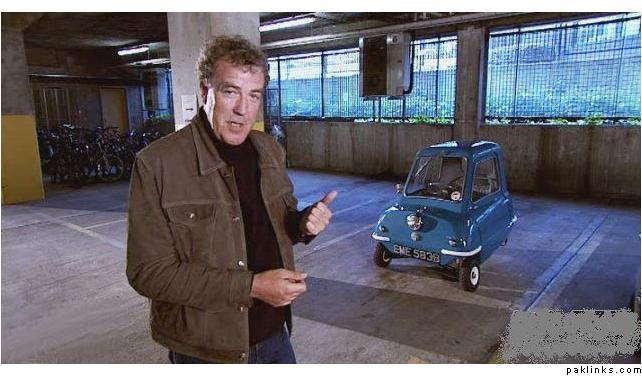
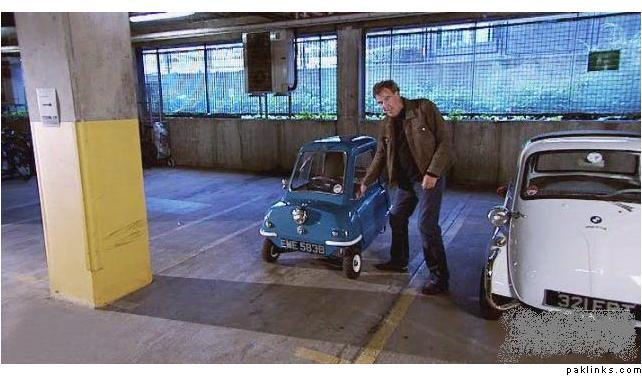
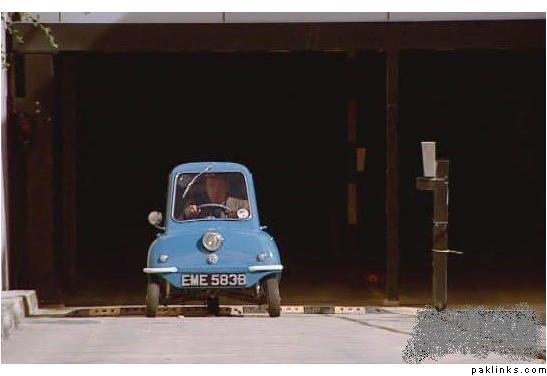
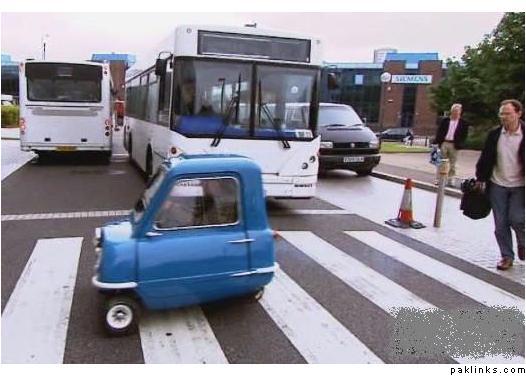
WORLD’s SMALLEST CAR !