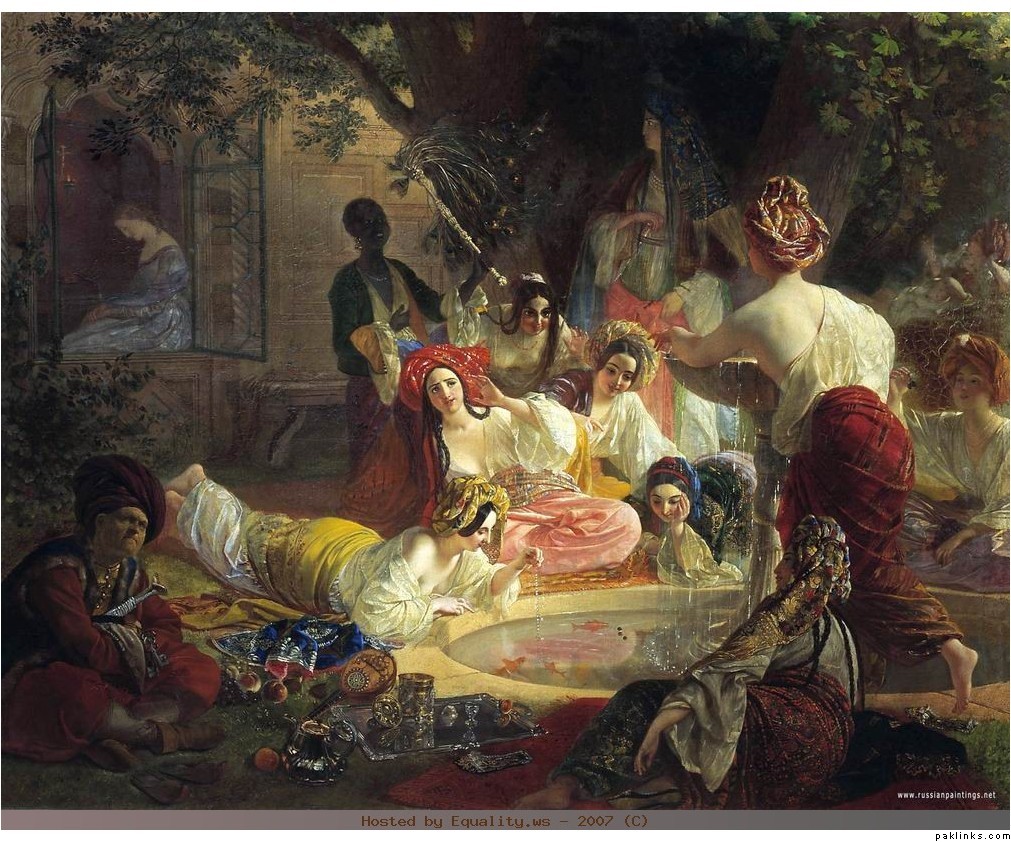
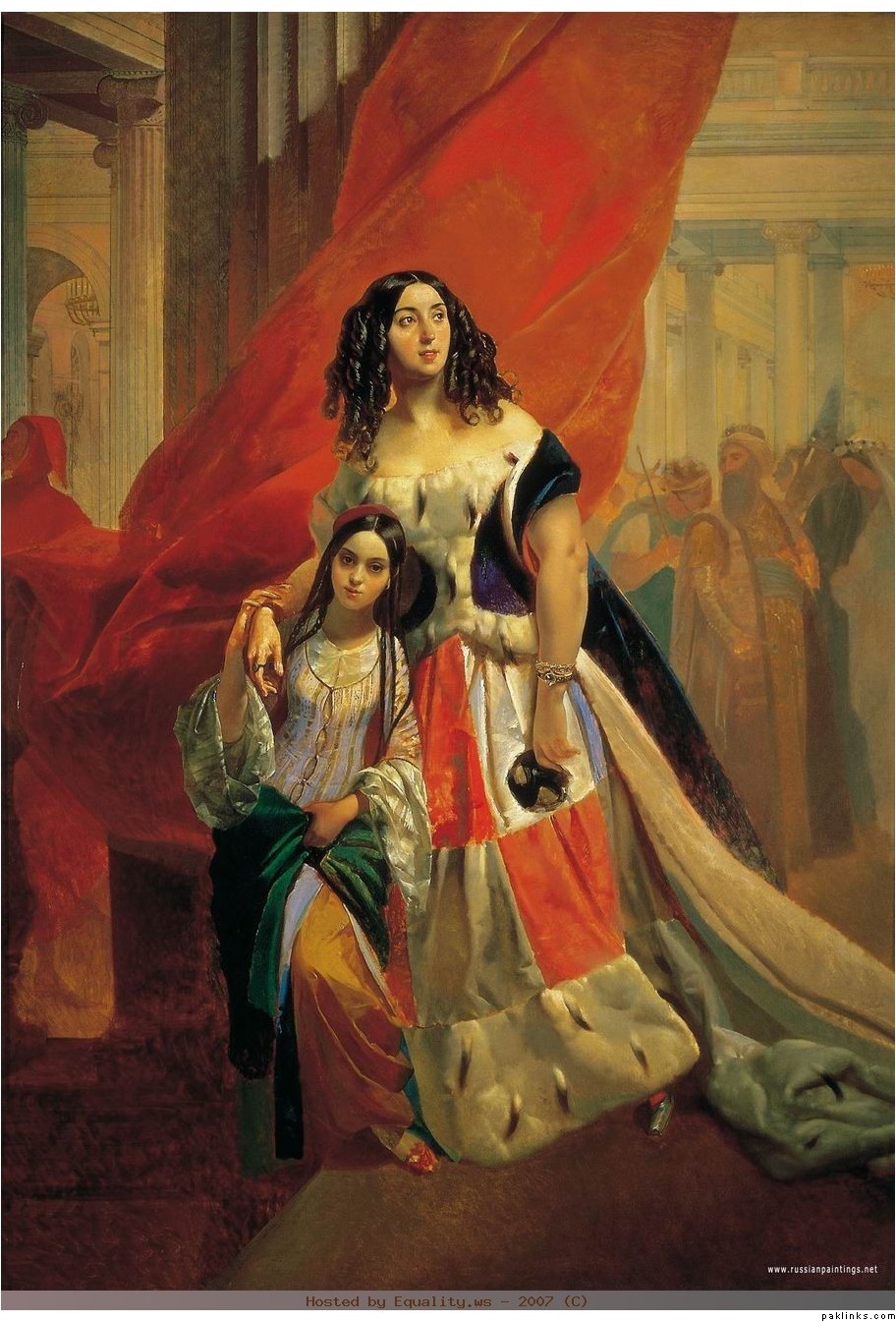
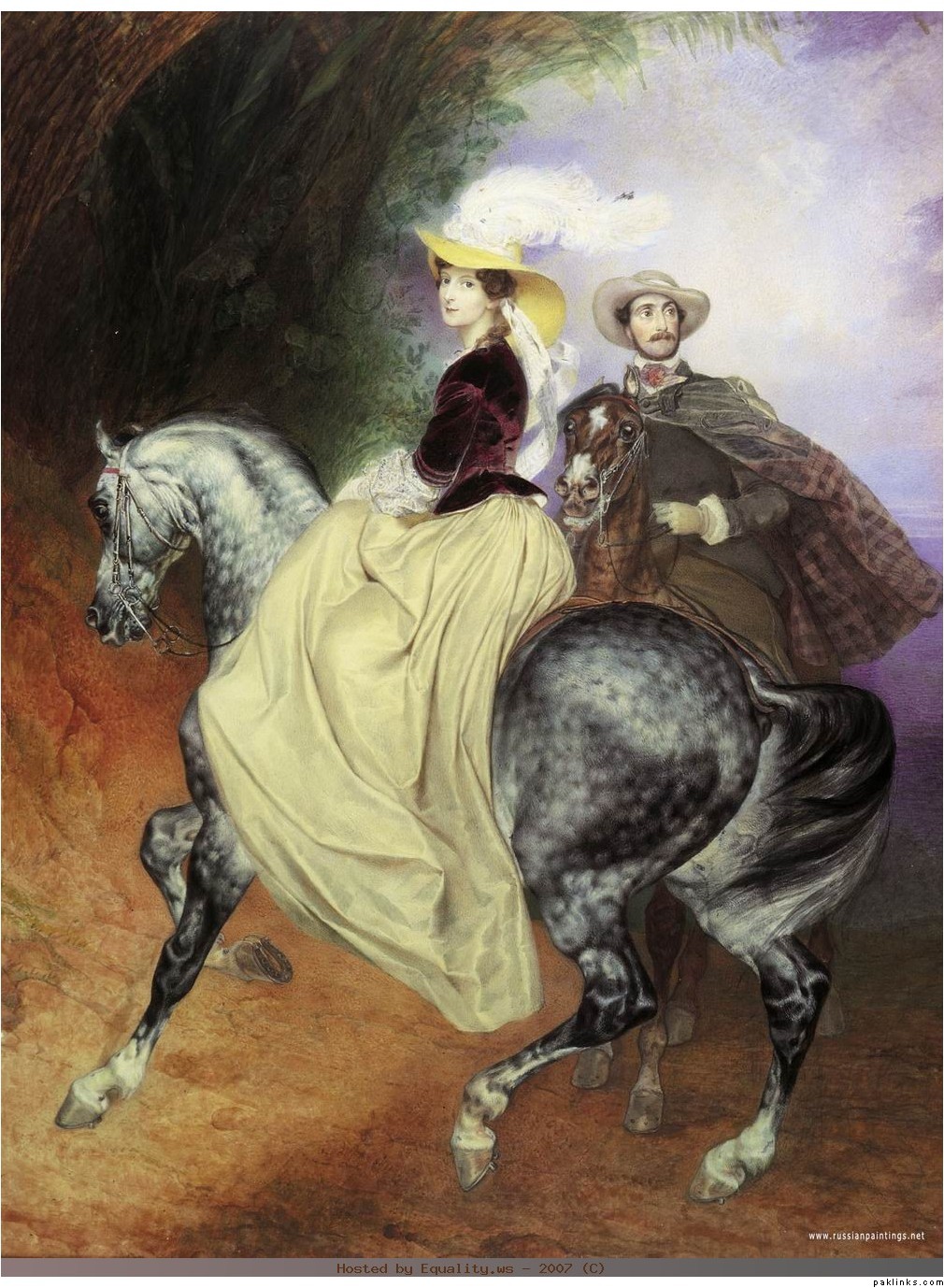
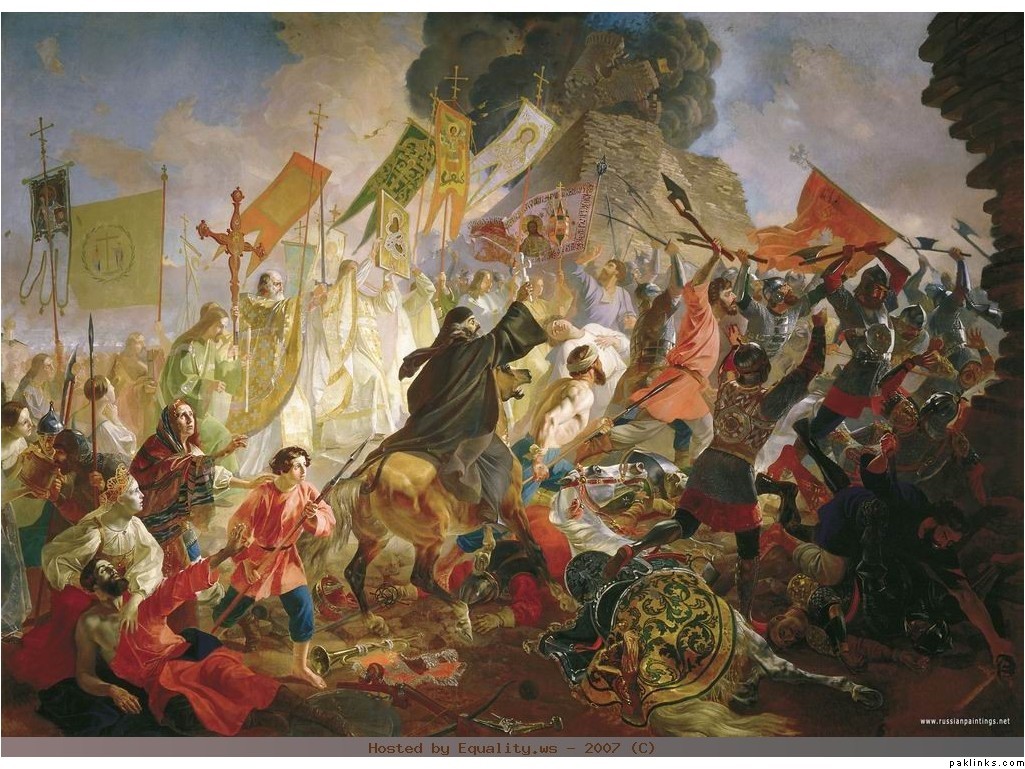
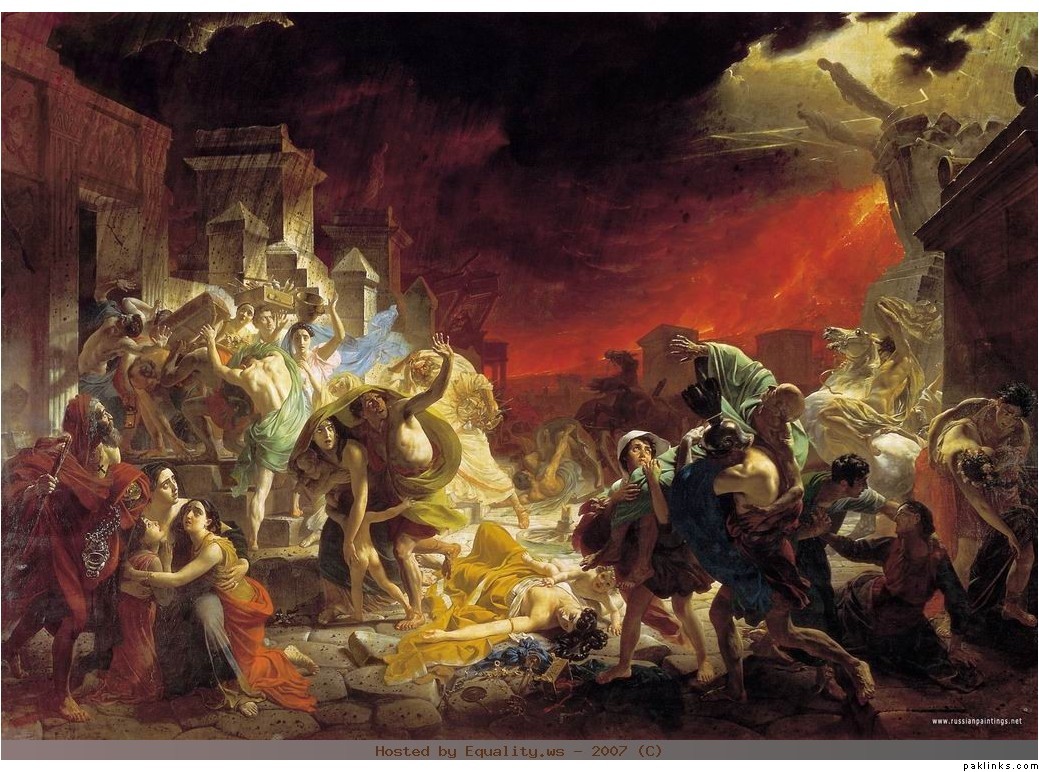
A most notable contribution to the Romantic spirit, was made by Karl Pavlovich Bryullov. He combined technical proficiency and classical academic training with a Romantic impulsiveness to produce some of the liveliest examples of Russian art of the period. Bryullov is celebrated for the unusual breadth of his artistic talent. He was a perfect historical painter, portraitist, and genre painter.
Bryullov descended from French Huguenots. His father was a sculptor. Karl Bryullov was educated at the St. Petersburg Academy of Fine Arts (1809-21). He studied in Italy from 1823, painting his monumental Last Day of Pompeii (1830-33), while there. It brought him an international reputation. Russia greeted him as a hero who had glorified the Motherland. Alexander Pushkin, Vassily Zhukovsky and Nikolay Gogol all warmly welcomed the artist.
Bryullov’s links with Romanticism are manifested in his desire to depict the most dramatic moments in the history of humanity, in his ability to show not only physical beauty, but the spiritual beauty of man during the most dramatic moments of his life. During his long sojourn in Italy he became fascinated by the life and customs of the Italians, their humour and lyricism.
Though he painted other monumental historical canvases, none was as successful as the Last Day of Pompeii. Much of his reputation rests on his more intimate portraits, water-colours, and travel sketches. Bryullov succeeded in asserting something new in all the genres he worked.**