I’ve heard about this fish thing but never seen our family (I’m part Bangladeshi from my mum’s side) or friends do it.. Maybe it’s a tradition which isn’t quite as common as it used to be but then again our family doesn’t follow a lot of traditions anyway.. we don’t stick to red, wear nose-rings or give jahez..
asked le wife. errybody - muslim hindu christian bangalis do the fish thing - its part of one of the wedding ceremonies called gaye holud - which is the equivalent of ubtan in north india. bangladeshis use a more expensive fish - ilish/hilsa, indians use rohu as fresh hilsa is not found any longer, its all imported from bangladesh. if the ceremony is somewhere fish is hard to find, they make do with desserts shaped into the shape of fish.
‘Separate events are held for the bride’s gaye holud, the groom’s family - minus the groom himself - go in procession to the bride’s home. They carry with them the bride’s wedding outfit and jewelry, wedding decorations such as the turmeric paste (Bengali: হলুদ holud) and henna (Bengali: মেহেদি or মেন্দি mehedi/mendi), cosmetics, sweets and other gifts.** They may also bring fresh fish dressed as a wedding couple, or desserts molded to resemble fish. **The procession traditionally centers on the bride’s (younger) female relatives and friends, who traditionally dress in matching clothes. The bride, her attendees, and all the guests traditionally wear red, yellow, orange, or green clothing. Nowadays, other colours may be permitted for gaye holud guests. The guests then enjoy a feast, including music, dance and some performances, arranged by the bride’s family.’
'So, the gaye holud is pretty fun to me now as an adult. As a kid, I was too self-conscious to participate and freaked out a little (because I may have a slight anxiety disorder). But the gaye holud is when the bride is given gifts by the groom’s family, including her wedding outfit and jewelry. The groom is not present. I like to think of it as the bride being welcomed into the family. (The same happens for the groom, vice versa.) The groom’s family prepares baskets of gifts, and the bride and her family walk through an aisle of the groom’s family, who are bearing gifts, and sometimes a pair of fish to represent the couple.’
Source: Bengali Wedding: Gaye Holud | Weddingbee
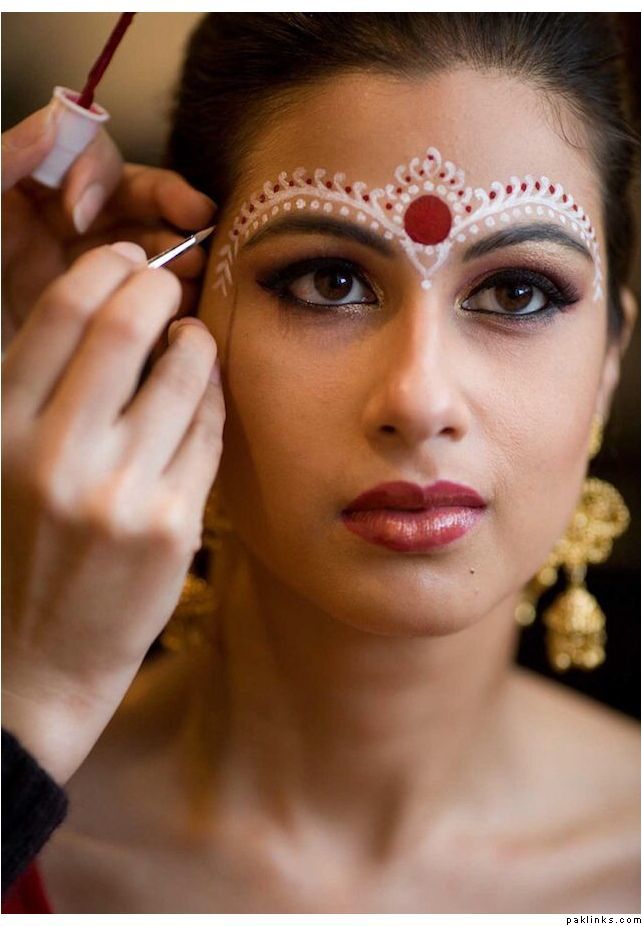
This is a bit off topic but still about Bengali weddings though. Does anyone know the significance of the white and red makeup worn above the eyes by Bengali brides? Also, is it a uniquely Hindu tradition or is it worn by all Bengali brides?
I’ve seen it in a couple of films and on Bengali brides on Pinterest:
^I used to see makeup like this in Bangladesh 20-odd years ago.. Am pretty sure it was a Hindu Bengali custom which was shared by Muslim Bengalis but it’s now frowned on for Muslim girls to have their makeup done that way..
The most common look nowadays is a very white face (no dots), bright lips, bright eyeshadow and as much gold as the bride can handle..
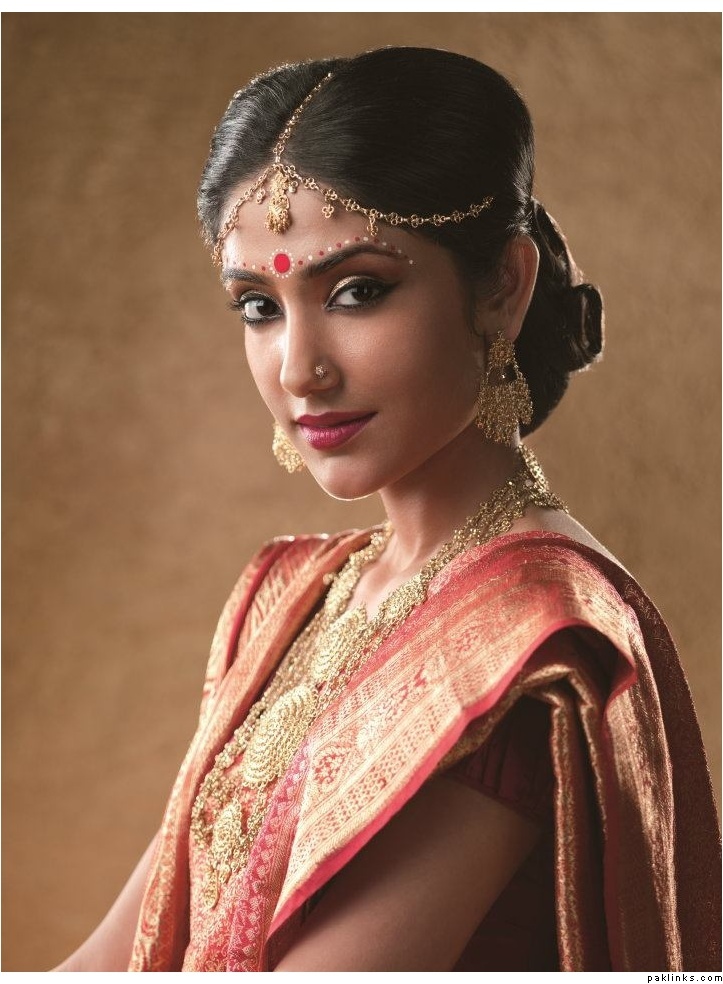
‘Modern’ middle + upper-class brides tend to go for a slightly less caked up look with lined/smokey eyes and less gold..
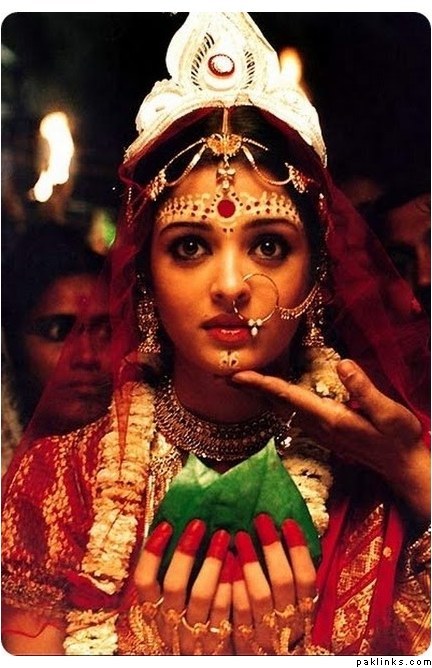
I’ve seen this look in a couple of films. Interestingly, both were period films, one was set in the early 20th century and the other in the 1950s, and featured a rather dramatic look, like this one:
Most of the Bengali brides I’ve seen on Pinterest have a more toned down look, rather like this:
The tiara is a Hindu Bengali thing as well.. Muslim Bengali brides wouldn’t wear that style of tiara.. I know the white dots are considered ‘improper’ nowadays for Muslim women because of the strong association with Hindu brides..
Bengali Muslims aren’t generally very religious or practising in comparison to Pakistanis but people are tending to move away from the old Hindu/Indian traditions (Certain groups are known for being more religious and conservative such as the Sylhetis here in the UK and back home in the villages you’d still be expected to wear a dupatta but in towns no-one will look twice or even care if you don’t bother with one.. I remember being surprised at how many women kept their heads uncovered even after hearing the call to prayer)..