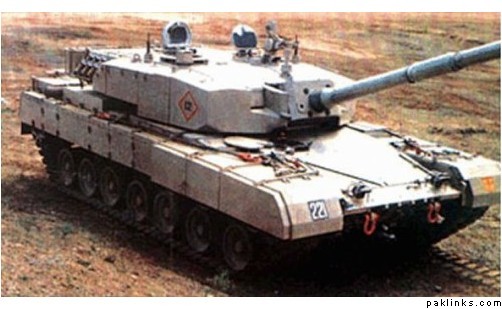
Indian Army unsure about Arjun tank's role

Indian Army unsure about Arjun tank’s role
[2 May, 2007]

PALLU (Rajasthan): The Indian Army seems unimpressed with the indigenously developed Arjun main battle tank (MBT) that has been 34 years in the making.

Further, the Army is unsure about the role in which this indigenous tank can be deployed.

These are the conclusions that can be drawn by the remarks of the army chief, General J J Singh, during a war game conducted in Rajasthan’s Thar Desert at which limited numbers of the Arjun tank were seen in action.

“We have to make sure the troops are not exposed to any disadvantage,” Singh replied cryptically when asked about Arjun’s performance during the five-day Exercise called Ashwamedh being held during April 29-May 3. A squadron of 14 Arjuns was deployed during the drill.

Singh spoke to reporters on the penultimate day of the exercise on Wednesday. Pallu is located some 400 kilometres from Rajasthan’s capital Jaipur.

“If improvements are required in the system, it will be pointed out (to the developers, Defence Research and Development Organisation),” the army chief maintained.

“We will draw lessons from the exercise on which area they (the Arjuns) can be best exploited,” he added.

While not officially going on record, the army is known to be extremely unhappy with the Arjun, having listed 14 defects that need to be rectified.
These include a deficient fire control system, inaccuracy of its guns, low speeds in tactical areas – principally deserts – and its inability to operate in temperatures over 50 degrees Celsius.

At a review meeting with the DRDO last month, Defence Minister A K Antony is known to have asked the organisation to get its act together to rectify these defects or the government might have to take another look at the entire programme.

Parliament’s Standing Committee on Defence has, in two reports earlier this year, remarked adversely on the slow pace of Arjun’s development and asked the DRDO to quicken the process.

The Indian Army laid down its qualitative requirement (QR) for the Arjun in 1972. In 1982, the DRDO announced that the prototype was ready for field trials. However, the tank was publicly unveiled for the first time only in 1995.
Arjun was originally meant to be a 40-tonne tank with a 105 mm gun. It has now grown to a 50-tonne tank with a 120 mm gun.

The tank was meant to supplement and eventually replace the Soviet-era T-72 MBT that was first inducted in the early 1980s.

However, delays in the Arjun project, and Pakistan’s decision to purchase the T-80 from Ukraine, prompted India to order 310 T-90s, an upgraded version of the T-72, in 2001.

Of these, 186 were built at the Heavy Vehicles Factory at Avadi in Tamil Nadu. An agreement was also signed for the licensed production of another 1,000 T-90s.

With the Arjun development delayed further, India last year signed a fresh contract with Russia to buy another 330 T-90s.

The Times of India

Would the Hindustani Army like to buy some Al-Khalid MBTs from Pakistan?

Re: Indian Army unsure about Arjun tank's role

^^ The problem with the Arjun Tank is that India tried to make this tank among the best in the world. The Best tanks in the world are found in Europe mostly the German Leopard or the French LeClerc Tanks.

What India failed to grasp is that those tanks are made for European battlefields and colder climates where as Indian Tanks are suppose to fight in deserts in sweltering heat.

So the basic principle was wrong. And thus once the body of the Tank was complete, it was tweaked and re-designed and re-designed to make it work but it kept getting heavier and heavier and now India has a 60 Ton Tank.

And to power it they had to install a massive engine which breaks down because its so hot and install a cooling unit because the tank feels like an oven for the crew and thus adding more weight and draining power from the tank.

So this tank has been a total disaster.

Pakistan went a different route.

They just took what worked and re-configured it to make it work for Pakistan like our Al-Khalid Tank which went from concept to induction in 10 years.

Re: Indian Army unsure about Arjun tank’s role

Almost 24 years after its first prototype rolled out, the country’s indigenous main battle tank (MBT) Arjun today underwent baptism by fire as it took part for the first time in the biggest Indian army exercises in last two years.

14 Arjun tanks crossed swords with the 100s of Russian-supplied T-90 and T-72 tanks in the final phase of month-long exercises ‘Ashwamedha’ and the Army Chief Gen JJ Singh, who witnessed the war games close to Pakistan border, said “performance of the tanks would be analysed”.

Notwithstanding the indigenous tanks taking part for the first time in the exercises in which live ammunition was used, Singh said Arjun would still have to go through comparative trials with Russian tanks later this year.

“The comparative trials would clear the induction of the first batch of Arjuns,” senior officers told PTI. DRDO’s Heavy Vehicles Factory in Avadi has rolled out and handed over 15 tanks to the Army for evaluation.

DRDO officials said that only after certification by the Army, a go ahead would be given for full commercial production of 124 Arjun tanks.

“Arjun tanks were fielded in the exercise to test their capability and to see how best to deploy them” Army Chief told reporters.

This is the latest on it

Re: Indian Army unsure about Arjun tank's role

^^ whats the verdict by the Indian Generals about this tank's performance?

Because I have heard even the Russian T-90's are breaking down due to the heat

Re: Indian Army unsure about Arjun tank's role

Only 124? Is that it? Hindustan spent millions over the past 33 years and they only need 124?

Re: Indian Army unsure about Arjun tank's role

That number was further reduced to 80 and even 80 are for political reasons....

Re: Indian Army unsure about Arjun tank's role

build a catapult and throw em into the arabian sea and call it missile tests.

Re: Indian Army unsure about Arjun tank’s role

In this report, it mentions that army is satisfied with it.

But this only time can tell as these were un-official trials. Only thing is, those 124 tanks will be ordered only if those loop holes are rectified.

Re: Indian Army unsure about Arjun tank's role

Ghar mein ghud khana banana aana chahiye, chahe utna tasty na bane par aana chahiye. Kahin hotelon ki strike ho gayi to bhuke pet sona padega.

Re: Indian Army unsure about Arjun tank's role

Respected Sir
You do have a valid point. That is why we train ouselves every year by compulsary fasting in the month of Ramazan and optional fasting anytime of the year.
Anyway, without going off the topic, I admit that Arjun is no doubt a very good tank. It may be not the best in the world, but definitely the best which India has produced so far.
Regards.

Re: Indian Army unsure about Arjun tank's role

india better off improving relations with pakistan and china
then spend money on tank warfare

Re: Indian Army unsure about Arjun tank's role

The same applies to china and pakistan than developing weapons. and india has improved relations. and tank development can be independent of relations. and the topic is not about relations

Re: Indian Army unsure about Arjun tank’s role

Indian Army To Conduct Final User Trials of Arjun MBT in June

Close on the heels of their baptism during war games in the Thar desert, the country’s indigenous Arjun battle tanks would undergo final user comparative trials next month, leading to their induction into the Army.

“It is the topmost priority of his Government to operationalise the Arjun tanks,” Defence Minister A K Antony said today said. “There were some defects, which have now been removed,” Antony told reporters on the sidelines of a defence function here.

While admitting that some more problems were there with the tanks, Antony said that 14 Arjun tanks would undergo comparative summer trials against Russia supplied T-90 and upgraded T-72 in the Thar desert next month, prior to their induction. During the recent exercise ‘Ashwamedh’, army had for the first time fielded Arjun tanks in war manoeuvres.

Government has already cleared commercial production of 124 Arjun tanks to equip two armoured regiments. “After their induction, we may consider proposals to manufacture more tanks,” the Defence Minister said.

The Arjun (Mk I) was developed after three decades of identifying requirements, design, evaluation, redesign process involving the DRDO and the Indian Army. Weighing in at 58.5 tons, it is significantly heavier than the Soviet-era T-series tanks used presently by the Indian Army, and requires changes to the army’s logistics establishment. This along with concerns about the imported content and the required changes in production facilities has slowed adoption by the Indian Army.

Armed with a 120 mm rifled gun, it is capable of firing APFSDS (Kinetic Energy) rounds, HE, HEAT, High Explosive Squash Head (HESH) rounds and the Israeli semi-active laser guided LAHAT missile. In addition, it is armed with a 12.7 mm AA machine gun and a 7.62 mm coaxial machine gun.

A special prefragmented round is also under development. This shell has a proximity fuse designed to be used against low-flying aircraft, such as attack helicopters. This round could now be supplanted by the LAHAT ATGM which is to be acquired for the Arjuns.

The Fire Control System is stabilised on two axes, and with an extremely high hit probability (design criteria call for a greater than 90% Pk) replaces an earlier analogue one, which had problems due to the extreme conditions during tests. The combined day sight from Bharat Electronics Ltd. and Thermal imager (formerly from Sagem, now reported to be from El-Op) is the gunner’s primary sight. The first batch of tanks of the 124 ordered by the Army, will have an all digital Sagem FCS, whereas the second block will have the BEL unit, which will be used for all units thereafter. The design and development of the BEL IGMS (Indigenous Gunners Main Sight), the name for the local fire control system, is a huge step forward for Indian industry, given its demanding specifications. The commander’s own stabilised panoramic sight, allows him to engage targets and/or hand them over to the gunner. The Arjun was to be supplied by an auxiliary power unit to operate weapon systems in silent watch mode, but space constraints may have led to this requirement being dropped.

The tank incorporates GPS based navigation systems, sophisticated frequency hopping radios. The state-of-the-art Battlefield Management System, developed by DRDO allows it to network with other fighting units. It is protected by a Laser warning system and smoke launchers for counter measures. To further enhance combat survivability, the tank has an auto-fire detection and suppression system. Ammunition is also stowed in watertight containers to reduce the risk of fire.

Arjun has been designed with Western design practices in mind, especially reflected in its crew protection features. With a crew of four, it incorporates heavy composite armour and significant crew protection measures, including ammunition separated from the crew, and blow off panels on the turret bustle, and an integrated fire detection and suppression system. It also incorporates nuclear, biological and chemical protection. Further, Explosive Reactive Armour (ERA) panels can be added, though the current Kanchan armour is deemed sufficient for the Arjuns tank-killing role. The turret and glacis are heavily armoured and use “Kanchan” (gold) composite armour. A new honeycomb design Non-explosive and non-energetic reactive armour (NERA) armour is being tested on the Arjun and is reported to be working perfectly. The turret has been designed with the ergonomics of Indian Army troops in mind. The typical crew consists of a Gunner, Commander, Loader and Driver.

The engine and transmission are provided by MTU and Renk respectively. The engine generates 1,400 hp and is integrated with an Indian turbocharger and gearbox. A local transmission is under trials and will ultimately replace the Renk supplied unit. The tracks which were being supplied by Diehl are now being manufactured by L & T, an Indian company. The cooling pack has been designed for desert operations. The Arjun has a lower ground pressure than the lighter T-72, due to its design. The Arjun, despite using a bulkier and older powerplant than comparable western tanks, still boasts a lower silhouette. This was a significant design success for Indian engineers.

The Arjun has a state of the art hydro-pneumatic suspension. This coupled with the Arjun’s excellent stabilisation and fire control system, allows the tank superb first-hit probability. Its ride comfort is highly praised, though on the negative side, it is a more maintenance-intensive and expensive system, even if more capable, than the simpler and cheaper torsion bar system utilized on many tanks worldwide.

The Arjun has a capability to network with other tanks, thanks to its Battle Management System. In a search and engage operation, referred to as the “Wolfpack/Hunter Network”, several Arjun Tanks can monitor an opponent and his moves, and eliminate him in a chase or ambuscade
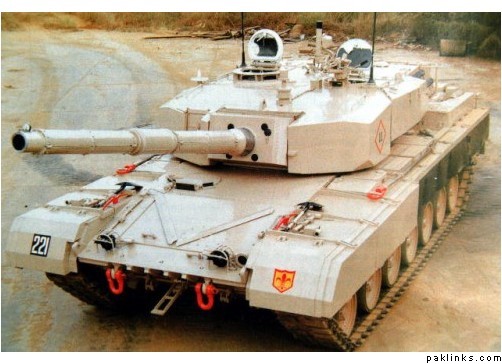
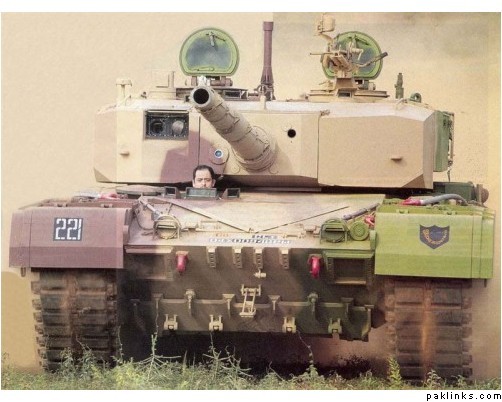
Re: Indian Army unsure about Arjun tank’s role

Arjun is no doubt one of the best Tanks which India has produced thus far. Here are few of its snaps.


Regards for all.

Re: Indian Army unsure about Arjun tank’s role

Indian Army to Acquire 124 Arjun MBTs By 2009: Defence Ministry

The production of Main Battle Tank Arjun has commenced at Heavy Vehicle Factory (HVF) – Avadi, Chennai. Army has placed an indent for manufacture of 124 Tanks at a cost of Rs. 1760 crore. As on 31st March 2007, HVF has made an expenditure of Rs. 1270.82 crore against this indent.

An indent for manufacture of 124 Tanks has been placed on Ordnance Factory Board (OFB) in March 2000. Five Tanks have already been handed over to Army in 2005 and nine more Tanks are ready for delivery. The remaining quantity is expected to be delivered by 2009.

All issues related to production of MBT Arjun have been resolved and the production is getting stabilized. At present there is no such proposal to take cooperation of private sector as a joint venture. However, private sector is involved in the project as supplier of various components/assemblies.

Presently, Army is using tanks imported from various countries. This information was given by the Defence Minister Shri AK Antony in a written reply to Shri Lalit Kishore Chaturvedi in Rajya Sabha today.

The Arjun (Mk I) was developed after three decades of identifying requirements, design, evaluation, redesign process involving the DRDO and the Indian Army. Weighing in at 58.5 tons, it is significantly heavier than the Soviet-era T-series tanks used presently by the Indian Army, and requires changes to the army’s logistics establishment. This along with concerns about the imported content and the required changes in production facilities has slowed adoption by the Indian Army.

Armed with a 120 mm rifled gun, it is capable of firing APFSDS (Kinetic Energy) rounds, HE, HEAT, High Explosive Squash Head (HESH) rounds and the Israeli semi-active laser guided LAHAT missile. In addition, it is armed with a 12.7 mm AA machine gun and a 7.62 mm coaxial machine gun.

A special prefragmented round is also under development. This shell has a proximity fuse designed to be used against low-flying aircraft, such as attack helicopters. This round could now be supplanted by the LAHAT ATGM which is to be acquired for the Arjuns.

The Fire Control System is stabilised on two axes, and with an extremely high hit probability (design criteria call for a greater than 90% Pk) replaces an earlier analogue one, which had problems due to the extreme conditions during tests. The combined day sight from Bharat Electronics Ltd. and Thermal imager (formerly from Sagem, now reported to be from El-Op) is the gunner’s primary sight. The first batch of tanks of the 124 ordered by the Army, will have an all digital Sagem FCS, whereas the second block will have the BEL unit, which will be used for all units thereafter. The design and development of the BEL IGMS (Indigenous Gunners Main Sight), the name for the local fire control system, is a huge step forward for Indian industry, given its demanding specifications. The commander’s own stabilised panoramic sight, allows him to engage targets and/or hand them over to the gunner. The Arjun was to be supplied by an auxiliary power unit to operate weapon systems in silent watch mode, but space constraints may have led to this requirement being dropped.

The tank incorporates GPS based navigation systems, sophisticated frequency hopping radios. The state-of-the-art Battlefield Management System, developed by DRDO allows it to network with other fighting units. It is protected by a Laser warning system and smoke launchers for counter measures. To further enhance combat survivability, the tank has an auto-fire detection and suppression system. Ammunition is also stowed in watertight containers to reduce the risk of fire.

Arjun has been designed with Western design practices in mind, especially reflected in its crew protection features. With a crew of four, it incorporates heavy composite armour and significant crew protection measures, including ammunition separated from the crew, and blow off panels on the turret bustle, and an integrated fire detection and suppression system. It also incorporates nuclear, biological and chemical protection. Further, Explosive Reactive Armour (ERA) panels can be added, though the current Kanchan armour is deemed sufficient for the Arjuns tank-killing role. The turret and glacis are heavily armoured and use “Kanchan” (gold) composite armour. A new honeycomb design Non-explosive and non-energetic reactive armour (NERA) armour is being tested on the Arjun and is reported to be working perfectly. The turret has been designed with the ergonomics of Indian Army troops in mind. The typical crew consists of a Gunner, Commander, Loader and Driver.

The engine and transmission are provided by MTU and Renk respectively. The engine generates 1,400 hp and is integrated with an Indian turbocharger and gearbox. A local transmission is under trials and will ultimately replace the Renk supplied unit. The tracks which were being supplied by Diehl are now being manufactured by L & T, an Indian company. The cooling pack has been designed for desert operations. The Arjun has a lower ground pressure than the lighter T-72, due to its design. The Arjun, despite using a bulkier and older powerplant than comparable western tanks, still boasts a lower silhouette. This was a significant design success for Indian engineers.

The Arjun has a state of the art hydro-pneumatic suspension. This coupled with the Arjun’s excellent stabilisation and fire control system, allows the tank superb first-hit probability. Its ride comfort is highly praised, though on the negative side, it is a more maintenance-intensive and expensive system, even if more capable, than the simpler and cheaper torsion bar system utilized on many tanks worldwide.

The Arjun has a capability to network with other tanks, thanks to its Battle Management System. In a search and engage operation, referred to as the “Wolfpack/Hunter Network”, several Arjun Tanks can monitor an opponent and his moves, and eliminate him in a chase or ambuscade.

Re: Indian Army unsure about Arjun tank’s role

http://www.ndtv.com/convergence/ndtv/videos.aspx?id=13259

This is the first video of arjun taken by media. Click more in videos section and you will get it.

In youtube(though not good quality),

http://www.youtube.com/watch?v=kd2-Vsv3CkU

Re: Indian Army unsure about Arjun tank’s role

What do you mean the Arjun tank is their best Tank produced so far?

Its their only Tank that they have produced and even that took like 30 years :smiley:

Re: Indian Army unsure about Arjun tank’s role

good quality video in youtube

Re: Indian Army unsure about Arjun tank’s role

http://www.defensenews.com/story.php?F=2776224&C=landwar

India To Test Arjun in Exercise; Army Claims Tank Is Faulty

By VIVEK RAGHUVANSHI, NEW DELHI

India will test its 14 Arjun main battle tanks in June desert exercises alongside, and in comparison to, Russian T-90 and T-72 tanks.
But Army officials have already declared that the indigenous tank is not fit for combat.
Conceived in 1974 at an original design and development cost of $3.6 million, the Arjun tank program under the Defence Research and Development Organization now costs $83.33 million. The Arjun tank was to have replaced the aging T-72, but development delays led the service to order T-90s after the Kargil battle in 1999, and the Army still says it has a serious shortage of main battle tanks. The T-90 now serves as India’s main battle tank.
An Army official said next month’s exercises are user and comparative trials in the deserts of Rajasthan.
Army sources said the Arjun continues to be only a training tank and is not yet qualified for combat, as it is very heavy and will need many changes in its logistics tail, including the size of the rail cars that transport them.
But a Defence Ministry official said the Arjun’s defects have been removed, and if it passes next month’s tests, more production orders will be placed with the state-owned Heavy Vehicles Factory, Avadhi.
Army officials disagree, saying there are still at least a dozen defects in the tank, including a deficient fire-control system, inaccurate gun and faulty air conditioning that makes it difficult to operate in very hot conditions.
The quality of the Arjun tank also has been a concern for the Parliament’s Standing Committee for Defence, which in its 16th Report in 2006-’07 said that one official had testified, “I am afraid our quality control is very poor. I have heard that five tanks were presented before the media. However, when the media and other people went away, the tanks were put back in the factory because still some quality checks had to be made.
“The biggest problem in India in respect of defense production is quality control. If China can do it, why can we not do it?”
The Defence Ministry official admitted that there is a shortfall of about 3,500 tanks and that the delivery schedule of the Arjun is not satisfactory. The Army is junking more tanks in the next two to three years than it will be inducting, which will lead to further shortfalls. The Army sources said that around 1,000 tanks out of the 3,000 now in service will be junked by 2008.
If the Arjun is not cleared for combat, the Army will need to purchase more tanks besides the T-90 from overseas markets and upgrade more than 1,600 of its T-72 tanks, the Army sources said. •
E-mail: [email protected].

Re: Indian Army unsure about Arjun tank’s role

first of all arjun has no airconditining system and it’s gun is rifled which is more accurate than a smooth bore gun.

I wouldn’t say arjun is perfect or not perfect as of now. Let the coming trials happen and would like to leave for the army to decide.