Re: Historical Places of the Subcontinent
Swat’s historical places, government should try to protect its historical and archaeological sites…

Re: Historical Places of the Subcontinent
Swat’s historical places, government should try to protect its historical and archaeological sites…
Re: Historical Places of the Subcontinent
Its a pity that we and our government are failed to protect such rich historical heritage 
Re: Historical Places of the Subcontinent
Derawar Fort, cholistan
https://www.youtube.com/watch?v=Rq6-mhjT4JM ](http://www.youtube.com/watch?v=Rq6-mhjT4JM&feature=related)Re: Historical Places of the Subcontinent
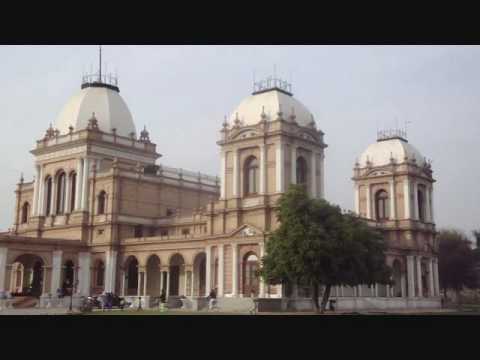
Bahawalpur
Re: Historical Places of the Subcontinent
The haunting Rohi and Derawer. :k:
Multan itself is a historical city (probably the oldest one in region).
Re: Historical Places of the Subcontinent
yes the whole region Sahiwal all the way to Moenjodaro (including Multan, Bahawalpur, Sukkur and other cities coming in between).
Re: Historical Places of the Subcontinent
Do you about Hinglaaj, Balochistan. I read that its been sacred place for Hindus since centuries and even Sita and Raam (probbaly after killing Ravan) visited there. On there way to Hinglaaj, they stayed in Sindh. Interesting to note that the place where they stayed was then converted to a Mandir alongwith a bagh known as ‘Raam Bagh’. Now its called ‘Araam Bagh’ Karachi.
Re: Historical Places of the Subcontinent
I have heard about Hinglaj but havent got any info about it though.
Re: Historical Places of the Subcontinent
The history of the areas forming Pakistan is very interesting over a period spanning thousands of years different people have come/invaded these areas including greeks, scythians, sakas, huns, afghans, arabs, british etc.
Re: Historical Places of the Subcontinent
Here is a report a pictures of journey from Karachi to Hinglaaj. will add further material soon 
Re: Historical Places of the Subcontinent
Yes and the most interesting point of our history is our land is capable of conquering the conquerors. :k:
Re: Historical Places of the Subcontinent
Shahi Qila (Royal Fort), Lahore
Although most parts of the Royal Fort were constructed around 1566 A.D. by the Mughal Emperor, Akbar the Great, there is evidence that a mud fort was in existence here in 1021 A.D. as well, when Mahmood of Ghazna invaded this area. Akbar demolished the old mud fort and constructed most of the modern Fort, as we see it today, on the old foundations.
The Royal Fort is rectangular. The main gates are located alongside the centre of the western and eastern walls. Every succeeding Mughal Emperor as well as the Sikhs, and the British in their turn, added a pavilion, palace or wall to the Fort. Emperor Jehangir extended the gardens and constructed the palaces that we see today in the Jehangir’s Quadrangle, while Shah-Jehan added Diwan-e-Khas, Moti Masjid (Pearl Mosque) and his own Sleeping Chambers. Aurangzeb built the impressive main gate which faces the Hazoori Bagh lying in between the Badshahi Mosque and the Fort. The Famous Sheesh Mahal or Palace of Mirrors is in the north-east corner of the Fort. This is the most beautiful palace in the Fort and is decorated with small mirrors of different colours set.
The part of the wall of the Elephant Steps towards the Fort’s inner gate are scarred by bullet marks, bearing testimony to the Sikh Civil War of 1847 A.D.
The Sleeping Chamber of Mai Jindan houses a very interesting museum with relics from Mughal and the Sikh periods
Re: Historical Places of the Subcontinent
Chokundi Graveyard near Karachi
Chaukhandi tombs, are attributed to Jokhio and Baloch tribes and were build between 15th and 18th centuries. It is situated 29 km east of Karachi on N-5 National Highway near Landhi Town.The Chaukhandi tombs are remarkable for the elaborate and exquisite carving; the style of architecture is not only typical to the region of Sindh but unique in the sense that it is no where else to be found in the Islamic world.
**In early 20th century Scholars were attracted by these peculiar type of Graveyards in Sindh and Baluchistan with their orientation from South to North. These graves are constructed in buff sand stone. Their carved decoration presents exquisite craftsmanship. These graves are constructed single or some time from two to eight raised on a common platform **.Their primary sarcophagus having six vertical slabs as two long slabs stands on each sides of the grave and covers the body and rest of two vertical slabs covers the head and foot side. These Six slabs are covered by second sarcophagus and having six more vertical slabs on it but similar in size to make this grave as pyramid in shape .This upper (second sarcophagus) is further covered four or five horizontally slabs and the top most (third) Sarcophagus is set vertically with its northern end carved in to knob knows as crown or turban. These tombs are embellished besides geometrical hoard and motifs with figural representation such as mounted horsemen, hunting scene, arms, jewelery etc.
There was a long play produced by PTV ‘Dil Dil Da Mamla’, which was picturised in this graveyard.
Re: Historical Places of the Subcontinent
Rawat Fort, Rawalpindi
The information displayed at Rawat Fort’s by archaeology department reveals that it was built in early 15th century by Salteen-e-Dehli. However there are some contradictions about the historical background of this fort.
According to some historians, the fort was built by Sultan Masood, son of Sultan Mehmood Ghaznavi in 1036 AD while some other books of history reveal that Sarang Khan, the leader of Gakhar tribes in Pothohar, built the fort.
The Rawat Fort remained in the use of different conquerors. According to some of the historical evidences the fort was in use of Sultan Masood, son of Sultan Mehmood Ghaznavi, whose rebel soldiers captivated him inside this fort and later they took him to the Gatri Fort near Taxila where they assassinated him.
**
For a long time the fort remained under the possession of Sarang Khan, the tribal leader of Ghakhar tribes. Ghakhars were famous for their chivalry and warrior attitude. Sultan Sarang died along with his sixteen sons while fighting a war with Sher Shah Soori in 1546 AD.The grave of Sarang Khan is also inside this fort. The building contains some of the old graves and a hexagonal tomb in it and if someone dares to climb through this tomb one may get a panoramic view of the plateau and the Mankiala Stupa.
**
Historical Rawat Fort needs preservation | Pak Tea House
Restored attachments:
Re: Historical Places of the Subcontinent
I didnt know that there was a fort at Rawat too.
Re: Historical Places of the Subcontinent
And Rohtas is also not far from Rawalpindi
Interesting story of building of the fort by Raza Ali Abidi.
Re: Historical Places of the Subcontinent
I have not been able to see this as well but heard about it a lot…
This is hiran minar sheikhupura

Re: Historical Places of the Subcontinent
Yes, we discussed Hiran Minar earlier.. was made by Jehangir in memory of a deer (Hiran) called Mansukh
Those were the days, when ruler even feel for the animals and now …
Re: Historical Places of the Subcontinent
One of my phupha was telling me one day that in Sindh (maybe Sehwan) there is a building/mazaar/maybe whole town which is upside down, do you know about that?
Re: Historical Places of the Subcontinent
Yes, I’ve heard about this Ulta Qila from my friends belonging to Sehwan too. The area (historically known as Sestaan / Sevistaan) is full of historical places and many myths are spreaded by locals including a place near Sehwan Lakki Shah Sadar ( a hilly area) for which it is believed that Hazrat Ali (RA) visited there. We know that is not historically true, but people try to defend it with spiritual reasoning. There is also a cave there, for which it is believed that Qalandar Shahbaz used to go to Makkah / Medina through this cave :smack2:
Here is the article from Dawn, abou Sehwan and its historical places.

