Turns 60 today (born 25 November, 1952)
Imran Khan | Pakistan Cricket | Cricket Players and Officials | ESPN Cricinfo

But it seems his political star is fading
Turns 60 today (born 25 November, 1952)
Imran Khan | Pakistan Cricket | Cricket Players and Officials | ESPN Cricinfo
But it seems his political star is fading
Re: Happy 60th Birthday to Imran Khan
Imran khan
A Legend of Pakistan
Happy Birthday khan sahab :ik:
Re: Happy 60th Birthday to Imran Khan
A true legend of Pakistan Cricket :k:
**
http://www.espncricinfo.com/magazine/content/story/592635.htmlCricket’s
Pinteresque silences
The sport is full of pauses that enhance the drama, just like in Harold Pinter’s plays**
Saad Shafqat
November 24, 2012
[TABLE=“align: right”]
In the right mood and under the right circumstances, Javed Miandad can sometimes be persuaded to talk about The Partnership. It was a 139-run affair that won a landmark title, so the capitals are well deserved.
The story has an arresting beginning. The MCG is packed to capacity and the World Cup final of 1992 is nine overs old. Derek Pringle is bowling lively swing and seam. He gets one to cut back sharply and Pakistan are 24 for 2.
Miandad walks in and steps up to the wicket. He takes guard and surveys the field. Imran Khan is at the other end, and the two make eye contact. Information flows but no words are exchanged. There is not even a nod or any other visible form of acknowledgment, yet meaning and intent are conveyed. Over nearly two decades of struggle and combat, these two have laid the foundations of modern Pakistan cricket. By this stage, Imran is living inside Miandad’s head, and Miandad inside Imran’s; there isn’t much left to be said.
Miandad settles into his stance. Imran steps out of the non-striker’s crease, moving his bat to his left hand and dragging it to just inside the line. A heavy burden hangs above them both. The Partnership begins.
Cricket is full of such Pinteresque silences. Pregnant with meaning, loaded with portent and symbolism, they are interludes that punctuate the willow-leather conflict at points of inflection and drama. No runs are scored, no stumps smashed, no strokes executed, yet every so often these episodes can emerge as the most pleasurable - and oddly memorable - passages of play. Great literature is sometimes about saying something intense and important without really saying it. This is the charm of cricket’s meaningful silences. They have the potential to be subtly yet powerfully expressive in a way that the thrill of a flying bail or the delicate nuance of a silken drive are not.
Take the sense of allure and possibility that comes from watching a celebrated fast bowler walk back to resume his run-up. In the prime of his bowling life,** Imran Khan looked the part better than anyone. Frame erect, chest flared out, hair flowing like a lion’s mane, he provided an utterly captivating sight**. The backdrop could have been Karachi or Lahore, London or Sydney. The sky could be cloudless or overcast, the day still or breezy, the crowd massive or sparse. You always felt the same sheer majesty of his presence. He was usually looking down and to the side, polishing the ball on his trousers, a few motions down the front, then up the back, occasionally mopping his brow with his shirtsleeve. Eventually the moment arrived, and he turned at the top of his bowling mark. Quite apart from the delivery and its consequences, Imran’s walk back existed as an event in itself. This wasn’t any mere appetiser; it could be consumed as a silent entrée delicious enough to unleash waves of gratification.
Harold Pinter, who adored cricket, interspersed his plays with calculated silences and used them as a literary device to intensify the dramatic experience. It is tempting to wonder if he saw any correspondence between the expressive silent passages of cricket and the silences he created in his plays to such legendary effect. As a famous cricket aficionado, he is credited with one of the wittiest quotes about the game, in which both cricket and sex come out looking good. Although he barely wrote on cricket, you can hear silences in his one famous essay on the game, “Hutton and the Past”.
One of Pinter’s remarkable theatrical achievements was to show that silent drama can, in fact, be embedded in the most trivial of activities, with the most basic of props, and created from but one or two characters. Cricket provides a fertile mix for such occurrences. Try and reflect for a minute, and you will soon come up with your own favourite examples.
[TABLE=“class: pullquote, align: right”]
Imagine a batsman walking back in defeat, a bowler quietly simmering after a catch has been floored off his efforts, a spry fielder prowling the outfield in athletic anticipation… Cricket’s vast canvas is dotted and decorated with these engrossing silences
One that struck me recently is from the film Fire in Babylon. There is a moment in the documentary when Viv Richards has his cap knocked off by a rising delivery. The ball itself draws applause, but Richards’ response to the affront all but draws blood. His skull has just had the narrowest of escapes, yet there he is, a seething Smokin’ Joe, with nothing in his manner to suggest he is perturbed or unsettled. The incident hasn’t even remotely affected his gum-chewing swagger. With an unhurried calm, Richards gathers his cap, dusts it off, replaces it on his head, and resettles into his stance. His mouth remains silent, but his eyes speak a cool anger. Pinter would approve.
You don’t always need intensity and emotion to make a cricketing silence memorable. Nor do you need any elaborate storyline. In another World Cup at another time, Zaheer Abbas is padded up in the dressing room at The Oval. With a semi-final at stake, Michael Holding is on fire and West Indies are doing justice to their fame. At 10 for 1, Zaheer stands up and begins walking down the pavilion steps. All of Pakistan collectively holds its national breath.
This is 1979, so he is dressed in whites and has nothing on his head except a green felt cap with the PCB insignia. At the bottom of the steps there is a latched barrier barely waist-high. Zaheer dangles his bat from his left hand as he uses the right to undo the latch. Because of his batting gloves, the action is a bit clumsy. The battle of his life beckons, but Zaheer has been reduced to just a man fiddling with a wicket gate and its latch. He is like a knight setting out to slay a dragon, but first there is the chain of his castle’s drawbridge to deal with. There is something strangely incongruent about it, but it is incongruence with momentous implications.
The essence of the Pinteresque silence is unspoken eloquence emerging from a minimum of plot, the contours of which, while shaped by context, also have an independent existence. A celebrated batsman walking in for a historic battle provides a natural instance, but it is far from the only one. Imagine, for example, a batsman walking back in defeat, a bowler quietly simmering after a catch has been floored off his efforts, a spry fielder prowling the outfield in athletic anticipation, a stone-faced umpire whose brow crease nevertheless reveals that he is fretting under the burden of a crucial appeal.
Cricket’s vast canvas is dotted and decorated with these engrossing silences. In a way, it is not surprising that some of cricket’s best moments are to be found among them, since they constitute such a big chunk of the game. In any given over, for example, the ball is in live play for only a small fraction of the time, perhaps 10% or less. In this skewed ratio of lack of action to action, cricket stands unique among the major spectator sports. Only baseball comes close.
You could argue that the silences become significant because of the action that precedes or follows them, but they also possess something intrinsic and fundamental that imparts to them a life and a character of their own. With the right gestalt, they become unforgettable. It has been said of Pinter’s plays that they are at their most eloquent when nothing is being said at all. In some ways that is true of cricket too.
Re: Happy 60th Birthday to Imran Khan
Happy birthday to the legend
Re: Happy 60th Birthday to Imran Khan
Amazing… and its fantastic how he kept it up later in his career.
He has the best batting average and bowling average among all Pakistani test cricketers for matches played after reaching 35th birthday.
Batting records | Test matches | Cricinfo Statsguru | ESPN Cricinfo
Re: Happy 60th Birthday to Imran Khan
Happy B’day to the most handsome cricketer there ever was  (and he is still handsome!)
Re: Happy 60th Birthday to Imran Khan
Khan sahab is awesome :ik:
Re: Happy 60th Birthday to Imran Khan
A wonderful article on Imran by Saad, a cricket-mad medical doctor. He is a nephrologist (or renal physician or kidney specialist) at the prestigious Agha Khan Hospital in Karachi
Imran Khan A perfect storm of a man
Imran Khan, now 60, was as complete a cricketer as one could be, but excelling in one field (or even two) wasn’t enough for him
Saad Shafqat
December 1, 2012
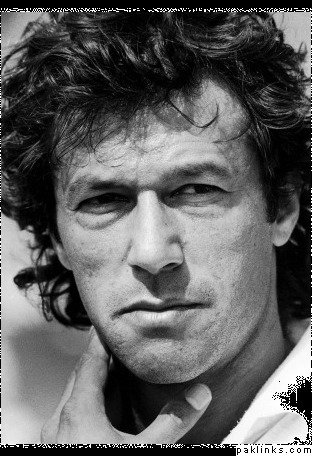
Nobody’s a perfect cricketer, but even his rivals will probably agree that Imran Khan comes pretty close. There’s no question he is Pakistan’s greatest-ever player, but even that description is an understatement. In fact, he has been world-class in batting, bowling, fielding and captaincy. Even among the game’s absolute elite, hardly anyone can make that claim.
Nor did he slow down after retiring from cricket. It would have been entirely natural for him to climb into a comfortable zone of exalted reverence, but he gave that a pass. Instead, he single-handedly founded a philanthropic cancer hospital in Lahore in the memory of his late mother that has become one of Pakistan’s premier medical institutes. Now, having just turned 60, he heads a political party that appears poised to emerge with influence in the country’s next general election.
The passage of years has made it clear that Imran is really one perfect storm of a man in whom multiple natural gifts - ability, ambition, drive, personality, looks, physique, and pedigree - have come together spectacularly. He was born with advantages and he has gone on to make the most of them.
His family background (Lahore aristocracy) and schooling (Aitchison College, Pakistan’s Eton) are as good as it gets in this part of the world. Then there is his unparalleled cricket education, starting from the family compound in Lahore’s Zaman Park under the watchful eyes of Majid Khan and Javed Burki, going on to Oxford University, domestic seasons in England and Australia, Kerry Packer’s World Series Cricket, an old-fashioned apprenticeship in reverse swing with Sarfraz Nawaz, and a complex partnership in battlefield tactics with Javed Miandad.
People say that if Imran succeeds in becoming a statesman, he will have achieved more than any other cricketer. Yet what he has achieved already - setting the philanthropy and politics aside - is quite incredible. As a bowler, his Test average, economy, and strike rate are all better than Wasim Akram’s, which is a huge statement when you consider that for two years in his prime, Imran had to sit out with a stress fracture of the shin. And though his career Test batting average is only in the high 30s, it jumps to 52.34 in his 48 Tests as captain; astonishingly this is higher than the corresponding figure for Steve Waugh, Ricky Ponting, Sachin Tendulkar, Clive Lloyd, Allan Border, Sunil Gavaskar, Inzamam-ul-Haq, Len Hutton, and yes, even Miandad.
His fielding never gets talked about because it has been diluted by so much else, but Imran was an excellent outfielder - an extremely safe pair of hands both in catching and ground-fielding, and possessing a near-perfect arm from the boundary. He exercised tirelessly and his body language was always attentive and athletic. He might have adopted a regal air after becoming captain, but his commitment in the field was never diminished.
Imran is almost as old as Pakistan’s Test history, which makes it rather fitting that he should be the man to have so fundamentally altered its course
Then there is the matter of captaincy. Imran is almost as old as Pakistan’s Test history, which makes it rather fitting that he should be the man to have so fundamentally altered its course. His captaincy was born in turbulence, arising from the dust of the infamous 1981 rebellion against Miandad. Yet once he was in charge, there was no looking back. He led by example, commanding respect, demanding unflinching dedication, and keeping merit and performance supreme. The team became united and laurels soon piled up: a fortress-like record at home, inaugural series wins in India and England, an unforgettable showdown in the West Indies, and the World Cup of 1992 - by any standards, a golden era. Pakistan’s cricketing mindset was revolutionised.
Imran’s entry into politics has complicated his hallowed status as a cricketing icon. Nowadays, whenever he is mentioned in a current-affairs context in the international press, the term is “cricketer-turned-politician”. Choosing one identity over the other is no longer possible, because with Imran’s continued evolution both have acquired equal importance. To the generation of cricket romantics and diehards who grew up watching and worshipping Imran - and I would place my boyhood friends and myself very much in that demographic - this feels like something of an intrusion.
Yes, the economy needs to be fixed; health, education, and unemployment need to be tackled; the foreign policy has to be sorted out; law and order have to be secured; and peace and prosperity must be ushered in. Yes, there is all that, of course. But what about the devastating spell of reverse swing on that breezy Karachi afternoon, those 12 wickets in Sydney that spawned a dynasty, that dogged defence, those towering sixes, that enthralling leap at the bowling crease, that quiet air of authority and command in the field? The space for reliving those pleasures is shrinking.
As a cricket fan, you expect your idols to be entirely defined by cricket, but Imran is an idol for whom the game is but one of his endeavours. That disorients the cricket lover’s mind and calls for an emotional adjustment. Nevertheless, this is not any cause for concern or complaint, because the trajectory of Imran’s life is really best seen as a compliment to the game. He was already a phenomenally successful cricketer and cricket leader. What else do you aim for next but the office of prime minister?
Initially politics proved a sticky wicket. For several years after founding his party, in 1996, Imran laboured on the margins of Pakistan’s political theatre. He struggled to find a voice in the national conversation, and kept getting dismissed as an amateur naïvely trying to extrapolate the success he had had in cricket and through his cancer institute. Yet here too, Imran’s persistence has paid off. His message of transformative change and clean governance is resonating throughout Pakistan, and his party has attracted a substantial following. Most observers expect him to be a key player in any coalition that emerges from next year’s national polls.
The most noticeable consequence of Imran’s political rise is that his critics have multiplied. He is accused of being a hypocrite who espouses conservative Islamic values after having lived the life of a playboy. He is derided for offering to negotiate with militant extremists. He is mocked for being stubborn and inflexible. Every now and then, his failed marriage to a British heiress is also raked up. Even his cricketing achievements are questioned, with people labelling him a dictatorial captain whose departure left the team in a tailspin. Pakistan may be a nascent democracy but it is still a vocal one.
Despite all the noise and clatter, Imran is quietly (and sometimes not so quietly) steaming ahead. If you take a panoramic view of his life and career, the quality that most dominates is focus and single-mindedness in the service of a lofty goal. It seems that for the right cause, he could almost move mountains through sheer force of will. Even his detractors always stop short of questioning his intent and resolve. Ultimately it is this clarity of purpose and Imran’s seemingly limitless capacity for challenge and endurance that have taken him so high and so far.
Saad Shafqat : Saad Shafqat on Imran Khan at 60 | Cricinfo Magazine | ESPN Cricinfo
Re: Happy 60th Birthday to Imran Khan
I think he is handsome too! He is a legend.